

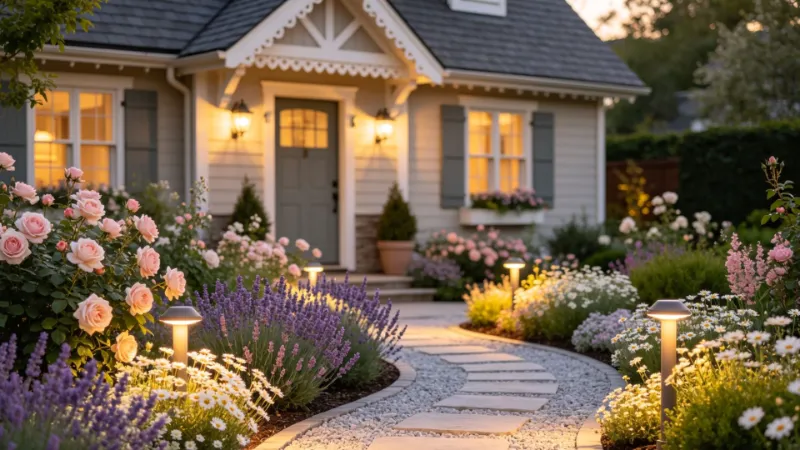
Whether you’re working with a compact terraced house plot, a wide suburban drive, or a bungalow with room to grow, the right front garden design can dramatically increase your property’s value and kerb appeal. Studies by the Royal Institution of Chartered Surveyors (RICS) suggest a well-designed front garden can add up to 10% to a home’s perceived value yet it’s the most neglected outdoor space in Britain and across the US.
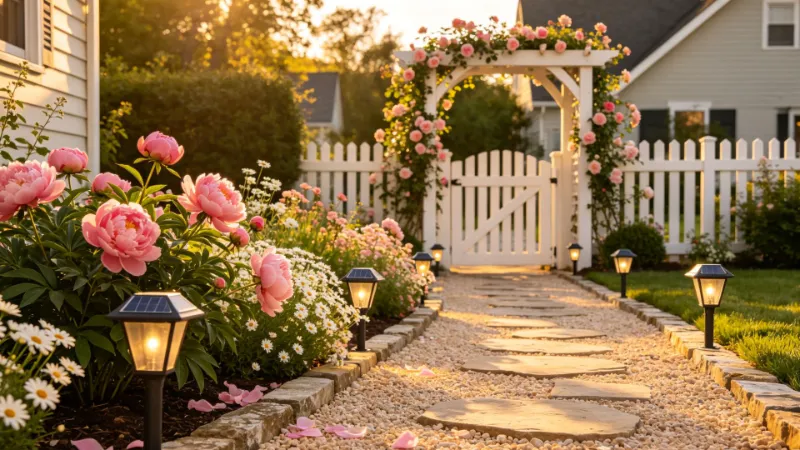
In this guide, you’ll find eight practical and inspiring front garden ideas covering everything from low-maintenance planting schemes and smart paving to water features and wildlife-friendly borders. Each idea includes expert insight, real-world scenarios, and design tips you won’t find in a generic listicle.
a Low-Maintenance Gravel Garden With Drought-Tolerant Plants
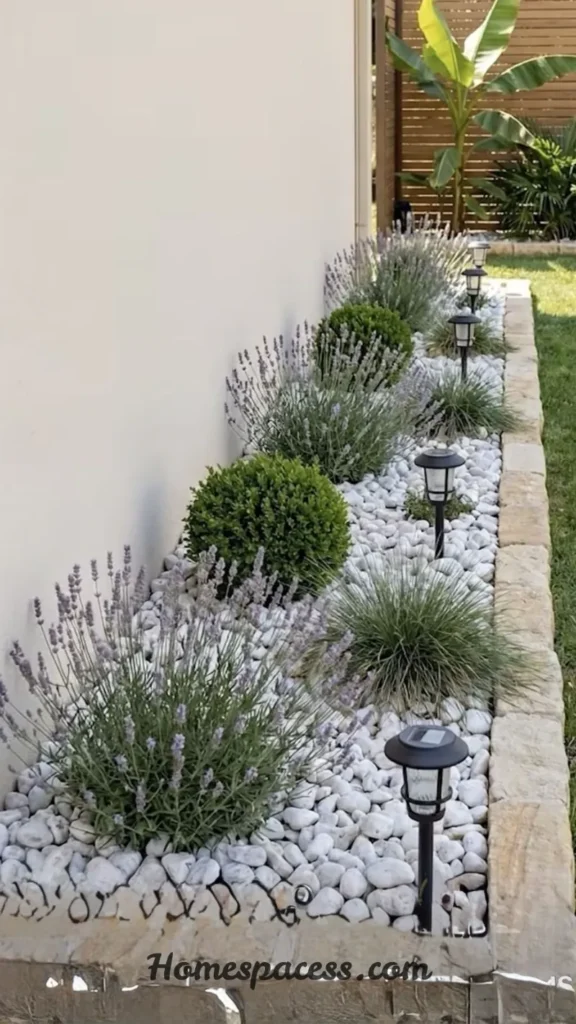
A gravel front garden is one of the smartest transformations you can make especially if your lifestyle doesn’t allow for weekly mowing. Replacing a tired lawn with decorative gravel, laid over a permeable membrane, instantly modernises the appearance while almost eliminating ongoing maintenance. Pair it with drought-tolerant plants like lavender, sedum, ornamental grasses, and rosemary to create texture and fragrance without daily watering.
The key mistake most homeowners make is choosing single-size, single-colour gravel, which looks flat and industrial. Instead, mix a primary gravel (10mm golden flint, for example) with a few statement boulders and chunky cobbles for depth. Planted pockets of lavender Hidcote or alliums pushing through gravel create a naturalistic, almost Mediterranean feel that’s genuinely distinctive and increasingly popular in front garden design across the UK and US.
Expert TipAlways use a weed-suppressing membrane underneath gravel, but avoid non-permeable plastic sheeting it blocks rainwater and can contribute to surface flooding. Opt for a landscape fabric that lets water drain freely while keeping weeds down.
From a drainage standpoint, gravel is far superior to block paving for front gardens. With increasing surface flooding in urban areas, planning authorities in England now require that new front garden paving be permeable gravel naturally satisfies this requirement without any special engineering.
Must Read: Birthday Party Ideas for a Personal and Creative Touch
Design a Welcoming Pathway With Mixed Paving Materials
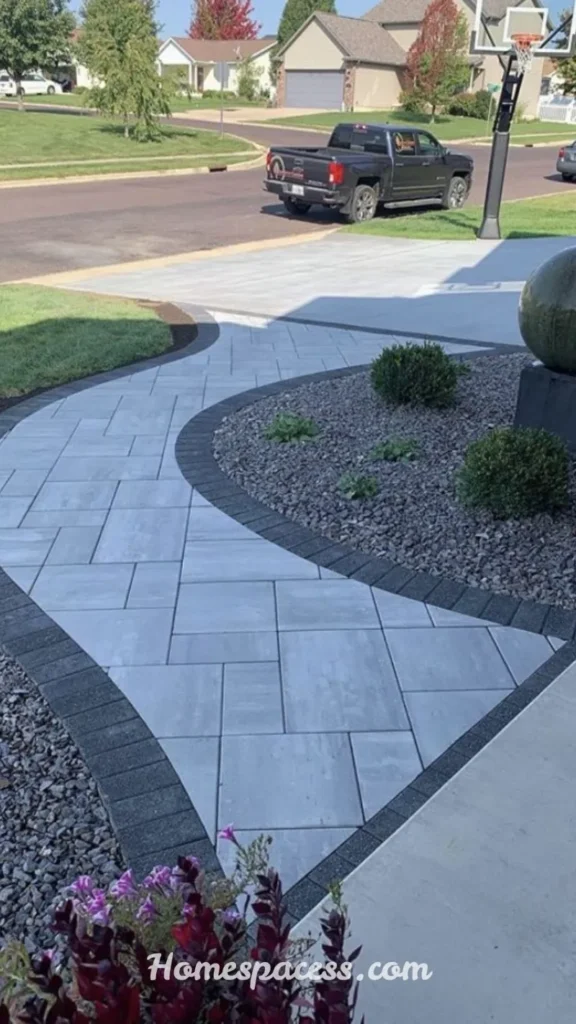
A well-designed pathway is more than just a practical route to your front door it’s a design statement that sets the tone for the entire property. The most visually engaging pathways combine two or three complementary materials: natural stone setts with brick infill, concrete stepping pads edged with pebbles, or reclaimed slate tiles bordered by creeping thyme. These combinations look far more curated and intentional than a single uniform surface.
The shape of the path matters just as much as the material. A straight, centred path suits a formal or Georgian property, while a gently curved path works beautifully with a cottage-style or Arts and Crafts home. Avoid abrupt 90-degree corners they rarely occur in nature and feel jarring in garden design. Sweeping curves encourage the eye to travel and make even a short garden feel longer.
Real-World ScenarioA semi-detached 1930s home in a leafy suburb replaced its cracked concrete path with a combination of aged sandstone stepping slabs and low-growing chamomile planted in the joints. The result: a pathway that releases fragrance with every step and photographs beautifully in all seasons.
Consider built-in path lighting for both safety and evening kerb appeal. Recessed LED ground lights flush with the paving surface are incredibly effective and last for years on very low energy. Solar-powered versions require zero wiring and are now sophisticated enough to provide reliable light even in cloudy climates.
Read More: Creative Twin Bedroom Ideas with Modern Decor and Storage
Plant a Cottage-Style Flowering Border for Year-Round Colour
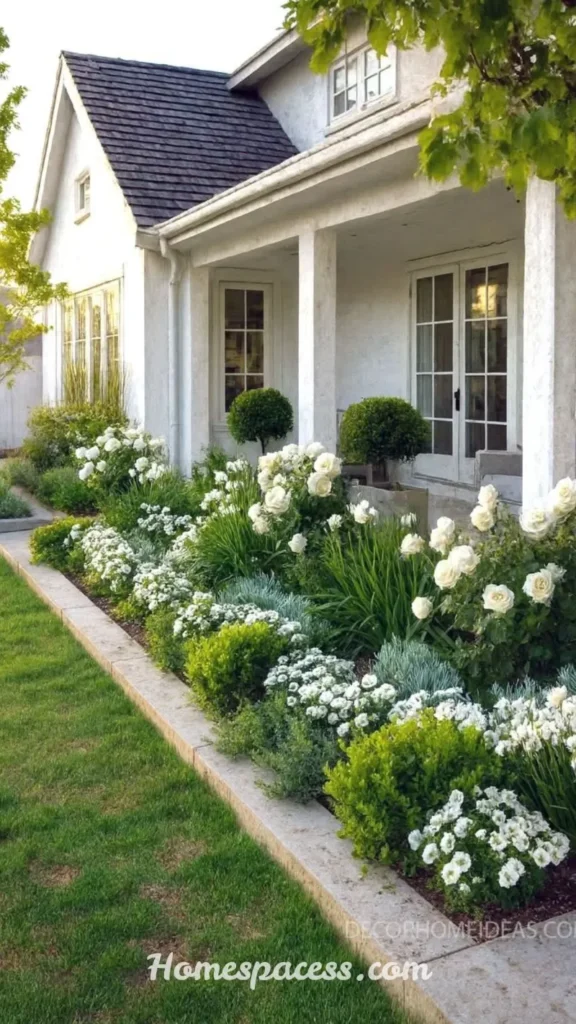
A thoughtfully planted flower border along the front of your home or property boundary is one of the most impactful front garden ideas you can implement on almost any budget. The secret to a border that looks good year-round is layering tall structural plants at the back (like foxgloves, echinops, or verbena bonariensis), medium fillers in the middle (geraniums, salvias, catmint), and low-growing edging at the front (Alchemilla mollis, dwarf lavender, or creeping sedum).
Most front garden borders fail because they focus exclusively on summer. A truly excellent border plans for four seasons: snowdrops and hellebores for winter and early spring, tulips and alliums for mid-spring, roses and hardy geraniums for summer, and rudbeckia, sedums, and ornamental grasses for autumn and winter structure. This multi-season approach means your home looks cared-for and attractive throughout the entire year, not just in July.
Pro Planting Tip
Group plants in odd numbers (3, 5, 7) and repeat the same species at intervals along the border to create visual rhythm. This technique, used by professional garden designers, creates cohesion and prevents borders from looking chaotic or random.
Don’t Miss: Trendy Funky Bathroom Ideas for a Cool and Modern Bathroom Makeover
Add Architectural Interest With Clipped Topiary and Evergreen Structure
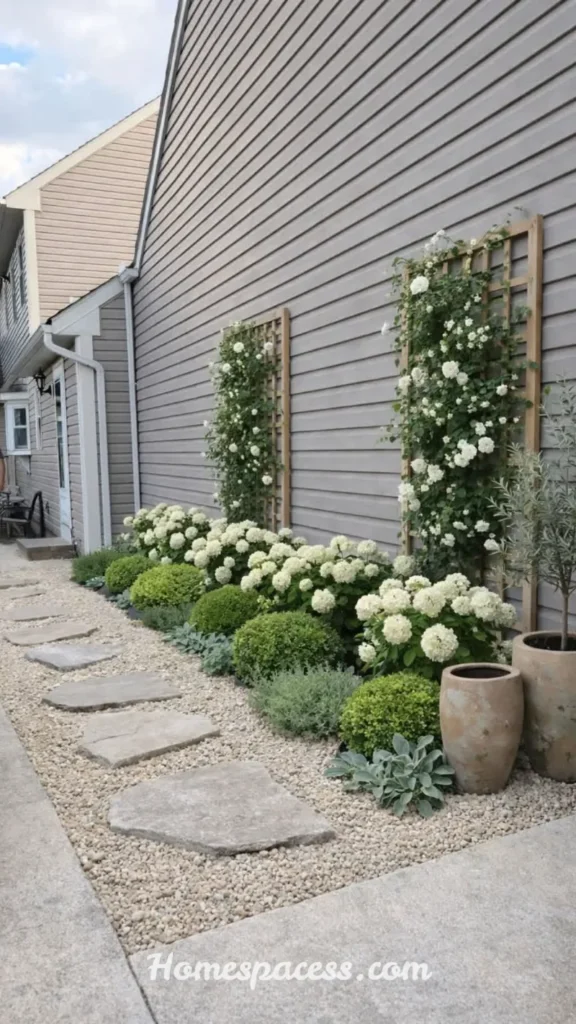
Topiary the art of clipping shrubs into formal shapes has experienced a major revival in front garden design. Far from being stuffy or old-fashioned, well-placed clipped evergreens provide year-round structure that gives a front garden its “bones.” A pair of matching clipped box balls flanking a doorway, two cloud-pruned pittosporums in pots, or a low clipped yew hedge bordering a path instantly elevates a property’s appearance and reads as refined and considered.
Given the devastating impact of box blight in recent years, many garden designers now recommend alternatives to traditional Buxus sempervirens. Ilex crenata (Japanese holly) is arguably the best substitute it clips identically, stays evergreen, and is completely resistant to box blight. Euonymus japonicus and Pittosporum tenuifolium ‘Golf Ball’ are also excellent choices for rounded forms in a front garden setting.
Design Insight
Topiary works in containers as well as in the ground. Two matching olive trees in tall terracotta pots either side of a front door require minimal maintenance yet create an instant Mediterranean elegance that’s very difficult to achieve any other way.
Read Also: Girly Room Ideas on a Budget for a Trendy and Elegant Space
Install Smart Outdoor Lighting for Safety and Evening Kerb Appeal
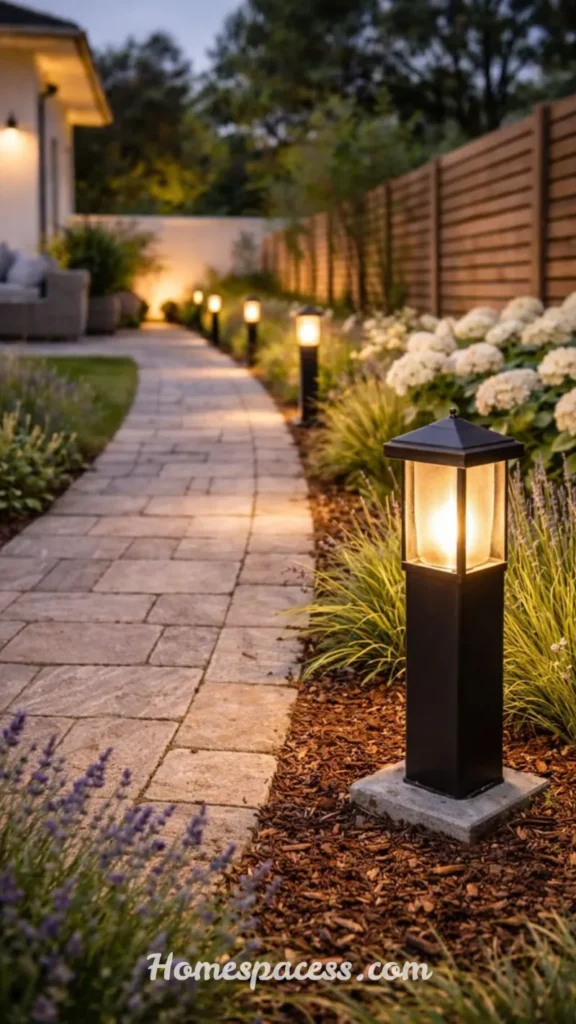
Outdoor lighting is the single most underused tool in front garden design. Most homeowners install a basic porch light and stop there which is a missed opportunity. Strategic front garden lighting can transform how a home looks after dark, highlighting architectural features, illuminating pathways, and creating a warm, welcoming glow that makes the property look beautiful from the street every single evening.
The most effective approach layers three types of lighting: task lighting (pathway and step lights for safety), accent lighting (uplights on specimen trees or architectural plants), and ambient lighting (wall lanterns, porch lights, or string lights for atmosphere). LED technology has made high-quality garden lighting far more affordable and energy-efficient than it was even five years ago, and smart systems now allow you to control colour temperature and brightness from your phone.
Smart Home Integration Tip
Systems like Philips Hue Outdoor or Ring Landscape Lighting connect directly to smart home platforms. You can program your front garden lights to turn on at sunset automatically, dim to 30% after 11pm, and respond to motion combining security with aesthetics seamlessly.
Create a Wildlife-Friendly Front Garden That Supports Biodiversity
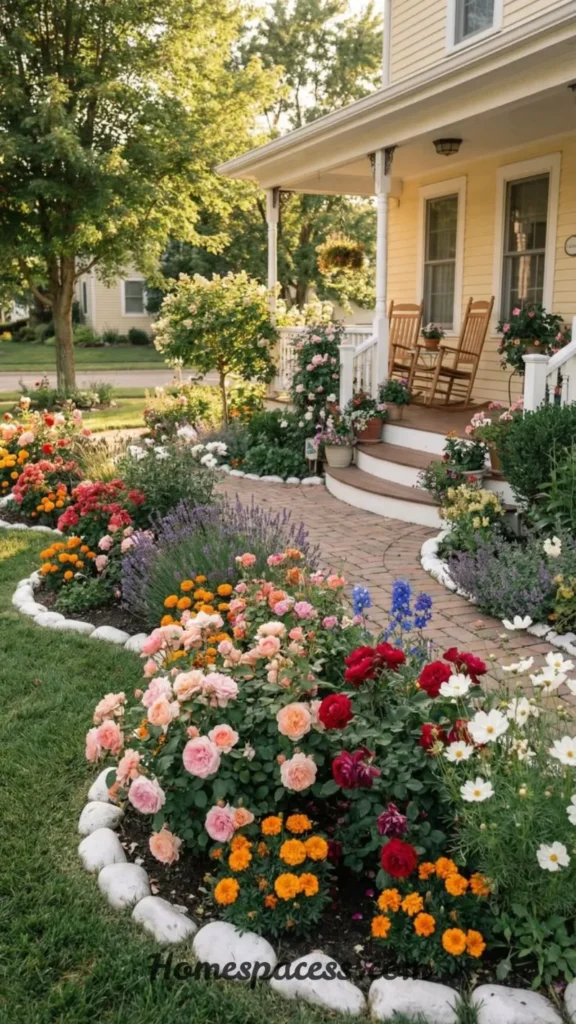
One of the most important shifts in modern garden design is the move toward ecological responsibility and the front garden is a crucial part of this. Wildlife-friendly front garden planting means choosing native or near-native plants that support pollinators and birds: nepeta (catmint), echinacea, single-flowered roses, verbena bonariensis, and native hedging like hawthorn or blackthorn. These plants also tend to be hardier and lower-maintenance than exotic cultivars.
Adding a small hedgehog highway (a 13cm x 13cm gap in your fence or wall), a shallow dish of water, or a small log pile can meaningfully support local wildlife without impacting aesthetics. A front garden needn’t look “wild” to be wildlife-friendly the best examples are beautifully curated spaces that happen to be ecologically rich. This approach also future-proofs your garden against hosepipe bans and increasing summer heat.
Quick Win
Swap one section of ornamental lawn for a small wildflower meadow patch using a plugging method rather than seed pre-grown wildflower plugs establish far faster and give instant results in year one, with established plants in year two.
Use Container Planting for Flexible, High-Impact Front Door Displays
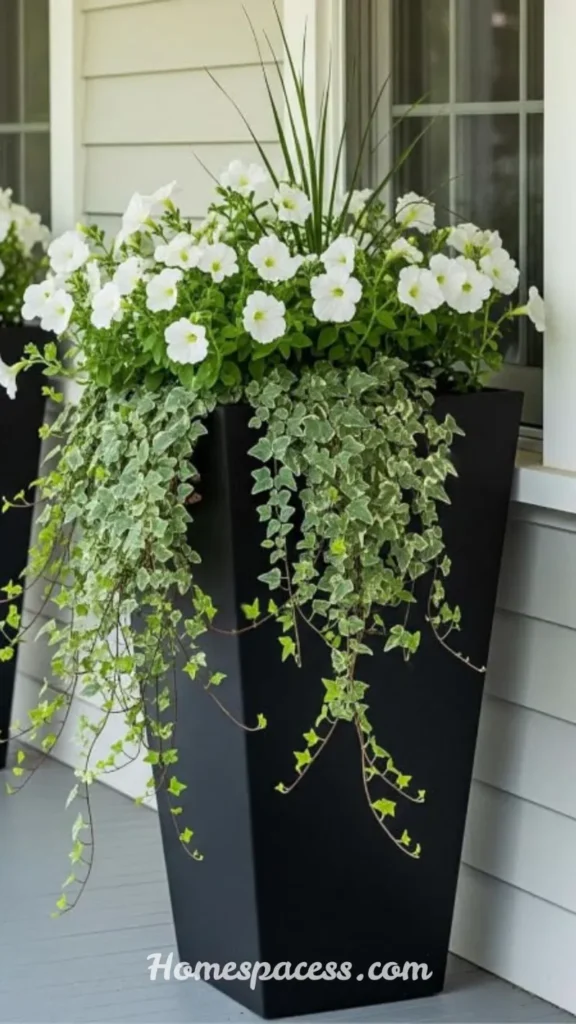
Container gardening at the front door offers something fixed borders cannot: flexibility. You can swap plants seasonally, move pots around, and adjust the display as your tastes or the season changes. A pair of large statement planters flanking a front door filled with structural plants like agapanthus, phormiums, or standard bay trees immediately elevates the entrance and adds a sense of intentional design that’s hard to achieve any other way.
The most common error with front door containers is choosing pots that are too small. A small pot dries out quickly, tips over easily, and looks mean against a large doorway. Invest in the largest quality pots your budget allows fibreglass versions are lightweight, frost-proof, and now available in extremely convincing stone, lead, and terracotta finishes. Large pots also allow better root development, meaning plants stay healthy and looking good with less intervention.
Seasonal Strategy
Keep a core “framework” planting (evergreen standard, architectural grass, or topiary) that stays in place year-round, then swap out seasonal colour plants around it tulips in spring, trailing fuchsias in summer, ornamental kale in autumn, cyclamen in winter. This approach gives constant visual impact with minimal replanting effort.
Transform Your Boundary With a Beautiful Hedge, Wall, or Fence Design
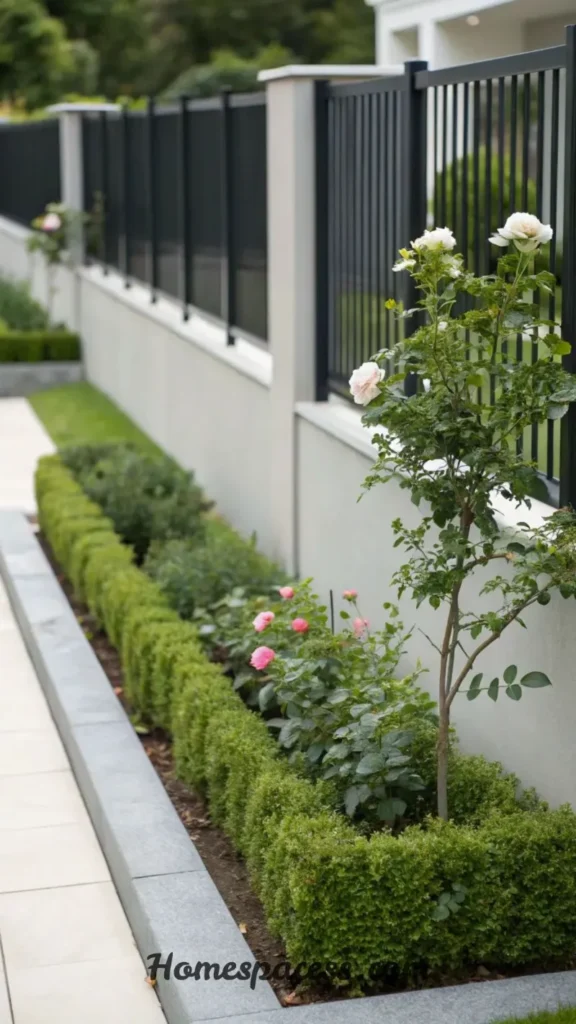
The boundary treatment whether a hedge, wall, fence, or railing has an enormous impact on how a front garden looks and feels. It defines the property, provides privacy, reduces noise, and often forms the backdrop against which everything else is seen. A poorly maintained boundary instantly undermines even beautiful planting behind it. Conversely, a beautifully maintained beech hedge, a freshly painted white picket fence, or an elegant iron railing on a low brick wall can transform a property’s entire character.
Living boundaries offer significant advantages over hard structures: they’re more environmentally friendly, support wildlife, improve air quality, and can be more cost-effective over time. Mixed native hedges combining hawthorn, blackthorn, field maple, and dog rose provide year-round interest through foliage, flowers, and berries while being virtually indestructible once established. Formal clipped hedges of hornbeam, beech, or yew suit more traditional settings and provide a gorgeous green architecture that never goes out of fashion.
Boundary Design RuleMatch your boundary style to your home’s architecture. Georgian and Victorian properties suit wrought iron railings on brick plinths; Arts and Crafts homes look best with clipped yew or beech hedging; modern homes benefit from clean horizontal timber fencing or a steel-framed gabion wall filled with local stone.
Conclusion
Transforming your front garden doesn’t require an enormous budget or weeks of hard labour it requires smart choices, a clear design direction, and plants that earn their place across every season. Whether you start with a simple gravel makeover, a beautiful container display, or a wildlife-friendly planting border, these front garden ideas offer genuine, lasting value for your home and the environment.
The best front gardens feel effortless but behind that effortlessness is always a little intentional thinking. Pick one idea from this guide, implement it well, and build from there. Your home’s exterior tells its story before anyone ever steps inside; make sure it’s a good one.Ready to start? Choose one idea above, sketch a rough plan, and take your front garden from overlooked to outstanding this season.
Trend Analysis
Front Garden Trends for 2026 and Beyond: What’s Reshaping Kerb Appeal
Water-Wise Design
Rain gardens, swales, and permeable surfaces replacing traditional lawns as hosepipe restrictions grow.
AI-Assisted Planning
AI garden planning tools that generate planting schemes from a photo of your house are gaining mainstream adoption.
No-Mow Naturalism
Clover lawns, thyme lawns, and mini meadows replacing traditional grass in front gardens for lower maintenance.
Solar-Integrated Lighting
Next-generation solar lights with lithium battery storage are now reliable enough for year-round garden use.
The dominant direction in 2026 front garden design is the fusion of aesthetics with ecological intelligence. Homeowners are no longer satisfied with gardens that merely look good they want spaces that actively support biodiversity, manage rainwater sustainably, and require less fossil fuel-intensive maintenance. This “beautiful utility” approach is replacing the previous decade’s obsession with block paving and decking that contributed to urban flooding and habitat loss.
Another significant trend is the rise of “climate-adaptive” planting choosing plants not just for appearance but for resilience to the increasingly unpredictable UK and US climate. Mediterranean plants like cistus, agapanthus, and verbena bonariensis are increasingly replacing thirsty traditional bedding plants that struggle in dry summers. Landscape architects and garden designers are actively building climate modelling into planting scheme decisions in ways that hadn’t previously reached the residential garden market.
Expert Insights
Practical Tips Garden Designers Actually Use (and Rarely Publish)
Professional garden designers approach front gardens very differently from how most homeowners do. The first principle is to always design from the street inward walk 10–15 metres away from your property and look back. Photograph it on your phone. Only then design what you see, because that’s what everyone else sees. Most people design from the door outward, which produces gardens that look better close up than from the pavement the wrong priority.
The second expert insight is the power of a “hero plant” one genuinely impressive specimen that anchors the entire garden and draws the eye immediately. This might be a multi-stem amelanchier in a small front garden, a standard Photinia ‘Red Robin’ clipped into a lollipop, or a large olive tree in a pot. The hero plant doesn’t have to be expensive it has to be properly placed, properly maintained, and given enough space to perform. Everything else in the garden should support and frame the hero, not compete with it.
Thirdly, experienced designers are meticulous about scale and proportion. The most common amateur mistake is planting too many different things in too small a space. Three species, well chosen and grouped confidently, will always outperform twelve species scattered randomly. This principle restraint and repetition is one of the least-taught and most valuable lessons in garden design.
Sustainability & Long-Term Value
Why Sustainable Front Garden Design Is Also Smart Financial Design
The sustainability conversation in garden design has moved well beyond vague environmental sentiment it now intersects directly with property value, planning policy, and long-term maintenance costs. In England, planning rules already prohibit non-permeable surfacing in front gardens without drainage consent. Similar legislation is developing across Europe and in some US states. Front gardens designed with sustainable drainage systems (SUDS) using gravel, planting, or permeable block paving are not only environmentally responsible but also future-proofed against tightening regulation.
The long-term financial case for sustainable front garden design is compelling. A mature, established planting scheme with drought-tolerant species requires a fraction of the water, fertiliser, and replacement planting costs of a traditional bedding-plant-based garden. A well-planted gravel garden, for example, will look significantly better after five years than it did in year one, as plants establish and self-seed naturalistically a conventional lawn, by contrast, looks progressively worse without constant input.
Property valuers are increasingly including garden quality in their assessments, particularly since hybrid working has increased the time people spend at home. A front garden that is attractive, low-maintenance, and ecologically considered is now viewed by estate agents as a genuine selling point rather than a bonus particularly in family and professional demographics, where time poverty is a real concern and sustainability is a growing value.
Future Predictions
The Future of Front Garden Design: Innovations Arriving in the Next 5 Years
Artificial intelligence is poised to fundamentally change how homeowners plan and manage front gardens. Several startups are already offering AI-powered garden planning tools that can analyse a photo of your front garden, identify existing plants, model sunlight exposure based on orientation, and generate a full planting scheme with seasonal interest mapped week by week. Within five years, these tools will likely be integrated directly into smart home platforms and available as mainstream consumer products rather than professional-grade services.
Smart irrigation is another rapidly maturing technology. Systems like Rachio and Hydrawise already integrate with local weather data to adjust watering schedules automatically but next-generation systems will combine soil moisture sensors with AI-powered plant identification to deliver precisely the right amount of water to each plant, based on its species-specific needs. For front gardens in water-stressed regions, this will dramatically reduce both water use and plant losses during heatwaves.
Biophilic design the integration of natural elements into built environments to improve human wellbeing is moving from commercial architecture into residential garden design. Research from Exeter University has quantified the mental health benefits of green space visible from a home. In the next decade, expect front garden design to be explicitly linked to wellbeing metrics in property listings and potentially in insurance assessments, creating a new economic value category for high-quality planting and green design.
Common Mistakes
Front Garden Mistakes Most Homeowners Make (and How to Avoid Them)
- Planting too close to the house: Most plants placed against a wall receive very little rainfall (the “rain shadow” effect) and can cause damp issues if touching the brickwork. Leave at least 30cm clearance and choose drought-tolerant varieties.
- Ignoring the vertical plane: Most front garden designs focus only on ground level. A well-chosen climber on a house wall or fence (wisteria, star jasmine, climbing hydrangea) adds enormous visual richness with minimal footprint.
- Choosing plants purely for summer: A garden that looks beautiful in July but bare and sad from October to April is a design failure. Always plan for winter structure with evergreens, grasses, and early-flowering bulbs.
- Over-paving for “low maintenance”: Block-paved front gardens look neat initially but often develop weed problems in joints within two years, and they contribute to flooding. Permeable alternatives like gravel or resin-bound aggregate are often lower maintenance long-term.
- Mismatching style to architecture: A cottage garden planting scheme in front of a 1970s detached house looks confused and unintentional. Always let the property’s architectural character guide the garden style.
- Neglecting the boundary: An overgrown hedge, a rotting fence, or a crumbling wall undermines every beautiful plant behind it. Boundary maintenance should be the first not last priority in front garden renovation.
- Underestimating plant spread: A Photinia ‘Red Robin’ planted 40cm from a path will need constant cutting back within three years. Always check the mature spread of a plant before purchasing, not just its height.

Team Home Spacess shares simple, practical design ideas that work for real families. The team focuses on cozy décor, soft colors, and natural textures that make a space feel truly lived-in. From everyday decorating tips to creative home projects, Team Home Spacess is dedicated to helping readers create warm, comfortable, and inviting spaces with a fresh and personal touch.