

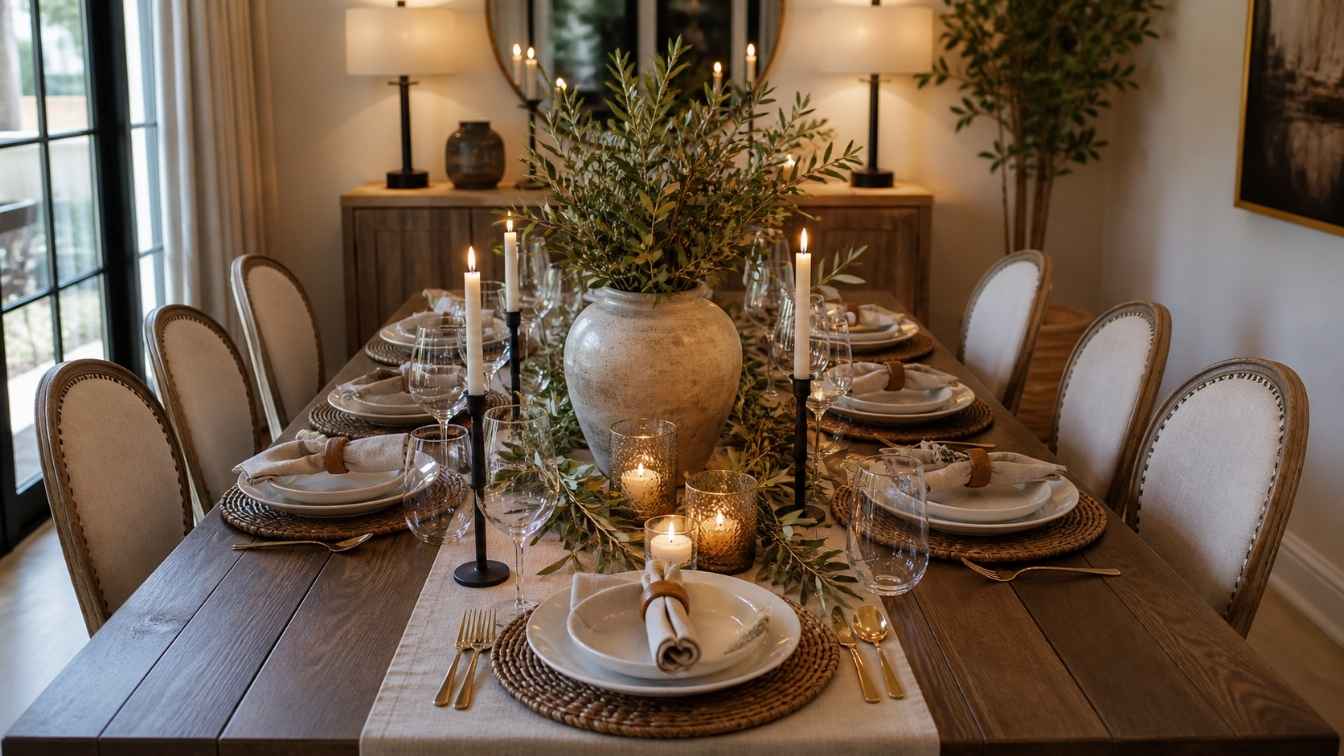
Your dining table is the most used surface in your home and yet it’s often the most neglected when it comes to intentional design. A bare table feels cold. An overdressed table feels chaotic. The sweet spot lies in thoughtful, layered styling that works for Tuesday night dinner and Saturday’s dinner party.
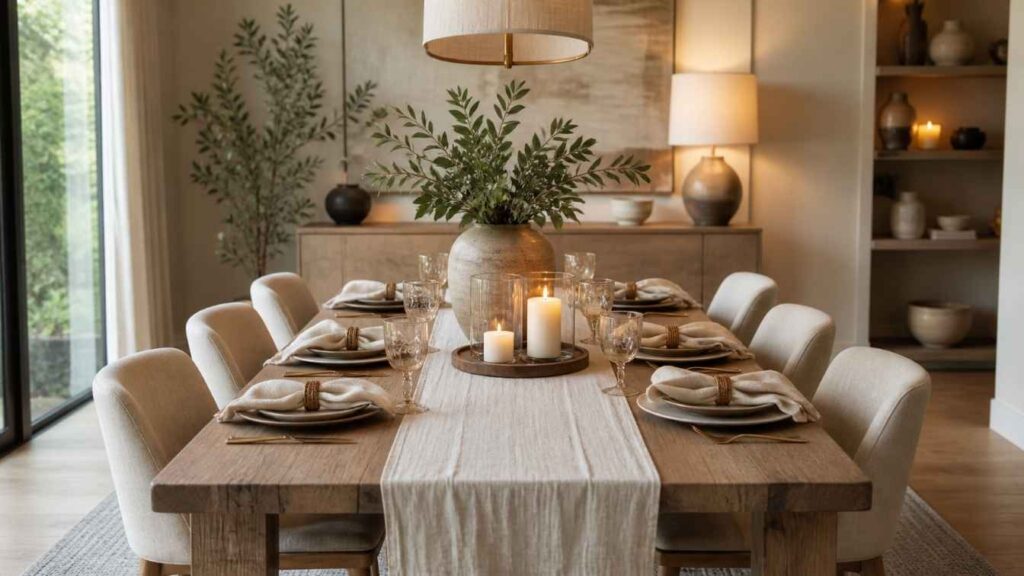
Interior stylists consistently point out that the dining table is the single most high-impact surface to decorate in a home, because it sits at eye level, anchors the room, and gets used daily. Yet most homeowners either skip it entirely or copy a Pinterest board without understanding why it works. This guide breaks that cycle seven practical, visually grounded dining table decor ideas with real context and real results.
Build a Layered Centerpiece
Not Just One Object
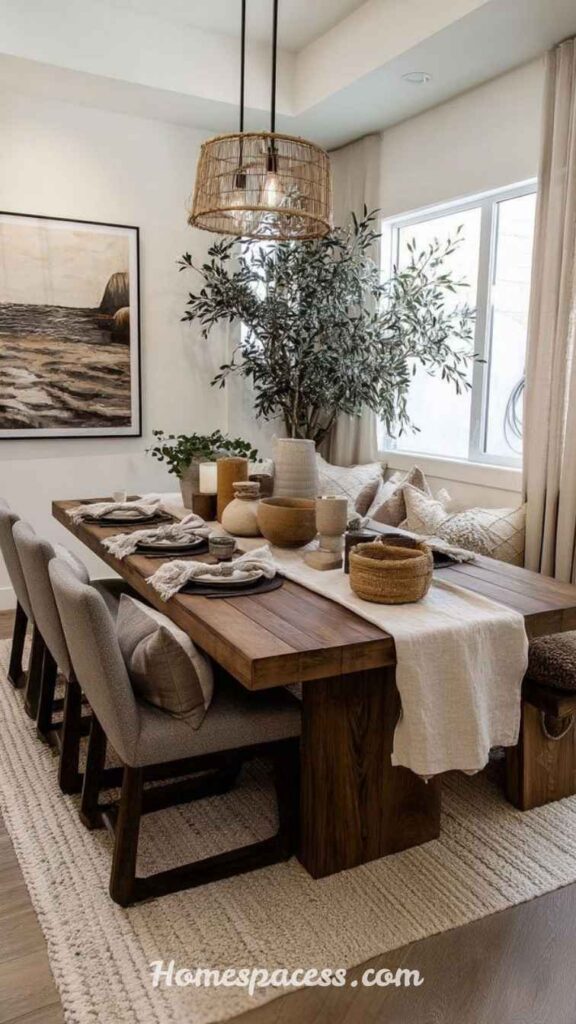
The most common dining table decor mistake is placing a single vase or bowl in the center and calling it done. What professional stylists actually do is layer: a low runner underneath, a medium-height vessel in the center, and one or two smaller accent objects flanking it. This creates visual rhythm without blocking conversation across the table.
Think of it like a skyline varied heights create interest, while objects at the same height feel flat. For a natural centerpiece, try a linen table runner, a low terracotta pot with trailing greenery, and two taper candle holders at different heights on each side. This three-layer formula works whether your aesthetic is modern minimalist, farmhouse, or maximalist eclectic.
Unique Insight:
Interior designers follow the “Rule of Odds” groups of 3 or 5 objects always look more intentional than pairs. When arranging a centerpiece, odd-numbered groupings feel naturally balanced to the human eye, even if they’re asymmetrical.
Must Read: Elegant Mini Bar Ideas for a Stylish Home Makeover
Use Candlelight as a Styling Tool
Not Just a Mood Setter
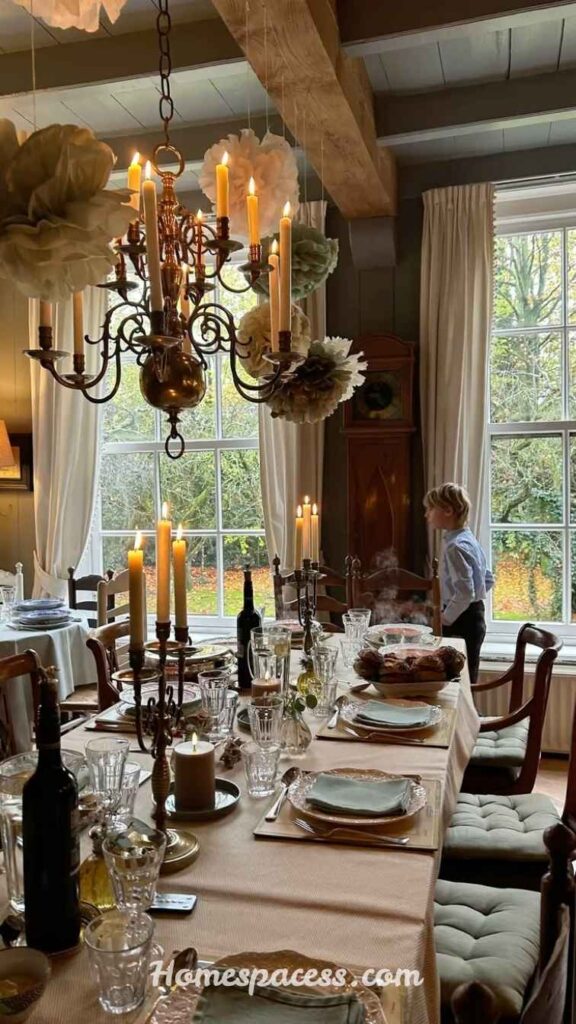
Candles on a dining table aren’t just about ambiance they’re one of the most powerful vertical design elements you have. Taper candles in mismatched heights add architectural drama. Pillar candles create a grounding, weighty focal point. Votives scattered in clusters give an intimate, campfire-like warmth. The key is to treat candles as part of your décor structure, not an afterthought.
Beeswax and unbleached soy candles have the added benefit of burning cleaner and longer, making them a practical upgrade too. Color-wise, neutrals like ivory, terracotta, and deep burgundy photograph better than stark white and feel richer in person. If you’re concerned about fire safety, high-quality LED flameless tapers now mimic real flicker convincingly ideal for homes with children or pets.
Expert Tip:
Place candles at different distances from the table center not all clustered together. A candle 30cm from center and another at 60cm creates depth and makes the table feel larger than it is.
Read More: Simple Outdoor Kitchen Ideas for Easy Backyard Cooking Setup
Bring in Seasonal Botanicals for Living
Evolving Décor
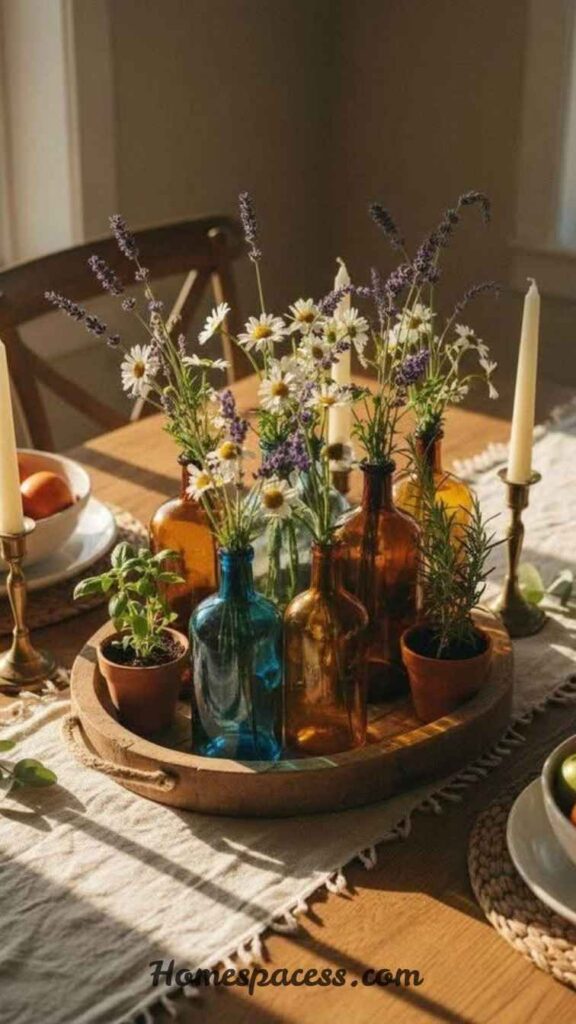
Dried and fresh botanicals are the fastest way to make a dining table feel alive and intentional without spending much. In spring, loose garden florals in a simple ceramic jug. In autumn, dried wheat, eucalyptus, and small gourds. Winter works beautifully with pine branches, berries, and dark foliage. Seasonal rotation keeps the table from ever feeling stale, which is the hidden enemy of long-term home styling.
For longevity, many interior stylists now prefer dried botanicals over fresh flowers for their everyday table. Dried pampas grass, lunaria (honesty seed pods), and preserved magnolia leaves hold their shape for months. They also photograph extremely well in natural light, making them ideal for styled home interiors. The earthy, textural quality of dried botanicals also fits seamlessly into the trending “organic modern” aesthetic that’s dominating interior design in 2026.
Overlooked Detail:
The vessel matters as much as the botanical. A grocery-store bunch of eucalyptus in a handmade matte ceramic pot looks intentional and styled. The same bunch in a plastic vase looks like an afterthought. Invest in two or three quality vessels.
Read Also: Baby Room Ideas That Make Small Nurseries Look Bigger and Brighter
Anchor the Table with a Statement Table Runner or Placemat Set
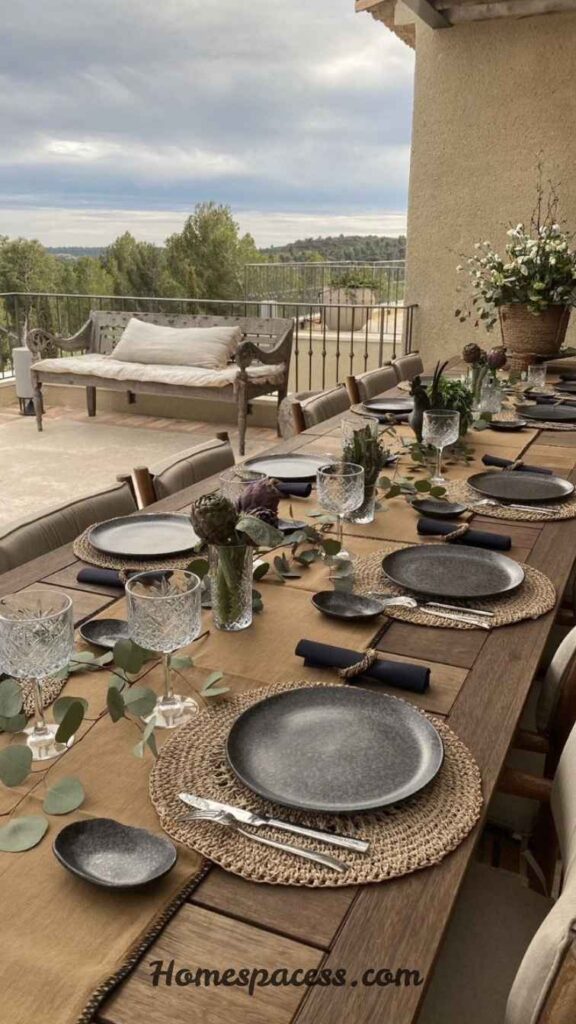
A table runner is the foundation of any styled dining table it defines the visual “axis” that everything else builds on. Linen runners in natural, undyed tones are the most versatile and long-lasting choice. They work with almost any plate or centerpiece style. Woven macramé runners add texture and a handcrafted quality that feels luxurious without being formal. Velvet or brocade runners signal special occasions and are worth having for holiday and dinner party settings.
Placemats perform a different function they frame each seat and create individual “zones” on the table. Rattan or woven grass placemats add texture and warmth, especially on wooden tables. Linen placemats with raw edges feel artisan and modern simultaneously. Mixing a runner with placemats creates a fully dressed table that looks professionally styled. The critical rule: the runner and placemat don’t need to match perfectly they just need to share a color family or material texture.
Don’t Skip: Outdoor Patio Ideas That Turn Any Backyard Into a Relaxing Escape
Incorporate Textured Objects: Stone, Wood, and Ceramics
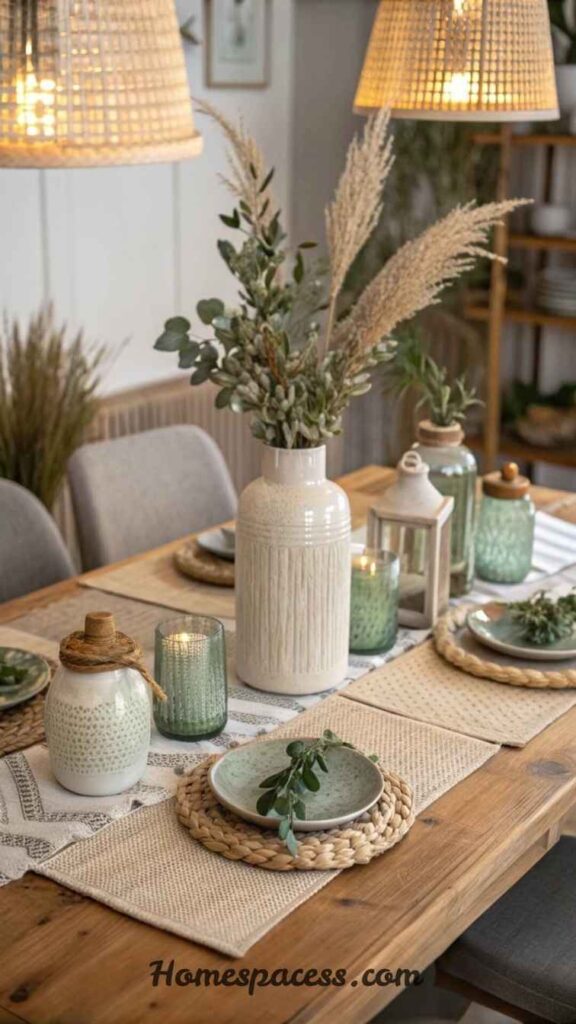
Texture is the dimension most people forget when decorating a dining table. Color and shape get all the attention, but the tactile quality of objects rough stone, smooth glazed ceramics, raw wood is what makes a table feel rich and curated. A marble salt cellar, a hand-turned wooden bowl, or a cluster of matte-glazed bud vases creates the kind of layered texture that high-end interior stylists rely on constantly.
The most effective approach is to combine three different materials in your table escape. For example: a linen runner (soft textile), a ceramic vase (smooth glaze), and a wooden board or tray (warm grain). This trio of contrasting textures creates visual depth and prevents the table from feeling one-dimensional. Object scale matters too one large item reads as a statement, while many small items of similar size read as clutter. Always have one dominant piece that anchors the arrangement.
Unique Insight:
Ceramics made with visible imperfections uneven glazing, finger marks, slight warping are commanding premium prices in 2026 home décor markets. These “wabi-sabi” qualities signal handmade artisan quality and are far more interesting on a table than factory-perfect objects.
Set an Intentional Color Palette
(and Stick to It)
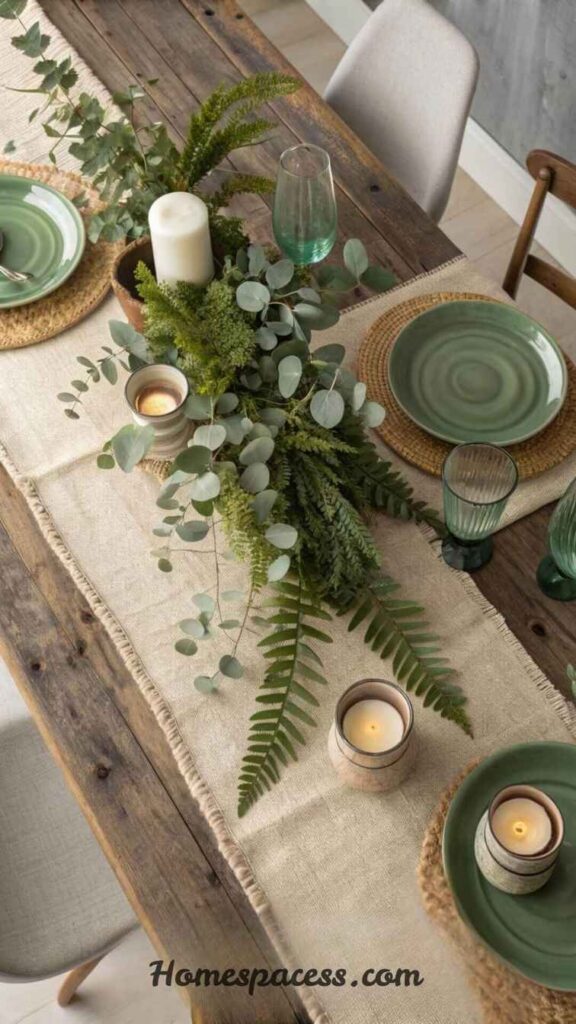
One of the clearest markers of a well-styled dining table versus a randomly assembled one is color discipline. Pick two to three colors maximum and let everything speak the same language. The most timeless palette for dining table decor combines warm neutrals (cream, sand, terracotta) with one deeper accent (forest green, navy, burgundy). This creates warmth and sophistication without looking trendy or dated quickly.
Color in dining table décor works best when it appears in at least two different places this is what designers call “color echo.” If your runner is terracotta, have a terracotta-colored candle or a terracotta ceramic piece nearby. This repetition makes the styling feel deliberate and cohesive rather than coincidental. Avoid the common mistake of having one very colorful statement piece surrounded by objects in completely unrelated tones it isolates the item rather than integrating it into the overall composition.
Add Personal, Meaningful Objects to Create a Story
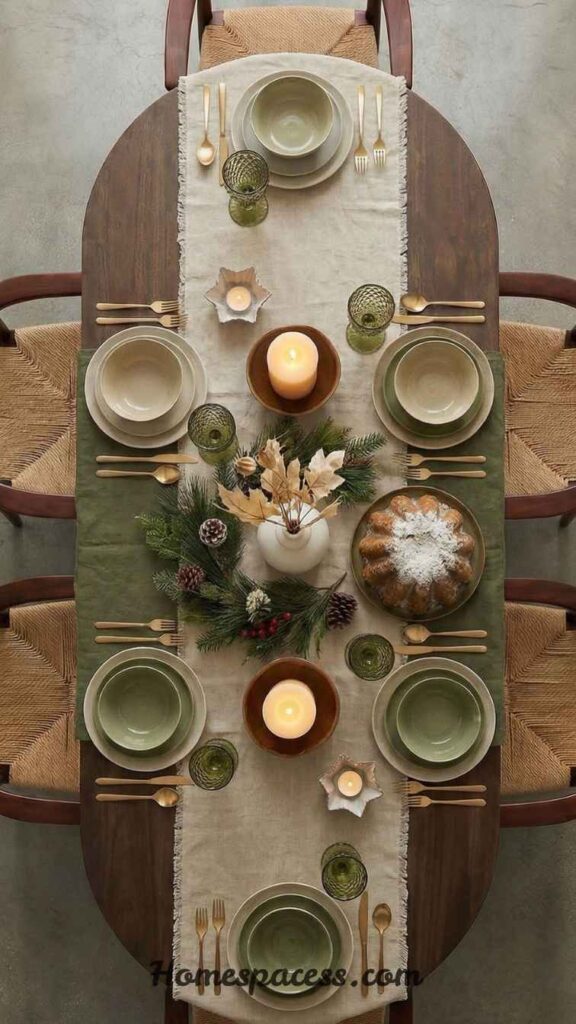
The most memorable dining tables in design books and shelter magazines aren’t the most expensive they’re the most personal. A piece of pottery bought on a trip, a small framed photograph in a simple stand, a handwritten menu card for a dinner party, or a meaningful book used as a display prop. These personal touches elevate a table from “styled” to “lived in” which is far more compelling in real life and in photographs.
Interior design educators call this the “narrative layer” of a room the objects that tell a story about the person who lives there. On a dining table, one or two personal objects placed deliberately among the standard decor elements make the whole arrangement feel authentic rather than showroom-perfect. The key word is “deliberately” the personal object should still follow the rules of scale, texture, and color that govern the rest of the table. It joins the composition, it doesn’t replace it.
Mini Scenario:
Imagine a table with a natural linen runner, a ceramic vase of dried pampas grass, two taper candles and a small brass compass from a grandfather’s collection placed beside the vase. That compass transforms the styling from beautiful to unforgettable. That’s the power of the narrative layer.
Conclusion
Great dining table decor isn’t about spending more it’s about choosing better, arranging thoughtfully, and understanding why certain combinations work. From layered centerpieces and candlelight to seasonal botanicals and personal narrative objects, these seven dining table decor ideas give you a complete, practical toolkit for transforming your most-used surface into the visual heart of your home.
The principles are simple layer heights, vary textures, echo colors, and build for daily life not just for occasions. Whether you’re starting from scratch or refreshing a tired table, even two or three changes from this guide will create a noticeable shift in how your dining space feels.
Trend Analysis 2026 & Beyond
What’s Actually Trending in Dining Table Decor Right Now
The dominant aesthetic driving dining table decor in 2026 is “Organic Modernism” the fusion of clean, minimal forms with raw, natural materials. Think stone-look ceramic platters, linen in undyed natural tones, and botanical arrangements that look freshly gathered from a garden rather than arranged by a florist. This is a direct reaction to the hyper-polished, all-white minimalism of the early 2020s, which many found cold and unwelcoming.
Rising Fast
Japandi Tablescaping
Japanese-Scandinavian fusion: sparse, handcrafted, deeply intentional. Every object earns its place.
Peaked, Still Strong
Dried Botanical Centerpieces
Pampas grass, dried citrus slices, wheat bundles. Low-maintenance, long-lasting, photogenic.
Emerging 2026
Sculptural Objects as Décor
Small art objects abstract ceramic sculptures, hand-blown glass replacing traditional centerpieces.
Future Forward
Multi-Sensory Table escaping
Scent (diffusers, scented candles) and tactile textiles combined with visual décor for full sensory dining.
Looking forward to 2027-2028, expect to see “adaptive table escaping” modular centerpieces that can be quickly swapped for different occasions without restyling from scratch. Brands are already developing interchangeable decor systems where a single base tray can be dressed differently for casual, formal, or festive settings in under five minutes.
Expert Insights
Practical Tips From Professional Interior Stylists
The most consistent advice from professional table escapers and interior stylists is to style your table for daily life first, and special occasions second. Many people do the opposite they create an elaborate display that gets dismantled every time the table needs to be used. A practical dining table decor setup should be easy to shift to one end of the table for meals and easy to restore in under two minutes.
- The 12-inch rule: Keep your centerpiece under 12 inches tall to maintain comfortable eye contact across the table during dinner. Tall arrangements are for sideboards and consoles, not dining tables.
- Odd numbers always: Style objects in groups of 3 or 5. Pairs feel formal and symmetrical; odd groups feel organic and collected over time.
- The tray trick: Place all your small centerpiece objects on a decorative tray. It unifies them visually and makes them easy to move as one unit when you need table space.
- Vary the finish: Mix at least one matte and one slightly reflective surface in your centerpiece. Candlelight bounces off glazed ceramics and glass differently it creates depth and interest.
- Don’t forget the perimeter: Place objects not just at the center but extending along the table’s length. A second small vase or candle at the end creates a more generously styled look.
Timing is an overlooked factor too. Professional stylists spend 15-20 minutes on a dining table arrangement not 5. Slowing down, stepping back, and viewing from different distances is what separates a thoughtful arrangement from a random one. Most people rush this process and then wonder why their table never looks as good as inspiration images they’ve saved.
Sustainability & Long-Term Value
Buying Smarter: Sustainable Dining Table Decor That Lasts
The fast-decor industry cheap seasonal items bought and discarded constantly is being challenged by a growing shift toward buying fewer, better objects. For dining table decor specifically, this means investing in three to five high-quality, timeless pieces rather than constantly refreshing with trend-driven purchases. A well-made linen runner, two good ceramic vessels, and a set of quality candleholders will serve you for 10-15 years and outlast dozens of trend cycles.
From a sustainability standpoint, natural materials like undyed linen, solid wood, terracotta, and stoneware are far preferable to synthetic alternatives. They biodegrade, improve with age, and develop the kind of patina that synthetic materials can never replicate. Beeswax candles, for instance, actually improve air quality compared to paraffin candles, which release petroleum byproducts. These material choices aren’t just ecological they’re aesthetically superior over time.
Long-Term Value Calculation: A handmade ceramic vase that costs $80 and lasts 15+ years costs you roughly $5 per year. Three fast-decor vases at $15 each, replaced every 18 months, cost $30 per year and create 3x the waste. Sustainable buying is almost always the economically smarter choice over a 5-year horizon.
Future Predictions 2026–2030
The Future of Dining Table Decor: What’s Coming Next
The next major shift in dining table decor will be driven by technology integrated invisibly into the objects themselves. Smart candleholders with built-in ambient light sensors that adjust their LED flicker to the room’s natural light level. Tabletop diffusers that sync scent profiles to the season or even to a music playlist. These aren’t concepts early versions exist in premium home technology brands and will reach mainstream home decor retailers by 2027.
Now · 2026
Organic modernism, wabi-sabi ceramics, dried botanicals, and Japandi minimalism dominate. Sustainability increasingly shapes purchase decisions.
Near · 2027
Modular centerpiece systems emerge. Smart ambient lighting objects hit mainstream retail. AI-assisted table styling apps launch, suggesting arrangements based on uploaded room photos.
Forward · 2028–2029
Scent-integrated table escaping becomes mainstream. Artisan and local ceramics outperform mass-market decor brands as consumers prioritize provenance and story.
Horizon · 2030
Fully biodegradable seasonal decor collections normalize. “Decor-as-a-service” subscription models offer curated table styling kits changed seasonally, with return/compost programs.
Perhaps the most significant future shift is cultural: dining tables are reclaiming their role as a social anchor in homes, especially as remote work continues to blur the line between living and working from home. The table that doubles as a workspace needs decor that transitions which is pushing interest in minimal, multi-purpose styling approaches that look intentional at 9am and beautiful at 7pm.
Common Mistakes Overlooked Factors
Dining Table Decor Mistakes Most Guides Won’t Tell You About
Beyond the obvious errors (too cluttered, wrong scale), there are subtler mistakes that prevent a dining table from looking truly polished. These are the details that separate a table that looks “nice” from one that stops people in their tracks.
- Ignoring the table’s finish: Placing light-colored objects on a dark wood table creates low contrast and makes both look muddy. Match your decor’s value range to your table light objects on dark tables, or create intentional contrast with one bold dark object on a pale table.
- Centering everything obsessively: Professional stylists often place the main centerpiece slightly off-center toward one end of the table. This feels more organic and leaves visual breathing room on the longer side.
- Forgetting the underside: A beautiful table runner left with raw, unfinished edges underneath catches the eye for the wrong reason. Always press or steam runners flat wrinkled linen reads as unfinished, not artisan-casual.
- Styling only for photography: Many people arrange their table for overhead Instagram shots which looks completely different in person. Style primarily for the seated view from approximately 1.2 meters away. That’s how your guests and family will experience it.
- Seasonal decor that arrives too early or stays too long: Christmas decor on December 1st feels forced; Valentine’s Day decor still up in March becomes invisible. Seasonal styling is most impactful in the 2-3 weeks surrounding the occasion.

Team Home Spacess shares simple, practical design ideas that work for real families. The team focuses on cozy décor, soft colors, and natural textures that make a space feel truly lived-in. From everyday decorating tips to creative home projects, Team Home Spacess is dedicated to helping readers create warm, comfortable, and inviting spaces with a fresh and personal touch.