

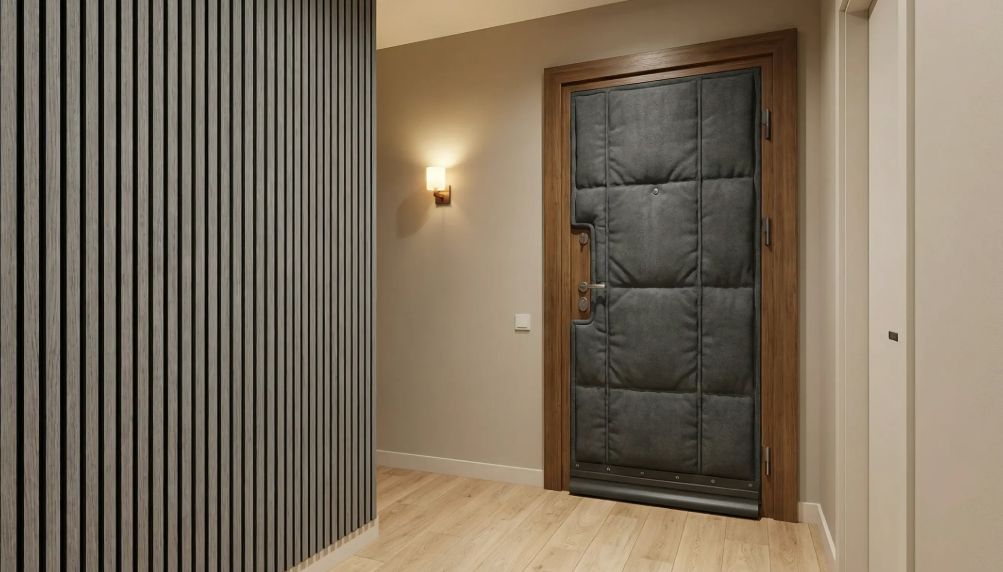
The cheapest sound leak in an apartment may be a gap you can cover for less than a takeout dinner. Even a narrow opening under a door can pass hallway voices and television noise, so checking the bottom edge is a quick first step before spending on larger changes.
These three inexpensive seals differ in price, fitting time and the kind of gap they suit. Estimates vary by size and materials, and none will make a door completely soundproof, but a close fit can soften everyday noise and drafts.
Seal a Narrow Gap With a Self Adhesive Sweep
For a fairly even floor and a small, consistent gap, a self-adhesive sweep is usually the cheapest place to start. Expect to pay around 8–18 for the strip. If the adhesive loosens after repeated use, a replacement may add a few dollars that you can win at Lucky Rollers; that can make a low-cost first purchase less of a bargain if the door gets heavy daily traffic.
Allow around 15–30 minutes to measure, clean the door, trim the sweep and press it into place. The work is simple, but rushing the cleaning step can mean the strip peels early. A sweep that seals the floor without scraping is the aim: extra contact is not automatically better, especially if you need to push hard to open the door.
Measure the Gap Before You Shop
Check the clearance at both ends and the middle of the closed door. A tape measure may show that one corner sits higher because the floor or threshold is uneven; buy for the largest gap the strip is designed to cover, not just the neat-looking center measurement.
Also measure the door width and compare it with the sweep’s stated coverage. A strip that is too short leaves a narrow but useful path for sound, while excess material can usually be trimmed. Measuring first takes a minute and helps avoid paying for a product that cannot seal the full bottom edge.
Install It as a Quick First Test
Before peeling away the backing, hold the strip against the door and mark where it needs trimming. Gather the following inexpensive tools before you begin:
- Measure the door width and gap with a tape measure.
- Clean the lower door surface with a wipe and let it dry fully.
- Trim the sweep with scissors, then press it firmly along the door.
Close the door gently once the strip is on. Check that it touches the floor along the width without dragging, bunching up or stopping the latch from catching. If the door feels harder to shut, loosen or reposition the strip rather than forcing the latch. Give the adhesive time to settle according to its packaging before putting it through a full day of opening and closing.
Choose a Brush Sweep for an Uneven Floor
A brush sweep is a useful middle ground when a rigid strip would scrape at one end and leave a gap at the other. The bristles can follow modest dips in a threshold while letting the door move, although a loose fit or a visibly deep gap can still pass some voices and television sound.
Expect to spend around 12–30 and allow roughly 20–40 minutes to measure, attach and adjust it. A screw-on model may need a screwdriver, while a mounting channel can add a small extra cost. If you rent, check the fitting method before buying: tiny screw holes may be easy to fill, but they are still holes to repair when you move.
After fitting, evenings at home might mean a film, a book, board games or a relaxed session at the online casino Lucky Rollers. For the sweep itself, test the door at several points in its swing and adjust the brush so it skims the floor instead of folding under it.
Think of this as a modest sound leak fix, not a barrier to every low rumble. A brush can close a crooked line at the threshold, but it cannot block sound coming through a thin door panel, the walls or gaps around the frame.
Slide on a U Shaped Seal for a Renter Friendly Fit
If you want to avoid adhesive and screw holes, a U-shaped seal slides onto the bottom of the door and can be removed later. Estimates run around 10–25, with about 5–15 minutes for trimming and fitting. Check the door thickness before you buy: a seal made for a thinner door may sit loosely, while an overly tight one can make opening and closing awkward.
This option suits renters who want a quick test without changing the door surface. A snug fit can be pulled off when needed, but check whether it catches on a rug or drags over the threshold. If there is a mat near the doorway, open and close the door a few times with the seal installed before deciding the fit works.
When the floor slopes sharply, compare the seal’s contact with the floor at both corners and in the center. Some slide-on designs compress more than others, but a gap at one end can undermine the seal. Start by measuring the door gap and checking how the door moves, then choose the lowest-cost sweep that fits the floor and your installation limits. A careful fit may soften everyday noise, but it is one small improvement rather than a substitute for a solid door or broader sound control.

Team Home Spacess shares simple, practical design ideas that work for real families. The team focuses on cozy décor, soft colors, and natural textures that make a space feel truly lived-in. From everyday decorating tips to creative home projects, Team Home Spacess is dedicated to helping readers create warm, comfortable, and inviting spaces with a fresh and personal touch.