


Two RTA cabinet quotes can describe the same kitchen and still be thousands of decisions apart.
One may include finished end panels, fillers, toe kicks, and freight. The other may show only cabinet boxes. One seller may document the exact drawer bottom, assembly system, and damage-claim process. Another may use phrases such as “premium construction” without explaining what they mean. If you compare only the number at the bottom of each page, you are not yet comparing the same project.
The better method is to audit every quote twice:
- Calculate the landed project cost—the amount required to receive, assemble, correct, and prepare the cabinets for installation.
- Calculate the documentation and risk score—how confidently you can verify the product, complete the order, and recover when something arrives missing or damaged.
This guide walks you through both audits. It does not rank one universal “best” cabinet brand, because the best RTA cabinets for a careful DIY remodeler may not be the best choice for a household with no assembly space or a kitchen full of unusual dimensions. Instead, you will finish with a comparison based on your layout, labor plan, and tolerance for uncertainty.
The quick method
Before placing an RTA order, make four one-page documents:
- A cabinet schedule that every seller prices.
- A scope sheet showing which pieces each quote includes.
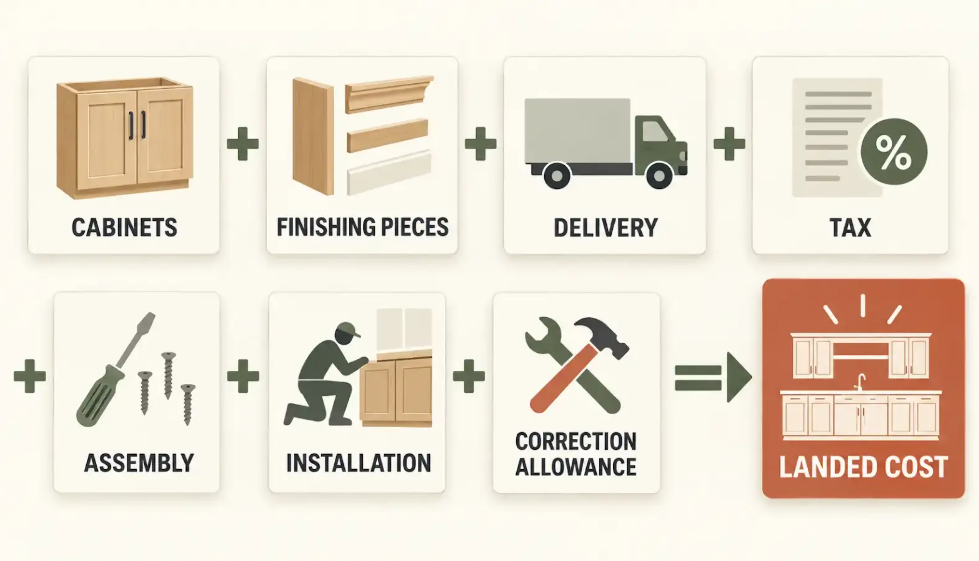
- A landed-cost worksheet that includes assembly, delivery, tax, installation, and correction costs.
- A documentation and risk score based on the exact line and written policies.
Keep cost and risk separate until the end. A quote should not earn a perfect risk score just because it is inexpensive, and a well-documented product should not automatically win if it does not fit your budget or layout.
1. Collect the same documents from every seller
Begin with evidence, not sale banners. Create one digital folder for each supplier and request the same information from all of them.
At minimum, collect:
- The itemized cabinet quote.
- The final floor plan and elevations.
- The cabinet-line specification sheet.
- The current size and accessory catalog.
- Assembly instructions for a base cabinet, wall cabinet, and drawer cabinet.
- The written freight and damage-claim policy.
- The return and cancellation policy.
- The product warranty.
- Information about replacement parts.
- A sample door or finish sample, when available.
Write the collection name and date on every note. “White Shaker” is a style description, not a unique product identifier. A seller may carry several white Shaker lines with different doors, boxes, hardware, and assembly methods.
If an important promise appears only in a chat or phone call, ask for it in writing. You are not being difficult; you are preventing a vague assurance from becoming a surprise after the order arrives.
Quick rule: If a claim could affect your purchase, it belongs in your comparison folder.
2. Freeze one layout before comparing prices
Price comparisons fail when the layouts are different. One designer may use a drawer base beside the range, while another uses a less expensive door cabinet. One plan may include a full-height pantry, and another may leave it out. Those quotes can both be reasonable, but their totals do not answer the same question.
Create a cabinet schedule from your approved layout. Give every supplier the same room measurements, appliance specifications, cabinet sizes, and requested accessories.
Your schedule can be a simple table:
| Code | Cabinet or part | Size | Quantity | Required detail |
|---|---|---|---|---|
| B1 | Base cabinet | ___ | ___ | Doors or drawers |
| W1 | Wall cabinet | ___ | ___ | Height and depth |
| P1 | Pantry/tall cabinet | ___ | ___ | Door swing and shelves |
| F1 | Filler | ___ | ___ | Finished if exposed |
| EP1 | End panel | ___ | ___ | Left/right and finish |
| TK1 | Toe kick | ___ | ___ | Length and finish |
Also identify framed or frameless construction. Framed cabinets have a face frame at the front of the box.
Frameless cabinets do not. Neither is automatically better, but the construction style can affect usable access, sizing, fillers, appearance, and installation details.
Check door and drawer clearances against walls, appliance handles, corners, and nearby cabinets. Fillers are often necessary to make those openings work; they are not simply wasted inches. If the room is tight, reviewing practical small-kitchen layout ideas can help you identify the storage and clearance priorities that need to appear in the schedule.
Do not send one seller rough measurements and another seller a finalized plan. Freeze the layout first, then ask for comparable revisions.
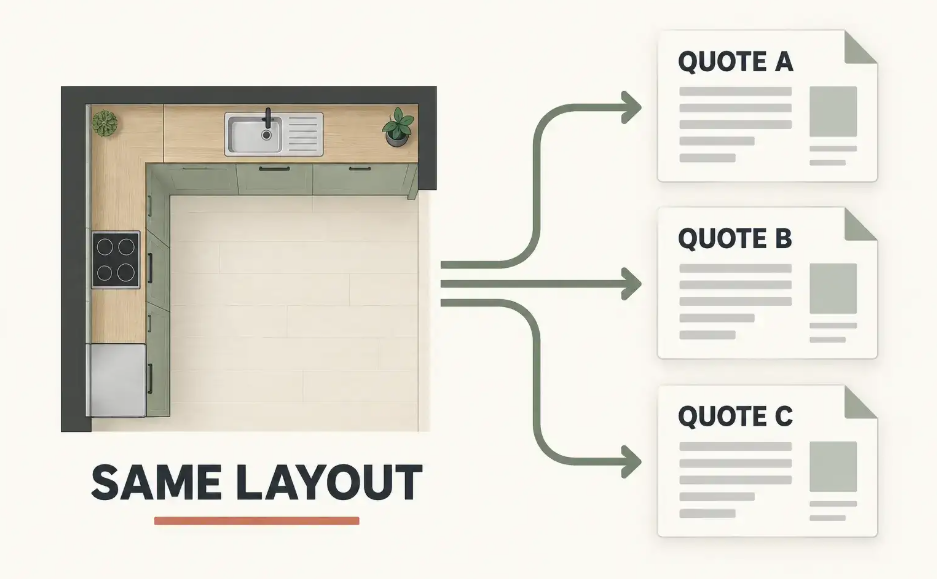
3. Normalize what each quote includes
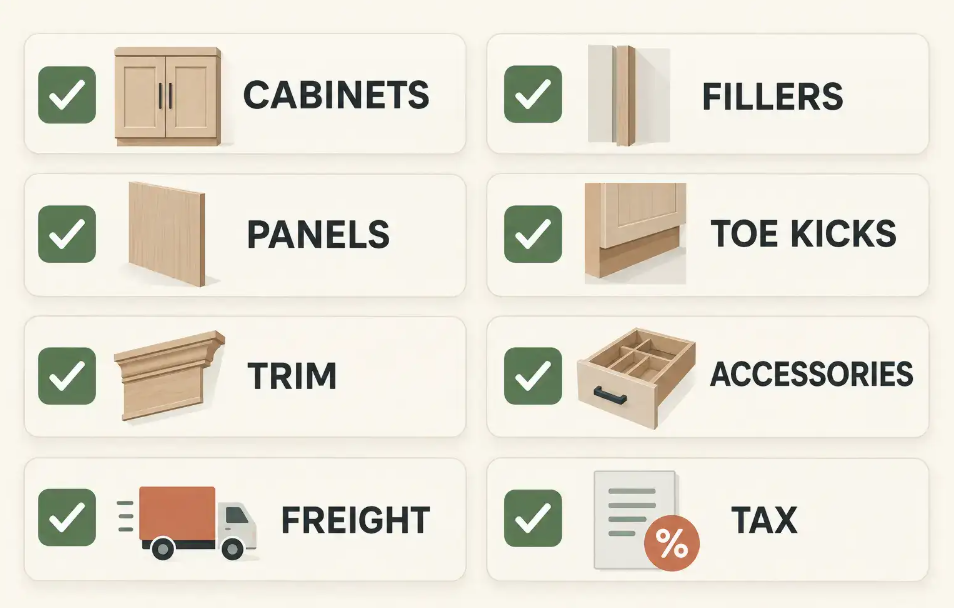
Now place the quotes side by side and mark every item as included, excluded, or unclear. This is where an apparently low RTA cabinet price often changes.
Cabinet and finish scope
Check for:
- Cabinet boxes, doors, drawer fronts, shelves, and drawer boxes.
- Fillers at walls, corners, and appliance openings.
- Finished end panels and island backs.
- Toe kicks and skins.
- Crown, light rail, scribe molding, and other trim in the design.
- Refrigerator, dishwasher, and tall pantry panels.
- Decorative doors or panels shown on exposed cabinet ends.
- Handles, pulls, and installation hardware.
- Interior organizers, rollouts, waste systems, or tray dividers.
Ask whether any panel must be cut from a larger sheet on-site. That can be normal, but the material, finishing, tools, and labor still belong in the project scope.
Service and transaction scope
Also compare:
- Design or measurement fees.
- Samples and whether their cost is credited back.
- Freight, liftgate, or local delivery charges.
- Sales tax.
- Optional assembly service.
- Installation, removal, or disposal.
- Order-change and cancellation charges.
If one design includes organizers and another does not, do not delete the organizers just to make the totals look close. Add the same functional requirement to all quotes. It is much easier to plan pull-outs and interior storage before ordering; these pantry organization ideas can help you decide which accessories are genuinely important and which can wait.
Common mistake: Treating a quote for boxes and doors as equivalent to one that includes every visible finishing piece.
4. Verify construction at the exact cabinet-line level
Once the scope matches, compare the product evidence. Avoid turning one material word into a complete quality grade. Plywood, MDF, HDF, particleboard, solid wood, and veneers can appear in different parts of the same cabinet for different reasons.
Instead, record where each material is used and whether the seller states its thickness.
Cabinet box and shelves
Ask for the material and stated thickness of the sides, bottoms, backs, and shelves. Check how the back connects to the box and how the cabinet is intended to be secured. Confirm whether shelves are adjustable and whether exposed sides need separate finished panels.
“Plywood construction” is not enough if you cannot tell which components are plywood.
Drawers
Record:
- Drawer-side material and thickness.
- Corner-joint method.
- Drawer-bottom material and thickness.
- Whether the bottom is captured in grooves or attached underneath.
- Whether drawers arrive assembled.
Dovetail joints are useful to identify, but the drawer bottom and the completed box matter too. A close-up of a corner does not document the whole drawer.
Hinges and glides
For hinges, confirm whether they are concealed, soft-closing, and adjustable. For glides, record whether they are full-extension or partial-extension, undermount or side-mount, and standard or optional.
Exact line, not the company average
Tie every fact to the collection on your quote. A category page can be useful when it publishes detailed specifications—for example, shoppers can review these ready-to-assemble cabinet specifications from Express Kitchens and then ask competing suppliers for the same level of cabinet-box, drawer, and hardware detail. The point is not to assume every line is identical. It is to make every seller answer the same component-level questions.
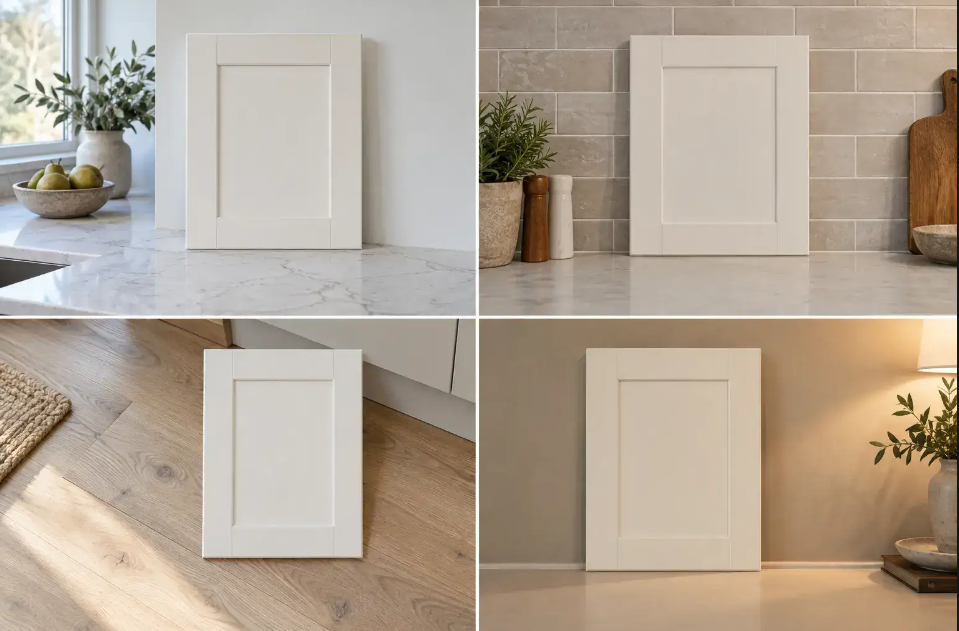
Order a door sample from the exact line and finish when possible. View it beside the countertop, backsplash, floor, and wall color in morning and evening light. Once the construction passes your audit, these kitchen decor ideas can help you judge how the finish works with the rest of the room.
5. Confirm what certification actually covers
An independent certification can provide stronger evidence than a seller’s own quality label, but only when it applies to the product you are buying.
The Kitchen Cabinet Manufacturers Association explains that cabinets carrying its A161.1 Quality Certification Seal are tested for areas including structural strength, door and drawer operation, and finish performance. Review the KCMA cabinet certification information to understand the program, then verify the current listing rather than relying on a logo copied onto a general sales page.
Ask:
- Is the exact manufacturer and cabinet line currently listed?
- Does the listing cover the configuration on my quote?
- Does it include the RTA version rather than only a factory-assembled version?
- Can the seller provide the current certificate or listing reference?
Certification does not replace accurate measurements, square assembly, secure wall attachment, or correct installation. It answers a narrower question: whether the listed product has been tested under the program. Give the quote credit for the evidence it provides, not for conclusions the evidence does not support.
6. Price the complete assembly plan
RTA cabinet assembly is not one standardized task. Different systems can use screws, cams, clips, brackets, glue, staples, or a combination. Doors and drawers may arrive at different stages of completion. Instructions and labeling may vary by collection.
Download the actual instructions before buying. If they are unavailable, mark that as a documentation gap.
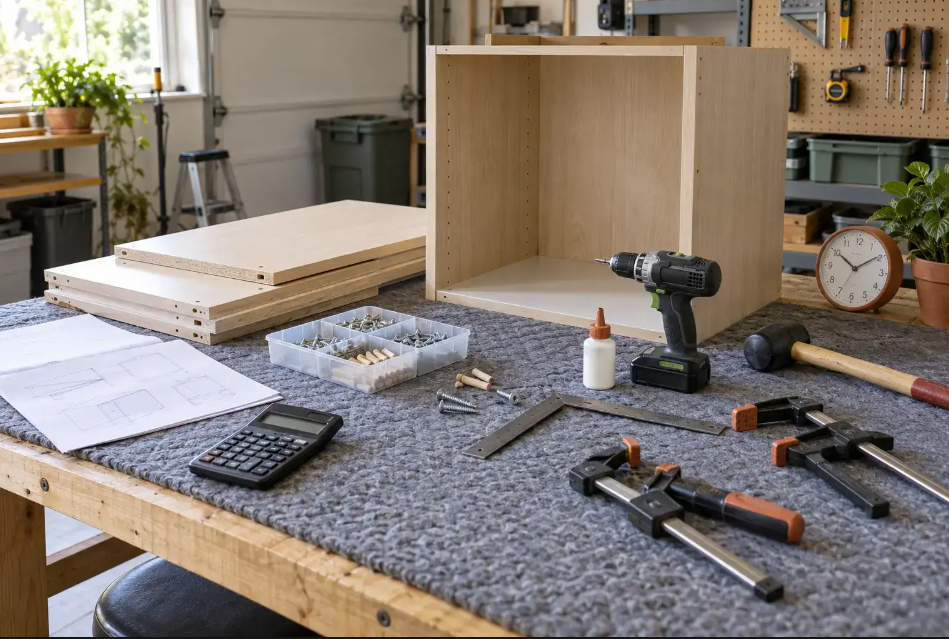
List the tools and supplies
Depending on the system, your assembly budget may include:
- Drill/driver and bits.
- Screwdrivers.
- Rubber mallet.
- Clamps.
- Carpenter’s square.
- Level.
- Wood glue or other specified consumables.
- A protected work surface.
- Labels, bins, and packaging disposal.
Do not assume that a familiar tool list applies to every line. Follow the manufacturer’s instructions, including any direction about adhesives or fasteners.
Value your time
If you plan to DIY, estimate how many cabinets you can reasonably assemble per session after learning the system. Include unpacking, identifying parts, checking for damage, building, squaring, adjusting doors and drawers, and clearing packaging.
Assigning a value to your time does not mean DIY is a bad choice. It lets you compare DIY assembly with a paid assembly option honestly. If one system is better documented or faster for you to build, that difference belongs in the decision.
Separate assembly from installation
Building a cabinet box on a level surface is not the same as fastening cabinets to walls, locating studs, leveling a run, scribing fillers, joining boxes, or preparing for a countertop. You can assemble the cabinets yourself and hire a professional for installation. Price that hybrid approach from the start if it matches your skills.
If possible, assemble one small, non-critical cabinet before setting up an assembly line. Confirm the sequence, parts, squareness, and adjustment process before repeating it across the kitchen.
7. Audit freight delivery and damage procedures
Flat-packed cabinets may save storage volume, but a kitchen order is still a substantial freight delivery. The receiving procedure can determine whether a damage claim is straightforward or disputed.
Write down the answers to these questions before ordering:
- Is the shipment parcel, curbside freight, threshold, garage, or room-of-choice delivery?
- Who unloads it?
- Is a liftgate included or charged separately?
- Must someone be present and available to inspect the shipment?
- What should be written on the delivery receipt if cartons appear damaged?
- What is the deadline for visible damage, concealed damage, or missing parts?
- Which photos, labels, cartons, or packing materials must be retained?
- Does the seller replace an individual component or the complete cabinet?
- Who pays for reshipping a confirmed replacement?
Do not generalize one company’s claim window to another. Record the exact deadline and time zone from each current policy.
Prepare a dry receiving area before the truck arrives. Keep the packing list, cabinet schedule, marker, phone camera, and a place for damaged cartons nearby. Count the shipment, photograph its condition, and inspect within the written deadline. Keep parts grouped by cabinet code.
The delivery process has a cost even when freight is listed as “free.” If you need helpers, time away from work, temporary storage, or special equipment, add those items to your landed-cost worksheet.

8. Audit returns, warranties, and replacement parts
A generous-sounding warranty does not automatically create a flexible return policy. Treat returns, warranty coverage, freight damage, order errors, and replacement parts as separate systems.
Return policy
Confirm:
- Which products are returnable.
- Whether special-order or clearance pieces are excluded.
- Whether opened, assembled, modified, or installed cabinets can be returned.
- The authorization deadline and required condition.
- Restocking fees.
- Return-freight responsibility.
- Whether samples can be returned or credited.
This is one reason to approve the sample and layout before building anything. Once assembly or modification begins, your options may narrow sharply.
Warranty
Read what the warranty covers, for how long, and who makes the determination. Note exclusions related to assembly, installation, environment, modification, moisture, or normal variation. Confirm whether the remedy is a part, a product, a credit, or something else.
Replacement parts
Ask how you would obtain a replacement door, hinge, drawer component, side panel, or piece of trim after delivery—and after the line is discontinued. A seller with a clear part-identification and support process may reduce the cost of a small mistake.
Record contact methods and expected documentation, but do not assume that a helpful pre-sale conversation guarantees the same remedy later. The written policy is your baseline.
9. Complete the landed-cost worksheet
Now convert every quote into the cost of the same completed scope. Use written amounts where available and label your own estimates clearly.
Landed RTA cabinet cost worksheet
| Cost item | Quote A | Quote B | Quote C |
|---|---|---|---|
| Cabinet boxes, doors, drawers, and shelves | | | $ | |
| Fillers, panels, toe kicks, and trim | | | $ | |
| Interior accessories | | | $ | |
| Samples not credited back | | | $ | |
| Freight, liftgate, or local delivery | | | $ | |
| Sales tax | | | $ | |
| Receiving help or temporary storage | | | $ | |
| Assembly tools and consumables | | | $ | |
| DIY time or paid assembly | | | $ | |
| Professional installation | | | $ | |
| Removal, disposal, and wall preparation | | | $ | |
| Correction-risk allowance | | | $ | |
| Comparable landed project total | ** | ** | $ |
The correction-risk allowance is a planning amount you choose; it is not a universal industry percentage. Base it on the gaps you found: uncertain measurements, unclear accessory scope, limited return options, long-distance freight, weak replacement support, or incomplete documentation. A quote with few unresolved items may justify a smaller allowance than one built on assumptions.
Do not bury the allowance inside the cabinet price. Keeping it visible shows why two similar totals may carry different levels of uncertainty.
10. Score documentation and correction risk
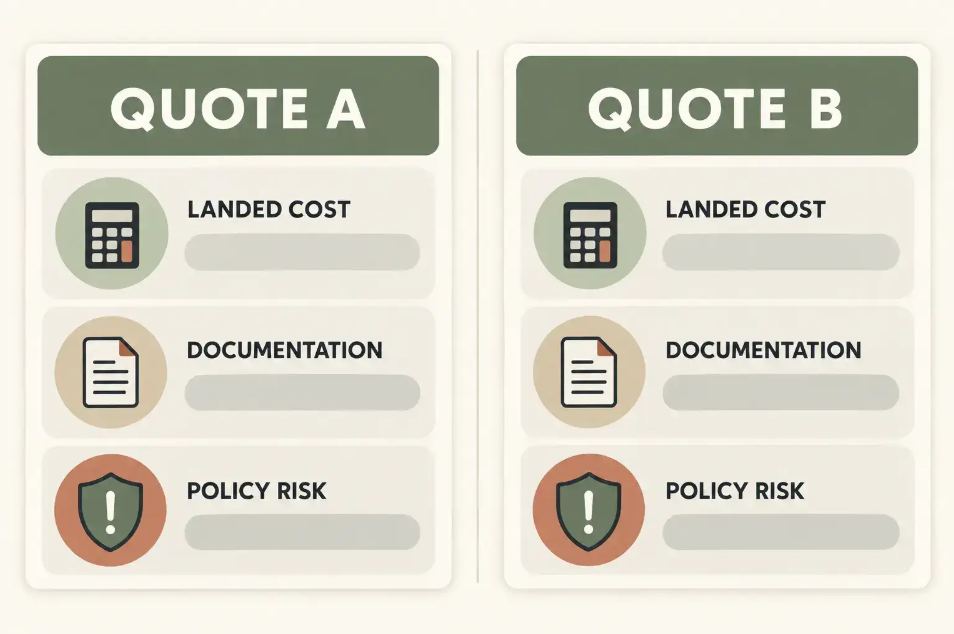
Price answers “What should this cost if the plan goes as expected?” The risk audit asks “How well can I verify the plan, and what happens if it does not?”
Use this 20-point score to compare evidence consistently. It is an original editorial worksheet, not an industry certification or product test.
Give each category:
- 0 points: Missing, vague, contradictory, or unacceptable.
- 1 point: Partly documented, but one or more important questions remain.
- 2 points: Clear, line-specific, written information that meets your project requirement.
| Documentation and risk category | Quote A | Quote B | Quote C |
|---|---|---|---|
| Exact line and framed/frameless configuration identified | /2 | /2 | /2 |
| Same cabinet schedule and finishing scope priced | /2 | /2 | /2 |
| Box, shelf, drawer, hinge, and glide details documented | /2 | /2 | /2 |
| Current certification scope verified, if claimed | /2 | /2 | /2 |
| Representative sample and current finish information available | /2 | /2 | /2 |
| Assembly instructions, required tools, and support reviewed | /2 | /2 | /2 |
| Freight duties and inspection deadlines documented | /2 | /2 | /2 |
| Return and cancellation restrictions documented | /2 | /2 | /2 |
| Warranty boundaries documented | /2 | /2 | /2 |
| Replacement-part and correction path documented | /2 | /2 | /2 |
| Total documentation and risk score | /20 | /20 | /20 |
Do not let a strong total hide a critical zero. If the seller cannot supply a required pantry size, a suitable finished panel, or an acceptable return path, the product can be wrong for your project even if the rest of the documentation is excellent.
You can also treat some categories as non-negotiable. A household that cannot unload curbside freight may require a different delivery option. A first-time DIYer may require detailed, line-specific assembly instructions. Decide those thresholds before you fall in love with a door style.
11. Choose the best-value quote
Put the two results next to each other:
| Final comparison | Quote A | Quote B | Quote C |
|---|---|---|---|
| Comparable landed project total | | | $ | |
| Documentation and risk score | /20 | /20 | /20 |
| Non-negotiable requirements passed? | Yes/No | Yes/No | Yes/No |
| Unresolved questions |
The lowest landed total may still be the right choice. The difference is that you will know what it includes and which risks you are accepting. A slightly higher total may be better value when it includes essential finishing pieces, clearer assembly support, workable delivery terms, or a documented path to replace a damaged component.
Use this decision order
- Eliminate quotes that do not fit the layout or a non-negotiable requirement. A low price cannot fix a cabinet that blocks an appliance or lacks the required size.
- Resolve all “unclear” scope items. Ask for a revised, itemized quote rather than adding verbal promises to your mental total.
- Compare landed totals. Make sure each column describes the same functional kitchen.
- Review documentation scores and critical zeroes. Look closely at assembly, freight, returns, and replacement parts.
- Approve the exact line and finish. Use the sample, drawings, specifications, and written policies.
- Save the final records. Keep the accepted quote, plans, policies, instructions, receipts, and correspondence together.
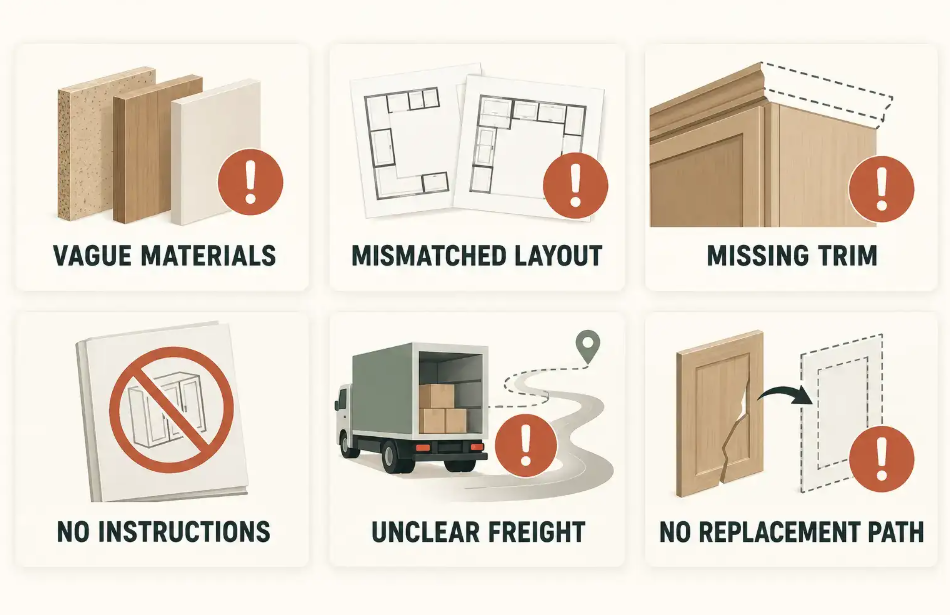
Red flags before you order
Pause and ask more questions when you see:
- A material claim with no component or thickness attached.
- A quote that does not match the approved cabinet schedule.
- Missing fillers, panels, toe kicks, or trim shown in the rendering.
- An assembly promise without line-specific instructions.
- A certification logo without a verifiable current listing.
- An unclear freight destination or unloading responsibility.
- A short claim window that you have no plan to meet.
- Return language that conflicts across the quote, FAQ, and policy page.
- No clear method for identifying or ordering replacement parts.
- Pressure to order before the sample, measurements, or itemized scope is approved.
Final takeaway
The best RTA cabinet quote is not simply the one with the smallest displayed total or the longest list of “premium” features. It is the one that fits the approved layout, documents the exact cabinet line, accounts for the full path from delivery through installation, and gives you an acceptable way to handle problems.
Freeze one design. Normalize the scope. Price your assembly and receiving plan. Read the policies before the truck arrives. Then compare cost and risk side by side.
That process will not remove every surprise from a kitchen remodel, but it will replace a vague brand comparison with a decision you can explain—and a budget that is much closer to the real project.
Frequently asked questions
What should be included in an RTA cabinet quote?
The quote should identify the exact cabinet line and include the cabinets, doors, drawers, shelves, fillers, finished panels, toe kicks, required trim, and selected accessories for the approved layout. It should also state freight, tax, sample charges, and any assembly or installation service. Mark anything not explicitly included as unclear until the seller confirms it in writing.
How do I compare RTA cabinet prices from different companies?
Give each company the same cabinet schedule, then add excluded finishing pieces, freight, tax, samples, tools, assembly labor or DIY time, installation, and a clearly labeled correction-risk allowance. Compare those landed project totals rather than category-page prices or model-kitchen promotions.
Is a plywood cabinet automatically better than every other cabinet?
No single material word describes an entire cabinet. Verify which components use plywood, their stated thicknesses, how the box is joined and mounted, and what materials are used for the doors, drawer sides, drawer bottom, shelves, and back. Judge the documented system and its fit for your project.
Should I assemble RTA cabinets myself?
DIY assembly can make sense when you have the time, workspace, tools, physical help, and confidence to follow the exact instructions and keep each box square. Wall installation is a separate task. Many homeowners can assemble cabinets but still choose professional installation for leveling, attachment, fillers, and countertop preparation.
Why do delivery and return policies matter before I buy?
Freight responsibilities, inspection deadlines, documentation requirements, and restrictions after assembly can determine whether a missing or damaged part is corrected smoothly. Reading those policies in advance lets you plan receiving help, storage, photos, inspection time, and the point at which assembly should begin.

Team Home Spacess shares simple, practical design ideas that work for real families. The team focuses on cozy décor, soft colors, and natural textures that make a space feel truly lived-in. From everyday decorating tips to creative home projects, Team Home Spacess is dedicated to helping readers create warm, comfortable, and inviting spaces with a fresh and personal touch.