
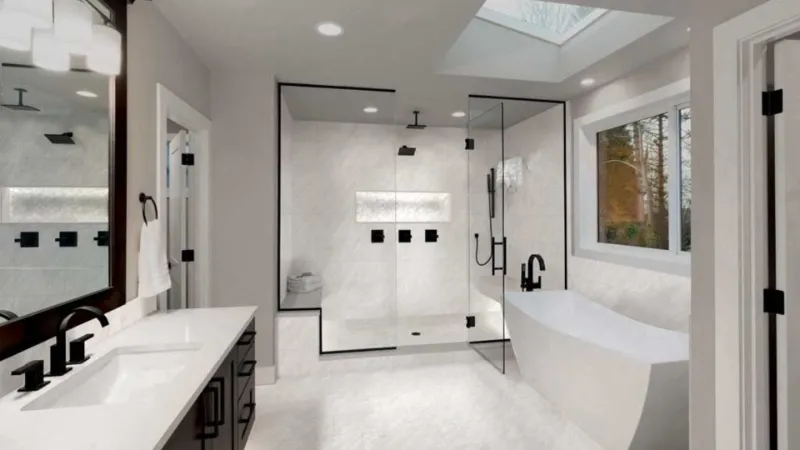
Your bathroom is the most-used room in your home yet most renovations play it safe with uninspired choices. This guide reveals the bathroom tile ideas that designers actually use, including trends your competitors aren’t talking about yet.
Choosing the right bathroom tile feels overwhelming with thousands of options across materials, sizes, finishes, and layouts, most homeowners default to “safe” choices they’ll regret within two years. The truth is, bathroom tile sets the entire visual tone of the space, affects perceived size, influences resale value, and impacts daily maintenance load. Getting it wrong is expensive. Getting it right is transformative.
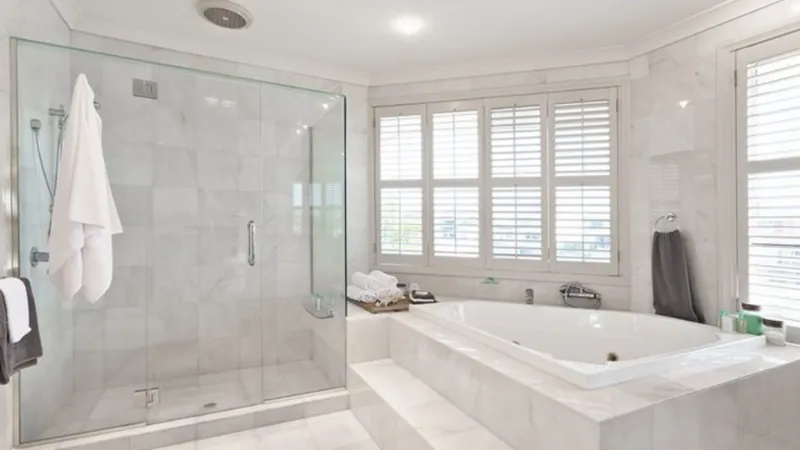
This guide walks through the 11 most impactful bathroom tile ideas for 2026, blending timeless design principles with emerging material trends. Whether you’re doing a budget-friendly refresh or a full gut renovation, these ideas provide a strategic starting point not just visual inspiration.
Subway Tile with a Modern Twist
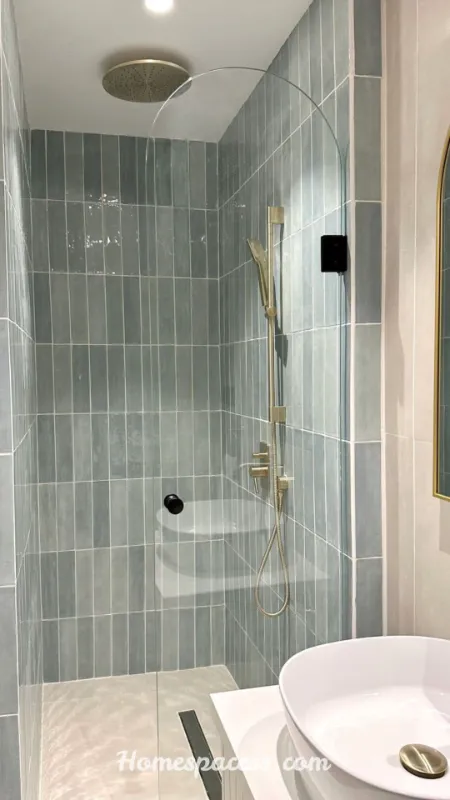
The classic white subway tile has earned its iconic status but in 2026, the most interesting versions push the format into unexpected territory. Designers are now working with oversized subway formats (4×12 or 3×9 inches) in sage green, warm beige, and terracotta hues, installed in stacked or vertical arrangements rather than the traditional running bond. This simple layout change dramatically shifts the energy of the tile from “builder’s grade” to “architectural detail.”
The real design secret is grout color. A contrasting dark grout charcoal or aged bronze against a cream subway tile creates grid-like definition that reads as intentional rather than conventional. Conversely, tone-on-tone grout (matching tile color) creates a seamless, elevated look that photographs beautifully. Neither approach costs more in materials, yet both produce results that feel far more considered and custom than the default.
Beyond aesthetics, subway tiles remain one of the most practical bathroom tile ideas due to their durability and ease of replacement. Individual tiles crack or chip far less than large-format slabs, and replacements are easy to source. This makes subway tile a smart long-term investment for high-traffic family bathrooms or rental properties where durability and low maintenance are priorities.
Pro Tip:
Install subway tiles vertically in small bathrooms it draws the eye upward and makes ceilings feel taller without any structural change. Pair with a matte black towel bar for an instant focal point.
See Related Articles: Bathroom Mirror Ideas to Create a Spa-Like Feel in Your Bathroom
Terrazzo Tile Flooring
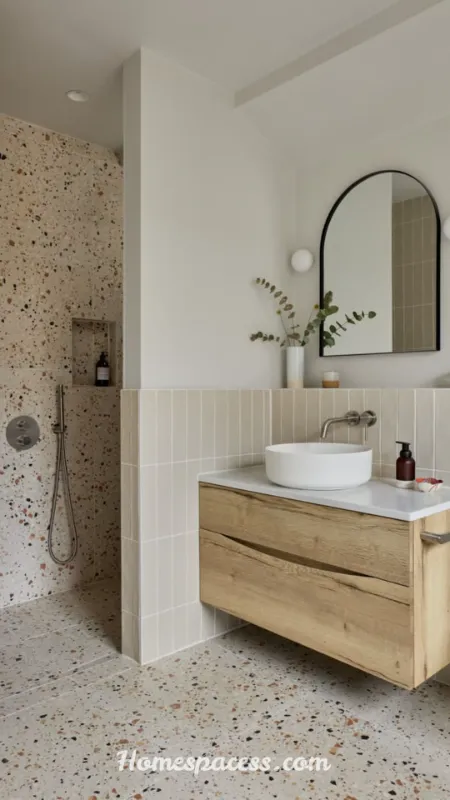
Terrazzo has staged one of the most remarkable comebacks in modern interior design. Originally a Venetian flooring technique using marble chips embedded in cement, today’s terrazzo tiles are engineered for bathroom use porcelain-backed, sealed against moisture, and available in sizes from 12×12 to 24×24 inches. The speckled, multi-tonal surface hides grout lines beautifully, which is a significant practical advantage in wet bathroom environments where grout discoloration is a common long-term complaint.
What makes terrazzo particularly versatile is its visual neutrality. The pattern reads as texture rather than color, meaning it pairs naturally with bold wall colors, patterned wallpaper, or statement vanities without visual conflict. Designers often use terrazzo on the floor and carry a single extracted color from its pattern onto the walls pulling a blush pink or warm grey to create rooms that feel intentionally composed rather than assembled from separate decisions.
From a maintenance perspective, polished terrazzo is one of the easiest bathroom floors to clean. Unlike natural stone, modern engineered terrazzo tiles require no sealing and resist staining effectively. The upfront cost is moderate typically $8–$18 per square foot but the 30-year lifespan and zero-sealing maintenance schedule makes the lifetime cost highly competitive against cheaper alternatives that need replacement or restoration every decade.
Pro Tip:
Choose terrazzo tiles with at least three chip colors the tonal complexity hides soap scum and minor grout discoloration far better than two-tone options, reducing your cleaning frequency noticeably.
You May Also Like: Trendy Funky Bathroom Ideas for a Cool and Modern Bathroom Makeover
Bold Geometric Patterns
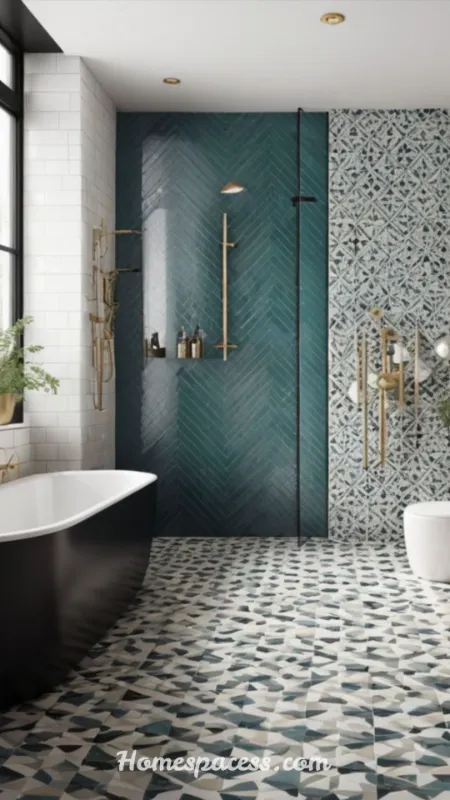
Geometric tile patterns think elongated diamonds, Moroccan fish scales, and chevron arrangements have moved from boutique hotel lobbies into residential bathrooms, and for good reason. When used strategically on a single accent wall or shower floor, bold geometry creates a focal point powerful enough to anchor the entire room’s design without requiring expensive fixtures or custom millwork. The visual complexity does the design heavy lifting at a fraction of the cost.
The critical design decision with geometric tiles is surface area control. Using bold pattern across every surface produces visual chaos and spatial compression particularly problematic in smaller bathrooms. The most successful applications confine the geometric tile to one feature zone: the shower niche, the floor inside a freestanding tub, or a half-wall accent. This creates a moment of drama while maintaining visual breathing room on surrounding surfaces.
Material matters significantly with geometric tiles. Encaustic cement tiles (unglazed, matte) carry an artisanal quality that works in Mediterranean or bohemian interiors but require annual sealing in wet areas. Glazed porcelain geometrics are more practical moisture-resistant and easier to maintain but sacrifice some of the handcrafted character. Choosing the right material for your bathroom’s moisture level and maintenance tolerance is as important as the pattern choice itself.
Pro Tip:
Before committing to geometric tile, lay out a dry sample arrangement on the floor first. Pattern repetition can look very different at scale than on a sample board this 10-minute step prevents expensive regret.
Continue Reading: Bathroom Decor Ideas That Transform Any Space
Marble-Effect Porcelain Tiles
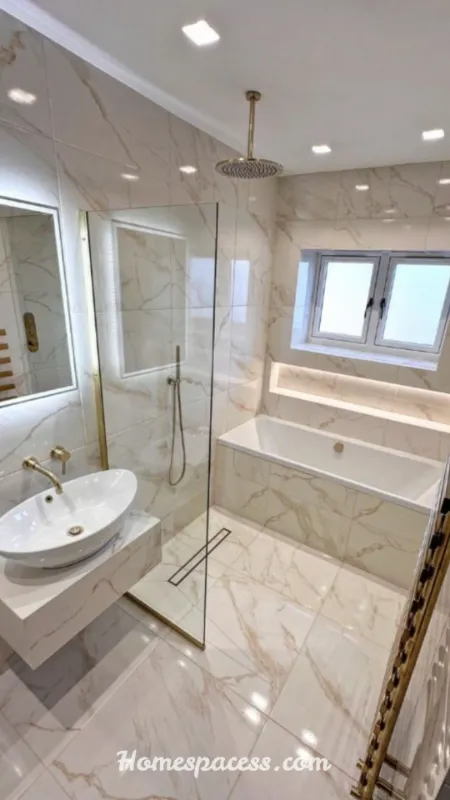
Natural marble is beautiful but in bathroom environments, it’s genuinely impractical. Marble is porous, stains from soap and shampoo within months, requires annual sealing, and scratches from everyday use. Modern marble-effect porcelain has largely solved these problems while achieving surface realism that’s virtually indistinguishable at conversational distance. Large-format slabs (24×48 inches) with matched vein continuity across tiles create the sweeping drama of natural stone without any of the maintenance burden.
The most sophisticated marble-effect tiles available today use multi-layered digital printing to replicate the depth and translucency of natural calcite. Brands like Atlas Concorde, Marazzi, and Porcelanosa now produce tiles where the vein pattern continues consistently across adjacent tiles when installed with “book-matching” a technique borrowed from real stone fabrication that creates mirror-image veining across a wall surface. This detail separates premium marble-look tiles from budget replications.
From a design strategy perspective, marble-effect porcelain works best in bathrooms with good natural light. In poorly lit spaces, the veining can appear muddy or gray rather than luminous. Warm-toned marble effects (Calacatta Gold, Statuario Gold) perform better in artificial lighting than cooler Carrara-style patterns, making them a smarter choice for interior bathrooms or those with limited window access.
Pro Tip:
Order 10-15% extra tile and request “sequentially numbered” boxes from your supplier this ensures vein patterns flow consistently from tile to tile, producing that high-end book-matched look at no additional material cost.
More on This Topic: Small Bathroom Ideas:25 Clever Ways to Make Every Inch Count
Zellige Handmade Tiles
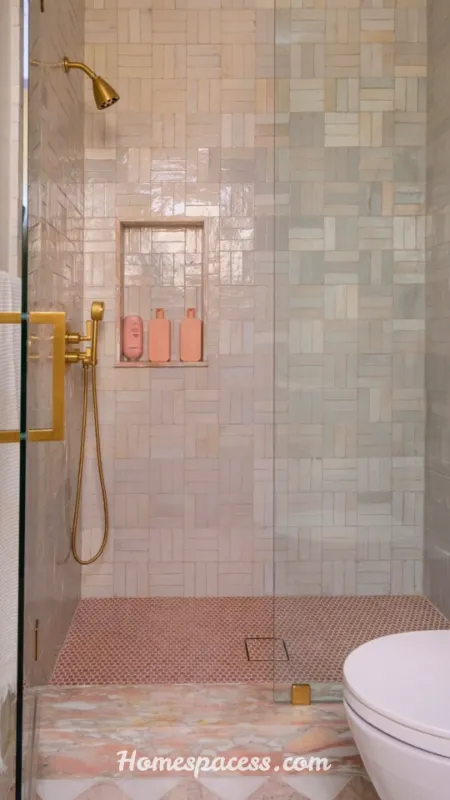
Zellige tiles hand-cut, fire-glazed Moroccan ceramic tiles represent one of the most compelling bathroom tile ideas for homeowners seeking authentic character. Each tile is individually made, resulting in subtle variations in color saturation, surface texture, and glaze pooling that mass-produced tiles simply cannot replicate. Installed together, these variations create a surface that shimmers and shifts as light moves across it an effect that’s genuinely unique to handmade ceramics and impossible to fake with digital printing.
The practical challenge of zellige is installation complexity. Because each tile varies in thickness (1–15mm), skilled tilesetters must constantly adjust mortar bed depth to achieve a flat finished surface. This adds labor cost typically 30–50% more than standard tile installation. However, zellige is almost exclusively used as an accent material (backsplash, shower niche, vanity wall), so the square footage involved is usually modest, keeping total added cost reasonable relative to the visual impact delivered.
Colorwise, the most timeless zellige applications favor tonal restraint deep forest green, aged white, warm biscuit over trendy bold colors. Because zellige has such strong visual texture from its irregular glaze, the color reads as layered and complex even in ostensibly “neutral” tones. Overloading on vivid color plus strong texture simultaneously is a common mistake that produces rooms that feel agitated rather than artisan-crafted.
Pro Tip:
Specify sanded grout in a close-match tone when installing zellige the slight give in sanded grout accommodates thickness variations far better than non-sanded options, reducing cracking risk by up to 40%.
See Also: Beach Bedroom Ideas That Actually Feel Like the Coast
Hexagon Mosaic Tiles
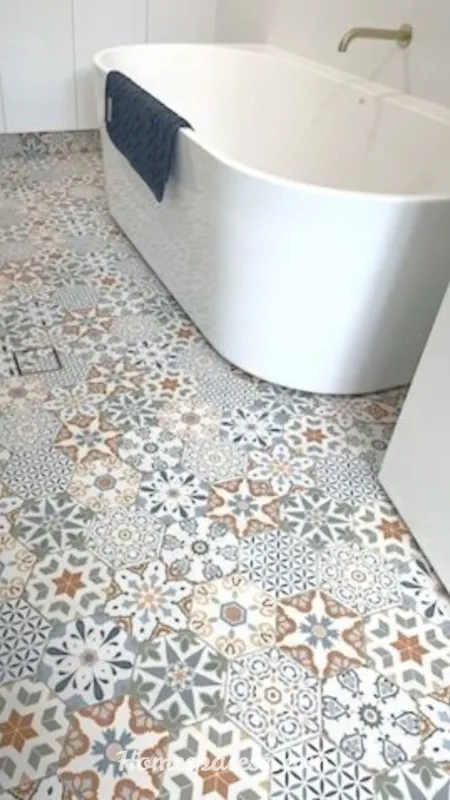
Hexagon tiles occupy a fascinating design position they feel simultaneously vintage (a nod to early 20th-century penny-hex floors) and contemporary (their geometric precision reads as modernist). This temporal duality makes them one of the most versatile bathroom tile ideas, working equally well in farmhouse, Art Deco, Scandinavian, and transitional interiors. The size you choose dramatically affects the aesthetic: micro hex (1-inch) reads as classic and intricate; large hex (8-inch+) reads as architectural and bold.
The most underutilized application of hexagon tile is as a transition element rather than a primary surface. Using hex tile as a border strip between two larger-format tiles for example, between a marble-look wall tile and a plain floor tile creates a sophisticated visual break that adds complexity without requiring bold pattern commitment across an entire surface. This “inset strip” approach is a designer trick that elevates ordinary tile combinations into something that reads as custom.
Grout management is particularly critical with hex tiles due to the high number of grout joints relative to tile surface area. Epoxy grout is strongly recommended for hex shower floors it resists staining, doesn’t require sealing, and won’t harbor mold growth in the dense grout network. The upfront cost of epoxy grout is higher, but it eliminates the annual re-sealing cycle and prevents the gray grout discoloration that plagues white hex floors within two years of installation.
Pro Tip:
For bathroom floors, choose matte-finish hex tiles over polished matte surfaces provide significantly better wet traction and hide water spots and footprints between cleanings, reducing your maintenance effort by half.
Discover More: Home Office Ideas to Boost Productivity in 2026
Large-Format Floor Tiles
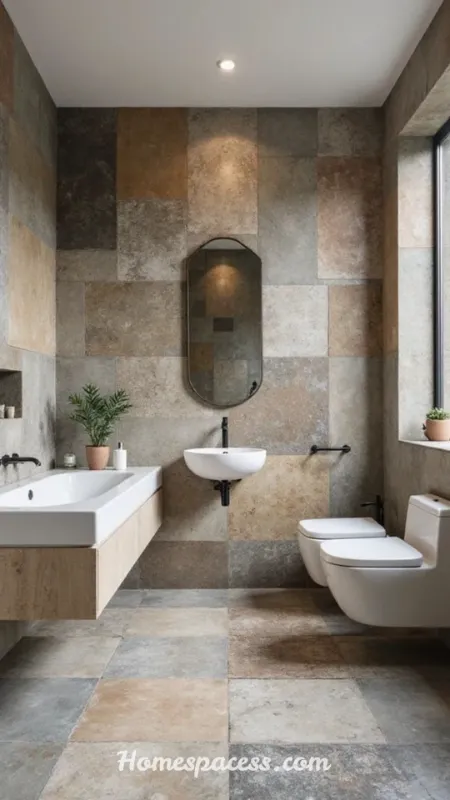
The shift toward larger floor tiles 24×24, 32×32, and even 48×48 inches is one of the most consistently recommended bathroom tile ideas in contemporary interior design, and the reasons are structural rather than merely stylistic. Fewer grout lines mean less visual interruption on the floor surface, which makes bathrooms read as significantly larger than they are. Studies from tile manufacturers indicate that switching from 12×12 to 24×24 tiles can make a room appear 15–20% larger without any physical changes to layout or lighting.
Installation of large-format tiles requires technical precision that smaller tiles don’t demand. The subfloor must be extraordinarily flat variations beyond 1/8 inch over 10 feet cause hollow spots, cracking, and lippage (tile edges that sit at different heights).
This typically means professional leveling compounds and laser checking before installation begins. Attempting large-format tile installation on a standard subfloor without proper preparation is the most common (and most expensive) DIY tile mistake in bathroom renovations.
Large-format tiles also perform better in heated floor systems (in-slab radiant heating), as they conduct and distribute heat more evenly across a room than smaller tiles with dense grout networks. If bathroom heating is part of your renovation plan, selecting large-format tile is a functional optimization, not just an aesthetic one heat transfer efficiency increases by 20–30% with larger tile formats over the same heating element configuration.
Pro Tip:
Center large-format tiles symmetrically in the room and plan cuts before installation — having equal cut tiles on opposite walls (rather than one full-tile edge and one narrow sliver) is the mark of professional installation.
Textured 3D Wall Tiles
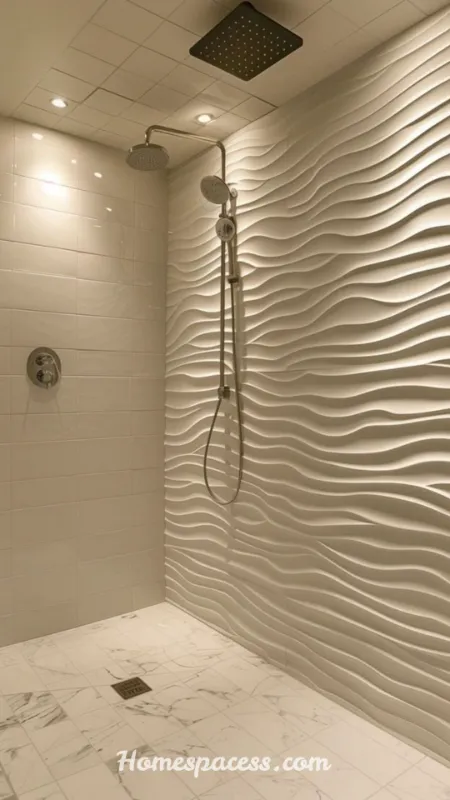
Three-dimensional wall tiles featuring carved, rippled, wave, or faceted surfaces introduce light play that fundamentally changes how a bathroom feels throughout the day. As natural or artificial light moves across a dimensional surface, shadow gradients shift and evolve, creating rooms that feel alive and dynamic rather than static. This effect is most dramatic with raking light from wall sconces positioned at eye level, which maximizes shadow depth and visual interest.
The most popular 3D tile profiles for bathrooms in 2026 are wave and fluted patterns in large formats (12×24 or 12×36 inches). These translate the currently popular fluted furniture trend fluted glass, ribbed cabinetry into a wall surface that reads as design-forward without being experimental. In white or off-white finishes, dimensional tiles work with virtually any color palette; in clay or limestone tones, they create a spa-like sensory environment without any additional material cost.
Cleaning textured tiles requires slightly more attention than flat surfaces a soft brush rather than a squeegee is necessary to reach the recesses of heavily dimensional tiles. This consideration should inform placement decisions: using 3D tiles behind a toilet or on a feature wall (rather than inside a shower enclosure) minimizes cleaning complexity while preserving the visual benefit. Functional placement strategy is what separates a beautiful bathroom from a beautiful-but-frustrating one.
Pro Tip:
Install dimensional tiles with the ridges running horizontally it visually widens narrow bathrooms and emphasizes ceiling height simultaneously. Vertical ridges have the opposite effect, which few installers mention proactively.
Wood-Look Ceramic Tiles
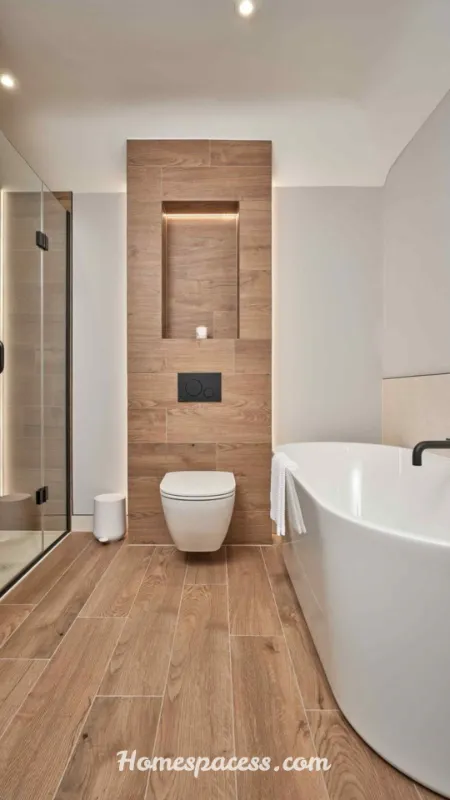
The desire for warm, natural materials in bathrooms has historically collided with a hard practical reality: wood cannot survive sustained moisture exposure. Wood-look ceramic and porcelain tiles resolve this conflict entirely, delivering the visual warmth of oak, walnut, or reclaimed timber plank aesthetics with the full moisture resistance of fired clay.
Technology advances in digital printing now produce wood-look tiles with grain variation, knot patterns, and even subtle color shifts across planks that replicate real wood far more convincingly than editions from even five years ago.
Installation direction creates dramatically different spatial results with wood-look planks. Running plank-format tiles lengthwise down a long, narrow bathroom exaggerates the tunnel effect. Instead, designers recommend running wood-look tiles diagonally (45 degrees) in rectangular bathrooms, or perpendicular to the longest wall both approaches visually widen narrow spaces and interrupt the elongated perspective. This single layout decision has more impact on perceived room size than most fixture choices.
For underfloor heating systems, wood-look porcelain is vastly superior to actual wood flooring. Wood contracts and expands with heat cycling, creating gaps and warping over time. Porcelain is thermally stable, conducts heat efficiently, and requires zero maintenance beyond normal cleaning. This makes wood-look tile the logical choice for any bathroom that includes or plans to include heated floors delivering both the aesthetic goal and the functional requirement simultaneously.
Pro Tip:
Mix at least three different tile patterns from the same wood-look collection real wood has grain variation, and using only one pattern creates an obviously repetitive effect that breaks the illusion immediately.
Penny Round Mosaic Tiles
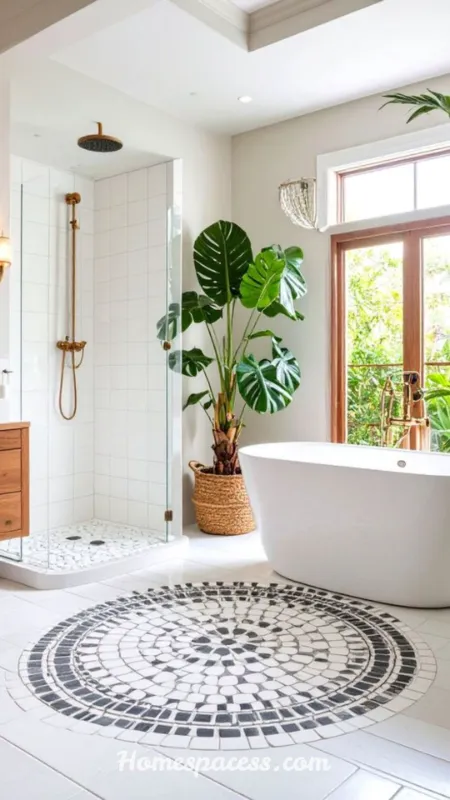
Penny round tiles typically 1-inch diameter circles, though available up to 2 inches occupy a unique design niche because they work at two different visual scales simultaneously. Viewed from across the room, a penny-round floor reads as a solid color with subtle texture.
Viewed up close, the individual rounds and their grout network reveal intricate geometric patterning. This dual-scale visual behavior makes penny rounds particularly effective in small bathrooms where every surface is seen at close range, delivering more design complexity per square foot than most alternatives.
The color blend flexibility of penny rounds is unmatched. Unlike larger tiles where blending shades requires careful planning, penny rounds on mesh-mounted sheets allow for seamless gradient effects transitioning from white to grey to charcoal across a shower floor, or from warm cream to terracotta on a feature wall. These ombre effects are extremely difficult to achieve with any other tile format and create high-impact results that don’t require expensive custom work.
From a safety perspective, penny round floors are technically among the best bathroom tile ideas for wet zones. The high ratio of grout joints to tile surface creates a naturally slip-resistant texture that surpasses the traction rating of most flat tile options.
For households with elderly residents or young children, this functional advantage should be weighted heavily in material selection penny rounds often meet or exceed accessible design standards for wet-area slip resistance without any additional surface treatment.
Pro Tip:
Always pre-seal penny round grout with a penetrating sealer before use the extremely high surface area of grout joints in penny-round installations means unsealed grout stains from soap and shampoo within weeks of use.
Fluted / Ribbed Tiles
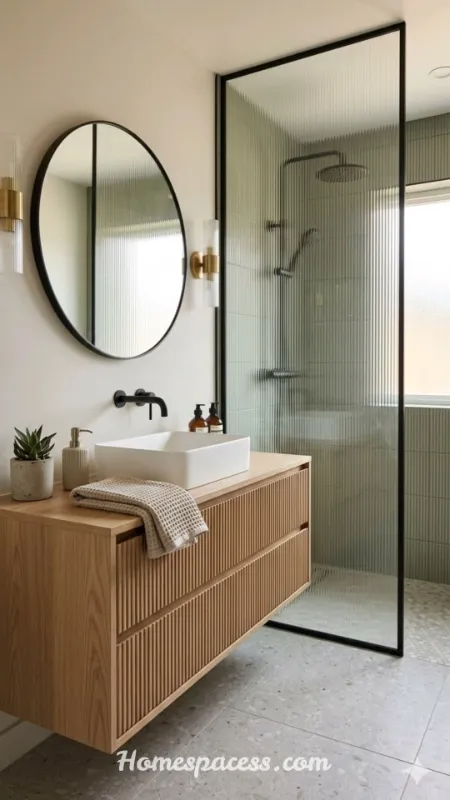
Fluted tiles featuring linear, parallel ridges across their surface have become the defining tile trend of the mid-2020s, moving from high-end hospitality design into mainstream residential renovations. Their appeal lies in a fundamental design principle: vertical lines draw the eye upward and create rhythm without using color or pattern.
This makes fluted tiles one of the most sophisticated-looking bathroom tile ideas that still photograph neutrally and age gracefully they won’t feel dated in five years the way more dramatic pattern choices often do.
The material range for fluted tiles has expanded significantly. While glazed white or cream ceramic remains the most popular option, terrazzo-effect fluted tiles, textured concrete-look fluted panels, and even fluted glass tiles are now available from mainstream suppliers.
Fluted glass tiles in particular create a distinctive translucent quality when lit from behind ideal for partition walls between a bathroom and dressing area, or as a frameless shower enclosure alternative that doesn’t sacrifice privacy.
Practically, fluted tile installation requires a skilled tilesetter achieving consistent ridge alignment across multiple tiles and maintaining flat overall plane while accommodating the dimensional surface demands experience and patience. Slightly misaligned ridges are immediately visible and cannot be corrected without removal and re-installation.
Budgeting for professional installation rather than DIY is a cost decision that protects the significant material investment fluted tiles represent.
Pro Tip:
Use fluted tiles on the vanity accent wall only, paired with large-format flat tiles on surrounding surfaces this restraint makes the texture more impactful than if used everywhere, and keeps the room from feeling visually busy.
Conclusion
Bathroom tile ideas are more than aesthetic choices they’re investments in daily experience, home value, and long-term maintenance reality. The 11 ideas covered here represent approaches tested across real renovations, each with clear design logic, practical constraints, and measurable outcomes. Whether you’re drawn to the handmade character of zellige, the practical elegance of large-format porcelain, or the timeless geometry of hexagon mosaics, the best bathroom tile is the one chosen with intention rather than default.
The future of bathroom tile is moving toward personalization, sustainability, and lower maintenance all directions worth considering even in current renovations. Choices made today should serve the next decade comfortably, not just the next photoshoot.
Pick one idea from this guide that genuinely excites you, request samples under your bathroom’s actual lighting, and take the first step. A great bathroom doesn’t happen by accident it starts with a deliberate tile decision.
2026–2030 Bathroom Tile Trend Analysis
The dominant direction in bathroom tile design for 2026 through 2027 is a decisive retreat from the cold, high-gloss minimalism of the 2010s. The industry is seeing sustained demand growth for matte finishes, warm earth tones, and handmade-feeling surfaces all driven by a broader cultural desire for spaces that feel sensory and restorative rather than sterile and performative. Gloss tiles are declining in residential specification, while matte porcelain and artisan ceramic are outpacing category average growth rates significantly.
Looking toward 2028–2030, large-format thin porcelain panels (slabs up to 60×120 inches, just 6mm thick) represent the next significant shift. Currently used primarily in commercial high-end projects, falling manufacturing costs are making slab-format tile accessible for residential renovation. These panels eliminate grout entirely on wall surfaces addressing the #1 bathroom maintenance complaint and create a seamless stone-like quality that no traditional tile can match.
Beyond materials, AI-assisted tile design tools are beginning to enter the specification process. Platforms using generative design algorithms can model complete bathroom tile layouts including material, pattern, grout color, and lighting interactions before a single tile is purchased. Early adopters of these tools are reporting 40% reductions in costly specification errors and material waste.
Expert Insights: What Tile Professionals Know (And Rarely Share)
Professional tile setters and interior designers consistently identify the same overlooked factors that separate successful bathroom tile projects from regrettable ones. The most universal insight: tile quality variation within a single product line is significant. Even within one manufacturer’s collection, the same tile SKU can vary in shade across production batches. Always purchase all required tile including a 15% overage from the same production lot. Ask your supplier for the “lot number” and ensure all boxes match.
Grout joint width is another professional-grade decision that most homeowners make unconsciously, defaulting to installer preference. Joint width changes the entire visual character of a tile installation: joints under 1/16 inch read as contemporary and seamless; joints of 3/16 inch or wider emphasize individual tiles and read as artisanal or traditional. Neither is superior but the choice should be intentional and coordinated with overall design direction.
The final expert insight concerns waterproofing beneath tile specifically the membrane system applied to the substrate before tile installation begins. Most tile failures (cracked grout, loose tiles, mold behind walls) are not tile failures at all they’re substrate failures. Investing in a quality uncoupling membrane (such as Schluter KERDI) beneath shower and wet-area tile significantly reduces long-term cracking risk from building movement and thermal cycling.
Sustainability, Longevity & Real Long-Term Value in Tile Selection
The sustainability conversation around bathroom tile is more nuanced than most guides acknowledge. While ceramic and porcelain tile are made from natural materials, their kiln-firing process is energy-intensive. However, the calculus shifts dramatically when considering lifespan: a quality porcelain tile will outlast two cycles of vinyl flooring, three cycles of laminate, and often the building itself. On a per-year-of-use basis, tile has one of the lowest environmental footprints of any flooring material.
Recycled content tiles represent an important and growing segment of the sustainable bathroom tile market. Manufacturers like Fireclay Tile produce products with 70%+ recycled content using post-industrial glass and ceramic waste, achieving equivalent durability to virgin-material tiles at competitive price points. Reclaimed tiles salvaged from demolition projects offer zero-production-impact options with genuine patina that new tiles cannot replicate.
From a purely financial sustainability perspective, tile selection directly impacts resale value in measurable ways. National Association of Realtors data indicates that updated bathrooms with quality tile return 60–70% of renovation cost at resale on average but bathrooms with distinctive, high-quality tile in a current aesthetic return significantly higher, sometimes exceeding 100% ROI in competitive real estate markets.
Future Innovations in Bathroom Tile: What’s Coming by 2030
Several technologies currently in commercial or advanced development phases will materially change bathroom tile by 2030. Self-cleaning tile coatings using photocatalytic titanium dioxide are moving from laboratory settings into consumer products TiO₂-coated tiles use UV light exposure to break down organic matter at the molecular level, requiring only occasional rinsing to remain hygienically clean. Pilot installations in European commercial bathrooms are showing 85% reductions in chemical cleaning frequency.
Thermochromic tiles which change color in response to temperature have been technically possible for years but are entering design-relevant quality levels with improved fade resistance and color accuracy. Imagine shower walls that shift from cool grey at room temperature to warm amber when hot water runs, creating a real-time visual indicator of water temperature that’s both functional and beautiful.
Perhaps the most transformative near-future development is customizable digital tile printing at the installer level. Several companies are developing large-format inkjet tile printers that can create fully custom tile designs from family photographs to site-specific patterns printed directly onto unglazed ceramic blanks at retail tile shops. This will democratize genuinely unique, one-of-a-kind tile for residential budgets by 2030.
Common Bathroom Tile Mistakes Most Guides Don’t Mention
✕Ignoring tile weight on upper floors. Large-format tiles and stone can exceed 15 lbs/sq ft an amount that some older floor joists cannot safely support. A structural assessment before specifying heavy tile on upper floors prevents both installation problems and genuine safety risk.
✕Choosing tile before choosing lighting. Tile appearance changes dramatically under different light temperatures. A warm-toned tile that looks beautiful in a showroom under incandescent lighting may read as muddy under the cool LED lighting in your actual bathroom. Always view tile samples under conditions that match your intended lighting before purchasing.
✕Skipping anti-slip ratings in wet zones. Every tile has a Coefficient of Friction (COF) rating. Shower floors and wet bathroom floors should have a COF of 0.60 or higher (ANSI standard). Many beautiful tiles fail this threshold and installers rarely verify it.
✕Over-tiling small bathrooms. Using the same tile material on every surface in a small bathroom creates spatial compression and visual monotony that feels oppressive. One or two surfaces in a contrasting material or finish creates necessary visual relief and actually makes rooms feel larger.
✕Underestimating installation complexity of patterned tile. Complex patterns require significantly more skilled labor time to install correctly. Getting quotes based on square footage without disclosing pattern complexity leads to massive budget overruns when installers reprice on-site.
Team Home Spacess shares simple, practical design ideas that work for real families. The team focuses on cozy décor, soft colors, and natural textures that make a space feel truly lived-in. From everyday decorating tips to creative home projects, Team Home Spacess is dedicated to helping readers create warm, comfortable, and inviting spaces with a fresh and personal touch.