

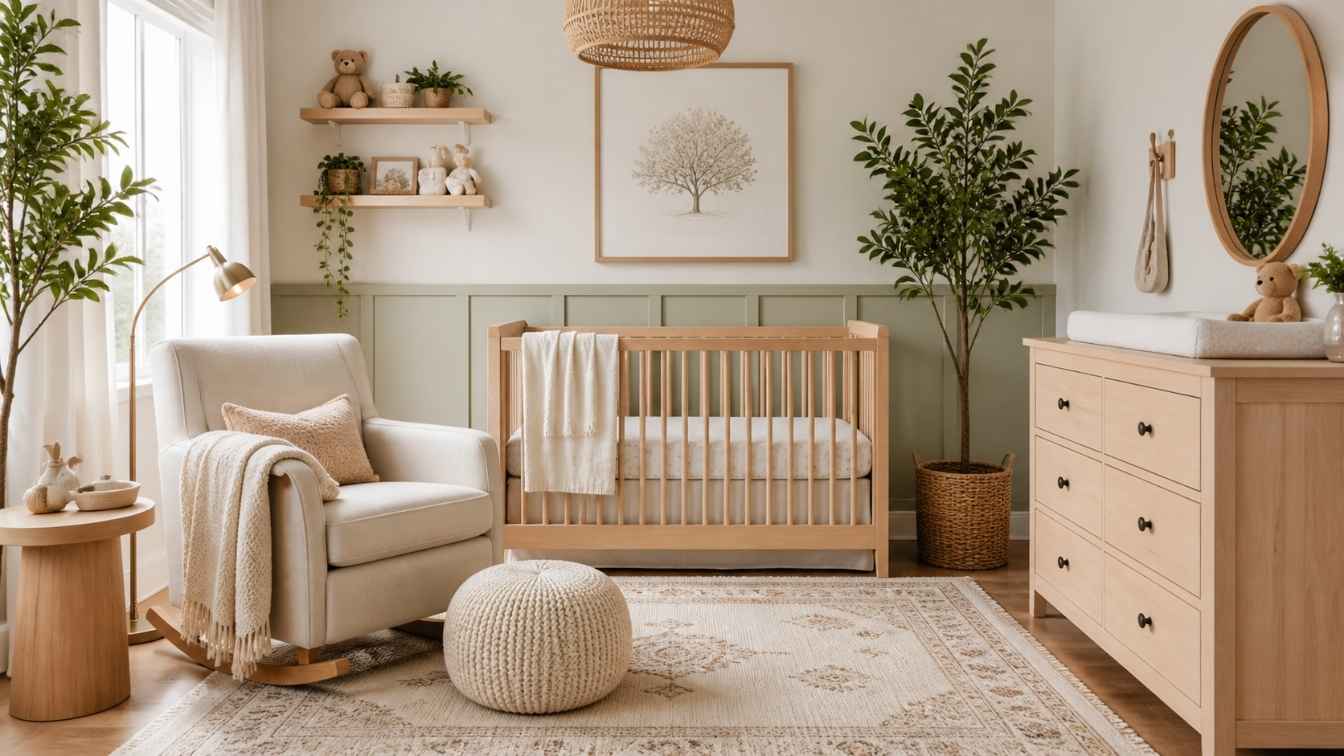
Most parents spend weeks choosing the perfect crib but the room around it often becomes an afterthought. A nursery that feels dated in 18 months, costs a fortune to redo, and doesn’t actually support your baby’s development. This guide changes that. Here are 12 thoughtful, expert-backed baby room ideas that balance aesthetics, safety, and long-term value so you design it right the first time.
A baby room is a special space made for a newborn or small child. It is designed to be safe, soft, and peaceful. The room usually has a crib, a changing area, and simple storage. Every item is placed with care and comfort in mind. Soft colors and gentle lighting help create a calm feeling. This space supports both the baby’s rest and the parents’ daily routine. A well-planned baby room makes life easier and more organized. It is a place where love, care, and comfort come together.
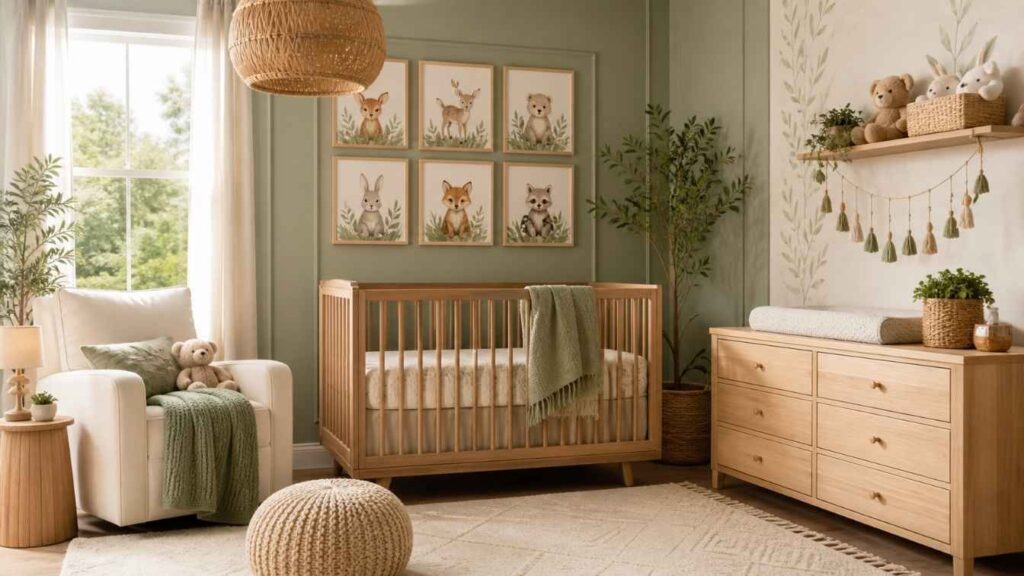
Every parent wants a room that feels warm, cozy, and full of love. A small change in color or decor can make a big difference. You don’t need a large budget to create something beautiful. Baby Room Ideas help you choose simple and smart designs. You can add cute themes, soft textures, and useful furniture. These ideas focus on comfort, style, and easy use of space. With the right choices, any room can become a perfect nursery. It is all about creating a happy and peaceful place for your baby.
Warm Neutral Color Palettes That Grow With Your Baby
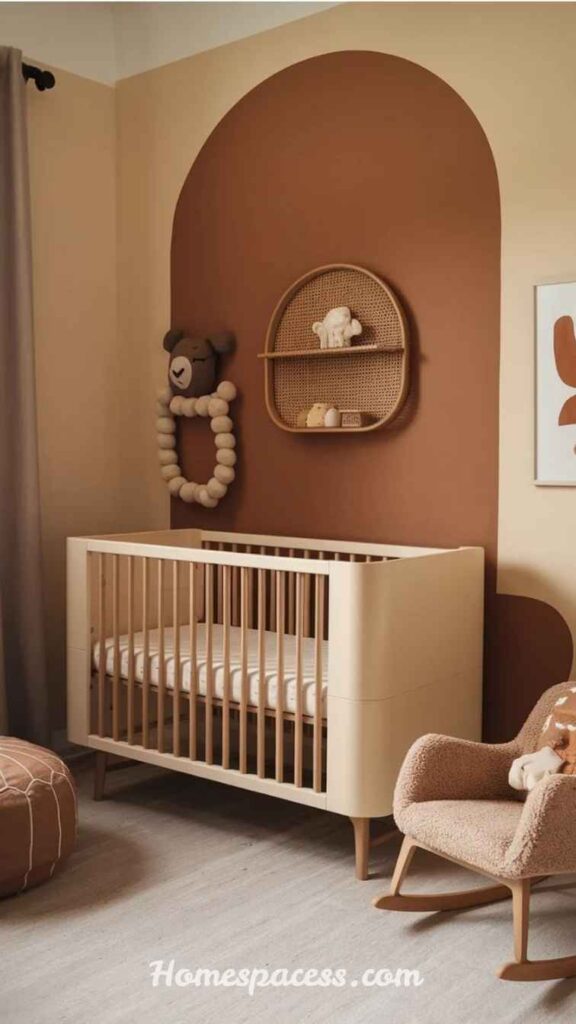
One of the most enduring baby room ideas is choosing a warm neutral palette think creamy whites, sage green, dusty rose, and warm terracotta. These colors aren’t just aesthetically timeless; they’re psychologically grounding for newborns whose visual systems are still developing. Harsh primaries can actually overstimulate infants in the early weeks, while soft, warm neutrals create a calming sensory environment that supports better sleep.
The real advantage of neutrals is longevity. A sage-and-white nursery that looks stunning for a newborn transitions seamlessly into a toddler’s room with a few accessory swaps. Parents who commit to bold themed colors often find themselves repainting within two years a costly and disruptive mistake. Consider using color on a single accent wall rather than throughout the room, keeping the dominant surfaces neutral and flexible.
For 2026, warm earthy tones with clay and sand undertones are dominating nursery design trends. Pair them with natural wood furniture and linen textiles for a room that feels calm, organic, and grown-up enough for the parents to actually enjoy spending time in. Remember: you’ll be in this room at 3 a.m. more than you expect.
Pro tip: Test paint swatches in natural and artificial light before committing.
Must Read: Outdoor Patio Ideas That Turn Any Backyard Into a Relaxing Escape
Nature-Themed Nurseries That Stimulate Early Development
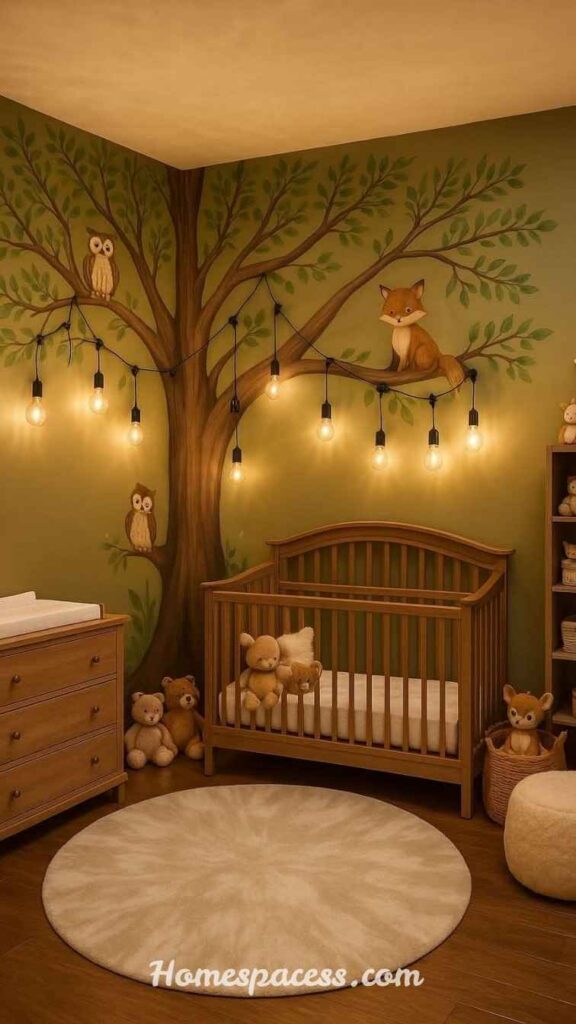
A nature-inspired baby room idea goes far beyond putting a few leaf prints on the wall. Think forest murals with layered depth, botanical mobiles, animal figure shelves, and textured natural materials like rattan, jute, and untreated wood. These elements introduce babies to visual complexity and natural patterns both of which are known to support early cognitive development and visual tracking skills.
What most nursery guides miss is the sensory dimension of a nature-themed room. Incorporate different textures a smooth wooden rocking chair, a woven storage basket, a cotton cloud mobile to create a multi-sensory environment. Even the sound element matters: a small white noise machine shaped like a woodland animal can double as décor and sleep tool. Nature themes also have the rare quality of appealing to children across ages 0 to 6, making them one of the most investment-worthy nursery design choices.
For a cohesive look, choose one ecosystem as your anchor woodland, jungle, or ocean and layer in three to four materials that reflect it. Avoid mixing too many animal themes, which creates visual noise. A curated woodland room with foxes, mushrooms, and tall trees feels intentional and magical; a mix of safari, ocean, and jungle elements feels cluttered
Pro tip: Wall decals are removable and renter-friendly for nature murals.
Read More: Wall Painting Ideas That Make Your Home Feel Warm and Inviting
Smart Storage Solutions That Keep the Room Functional
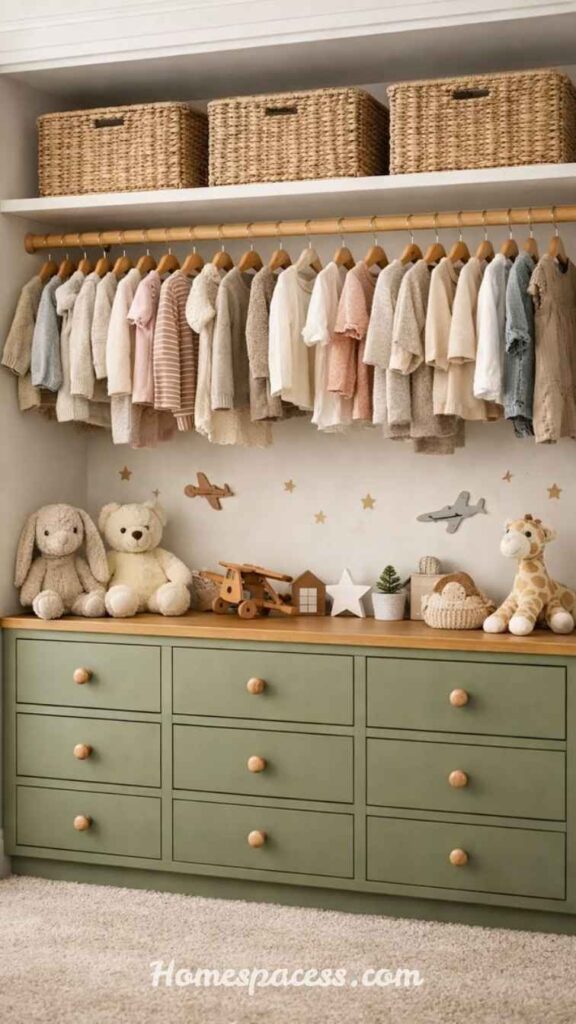
Storage is the unsexy hero of every successful baby room idea. New parents are almost always surprised by how much stuff a tiny human requires onesies in five sizes, extra blankets, nursing supplies, diaper creams, and more. Building smart, layered storage into the nursery from day one prevents the creeping chaos that takes over most baby rooms within the first three months. Think vertical: wall shelves, over-the-door organizers, and tall wardrobes maximize square footage without crowding the floor.
The most effective nursery storage systems work in zones. Create a diaper-change zone with everything needed within arm’s reach of the changing table wipes, diapers, cream, and a spare outfit. Build a sleep zone that’s free of clutter and visually calm. Designate a feeding zone near the rocking chair with a small side table for water, burp cloths, and a phone charger. Zoned storage isn’t just organized it makes nighttime routines genuinely faster and less stressful.
One often-overlooked strategy is the “size-up box” a labeled container on the top shelf holding the next size up in clothing, so outgrown items are immediately stored and replacements are ready. It sounds simple, but it eliminates one of the most common sources of new-parent clutter. Use open baskets for frequently accessed items and closed drawers for things you don’t need to reach daily.
Pro tip: Label storage at adult eye level, not child eye level, for the first year.
Don’t Miss: Simple Garden Decor Ideas for a Clean and Modern Outdoor Style
A Dedicated Reading Corner to Build Early Literacy
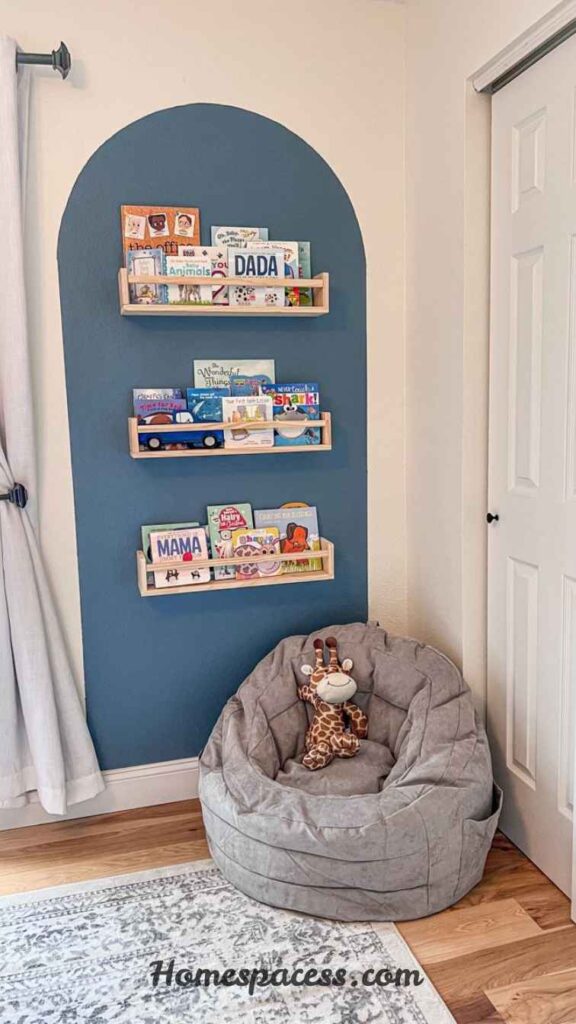
A reading nook is one of the most developmentally impactful baby room ideas you can implement, and it requires far less space than most parents assume. Even a corner with a small bookshelf at baby’s eye level (once they can sit), a soft rug, and a cozy chair for the caregiver creates an intentional literacy environment. Research consistently shows that children who grow up surrounded by books even before they can read develop stronger language skills and higher reading readiness by school age.
The design key is accessibility. Traditional bookshelves with spines facing out require children to read labels, which defeats the purpose before they can read. Instead, use forward-facing book displays like a simple rail shelf so covers are visible and inviting. Rotate books every two to three weeks to maintain interest without overwhelming the space. A curated selection of eight to twelve books visible at any time is more effective than a stuffed shelf of fifty.
Consider the caregiver’s comfort too. Many parents skip reading time not from lack of intention but from physical discomfort perching on a tiny bean bag at 11 p.m. is not sustainable. Invest in a proper nursing or rocking chair that’s comfortable for adults. When reading time is comfortable for the caregiver, it happens more consistently, which is what actually builds a lifelong reading habit.
Pro tip: A small LED clip light on the book rail lets you read without waking the room.
Read Also: Simple Bedroom Decor Ideas to Make Your Room Look Modern and Fresh
Minimalist Nursery Design: Less Is Genuinely More
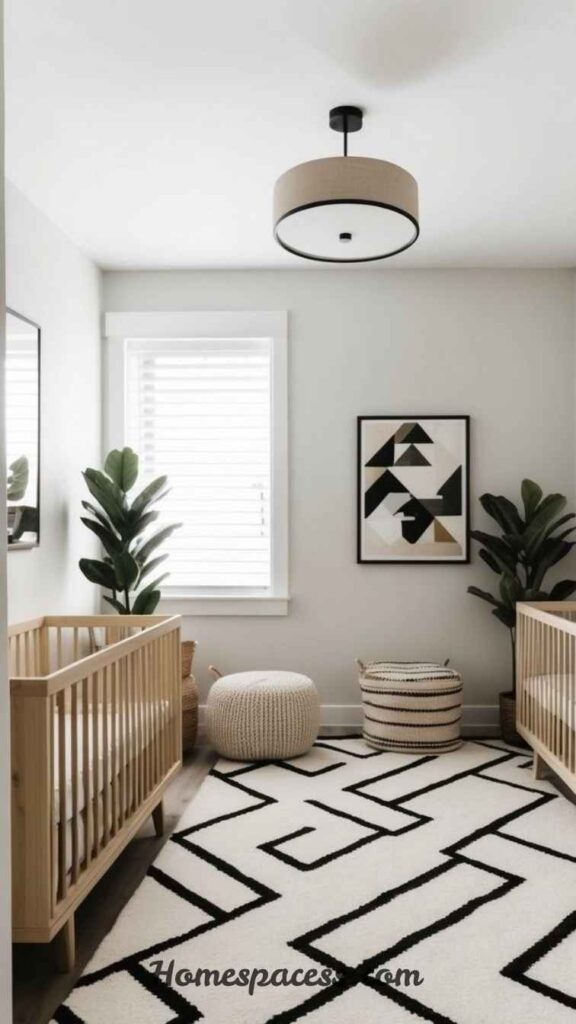
The minimalist nursery has moved from aesthetic trend to developmental philosophy. A clutter-free baby room idea isn’t just visually calming it supports a baby’s ability to focus attention, which is foundational to later learning. Overstimulating environments with too many colors, patterns, and objects can fragment a newborn’s attention and disrupt sleep. Minimalist design solves this without sacrificing warmth or personality.
Minimalism in the nursery doesn’t mean stark or cold. It means every item in the room has been chosen intentionally it either functions well, looks beautiful, or both. A single piece of meaningful wall art, one well-made wooden toy, a thoughtfully chosen crib these elements create a room that feels like a sanctuary rather than a store. The psychological benefit extends to parents too; research in environmental psychology shows that cluttered spaces raise cortisol levels, and a calm nursery environment supports calmer parenting.
The practical application of nursery minimalism starts at the registry. Resist the cultural pressure to accumulate every possible baby item before birth. Most newborns need far less than the market suggests. Start with the essentials safe sleep surface, a few feeding tools, basic clothing, and a clean, calm space and add items only as genuine needs emerge. This approach saves money, preserves sanity, and creates a room that actually stays organized.
Pro tip: Follow a “one in, one out” rule as your baby grows to maintain simplicity.
Montessori Floor Beds That Support Independent Development
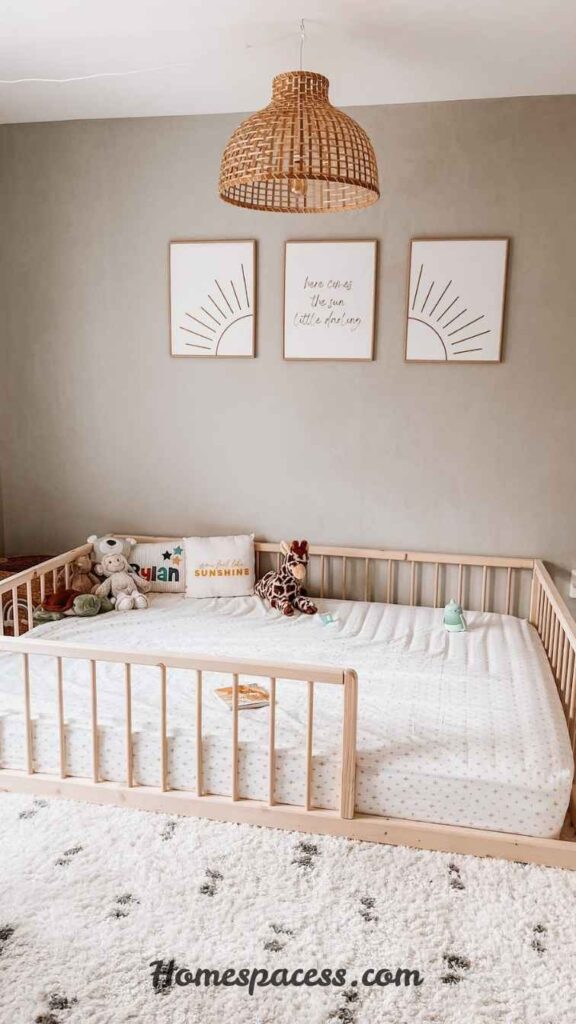
The Montessori floor bed is one of the most discussed baby room ideas in modern parenting communities and for good reason. Based on Maria Montessori’s principles of freedom of movement and environmental preparation, floor beds allow babies to roll, explore, and eventually climb in and out of their own sleep space safely. This supports proprioceptive development (the sense of body in space) and builds the early confidence that underpins independent learning.
A Montessori nursery doesn’t require expensive furniture or complete commitment to the method. The core elements are simple: a firm mattress on the floor or a very low platform frame, clear floor space for movement, and low shelves with a small selection of age-appropriate toys and books. The room itself becomes the learning environment, with everything at the child’s level and accessible by their own choice. This philosophy works particularly well in combination with a nature or minimalist aesthetic.
Safety is the primary consideration with floor beds. Ensure all furniture is anchored to walls, electrical outlets are covered, and there are no climb-to-reach hazards. The room should function as a safe space where a mobile baby can explore without immediate danger. Many parents use a baby monitor with floor-level camera positioning in Montessori rooms to maintain visibility. When implemented thoughtfully, this approach yields children who are remarkably confident, coordinated, and self-directed.
Pro tip: A firm mattress on a Montessori floor frame costs significantly less than most cribs.
Gender-Neutral Nursery Décor That Defies Convention
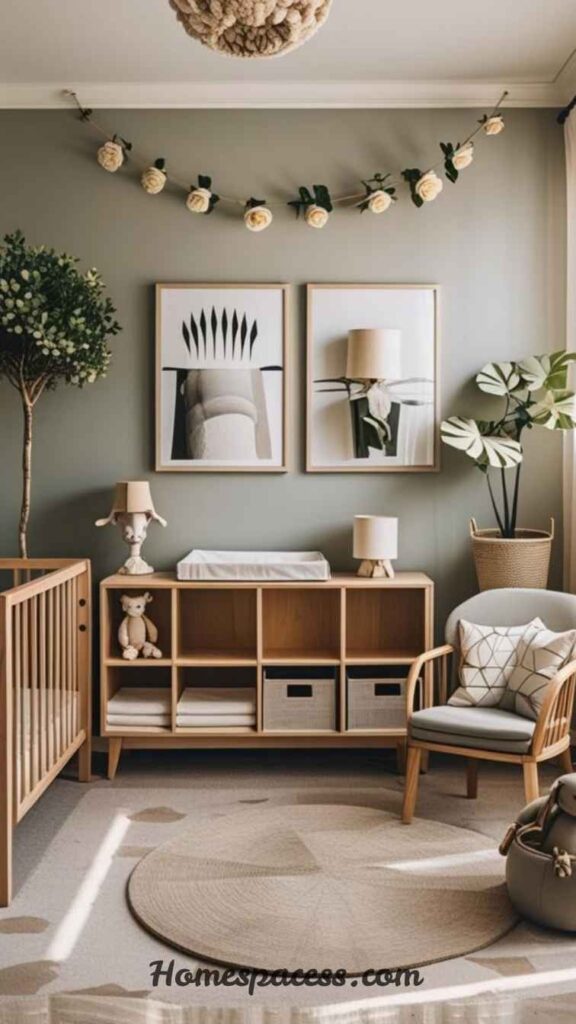
Gender-neutral baby room ideas have evolved well beyond the tired beige-and-gray template. Today’s gender-neutral nurseries are bold, beautiful, and intentionally designed to let children define their own interests as they grow. Think deep terracotta paired with forest green, mustard yellow with navy, or rich burgundy with cream color combinations that feel rich and distinctive without leaning on gender-coded palettes. These rooms tend to age better and photograph beautifully.
The philosophical case for gender-neutral design is increasingly supported by child development research. Studies suggest that environment shapes expectation a room filled exclusively with “boy toys” or “girl toys” subtly influences what children reach for and how adults interact with them. A neutral space creates fewer implicit signals and more room for genuine curiosity. This doesn’t mean removing personality; it means letting the child’s personality emerge rather than being pre-assigned.
Practically, gender-neutral nurseries also have higher resale appeal for furniture and décor, and work seamlessly if a second child of a different sex is expected. The most successful gender-neutral rooms choose a strong central concept a color, a material, a theme and commit to it fully rather than defaulting to absence of color. A room defined by texture, botanical prints, and warm wood is far more compelling than a room defined by being neither pink nor blue.
Pro tip: Bold art prints in abstract shapes are one of the easiest gender-neutral upgrades.
Multi-Functional Furniture That Extends Your Investment
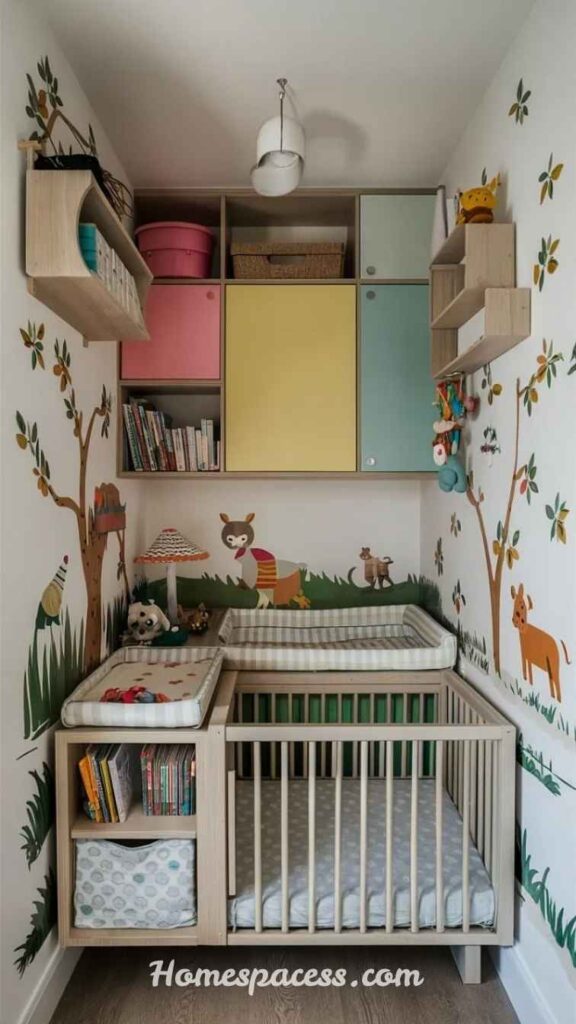
Babies outgrow everything including their furniture faster than any parent expects. Multi-functional furniture is one of the most financially and practically sound baby room ideas available. A convertible crib that transitions to a toddler bed, then a daybed, and finally a full-size bed can serve a child from birth to adolescence with minor hardware changes. A dresser with a removable changing topper becomes a standard dresser once the diaper stage ends. These pieces cost more upfront but deliver dramatically lower total cost over time.
The design challenge of multi-functional nursery furniture is ensuring it doesn’t look like “baby furniture with modifications.” The best pieces are designed from the ground up to be timeless solid wood construction, simple lines, neutral finishes so they genuinely look appropriate in a 10-year-old’s bedroom without awkward visual compromises. Brands specializing in heirloom-quality convertible furniture have grown significantly in the premium market for exactly this reason.
Beyond the crib, consider a rocking chair that works as general seating in any room once the nursing phase ends, and storage cubes that transition from toy storage to bookshelf to wardrobe organizer. The mental shift required is simple: instead of asking “what does my baby need right now,” ask “what can serve my child for the next seven years?” That question transforms the purchasing calculus entirely.
Pro tip: Avoid drawer handles that are too “baby themed” they date the piece quickly.
Layered Soft Lighting Systems for Sleep and Wakefulness
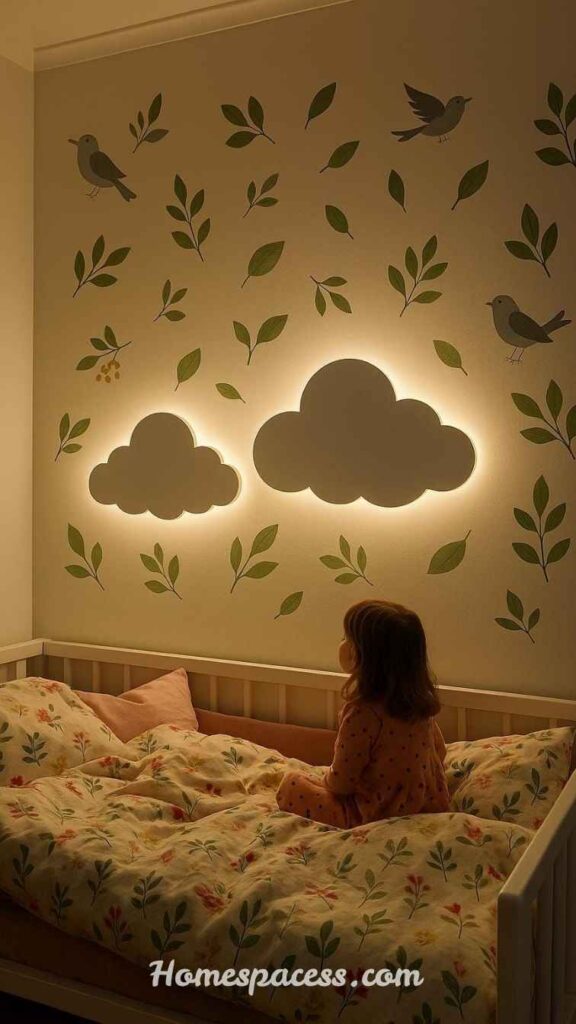
Lighting is the most underestimated element in any baby room idea list, and getting it right makes a measurable difference in sleep quality. Babies like adults are highly sensitive to light’s effect on circadian rhythm. Bright white light at 3 a.m. suppresses melatonin and makes resettling significantly harder. A properly layered lighting system gives you full, warm overhead light for daytime play, a dimmable warm ambient light for nighttime feeds and diaper changes, and complete darkness for consolidated sleep.
The 2026 standard for nursery lighting involves smart bulbs or smart switches that allow one-touch dimming without fumbling at 2 a.m. Warm color temperature (2700K–3000K) is the target range for nighttime use it produces minimal circadian disruption. Blackout curtains are non-negotiable for daytime naps, particularly in summer months when daylight extends well into the evening. The combination of blackout curtains plus a warm nightlight is one of the highest-return sleep investments a parent can make.
For the aesthetic dimension, lighting fixtures themselves have become one of the most expressive design choices in modern nurseries. Rattan pendant lights, sculptural ceramic sconces, and woven lampshades add warmth and texture while functioning beautifully. Choose fixtures you’d be proud to have in any room of your home because a thoughtfully chosen nursery light fixture often outlasts the nursery phase itself.
Pro tip: Install a dimmer switch it costs under $20 and transforms nighttime functionality.
Sensory Wall Features That Turn Décor Into Development
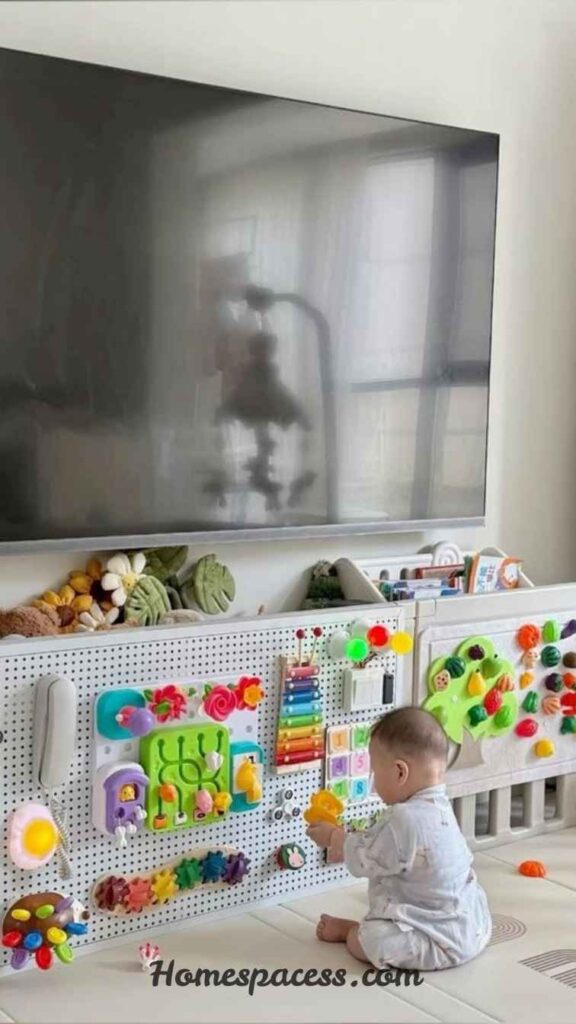
Sensory walls are one of the most innovative baby room ideas gaining traction in 2026. Unlike traditional wall art that simply decorates, a sensory wall feature is designed for interaction panels of different textures, small mirrors at floor level, hanging elements that move with air currents, and tactile boards with buttons, zippers, and fabric swatches. These elements actively engage a baby’s developing senses and fine motor skills during supervised play time.
The neuroscience behind sensory environments for infants is compelling. During the first year, a baby’s brain is forming synaptic connections at a rate that will never be matched again in their lifetime. Rich, varied sensory environments particularly those combining tactile, visual, and auditory stimuli support this neural development in meaningful ways. A thoughtfully designed sensory wall essentially turns wall space into a developmental tool. And because it’s fixed and supervised, it’s significantly safer than loose sensory toys on the floor.
You don’t need a bespoke installation. A DIY sensory wall can be assembled from a peg board, fabric scraps in different textures, a small unbreakable mirror panel, and a few hanging wooden shapes. Mount it at baby’s seated eye level, below 60cm from the floor, and refresh the elements every few months as developmental stages change. Many parents find this one of the most engaging and conversation-generating elements of their nursery for visitors as much as the baby.
Pro tip: Always mount sensory elements securely test pull resistance before baby can reach.
Growth-Adaptive Room Design That Evolves With Your Child
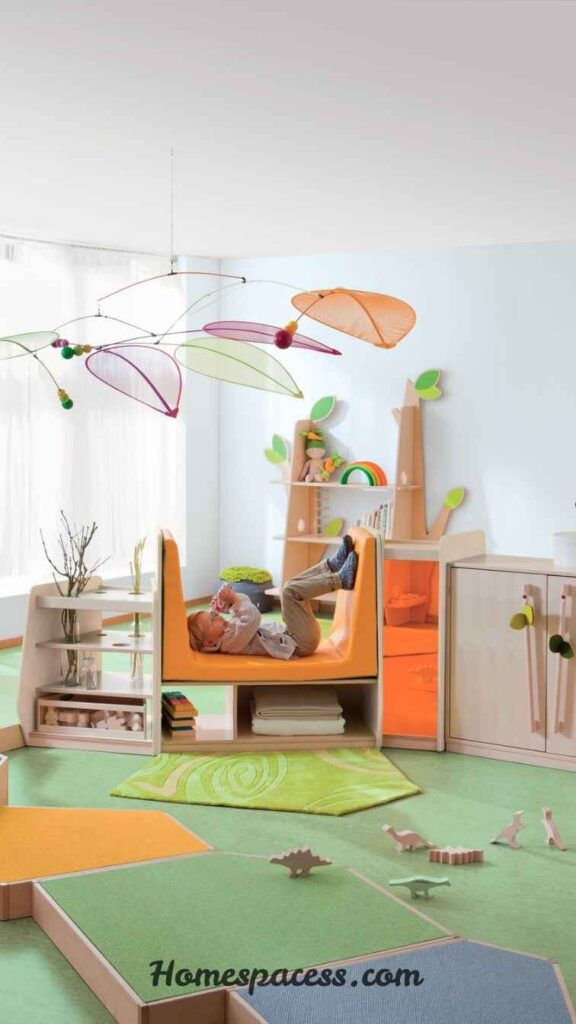
Most nursery guides focus on the 0–12 month stage, leaving parents to start from scratch once their toddler arrives. A growth-adaptive baby room idea builds evolution into the original design so the room changes with minimal cost or disruption. The strategy centers on investing in timeless structures quality flooring, durable paint, solid furniture while keeping accent elements flexible and easily swappable as your child’s interests emerge.
Imagine a room that begins as a soothing neutral nursery, evolves into a toddler’s play space by swapping out a crib for a floor bed and adding a small activity table, then transitions into a child’s bedroom by age five with the addition of a desk, a taller bookshelf, and more sophisticated artwork. The bones the color palette, the quality rug, the convertible wardrobe remain consistent throughout. What changes are the accessories, which are always the easiest and cheapest things to replace.
The key design principle here is “invest where it stays, save where it goes.” Spend on the crib that converts to a bed, the solid wood dresser that will still look good at age 10, the quality rug that won’t need replacing. Save on art prints (reprinting is cheap), decorative accessories (they change with interests), and themed items (trends shift fast). This approach produces better financial outcomes and consistently better-looking rooms across every development stage.
Pro tip: Design with four distinct developmental stages in mind: 0–1, 1–3, 3–6, and 6–10.
Cultural Heritage Décor That Tells Your Family’s Story
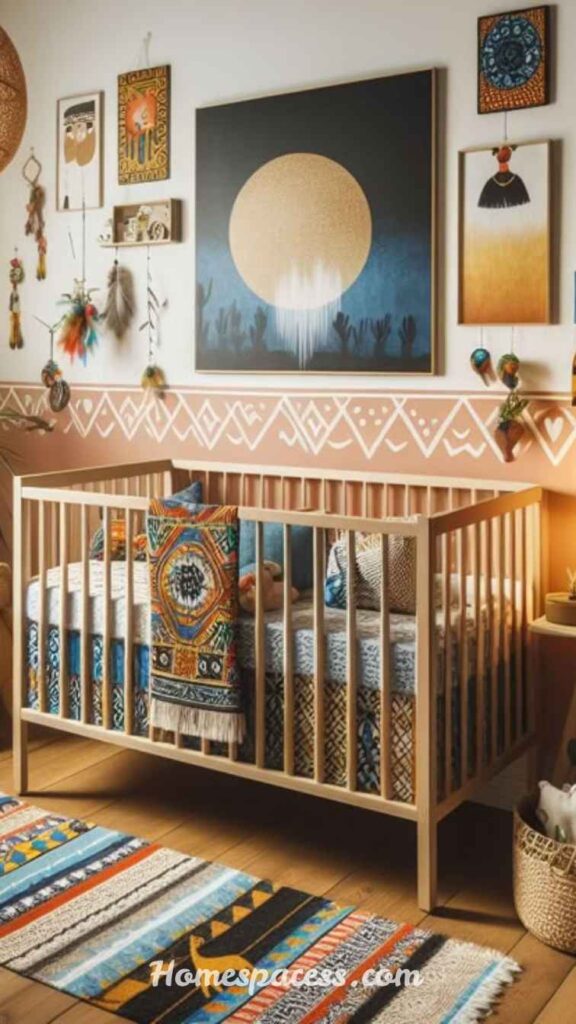
Perhaps the most deeply meaningful baby room idea on this list is one that almost no design guide mentions: incorporating your cultural heritage into the nursery. A room that reflects your family’s cultural identity through textiles, patterns, art forms, language, and color traditions gives a child a powerful, early sense of belonging and identity. This isn’t simply décor; it’s the visual language of where your family comes from, displayed in the first space your child will know.
This can take many forms. A South Asian family might incorporate block-printed textiles, hand-painted wooden toys from traditional artisans, or a framed piece of calligraphy. An East African family might use kente-inspired patterns in soft furnishings, handcrafted baskets as storage, or locally woven textiles as wall art. A Latin American family might draw on the rich tradition of papel picado, hand-painted ceramics, or traditional lullaby lyrics lettered on a wall. The most important quality is authenticity items that carry genuine meaning, not mass-produced “cultural” imports.
Research in child psychology consistently shows that children who develop a strong cultural identity in early childhood demonstrate higher self-esteem, greater resilience, and stronger connections to community. The nursery is a surprisingly powerful place to begin that work. And practically, culturally meaningful décor tends to be uniquely beautiful, handcrafted, and enduring exactly the qualities that make for a distinctive and memorable room.
Pro tip: Involve grandparents in sourcing cultural items the stories attached become part of the décor.
Conclusion
The best baby room ideas aren’t found on any single Pinterest board or design blog they emerge from the intersection of your child’s developmental needs, your family’s lifestyle, your aesthetic values, and your long-term budget. The 12 ideas in this guide offer a starting point, but the real design work is in the choices you make with intention. A thoughtfully designed nursery doesn’t need to be expensive, elaborate, or trend-following. It needs to be safe, functional, calming for your baby, and genuinely comfortable for you.
From warm neutral palettes to cultural heritage design, from smart lighting systems to Montessori floor beds each idea here is designed to deliver real value that outlasts the newborn phase. The nursery you create today will evolve with your child, and the best design decisions are the ones built with that evolution in mind. Start with one idea that resonates most and build from there.
Trend Analysis 2026 + Beyond
Nursery Design Trends Defining 2026 and What’s Coming Next
The defining shift in nursery design for 2026 is the move away from maximalist “Instagram nursery” culture toward rooms designed around child development research rather than aesthetics. Parents are increasingly asking “what does this do for my baby?” rather than “how does this look on my feed?” This has driven demand for Montessori-aligned furniture, sensory-rich environments, and biophilic design elements all discussed above and pushed overtly decorative nurseries toward irrelevance in the premium market.
Color-wise, 2026 is seeing the continued dominance of earthy, warm neutrals with dried botanical accents terracotta, sage, biscuit, and warm sand alongside a notable rise in deep, moody palettes for older babies’ rooms. Midnight blue nurseries, forest green accent walls, and charcoal-and-cream schemes are growing in popularity as parents resist the assumption that baby spaces must be pastel. What unites both directions is a rejection of the clinical bright-white nursery that dominated the mid-2010s.
Looking ahead to 2027–2029, the nursery design space will be significantly influenced by two forces: smart home integration and sustainability mandates. Expect to see AI-powered sleep environment systems that automatically adjust temperature, lighting, and white noise based on sleep stage data. On the sustainability front, EU and UK regulations are already tightening around VOC emissions in children’s products, which will accelerate the shift toward natural material nurseries even among cost-conscious buyers.
Expert Insights & Practical Tips
What Child Development Experts Actually Recommend for Nursery Design
Pediatric occupational therapists not interior designers are often the most useful source of nursery design advice, yet they’re almost never cited in mainstream nursery guides. Their core recommendation is consistent: design the room around the floor, not the furniture. Babies spend the vast majority of their waking time on or near the floor in the early months. A high-quality, washable play mat, adequate floor-level lighting, and safe floor-level exploration zones are developmentally more valuable than an elaborate changing station with matching accessories.
Child sleep specialists, similarly, emphasize the environment’s role in sleep architecture. A room that achieves genuine darkness (using a blackout lining behind curtains, not just blackout curtains alone the gap at the edges matters), consistent cool temperature (between 16–20°C for most infants), and neutral ambient sound conditions creates measurably better sleep outcomes. Many parents invest heavily in baby sleep courses without addressing the environmental baseline that either supports or undermines everything those courses teach.
One insight from Montessori educators that applies universally: rotation is more valuable than accumulation. Keeping 20% of toys visible at any time and rotating the rest every two weeks maintains genuine interest and engagement. Children confronted with too many choices simultaneously often engage with none deeply. A nursery designed around intentional curation in toys, in books, in décor consistently outperforms a room defined by abundance.
Sustainability & Long-Term Value
Building a Sustainable Nursery: Environmental Impact and Lasting Value
The baby products industry is one of the most resource-intensive consumer markets, driven by rapid developmental stages that render items obsolete within months and aggressive marketing that sells “essential” products that rarely are. A genuinely sustainable nursery strategy has both environmental and financial dimensions and they align more closely than most people assume. Buying fewer, higher-quality items, choosing natural materials, selecting convertible furniture, and prioritizing secondhand purchases for rapidly outgrown items significantly reduces both environmental impact and total spending.
From a material safety perspective, sustainable and non-toxic often mean the same thing in the nursery context. Solid wood furniture with water-based finishes, organic cotton bedding (GOTS certified), natural rubber mattresses, and wool play mats contain dramatically fewer synthetic chemicals than their conventional counterparts. This matters acutely in the nursery because babies spend more time in closer contact with their environment than at any other life stage they breathe, mouth, and skin-contact their surroundings constantly. Choosing low-VOC paint, natural textiles, and untreated wood isn’t environmental virtue signaling; it’s a legitimate health consideration.
The secondhand market for nursery furniture has matured significantly platforms dedicated to pre-loved children’s furniture now offer items in near-new condition at 40–70% of retail cost. Safety research shows that most furniture-related recalls involve items older than ten years, which means a five-year-old convertible crib from a reputable brand purchased secondhand is typically both safe and sustainable. The exception is mattresses, which should always be purchased new for hygiene and structural integrity reasons.
Future Predictions & Innovations
The Future of Baby Room Design: Smart, Adaptive, and Deeply Personal
The most significant near-term innovation in nursery design is the integration of environmental sensing technology. Within the next three years, smart nursery systems will move from novelty to mainstream ceiling-mounted units that continuously monitor air quality (CO2, humidity, particulates), surface temperature, sound levels, and light intensity, then automatically adjust connected devices to maintain optimal conditions. The difference from current smart home implementations is the integration: current systems require manual adjustment; next-generation systems will learn from infant sleep data and adapt autonomously.
Biophilic design incorporating living natural elements into interior spaces is moving from offices and hotels into residential nurseries. Expect to see plant walls designed specifically for nursery air quality (using species that filter formaldehyde and benzene at meaningful levels), moss panels that require no watering and maintain room humidity, and even small indoor water features designed for ambient sound. These aren’t luxury accessories; research in environmental psychology increasingly demonstrates measurable mood and stress regulation benefits from living plant elements in sleeping environments.
The most transformative long-term development may be in materials themselves. Mycelium-based furniture (grown from mushroom roots around agricultural waste) is already in limited production for adult furniture and will reach the nursery market within five years. These materials are carbon-negative, fully compostable, non-toxic, and surprisingly durable the perfect nursery material from both sustainability and safety perspectives. Watching this space is genuinely worthwhile for parents planning nurseries in 2026 who anticipate having additional children later.
Common Mistakes & Overlooked Factors
Baby Room Mistakes Most Parents Make and How to Avoid Them
The single most common and costly nursery mistake is completing the room before birth. It sounds counterintuitive of course you want the room ready but designing for a hypothetical baby rather than your actual baby leads to expensive misalignments. You don’t know if you’ll breastfeed (which changes the feeding zone requirements), how your baby sleeps (which affects the lighting and sound setup needs), or whether your baby prefers motion or stillness (which affects rocker placement and mobile choices). Design the structural elements before birth; complete the functional layers after the first few weeks of actual parenting.
Overlooking acoustics is another near-universal mistake. Most nursery guides address sound with “get a white noise machine” and stop there. But the acoustic quality of the room itself how much sound it transmits, how much it echoes, how it interacts with noise from adjacent rooms significantly affects sleep quality. Hard floors and bare walls create echo and transmit sound more readily than rooms with rugs, curtains, and soft furnishings. A room with a quality rug, lined curtains, and a bookshelf of books on a shared wall with a living room sleeps meaningfully better than a minimally furnished room, even with a white noise machine running.
Finally, parents consistently underestimate their own comfort needs in the nursery. A chair that’s slightly uncomfortable doesn’t feel like a problem until you’ve spent 45 minutes in it at 4 a.m. for the third consecutive night. A changing table at the wrong height causes back pain that accumulates over months. A room layout that requires maneuvering around furniture in the dark generates stress that compounds over sleep-deprived weeks. When designing your nursery, physically walk through every nighttime scenario feeding, changing, resettling before committing to a layout. Your future sleep-deprived self will thank you.

Team Home Spacess shares simple, practical design ideas that work for real families. The team focuses on cozy décor, soft colors, and natural textures that make a space feel truly lived-in. From everyday decorating tips to creative home projects, Team Home Spacess is dedicated to helping readers create warm, comfortable, and inviting spaces with a fresh and personal touch.