

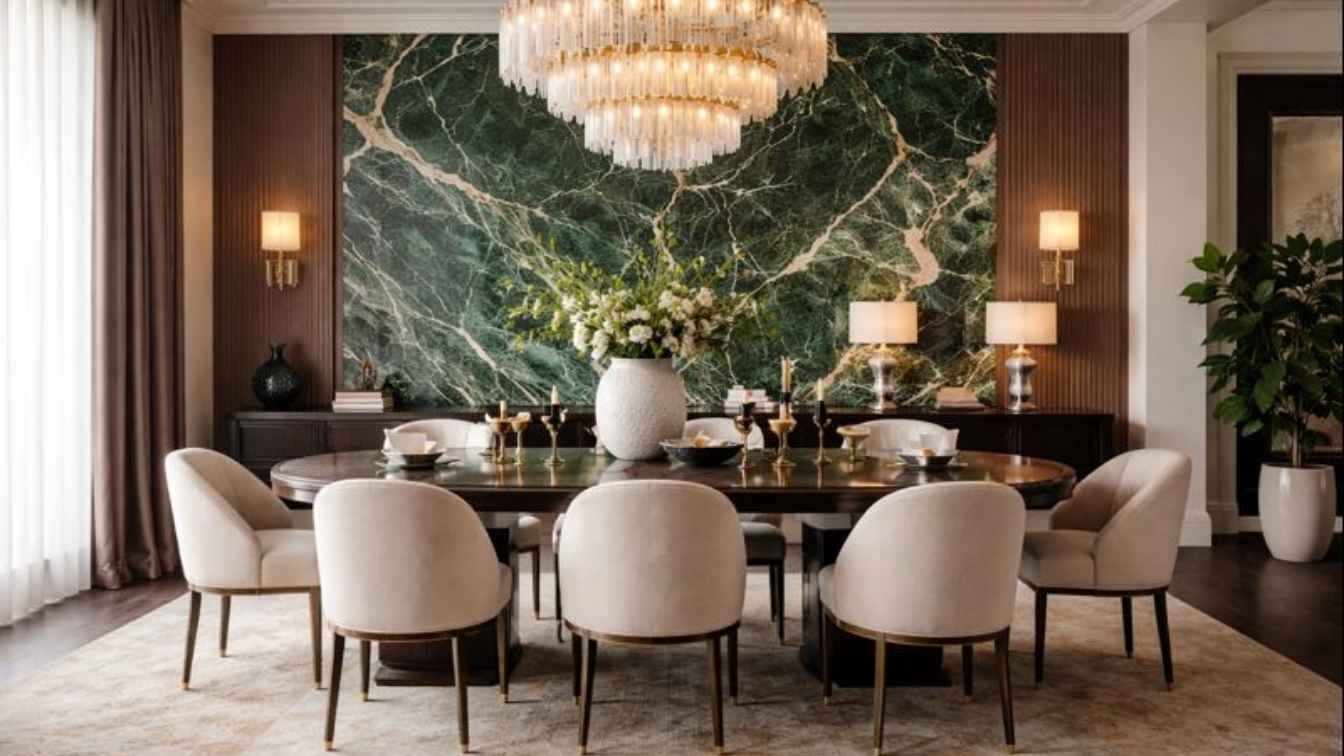
Most dining rooms feel like an afterthought. A table dropped in a box-shaped room, chairs that don’t quite fit, and lighting that’s either too bright or too dim. Sound familiar, You’re not alone and the good news is, it’s an easy fix.
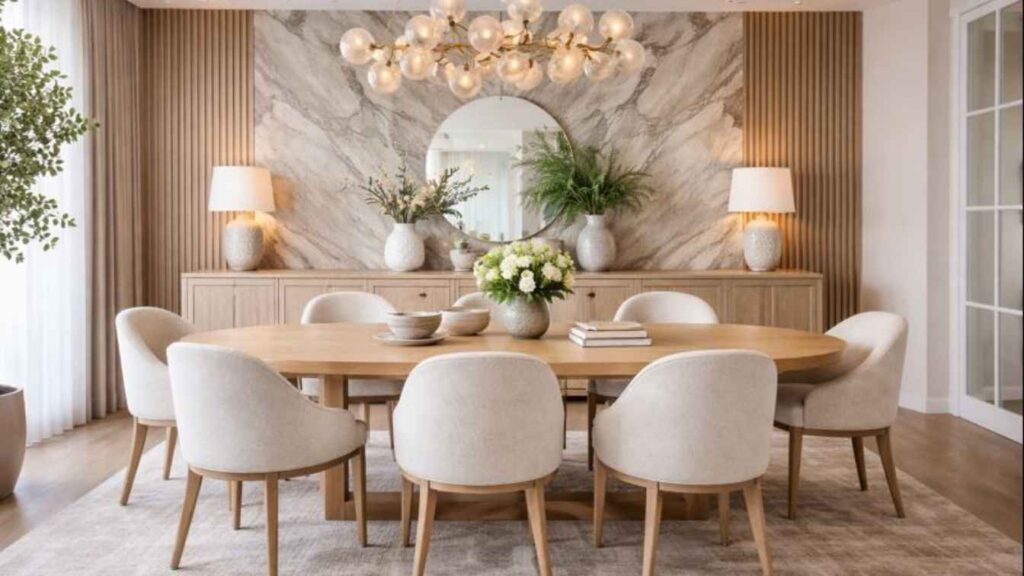
A well-designed dining room isn’t just about looks. It’s the space where meals become memories. Whether you’re working with a small apartment dining area or a generous open plan layout, the right dining room ideas can completely change how your home feels and how your family connects.
In this guide, we cover powerful dining room ideas backed by interior design principles, real-world use cases, and 2026 trends. Each idea is practical, budget-flexible, and instantly actionable. Let’s build the dining room your home deserves.
Choose the Right Dining Table as Your Room’s Anchor
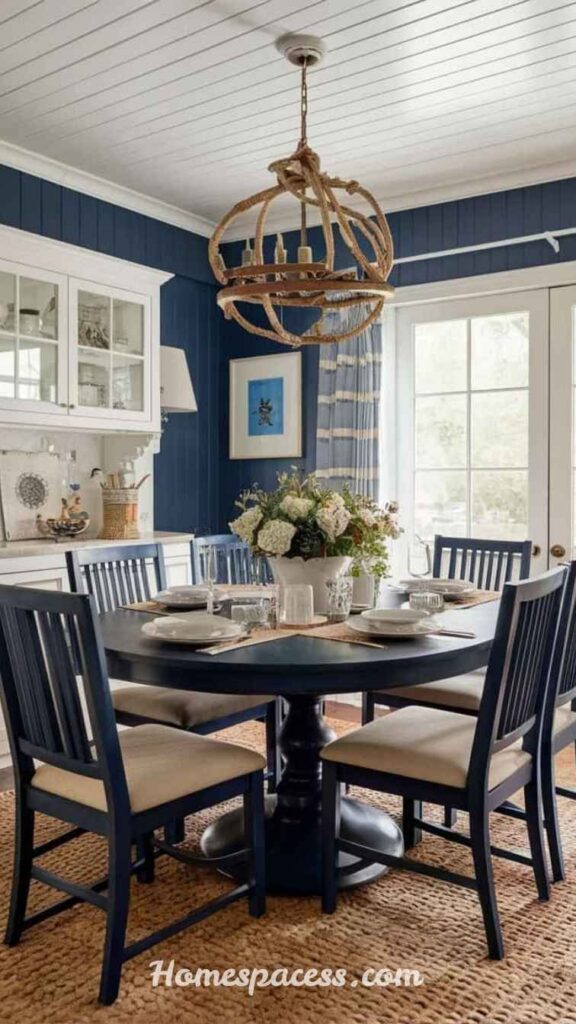
The dining table is the heart of every dining room design. Before choosing a style, think about how many people regularly eat there not just on holidays. A round table works beautifully for 4 people in a smaller dining space, promoting conversation and flow. A rectangular extendable table, on the other hand, gives you everyday practicality with flexibility for guests.
Material matters more than most people realize. Solid oak or walnut develops character over time and hides daily wear well. Marble looks stunning but requires maintenance. If you have kids or host frequently, consider a table with a lacquered or oil-finished surface it’s far more forgiving without sacrificing beauty. Always measure your dining room dimensions first and leave at least 90cm clearance on all sides for comfortable chair movement.
Expert Insight: Interior designers recommend the “arm-reach test” you should comfortably reach the center of your table from any seat without leaning. If you can’t, your table is too wide for meaningful conversation.
Must Read: Home Bar Ideas That Make Entertaining at Home More Fun
Layer Your Dining Room Lighting for Mood and Function
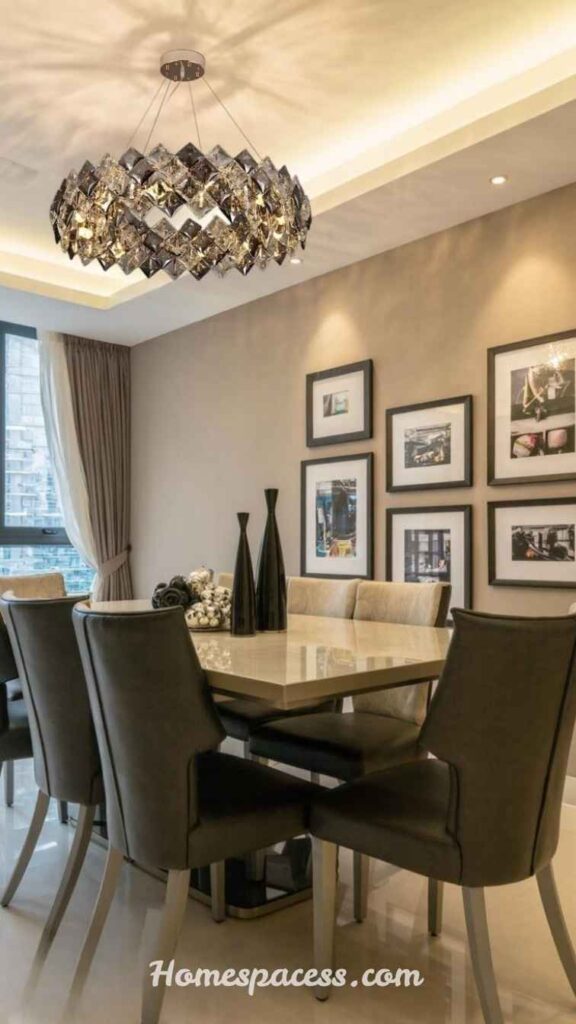
Lighting is the single most underestimated element in dining room decorating ideas. Most homeowners install one overhead light and call it done. The problem? A single source creates flat, unflattering light that kills the atmosphere at dinner. The solution is layering combine a statement pendant or chandelier above the table with wall sconces or a floor lamp nearby.
Your pendant light should hang 75–85cm above the table surface. Any higher and it loses visual impact. Any lower and it becomes a barrier to conversation. Always install a dimmer switch this single investment transforms your dining experience more than any piece of furniture can. For warm, inviting ambience, use bulbs with a color temperature of 2700K–3000K. Cool white lighting (4000K+) is for offices, not dinner tables.
In 2026, smart lighting systems are increasingly popular in modern dining rooms. With a voice command or phone tap, you can shift from bright “family lunch” mode to a dimmed, candle-like “dinner party” setting. Brands like Philips Hue and LIFX integrate beautifully with existing dining room decor without complex installation.
Don’t Skip: Easy Party Decor Ideas That Will Impress Your Guests Instantly
Use a Statement Wall to Define Your Dining Area
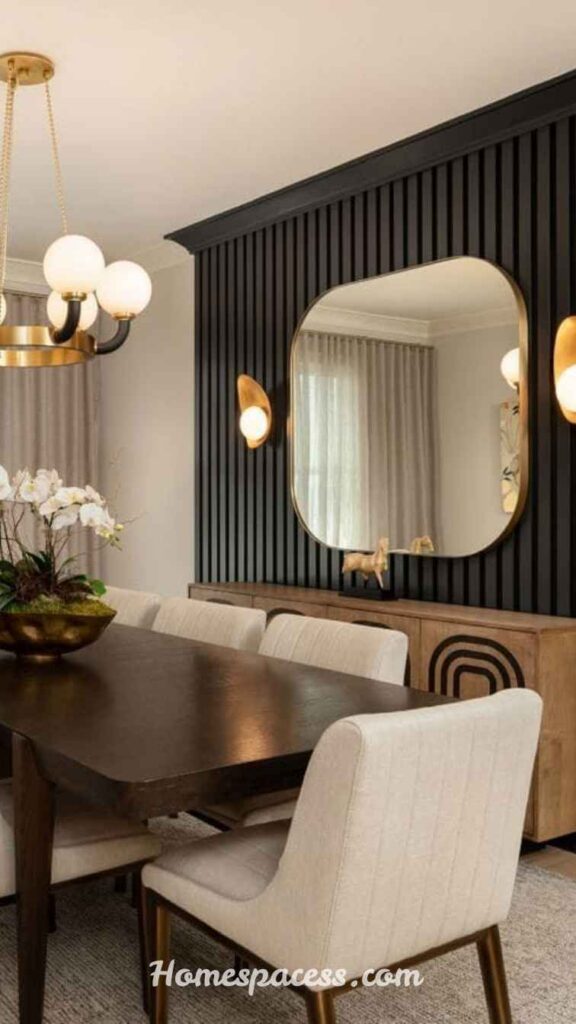
A statement wall instantly elevates a dining room from plain to purposeful. In open-plan homes especially, a feature wall visually “zones” your dining area without needing physical barriers. Popular options include bold paint in deep tones like forest green, navy, or terracotta colors that happen to be surging in popularity in 2026 dining room trends. These rich hues create a cocooning effect that makes meals feel more intimate.
Wallpaper is making a major comeback in dining spaces. Botanical prints, textured grasscloth, or geometric patterns add depth and personality that paint alone can’t achieve. For a budget-friendly alternative, consider limewash paint techniques they create a beautifully imperfect, aged texture that’s been favored by interior designers for Mediterranean-inspired dining rooms. Pair your statement wall with good lighting and you’ll have a dining space that feels deliberately designed.
Don’t Miss: Gaming Room Ideas That Transform Any Space Into a Setup Worth Streaming
Mix Dining Chairs for an Intentional, Curated Look
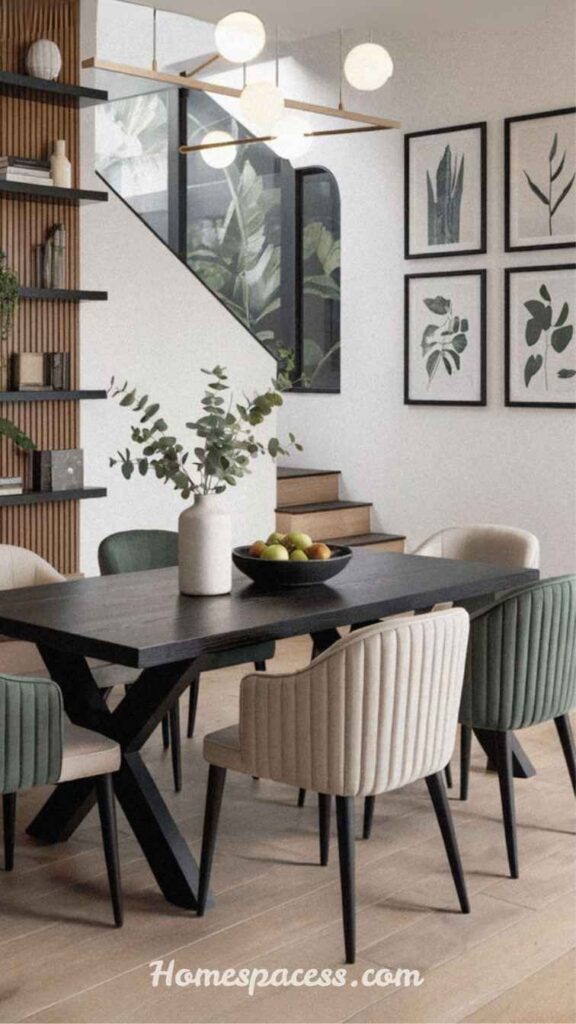
Matching chair sets are safe but mixing dining chairs is where personality lives. A growing trend in contemporary dining room ideas is pairing a solid upholstered bench on one side with statement chairs on the other. This combination is practical (benches seat more people), visually dynamic, and easier to refresh over time since you only need to reupholster or replace a portion of your seating.
If mixing chair styles, keep one consistent element color, material, or leg style to create cohesion. For example, four different chair silhouettes all painted in the same matte black look intentional and editorial rather than random. Upholstered chairs in boucle, velvet, or performance fabric add warmth and comfort for long meals. Remember: comfort drives how long people linger at your table, so don’t sacrifice it for aesthetics.
Pro Tip: Add a bench seat along one wall and push it under the table when not in use. This single move can increase your dining capacity by 30–40% without making the room feel cluttered perfect for small dining rooms.
Read More: Terrace Design Ideas: 10 Expert Ways To Create Your Perfect Outdoor Space
Incorporate a Dining Room Rug to Ground the Space
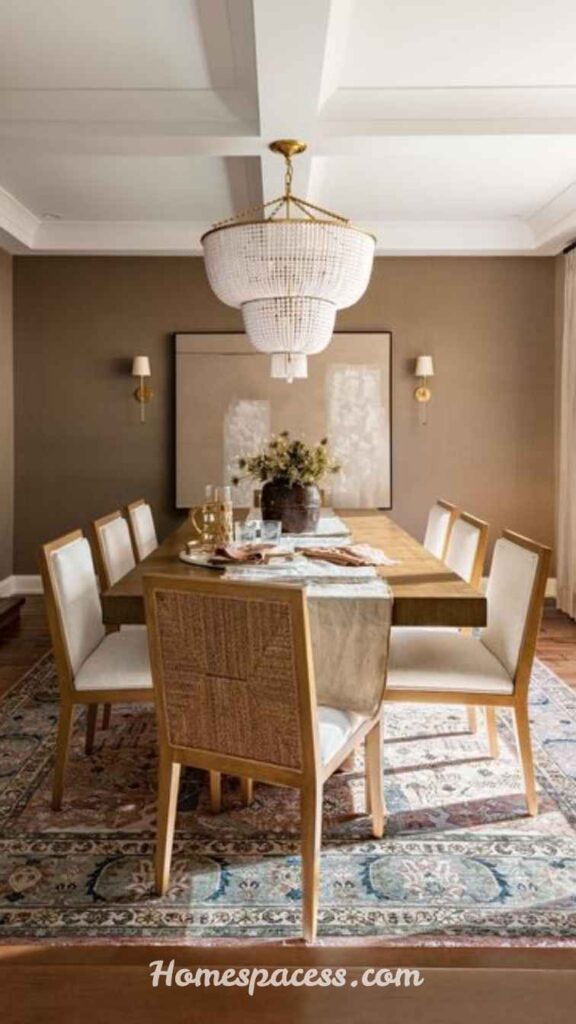
A rug under your dining table does three things: it defines the dining zone visually, protects your flooring, and adds texture and warmth to the room. However, getting the size wrong is one of the most common dining room decorating mistakes. Your rug must extend at least 60cm beyond all sides of the table so that when chairs are pulled out, all four legs remain on the rug. Anything smaller creates an awkward floating effect.
For dining rooms, choose rugs that balance beauty with practicality. Flatweave, sisal, or low-pile synthetic rugs are easiest to clean after spills. If you love the look of natural jute or a high-pile rug, place a rug pad underneath and treat it with a fabric protector spray. In terms of pattern, a solid or subtly textured rug lets your table and chairs shine, while a bold geometric or abstract pattern can become the room’s focal point especially effective in minimalist dining rooms.
Add a Sideboard or Buffet for Style and Storage
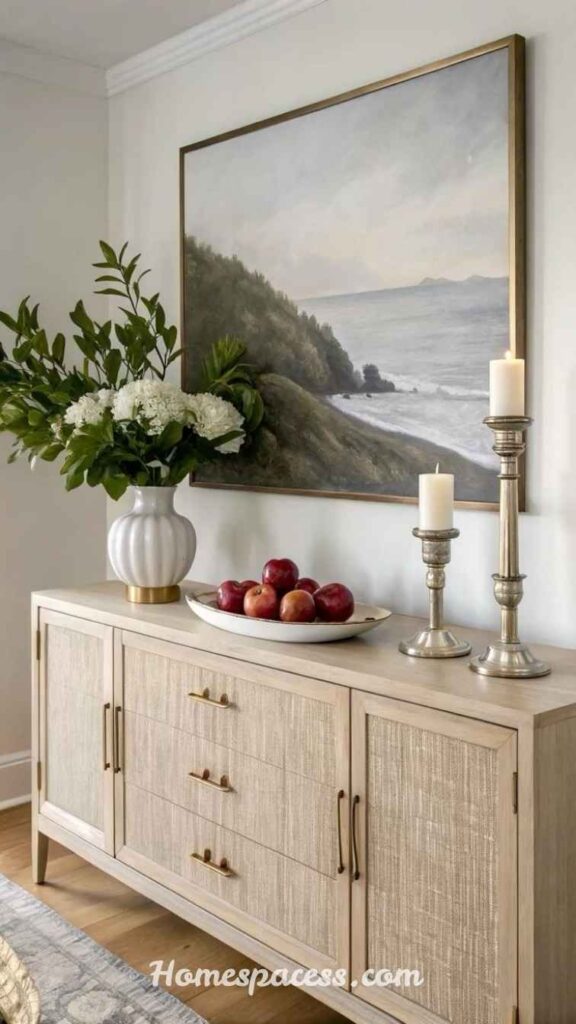
One of the most functional yet overlooked dining room furniture ideas is the sideboard. It serves as a serving surface during meals, extra storage for tableware and linens, and a display surface for art, plants, and objects. A well-styled sideboard immediately makes a dining room feel more complete like the room was properly furnished rather than just equipped with a table and chairs.
When choosing a sideboard, scale it to your dining room wall it should span roughly two-thirds of the wall’s width for visual balance. Mid-century modern designs with tapered legs feel light and airy. Contemporary boucle-fronted or fluted designs are trending strongly in 2026. Whatever style you choose, style the top with intention: vary height using candlesticks, a vase, a small mirror, and perhaps a potted plant. This creates a “vignette” that designers use to make a room feel curated and lived-in.
Bring Nature In with Dining Room Plants and Greenery
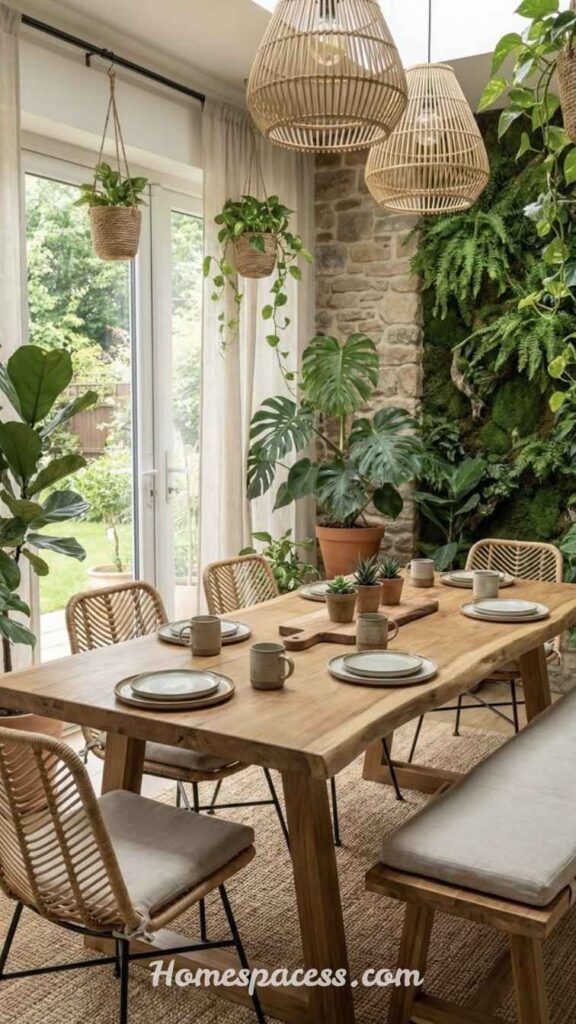
Plants are one of the most affordable and impactful dining room decor ideas available. They add life, texture, color, and perhaps most importantly a psychological sense of calm that makes meals more enjoyable. Research consistently shows that eating in the presence of plants reduces stress and promotes mindfulness at mealtimes. A sculptural fiddle-leaf fig in a corner, trailing pothos on a shelf, or fresh herbs in a ceramic pot at the center of the table all work beautifully.
If your dining room lacks natural light, focus on low-light tolerant species like pothos, snake plants, ZZ plants, or cast-iron plants. For well-lit dining spaces, olive trees in terracotta pots are an on-trend choice that brings Mediterranean warmth to any dining room interior. Fresh flowers on the table even a simple seasonal bunch create an immediate sense of occasion that no decor purchase can replicate.
Maximize Small Dining Room Spaces with Smart Design
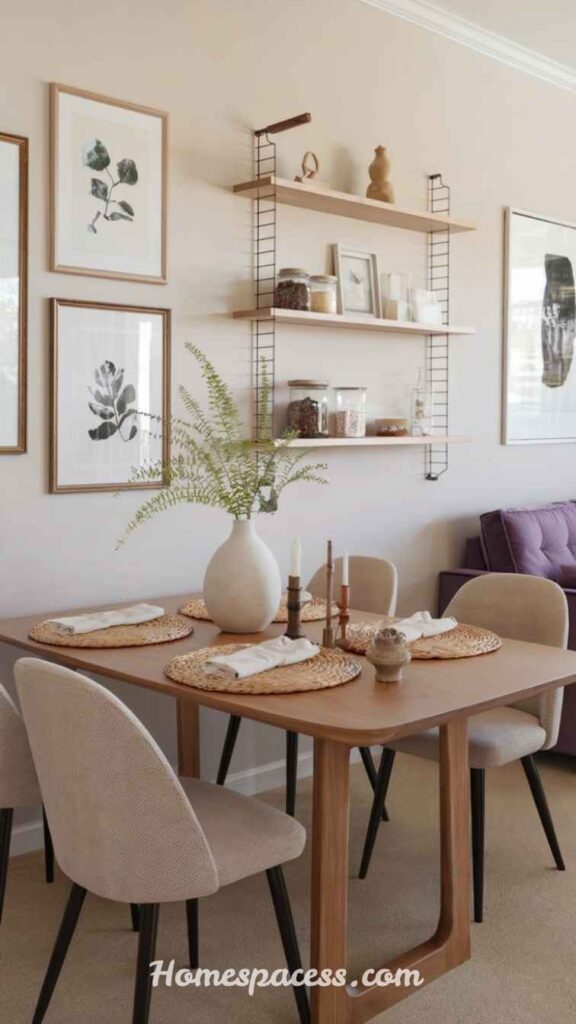
Small dining rooms are not a limitation they’re a design challenge with brilliant solutions. The key is to avoid the natural instinct to choose smaller furniture. Ironically, one properly sized piece looks better and functions better than several undersized items that make a small space feel cluttered. A round pedestal table is ideal for compact spaces no corners to bump into and it seats one extra person compared to a same-diameter square table.
Mirrors are a transformative tool in small dining room design. A large mirror on one wall creates the illusion of doubled space and bounces light beautifully. Wall-mounted fold-down tables are perfect for very small dining rooms or dining areas within studios they provide a proper surface for meals and fold flat against the wall when not in use. Choosing dining chairs with open, slim frames (like hairpin or cross-back designs) keeps sightlines clear and prevents the visual heaviness that makes small rooms feel oppressive.
Space Hack: Replace a traditional dining chair on one end with a slim upholstered bench that doubles as a hallway seat. In a small home, every piece should serve two purposes.
Create an Open-Plan Kitchen Dining Room That Actually Works
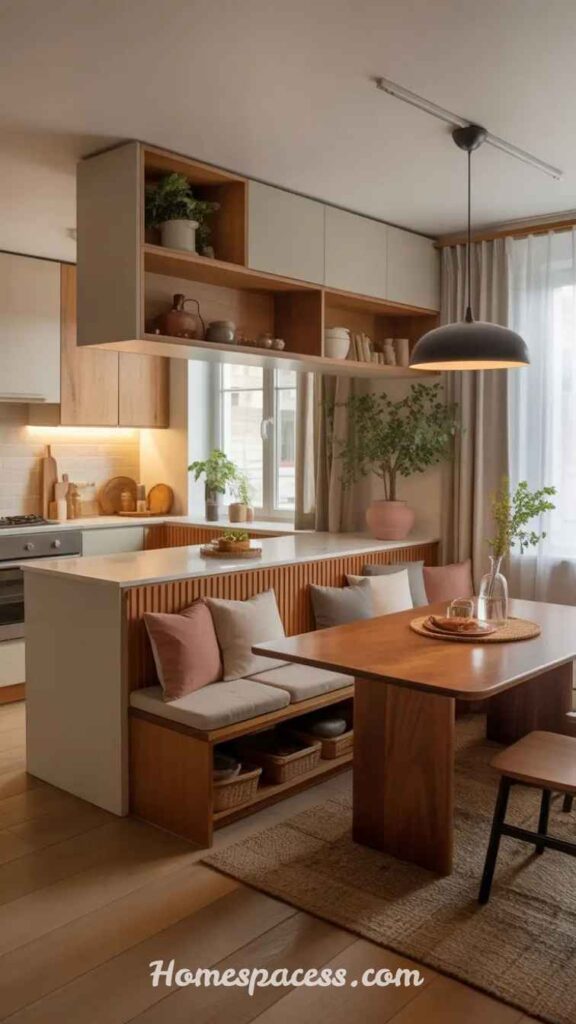
Open-plan kitchen-dining rooms are the standard in most modern homes but they’re notoriously difficult to design well. The biggest challenge is creating a dining area that feels distinct and purposeful without physical walls. The solution lies in intentional zoning: a large pendant light directly above the dining table, a rug that anchors the space, and a color accent (such as a different paint color on the dining zone wall) all work together to tell the eye “this is a different room.”
Furniture placement is critical in kitchen-diner layouts. Avoid pushing your dining table against a wall this immediately reads as a compromise rather than a design choice. Instead, float it in the space with at least 90cm clearance from the kitchen island or counter. Consider a kitchen island with bar stools as a secondary, casual dining option that handles everyday breakfasts and quick lunches, reserving your dining table for proper meals and gatherings.
Personalize with Dining Room Art and Decor
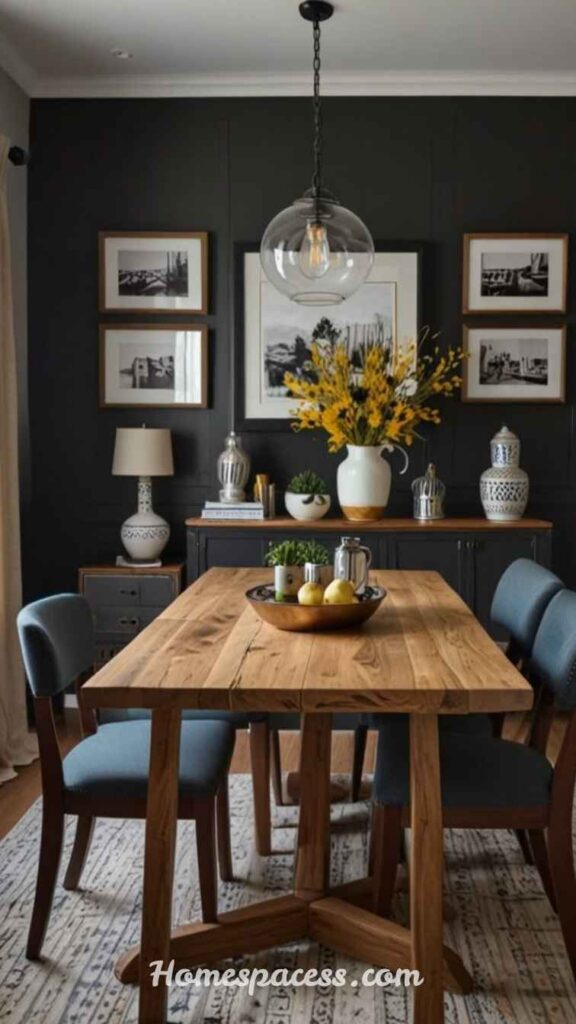
Art is what transforms a dining room from a showroom into a home. The dining room wall is one of the best places to invest in a single large-format piece that anchors the entire space emotionally. Abstract art, landscape prints, or photography work particularly well they’re conversation starters during meals without being politically charged. Scale is crucial: one large piece (at least 80cm wide) almost always outperforms a cluster of small prints in terms of visual impact.
Don’t overlook the dining table itself as a decor surface. A centerpiece that changes with the seasons a simple linen table runner, a sculptural bowl with seasonal fruit, taper candles in varying heights brings life to the table between meals and signals to guests (and your own household) that this space is valued. The most memorable dining rooms feel like they belong to the people who live in them, not to a furniture catalog. Personal objects, imperfect handmade pieces, and found treasures tell your story better than any perfectly matched set ever could.
Conclusion:
Great dining room ideas don’t require a big budget or a complete renovation. They require intention knowing what you want the space to feel like and making deliberate choices that support that feeling. From your table and lighting to your rug and art, every element contributes to a room that either draws people in or keeps them at a distance.
The dining room is one of the few spaces in a home that asks everyone to slow down, sit together, and simply be present. It deserves to be designed with that purpose in mind. Pick one idea from this guide just one and implement it this week. Small, deliberate improvements compound into something remarkable over time.
Trend Analysis
Dining Room Design Trends Shaping 2026 and the Next Decade
The dominant story in 2026 dining room design is the shift from “showroom perfect” to “lived-in luxury.” Homeowners are deliberately choosing materials that age beautifully oiled hardwoods, natural linen, unlacquered brass, and handmade ceramics over glossy, pristine surfaces that feel clinical. This reflects a broader cultural movement: dining rooms are reclaiming their role as the emotional center of the home, not just a functional space to eat.
Earthy Color Palettes
Terracotta, warm taupe, clay, and deep forest green are dominating dining room color schemes replacing the grey-and-white neutrals of the 2010s.
Curved Furniture
Round tables, curved-back chairs, and arched mirrors are replacing sharp, angular forms. Softer lines create a more welcoming dining atmosphere.
Textural Layering
Combining rough stone, smooth wood, woven textiles, and matte ceramics adds visual richness that photography-driven design had flattened.
Integrated Tech
Hidden charging surfaces, smart lighting scenes, and wireless speaker-integrated sideboards are entering the dining room quietly but decisively.
Looking ahead to 2027–2030, the dining room will increasingly blur with adjacent spaces. Hybrid dining-library rooms, dining rooms with integrated wine storage walls, and indoor-outdoor dining rooms with retractable glass walls are all gaining momentum. The meal as a curated experience not just a daily function is driving these architectural investments.
Expert Insights
Practical Tips Interior Designers Use (That Most Articles Don’t Tell You)
After working with hundreds of dining room projects, professional interior designers have accumulated a set of principles that rarely make it into listicle-style guides. These are the real-world decisions that separate a dining room that photographs well from one that actually functions beautifully every single day of the year.
- Buy your lighting before your table: The pendant light sets the visual center of the room. Choose it first, then scale your table and chairs around it not the other way around.
- Test paint colors at night: Dining rooms are used most in the evening. Always view paint swatches under artificial lighting before committing colors shift dramatically from daylight to lamplight.
- Seat comfort over chair aesthetics: The most beautiful chair that becomes uncomfortable after 20 minutes will make long dinners miserable. Always sit in a chair for at least 5 minutes before buying.
- Leave the wall behind the table empty: Art placement works best on side walls or the wall you face when seated. Art behind you creates no value only someone standing can see it.
- Add a tray to your dining table centerpiece: A tray corrals candles, vases, and decor objects so they can be moved as one unit when setting the table for a meal a small detail that makes a huge practical difference.
One insight that’s consistently overlooked: acoustics. Hard surfaces stone floors, glass, plaster walls, wooden ceilings create echo and noise that makes dinner conversation exhausting. A rug, upholstered chairs, curtains, and acoustic wall panels (now available in beautiful fabric-covered formats) dramatically improve dining room comfort in ways that photos will never capture but that every guest will feel.
Sustainability
Sustainable Dining Room Design: Buy Less, Choose Better
Sustainability in dining room interior design isn’t just an ethical choice it’s a financial one. Fast furniture (cheap flatpack pieces designed to be replaced every 3–5 years) costs more over a decade than a single well-made piece bought once. A solid hardwood dining table from a reputable maker will outlast five generations and only improve with age. When calculating cost, think per-year-of-use, not purchase price. A £2,000 solid oak table used for 30 years costs £67/year. A £400 engineered wood table replaced every 5 years costs £80/year and ends up in landfill three times.
Sourcing secondhand is one of the smartest dining room ideas that most style guides avoid mentioning presumably because it doesn’t sell new products. Vintage dining tables, chairs, and sideboards from mid-century and earlier were made with higher-grade materials than most of what’s produced today. Marketplaces like eBay, Chairish, Facebook Marketplace, and local auction houses regularly offer extraordinary pieces at a fraction of their real value. Refinishing a vintage dining table costs £100–£200 and produces a piece with genuine character.
For new purchases, look for FSC-certified wood, recycled metal frames, and natural upholstery materials like wool, linen, or organic cotton. Avoid vinyl and PU leather they crack within 3–5 years and are neither recyclable nor biodegradable. Water-based finishes on wood furniture are preferable to solvent-based ones for indoor air quality, which matters in a room where you spend time eating and breathing.
Future Predictions
The Dining Room of the Future: What’s Coming by 2030
The dining room is on the edge of a technological transformation that will be subtle but profound. AI-driven home systems are already beginning to personalize dining environments adjusting lighting color temperature based on the time of day, playing ambient soundscapes matched to meal type, and even suggesting table settings based on the occasion. By 2028, expect these systems to integrate with smart refrigerators and meal-planning apps, creating a fully connected dining ecosystem.
Smart Surface Tables
Embedded Induction Heating
AR Tabletop Displays
Adaptive Acoustic PanelsSelf-cleaning Upholstery
Self-cleaning Upholstery
Biophilic Ceiling Systems
Material science is delivering innovations that will change dining room furniture fundamentally. Self-healing coatings for dining table surfaces (already in use in automotive applications) will enter furniture within 3–5 years minor scratches disappearing with a little heat or simply over time. Mycelium-based composite materials are being developed as alternatives to wood and foam for chair construction, offering identical performance with a fully compostable end-of-life. Graphene-enhanced surfaces that resist heat, water, and bacteria without visible treatment are also in development for high-end dining tables.
The most transformative shift, however, may be architectural. The dedicated dining room as a fixed space is being redesigned into a flexible “dining zone” that can expand or contract based on need. Motorized partition walls, ceiling-mounted fold-down tables, and modular seating systems that reconfigure in minutes will redefine what we mean by “dining room ideas” by 2030 especially in urban apartments where space is the most valuable commodity of all.
Common Mistakes
Dining Room Design Mistakes That Quietly Ruin Beautiful Spaces
Most dining room design mistakes aren’t dramatic they’re subtle errors that accumulate into a space that feels “off” without a clear reason why. Understanding these pitfalls is just as valuable as knowing the best dining room ideas, because avoiding mistakes is often faster than adding new elements.
- Wrong rug size: A rug too small for the dining table is the most common and most visually damaging mistake in dining room decor. When chairs are pulled out, legs must stay on the rug always.
- Hanging the chandelier too high: A pendant light that drifts up toward the ceiling loses all visual connection to the table. Keep it 75–85cm above the tabletop no exceptions for higher ceilings.
- Ignoring acoustics: All-hard surfaces (stone floor, plaster walls, glass table) create an echo chamber. Add a rug, curtains, and upholstered seats to make conversation possible at normal volume.
- Over-matching everything: A dining room where table, chairs, sideboard, and lighting all come from the same collection looks like a furniture showroom, not a home. Intentional mixing creates authenticity.
- Neglecting storage: A dining room without storage forces clutter onto the table. A sideboard, built-in shelving, or even a slim console table gives you somewhere to stage serving dishes and store everyday items.
- Choosing form over footprint: A dramatic oversized table that leaves guests unable to pull their chairs out, or that blocks a doorway, defeats every aesthetic advantage. Always prioritize human movement first.
Perhaps the most overlooked factor of all is the relationship between the dining room and natural light throughout the day. A dining room that gets harsh western afternoon sun will be unbearably bright during weekend lunches unless you have blinds or curtains. A dining room with no natural light at all will feel oppressive regardless of how well it’s decorated. Before finalizing any dining room design, spend time in the space at different hours morning, noon, and evening and design your lighting and window treatments accordingly.

Team Home Spacess shares simple, practical design ideas that work for real families. The team focuses on cozy décor, soft colors, and natural textures that make a space feel truly lived-in. From everyday decorating tips to creative home projects, Team Home Spacess is dedicated to helping readers create warm, comfortable, and inviting spaces with a fresh and personal touch.