

Key Takeaways
- Measure the seating area, walkways, and delivery route before ordering.
- Choose a shape that makes movement around the room feel natural.
- Match the table height closely to the sofa seat height for everyday comfort.
- Select materials according to spills, children, pets, entertaining, and cleaning habits.
- Natural stone adds character, but it benefits from sensible care and prompt spill cleanup.
- Leave enough clear surface space for the way your household actually lives.
A coffee table is more than a decorative centerpiece. In Australian living rooms, it often holds morning coffee, remotes, books, snacks, board games, laptops, and the occasional shared meal. The best choice supports those routines while leaving the room easy to move through.
For homeowners drawn to natural materials, a travertine marble coffee table can bring a calm, grounded finish to coastal, contemporary, Japandi, and mid-century interiors. Elsa Home And Beauty specializes in marble and stone furniture, and its travertine coffee table collection provides a useful point of comparison for shoppers in Australia, with varied shapes, custom sizing on request, and worldwide shipping for design-led homes.
Start With the Room Layout
Before falling for a finish or sculptural base, measure the sofa, chairs, rug, television unit, doors, and main walking paths. Mark the proposed table footprint with masking tape or flattened cardboard. This simple test reveals whether the table will feel proportionate to the sofa and whether people can pass without bumping knees.
Also measure doorways, apartment lifts, stairwells, and hallways. A substantial stone piece can be difficult to reposition once delivered, so choose its final location before it arrives. Think about how many people use the room, whether children play there, and whether the layout needs to change for guests.
Choose a Shape That Supports Movement
- Round tables suit compact rooms and busy pathways because there are no sharp corners to navigate.
- Oval tables provide a longer surface while maintaining softer edges.
- Rectangular tables work naturally with longer sofas, broad rugs, and linear living rooms.
- Square tables can balance a sectional or a symmetrical arrangement of sofas and chairs.
- Nesting tables add flexible surface area for visitors, then tuck together when the room needs more floor space.
- Organic shapes can soften a room filled with straight-lined cabinetry and upholstery.
Shape affects more than appearance. A round or oval table can make a smaller Sydney apartment lounge or a narrow Melbourne terrace sitting room feel easier to circulate, while a large rectangular design may better anchor an open-plan family space.
Get Height and Clearance Right
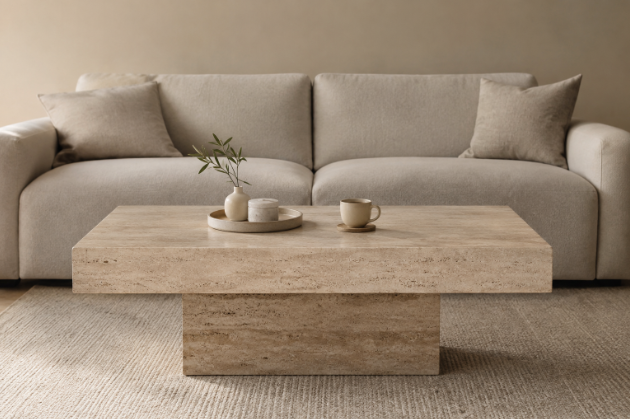
A coffee table generally feels most practical when its top sits close to the sofa cushion height or slightly below it.
A very high table can feel visually heavy and awkward to reach across, while a low one may be less convenient for drinks, snacks, or a laptop.

Simple Measuring Steps
- Measure from the floor to the top of the sofa cushion.
- Measure the open floor area in front of the seating.
- Mark the intended table size on the floor.
- Sit down and check that the marked surface is easy to reach.
- Walk around it, including the path to doors and adjoining rooms.
Leave enough room between the sofa and table to sit comfortably, stretch your legs, vacuum, and move through the space. Check nearby armchairs as well, particularly if they are angled toward the table.
Match the Material to Everyday Habits
Every material asks something different of a household. Timber introduces warmth and is easy to pair with linen, wool, and rattan. Glass keeps a room visually open but readily shows fingerprints and dust. Metal can create a clean, light profile. Engineered surfaces may offer a more uniform colour and pattern.
Natural stone brings distinct variation in tone, veining, and texture. Travertine is a form of freshwater limestone, which helps explain its warm neutral colouring and naturally occurring pores. Those features are part of its appeal, not necessarily defects, but they also mean each piece can look different.
Consider Natural Stone With Realistic Expectations
Stone is a considered choice rather than a maintenance-free one. Travertine, marble, and limestone can suit daily living when owners use coasters, place serving items on trays, and deal with spills quickly. Expect natural variation and small changes over time rather than a perfectly uniform surface.
Weight is another practical consideration. Confirm the floor location, delivery access, and whether the table needs to be moved often. For families, stable bases and softened edges are worth prioritizing. For pet owners, avoid designs with tight gaps that may catch toys or paws.
Learn the Basic Care Rules
For routine care, use a soft cloth to remove dust and blot spills rather than rubbing them across the surface. Follow the supplier’s instructions on sealing and use cleaners made for the specific stone. Felt pads beneath bowls, lamps, trays, and decorative objects can reduce the chance of scratches.
Avoid vinegar, lemon juice, abrasive powders, and harsh bathroom cleaners on calcium-based stone. The way acids react with marble and limestone shows why acidic products are unsuitable for these surfaces. A pH-neutral stone cleaner is usually the safer everyday option unless the manufacturer advises otherwise.
Use Colour and Texture to Balance the Room
Choose the table as part of the room’s broader material mix. A pale stone surface can lighten dark floors or deep upholstery, while a darker timber or metal table can ground a cream rug and light sofa. Repeat one tone through a lamp base, picture frame, cushion, or side table, but avoid matching every finish exactly. Contrast often makes a room feel more relaxed and personal.
Common Coffee Table Mistakes to Avoid
- Buying based on a product image without measuring the full seating area.
- Choosing a shape that interrupts the main walkway.
- Ignoring sofa cushion height.
- Selecting a material that does not suit the household’s daily habits.
- Forgetting the delivery route and weight of a solid stone table.
- Overstyling the top until there is no usable space left.
A Simple Buying Checklist
- Room dimensions and walkways measured
- Sofa and chair heights checked
- Shape matched to the seating layout
- Material suited to spills, pets, children, and entertaining
- Care and sealing requirements understood
- Delivery access and table weight considered
Common Questions
What is the best coffee table shape for a small living room?
Round, oval, and nesting tables are often strong choices because they can improve movement and reduce the visual weight at the center of the room.
Should a coffee table be higher or lower than the sofa?
It usually works best close to the sofa seat height or slightly lower. Test reach and comfort from your own seating before deciding.
What should go on a coffee table?
Keep it useful: a tray, a small stack of books, a low bowl, a vase, or one sculptural object is often enough. Leave open space for everyday use.
Conclusion
The right coffee table fits the room, supports daily routines, and remains easy to live with. By balancing scale, shape, height, material, care needs, and personal style, you can choose a piece that makes an Australian living room feel calmer, more functional, and more complete.

Team Home Spacess shares simple, practical design ideas that work for real families. The team focuses on cozy décor, soft colors, and natural textures that make a space feel truly lived-in. From everyday decorating tips to creative home projects, Team Home Spacess is dedicated to helping readers create warm, comfortable, and inviting spaces with a fresh and personal touch.