

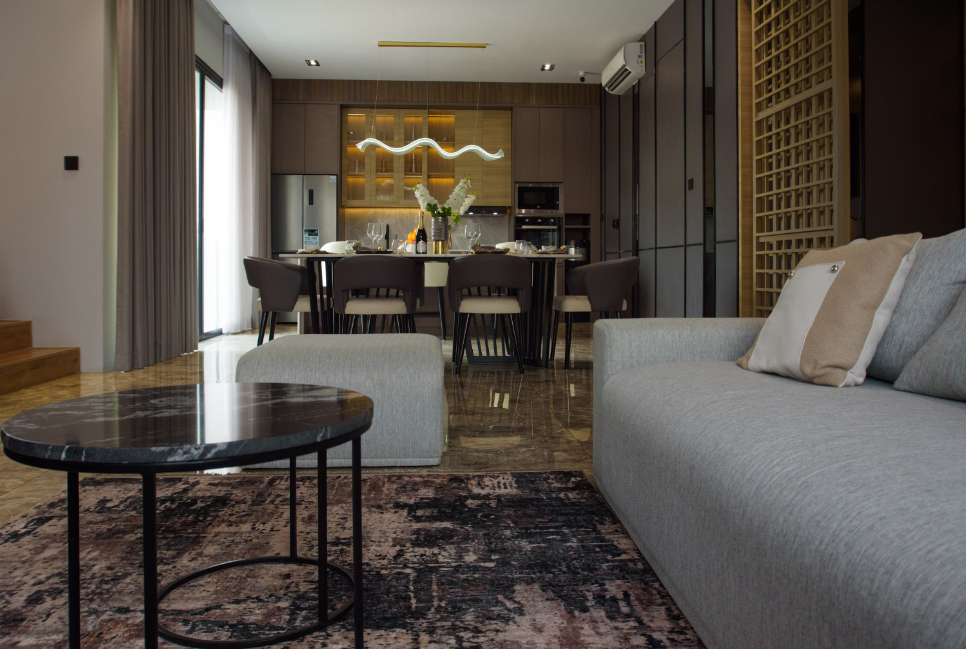
Contemporary living room design has moved well past the cold, gallery-white rooms that dominated the 2010s. Modern interiors prioritize warm minimalism, honest materials, and adaptable layouts that work for daily life rather than just looking tidy in photographs.
Whether you are furnishing a sun-drenched open-plan home or reworking an inner-city apartment, a well-designed contemporary lounge relies on intentional proportions, layered textures, and glare-free lighting. Below is a practical guide to the architectural and styling choices defining contemporary living rooms right now.
1. Anchor the room around orientation and natural light
Before selecting paint swatches or furniture finishes, look at how daylight moves through your room. A color palette behaves very differently depending on window orientation:
North-facing rooms receive warm, consistent sunlight throughout the day, which makes cool greys read blue and clinical. Bone, oatmeal, and warm timber tones keep these spaces balanced.
South-facing rooms draw cool, even daylight, so richer earth tones—like terracotta, olive, or warm walnut—prevent the room from feeling flat.
West-facing rooms take intense, low-angled afternoon sun that highlights every roller mark on flat walls. Textured plaster, limewash finishes, and brushed timber surfaces absorb that raking light gracefully.
2. Choose seating scaled to real human posture
The centerpiece of any contemporary living room is its seating, and proportions have shifted dramatically. Rather than cramming an oversized, rigid corner suite against every wall, designers favor fewer, better-proportioned pieces with deep seats (at least 58 cm to 65 cm of usable cushion depth) and softened edges.
“People often buy the biggest couch that physically fits through the front door, only to realize it kills foot traffic and blocks natural light,” says Melbourne interior architect Hannah Reid. “Leaving 80 cm to 90 cm of clear walkway around your main seating makes an average-sized room feel twice as open.”
When planning your layout, look for sofas that pair clean contemporary silhouettes with durable, tactile upholstery like recycled chenille, heavyweight linen blends, or FSC-certified timber frames. Modular designs and low-slung three-seaters work particularly well in open-plan rooms because backrests under 78 cm keep sightlines open between the lounge, dining area, and kitchen.
The trade-off with low-profile contemporary seating is upper-back support. If you spend evenings reading or watching films upright, balance a low-slung sofa with a high-backed swivel armchair or supportive lumbar cushions.
3. Replace matched suites with tactile material contrast
Buying a coordinated three-piece furniture set—matching coffee table, media console, and side tables—immediately makes a room feel staged. Contemporary design relies on material tension: pairing smooth surfaces with raw, organic ones so the eye moves naturally around the space.
Combine a soft, nubby bouclé or chenille sofa with a solid oak or ash coffee table, then introduce a third contrasting material such as honed travertine, brushed stainless steel, or smoked glass. Stick to two or three dominant wood and stone tones across the room, and repeat each finish at least twice so the mix feels deliberate rather than accidental.
4. Conceal visual clutter and oversized screens
Few things disrupt a calm contemporary room faster than a wall dominated by a massive black television screen and tangled cables. Contemporary layouts treat media storage as architectural joinery rather than an afterthought.
Low-profile timber sideboards with slatted or fluted doors hide routers, gaming consoles, and remotes while still allowing infrared signals to pass through. If your wall space allows, mounting the screen inside custom cabinetry or offsetting it slightly beside a vertical bookcase prevents the entire room from pointing at a single dark rectangle.
5. Layer lighting across three distinct heights
Relying on recessed ceiling downlights is the fastest way to flatten shadows and make warm textiles look harsh after sunset. Contemporary living rooms use multiple low-glare light sources on separate dimmer circuits:
Ambient overhead warmth: A diffused paper, linen, or frosted glass pendant centered over the coffee table to cast soft, even light.
Task and reading light: An arched floor lamp or articulated wall sconce angled over the primary armchair.
Low-level accent glow: A compact ceramic or cordless table lamp tucked onto a bookshelf or sideboard to illuminate dark corners.
Choose LED bulbs rated at 2700K (warm white) with a Color Rendering Index (CRI) of 90 or higher so timber grains, skin tones, and earthy upholstery colors look rich rather than washed out.
6. Ground the floor plan with properly sized rugs
Hardwood, polished concrete, and large-format porcelain tiles are staples in contemporary architecture, yet they create sharp acoustic echo if left bare. A hand-knotted wool, jute, or flatweave rug absorbs ambient sound while visually anchoring the seating zone.
The most common sizing mistake is choosing a rug that floats like a small island in front of the couch. Select a rug large enough—typically 200 cm by 300 cm or larger—so at least the front legs of your sofa and accent chairs rest directly on the weave, extending 25 cm to 30 cm past each armrest.
Building a space that adapts over time
The strongest contemporary living rooms avoid rigid formulas in favor of durable foundations. Invest in well-built anchor pieces—a frame-guaranteed sofa, a solid timber table, and a natural-fiber rug—and leave breathing room around them so your layout can shift as your routines change. When every piece earns its footprint through comfort and material quality, the room stays effortless to live in for years.

Team Home Spacess shares simple, practical design ideas that work for real families. The team focuses on cozy décor, soft colors, and natural textures that make a space feel truly lived-in. From everyday decorating tips to creative home projects, Team Home Spacess is dedicated to helping readers create warm, comfortable, and inviting spaces with a fresh and personal touch.