

A short drive across town feels easy, and that’s usually where decor gets hurt. On a Simpsonville local move, people tend to pack the furniture carefully and then toss the mirrors, lamps and framed prints into the back seat at the last minute. Those are the pieces that make a room feel finished, and they’re often the hardest to replace.
So this guide skips the general moving checklist and focuses on the stuff that decorates a home.
Why Short Moves Are Hard on Decor
Long-distance moves force a plan. There’s a truck, a schedule, a packed inventory. A move of a few miles gets treated more casually, and decor ends up making several trips in personal cars, wedged between laundry baskets.
Every extra load is another chance for a frame corner to crack or a lampshade to get crushed. And because the new place is close, it’s tempting to leave fragile items for “one more run” after the heavy lifting is done, when everyone is tired.
The fix isn’t complicated. Treat decor as its own category with its own boxes, and decide early who moves what.
Sort Your Decor Before Anything Goes in a Box
Walk through each room and pull out the decorative pieces: wall art, mirrors, vases, table lamps, sculptures, plants, throw pillows, small rugs. Seeing them grouped together usually makes it obvious what you love and what you’ve been meaning to donate for two years.
Photograph your walls before taking anything down. A quick photo of a gallery wall or a styled bookshelf saves a lot of guesswork when you’re trying to recreate it later. It also gives you a record of what each piece looked like before it moved, which helps if something arrives damaged.
Keep a short list of the fragile or high-value items. It doesn’t need to be fancy. A note on your phone with the item, the room it’s going to and which box it’s in is plenty.
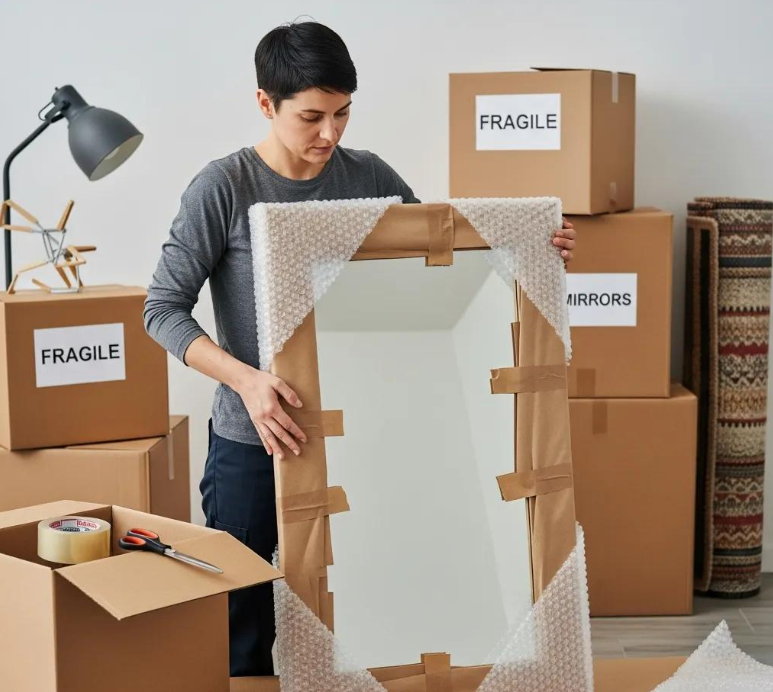
Packing Mirrors and Framed Art
Mirrors and large frames can be particularly vulnerable during a move because they’re often awkward to handle and difficult to secure.
A few habits that tend to help:
- Use picture or mirror boxes sized close to the item, so it can’t slide around inside.
- Add cardboard corner protectors, since corners usually take the hit when a frame gets bumped.
- Wrap the piece in packing paper or a moving blanket, then fill any gaps in the box.
- Avoid relying on tape to protect mirror glass. Instead, use proper mirror packaging and adequate cushioning to reduce the risk of impact damage.
- Stand boxes on edge rather than laying them flat with weight on top.
Label these boxes on more than one side with the room name and “glass.” It sounds obvious, but a box that only says “fragile” on the top is easy to stack upside down.
Canvas paintings without glass are lighter, but the canvas surface can dent if something presses against it. A piece of stiff cardboard over the front before wrapping gives it some protection.
Questions to Ask Before Moving Day
If you’re hiring professional movers, discuss your fragile and decorative items during the estimate rather than waiting until moving day. When comparing Simpsonville local movers, ask how the crew handles mirrors and oversized frames, whether specialty packing materials are available, and whether packing those items is included in your moving package or quoted separately.
South Carolina regulates movers who handle household goods within the state. The state’s Office of Regulatory Staff transportation FAQs suggest asking a mover for its PSC/ORS certificate number and calling to verify it. The same guidance says both you and the mover should note any existing damage before the move and recommends asking about coverage limits and the cost of additional coverage.
That point about existing damage is worth taking seriously for decor. A small chip on a frame or a scratch on a mirror can be noted on the inventory before anything leaves the house, which avoids an argument later about when it happened.
You’ll also want to decide which pieces you’d rather move yourself. Many people keep sentimental items, original artwork or anything irreplaceable in their own car, and that’s a reasonable call as long as those pieces are packed just as carefully.
Lamps, Ceramics and the Small Stuff
Lamps should come apart before they go anywhere. Take off the shade, remove the bulb and the harp if there is one, and pack the shade on its own. Lampshades crush easily, so don’t pack anything inside them.
For vases, bowls and ceramic pieces, wrap each item separately and pack heavier pieces at the bottom of a small box. Small boxes matter here. A large box full of ceramics gets heavy fast, and heavy boxes get dropped.
Throw pillows, blankets and soft textiles can provide extra cushioning around properly wrapped fragile items, helping fill empty spaces while keeping the linen closet moving at the same time.
Unpacking Decor in the New House
Unpack fragile boxes soon after the move instead of letting them sit in the garage. The state guidance recommends unpacking and inspecting goods as soon as possible and asking the carrier for a claim form right away if you find damage.
Before you start styling shelves, secure the furniture they sit on. The U.S. Consumer Product Safety Commission recommends anchoring top-heavy furniture, including bookcases and dressers, to the wall to reduce the risk of tip-over injuries. Shelves loaded with decor add weight up high, so it makes sense to anchor them before the vases and frames go back up.
Then go back to those wall photos. Hang the largest pieces before the smaller ones, since they set the layout for everything around them. Leave a few things in their boxes for a week or two if you’re not sure where they belong yet. A new room sometimes asks for a different arrangement than the old one did.
A local move is short, but your decor still has to survive it. A little planning on the fragile pieces is usually what decides whether the new place feels like home on the first night or after three more trips to the store.

Team Home Spacess shares simple, practical design ideas that work for real families. The team focuses on cozy décor, soft colors, and natural textures that make a space feel truly lived-in. From everyday decorating tips to creative home projects, Team Home Spacess is dedicated to helping readers create warm, comfortable, and inviting spaces with a fresh and personal touch.