

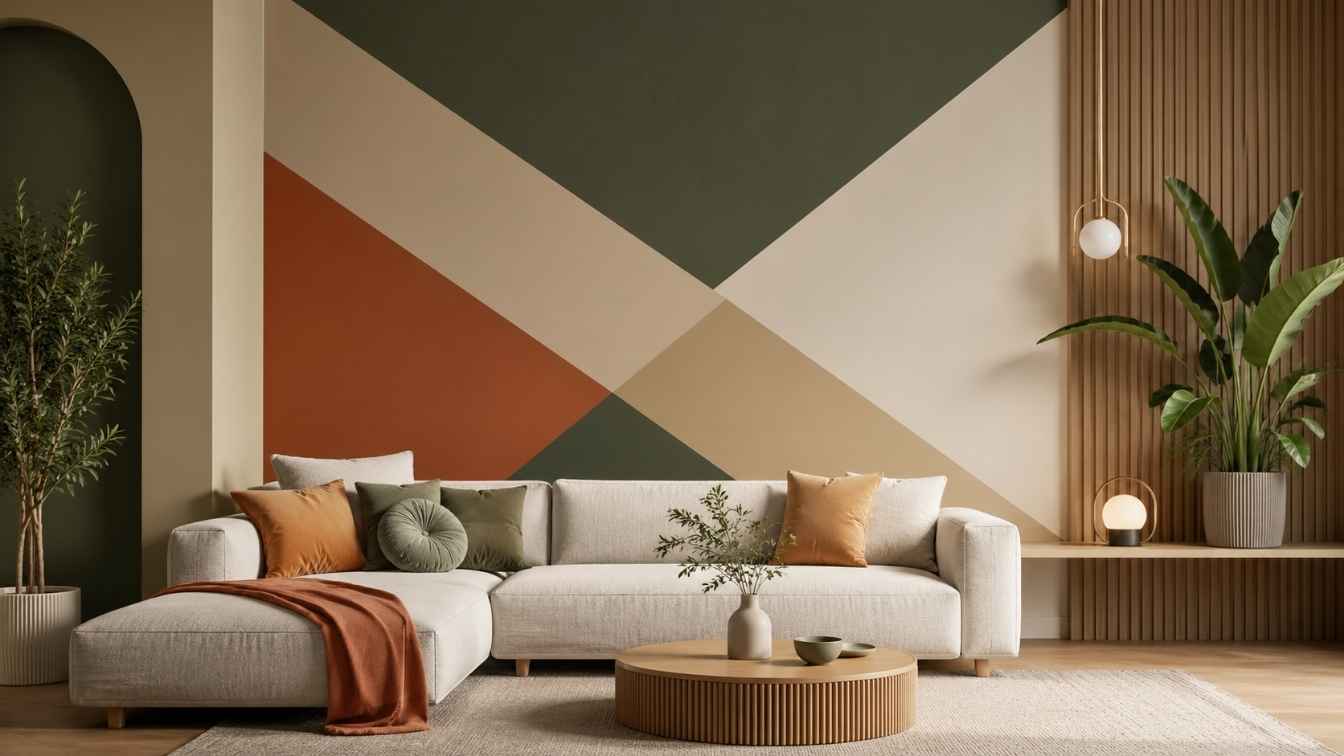
Most homeowners spend hours scrolling through photos of beautiful rooms only to end up with blank, uninspiring walls they don’t know how to change. A fresh coat of paint is one of the most affordable, high-impact home improvements you can make, yet the sheer number of choices leaves most people paralyzed.
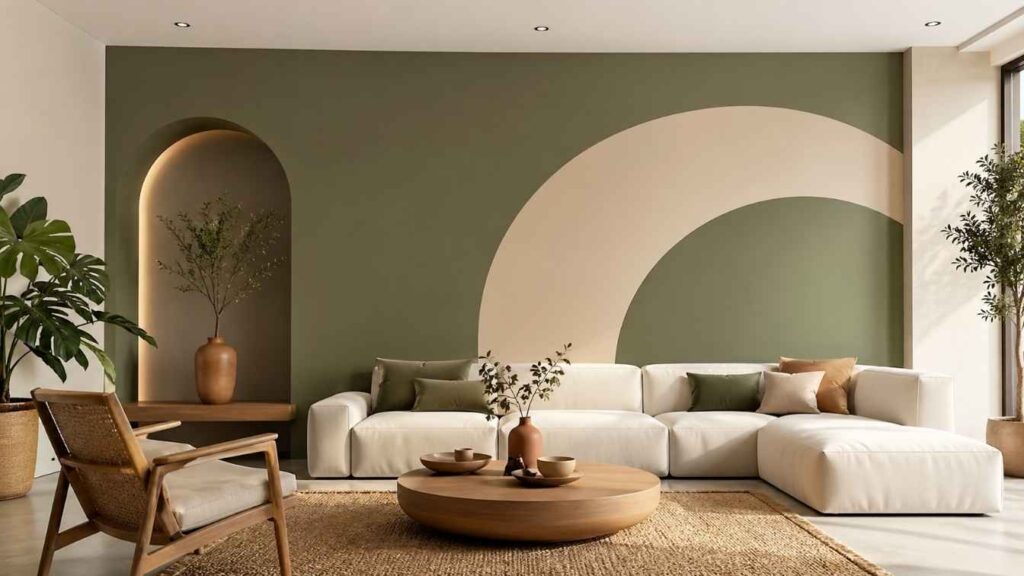
This guide cuts through the noise. Whether you’re drawn to bold statement walls, timeless textures, or calming minimalist palettes, these wall painting ideas cover every style, skill level, and budget. Each idea includes practical guidance you can actually use not just pretty descriptions.
From trending techniques designers are using right now to overlooked mistakes that ruin even the best paint jobs, everything you need to confidently transform your walls is right here.
The best wall painting ideas for 2025 include color blocking, limewash texture, two-tone walls, ombre gradients, mural accent walls, geometric patterns, Japandi-inspired neutrals, arch painting, panel detailing, nature motifs, dark moody hues, terracotta clay tones, and vintage floral stenciling.
Color Blocking
Bold Geometry Without a Single Brush Pattern
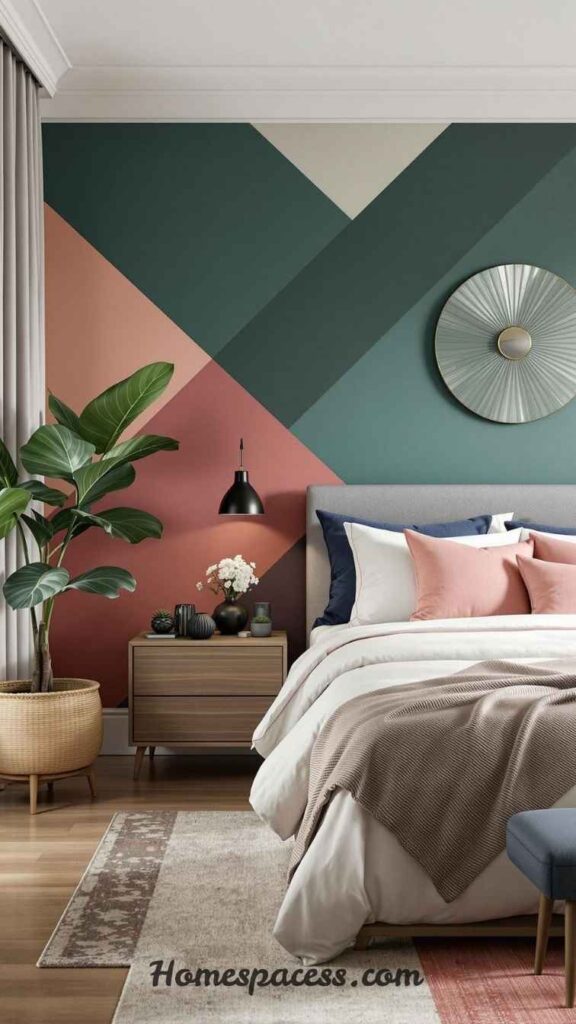
Color blocking is the art of dividing your wall into two or more distinct solid-color zones usually separated by a clean horizontal or diagonal line. It’s one of the most impactful wall painting ideas because it creates visual structure without needing expensive wallpaper or complicated techniques. A single paint roller and painter’s tape is all you need.
The key to making color blocking work is contrast. Pair a warm terracotta lower half with a pale cream upper section, or go bold with forest green meeting dusty blush. Design professionals often use color blocking in smaller rooms to create the illusion of higher ceilings painting the upper two-thirds lighter draws the eye upward dramatically.
For a modern twist, try a diagonal split instead of horizontal. Tape a line from one corner to the midpoint of the opposite wall and paint each section a contrasting color. This technique photographs beautifully and feels custom-designed without requiring any artistic skill.
Seal your painter’s tape edge with the lighter color first. Let it dry, then apply the darker color over the tape. This prevents bleed-through and gives you a razor-clean line.
Must Read: Simple Garden Decor Ideas for a Clean and Modern Outdoor Style
Limewash Texture
The Ancient Technique That Feels Completely Fresh
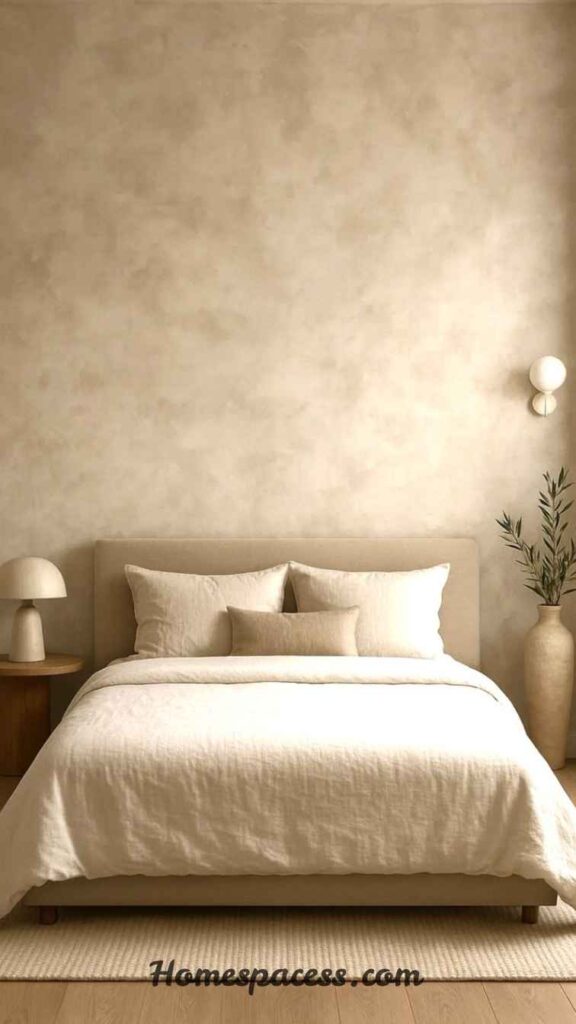
Limewash painting creates a soft, naturally mottled, aged-plaster look that no flat paint can replicate. Originally used on Mediterranean farmhouses for centuries, limewash has surged back into interior design as homeowners move away from sterile, perfectly smooth walls toward surfaces with depth and character. The finish absorbs and reflects light differently throughout the day which makes a room feel alive.
Applying limewash is surprisingly forgiving. You brush it on in loose, overlapping strokes, then wipe back sections with a damp cloth before it dries. The imperfections are the point. Unlike faux finishes that try too hard, limewash looks effortlessly handcrafted. Bedroom accent walls are the most popular application, but it works equally well in entryways and dining rooms.
Modern limewash paints (like Portola Paints or Classico Lime) don’t require the alkali-resistance concerns of traditional lime products, making them safe for interior use without special preparation. For a budget-friendly alternative, diluted chalk paint applied in similar cross-hatch strokes achieves a comparable textured effect.
Apply limewash to a slightly damp wall surface. This slows the drying time and gives you a wider working window to blend and wipe back the texture naturally.
Read More: Simple Bedroom Decor Ideas to Make Your Room Look Modern and Fresh
Two-Tone Walls
The Simplest Upgrade Most Rooms Are Missing
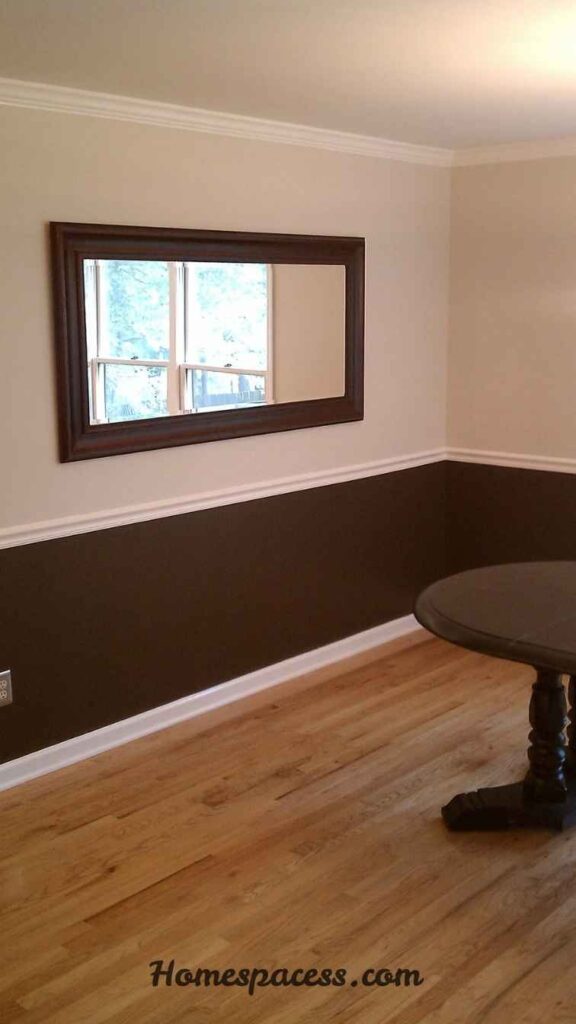
A two-tone wall divides the wall at chair-rail height roughly 32 to 36 inches from the floor with two complementary colors. The lower section is traditionally darker, grounding the room, while the upper section stays lighter to keep the space open. This technique has roots in Victorian architecture but has been reimagined for contemporary interiors with much more interesting color combinations.
What makes the two-tone approach stand out among beginner-friendly wall painting ideas is its forgiving nature. Even if your lines aren’t perfectly straight, the visual break between colors draws less attention to minor imperfections than a solid-color wall would. Adding a strip of contrasting color or even a simple wooden trim board at the dividing line elevates the look significantly.
For 2025, designers are pushing the dividing line higher to about halfway up the wall and using unexpected pairings: sage green meets bone white, or deep burgundy meets warm sand. This creates a sophisticated paneled effect without the cost of actual wainscoting.
Use a level and chalk line to mark your horizontal divide before taping. Even a subtle slope of just a few millimeters becomes very obvious once the paint dries.
Read Also: Trending Home Decoration Ideas to Upgrade Your Home Instantly
Ombre Gradient Walls
Soft Color That Moves Like Light
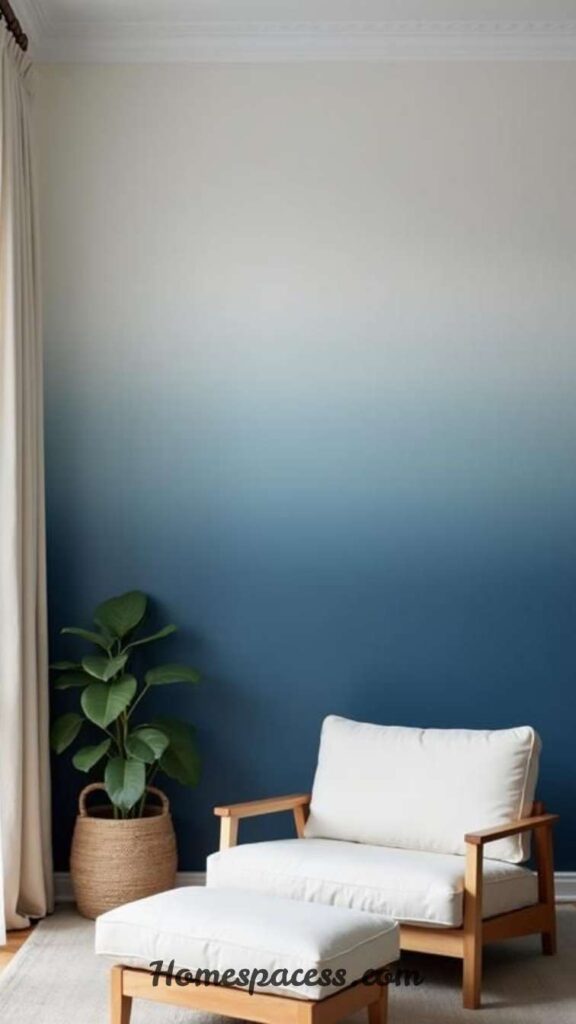
An ombre wall blends one color seamlessly into another or fades a single hue from deep at the base to barely-there at the ceiling. The result is a wall that feels soft, atmospheric, and almost watercolor-like. It’s one of the most visually complex-looking wall painting techniques that is, in practice, achievable by a confident beginner with the right approach.
The secret is working wet-into-wet. You paint your darkest color at the bottom, your lightest at the top, then blend the middle zone using a dry brush or large sponge in quick, light horizontal strokes before either section dries. Having a helper speeds this up considerably. Monochromatic ombré dark navy blending into a barely-there sky blue looks particularly stunning in bathrooms and nurseries.
Less obvious applications include painting just a small section of wall, like the area behind a headboard, in an ombre fade. This framed approach lets you test the technique without committing to an entire room, and it creates a custom headboard backdrop without any furniture purchase.
Mix three paint shades (dark, mid, light) in separate trays before you start. Do not try to mix colors on the wall it leads to muddy, uneven blending.
Don’t Miss: Patio Decor Ideas to Upgrade Your Backyard Without Overspending
Painted Arch Accent
Architectural Drama With Just a Can of Paint
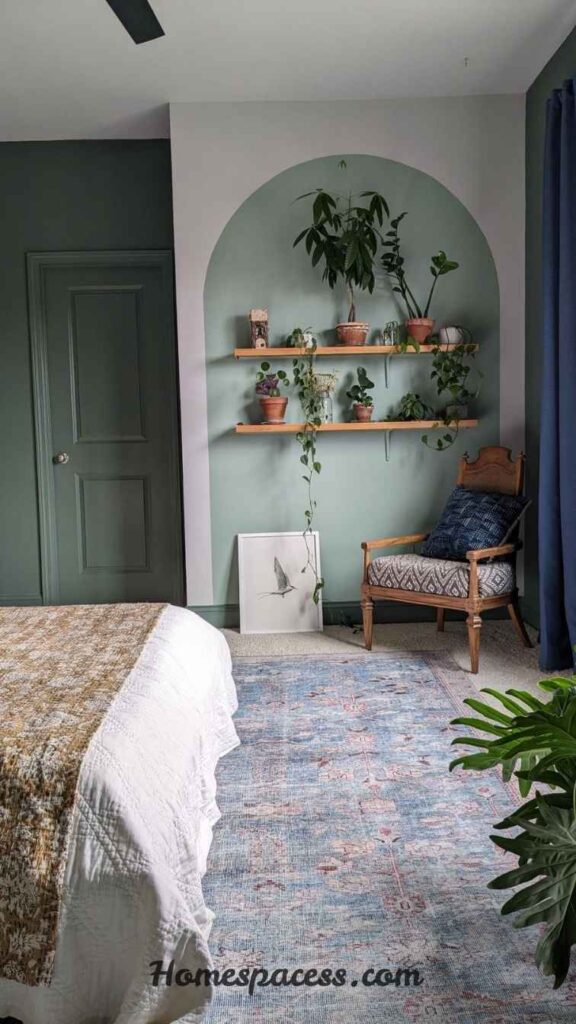
The painted arch trend transforms a flat wall into something that looks like a built-in architectural feature. By painting a simple semicircle or full arch shape in a contrasting color, you create the impression of a doorway, alcove, or gallery niche without any construction. Styled with a console table, a mirror, or even a hanging plant in front, a painted arch becomes the focal point of an entire room.
Execution requires a little planning but no special skills. Cut a piece of string to your desired arch radius, pin one end to the wall at the midpoint of your arch, and use the other end with a pencil attached to trace a perfect curve. Tape and paint inside the shape. Deeper, more saturated colors work best terracotta, forest green, and dusty cobalt are the most popular choices this year.
What competitors don’t often mention is that the arch doesn’t have to be centered on the wall. An off-center arch placed to one side of a doorway or beside a window creates an asymmetric, editorial look that feels curated rather than templated. This subtle shift makes a huge visual difference.
After painting the arch shape, sand the edges lightly before the final coat to blur the painted perimeter slightly. This makes the arch look like it has depth, rather than a flat shape stuck on the wall.
Geometric Pattern Walls
Precision Painting That Looks Custom-Made
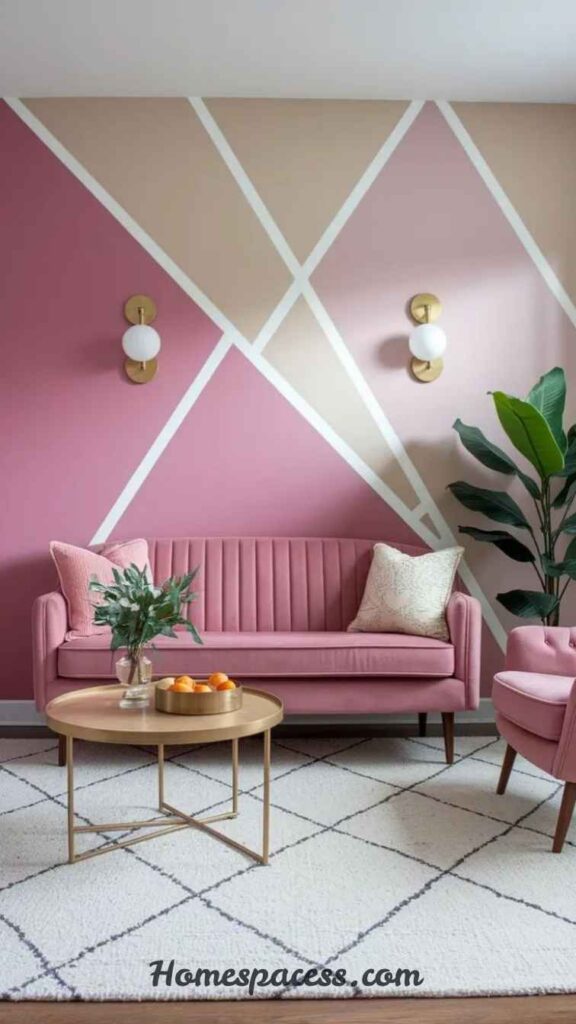
Geometric wall painting triangles, diamonds, chevrons, or herringbone patterns creates a graphic, high-design look that’s far more achievable than it appears. The entire process relies on painter’s tape as a stencil. You plan and apply the tape in the shape of your pattern, paint over it, and peel the tape away once the paint is slightly tacky. What’s left is a crisp, precise design that looks like it was done by a professional muralist.
The planning phase matters most. Sketch your grid on graph paper first, then transfer the measurements to the wall using a level, pencil, and measuring tape. Symmetry is everything in geometric work even a 2mm misalignment becomes visible across a repeating pattern. Take your time in the tape-laying stage; the painting itself is fast.
For rooms with existing busy furniture or décor, opt for tone-on-tone geometric painting: the same base color in flat and satin finish. You get the pattern without visual overwhelm it’s subtle from a distance but reveals itself in raking light, creating an almost tonal damask effect that’s genuinely difficult to identify as DIY paint work.
Use a bone folder (a bookbinding tool) or even an old credit card to press your tape edges down firmly. This eliminates bleed-through on detailed geometric patterns where clean lines are non-negotiable.
Japandi-Inspired Neutral Walls
Calm, Considered, and Endlessly Livable
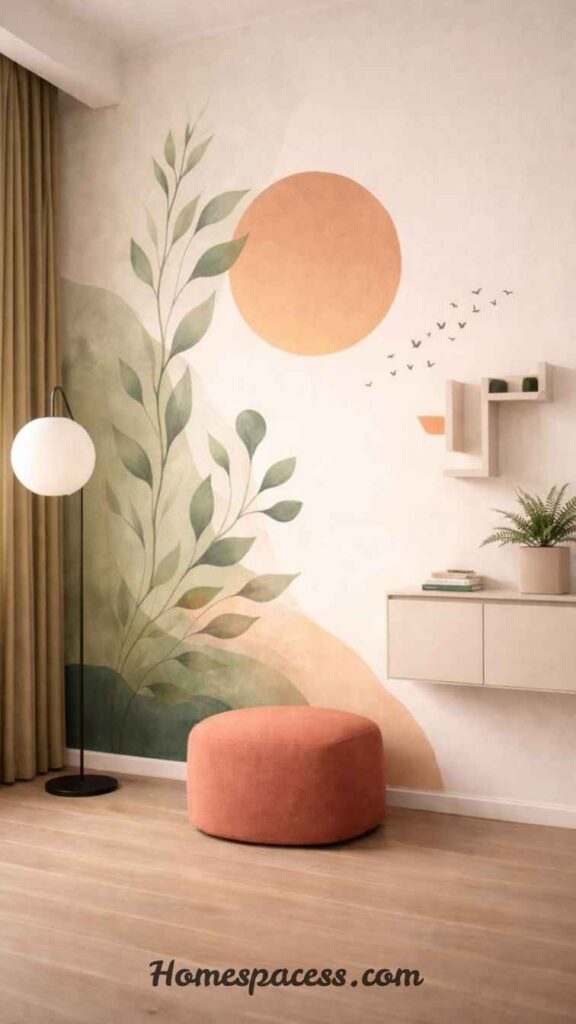
Japandi the design hybrid of Japanese minimalism and Scandinavian warmth has moved from niche trend to mainstream staple, and its wall color philosophy is one of the most practical approaches in interior design. These walls are warm, off-white, slightly dusty, and deeply calm. Think underbaked clay, warm linen, muted sage, and driftwood tones. Nothing shouts. Everything coheres.
What makes Japandi wall painting distinctive is not just the hue but the finish. Japandi interiors avoid the cold, reflective quality of standard eggshell paints. Instead, they use flat or very-low-sheen finishes that absorb light gently, creating a matte warmth that feels tactile and grounded. This is especially important in rooms that receive harsh direct sunlight, where reflective finishes can make a space feel clinical.
The real value of Japandi neutral walls is longevity. While bolder wall painting ideas require re-evaluation every few years as trends shift, a well-chosen Japandi neutral works with changing furniture, evolving textile trends, and different lighting conditions. It’s the paint equivalent of a well-made white shirt never wrong, always right.
Test Japandi neutrals at multiple times of day before committing. A tone that reads perfect in morning light can shift cooler and greyer by afternoon in north-facing rooms always check under your room’s specific light conditions.
Wall Panel Painting
Faux Millwork for a Fraction of the Cost
Painted wall paneling using paint, primer, and thin decorative molding (or just tape and paint alone) to create the impression of fitted wainscoting or raised panels is one of the fastest-growing wall painting ideas among design-forward homeowners. The result looks architectural and expensive. The reality is that a tube of caulk, some adhesive molding strips, and a weekend is all it takes.
The most popular configuration is a grid of rectangles across the lower third of a wall, painted the same color as the rest of the wall but with the molding strip itself casting a shadow that defines each panel. For a more dramatic effect, paint the paneled section a different (usually darker) color than the upper wall, creating an elegant dado-rail effect with visual depth and richness.
Dining rooms respond particularly well to panel painting because the technique adds formality and occasion without making the room feel heavy or dated. Pair deep-green panels with warm brass hardware and linen curtains, and the result feels like a high-end restaurant rather than a Tuesday-night DIY project.
If using tape to simulate molding lines (without real strips), use 1/4-inch tape for the inner rectangle and 1/8-inch tape for the border. The subtle width variation mimics the look of actual layered molding profiles.
Nature-Inspired Mural Accent Walls
Organic Art in Your Own Home
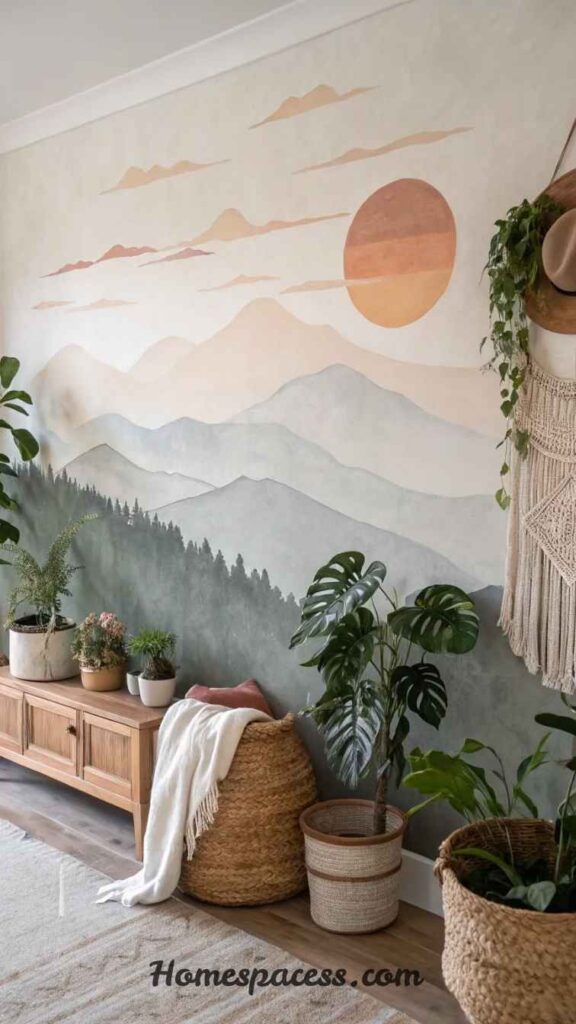
A nature mural whether a simplified forest canopy, rolling mountain silhouette, or abstract botanical pattern transforms a wall into a piece of artwork that cannot be replicated anywhere else. Unlike purchased prints or wallpaper, a hand-painted mural is entirely unique to your space. And with today’s projector-aided techniques, you don’t need to be a trained artist to execute a convincing nature-themed wall painting.
The most accessible approach uses a projector to cast your reference image directly onto the wall. Trace the outlines lightly in pencil, then fill in sections with flat paint, working from background to foreground. A simplified mountain range in two tones, for example, requires nothing more than the ability to paint within outlined shapes a skill anyone can manage with patience.
Children’s bedrooms, reading nooks, and home office backgrounds (for video calls) are the ideal locations for nature murals. They create a sense of place and calm that generic wall colors simply cannot achieve. For renters, the same concept scales beautifully onto large canvas panels that can be hung and removed without damaging walls.
Always start with your lightest colors and work progressively darker. Lighter paint corrects over darker paint poorly but dark paint laid over light corrections is nearly invisible once dry.
Moody Dark Walls
The Counterintuitive Choice That Opens Up Rooms
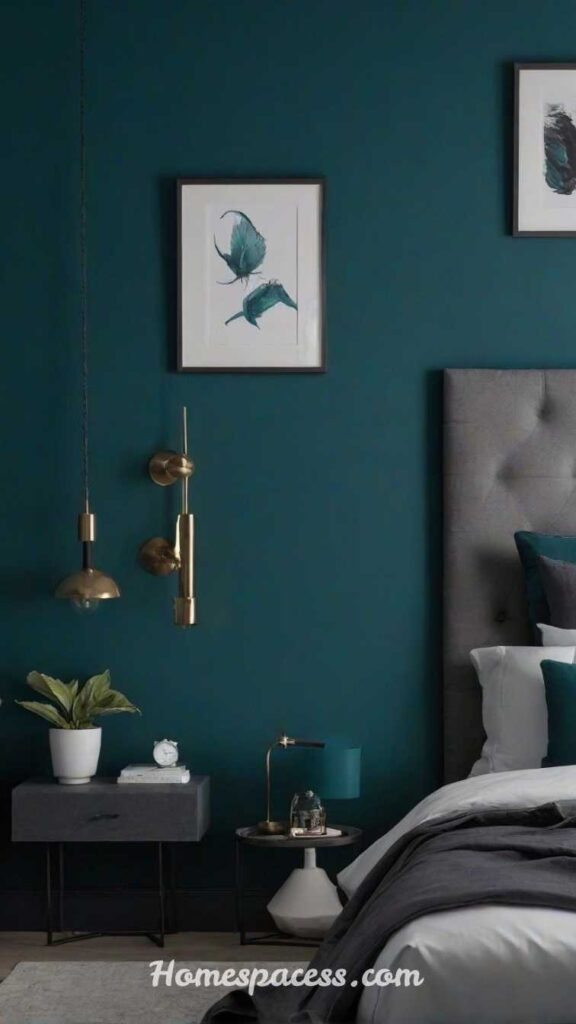
The conventional wisdom that dark paint makes rooms feel smaller is outdated and increasingly disproven by real-world interior results. In fact, when all four walls of a room are painted the same deep, saturated color (charcoal, navy, hunter green, or near-black), the boundaries of the room visually recede. The result feels immersive and cave-like in the best possible sense cozy, dramatic, and surprisingly spacious.
The lighting equation changes completely with dark walls. Natural light becomes a feature rather than an assumed constant. Candles, lamps, and directional spotlights become more dramatic and intentional. A dark-walled room with warm lighting sources at varied heights feels like a curated experience rather than a simple paint job.
Libraries, home cinemas, and primary bedrooms are the best candidates for dark wall painting. The key detail most guides miss is ceiling color: paint the ceiling the same dark color as the walls (or one shade lighter). A bright white ceiling with very dark walls creates jarring contrast that undermines the enveloping effect entirely.
Dark colors show lap marks more than any other paint type. Always use a premium roller with a 3/8-inch nap, work in long V-shaped strokes, and never stop mid-wall. Finish one full wall before resting.
Terracotta and Clay Tones
Earth Colors That Age Beautifully
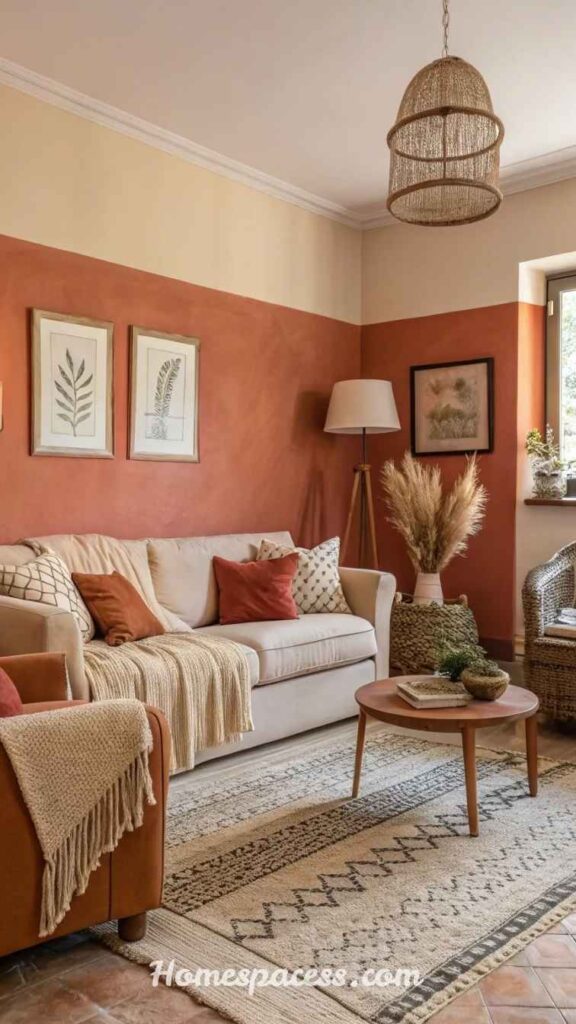
Terracotta and clay-based colors warm, dusty, red-orange to brown-pink hues have moved firmly into the mainstream after years as a niche design preference. These colors carry emotional warmth that neither beige nor white can offer. They read as grounded and natural, referencing fired clay, Moroccan plaster, and Mediterranean sun without requiring any textured application technique.
What makes terracotta wall painting particularly smart is its versatility with other materials. It pairs beautifully with raw linen, woven rattan, warm timber, hammered brass, and whitewashed terracotta pots. The earthy undertones play well with both natural and artificial light, avoiding the greenish cast that some warm tones develop in fluorescent lighting.
For rooms with a lot of natural timber flooring or furniture, a terracotta wall creates a tonal harmony that feels intentional rather than coincidental. The trick is to choose a terracotta with just enough pink to keep it from reading as pure orange a tone like Farrow and Ball’s Red Earth or Benjamin Moore’s Terra Maesta strikes this balance well.
Terracotta tones need a minimum of two coats for even coverage often three. The pigment density in earthy reds is lower than other colors, and streaking is common with under-applied coats.
Stencil Painting
Repeating Patterns With Artistic Control
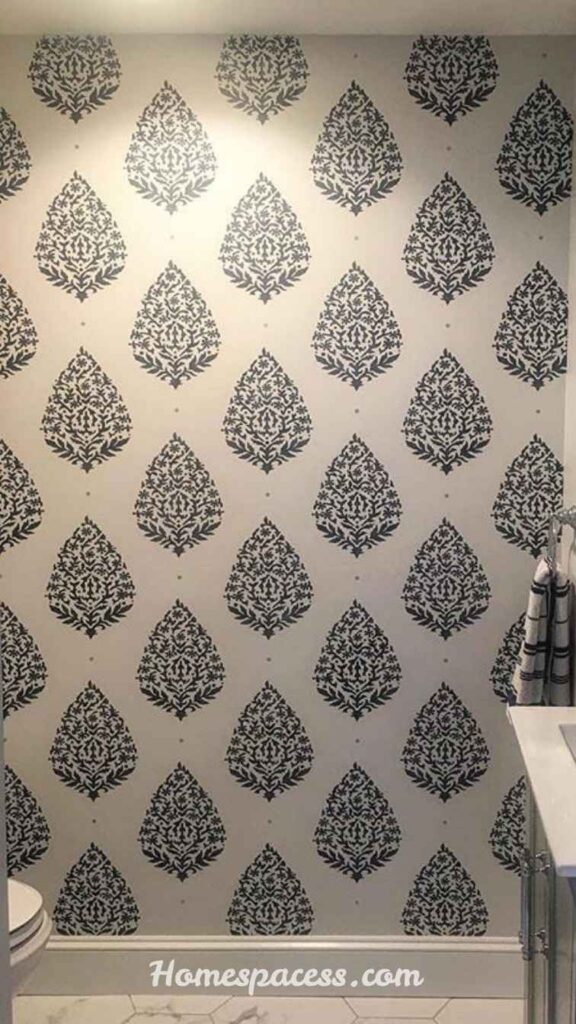
Stenciling is one of the most versatile wall painting ideas because the pattern is entirely replaceable by simply buying or cutting a different stencil. From Moroccan tile repeats to Art Nouveau botanical swirls to simple dotted grids, stenciling achieves a wallpaper-like visual richness using only paint and a foam roller. One stencil, used intelligently, can cover an entire wall in an afternoon.
The critical technique mistake most beginners make is applying too much paint to the stencil roller. A lightly loaded roller almost dry is what creates a crisp impression. Too much paint bleeds under the stencil edges and makes every repeat look blurry and amateur. Offload excess paint on a paper towel before each application until you can barely see paint transferring onto the paper; then apply to the wall. The result will surprise you.
For advanced results, use two stencil colors: a lighter base impression and a slightly darker overlay shifted by a few millimeters. This creates a shadow-and-highlight effect that makes the pattern appear three-dimensional a technique used by professional decorative painters to create faux hand-blocked wallpaper effects indistinguishable from the expensive original.
Reposition your stencil using registration marks small pencil dots placed in the corners of the stencil pattern that you re-align with the last painted impression. This keeps your repeats perfectly consistent across the full wall.
Vintage Floral and Botanical Painting
The Return of Romantic Walls
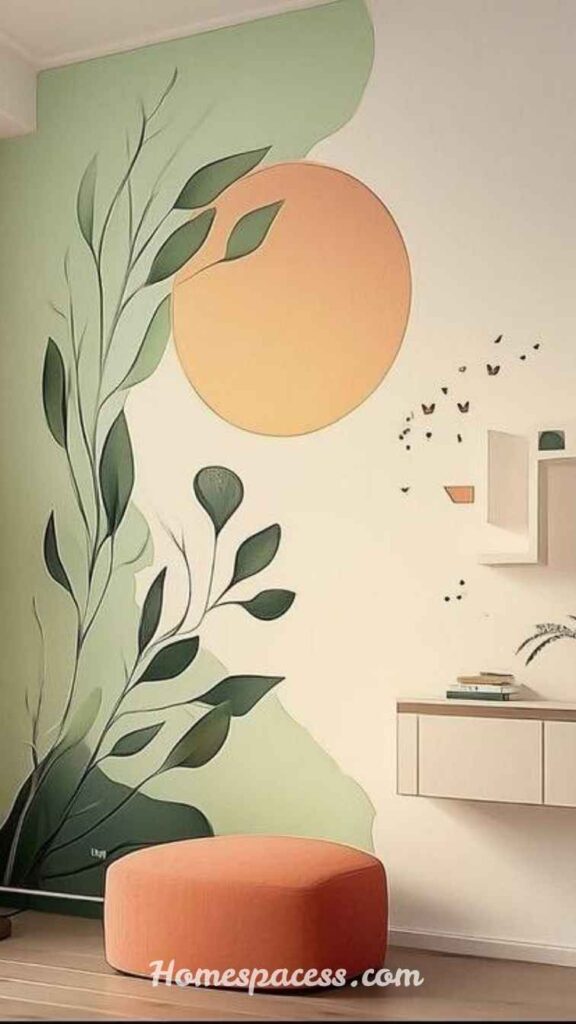
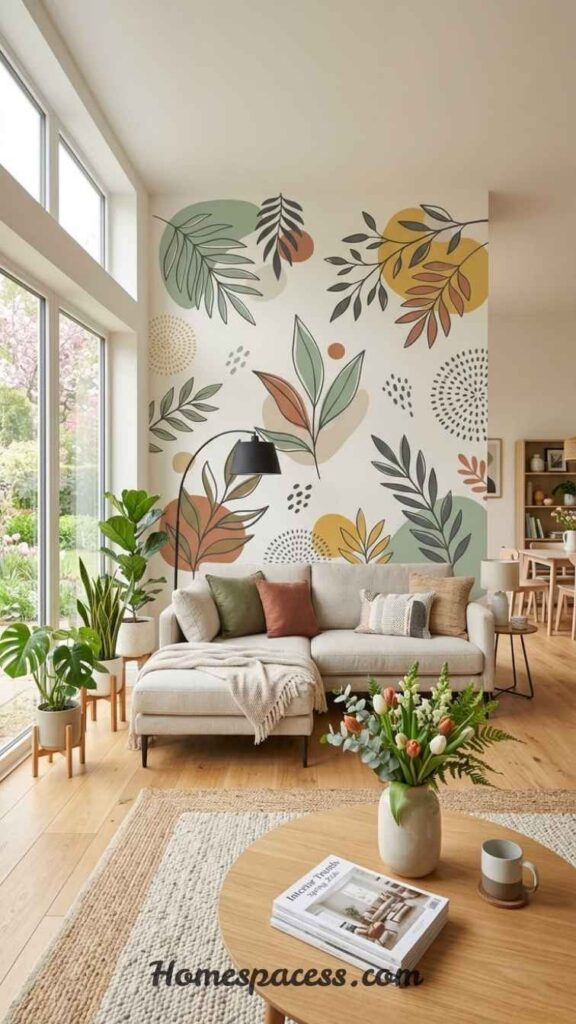
After years of minimalism dominating interior design, romantic and decorative wall treatments are back and with significantly more restraint than their Victorian predecessors. Modern botanical wall painting sits between full-coverage floral wallpaper and a bare painted wall: clusters of oversized, loose botanical illustrations painted directly onto a neutral wall. Think large-scale peonies, eucalyptus sprays, or poppy pods in a limited two- or three-color palette.
The contemporary botanical mural approach uses negative space as a design tool. Rather than covering the entire wall with repeated motifs, loose botanical clusters are positioned in one or two corners, creeping up the wall with increasing lightness as though nature itself has taken hold of one section of the room. This partial coverage approach is more achievable for non-artists and more design-forward than edge-to-edge floral painting.
Watercolor-style botanical painting using highly diluted, semi-transparent paint in soft, layered strokes is particularly popular for bedrooms and reading spaces. The translucency gives the walls an organic softness that no wallpaper can quite replicate, because the wall surface texture shows through, grounding the pattern in the physical material of the room.
Use a wet-on-wet technique for botanical painting: dampen your wall section lightly with a clean sponge, then apply diluted paint over the damp surface. Colors will bloom and spread naturally, creating organic-looking petal edges without any artistic precision required.
Conclusion
Wall Painting Ideas are one of the easiest and most affordable ways to completely change the look of your home. A simple color change or creative design on your walls can make any room feel fresh, modern, and more welcoming. You do not need expensive decoration items or a big renovation. Even basic painting styles can bring a strong visual impact. Soft tones can make your space calm and relaxing, while bold colors can add energy and personality. The right choice depends on your mood, lifestyle, and the feeling you want in your home.
Overall, Wall Painting Ideas give you full freedom to express your style in a simple way. You can try patterns, color combinations, or accent walls to make your rooms stand out. Every space in your home can have a different story through paint. It is also a fun and creative process that anyone can try. Just plan your colors, keep it simple, and focus on balance. With the right Wall Painting Ideas, your home can feel more stylish, comfortable, and truly yours.
Trend Analysis
What’s Rising, Peaking & Emerging in Wall Painting
The wall painting landscape in 2025 is being shaped by three converging forces: a post-pandemic longing for warmth and character, the influence of social media aesthetics that reward distinctive, photogenic spaces, and a growing consumer preference for sustainable, low-VOC materials. Understanding where these trends are in their lifecycle helps you make choices you won’t regret in eighteen months.
Technique
Limewash & Clay Paint
At Peak
Color
Warm Greens (Sage, Moss)
Rising
Style
Dark Immersive Rooms
Rising
Color
Terracotta & Ochre
At Peak
Technique
AI-Assisted Murals
Emerging
Color
Deep Inky Blues
Rising
One shift that most trend reports overlook is the movement away from accent walls toward full-room immersive color. The accent wall one painted wall contrasting three white walls dominated 2010–2020 décor but is now reading as dated in design-forward circles. The new approach wraps the entire room (and often the ceiling) in a single considered color, creating a capsule experience rather than a feature moment.
Looking ahead into 2026 and beyond, predictive color analysis from major paint manufacturers points toward a strong emergence of complex neutral greens greens with significant gray, brown, or blue content that resist being labeled “obviously green.” These colors work harder than simpler neutrals because they respond dramatically to different light conditions, giving rooms multiple personalities across a single day.
Expert Insights:
What Professional Decorators Know That DIYers Don’t
Professional decorative painters approach wall painting with a set of principles that rarely appear in beginner guides. The most important of these is understanding undertones the subtle secondary hues hidden within every paint color. A white paint can read pink, yellow, or blue depending on its undertone. Choosing a paint based on the chip in the store without accounting for your room’s fixed undertones (floor color, furniture, light source) is the most common cause of paint regret.
“The paint chip is the least reliable tool in the process. The only reliable test is a large painted sample at least A4 size observed in the room at different times of day for 48 hours.”
Another professional insight is the value of primer as a color tool, not just a preparation step. Tinted primers primed to 50% of the topcoat color dramatically reduce the number of topcoats required for full coverage, especially with saturated or very dark colors. A single topcoat over a tinted primer typically produces better, more even results than three coats of color over a white primer.
Finally, professional decorators almost never use brushes to cut in walls. Instead, they use a cutting-in technique with a quality angled sash brush and a steady hand moving the brush parallel to the ceiling or trim rather than into it. The capillary action of the loaded brush naturally follows the line with practice, producing faster and cleaner results than tape in experienced hands.
Sustainability & Long-Term Value
Painting Choices That Matter Beyond Aesthetics
Conventional latex paints contain volatile organic compounds (VOCs) chemicals that off-gas into your indoor air for weeks after application and contribute to respiratory irritation and long-term health concerns. Zero-VOC and low-VOC paints have improved dramatically in the past five years. Brands like Earthborn, Little Greene, and ECOS now produce zero-VOC formulas that perform identically to conventional paints in durability and coverage, making the switch a straightforward one.
Clay-based and mineral paints are worth considering for sustainability-conscious homeowners for an additional reason beyond their low chemical content: they are breathable. Unlike film-forming latex paints that seal the wall surface, mineral paints allow moisture vapor to pass through, which regulates humidity naturally and prevents the trapped moisture that leads to mold growth behind paint films over time. In older homes with solid masonry walls, this breathability is not just a sustainability choice it’s a structural one.
From a long-term value perspective, investing in premium paint rather than budget options almost always pays off. A high-quality paint in the right sheen for its location (flat for ceilings, eggshell for walls, semi-gloss for trim) will resist scrubbing, fading, and scuffing for seven to ten years. Budget paints in the same conditions typically degrade in three to five years, requiring full repainting sooner making the “cheaper” choice more expensive over time.
Future Innovations
Where Wall Painting Is Heading in the Next 5 Years
The most significant technological shift coming to the wall painting industry is AI-assisted design and application. Augmented reality (AR) apps already allow homeowners to visualize paint colors on their own walls in real time through a smartphone camera but the next generation of these tools will move beyond color selection into full design simulation, allowing users to preview textured finishes, geometric patterns, and mural compositions at room scale before committing to a single brushstroke.
On the materials side, thermochromic and photochromic paint additives which cause colors to shift in response to temperature and light respectively are moving slowly from commercial to residential applications. Imagine a bathroom wall that shifts from a cool morning blue to a warmer morning tone as the room heats up, or a living room accent wall that subtly deepens in color as natural light fades in the evening. These effects are currently achievable with specialty products at a significant cost premium, but that gap is narrowing quickly.
Self-cleaning mineral coatings that actively break down organic material on wall surfaces already deployed in high-traffic commercial spaces are expected to enter the premium residential paint market within the next three to five years. These photocatalytic coatings use titanium dioxide to oxidize dust, grease, and organic matter in the presence of light, maintaining a cleaner surface with minimal maintenance. For households with children or pets, the practical value will be substantial.
Common Mistakes
That Ruin Even Beautiful Wall Painting Ideas
Understanding what goes wrong is as important as knowing what to do. These are the most consistently overlooked errors in home wall painting not the obvious ones (forgetting to tape, skipping primer) but the subtle decisions that separate professional-looking results from disappointing ones.
- Skipping the wall wash: Painting over dusty, greasy, or lightly contaminated walls causes paint adhesion failure that shows up months later as peeling or bubbling. Washing walls with a sugar soap solution before painting is a ten-minute step that prevents a costly rework.
- Using the wrong sheen for the location: High-gloss and semi-gloss paints on textured or imperfectly plastered walls amplify every dip and ridge under raking light. Reserve glossy finishes for trim and use flat or eggshell on large wall surfaces to minimize surface imperfections.
- Painting in poor lighting: Overhead room lighting rarely illuminates wall surfaces evenly. Set up a portable work light placed at a low angle to the wall it shows you missed sections, runs, and brush marks in real time, before the paint dries and you’ve moved on.
- Opening windows immediately after painting: It seems logical to ventilate but a strong draft can cause the paint surface to skin over before the underneath layers dry, leading to wrinkling and poor adhesion. Gentle ventilation is correct; direct cross-drafts are not.
- Choosing color in isolation: A paint color selected based on a chip, without accounting for existing floor color, furniture tones, and light source, is chosen with at most 30% of the relevant information. Always test large painted samples alongside your actual room contents before purchasing full quantities.
The most expensive mistake of all the one almost no guide addresses is buying too little paint. Running out mid-project and purchasing a new tin later, even from the same batch code, can result in a visible color difference that requires full repainting to correct. Always buy at least 10% more paint than your square-footage calculation suggests, and store the remainder for touch-ups.

Team Home Spacess shares simple, practical design ideas that work for real families. The team focuses on cozy décor, soft colors, and natural textures that make a space feel truly lived-in. From everyday decorating tips to creative home projects, Team Home Spacess is dedicated to helping readers create warm, comfortable, and inviting spaces with a fresh and personal touch.