

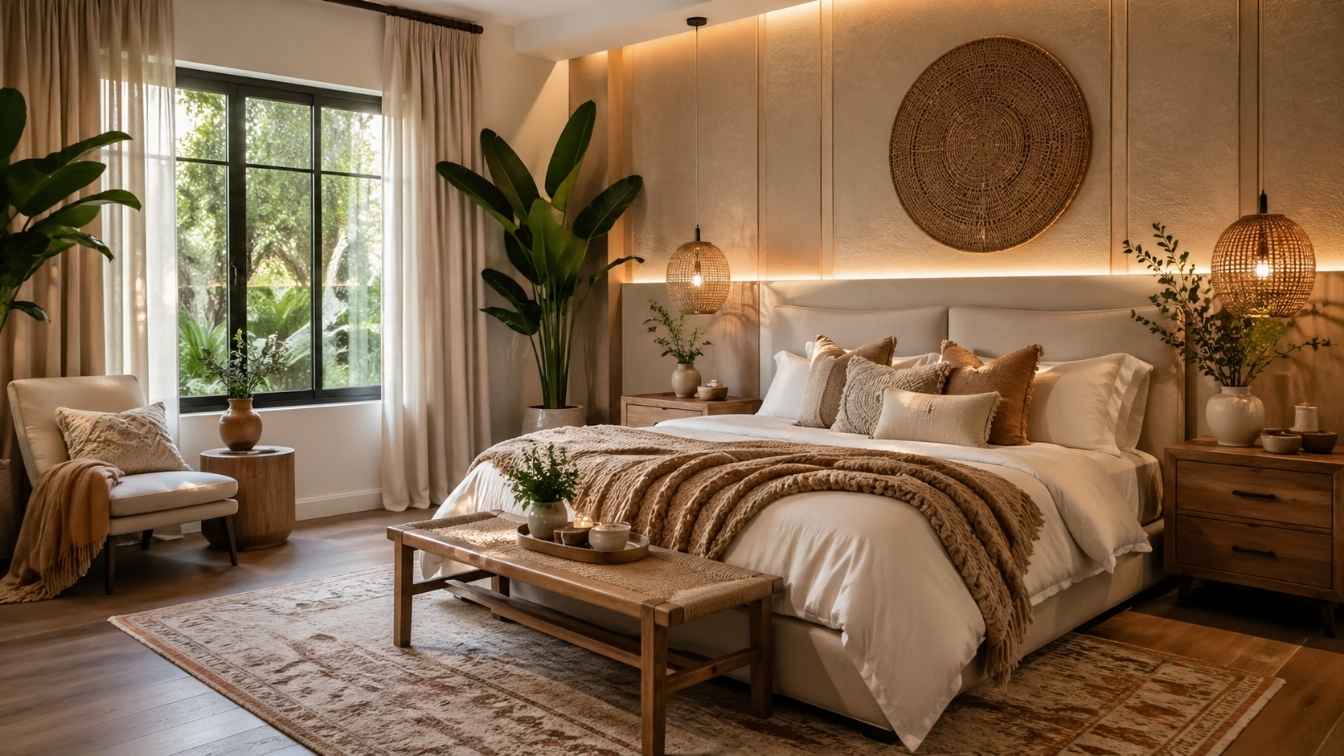
Your bedroom should be the most personal room in your home yet most people treat it like a storage unit with a bed. Poor lighting choices, mismatched furniture, and neglected walls silently drain the restfulness a bedroom should deliver. The result? A space that looks lived-in but never truly feels like yours.
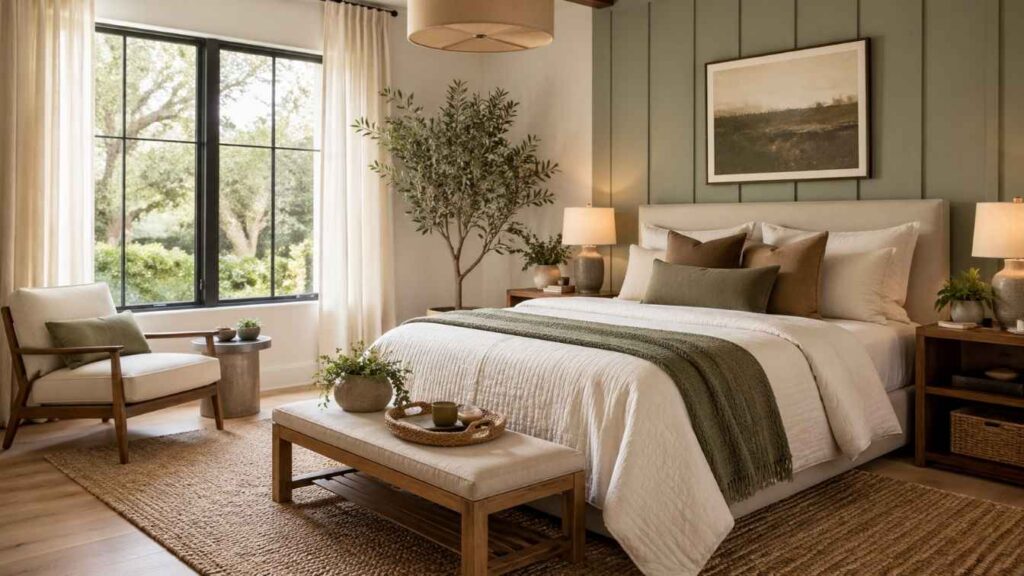
The good news: you don’t need a full renovation or a designer’s budget to change this. The right bedroom decor ideas applied strategically can completely shift the atmosphere, mood, and functionality of your sleeping space. Whether you’re starting from scratch or refreshing an existing setup, this guide covers 14 high-impact ideas backed by interior design principles, current trends, and real-world practicality.
We’ll move from foundational decisions like color and lighting to finishing touches like art and scent and then go deeper with trend analysis, sustainability insights, and future predictions that most bedroom decor articles never touch. Let’s get started.
74%
of adults say bedroom decor directly affects their sleep quality
3x
more resale value added by well-designed bedroom spaces
$200
average spend for a high-impact bedroom refresh (DIY approach)
Biophilic Bedroom Design
Bring the Outdoors In:
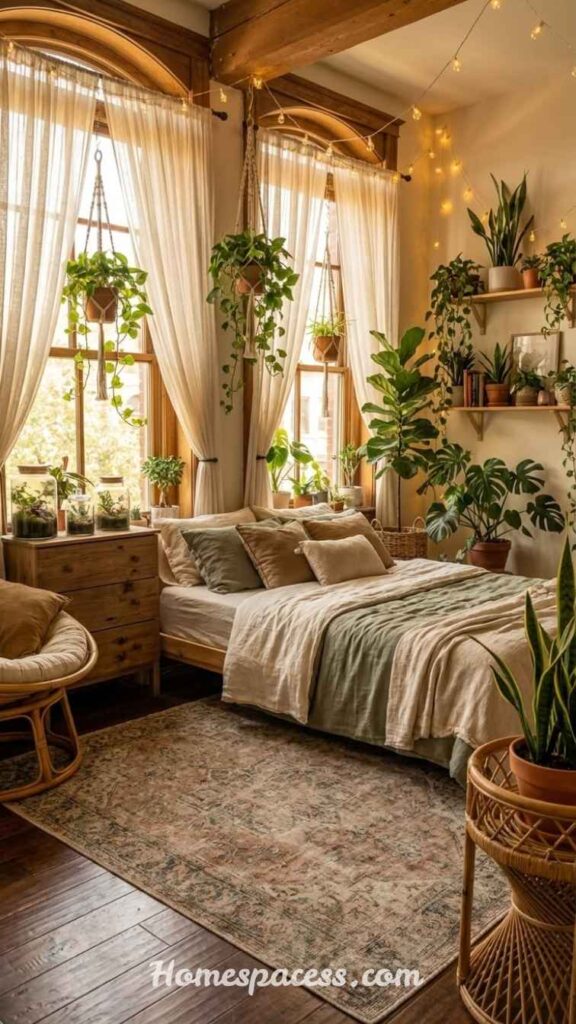
Biophilic design the practice of incorporating natural elements into interior spaces is no longer a niche trend. It’s a scientifically supported approach that reduces cortisol levels, improves air quality, and creates a sense of calm that makes falling asleep significantly easier. For bedroom decor, this translates into plants, natural wood tones, stone textures, and organic shapes rather than sharp, synthetic forms.
Start with low-maintenance plants that thrive in bedroom conditions: snake plants, pothos, or ZZ plants require minimal light and water, and all have air-purifying properties. Place them at varying heights a hanging trailing plant near the window, a small succulent on the bedside table, a larger statement plant in a corner. The layering of green at different elevations mimics natural outdoor environments, which your nervous system instinctively recognizes as safe.
Beyond plants, consider introducing raw materials: a jute area rug, linen curtains, a wooden bed frame with visible grain, or a wicker side table. These textures add warmth and depth without clutter. Paired together, biophilic elements create a bedroom decor scheme that feels intentional, calming, and deeply connected not just aesthetically pleasing but physiologically restorative.
💡 Expert Insight:
According to the WELL Building Standard, even a single plant within 6 feet of your sleeping area can measurably improve air quality and perceived room comfort.
Must Read:T rending Home Decoration Ideas to Upgrade Your Home Instantly
Master Layered Lighting for Every Mood

Lighting is the single most underestimated element in bedroom decor and the one that professionals always address first. The mistake most homeowners make is relying on one harsh overhead light for everything. This flattens the room visually and floods the space with blue-spectrum light that suppresses melatonin production, making sleep harder. A layered lighting strategy fixes both problems simultaneously.
Think in three layers: ambient (overall illumination from a ceiling fixture or cove lighting), task (focused light for reading, from sconces or bedside lamps with adjustable arms), and accent (decorative lighting that adds warmth and dimension, like LED strip lights behind a headboard, a Himalayan salt lamp, or fairy lights draped over a canopy). Each layer serves a different time of day and mood bright and clear for getting ready in the morning, warm and dim for winding down at night.
Dimmer switches are a game-changing upgrade that costs less than $30 per outlet. For bedroom decor that truly transforms how the room feels, install warm-toned bulbs (2700K–3000K) in all fixtures and use smart bulbs that allow you to shift color temperature throughout the day. This creates a bedroom that feels completely different at 7am, 7pm, and midnight all without changing a single piece of furniture.
💡 Pro Tip:
Avoid cool-white (5000K+) bulbs in bedrooms. Warm bulbs (2700K) signal your brain to produce melatonin, supporting natural sleep cycles.
Don’t Skip: Patio Decor Ideas to Upgrade Your Backyard Without Overspending
Create a Focal Point With a Statement Accent Wall
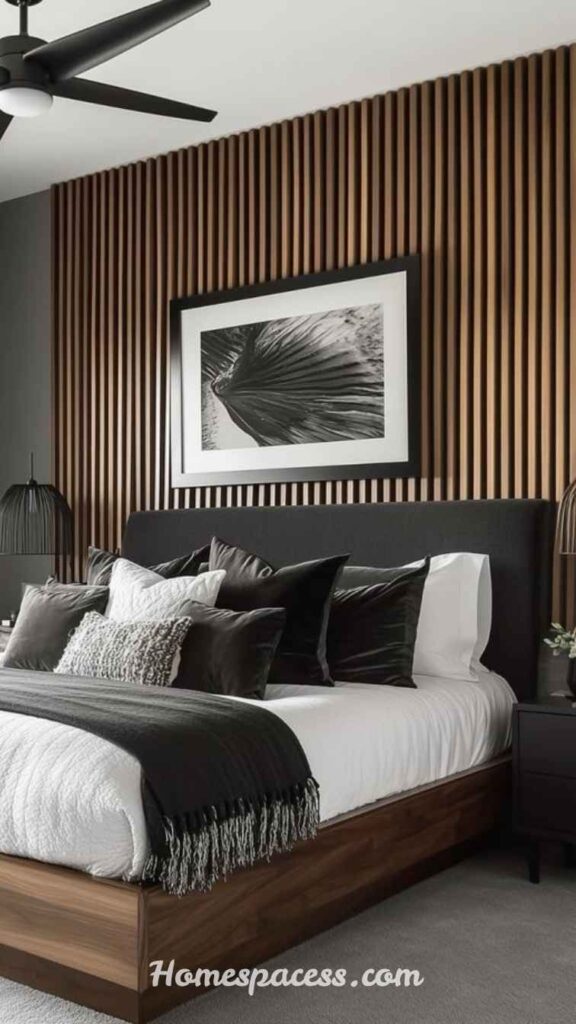
An accent wall gives your bedroom decor an immediate visual anchor a deliberate focal point that tells the eye where to look. The wall directly behind the headboard is almost always the right choice, as it naturally frames the room’s centerpiece. What goes on that wall, however, is where most people play it too safe and end up with something forgettable.
Think beyond paint. In 2026, the most compelling accent wall approaches include limewash paint (which creates a layered, aged texture with extraordinary depth), removable wallpaper in bold botanical or geometric prints, shiplap or fluted wood paneling stained in rich tones, or even a gallery of oversized framed botanicals. Each option carries a completely different energy limewash feels European and artisanal; paneling adds warmth and structure; wallpaper makes a confident, personality-driven statement.
If you’re uncertain, a single saturated paint color on the headboard wall is still highly effective especially in deep tones like forest green, navy, terracotta, or midnight blue. The key insight most guides miss: the accent wall should be three shades deeper than your dominant room color for maximum contrast without clash. For example, a room with warm beige walls pairs beautifully with a burnt sienna or chocolate brown feature wall.
Read More: Kitchen Lighting Ideas to Create a Cozy and Modern Cooking Space
Invest in Luxurious Bedding Layers
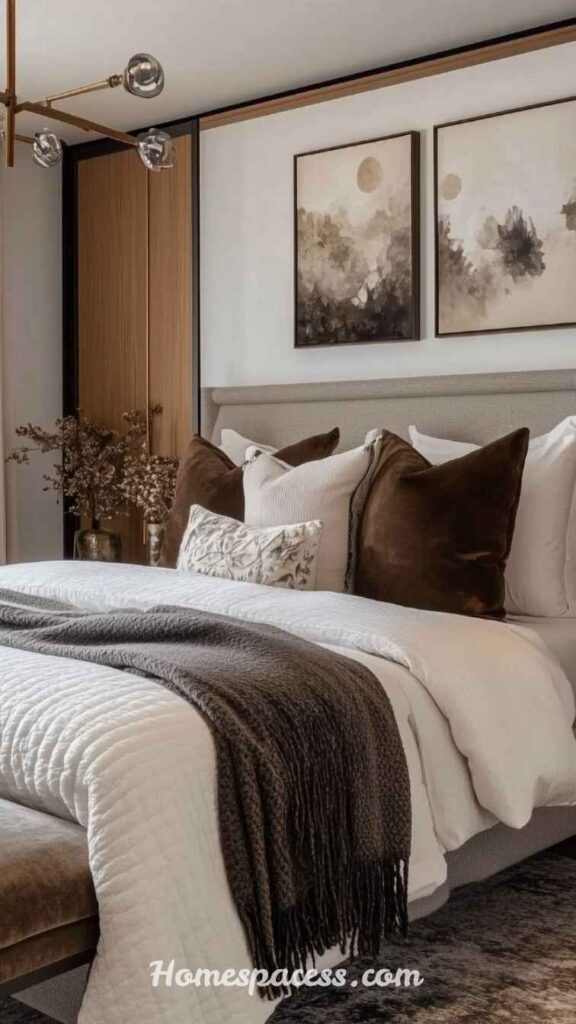
Your bed is the room’s most-used surface and its visual centerpiece. The way you dress it communicates your entire design intent and yet most people stop at a duvet cover and call it done. Layering bedding the way interior designers and luxury hotels do creates a bed that looks inviting, feels indulgent, and photographs beautifully from any angle.
Start with high-quality base layers: fitted sheet in a natural fiber (linen or percale cotton with at least 200 thread count), then a flat sheet or light cotton blanket. On top, add a main duvet in a neutral or textured cover. The professional touch comes in the final layers a folded throw blanket draped asymmetrically at the foot of the bed, and a cluster of pillows: two sleeping pillows, two euro shams standing behind them, and one or two decorative accent pillows in front. This “hotel stack” instantly elevates bedroom decor without touching a single wall.
The fabric mix matters as much as the layering. Pair a crisp white cotton duvet with a chunky knit throw and velvet accent pillow. Introduce at least two textures and at least two tonal shades of your main color. Neutral base + textured throw + one pattern pillow = the professional formula. Resist the urge to match everything perfectly controlled contrast is what creates visual richness.
Also Read: Gaming Desk Ideas: Stylish and Functional Setups for Every Budget
Use Color Psychology to Design for Sleep & Mood
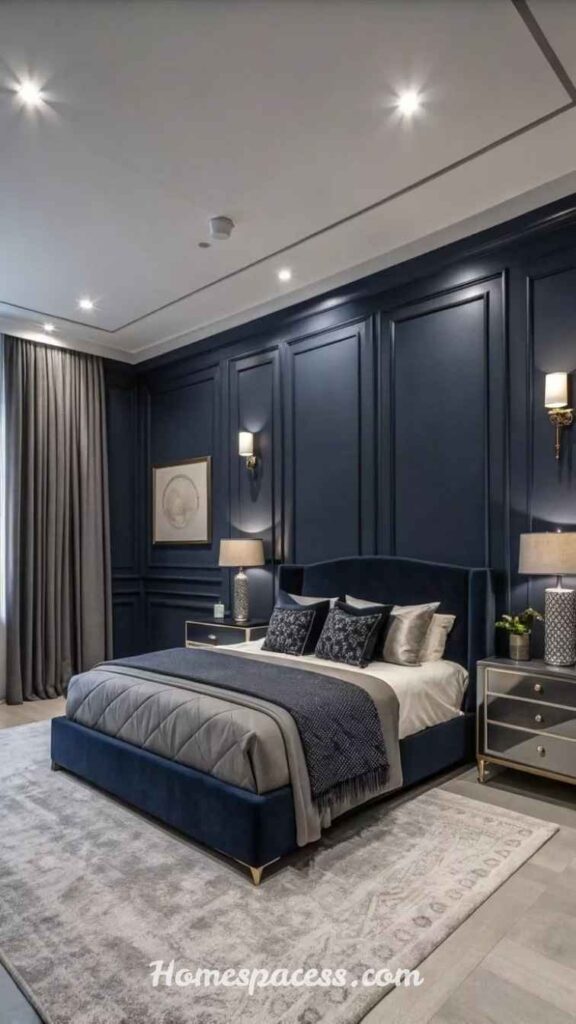
Color isn’t just aesthetic in a bedroom it’s physiological. Research in environmental psychology consistently shows that wall and textile color directly influences perceived room temperature, heart rate, and sleep onset time. Understanding this moves bedroom decor from decoration into deliberate environmental design. The stakes are higher here than in any other room in the home.
Cool, muted tones dusty blue, sage green, soft lavender, warm greige activate the parasympathetic nervous system and signal rest. These are the colors consistently linked to shorter sleep latency in sleep research. Warmer, saturated hues like terracotta, mustard, or deep rust can energize, which works well as accents (pillows, artwork) but not as dominant wall colors in spaces where deep rest is the goal. Bright white, while clean, reads as clinical and creates visual tension opt for warm white (with a yellow or pink undertone) for a softer, cozier alternative.
The 60-30-10 color rule is your framework: 60% dominant color (walls, large rug, bed frame), 30% secondary color (bedding, curtains, upholstered chair), and 10% accent color (cushions, artwork, small decoratives). Applied to bedroom decor, this prevents the visual chaos of too many competing colors and creates a space that feels coherent and intentional which the brain interprets as safe, ordered, and restful.
Choose Multi-Functional Furniture Strategically

Small and medium-sized bedrooms are too often cluttered with single-purpose furniture. A bedside table that only holds a lamp. A bench at the foot of the bed that’s purely decorative. A dresser with more surface than storage. Multi-functional furniture solves both the aesthetic and practical challenges of bedroom decor simultaneously and it’s especially valuable in rooms under 200 square feet where every piece must earn its footprint.
An ottoman bench with internal storage at the foot of the bed serves three purposes: seating, blanket storage, and visual grounding of the sleeping area. A floating wall-mounted shelf with built-in integrated lighting replaces both a bedside table and a sconce, freeing floor space and creating a clean architectural line. A platform bed with built-in drawers eliminates the need for a separate dresser in smaller rooms. These aren’t compromises they’re intelligent design decisions that the best interior designers make in high-end projects too.
For those with dedicated reading corners or work-from-home setups in the bedroom, a Murphy bed-desk combination or a fold-down wall desk can transform the function of the entire room during the day without sacrificing sleep quality at night. The key principle: before purchasing any piece of bedroom furniture, ask what two functions it serves. If it only serves one, look for a better alternative.
💡 Space-Saving Tip:
Beds with drawers underneath can store the equivalent of a 6-drawer dresser while keeping floor space open a major visual and practical win for smaller bedrooms.
Build a Personalized Gallery Wall
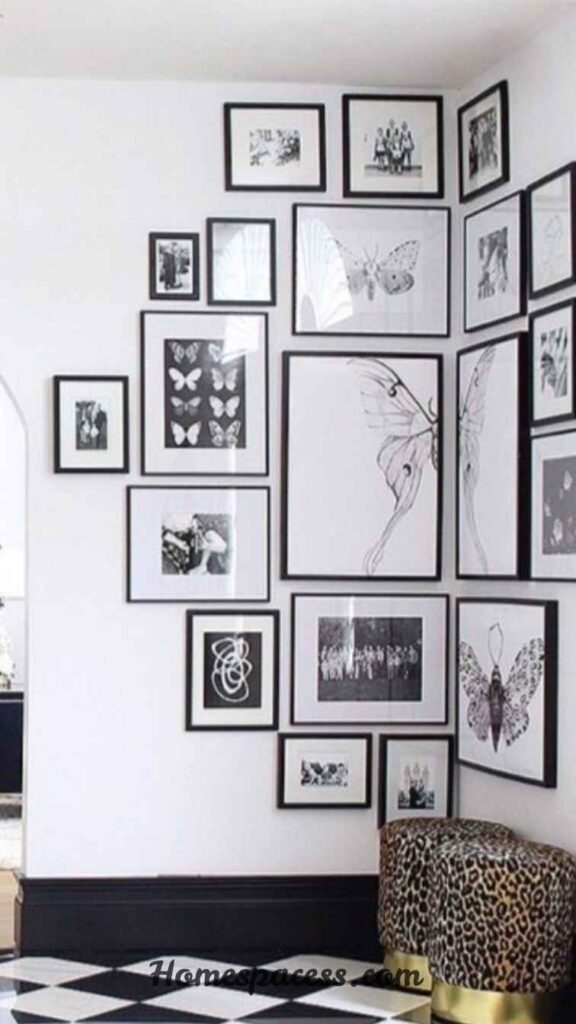
A gallery wall, done well, is one of the most effective ways to inject personality into bedroom decor without permanent commitment. Unlike paint or wallpaper, it can be updated, rearranged, and expanded over time and it gives a room a story. The common mistake is grabbing a set of matching frames and evenly spacing them. That approach looks corporate, not curated.
The most compelling gallery walls mix frame sizes (large, medium, small), materials (wood, metal, or frameless), and content types (photography, prints, textiles, mirrors, dried botanicals in frames, or even small shelves). Lay your intended arrangement on the floor before putting a single nail in the wall. Start from the center and work outward, maintaining roughly 2–3 inches between pieces for visual breathing room. The overall shape of the collection should be deliberate a rectangle, organic oval, or intentional asymmetry all work better than a scattered random spread.
For bedroom decor specifically, gallery walls work best on the wall opposite the bed the first thing you see each morning. Use personal photography, artwork that genuinely moves you, or prints that reflect your color palette. Avoid inspirational quotes in script fonts: they’ve become so common they register as wallpaper rather than art. The test of a good gallery wall is whether each piece could stand alone in the room if so, the collection becomes extraordinary.
Design for All the Senses: Scent & Ambience
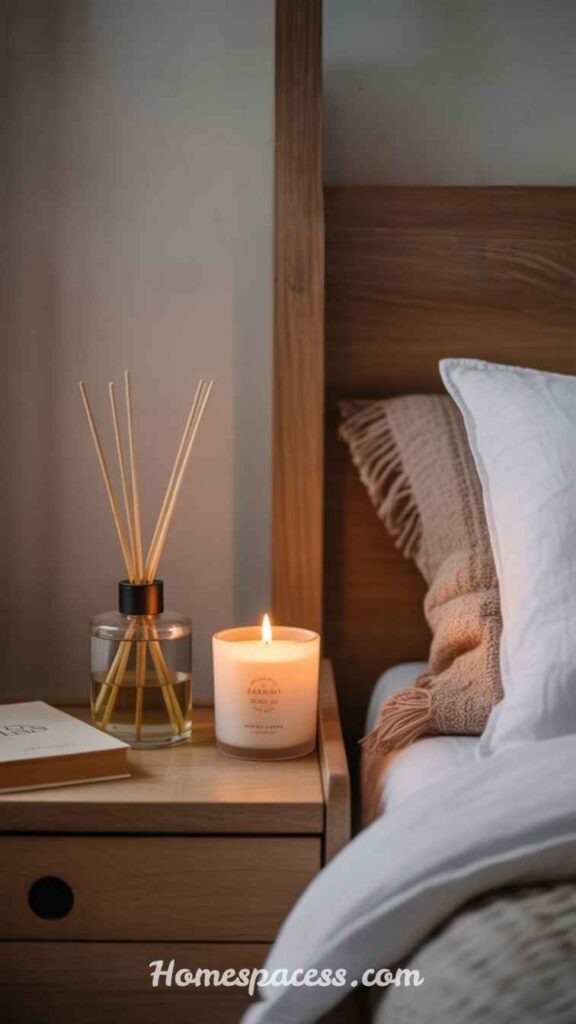
Interior design is traditionally a visual discipline but the most memorable spaces engage multiple senses. In a bedroom, scent is the most underutilized design tool available, and it’s the only sense directly wired to the limbic system (the brain’s emotional and memory center). A consistent bedroom scent isn’t just pleasant it actually trains your brain to associate that smell with sleep and relaxation, accelerating the wind-down process over time.
Lavender is the most research-backed choice for promoting relaxation, but bergamot, sandalwood, cedarwood, and chamomile all have documented calming effects. Introduce scent through high-quality soy candles (burned before sleep, not during), a reed diffuser on the dresser, or linen spray spritzed on pillowcases before bed. Avoid synthetic air fresheners, which often contain volatile organic compounds that reduce indoor air quality. The investment in a quality essential oil diffuser ($40–$80) pays dividends in bedroom atmosphere every single night.
Ambience extends to sound as well. A white noise machine or soft brown noise (more natural than white) masks environmental interruptions and creates a sound cocoon that dramatically improves sleep quality. When combined with the right lighting, scent, and tactile bedding, you’re creating what designers call a “total sensory environment” and it’s a level of bedroom decor thinking that goes far beyond curtains and throw pillows.
Layer Textiles for Warmth and Visual Depth
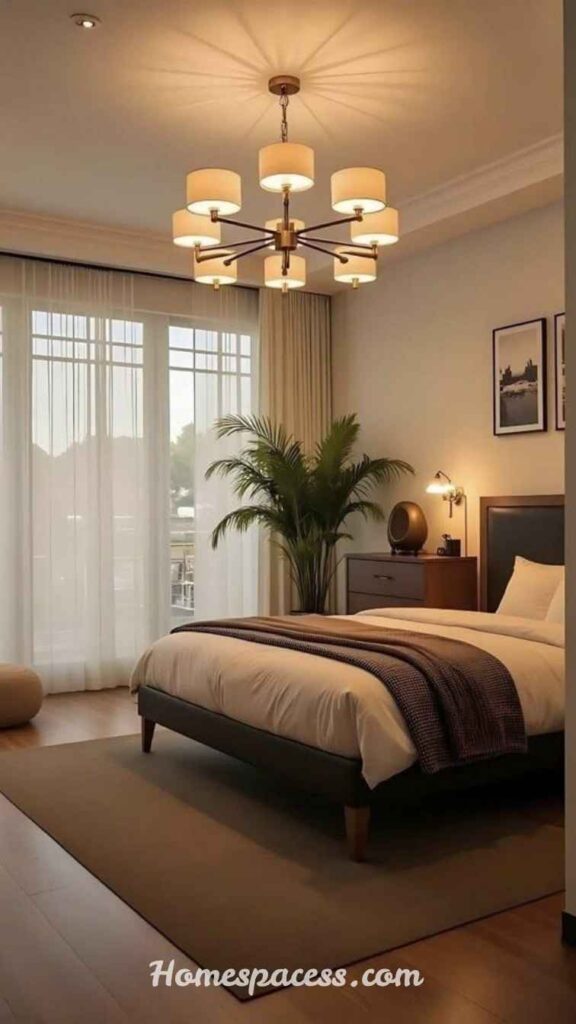
Textiles are the fastest way to transform bedroom decor without touching the walls or buying new furniture and yet most people use only two or three: a rug, curtains, and bedding. Professional interior designers layer five to seven different textile elements in a bedroom, and the result is a room that looks rich, intentional, and photographically beautiful from every angle.
Your textile inventory for a well-dressed bedroom should include: an area rug (ideally extending at least 18 inches beyond the bed on both sides), curtains in a natural fabric (linen, cotton, or velvet depending on the aesthetic), layered bedding with at least two textures, a throw blanket over a chair or bench, cushion covers in mixed fabrics, and if space allows, a fabric upholstered headboard or a curtain panel behind the bed as a soft backdrop. Each layer adds both physical warmth and visual dimension.
The professional secret in textile mixing is the rule of odd numbers and tonal consistency. Use three cushion sizes, five textile pieces, seven shades of one color family. Odd groupings feel dynamic while even numbers feel static. Staying within one color family (cream, bone, caramel, and sand, for example) while varying textures creates sophisticated layering that feels expensive but is achievable on almost any budget through strategic thrifting and mix-and-match purchasing.
Use Mirrors Strategically to Expand Visual Space
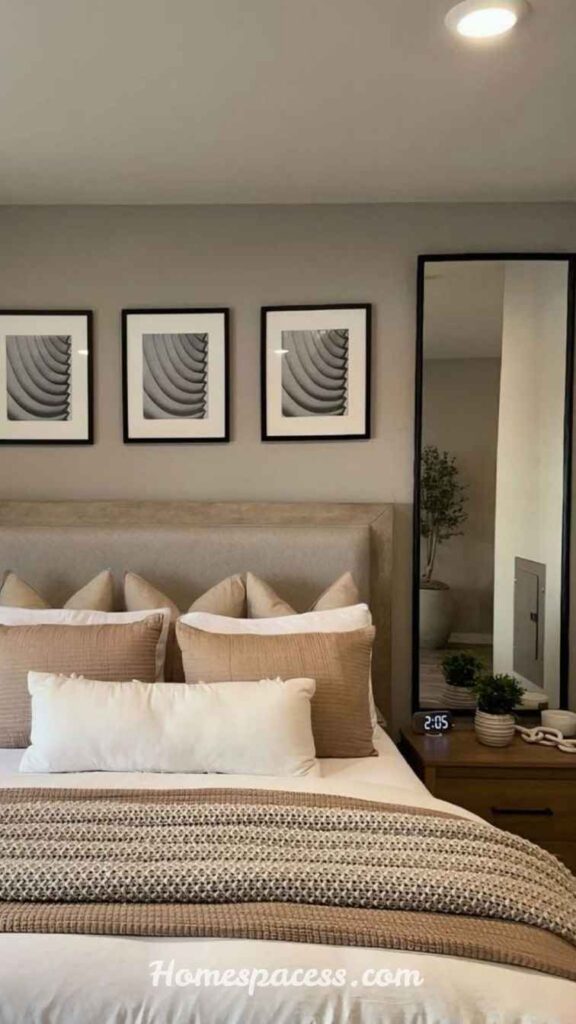
Mirrors are the interior designer’s most reliable tool for making a bedroom feel larger, lighter, and more luxurious particularly in rooms under 150 square feet. A well-placed mirror can visually double the depth of a space and reflect natural light into corners that would otherwise feel dim and heavy. Yet most people treat bedroom mirrors as purely functional objects (checking outfits) rather than design elements.
The most impactful placement for a large mirror is opposite or adjacent to a window, where it catches and amplifies natural light throughout the day. A floor-length leaning mirror in a bedroom corner takes up almost no structural space while adding significant visual depth and a touch of drama. For a more architectural effect, a series of three narrow vertical mirrors arranged together on a wall creates a paneled appearance that adds height and elegance without the weight of a single large piece.
Mirror frame style matters as much as placement. A chunky rattan or bamboo frame works perfectly in a coastal or boho bedroom decor scheme. A thin brushed brass or black metal frame suits contemporary and transitional styles. Antique-style beveled frames with aged silver finish add old-world warmth to maximalist or traditional rooms. Choose the frame as carefully as you would a piece of art it will likely be one of the most prominent decorative objects in the room.
Add Drama With a Canopy or Statement Bed Frame
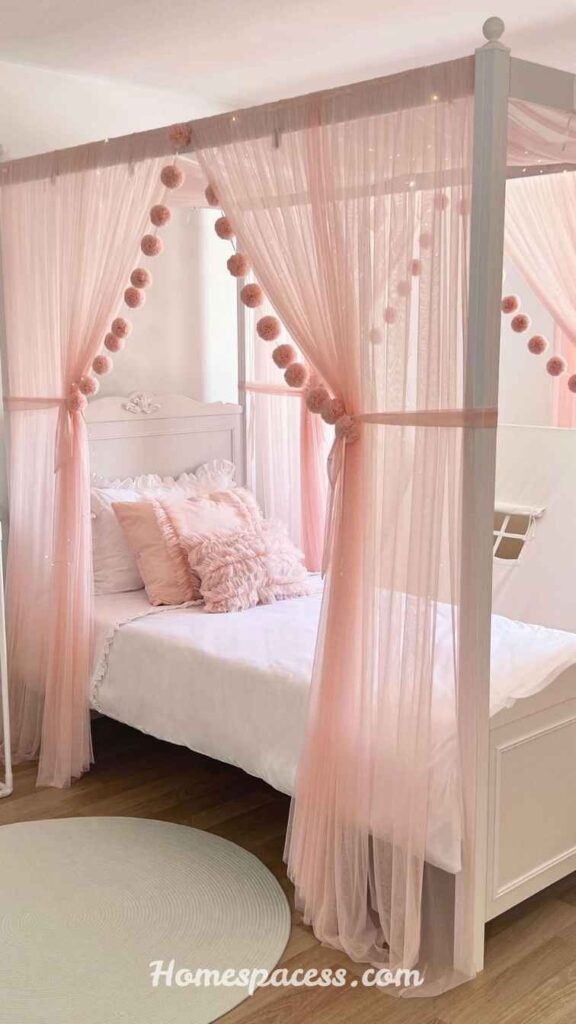
The bed frame is the anchor of every bedroom decor scheme and yet it’s often the piece people spend the least time considering. A standard low-profile platform bed does its job, but a statement bed frame (upholstered, arched, four-poster, or carved wood) completely changes the room’s energy and sets the tone for every other decorative decision. Think of it as the room’s architectural centerpiece.
Upholstered beds with a tall, tufted, or curved headboard are the current reigning favorite in interior design, and for good reason: they add softness, color, and visual height simultaneously. In a room with high ceilings, a floor-to-ceiling fabric panel behind the bed, paired with a simple frame, creates a canopy effect without actual structural commitment. For rooms with lower ceilings, a four-poster frame hung with sheer linen panels adds romance and enclosure without overwhelming the space.
If a full frame replacement isn’t feasible, a DIY canopy can achieve remarkable transformation at low cost. Mounting a curtain rod to the ceiling above the bed and hanging two panels of sheer or linen fabric creates an instant sanctuary effect. Adding a simple crown molding piece or a decorative wood bracket above a standard headboard can make even a budget bed look architecturally intentional. In bedroom decor, perceived quality almost always comes from proportion and detail not price tag.
Integrate Smart Bedroom Technology Seamlessly
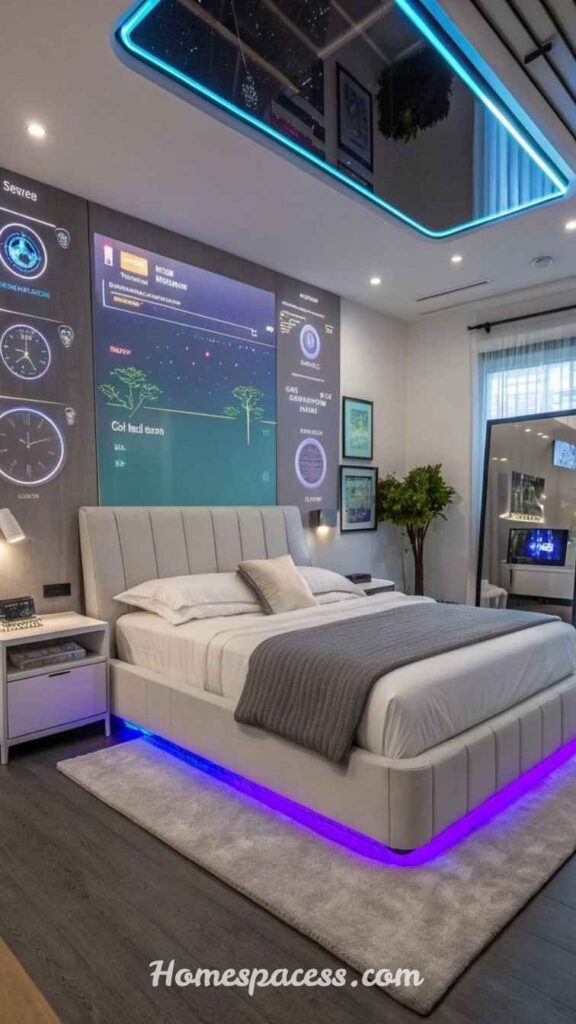
Smart home technology has arrived in the bedroom and the best implementations are invisible. The goal isn’t to fill your bedroom with gadgets; it’s to make light, temperature, sound, and scent controllable without disrupting the room’s aesthetic. Done well, smart bedroom decor actually reduces visual clutter by eliminating multiple physical controls and replacing them with voice or app-controlled systems.
Smart bulbs (Philips Hue, Govee, or LIFX) in bedside lamps allow you to shift color temperature from 6500K daylight for morning alertness to 2200K candlelight warmth for nighttime wind-down all through a single app or voice command. A smart thermostat programmed to drop room temperature by 2°F at your bedtime (research shows 65–68°F is optimal for sleep) can meaningfully improve rest quality without a single design change. A smart plug on a white noise machine, diffuser, or heated blanket gives you full schedule control.
The aesthetic integration challenge is real: charging cables, smart hubs, and voice assistant devices can visually undermine even the most carefully curated bedroom decor. Hide cable runs in cord covers painted to match the wall. Choose devices in neutral finishes (white, black, or wood) that blend with the room rather than contrast it. Mount your smart speaker in a bookshelf or inside a wooden box speaker housing to make it look intentional rather than incidental. Technology should serve the bedroom not decorate it.
Embrace Minimalism Through Intentional Decluttering
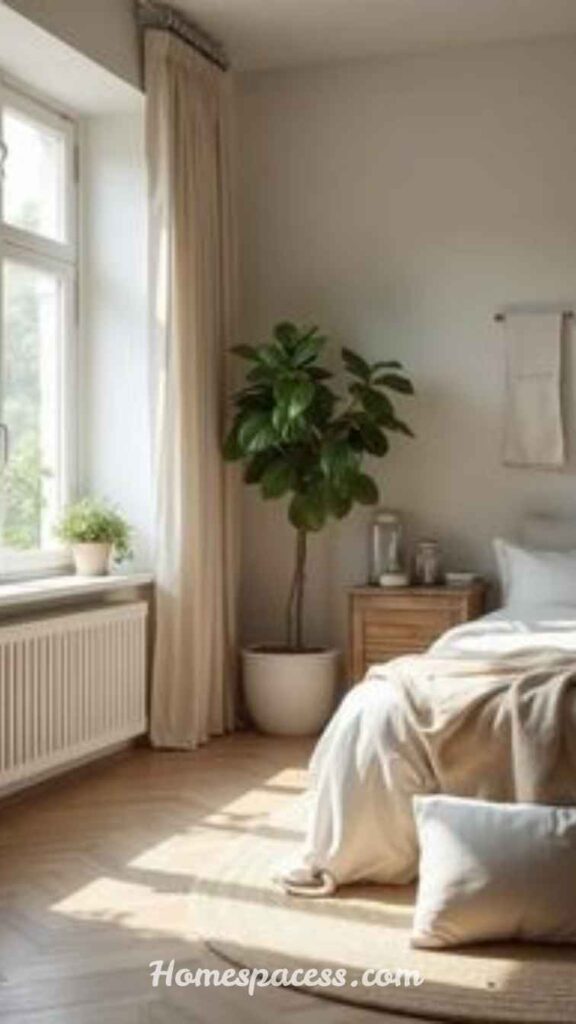
No bedroom decor idea delivers more immediate impact for less money than removing things. Visual clutter surfaces covered with objects, floors obscured by items, furniture competing for attention creates cognitive load that the brain must process even during sleep. Numerous sleep studies have linked cluttered bedroom environments to elevated cortisol and disrupted sleep patterns. Decluttering isn’t just organizational; it’s therapeutic and physiologically meaningful.
The approach interior designers use isn’t ruthless minimalism it’s intentional curation. Every object in your bedroom should either serve a clear function or bring genuine aesthetic joy (ideally both). Start with horizontal surfaces: bedside tables, dressers, and window sills. Remove everything, clean the surface, and return only the items that truly belong. A bedside table needs: a lamp, one book, and perhaps a glass of water. Everything else is clutter masquerading as decoration.
Closed storage is the minimalist bedroom’s best friend. Replace open shelving with cabinets where possible. Use baskets or decorative boxes to contain small items on remaining open surfaces. Invest in quality wardrobe organization systems that keep clothing fully hidden when doors are closed. The hidden principle behind luxury hotel room design which almost universally feels peaceful and spacious is that storage is abundant and everything has a dedicated, concealed place. Replicating that in your bedroom decor is achievable; it just requires systematic, intentional editing.
Create a Dedicated Reading or Relaxation Nook
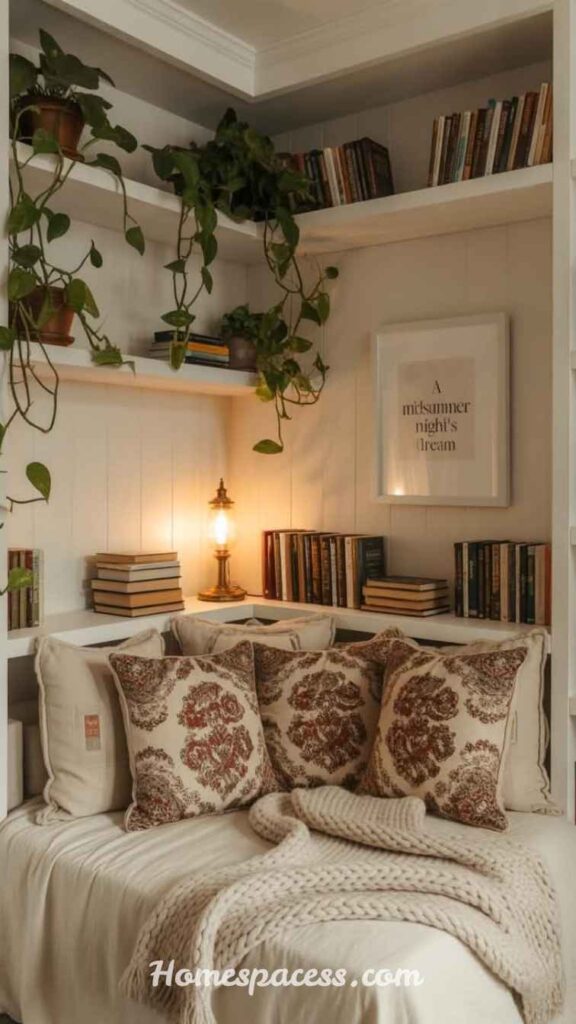
A reading nook isn’t a luxury it’s a design strategy that serves a critical function in bedroom decor: it gives you a dedicated space to wind down that isn’t the bed itself. Sleep hygiene research consistently recommends using the bed only for sleep and intimacy, not for scrolling, reading, or working. Having a beautiful alternative relaxation spot in the bedroom makes this habit sustainable without feeling restrictive.
Even a small bedroom (under 150 sq ft) can accommodate a reading nook with the right approach. A single armchair or papasan in a corner, paired with a floor lamp and a small side table or stack of books, creates a complete mini-zone. A bay window becomes an obvious candidate a window seat with a cushion, throw, and two pillows transforms what’s often wasted structural space into the most coveted corner in the house. For truly tight spaces, a floor cushion or pouf with a wall-mounted sconce above creates a functional nook with no furniture footprint at all.
The materials and color palette of the nook don’t need to match the rest of the bedroom exactly a slight shift in texture or tone can make the nook feel like a destination rather than an extension of the main room. A richer, warmer tone in that corner (deeper wall color, heavier curtain panel, denser rug) creates a sense of cocooning that enhances relaxation. Done well, a bedroom reading nook is one of those bedroom decor decisions that fundamentally changes how you use and feel about the entire space.
Conclusion
Bedroom Decor Ideas can help you create a space that feels calm, stylish, and truly your own. You do not need to spend a lot of money to see a big change. Simple updates like adding soft bedding, warm lighting, and neat storage can improve the whole look. Choose colors that make you feel relaxed and happy. Keep your room clean and organized so it always feels fresh and comfortable.
Using the right Bedroom Decor Ideas, you can turn any bedroom into a cozy and inviting place. Try mixing modern and simple styles for a balanced look. Add small personal touches like photos or plants to make the space feel special. Focus on comfort as well as design so you enjoy your room every day. With small steps, your bedroom can become a peaceful and beautiful space.
Trend Analysis
Bedroom Decor Trends: What’s Dominating 2026 and Beyond
The most significant shift in bedroom decor entering 2026 is the move away from “Instagram aesthetics” toward deeply personalized, wellness-first design. The all-white Scandinavian bedroom that dominated the 2010s has given way to richer, warmer palettes terracotta, forest green, clay, and deep plum are consistently appearing in top design publications and real estate staging. This isn’t a passing fad: it reflects a broader cultural shift toward comfort, authenticity, and spaces that feel inhabited rather than curated for a photoshoot.
Dominating Now
Warm Earthy Palettes
Terracotta, mocha, sage green, and warm greige replacing cool grays and stark whites across bedroom design.
Dominating Now
Curved & Organic Forms
Arched headboards, round mirrors, and blobby furniture silhouettes replacing the sharp angles of mid-century modern.
↑ Rising Fast
Maximalist Layering
Rich pattern-on-pattern mixing, global textiles, and collected-over-time aesthetics replacing minimalist restraint.
↑ Rising Fast
Japandi Evolution
Japanese-Scandinavian fusion deepening into wabi-sabi concepts: imperfect textures, aged materials, visible craftsmanship.
Looking ahead to 2026–2027, the trajectory points toward AI-assisted personalization (apps that generate bedroom decor schemes from a photo of your existing space), increased integration of sleep science into design specifications, and a strong sustainable material movement that will make natural fibers, reclaimed wood, and low-VOC finishes the default rather than the premium option.
Expert Insights
What Interior Designers Know That Most Articles Don’t Tell You
One of the most common professional insights that rarely reaches DIY bedroom decor guides: scale is more important than style. A room decorated in a mediocre aesthetic with properly proportioned furniture will always look better than a beautifully styled room with furniture that’s the wrong size. Before buying anything new, measure your room and create a simple floor plan. The industry standard is that beds should leave at least 24 inches of walkway on both sides, and rugs should extend a minimum of 18 inches beyond the bed frame. Breaking these rules consistently makes rooms look smaller and more chaotic regardless of how beautiful individual pieces are.
Professional designers also consistently cite the “ceiling rule” treating the ceiling as a fifth wall rather than leaving it plain white by default. A tone-on-tone ceiling (the room’s wall color applied 50% lighter) adds depth and cohesion without drama. A deeper ceiling color in the same family (painting it a shade or two darker than the walls) creates a cocooning effect that’s particularly suited to bedrooms and is a signature technique in high-end residential design. Even adding simple coffered molding or a circular ceiling medallion transforms the overhead plane from an afterthought into an architectural feature.
Finally, the “shop your house” strategy: before purchasing new bedroom decor items, walk through every other room and identify pieces that might work better in the bedroom. An unused vase, a lamp from a guest room, a piece of art from a hallway rearranging existing items costs nothing and often produces surprising results. Professional stagers do this routinely. The freshness of seeing a familiar object in a new context often delivers more impact than introducing something entirely new.
Sustainability & Long-Term Value
Sustainable Bedroom Decor: Design That Lasts Decades, Not Seasons
The environmental impact of fast-furnishing culture buying cheap bedroom furniture and replacing it every few years is substantial. The average mattress takes 80–120 years to decompose in a landfill; polyester bedding sheds microplastics with every wash; particleboard furniture off-gasses formaldehyde for years. Sustainable bedroom decor isn’t just an ethical choice it’s a health-positive, financially sound long-term strategy that produces better design outcomes.
Natural Fibers
Choose organic cotton, linen, or wool bedding. They’re biodegradable, breathable, and soften with every wash.
Solid Wood Furniture
FSC-certified solid wood outlasts particleboard by decades and can be refinished, repainted, or repurposed.
Secondhand First
Vintage and antique pieces carry zero new manufacturing impact and often superior craftsmanship to modern alternatives.
From a financial perspective, the “cost per use” calculation strongly favors investing in quality foundation pieces and keeping them for 15–20 years over buying budget alternatives every 3–5 years. A solid walnut bed frame purchased for $1,200 that lasts 25 years costs $48 per year. A $300 particleboard frame replaced every 4 years costs $75 per year and produces far more waste. The sustainable bedroom decor approach and the financially intelligent approach are, in most cases, identical.
Future Predictions
The Bedroom of Tomorrow: Innovations Changing Home Design
Sleep science and interior design are converging rapidly, and the bedroom decor landscape of 2027–2030 will look meaningfully different from today’s. The clearest signal is the integration of biometric feedback into bedroom environments: smart beds and mattresses from companies like Eight Sleep already adjust temperature in real-time based on your body’s thermal readings, and the next generation will communicate with room climate systems, lighting, and sound to create a fully adaptive sleep environment that responds to your physiology rather than a preset schedule.
2026
Circadian Lighting Goes Mainstream
Automated color-temperature lighting systems move from luxury market to standard bedroom installations in new builds.
2027
AI-Personalized Decor Recommendations
Apps using computer vision analyze existing bedroom photos and generate photorealistic redesign options within minutes.
2028
Biometric-Responsive Environments
Rooms that automatically adjust temperature, light, and sound based on wearable sleep tracker data become commercially available.
2029+
Programmable Surface Materials
Electrochromic glass and smart wall panels that change color or opacity on command replace traditional repainting cycles.
From a design perspective, the shift toward modular bedroom furniture pieces that reconfigure as life circumstances change will reduce replacement cycles and address the environmental concerns of disposable furnishing culture. Brands like Resource Furniture and Floyd already lead in this space; by 2028, modular systems will be a mainstream offering at every price point. For consumers, this means bedroom decor investments made today should prioritize adaptability and quality over trend-specific styling that may feel dated within a few years.
Common Mistakes
Bedroom Decor Mistakes Most People Make (And How to Fix Them)
Understanding what not to do is often more actionable than another list of ideas. These are the most frequently observed bedroom decor errors seen in both budget setups and expensive renovations that undermine an otherwise solid room. Avoiding even two or three of these produces a noticeably more polished result without any additional investment.
- Hanging artwork too high. The standard eye-level rule means the center of a piece should sit at approximately 57–60 inches from the floor not at the top of your wall. Most people hang art 6–12 inches too high, which makes ceilings feel lower and the art feel disconnected.
Fix: Measure 57″ up from floor, mark, and center the piece at that point. - Choosing a rug that’s too small. A rug that only fits under the bed is the most common proportional error in bedroom decor. It makes the room feel unanchored and smaller than it is.
Fix: The rug should extend 18″+ beyond each side of the bed. Size up always. - Ignoring the back of the bedroom door. A behind-the-door hook or organizer, a full-length mirror, or even a piece of art transforms dead vertical space into functional or decorative real estate.
Fix: Mount a simple hook system or lean a mirror against the doorimmediate impact, zero cost. - Matching everything perfectly. A “matching set” bedroom (same wood tone, same finish, same style across every piece) reads as flat and generic. Intentional contrast creates the visual tension that makes a room interesting.
Fix: Mix two wood tones deliberately. Pair light and dark finishes for dynamic contrast. - Skipping window treatments. Bare windows make a room feel unfinished, reduce privacy, and let in light that disrupts sleep. Curtains also add significant height when hung close to the ceiling.
Fix: Mount curtain rods 2–4 inches below the ceiling, not above the window frame. Instant height illusion.

Team Home Spacess shares simple, practical design ideas that work for real families. The team focuses on cozy décor, soft colors, and natural textures that make a space feel truly lived-in. From everyday decorating tips to creative home projects, Team Home Spacess is dedicated to helping readers create warm, comfortable, and inviting spaces with a fresh and personal touch.