
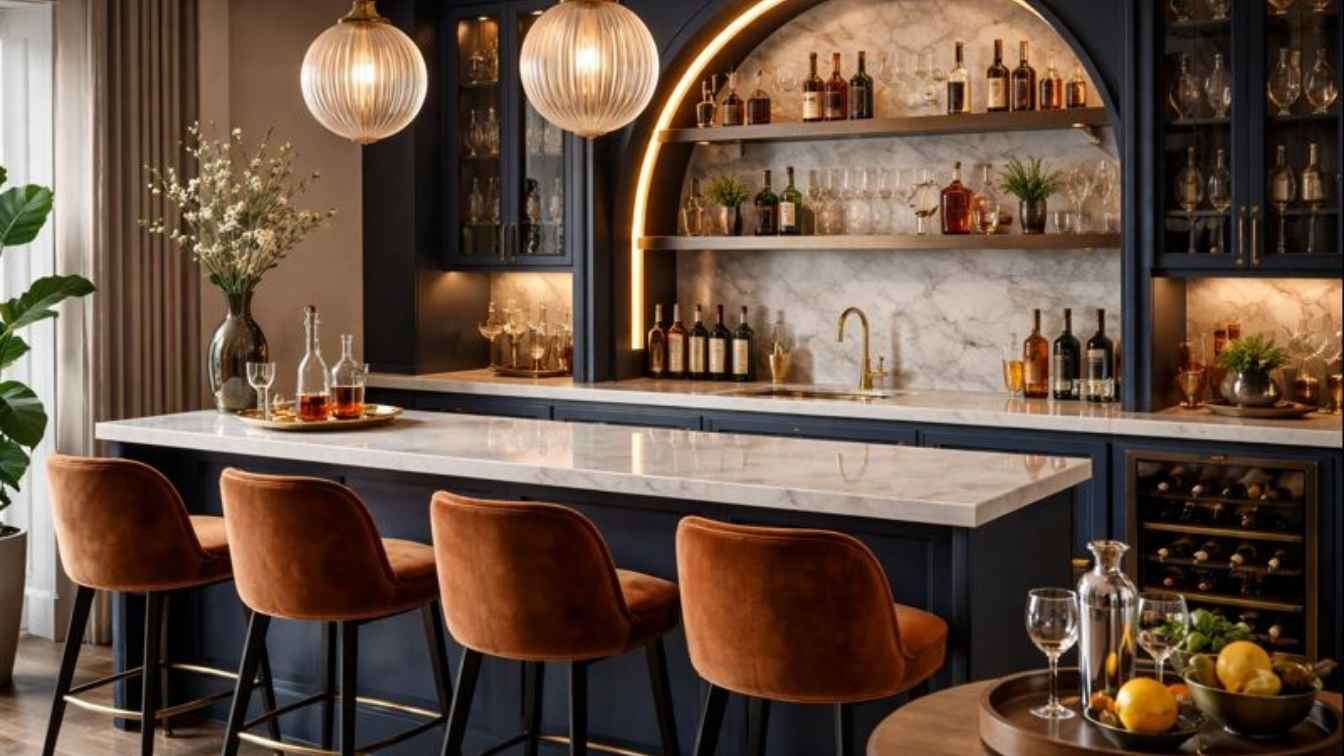
Most people underestimate their own home’s entertaining potential. You’ve hosted a dinner party, watched guests crowd around the kitchen counter, and quietly wished you had a proper place to mix a cocktail and pour a glass of wine without the chaos. The good news? You don’t need a mansion to build a beautiful, functional home bar.
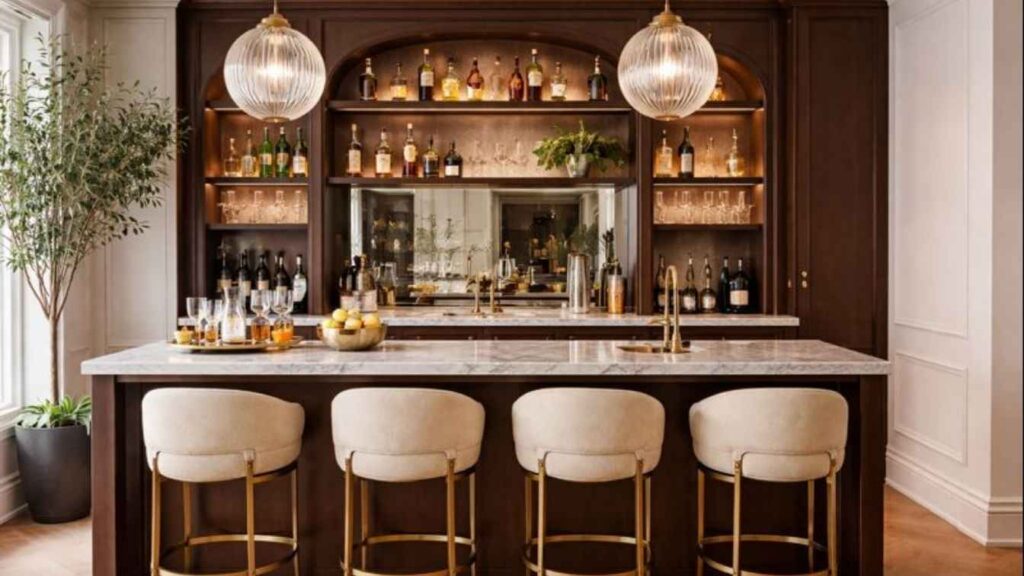
Home bar ideas have evolved dramatically over the last few years from built-in wet bars with marble countertops to compact rolling bar carts that cost less than a decent bottle of whiskey. Whether you’re working with a sprawling basement, a narrow hallway alcove, or a single spare wall in your living room, there’s a design approach that fits your space, budget, and lifestyle.
This guide covers 13 distinct home bar ideas, each explored with enough depth to help you understand not just what to do, but why it works and how to execute it well. We’ll also cover the trends shaping home bar design in 2026, the mistakes most people make, and what the future of home entertaining looks like. Let’s build something worth raising a glass to.
The Classic Bar Cart:
Portable Elegance for Any Room
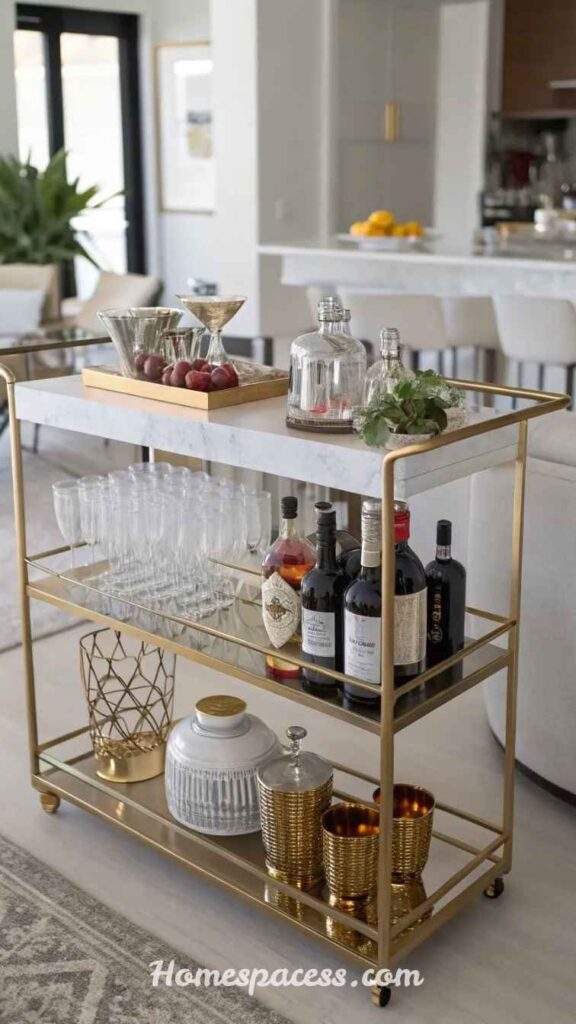
The bar cart is arguably the most democratic of all home bar ideas affordable, space-efficient, and endlessly stylish. A well-styled bar cart placed in a living room corner or dining room nook immediately signals that you take entertaining seriously, without requiring a single renovation. The beauty of this setup is its mobility: you can wheel it to wherever the party is happening, and tuck it away just as easily.
When choosing a bar cart, think beyond just size. The material matters enormously for both aesthetics and durability. Brass-finished metal carts with glass shelves work brilliantly in Art Deco or mid-century modern interiors. Matte black iron suits industrial or contemporary lofts. Rattan or bamboo carts have surged in popularity for bohemian and coastal-inspired spaces. Most importantly, avoid overloading it curate the selection to seven to ten bottles maximum, plus essential glassware and a few bar tools, to maintain that effortlessly stylish look.
One often-overlooked insight: treat your bar cart like a vignette, not a storage unit. Add a small plant, a candle, a decorative tray, or an interesting bottle stopper to create visual texture. Grouping items in odd numbers (threes and fives) is a designer trick that gives the cart a collected, intentional feel rather than a cluttered one. Budget-conscious decorators can find beautiful bar carts in antique stores for a fraction of retail prices and aged brass patina actually adds character that new carts can’t replicate.
Must Read: Easy Party Decor Ideas That Will Impress Your Guests Instantly
Repurposed Cabinet Bar:
Hidden Sophistication
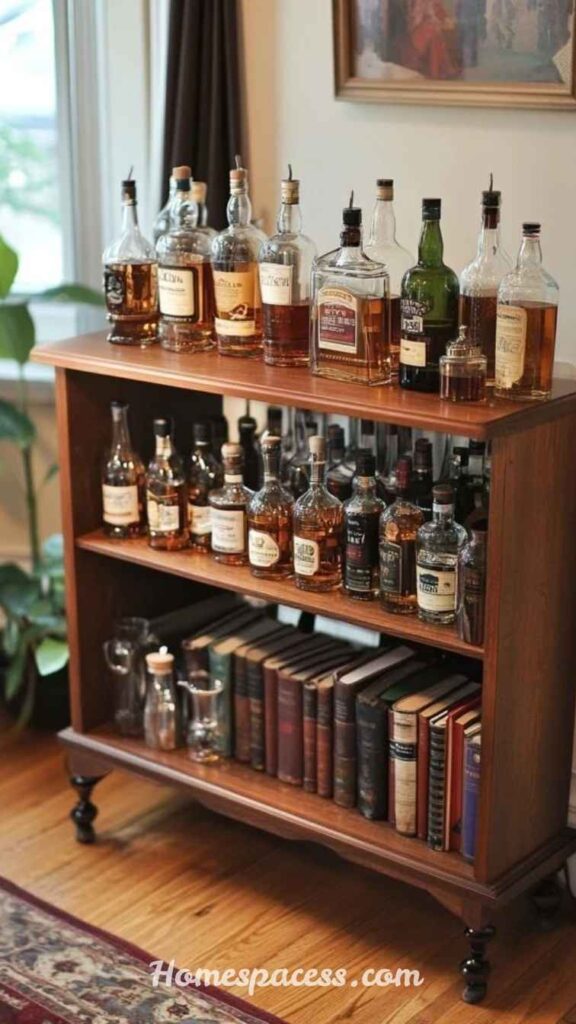
Transforming an old armoire, china cabinet, dresser, or hutch into a home bar is one of the most creative and cost-effective ideas available today. The concept works especially well in homes where a dedicated bar room isn’t feasible when the cabinet doors are closed, the bar disappears entirely, leaving guests surprised and delighted when it opens. This “hidden bar” approach adds a layer of theatre to entertaining that purpose-built solutions rarely match.
The conversion process is simpler than most people assume. Strip out interior shelving to custom-fit your bottle heights, add a dark tile or marble contact paper to the interior back wall, install a few LED strip lights under the shelves, and line the interior with a wine rack insert. The existing cabinet frame provides structural support, meaning you typically don’t need to reinforce it unless you’re storing significant weight. A small wine cooler or under-counter fridge can be integrated if the cabinet footprint is large enough.
Thrift stores and estate sales are goldmines for this project. A solid wood armoire that’s cosmetically tired but structurally sound can often be found for $50–$150 paint it a dramatic color like deep navy, forest green, or matte black, and it becomes a statement piece. This approach also aligns well with sustainability values, since it repurposes existing furniture rather than adding new production to the supply chain. The result is a bar that has a story, which is always a better conversation starter than something bought off a showroom floor.
- Pro Tips for Cabinet Bar Conversion
- Use peel-and-stick wallpaper on the interior back panel for a luxurious look without commitment.
- Install a magnetic closure to keep doors shut securely especially important if you have children at home.
- Add a fold-down surface on the inside of the door for a prep station when open.
- Battery-powered LED puck lights are ideal if running electrical isn’t feasible.
Don’t Skip: Gaming Room Ideas That Transform Any Space Into a Setup Worth Streaming
Basement Wet Bar:
The Gold Standard for Home Entertaining
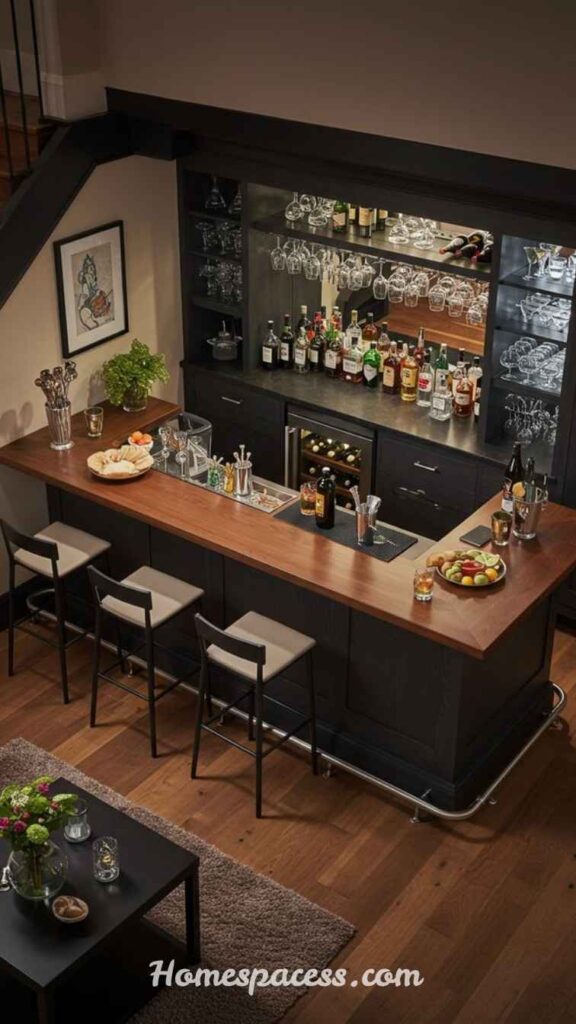
If you have an unfinished or underutilized basement, building a dedicated wet bar is one of the highest-return investments you can make in your home. A wet bar meaning one with a sink and running water elevates your home’s entertainment capability dramatically. It allows for proper cocktail preparation, rinsing glassware, and cleanup without constant trips upstairs. Real estate appraisers consistently note that a finished basement with a wet bar adds measurable value to a home’s resale price.
The design of a basement home bar should account for the unique challenges of below-grade spaces: limited natural light, moisture management, and often lower ceiling heights. Opt for warm, directional lighting (Edison bulb pendants, backlit shelving, or LED strip under-cabinet lights) to counter the absence of windows. Waterproof flooring like luxury vinyl plank or polished concrete is essential. For the bar itself, a L-shaped or U-shaped configuration maximizes functionality in a corner while leaving the floor plan open for seating.
Material selection sets the tone entirely. A waterfall-edge quartz countertop in a dark color (charcoal, slate, or black pearl) creates a high-end look at a mid-range price point. Shiplap or reclaimed wood paneling on the back wall behind open shelving adds warmth and texture. Don’t overlook the ceiling exposed painted beams or a coffered detail can make a low basement ceiling feel intentional rather than cramped. Budget typically ranges from $3,000 for a basic DIY build to $25,000+ for a fully custom, professionally installed setup.
Don’t Miss: Terrace Design Ideas: 10 Expert Ways To Create Your Perfect Outdoor Space
Floating Shelf Bar:
Minimal Space, Maximum Style
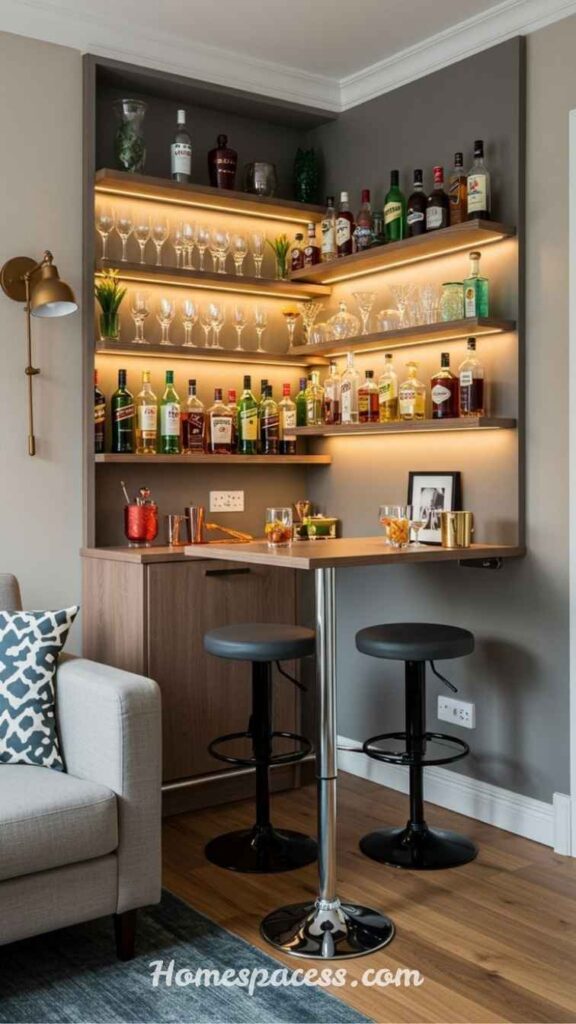
Floating shelves arranged to display bottles, glassware, and bar accessories represent one of the cleanest expressions of home bar design and one of the most adaptable. This approach works in virtually any room, on any wall with sufficient studs, and can be executed for as little as $100 in materials. The key is treating the shelves as deliberate display, not casual storage. Think of it as your own private back bar, the kind you’d admire at a craft cocktail lounge.
For a cohesive look, limit yourself to three shelves maximum in a vertical stack. The top shelf is for spirits on display aesthetically interesting bottles with varied heights create the best visual profile. The middle shelf holds frequently used bottles and a small ice bucket or cocktail shaker. The bottom shelf displays glassware, ideally hung from a stemware rack mounted underneath. This hierarchy makes the bar both beautiful and functional, since everything has a logical home.
The wall behind the shelves is where real personality emerges. A large mirror panel (which also makes the room feel larger), a tile backsplash, exposed brick, or a dramatic wallpaper panel all create depth and visual interest. LED strip lighting mounted behind the shelves creates an ambient glow that looks spectacular in the evening. For smaller apartments, a two-shelf arrangement between windows or beside a fireplace can create a bar presence without dominating the wall.
“The best home bars don’t announce themselves they reveal themselves. A well-lit floating shelf bar turns a bare wall into the soul of a room.”
Read More: Swimming Pool Design Ideas: Expert Concepts That Transform Any Backyard
Kitchen Extension Bar:
Seamlessly Integrated Elegance
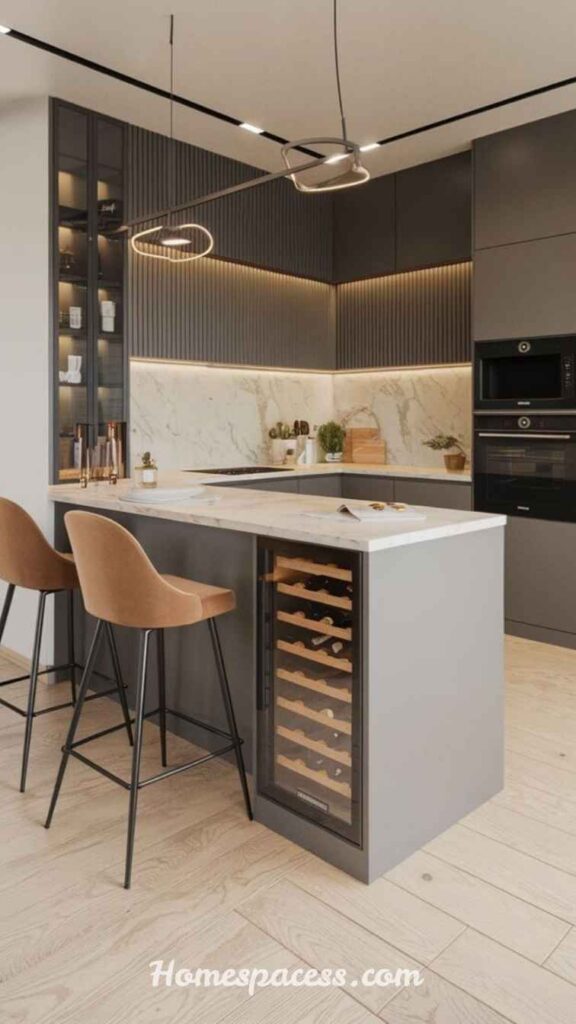
For open-plan homes, extending the kitchen island or counter into a dedicated bar zone is the most seamlessly integrated approach to home bar design. This doesn’t require a full renovation designating a section of the kitchen peninsula as a bar area, with dedicated glassware storage above and a small wine fridge below, can be done without structural changes. It works particularly well when entertaining, because the host can interact with guests while preparing drinks without leaving the communal space.
The most effective kitchen bar extensions use a visual cue to delineate the bar zone from the cooking zone. A change in countertop material say, butcher block for the cooking area and marble or waterfall quartz for the bar end signals the shift without physical walls. A different pendant light style over the bar section further defines the space. Under-counter wine and beverage refrigerators are now available in 15-inch widths, making them easy to integrate even in modest kitchen layouts.
One functional insight most guides miss: include a dedicated drawer for bar tools (jigger, muddler, strainer, corkscrew) right at the bar end of the island. When these tools are mixed in with kitchen utensils, they’re never where you need them. A simple dedicated drawer transforms the kitchen bar from an aesthetic gesture into a genuinely functional setup. Add a small under-mount sink if plumbing allows, and you have all the utility of a wet bar within your existing kitchen footprint.
Closet Conversion Bar:
The Wow-Factor Reveal
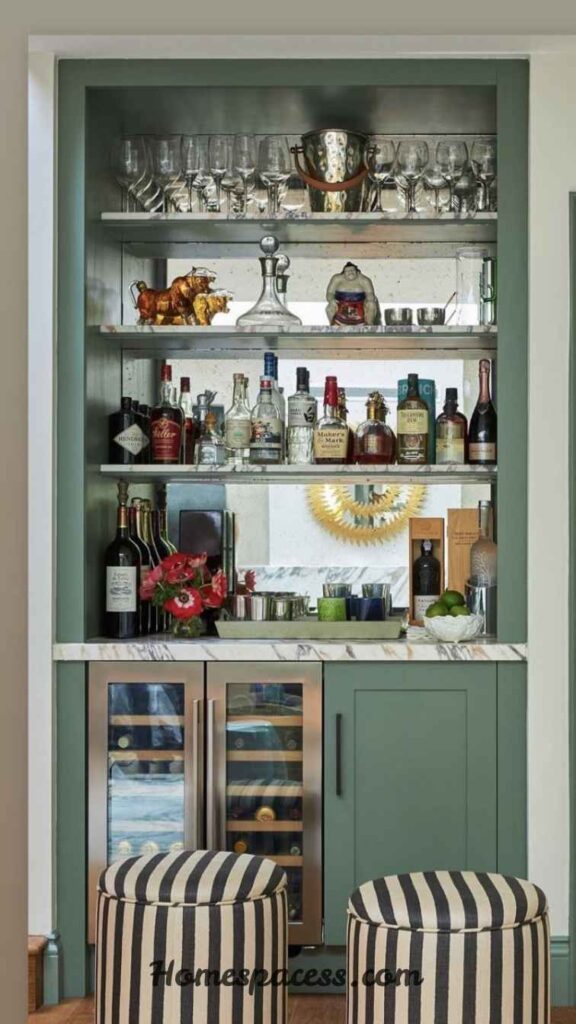
Converting an unused closet into a home bar often called a “cloffice bar” or “bar closet” is one of the most dramatic space transformations available to homeowners and renters alike. Remove the closet door (or replace it with a set of barn-style sliding doors or bifold mirrored doors), remove the existing rod and shelves, and you have a ready-made niche that’s ideally proportioned for a home bar. The footprint is typically around 24–36 inches deep and 3–5 feet wide exactly right for a single counter with shelving above.
The enclosed nature of a closet bar concentrates the design impact. Because you’re working with all four walls, the ceiling, and the floor in a small contained space, you can use materials and colors you’d never risk in a full room. Dark wallpaper, dramatic tile, a single neon sign, exposed LED Edison string lights these elements that might overwhelm a room feel perfectly calibrated in a closet bar. The contrast between the rest of the home’s interior and the bar’s aesthetic creates the “wow factor” that guests talk about long after the evening ends.
For renters, this is a particularly powerful approach because most closets don’t require any permanent modifications. A floating shelf mounted with removable hardware, peel-and-stick tile or wallpaper, battery-powered lighting, and a vintage bar cart slid into the opening can create a fully realized bar that you can dismantle in an afternoon when you move. Install a curtain rod with linen drapes across the opening instead of doors, and the whole setup looks intentional and sophisticated.
Outdoor Home Bar:
Alfresco Entertaining Done Right
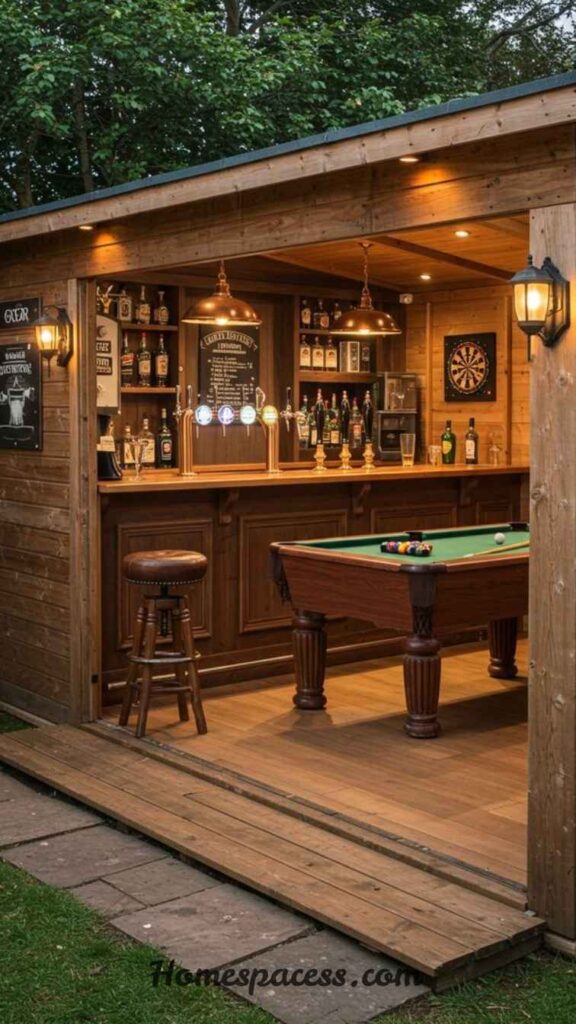
Outdoor home bars have experienced a surge in popularity since 2020, and the trend shows no signs of slowing. When your patio, deck, or backyard is already an extension of your living space, a built-in or semi-permanent outdoor bar completes the picture. The experience of mixing cocktails outdoors under string lights on a warm evening has a quality that no indoor setup can fully replicate and your guests will always remember it.
Material durability is the primary design constraint for outdoor bars. Teak, ipe, or cedar wood weathers beautifully in most climates with minimal treatment. Concrete countertops are virtually indestructible and develop a character over time. Stainless steel is the professional choice for outdoor kitchens because it handles moisture, heat, and UV exposure without degradation. For the bar structure itself, consider a combination of concrete block or CMU (concrete masonry unit) walls with a teak or concrete countertop this construction can be done DIY for under $1,500 and will last decades.
Don’t treat the outdoor bar as an isolated element connect it to your larger outdoor room design. Position it adjacent to a pergola or under a covered structure to extend the entertaining season in rainy or cold climates. A bar-height counter with stools on the guest side means your guests are always engaged, never standing awkwardly. Integrate a small outdoor fridge, a built-in ice chest, and a few weatherproof cabinets below the counter, and you have a fully functional bar that eliminates the need to go inside during outdoor gatherings entirely.
Industrial Pipe Bar:
Raw, Character-Rich Design
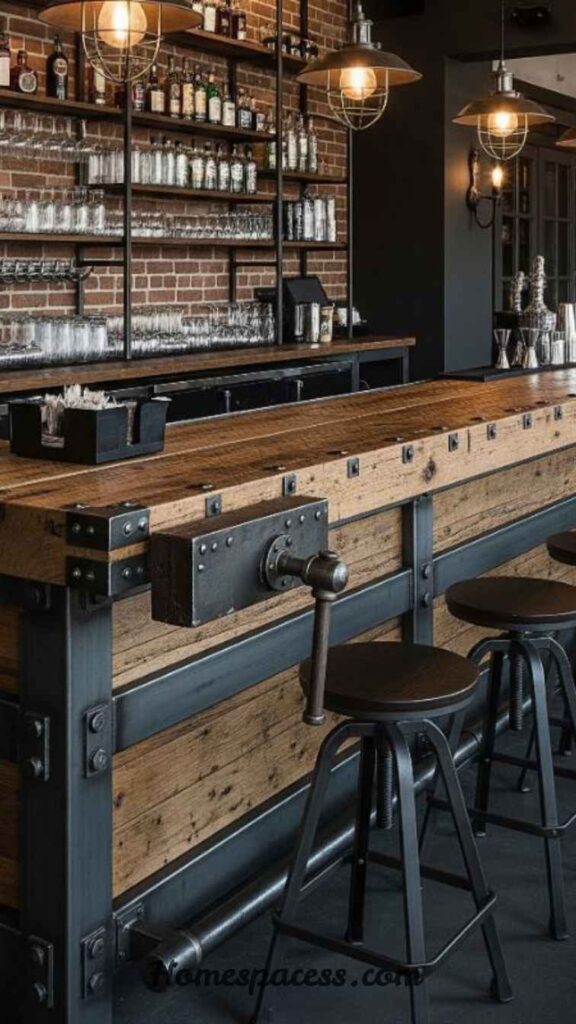
The industrial pipe bar has become a staple of loft-style and modern rustic interiors and for good reason. Black steel pipe fittings, typically used in plumbing, can be repurposed as shelving brackets, footrests, glass racks, and structural elements with a level of authenticity that prefabricated bar furniture simply can’t match. The aesthetic communicates craftsmanship, intentionality, and a certain no-nonsense attitude that resonates with homeowners who want their bar to feel earned rather than bought.
Building an industrial pipe shelf system is a genuine DIY project accessible to intermediate skill levels. Steel pipe and fittings from a hardware store, combined with reclaimed wood planks (pallet wood, salvaged warehouse flooring, or even stained pine), create the core structure. The pipe serves as both brackets and visual element the fittings (floor flanges, elbows, tees) become decorative details when left in their raw black finish. A complete three-shelf industrial bar wall can typically be built for $150–$400 in materials, depending on the scale.
The industrial aesthetic pairs naturally with concrete, exposed brick, and dark metals, but it also works as a contrast element in otherwise soft or traditional interiors a raw steel-and-wood bar against white shiplap walls creates a compelling tension. For the counter surface, a thick slab of live-edge wood sealed with epoxy resin is the definitive choice, adding warmth that balances the coldness of metal. Pair with leather bar stools, Edison bulb pendants, and a vintage neon sign for maximum character.
Speakeasy-Themed Bar:
Immersive Prohibition Atmosphere
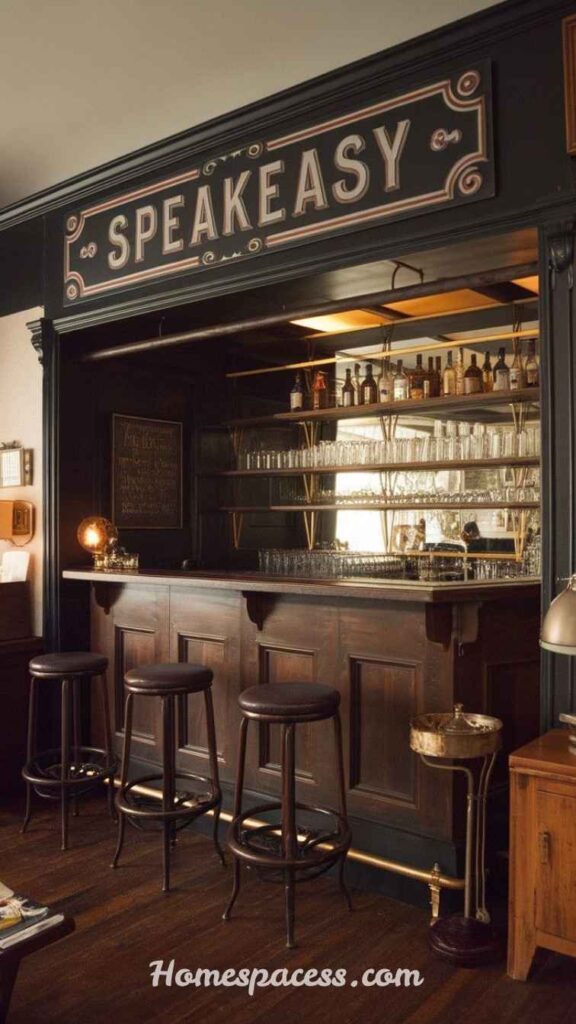
A speakeasy-inspired home bar is less a design style and more a full sensory experience. Drawing from the hidden jazz clubs of the 1920s Prohibition era, this approach prioritizes atmosphere above all else: dark wood paneling, low amber lighting, leather seating, exposed brick, vintage mirrors, and a back bar that would look at home in a pre-war Manhattan lounge. It’s the home bar concept most likely to make a guest stop at the entrance and say “wow” before anything else has happened.
The design works best in rooms that can be truly immersed basements, wine cellars, or dedicated game rooms that don’t need to function as anything else. Cover walls in dark, moody wallpaper (think deep burgundy damask or dark-green botanical prints) or V-groove wood paneling stained to an aged mahogany tone. Install a proper back bar unit with a large mirror, tiered bottle shelving, and glass-door cabinetry. Pendant lights with Edison bulbs, wall sconces with amber glass shades, and candles on the counter create the lighting atmosphere that makes this style come alive.
The bar top itself is a signature opportunity. Aged copper or hammered zinc bar top material is period-accurate and ages beautifully the metal develops a patina that only improves with time. Dark leather bar rail padding along the counter edge adds tactile authenticity. For finishing touches, frame original Prohibition-era ephemera (vintage cocktail menus, jazz event posters, period photographs), and select a classic jukebox or Bluetooth speaker hidden in a vintage radio cabinet. The goal is a room that transports guests and delivers on the promise every time the door opens.
Minimalist Slab Bar:
Architectural Restraint
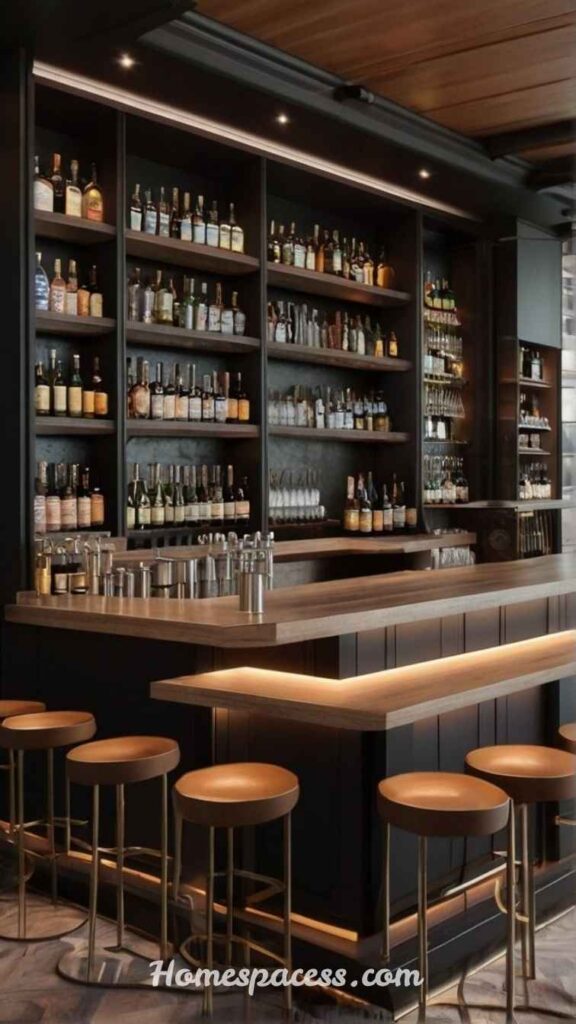
In direct counterpoint to the speakeasy’s maximalism, the minimalist slab bar strips away every non-essential element to create something that feels more like sculpture than furniture. This approach suits contemporary and Japandi-influenced interiors where clean lines, natural materials, and intentional negative space define the aesthetic. The “slab” in question is typically a thick countertop stone, concrete, or solid wood that serves as the primary design statement, supported by the simplest possible base.
Execution requires discipline. Limit the bottle display to six to eight bottles, selected for aesthetic coherence (similar label styles, complementary bottle shapes, or a strict color palette) rather than variety. Glassware is hidden in a single below-counter cabinet or displayed on one small shelf, grouped precisely. The countertop material carries the visual weight: a honed Calacatta marble slab, a single piece of bookmatched granite, or a poured concrete counter with an integral sink are all appropriate choices. Every accessory earns its place, or it doesn’t make the cut.
Lighting for a minimalist bar should be equally considered. Recessed ceiling lights on a dimmer, a single architectural pendant, or integrated LED channels within the shelving (visible only as a line of light, not as a fixture) all work. Avoid decorative lighting elements they undermine the reductionist intent. The minimalist bar communicates restraint, taste, and confidence: it says you know exactly what you want and need nothing extra to prove it. For urban apartments or spaces where an understated sophistication is the goal, no other home bar style comes close.
Corner Nook Bar:
Making Dead Spaces Come Alive
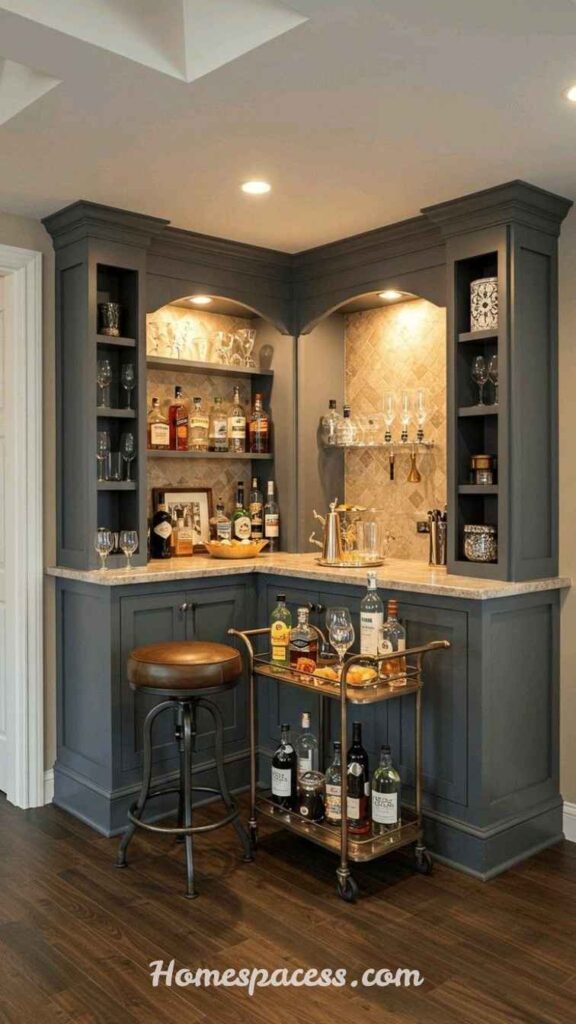
Every home has at least one awkward corner the spot next to the fireplace, the junction between the living room and hallway, the unused angle behind the dining table. These are prime real estate for a compact home bar that converts wasted square footage into one of the most used spots in your home. Corner nook bars are space-efficient, cozy, and surprisingly impactful for their small footprint. Guests naturally gravitate toward corners, which makes this setup intuitively social.
The most effective corner bar configurations use custom or semi-custom corner shelving to maximize the angular space. A set of L-shaped floating shelves, or a corner cabinet with open upper shelving and a countertop at bar height, typically requires 18–24 inches in each direction from the corner point. This leaves the rest of the room fully functional while dedicating a purposeful zone to drinks. A pair of backless bar stools pulled up to the counter creates a spot for intimate conversation that a straight bar counter can’t replicate.
For visual impact, the corner bar benefits greatly from a single, well-placed piece of art or mirror mounted at the apex of the two walls it draws the eye directly to the bar and makes the corner feel like a destination rather than an afterthought. Wrap the walls of the bar corner in a different material from the rest of the room (a contrasting paint color, wallpaper panel, or tile treatment) to visually define the zone. This “bar alcove” treatment is a favorite designer strategy for giving small bars a sense of place without permanent construction.
Dedicated Wine Bar Wall:
For the Serious Collector
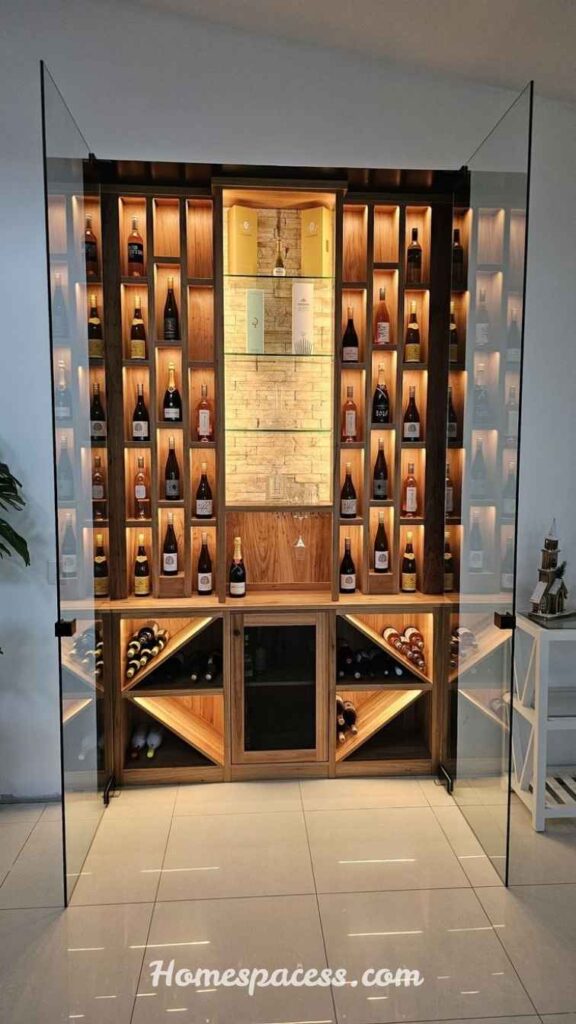
For wine enthusiasts, a dedicated wine bar wall is more than an aesthetic statement it’s a functional system for storage, display, and service that respects the beverage it houses. Unlike a general home bar, the wine bar wall prioritizes the wine itself: proper storage orientation (bottles horizontal to keep corks moist), temperature consideration (a built-in wine fridge or temperature-controlled cellar section), and display that showcases labels without exposing wine to light damage. Done well, it’s breathtaking; done poorly, it ruins expensive bottles.
The wall itself can accommodate a combination of open diamond-grid wine storage (for everyday bottles displayed horizontally), a built-in wine refrigerator or two (one for reds at cellar temperature, one for whites chilled), a narrow counter for decanting and serving, and glass-door cabinetry for stemware. A well-designed wine wall of 8 feet wide by 8 feet tall can store 200+ bottles while functioning as the dramatic focal point of a dining room, kitchen, or dedicated wine room. Materials like raw walnut, blackened steel, and slate or marble tile are favorites for their sophisticated, wine-appropriate aesthetic.
Lighting is critical and nuanced for wine walls. UV light degrades wine, so standard LED strips mounted directly above bottles are problematic. Shielded LED lights with low UV output, or warm halogen-style LEDs behind frosted diffusers, provide the visual drama without the wine risk. Many serious collectors incorporate a sommelier’s table a slightly larger surface at standard table height, 30 inches, rather than bar height for bottle presentation and decanting. Integrating a small catalog or cellar management system (apps like Vivino or CellarTracker) turns the wine wall into a managed collection, not just a display.
Smart Home Bar:
Technology-Integrated Entertaining
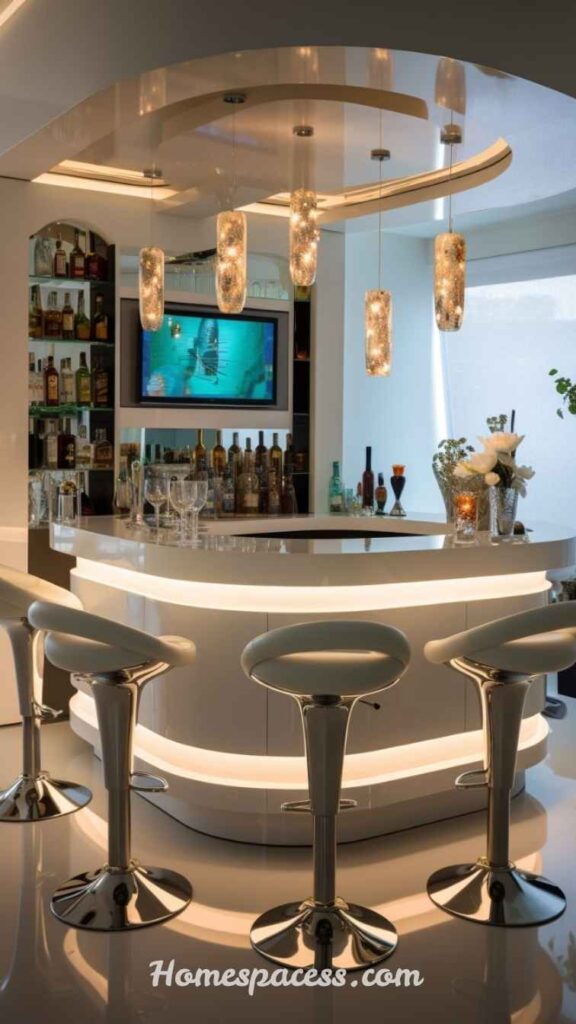
The smart home bar represents the frontier of home entertaining a setup that leverages connected technology to enhance every aspect of the experience, from ambiance control to inventory management. This isn’t about gadgetry for its own sake; it’s about reducing the friction between idea and execution. The best smart bars work invisibly, making the host more present with guests because the environment manages itself. This is the direction the most forward-thinking home entertainers are already moving.
At the core, a smart bar integrates voice-controlled lighting (Philips Hue or similar) that can shift from bright prep lighting to ambient cocktail hour warmth at a spoken command or scheduled time. A dedicated smart speaker (integrated into the bar itself, not placed awkwardly on the counter) manages music playlists that match the evening’s mood. A tablet or touchscreen mounted flush in the cabinetry provides instant access to cocktail recipes, and can even guide guests through self-serve mixing when the host steps away. Smart wine and beverage refrigerators with app connectivity alert you when temperatures drift or bottles reach optimal drinking temperature.
Inventory management is the most practically transformative smart bar feature. Apps like BarStock or DrinkControl connect to your bottle inventory, track what’s running low, and generate shopping lists automatically. Smart bottle pourers (like Pours Track) monitor exactly how much spirits are dispensed and update inventory in real time. For the serious home bartender, this level of organization eliminates the frustrating discovery mid-party that a key spirit is empty. The investment in smart bar technology scales from modest ($150–$300 for basic lighting and audio) to sophisticated ($2,000+ for fully integrated management systems), with clear functional value at every tier.
Conclusion:
Building a home bar whether it’s a $150 bar cart or a $15,000 basement wet bar is fundamentally an act of hospitality and self-expression. The right home bar idea for you isn’t the most expensive or the most elaborate; it’s the one that fits your space, matches your lifestyle, and makes you genuinely excited to invite people over.
The 13 home bar ideas in this guide cover the full spectrum of scale, budget, and style from minimalist floating shelves to fully immersive speakeasy rooms, from repurposed furniture to smart, technology-integrated bars. Each one is a legitimate path to the same destination: a home that entertains beautifully and a host who feels confident and prepared.
Start with what you have a wall, a corner, a closet, or a cabinet and let one of these ideas show you what it could become. The best home bar is the one you actually build. Pick your favorite idea and take the first step this week.
Trend Analysis · 2026 & Beyond
Home Bar Design Trends Shaping 2026 and the Next Decade
The home bar market is experiencing a structural shift, not just a passing design trend. Post-2020 investment in home entertainment spaces has permanently recalibrated how homeowners allocate renovation budgets. According to interior design industry reports, dedicated home bar and beverage station installations increased by over 40% between 2020 and 2024 and 2025–2026 data suggests this trajectory is holding, particularly among millennial homeowners who are now entering peak home-improvement spending years.
The dominant aesthetic trend for 2026 is what designers are calling “warm restraint” interiors that are refined and minimal in structure but rich in material quality and tactile texture. This plays out in home bars as: stone or concrete counters with leather bar rail trim, open shelving in blackened steel or oiled walnut, and lighting that emphasizes warmth over brightness. The maximalist “rustic farmhouse” bar aesthetic that dominated from 2015–2021 is definitively receding, replaced by quieter, more sophisticated expressions of the same social function.
Two emerging trends deserve particular attention. First, the “non-alcoholic bar” or “botanical bar” a dedicated space for premium mocktails, adaptogen drinks, shrubs, and fermented beverages is gaining traction among health-conscious entertainers. Second, multifunctional bar furniture (pieces that serve as bars by evening and coffee stations or work surfaces by morning) is a growing category driven by urban density and the need for spaces that justify their square footage around the clock. Both trends will likely become mainstream within the next three to five years.
Expert Insights · Practical Optimization
What Interior Designers and Master Bartenders Actually Recommend
Interior designers who specialize in home entertainment spaces consistently emphasize one principle that most homeowners overlook: the functional sequence of the bar. Just as professional kitchen design follows the “kitchen triangle” (stove, sink, refrigerator), a home bar should be laid out around a logical workflow: glassware storage → ice → mixing surface → spirits → serving. When these elements are arranged out of sequence, the bar creates friction rather than flow and the host ends up making excuses rather than cocktails.
Professional bartenders who have helped clients design home bars point to lighting as the single highest-impact investment most homeowners underprioritize. The difference between a home bar that feels like a professional cocktail lounge and one that feels like a kitchen counter with bottles on it is almost always lighting. Directional warm lighting (2700K–3000K color temperature) over the work surface, accent lighting highlighting bottles from behind or below, and ambient lighting that fills the surrounding space without competing these three layers transform the experience. This can be achieved for $200–$400 in materials with basic electrical skills.
Both designers and bartenders agree on the importance of the “edit.” The instinct to stock every spirit and display every bottle works against you a curated selection of 8–12 bottles, chosen with intention and displayed thoughtfully, looks and functions better than 30 bottles crammed onto shelves. The principle is the same one that makes boutique hotels feel more luxurious than large chains: selectivity signals confidence and taste. Choose what you genuinely love to drink and make well, and let that define the bar’s personality.
- Counter height matters: Standard bar height is 42 inches; standard counter height is 36 inches. Choose based on whether guests will stand (42″) or sit on regular chairs (36″).
- Always include a small prep sink: if at all possible it changes the bar’s usability more than any other single addition.
- Plan storage before aesthetics: Measure your tallest bottles (typically magnum wine at 14″ or handles of spirits at 13″) before designing shelf spacing.
- Footrest detail: A bar-height counter without a footrest rail is uncomfortable within minutes. This inexpensive addition dramatically improves the guest experience.
Sustainability & Long-Term Value
Building a Home Bar That Lasts and One That’s Good for the Planet
The most sustainable home bar is the one you build once and never need to replace. This sounds simple, but it runs counter to the fast-furniture culture that produces bar carts and shelf units designed to last three to five years before they wobble apart. Investing in quality materials solid wood, real stone, steel costs more upfront but produces a bar that appreciates in character over time rather than depreciating into the recycling bin. A properly built home bar with solid construction can serve a household for 30 years or more.
Material sourcing is where sustainability decisions have the greatest impact. Reclaimed wood (barn wood, industrial flooring, deconstructed furniture) eliminates new-growth timber from your project while adding visual authenticity that no new product can match. Recycled steel pipe for industrial bar shelving, salvaged stone countertops from demolition projects, and vintage or antique furniture repurposed as bar structures all reduce environmental footprint while often producing better aesthetic results than new materials. Many homeowners have found that salvage yards and architectural antique dealers are the best possible sources for home bar materials both for their environmental credentials and their design uniqueness.
From a financial value perspective, a well-executed home bar consistently appears on real estate appraisers’ lists of features that add measurable value, particularly a basement wet bar or a dedicated wine wall in dining rooms. The ROI varies by market, but homeowners in most US and European markets report that a professionally finished basement bar recoups 50–70% of its cost in resale value higher than many kitchen and bathroom upgrades. For homeowners who plan to sell within five to ten years, this context makes a quality home bar not just an entertainment expense, but a considered investment.
Future Predictions · Innovation Watch
The Future of Home Bar Design: What’s Coming Next
The most significant innovation on the near horizon for home bars is AI-integrated cocktail assistance systems that connect to your home’s ingredient inventory, suggest cocktails based on what you have, provide step-by-step audio or video guidance, and automatically order replenishments through smart grocery integration. Early versions already exist in premium smart kitchen appliances. Within three to five years, purpose-built home bar versions will likely be available as modular add-ons to existing bar setups, making the home bartending experience more accessible to non-enthusiasts while deepening it for experienced ones.
On the beverage side, the zero-proof category is fundamentally reshaping what a “home bar” contains and communicates. Premium non-alcoholic spirits (Seedlip, Lyre’s, Monday, and others), functional beverages (adaptogens, nootropics, CBD-infused drinks), and sophisticated fermented beverages (premium kombuchas, kefir sodas, botanical shrubs) are moving from health-food niche to mainstream entertaining staple. The home bar of 2030 will likely display these alongside traditional spirits as equals not as an afterthought section. This shift will influence bar furniture design, glassware selection, and how hosts conceptualize and present their bars to guests.
Modular, reconfigurable bar furniture is another innovation category gaining serious investment from furniture designers. Systems that can shift from a low coffee-table configuration by day to a standing bar counter by evening, or that expand accordion-style to serve a party of 20 before folding back to a slim console, address the core challenge of dedicated bar space in smaller urban homes. Japanese furniture design, which has long grappled with multi-function space, is likely to be the source of the most elegant solutions in this category as it gains mainstream Western adoption.
Common Mistakes · What Most Guides Miss
The 6 Home Bar Mistakes Most People Make (And How to Avoid Them)
The single most common home bar mistake is prioritizing display over function. A bar that looks spectacular in photos but produces a cramped, poorly lit, awkward working experience will be used rarely because every time you go to make a drink, the environment creates friction rather than pleasure. The bar that gets used daily is the one that’s genuinely enjoyable to work at, even if it’s less photogenic than a magazine spread. Always design for use first, and let aesthetics serve the function rather than override it.
The second most widespread mistake is under-investing in seating and comfort. The bar counter itself gets meticulous attention, while the stools and surrounding seating are selected as afterthoughts or worse, not included at all. A home bar without quality, comfortable seating is a standing display case, not an entertaining space. Bar stools should have back support for extended sitting, appropriate height for the counter (10–12 inches between seat and counter surface), and a footrest at the right level. This is where guests spend their time, so it deserves proportional investment.
Other frequently overlooked factors include: insufficient electrical outlets (bars need power for refrigerators, lighting, and audio plan for at least four outlets minimum); no provision for trash and recycling (a small pullout bin beneath the counter is essential, yet almost always absent); inadequate glassware storage that forces glasses to live in remote kitchen cabinets; and failing to waterproof adequately (spills are inevitable surfaces, flooring, and cabinetry interiors must all handle moisture without degrading). Each of these is a small detail that separates a functional home bar from a frustrating one.
- Mistake: Using the same overhead lighting as the rest of the room.
- Fix: Dedicated bar lighting on a separate dimmer circuit.
- Mistake: Buying all bottles at once to “stock up.”
- Fix: Build the collection gradually around what you actually enjoy making and drinking.
- Mistake: Ignoring ventilation near an outdoor or basement bar.
- Fix: Adequate airflow prevents moisture problems and makes the space comfortable.
- Mistake: Choosing glassware for aesthetics over practicality.
- Fix: Prioritize durable, dishwasher-safe pieces for daily use; save delicate crystal for display.

Team Home Spacess shares simple, practical design ideas that work for real families. The team focuses on cozy décor, soft colors, and natural textures that make a space feel truly lived-in. From everyday decorating tips to creative home projects, Team Home Spacess is dedicated to helping readers create warm, comfortable, and inviting spaces with a fresh and personal touch.