
Your front door speaks before you do. It’s the first thing guests notice, the last thing they forget yet most homeowners spend years ignoring it. A fresh coat of paint on a door is the single highest-return DIY investment in home improvement: it costs under $60, takes one afternoon, and can increase curb appeal by up to 30%. But getting it right requires more than just picking a color you like.
This guide goes beyond the usual listicle. Whether you’re refreshing an interior bedroom door, replacing dated oak with something bold, or finally making your front door a design statement, you’ll find 20 deeply considered door painting ideas each with color psychology, finish guidance, and real-world application advice. Let’s make your doors impossible to ignore.
30%
Avg. curb appeal boost from a freshly painted front door
$40
Typical cost for a single-door paint project
5×
ROI compared to most exterior upgrades
2 hrs
Average time to complete a quality door paint job
Classic Glossy Black Front Door
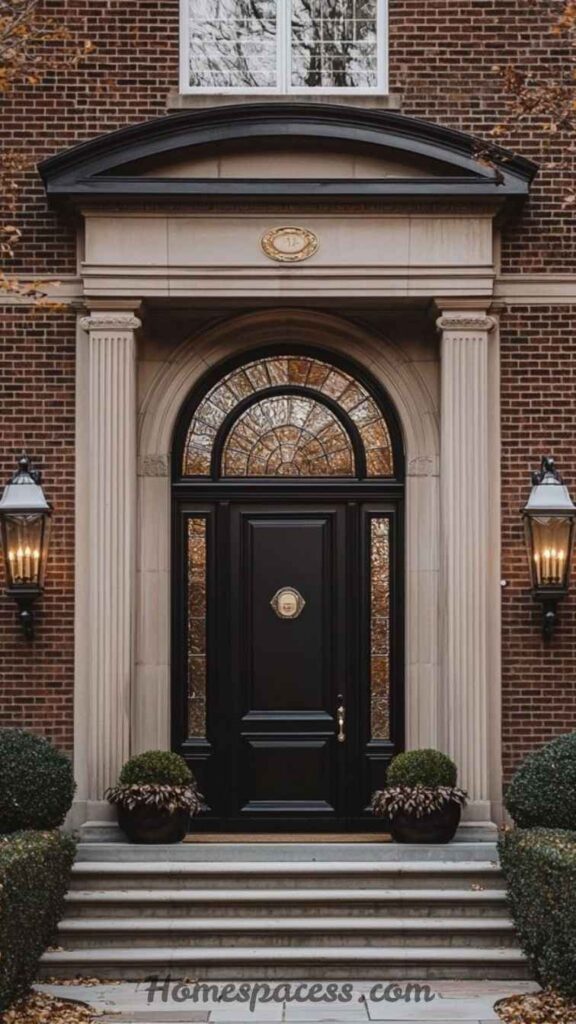
Black front doors never date. A high-gloss finish on a black door creates a lacquered, luxurious effect that photographs stunningly and signals sophistication. It works with virtually every exterior palette from red brick to white render to grey stone.
The key is the finish: matte black reads flat and modern, while gloss black reads heritage and formal. For most residential facades, semi-gloss is the sweet spot enough sheen to pop without showing every smudge. Pair with brass or satin gold hardware for maximum contrast.
Must Read: 25 Home Decor Ideas That Actually Transform Your Space
Deep Forest Green Statement Door
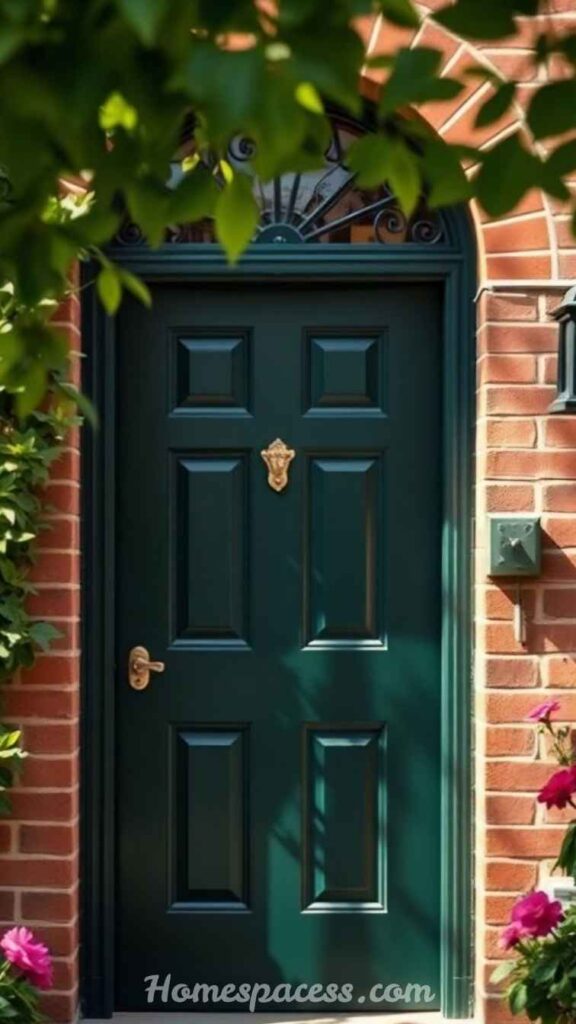
Deep forest green has overtaken navy as the most-requested door color in 2026–2027. It connects to the biophilic design movement the psychological pull toward natural, organic tones. Shades like hunter green, bottle green, and sage-with-depth all work beautifully against cream or white exteriors.
Unlike trendy pastels that can fade poorly, deep greens age well and develop a richer patina over time. They also absorb less heat than darker colors a practical advantage in warmer climates. Try Benjamin Moore’s “Racing Green” or Farrow & Ball’s “Calke Green” for authentic depth.
Don’t Skip: 21 Kitchen Decor Ideas That Transform an Ordinary Kitchen Into a Space You Actually Love
Two-Tone Door with Contrasting Frame
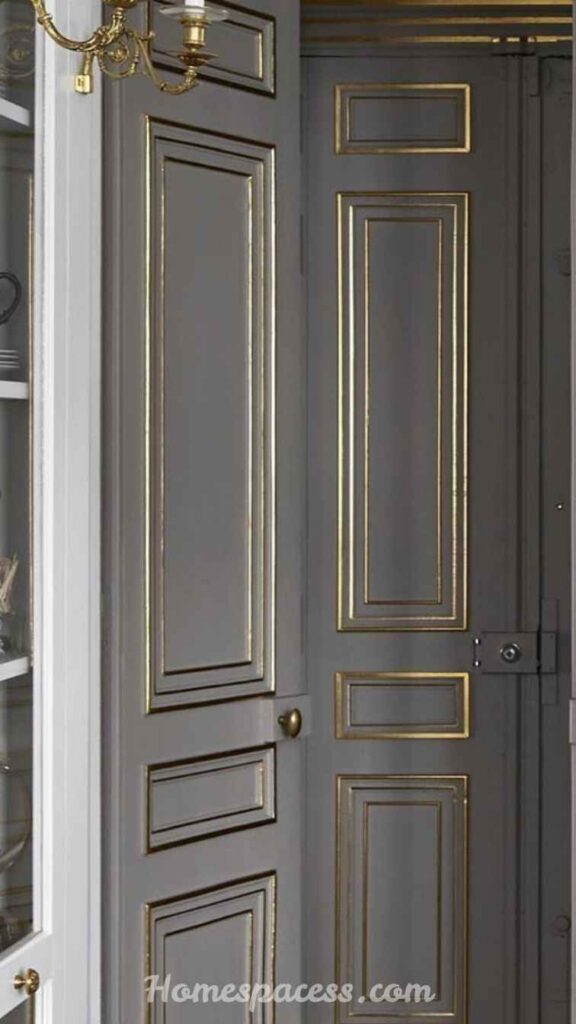
Painting a door panel and its surrounding frame in two coordinating but contrasting colors is one of the biggest design moves of 2026. The technique creates architectural depth where there isn’t any essentially adding visual moulding for free. Dark charcoal door with an off-white frame is a classic combination.
For interior doors, try a matte navy door with a dusty rose or terracotta frame for a maximalist-editorial look. The two-tone approach also disguises imperfect wall-to-door transitions, making it practical for older homes with uneven plasterwork around door casings.
Read More: 29 Bathroom Decor Ideas That Transform Any Space
Terracotta & Warm Earth Tones
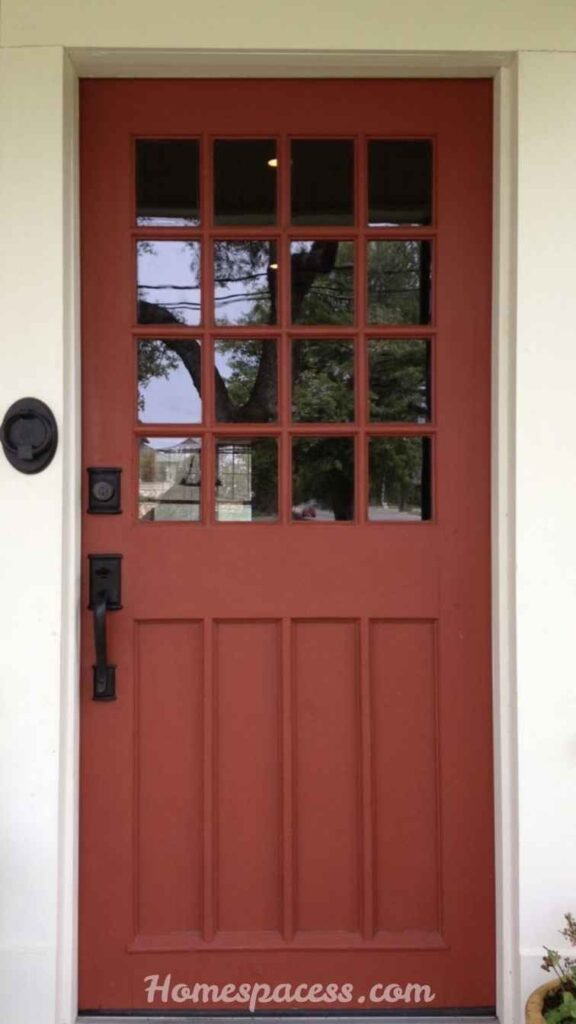
Terracotta is the breakout door color of 2026. Moving beyond its Mediterranean associations, terracotta now reads contemporary and grounded especially against natural materials like rattan, timber cladding, or exposed concrete. It brings warmth without the visual aggression of red or orange.
From burnt sienna to dusty clay, this color family performs exceptionally in high-sunlight environments where it deepens beautifully rather than bleaching. Interior applications think a mudroom or kitchen pantry door are equally compelling when paired with linen whites and raw brass.
Don’t Miss:23 Front Porch Ideas That Will Transform Your Home’s First Impression
Navy Blue Paneled Door
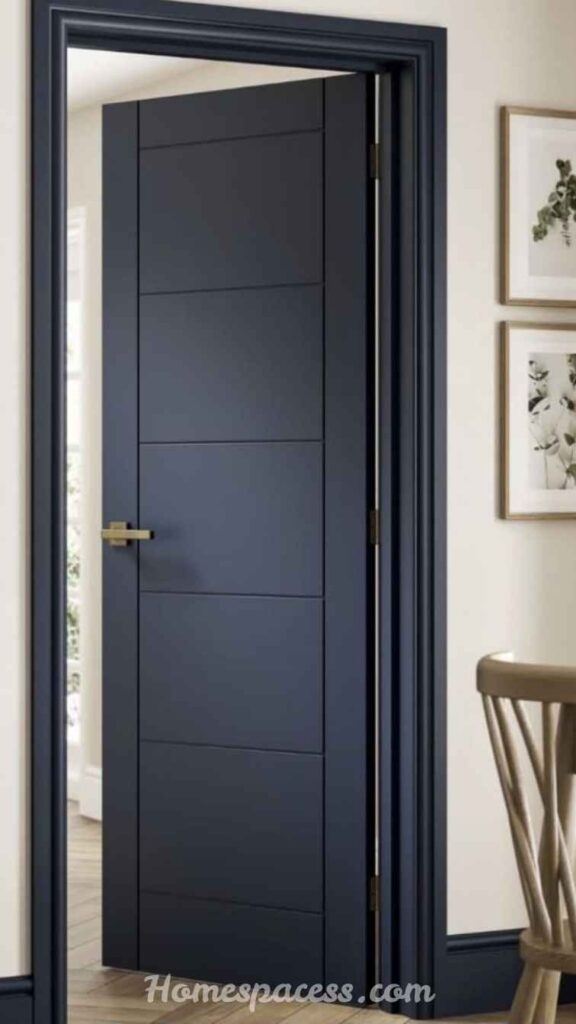
Navy blue remains evergreen for front doors because it conveys trust, stability, and refined confidence traits no homeowner objects to projecting. It’s particularly effective on Georgian and Victorian properties where the paneled door style already creates natural geometry for the color to inhabit.
The critical nuance is tone: warm navy (slightly purple-leaning) works on warm-toned brick homes, while cool navy (slate-leaning) suits render, stone, or painted exteriors. Avoid blue-black confusion in low-light by choosing navy that clearly reads blue in daylight conditions.
Chalky White with Visible Grain
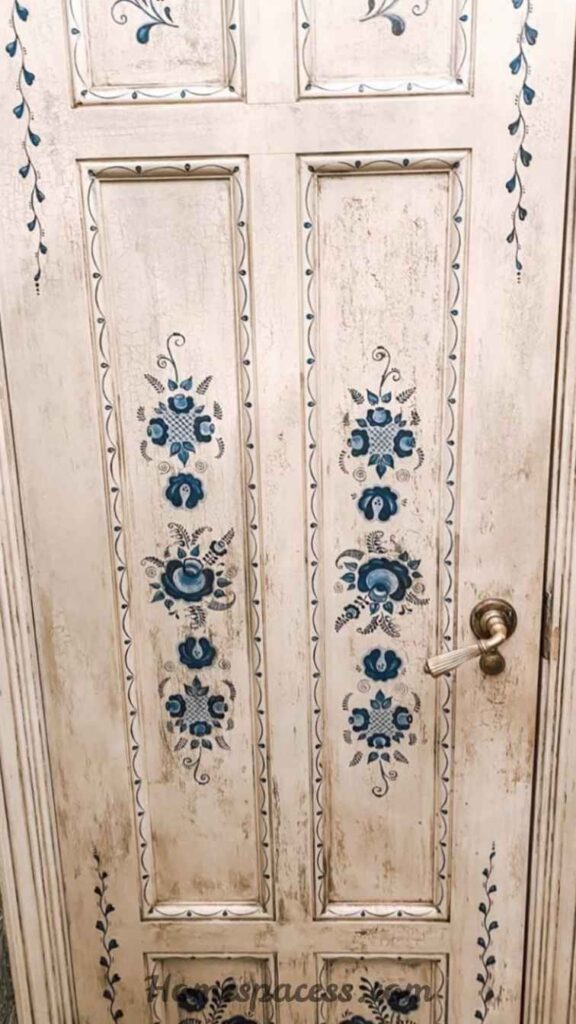
Using a matte or chalky white paint on interior timber doors while deliberately leaving wood grain visible through thin, semi-opaque coats creates a Scandinavian-influenced look that’s both minimal and warm. This technique is called “colour washing” and produces results far more interesting than a solid white coat.
It works best on doors with natural wood grain (pine, oak, ash). Apply a thinned white paint (1 part paint to 4 parts water) with a brush, then wipe back immediately with a cloth. Two to three layers builds the effect. The result: depth without heaviness, perfect for cottages and Japandi-style interiors.
Moody Plum or Aubergine
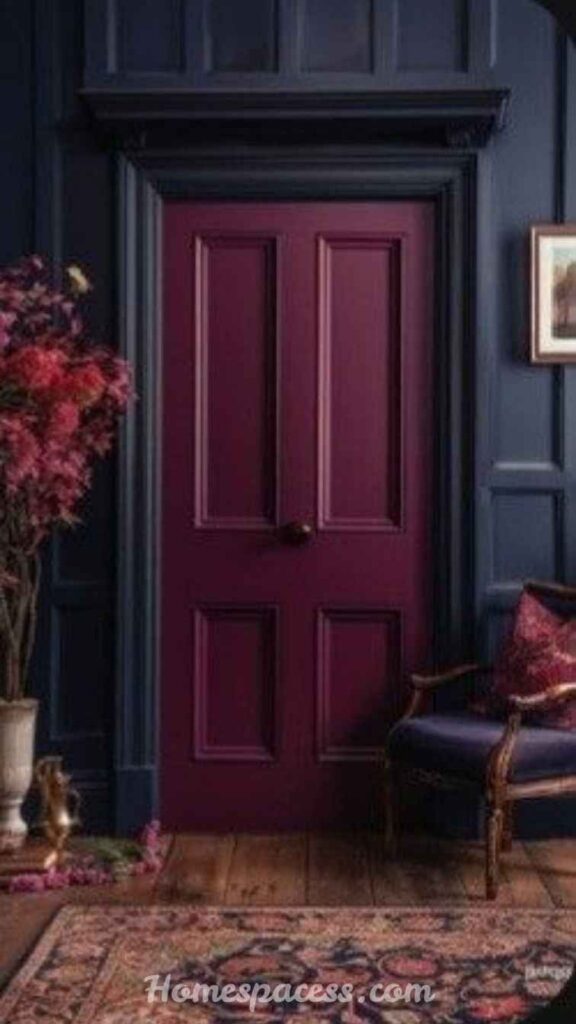
Deep plum and aubergine doors are commanding designer moves for 2026’s maximalist wave. On a bedroom or study door, these shades create an ante-chamber effect a moment of dramatic transition that makes the room beyond feel more special. They photograph exceptionally for interior design content.
Pair plum doors with warm lighting (2700K bulbs), aged brass hardware, and adjacent walls in deep cream or stone. The combination creates a rich, layered look that feels genuinely European and deliberately curated. This is one of those ideas that looks outlandish in a sample pot and stunning on an actual door.
Sage Green
The Quiet Trendsetter
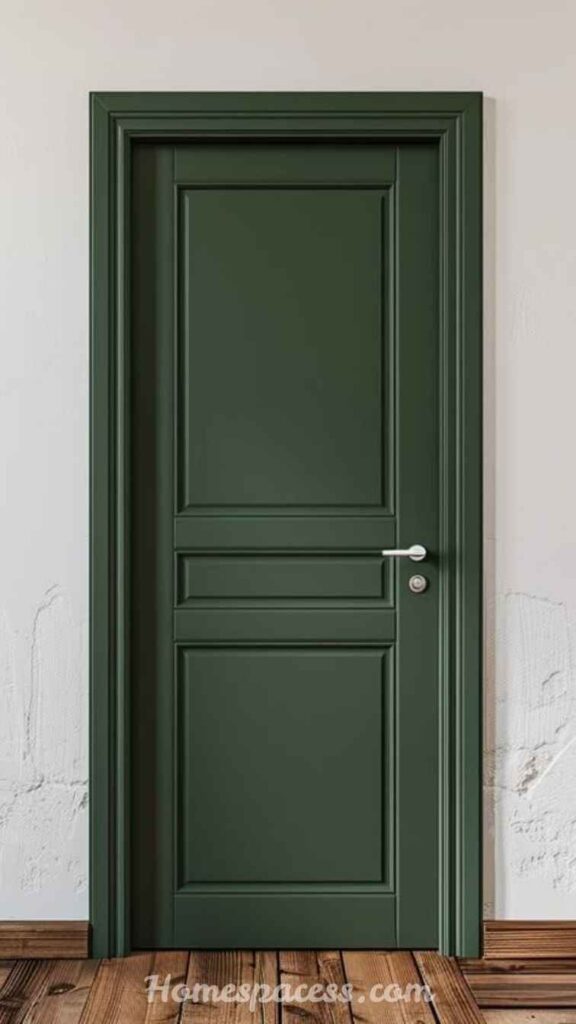
Sage green has held its trending status for three consecutive years proof that it’s not just a fad but a genuinely versatile color family. For interior doors, sage creates a restful, botanical quality that bridges the gap between white (too safe) and bold (too risky) for most homeowners.
Sage is particularly effective in open-plan spaces where interior doors frame views into other rooms. It anchors the eye and creates an easy palette for the rest of the space to respond to. Muted, grey-leaning sages work in low-light north-facing rooms; warmer yellow-green sages suit bright south-facing spaces.
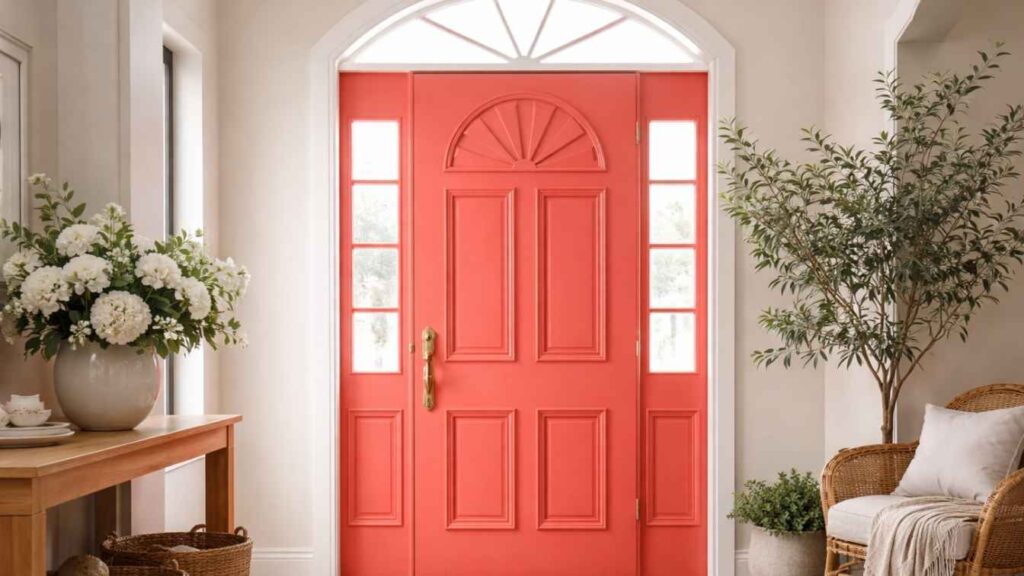
Bold Red: The Welcoming Classic
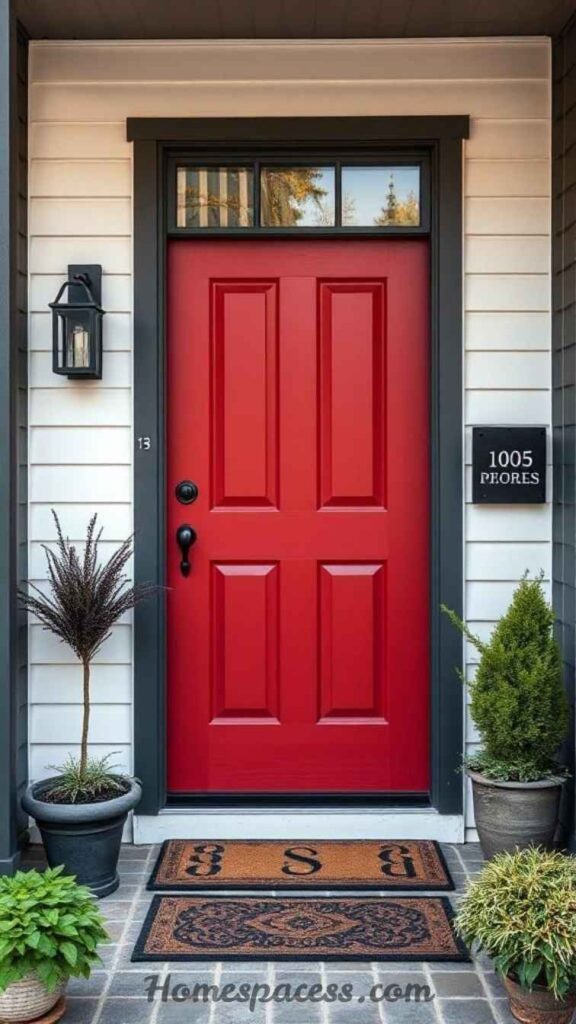
Red front doors have cultural weight. In Chinese tradition, a red door symbolizes luck and prosperity. In Scottish history, a red door meant the mortgage was paid off. In contemporary design, it simply means confidence. A well-chosen red not fire-engine, but deeper tones like oxblood or lacquer red works on almost any facade color.
The tricky part is warmth. Red doors on cool-toned grey houses need a blue-red (more vermilion), while warm-toned brick or yellow-stone homes need an orange-red (more paprika). Getting this wrong creates a jarring clash; getting it right creates one of the most impactful exterior design moments possible.
Dusty Pink Bedroom Door
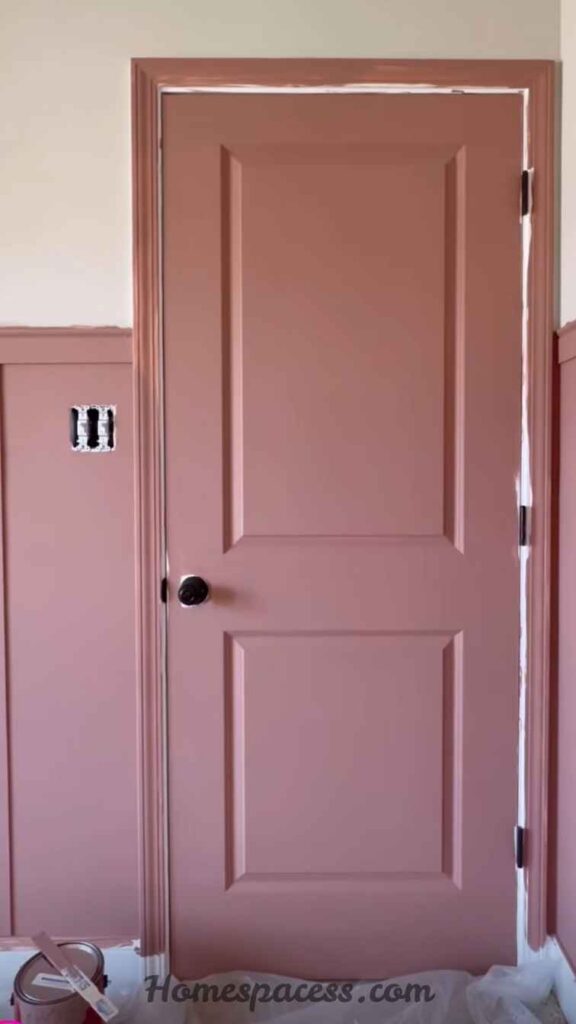
Dusty, muted pinks think dried rose, antique blush, or powder pink have completely replaced bright candy pink in interior design circles. On a bedroom or dressing room door, a dusty pink creates intimacy and warmth without the childlike associations of brighter pinks. It’s quiet confidence in paint form.
The key to successful dusty pink doors is desaturation: choose shades that have significant grey or brown undertones. They should look almost neutral in certain light and unmistakably pink in others. This chameleon quality is what makes them so sophisticated. Combine with aged white walls and linen textiles for peak effect.
Trompe-l’œil Wood Effect on MDF Doors
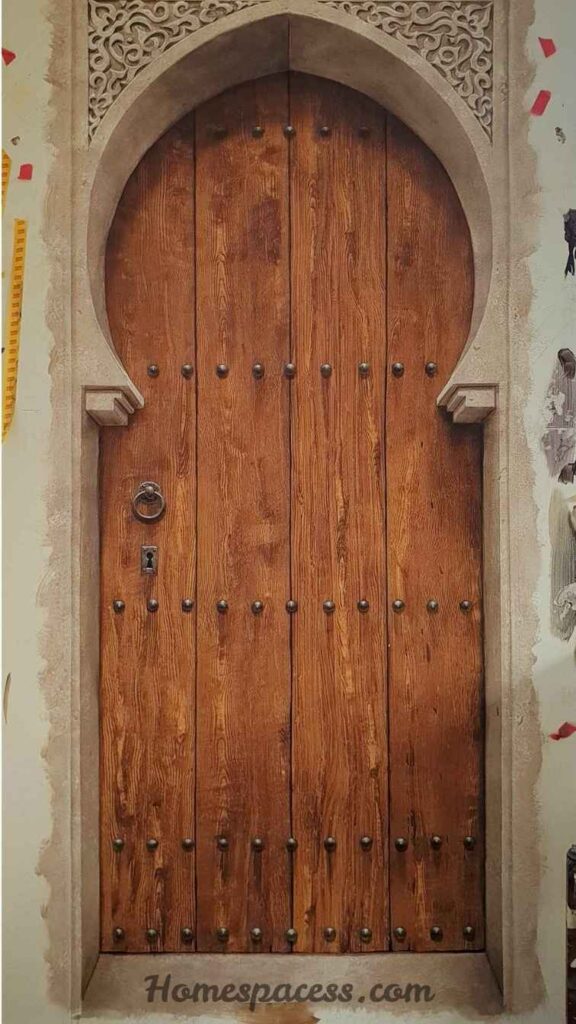
MDF doors are economical and ubiquitous in modern homes, but they often look cheap and soulless. The growing trend of faux wood-grain painting on flat MDF doors using specialist graining tools and oil-based glazes creates the appearance of genuine timber at a fraction of the cost of replacement.
Professional faux-finishers achieve results that are genuinely difficult to distinguish from real wood under normal viewing conditions. The technique requires a base coat in a warm amber-cream, then a top glaze dragged with a graining comb while still wet. It’s a skill worth learning for anyone with multiple flat interior doors to transform
Warm Charcoal (Not Just Grey)
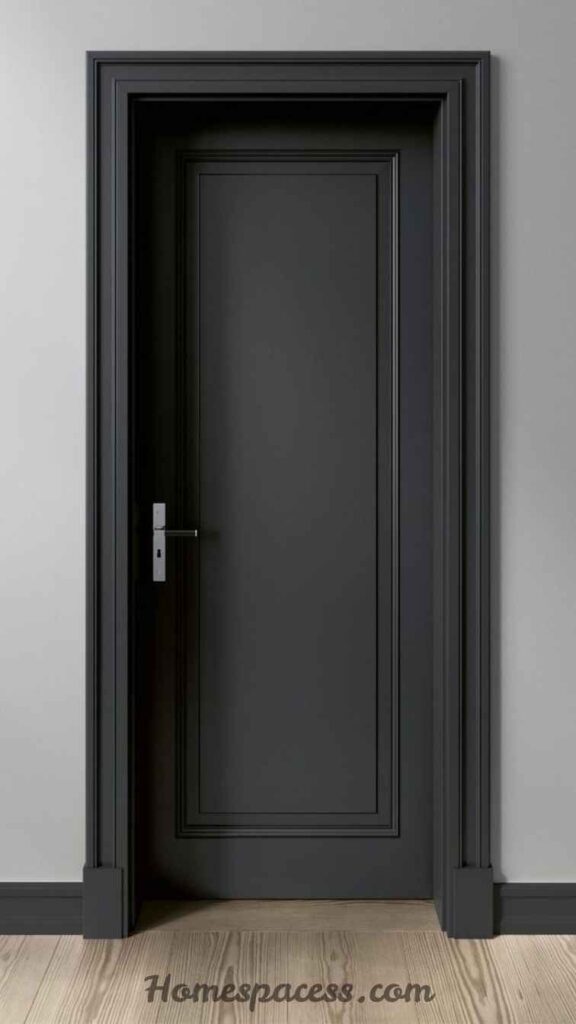
Grey doors became so ubiquitous in the 2010s that the color became associated with identikit new-build developments. The solution isn’t abandoning grey it’s specifying warm charcoal instead: shades with brown or bronze undertones that feel considered rather than default. Think graphite, pewter, and dark linen.
Warm charcoal exterior doors work particularly well on contemporary homes with zinc cladding or timber accents, where they feel coherent with the material palette. They also suit period homes as a quieter alternative to black similar drama, less formality. Finish in eggshell for a sophisticated, non-reflective look.
Color Drenching
Door Matches Walls
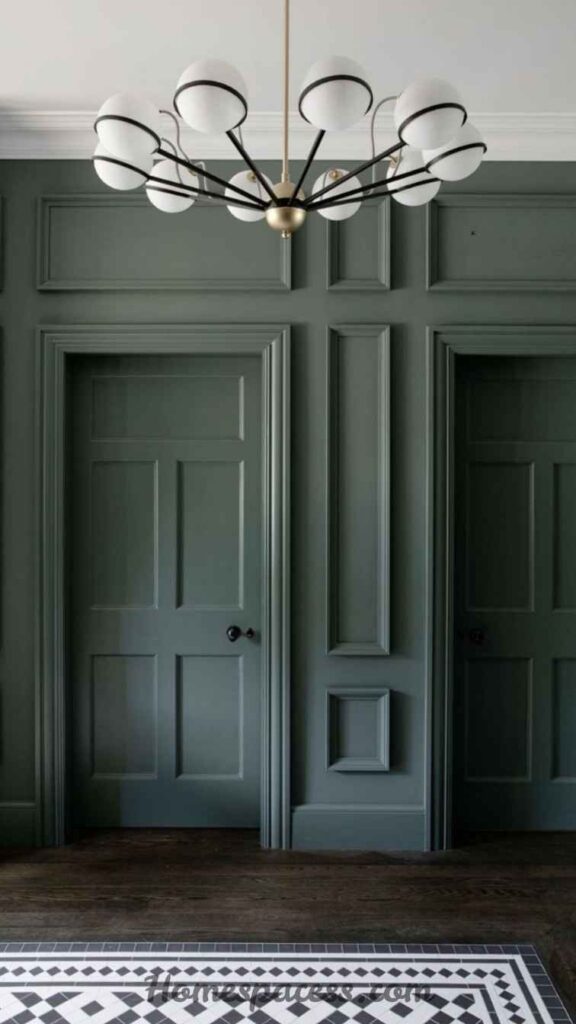
Color drenching painting walls, skirting boards, doors, and even ceilings in the same paint color is one of the most impactful interior trends of the 2020s. Applying it to doors eliminates the visual interruption that white doors create and makes rooms feel dramatically larger, more intentional, and deeply enveloping.
The approach works especially well in hallways, living rooms, and home offices. It requires commitment but rewards it: a room where every surface shares a single deep blue, forest green, or warm terracotta becomes an immersive environment rather than just a decorated one. It’s the opposite of playing it safe and it consistently outperforms in before/after impact.
Limewash Finish
Texture Over Color
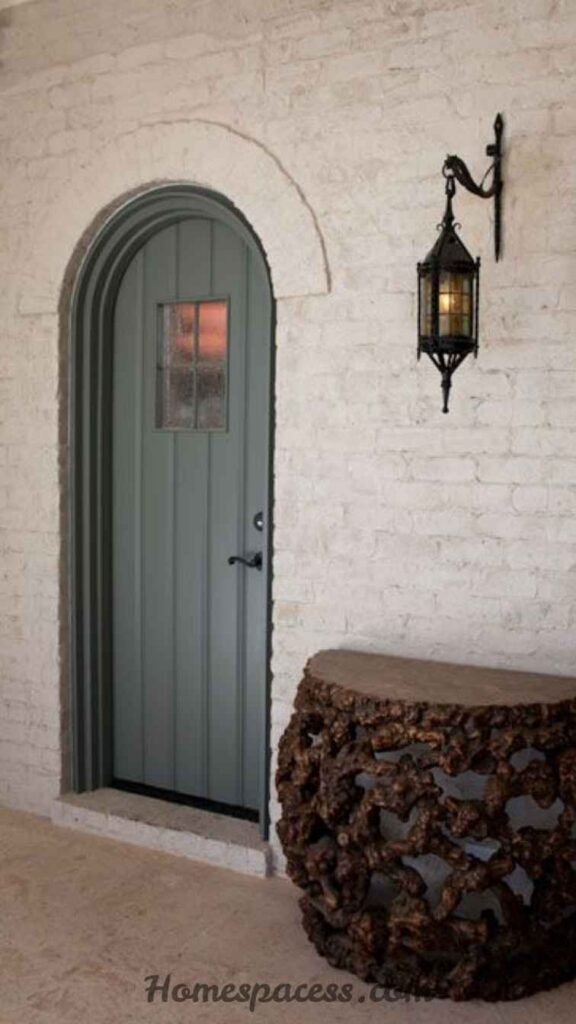
Limewash paint on doors creates an extraordinary aged, mineral effect that adds texture and character impossible to achieve with conventional paint. Originally developed for stone and plaster walls, specialist limewash paints can now be applied to wooden doors to produce a soft, cloud-like variation in tone across the surface.
It’s particularly effective on heavy, paneled doors in older homes where the irregular finish reads as authentic rather than distressed. Apply in thin layers with a wide brush, working in circular motions and then dragging outward for the characteristic clouded look. A wax or specialist top coat protects the finish on high-traffic doors.
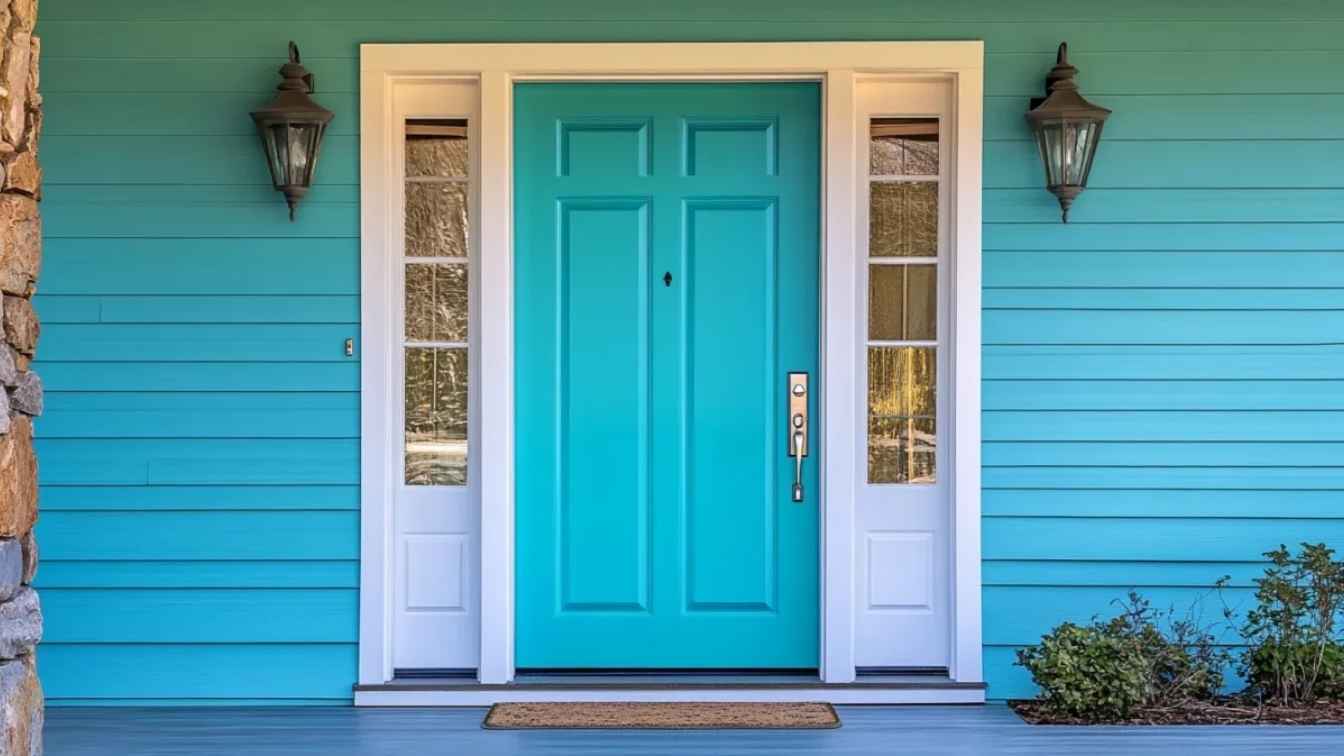
Teal & Peacock Blue
The Jewel Tones
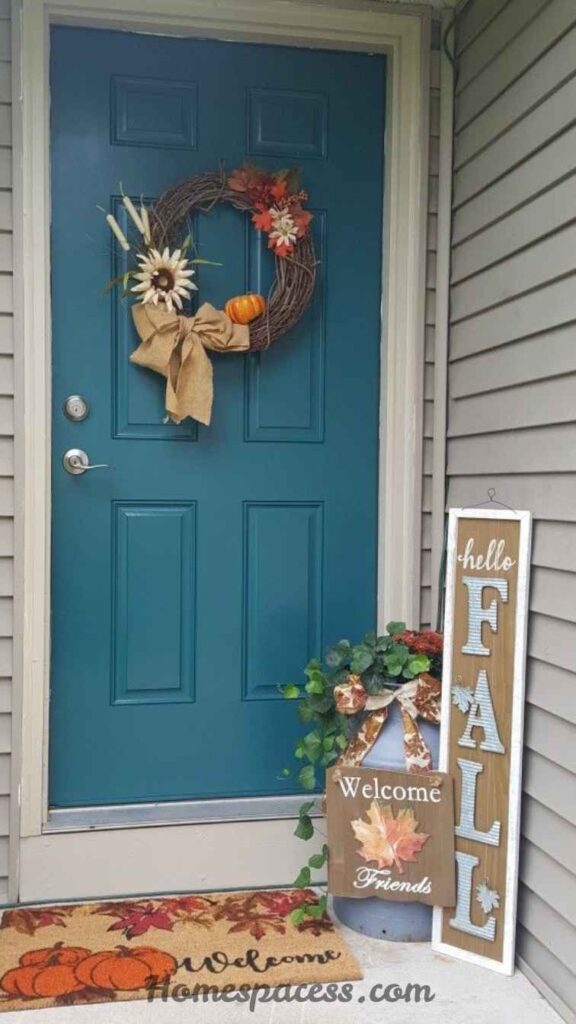
Jewel-toned doors in teal, peacock blue, and emerald are experiencing a sustained surge. These are colors that work harder than safe choices they attract attention without aggression, signal personality without eccentricity, and improve with quality trim materials like satin chrome or unlacquered brass hardware.
Teal sits perfectly between green and blue, making it unusually flexible it harmonizes with brick, render, cladding, and stone. In high-gloss finish, it reads like a lacquered jewellery box; in satin, it has a more relaxed contemporary energy. Either way, it never looks like an accident or a compromise.
Warm Off-White with Detailed Mouldings
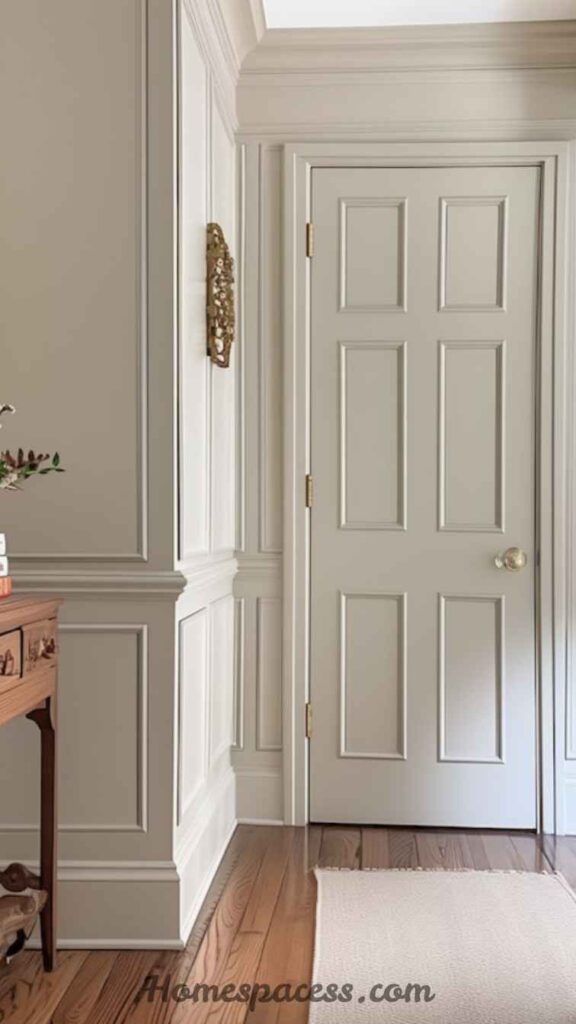
The sophisticated alternative to plain white: choosing a warm off-white cream, linen, or bone brings warmth and character to period paneled doors without committing to colour. The key upgrade here is finish: eggshell on the panels, semi-gloss on raised mouldings, which catches light and creates architectural definition.
This two-sheen-on-one-color technique is widely used by heritage property renovators and produces results that look professionally finished. The visual effect highlights craftsmanship already in the door and suits Georgian, Victorian, and Arts & Crafts properties especially well. It’s refinement, not decoration.
Ombre or Gradient Effect Door
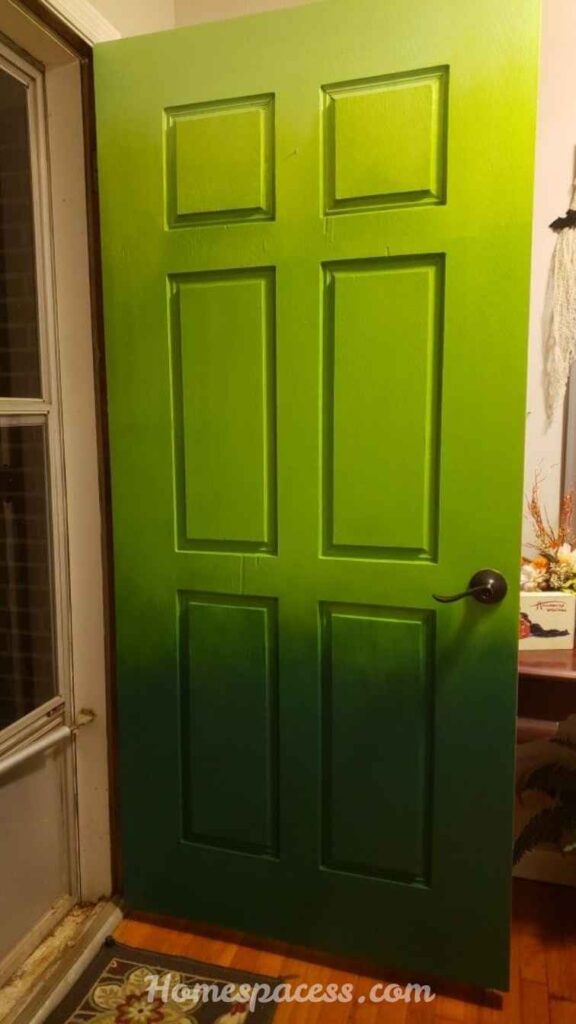
Ombre blending two or three tones of the same color family from dark at the base to light at the top is an advanced door painting technique that creates a genuinely artistic result. It mimics the natural light distribution in a room and creates a sense of height, making it ideal for low-ceilinged spaces.
The technique works best with three pots of paint in the same color family (light, mid, dark) and requires working wet-into-wet for smooth blending. Interior bathroom or bedroom doors are the best canvas. Blues are particularly effective the gradient evokes depth of water and sky in equal measure.
Midnight Blue Garage Door Revival
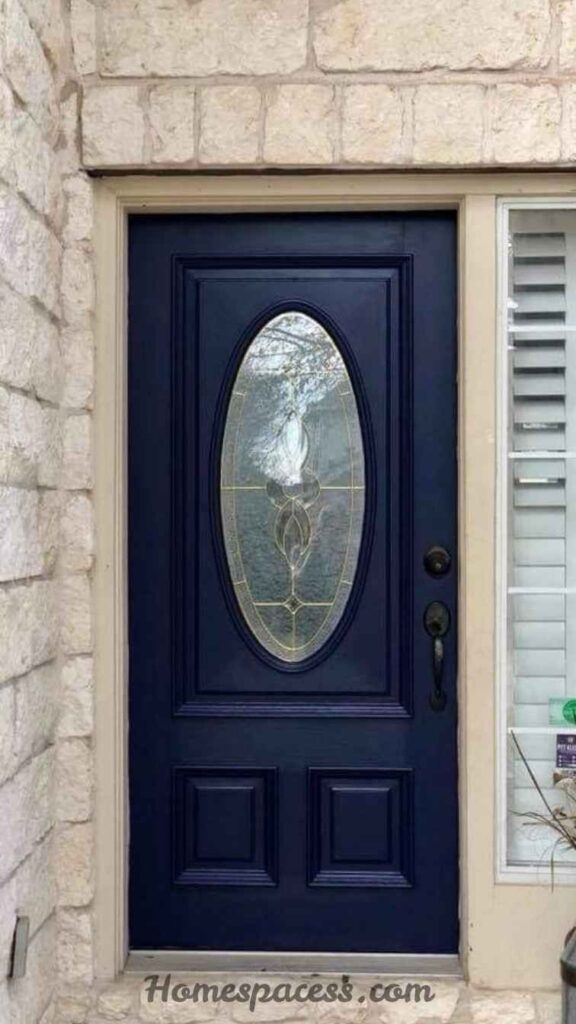
Garage doors are the most overlooked surface in exterior design often left in dated white or cream while the rest of the facade gets attention. Painting a garage door in a bold midnight blue or deep teal instantly upgrades the entire streetscape and unifies a disparate facade into a coherent composition.
Use exterior metal or specialty masonry paint depending on the door substrate. Roller application with a 4mm pile gives the smoothest finish on sectional panel garage doors. Consider coordinating (not matching exactly) with your front door related colors rather than identical ones create a more sophisticated, layered look.
Stenciled Pattern on a Painted Door
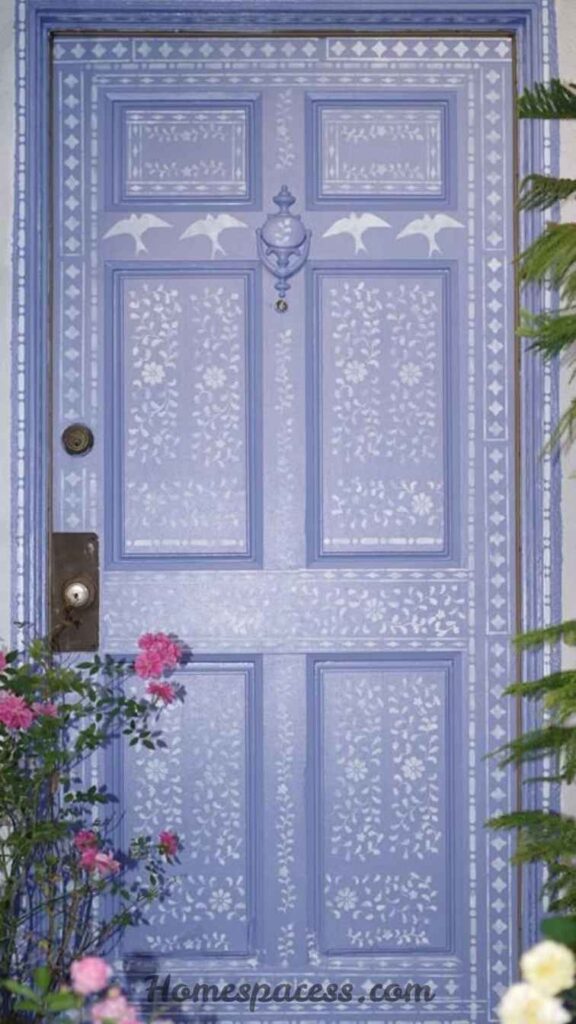
For those who want more than a color change, stenciling an architectural pattern onto a painted door geometric diamond, Moroccan lattice, or Art Deco fan creates a custom, bespoke piece of functional art. Used on a solid-painted base in a contrasting shade, the effect elevates any flat interior door.
Chalk paint is ideal for stenciling because its fast dry time reduces bleeding under stencil edges. After painting, a matte varnish protects the pattern from door handle friction. This technique is especially effective on wardrobe doors, pantry doors, and feature bathroom doors where pattern adds intrigue to what would otherwise be featureless surfaces.
Opposite-Side Color: The Surprise Interior
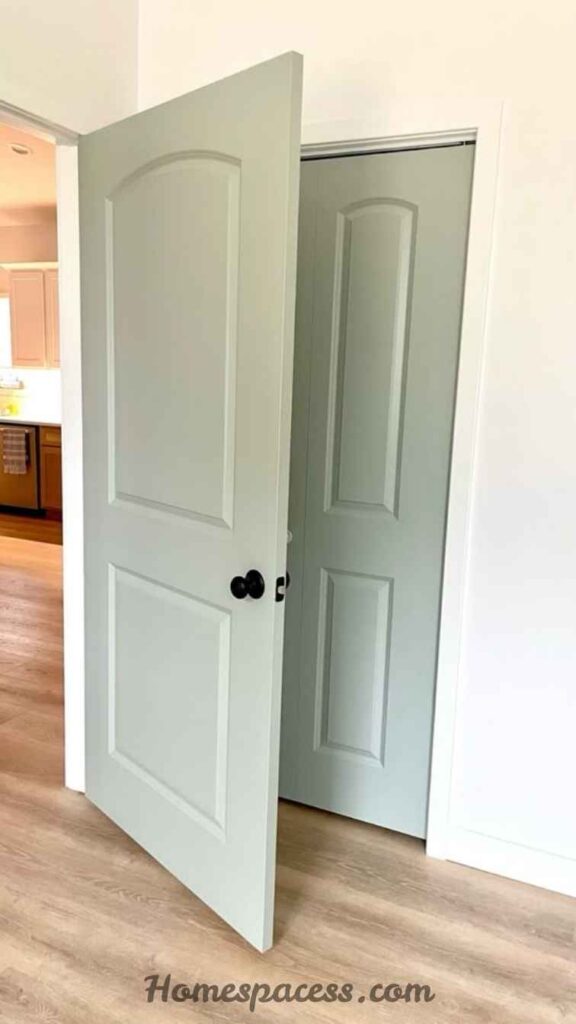
One of the most sophisticated door painting moves is painting each side of a door a different color coordinated with the room it faces. The exterior-facing side matches the hallway palette; the interior-facing side complements the room it opens into. The effect is discovered on entry, creating a moment of pleasant surprise.
This technique requires planning the two palettes as a pair they should be harmonious (related hues on the color wheel) rather than matching. Forest green on the hallway side and sage on the bedroom side, for example, creates coherence with variation. It’s a detail appreciated by design-literate guests and deeply satisfying to live with daily.
Conclusion:
Door painting ideas are one of the simplest and smartest ways to improve your home. You don’t need to spend thousands on renovation. A single door, painted in the right color with the right finish, can change the entire feel of a space. Whether you choose a bold black front door that turns heads on the street, a soft sage green bedroom door that brings calm inside, or a dramatic teal that shows off your personality the impact is always bigger than you expect. Paint is affordable, the results are fast, and the satisfaction lasts for years.
The best part about door painting is that there are no strict rules. You can go classic or bold, subtle or dramatic, traditional or completely unexpected. What matters most is that the color feels right for your home and reflects who you are. Start with good preparation, choose quality paint, and don’t rush the process. Even one well-painted door can become the most talked-about detail in your entire home. So pick up that brush, trust your instincts, and give your door the attention it truly deserves.
Trend Analysis:
2026 Door Paint Trend Analysis & Future Directions
Understanding what’s driving current door painting trends helps you make choices that feel fresh now and age gracefully. The dominant forces shaping door color in 2026–2027 are biophilic design (the pull toward nature-derived tones), the maximalist counter-movement against decades of minimalism, and a deeper awareness of paint’s role in sustainability.
| Color Family | 2024 Status | 2026 Direction | Longevity |
| Forest & Bottle Green | Rising | Peak / Mainstream | High anchored in biophilic movement |
| Terracotta & Clay | Emerging | Strong growth | High ties to sustainability narrative |
| Cool Mid-Grey | Declining | Fading fast | Low over-associated with 2015–2020 era |
| Deep Plum / Aubergine | Niche | Growing (interiors) | Medium maximalist trend dependent |
| Dusty Pink | Stable | Holding (bedrooms) | Medium-High cross-generational appeal |
| Classic Black Gloss | Stable | Enduring | Very High perennial classic |
| Warm Charcoal | Rising | Strong | High sophisticated black alternative |
| Bright Primary Colors | Declining | Low interest | Low reads dated without careful execution |
The most interesting trend happening beneath the surface is the return of regional and climate-responsive color choices. Rather than following global Instagram trends, homeowners in coastal climates are gravitating toward weathered blues and driftwood greys; those in Mediterranean or high-sun areas toward warm terracottas and deep ochres; northern European markets toward deep, saturated jewel tones that combat the grey light. This regionalization of door color is a meaningful shift away from the homogenized global aesthetic that dominated the 2010s.
Insight competitors miss:
The next wave in door color won’t be a specific hue it will be about finish complexity. Single-color, single-finish doors are giving way to doors where the finish itself creates texture: limewash, colour-wash, faux-grain, and dual-sheen effects. Color is becoming the background; finish is becoming the statement.
Expert Techniques
How to Paint a Door Like a Professional
The gap between a DIY door paint job that looks amateur and one that looks professional isn’t about natural talent it’s about preparation, sequence, and tool selection. Most people rush stages that experienced painters treat as primary. Here is the process that separates results that last one year from those that last a decade.
Remove the door before painting.
Laying it flat on sawhorses eliminates runs, drips, and brush marks from fighting gravity. It also gives you access to the top and bottom edges the most frequently missed surfaces, where moisture enters and causes warping. This single step accounts for 40% of finish quality difference.
Surface preparation is non-negotiable. On previously painted doors, sand thoroughly with 120-grit followed by 180-grit paper. Wipe with a tack cloth, not a damp cloth moisture is the enemy of adhesion. Fill any dents or holes with a flexible wood filler (not plaster-based), let cure fully, and sand flush before priming. Skipping primer on a colour-change project is the single most common mistake that causes visible bleed-through within months.
Paint in this order for paneled doors:
(1) mouldings and recesses first, (2) panels, (3) vertical central stiles, (4) horizontal rails, (5) outer vertical stiles. Working in this sequence prevents lap marks and ensures wet edges always meet wet edges the key to invisible brush joins.
For exterior doors, always apply at least two topcoats, sanding lightly between each with 220-grit paper. Temperature matters critically: ideal painting conditions are 10–25°C (50–77°F) with relative humidity below 70%. Painting in hot direct sunlight causes paint to dry too fast, leading to brush drag marks. Early morning application on a south-facing door is often optimal in warmer months.
Brush vs. roller truth:
Professional painters often use a 2-inch angled brush for panels and mouldings, then finish large flat areas with a small foam roller (4mm pile) for a near-spray finish. The foam roller eliminates brush texture completely on flat surfaces something a brush alone cannot achieve without specialist technique.
Eco-Friendly Door Paints & Long-Term Value Perspective
The paint industry is undergoing its most significant reformulation in decades. Low-VOC (volatile organic compound) and zero-VOC paints once a compromise on performance now match or exceed their solvent-based predecessors in durability, adhesion, and finish quality. This shift matters for door painting because doors receive high levels of UV exposure, moisture, and physical contact conditions that historically required the most robust (and most polluting) paint formulations.
From a long-term value perspective, investing in premium exterior door paint pays back exponentially. A £10–15 budget exterior paint will typically need recoating every 2–3 years. A £35–50 premium brand (Farrow & Ball, Little Greene, Fired Earth) properly applied can last 7–10 years with simple annual maintenance washes. The premium costs less over time and avoids the disruption of frequent repainting a calculation most homeowners never make when buying paint.
Sustainability insight:
Limewash and mineral-based door paints have a genuinely different environmental footprint to acrylic and oil-based products. They are breathable (important for moisture management in old properties), naturally antibacterial, and fully biodegradable. As climate-responsible renovation becomes mainstream, expect mineral paints to move from specialist to standard for heritage properties by 2028.
For the environmentally conscious homeowner, look for paints certified by the EU Ecolabel, Cradle to Cradle, or Green Seal standards. Water-based formulations now available from most major brands contain dramatically fewer harmful compounds, dry faster, and clean up without solvents. They’re not only better for indoor air quality during application they require fewer coats than older formulas, reducing total paint consumed per project.
Future Innovations:
Future of Door Painting: Innovations Coming by 2028
The door painting category is about to be disrupted by several converging technologies. The most immediately impactful is digital color matching AI: apps that photograph a door in its real-world lighting context and recommend specific paint shades calibrated to that exact light environment, compass orientation, and surrounding material palette. This technology, currently in beta at several major paint brands, will eliminate the guesswork that causes the most expensive color mistakes.
Smart thermochromic paints formulations that shift hue with temperature are being piloted for exterior applications. Imagine a front door that deepens from teal to navy as the air temperature drops. While still in commercial development, these paints are expected to reach mainstream availability in the £80–150 per litre range by 2027. They represent a fundamental rethinking of what “door color” even means, transforming a static choice into a dynamic, living surface.
Innovation to watch:
Self-healing paint coatings embedded with microcapsules that release healing agents when scratched is moving from automotive applications into architectural paints. Exterior door paint with self-healing properties would practically eliminate the micro-scratches and scuff marks that make doors look tired within 18–24 months of painting. Commercial availability is projected for 2026–2027.
AR (augmented reality) door painting visualization has already launched in beta from Dulux (Visualizer app), Sherwin-Williams, and Benjamin Moore. The next iteration real-time 3D rendering that accounts for the specific texture of your door surface, the shadow cast by your porch overhang, and your neighborhood’s general streetscape will make color selection a genuinely accurate process rather than a hopeful approximation. Expect full AR visualization to be table-stakes for major paint brands by 2026.
Common Mistakes
Common Door Painting Mistakes (and How to Avoid Them)
Having guided hundreds of homeowners through door painting projects, certain errors appear with depressing regularity. They’re not about lack of effort they’re about lack of information. Here are the mistakes that most visibly sabotage results, with the specific corrections that prevent each one.
- Choosing Color from a Paint Chip Indoors: A paint chip viewed in a shop under fluorescent lighting bears almost no resemblance to the same color on your actual door in natural daylight. Always test your shortlisted colors directly on the door surface (use sample pots) and observe them at different times of day morning light, midday, and evening light will all show different versions of the same paint. Live with the samples for at least 48 hours before deciding.
- Skipping the Undercoat on a Color Change: Painting a dark color over a white door (or vice versa) without a quality primer is one of the most expensive shortcuts in home improvement. The original color bleeds through visibly, requires 3–4 extra topcoats, and still looks uneven. A correct primer oil-based for a water-based topcoat on an oil-based base, or a bonding primer for problematic surfaces takes one day and saves two weekends of frustration.
- Using Interior Paint on an Exterior Door: Interior and exterior paints have completely different formulations. Interior paints lack the UV stabilizers, mold inhibitors, and flexibility agents that exterior paints contain. Using interior paint on a front door typically results in peeling within 12–18 months, particularly on south-facing doors in direct sunlight. Always check the label explicitly for exterior use certification.
- Painting Over Dirty or Glossy Surfaces: New paint adheres to clean, lightly scuffed surfaces not to dust, grease, or high-gloss finishes. Wash the door with sugar soap and allow to dry fully. Then de-gloss by sanding with 180-grit (for an oil-based existing finish) or a chemical de-glosser. This creates the mechanical and chemical bond that allows paint to adhere rather than sit on top of the existing surface.
- Rushing Back into Service: Most paints feel dry to the touch within 2–4 hours but remain chemically uncured for 2–4 weeks. Hanging a door, fitting hardware, or allowing it to close against a frame during this curing period causes paint to peel, chip, or stick. Allow a minimum of 24 hours before rehinging exterior doors, and avoid closing interior painted doors completely for 72 hours after the final coat.
FAQ’S About Door Painting
What is the best paint finish for a front door?
Semi-gloss or gloss finish is best for exterior front doors because it reflects moisture away, is easy to wipe clean, and creates the visual pop that makes colored doors look intentional. For interior doors, eggshell provides durability and a more refined, less plasticky look than gloss.
How many coats of paint does a door need?
For a quality exterior door: one coat of appropriate primer, followed by two topcoats with light sanding (220-grit) between each. For an interior door with a similar base color: one primer and one topcoat may suffice. For a dramatic color change, plan on two topcoats minimum regardless of primer coverage.
Should I paint my front door the same color as my shutters or window frames?
Not necessarily. Matching door and shutters creates a coordinated but often flat look. A more sophisticated approach is to use related colors the shutters in a mid-tone and the door in a darker or richer version of the same hue. This creates depth and hierarchy in the facade without the visual busyness of multiple competing colors.
What door colors increase home value most?
Studies by Zillow and estate agents consistently show that black and dark charcoal front doors command the highest sale price premiums often 1–3% above comparable homes. Bold, confident colors (deep green, teal, navy) also show positive association. Unpainted or natural wood doors, and very light or dated colors, tend to show neutral or slight negative correlation.
How do I choose a door color that won’t date quickly?
Anchor your choice in the existing color palette of your home’s exterior brick tone, roof color, window frame material. Colors that work with your home’s fixed elements rather than against them will remain relevant regardless of trends. Deep, complex colors (those with multiple pigments giving warmth and depth) age better than single-pigment, pure-tone colors which can feel rigid as trends shift.
Team Home Spacess shares simple, practical design ideas that work for real families. The team focuses on cozy décor, soft colors, and natural textures that make a space feel truly lived-in. From everyday decorating tips to creative home projects, Team Home Spacess is dedicated to helping readers create warm, comfortable, and inviting spaces with a fresh and personal touch.