
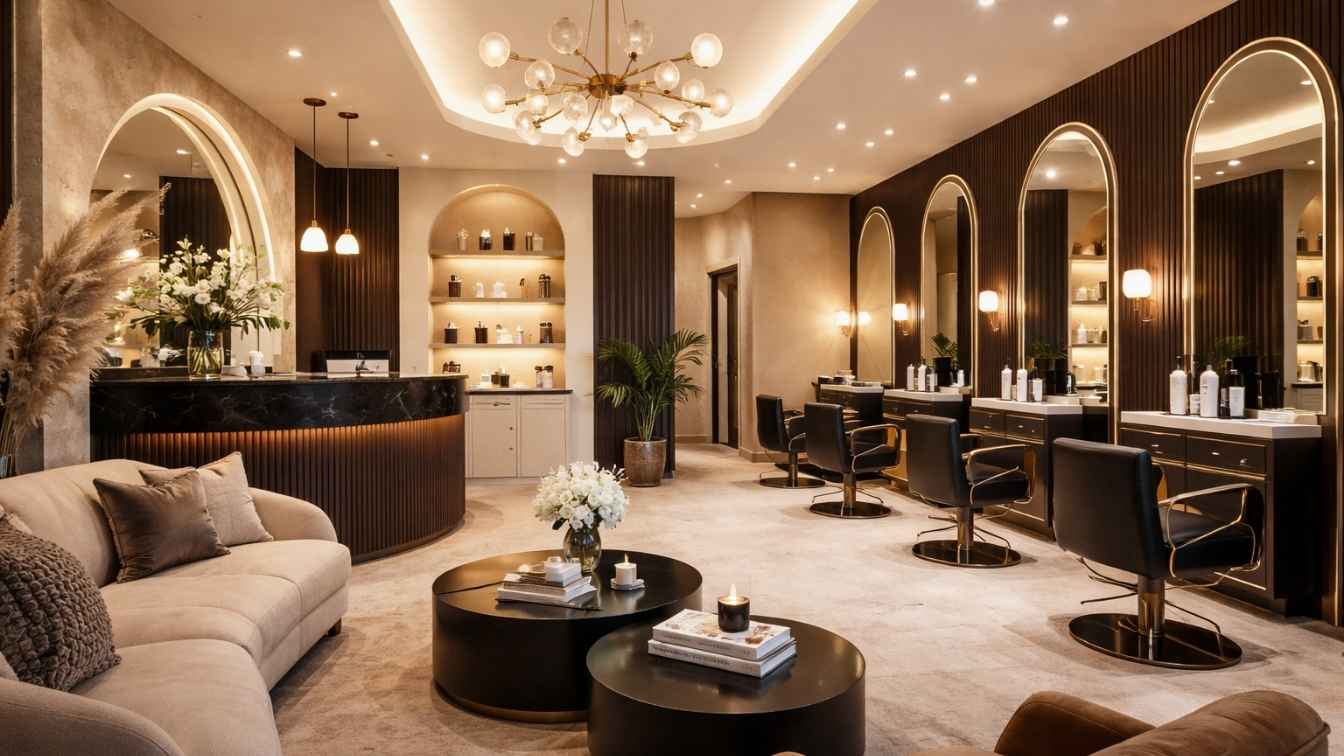
Your salon’s interior is doing more than holding chairs and mirrors it’s making a promise to every client who walks through the door. Before a single strand of hair is cut or a nail is painted, your space has already communicated your brand, your values, and the kind of experience a client can expect.
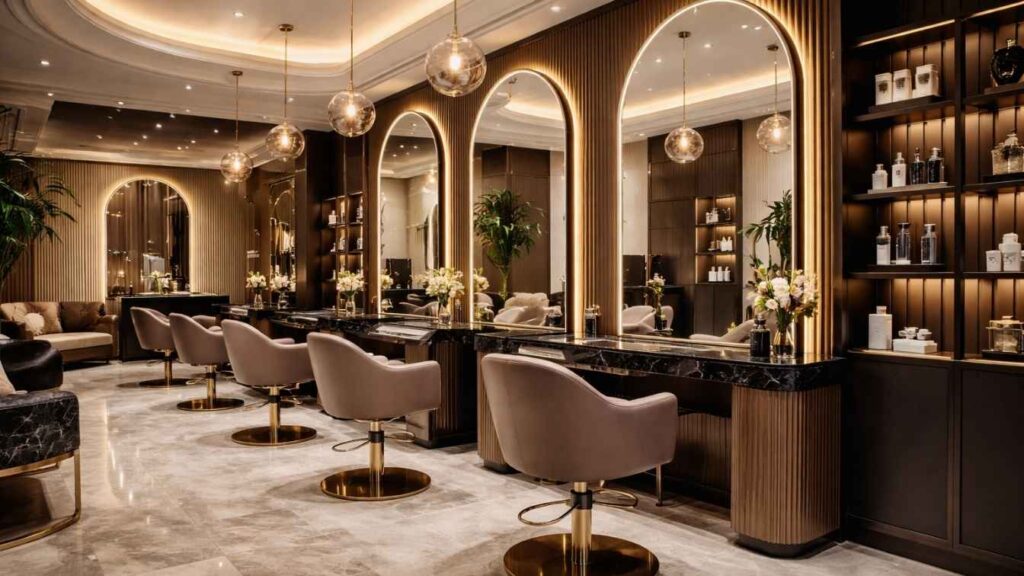
Imagine a potential client walking past your salon. In under three seconds, they decide whether to walk in. That split-second judgment has nothing to do with your pricing or service menu it’s entirely about how your space looks and feels. Salon interior design is not a luxury; it’s a business strategy. A well-designed salon commands higher prices, generates organic social media content, reduces client churn, and communicates professionalism before a word is spoken. This guide gives you 27 actionable, expert-backed interior design ideas from budget-friendly styling hacks to full renovation concepts that will help you build a space clients genuinely can’t stop talking about.
You don’t need a massive renovation budget to create a space that feels intentional, on-trend, and deeply inviting. Whether you’re launching a brand-new salon or refreshing an existing one, these 27 salon interior design ideas will help you build a space that clients photograph, remember, and return to.
Atmosphere & Aesthetic Identity
Before picking a color or a chair, define what your salon should feel like. Atmosphere is built through cohesive decisions not individual pieces. These first nine ideas lay the emotional foundation of your space.
Define a Clear Design Concept Before Buying Anything
One of the most costly mistakes salon owners make is shopping for furniture and décor without a unifying concept. A design concept is your north star it answers questions like “Does this mirror belong here?” before you spend money. Popular concepts for modern salons include Japandi (Japanese-Scandinavian minimalism), industrial chic, botanical luxury, maximalist glam, and spa-inspired zen. Your concept should reflect your target clientele, not just your personal taste.
Once you commit to a concept, create a mood board using Pinterest, Canva, or even physical magazine clippings. Include color swatches, material textures, furniture silhouettes, and lighting references. Share this board with every vendor or contractor you hire. A well-communicated concept prevents costly mid-project changes and ensures visual cohesion across every touchpoint from your waiting area to your retail shelf.
💡 Design Insight
Salons with a clearly defined aesthetic concept see up to 40% more organic Instagram tags from clients, according to beauty industry brand consultants. Your space becomes content and content drives bookings.
Must Read: 20 Walk In Closet Ideas To Transform Your Space
Use a Warm, Neutral Color Palette with One Bold Accent
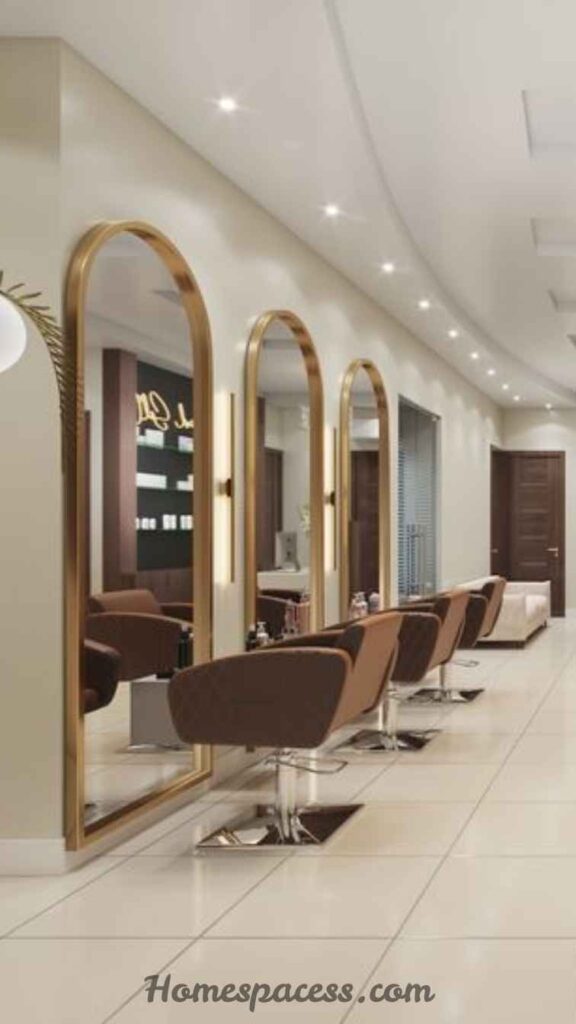
Color psychology plays a powerful role in how clients perceive your salon and how long they want to stay. Warm neutrals think creamy whites, soft taupes, muted blush, and warm greiges create a relaxing backdrop that makes your clients and your work look their best. Avoid stark, cold whites: they amplify anxiety and make hair color look different than it appears in natural light.
Layer in one bold accent color to give the space personality and make it photographable. Deep forest green, dusty terracotta, rich burgundy, or matte black all work beautifully as accent walls, cabinetry colors, or upholstery choices. The key is restraint use your accent color in no more than 20–25% of the space. Too much kills the impact; too little creates blandness.
Don’t Skip: 18 Brilliant Laundry Room Ideas That Actually Transform the Space
Invest in Statement Lighting That Does Double Duty
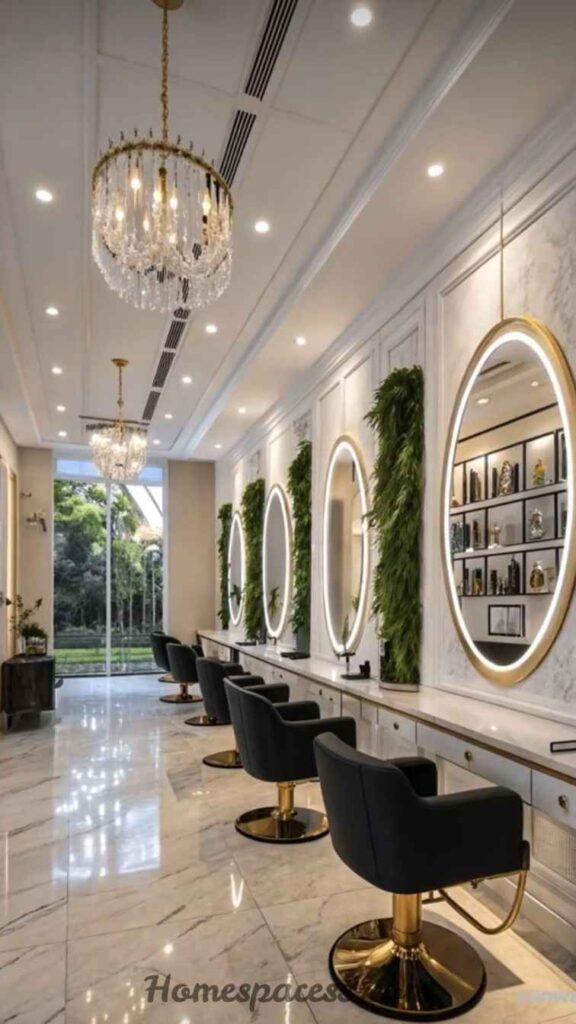
Lighting is the single most transformative and most underestimated element in salon interior design. Bad lighting makes hair color look wrong, skin look tired, and spaces feel cheap no matter how expensive the furniture. Layered lighting is the professional approach: ambient lighting for overall illumination, task lighting for workstations, and accent lighting for atmosphere and display areas.
Statement pendant lights above styling stations create a visual rhythm and make your salon extremely photogenic. Consider dimmable LED bulbs in the 3000–3500K color temperature range warm enough for flattery but accurate enough for color work. For makeup or color stations, use high CRI (Color Rendering Index) bulbs with a CRI of 95+ to ensure precise color matching. Proper task lighting also reduces stylist eye strain and increases precision.
✓ Pro Standard
Use CRI 95+ LED bulbs at workstations. Pair with dimmable ambient fixtures set to 3000–3200K for a space that’s warm but color-accurate the holy grail of salon lighting.
Read More: 25 Dressing Table Ideas That Transform Your Daily Ritual Into a Luxury Experience
Design a Memorable Entrance That Sets the Tone
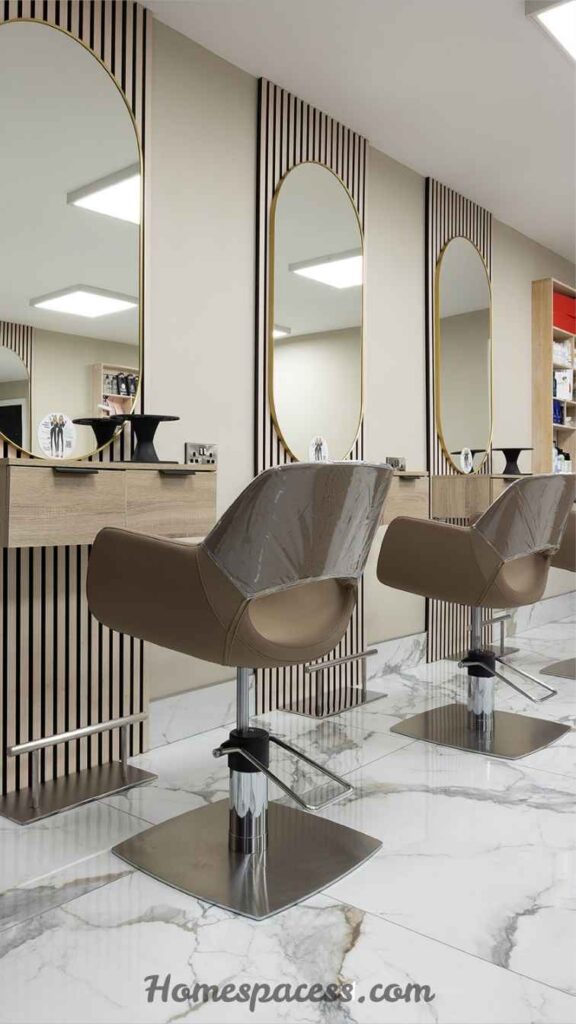
Your salon entrance is a first impression, a photo opportunity, and a brand statement all at once. The moment a client steps through your door, every design decision they encounter tells them whether they made the right choice. A thoughtfully designed reception area with a signature scent, coordinated desk, and branded signage communicates premium service before anyone says hello.
Consider placing a small gallery wall, a living plant installation, or a branded neon sign near the entrance. These elements become natural backdrops for client selfies and social media posts. Practical tip: ensure the reception desk is positioned so staff have full sightlines to the entrance clients should never feel ignored the moment they walk in.
Don’t Skip: 27 Library Room Ideas to Transform Any Space Into a Dream Home Library
Create a Sensory Experience, Not Just a Visual One
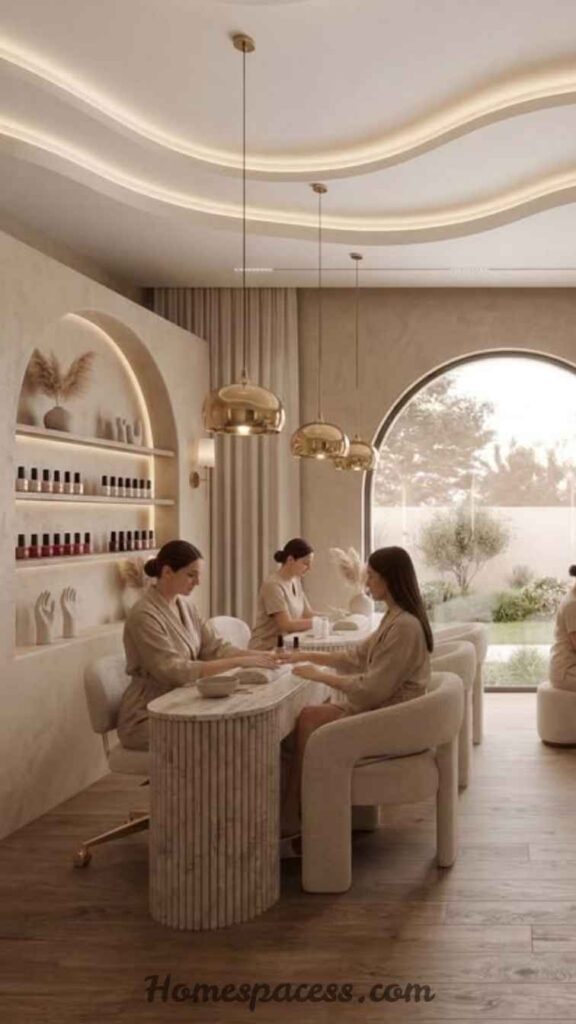
The most memorable salons engage all five senses not just sight. A signature scent diffused through your HVAC system or placed near the entrance creates powerful emotional memory. Studies in consumer neuroscience consistently show that scent is the strongest trigger for brand recall. Choose a fragrance that aligns with your brand: eucalyptus for a wellness-focused salon, warm vanilla for a luxury space, or fresh citrus for a youthful, energetic concept.
Sound is equally important. A curated playlist that matches your brand energy lo-fi for a chill studio vibe, jazz for upscale boutique, R&B for a diverse urban salon shapes how clients feel during their visit. Acoustic panels can reduce noise levels in busy salons, making the experience feel more intimate and less chaotic. These non-visual design elements separate exceptional salons from average ones.
Use Mirrors Strategically to Expand and Elevate Space
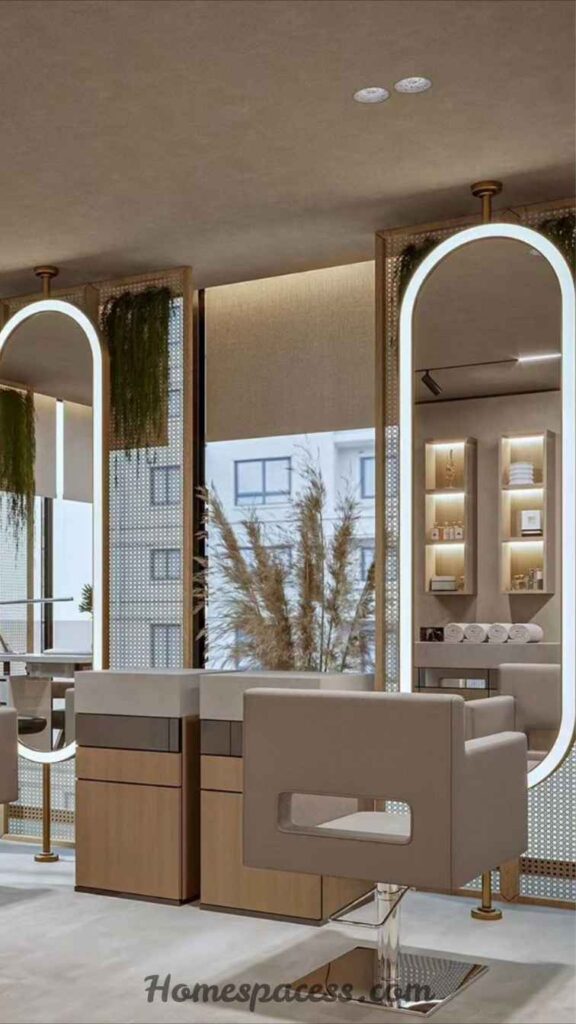
Every salon needs mirrors, but most don’t think strategically about them. Oversized, ornate mirrors with warm-toned frames elevate the perceived luxury of a space far more than standard functional mirrors. A large statement mirror at the end of a hallway or behind a reception desk creates a sense of depth and grandeur even in smaller spaces.
For styling stations, consider integrated mirror lighting LED strips built into the frame or positioned on either side which eliminates unflattering shadows on clients’ faces. Leaning floor mirrors in the retail area encourage clients to try on looks and naturally create browsing behavior. Avoid placing mirrors directly opposite each other as it creates a disorienting infinity effect; instead, angle them to optimize the visual flow.
Incorporate Biophilic Design with Live Plants and Natural Materials
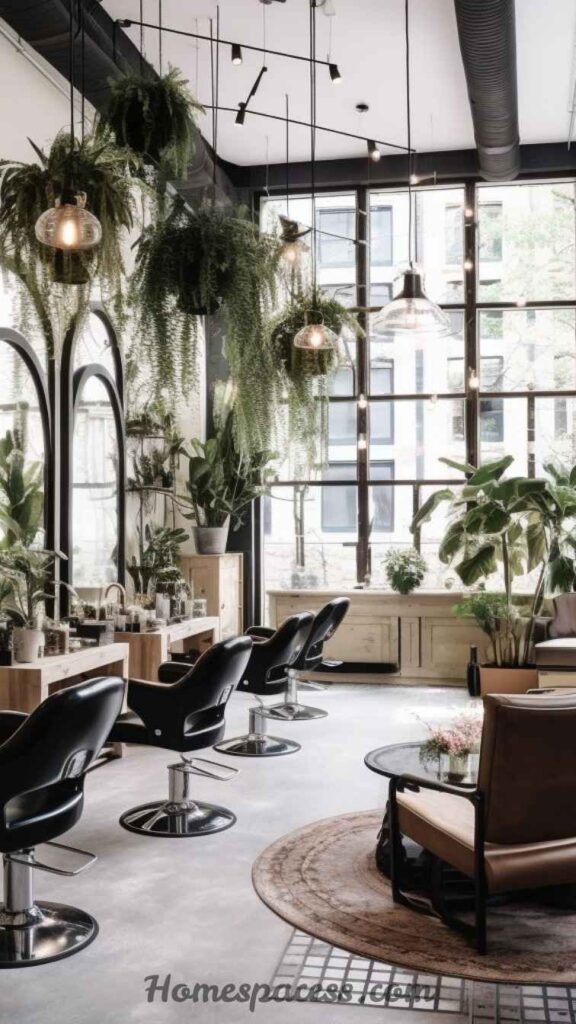
Biophilic design incorporating natural elements into interiors is one of the most evidence-backed trends in commercial design. Studies published in environmental psychology journals show that the presence of plants reduces cortisol levels, lowers blood pressure, and increases feelings of well-being. For a salon, this means clients feel calmer, more relaxed, and have a more positive association with the experience.
You don’t need a full indoor garden to achieve biophilic impact. A few strategically placed statement plants a large fiddle-leaf fig in the reception corner, trailing pothos along a shelf, or a moss wall panel as a focal point create significant impact. Pair plants with natural materials like rattan, bamboo, linen, terracotta, and raw wood to reinforce the connection to nature throughout the space.
Design Your Waiting Area as a Lounge, Not a Lobby
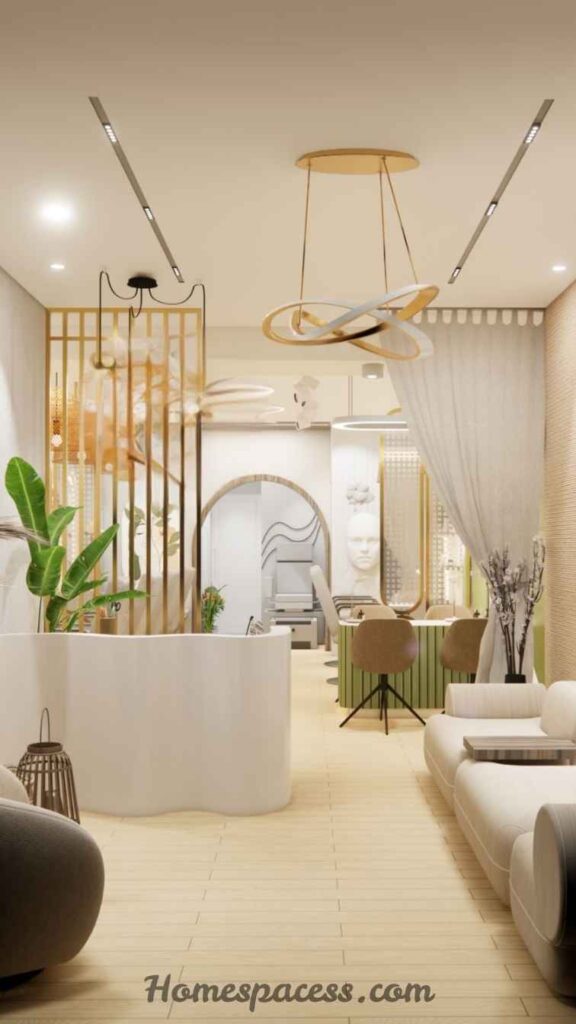
The waiting area is where clients form their first real impression of your salon’s culture. Rows of plastic chairs signal “get in, get out” the opposite of what premium salons want to communicate. Instead, design your waiting area like a boutique hotel lounge: comfortable seating with a mix of textures (velvet, leather, linen), a low coffee table with curated magazines or a coffee table book, and a small refreshment station.
Even a simple herbal tea and water station with branded cups elevates the perceived value of a visit. Charging stations built into side tables or available as a small courtesy amenity reduce client phone anxiety during longer services. Consider ambient background music that’s distinct from the main floor softer and more calming to ease nerves before a new service.
Use Textured Wall Treatments to Add Depth Without Clutter
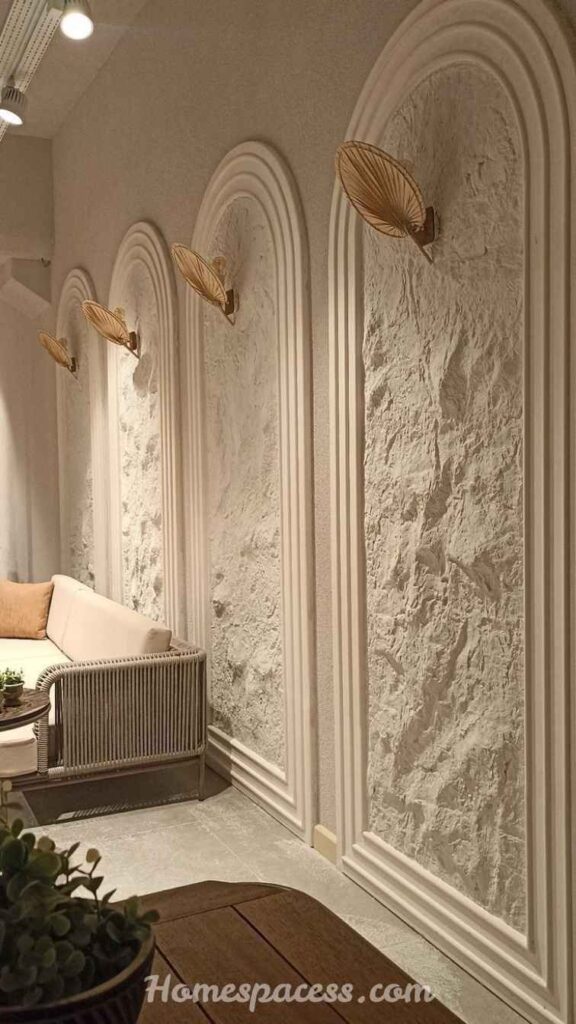
A common mistake in salon design is relying too heavily on decorative objects to add visual interest. Instead, invest in your walls. Textured wall treatments plaster, limewash, fluted wood paneling, rattan screens, or Venetian stucco create rich depth and tactile warmth without visual clutter. These surfaces photograph beautifully and look expensive at a fraction of the cost of premium furniture.
Limewash paint, in particular, has become a leading salon interior design trend because it gives walls an organic, aged quality that feels both artisanal and luxurious. Fluted or reeded wood panels behind reception desks or as accent walls provide an architectural detail that elevates the entire space. The best part: these treatments are durable, easy to maintain, and virtually timeless.
Functional Design & Client Experience
Great salon design is not just beautiful it works. These nine ideas address how layout, furniture, and client flow affect both the client experience and your team’s productivity.
Design Your Floor Plan Around Client Flow First
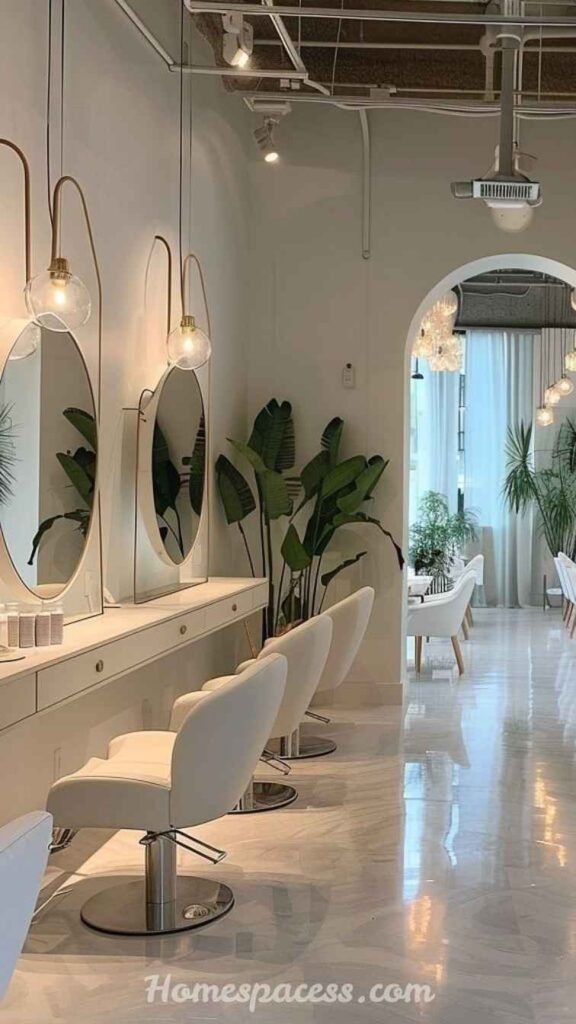
Before placing a single piece of furniture, map your client journey on paper: entrance → reception → waiting → service area → shampoo → styling → retail → checkout. Every unnecessary step in this flow costs time and disrupts the experience. An efficient floor plan places these zones in a logical sequence that feels effortless for clients and reduces unnecessary movement for staff.
Typical salon layouts include the open floor plan (stations visible from reception creates energy and social atmosphere), the boutique layout (semi-private partitioned zones ideal for premium pricing), and the hybrid layout (open common areas with some private treatment spaces). Choose based on your service mix: color-heavy salons benefit from proximity to shampoo bowls, while cut-focused salons prioritize central station placement near good natural light.
Choose Ergonomic Styling Chairs That Work for Both Client and Stylist
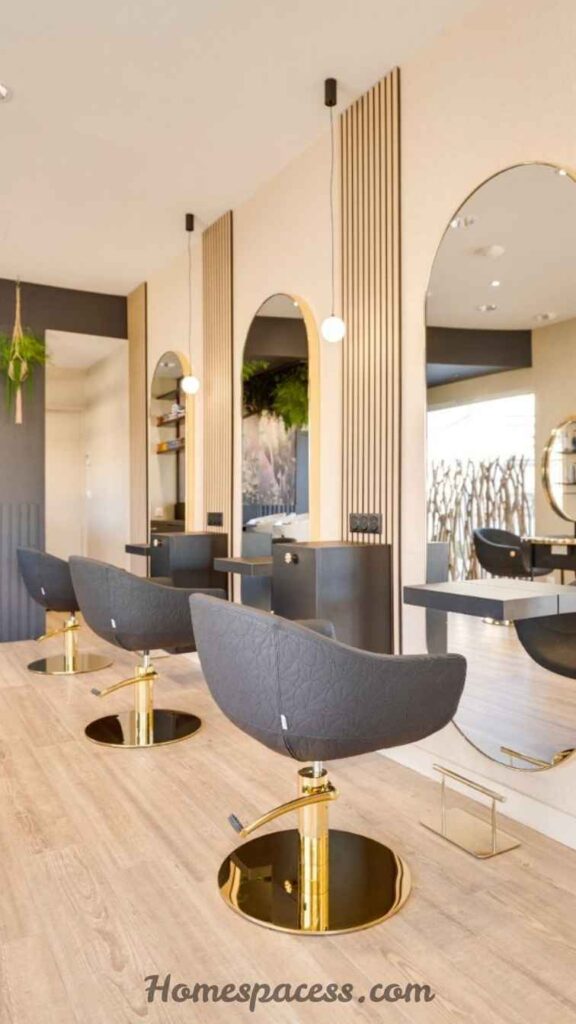
Styling chairs are one of your highest-use investments they affect both client comfort and stylist health. A poorly designed chair contributes to back pain, posture issues, and fatigue in stylists who spend eight hours a day on their feet. Look for hydraulic chairs with a wide adjustment range (so they accommodate different stylist heights), footrests at comfortable angles, and lumbar-supportive seat depths for clients during long color appointments.
Aesthetically, your styling chairs should anchor the color palette. Chairs come in virtually every upholstery color now don’t default to black simply because it’s practical. A warm cognac leather, dusty sage vinyl, or deep navy velvet-effect fabric can become a defining visual element of your salon’s identity. Ensure the upholstery is rated for commercial use and is treated for easy chemical cleaning.
⚠ Common Oversight
Many salon owners choose chairs based on aesthetics alone. Always test the hydraulic range: a chair that can’t adjust low enough for a short stylist or high enough for a tall one creates daily ergonomic strain that leads to staff turnover and injury claims.
Create Dedicated Zones for Each Service Category
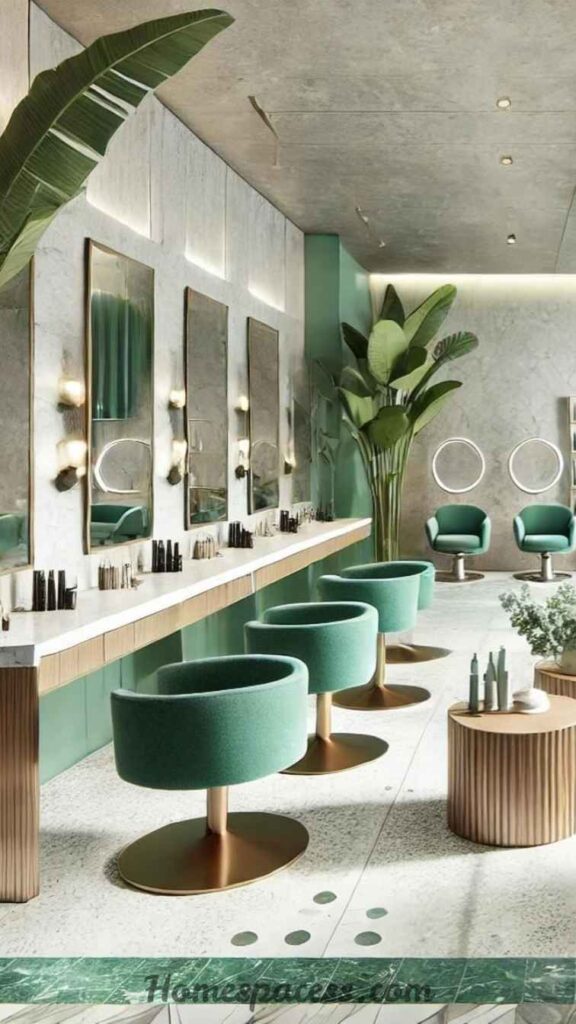
Zone design is one of the most powerful layout strategies for salon interior design because it allows each service to exist in its own optimized micro-environment. Color and treatment zones benefit from proximity to sinks and strong ambient light. Cut and blow-dry zones work best near windows for natural light. Nail and brow services should be separated from the main floor to reduce chemical smell crossover and noise.
Visual zoning is equally important: you can define zones without physical walls using ceiling treatments (a different pendant light cluster above the color bar), flooring changes (herringbone wood in one zone, patterned tile in another), or simply rug placement. This approach makes larger salons feel more intimate and smaller salons feel more purposefully designed. It also enables targeted music or lighting settings per zone.
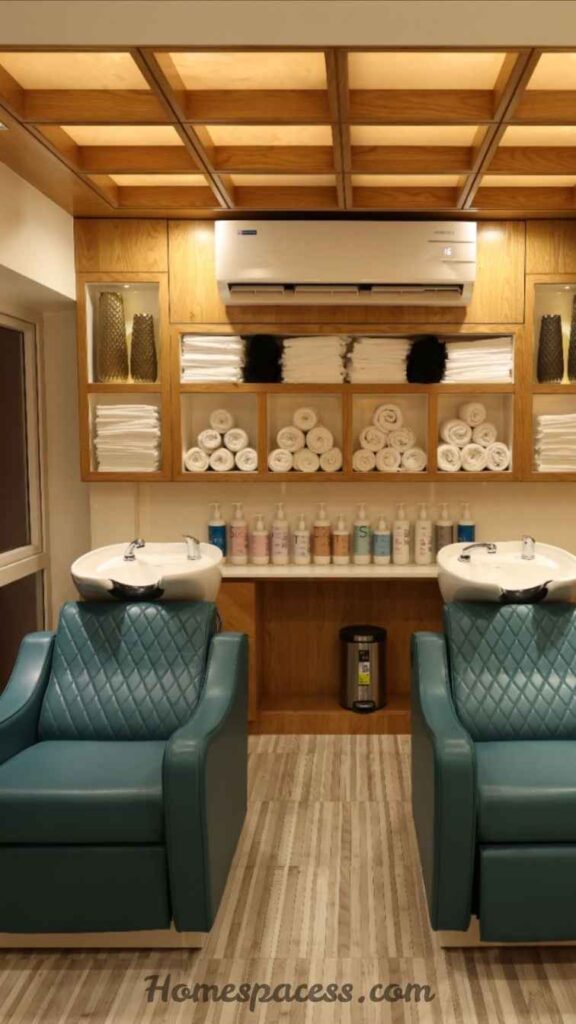
Build a Shampoo Area That Feels Like a Retreat
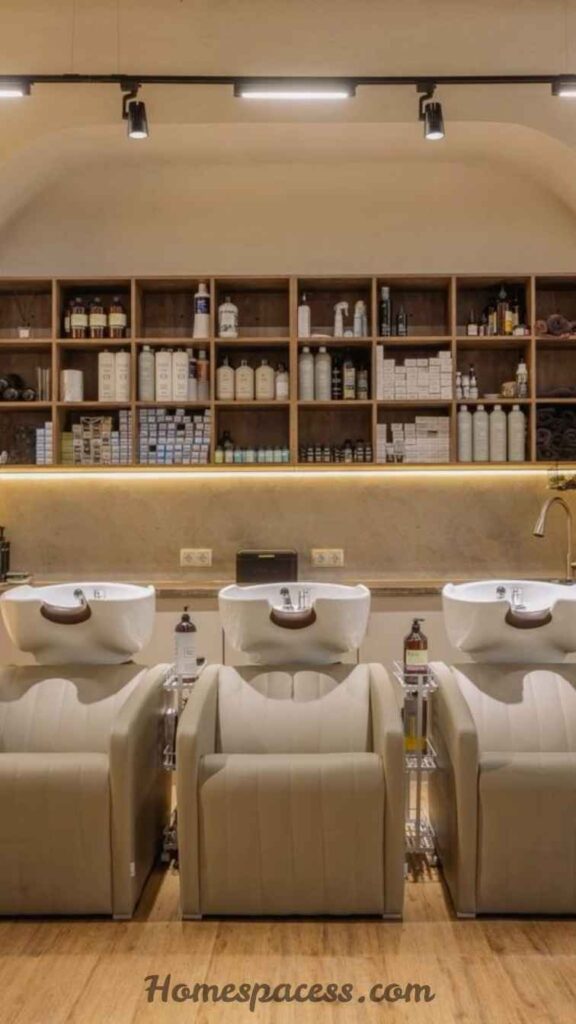
The shampoo experience is a hidden opportunity. Most clients describe the scalp massage during a shampoo as the most pleasurable part of a salon visit yet most shampoo areas are purely functional with no design investment. Transforming this zone into a mini spa retreat creates an unexpected delight moment that clients remember and rebook for.
Use backwash chairs with neck cushions and heated seat options where budget allows. Install dimmable lighting specifically in the shampoo alcove lower and warmer than the main floor. Add a small speaker for private audio, a plant in the corner, and a warm towel warmer nearby. Consider a textured tile or stone wall behind the bowls as a focal point. This zone costs relatively little to upgrade but creates outsized emotional impact.
Design a Retail Display That Sells Without Feeling Pushy
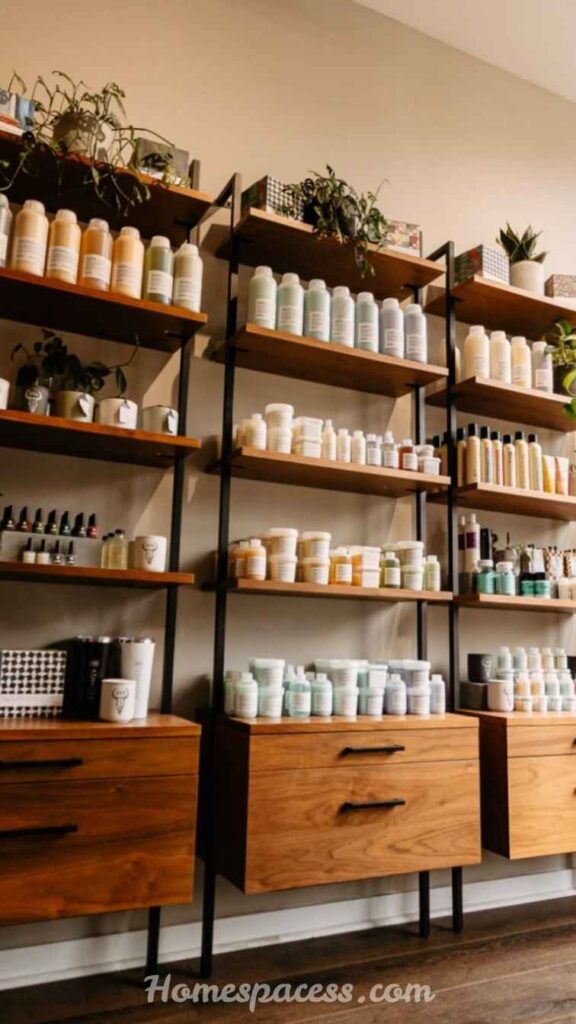
Retail sales are a significant revenue stream for salons and most lose a large percentage of that opportunity due to poor display design. Products placed randomly on cluttered shelves communicate low value. Instead, design your retail area like a boutique: use open shelving at eye level, group products by category and brand, and use consistent spacing between items. This “breathing room” approach makes products look premium and shoppable.
Lighting your retail shelf is non-negotiable. Directional spotlights or LED strip lighting behind shelves illuminates labels and creates a warm “product glow” that draws the eye. Place bestsellers and high-margin items at eye level and in the first section a client sees when approaching. Consider a small “stylist recommends” section with handwritten tags this personalization dramatically increases retail conversion rates.
Create a Branded Color Bar Area for Color Consultations
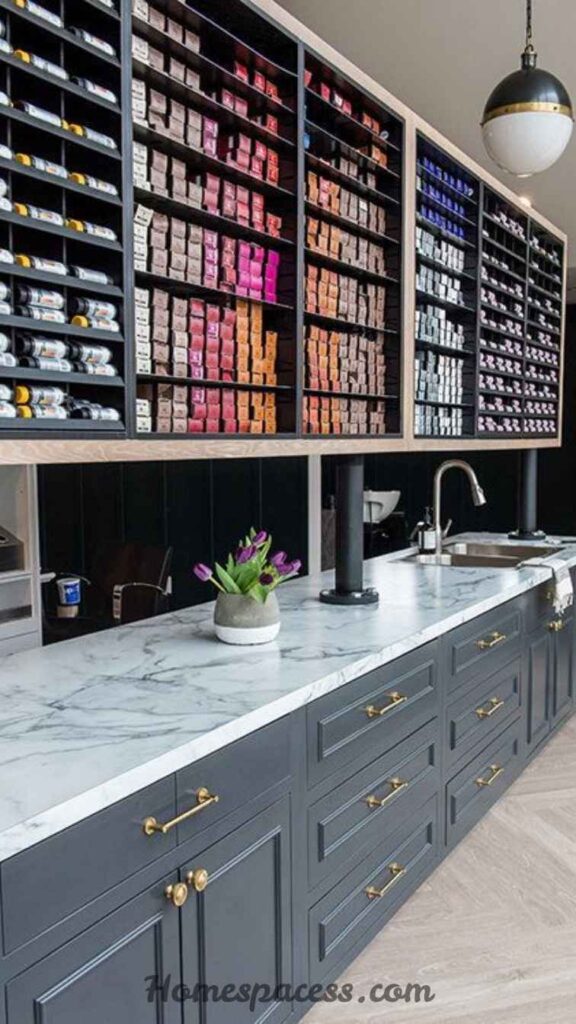
If color services are a significant part of your business, consider dedicating a specific “color bar” area for consultations, swatching, and color mixing. This zone communicates expertise and professionalism to color clients it shows you take the technical side of color as seriously as the creative side. A clean, well-lit counter with swatches, color wheels, and consultation tools creates a mini-laboratory aesthetic that high-end color salons are adopting globally.
The color bar also gives stylists a dedicated place to consult with clients away from the main floor, making the conversation feel more focused and premium. Use clear storage for color tubes and tools organized, visible supplies communicate professionalism. A branded mixing station with your salon’s logo creates a highly Instagram_able moment that markets your color expertise organically.
Use Flooring to Define Space and Anchor Your Aesthetic
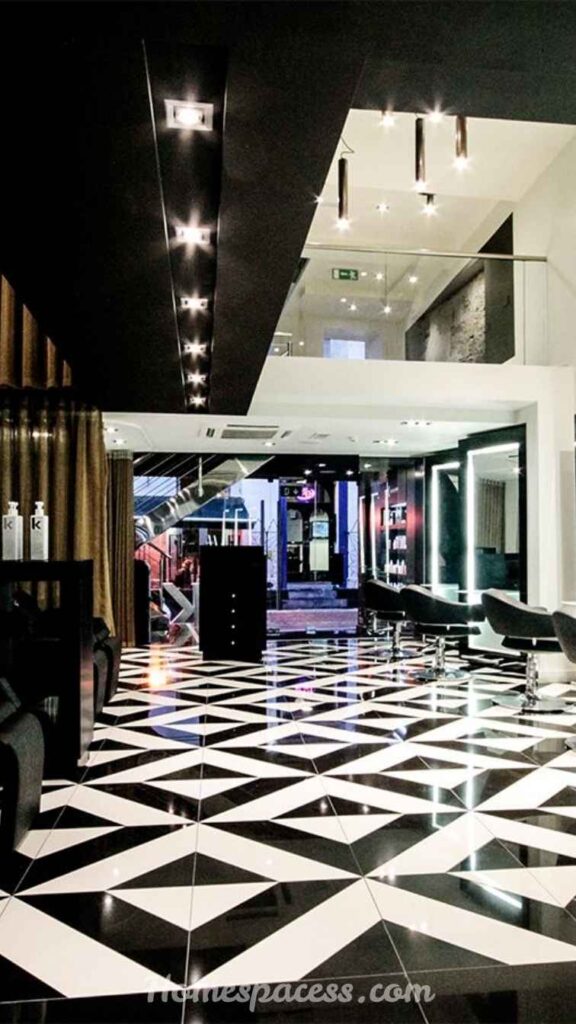
Flooring is one of the most overlooked elements in salon interior design yet it covers the largest surface area in your space. The wrong floor makes everything else feel cheaper than it is. Polished concrete gives an industrial-cool edge. Wide-plank wood creates warmth and organic luxury. Large-format marble-effect porcelain tiles signal upscale positioning. Patterned encaustic tiles in the reception or shampoo area create a heritage artisan feel.
For multi-zone salons, consider using two different flooring materials to visually delineate areas without walls. Ensure your chosen flooring has a slip resistance rating appropriate for a professional environment chemical and water spills are inevitable. Anti-fatigue matting at styling stations (either integrated into the floor design or chosen to match your palette) reduces stylist joint pain over long shifts and is a genuine retention benefit.
Invest in Custom Built-Ins to Maximize Every Square Foot
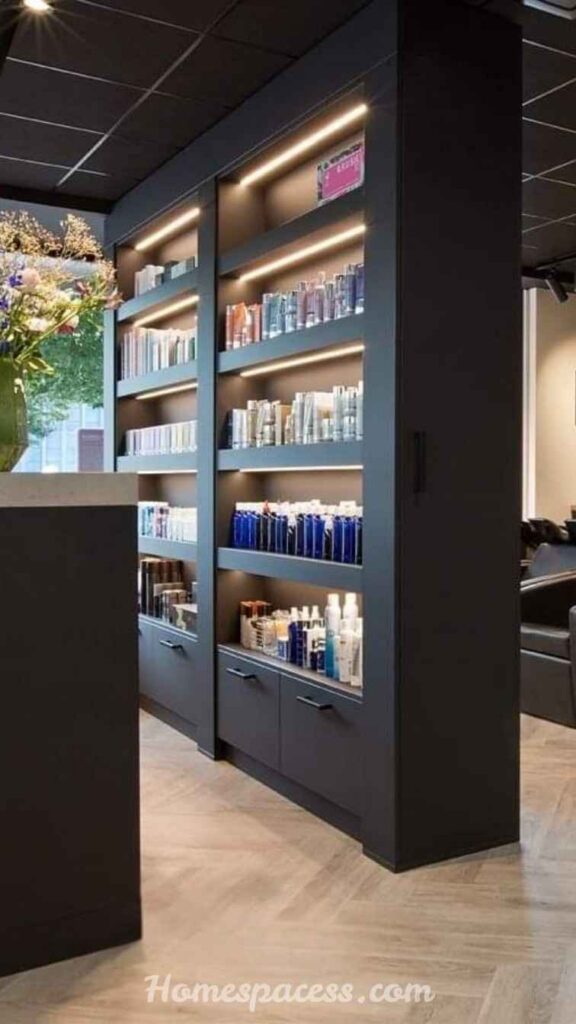
Freestanding furniture in salons often creates awkward gaps, mismatched heights, and wasted corner space. Custom built-in joinery reception desks, styling station cabinetry, shelving systems, and shampoo alcoves maximizes every square foot and creates a seamless, high-end look that freestanding pieces can rarely achieve. Built-ins allow you to integrate cable management, product storage, tool charging ports, and lighting within each unit.
Bespoke cabinetry also allows precise color matching to your brand palette something off-the-shelf furniture rarely delivers. For smaller salons, this is especially valuable: custom-built floor-to-ceiling cabinetry with integrated mirrors and task lighting can make a 60-square-foot station feel like a premium private suite. Budget for built-ins early in your planning they are rarely retrofitted cheaply.
Make Your Checkout Experience a Final Brand Impression
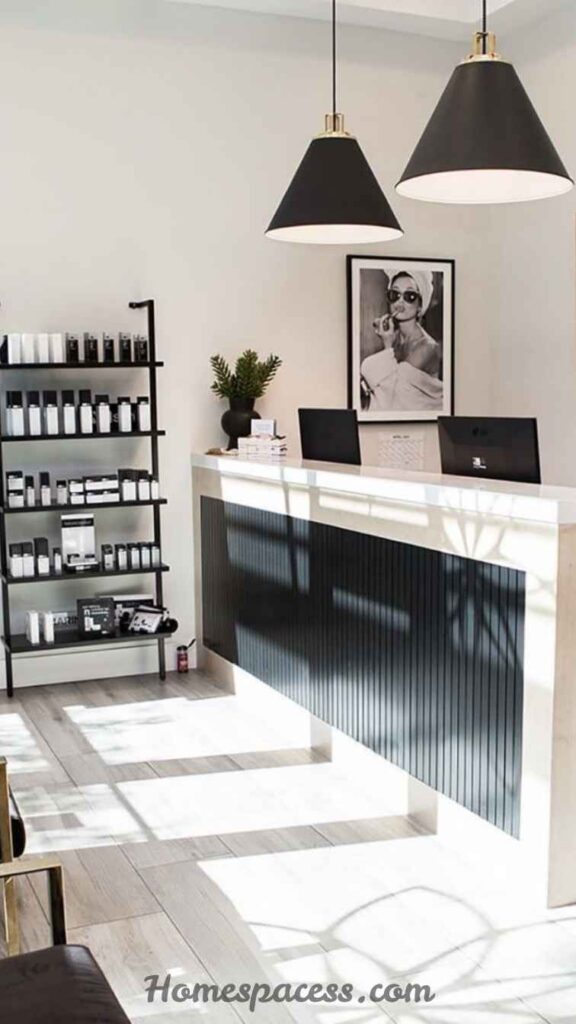
The checkout area is the last touchpoint before a client leaves and it’s where rebooking decisions happen. A cluttered, cramped, or poorly designed checkout counter communicates a rushed, transactional vibe at the worst possible moment. Instead, design it as a curated closing experience: a clean, branded POS setup, small impulse retail display, a card reader at a comfortable height, and a business card or loyalty card holder visible at all times.
Consider adding a small digital display showing your booking platform or upcoming promotions near the checkout. A simple but branded “thank you” card included with retail purchases creates a disproportionate impression of care. Lighting at checkout should be slightly brighter than the ambient floor this is a task zone, not a mood zone but keep it warm-toned to maintain the salon’s overall atmosphere.
Brand Expression & Social-First Design
In 2026, your salon interior is a marketing channel. These final nine ideas ensure your space generates organic content, communicates brand values, and creates the kind of visual identity that builds loyal communities.
Design One Unmissable “Instagram Wall” or Photo Moment
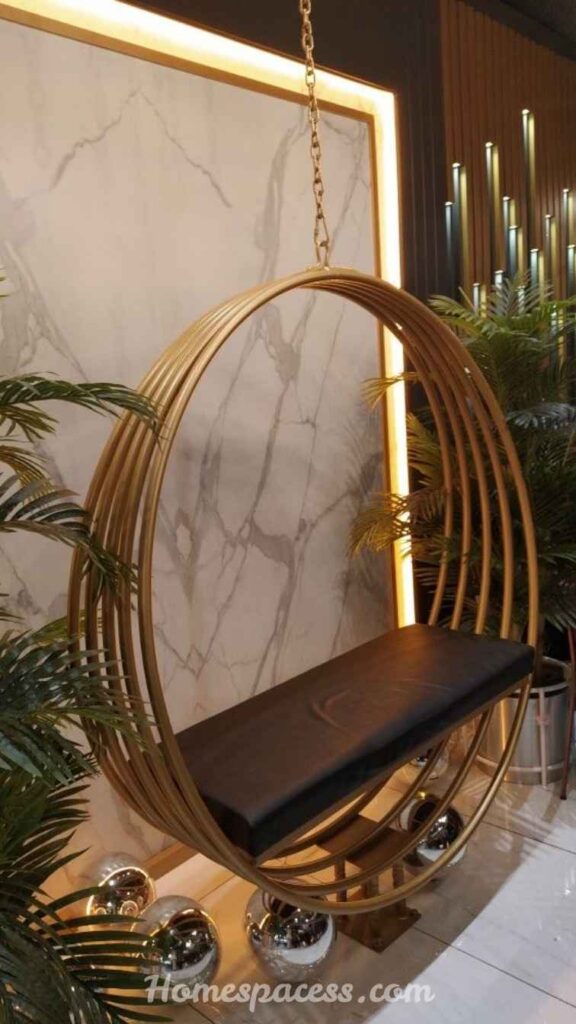
Every high-performing salon in 2026 has at least one designed photo moment a spot where clients instinctively take and share photos. This isn’t about being trendy; it’s about embedded marketing. When a client posts a photo from your salon, their entire network sees your brand. This engineered word-of-mouth is worth thousands in advertising budget. Designed photo moments include: neon signs with your salon name or a motivational phrase, a curated gallery wall in your brand colors, a living plant wall, or a striking mural from a local artist.
Whatever you choose, make sure it includes enough visual information to identify your salon your name in the shot is ideal. Add your Instagram handle in small, tasteful lettering nearby. Pro tip: position this photo moment in good natural or supplemental lighting so client photos look flattering and the space photographs beautifully without filters.
Commission Local Art to Build Community and Uniqueness
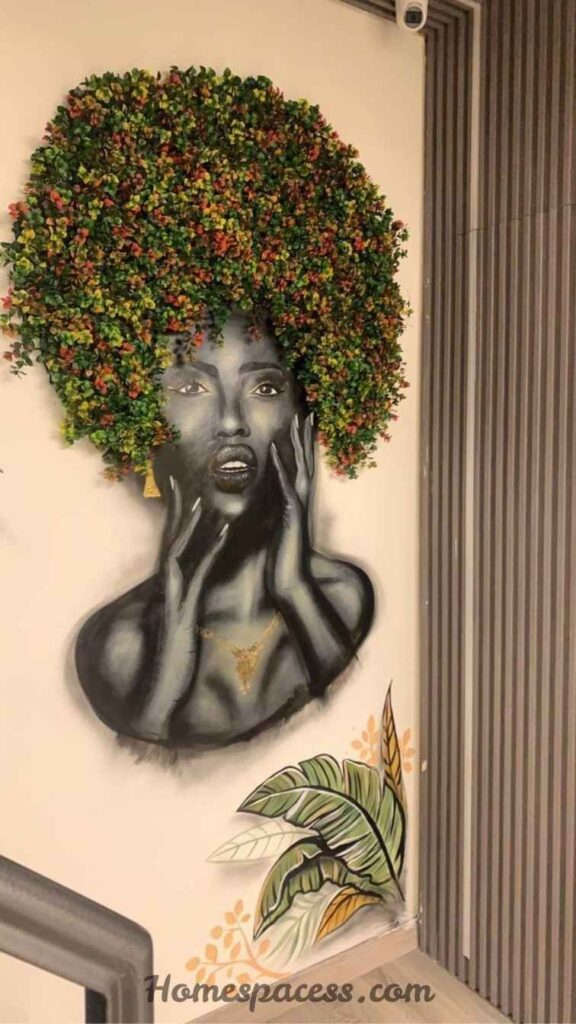
Local art transforms a salon from a commercial space into a cultural one. Commissioning murals, paintings, or sculptural pieces from artists in your community is one of the most differentiated design moves a salon can make no competitor can replicate it. This approach also supports your local creative economy, builds genuine community goodwill, and generates a strong story for your brand’s social media content.
Work with artists whose visual aesthetic aligns with your salon’s concept. A maximalist salon might commission a bold, colorful abstract mural across an entire wall. A minimalist Japanese-inspired concept might feature a single, precise ink-brush work. Rotate smaller artworks seasonally this gives regular clients a reason to notice and rebook, and generates fresh content every season.
Use Your Brand Colors and Typography Throughout Every Touchpoint
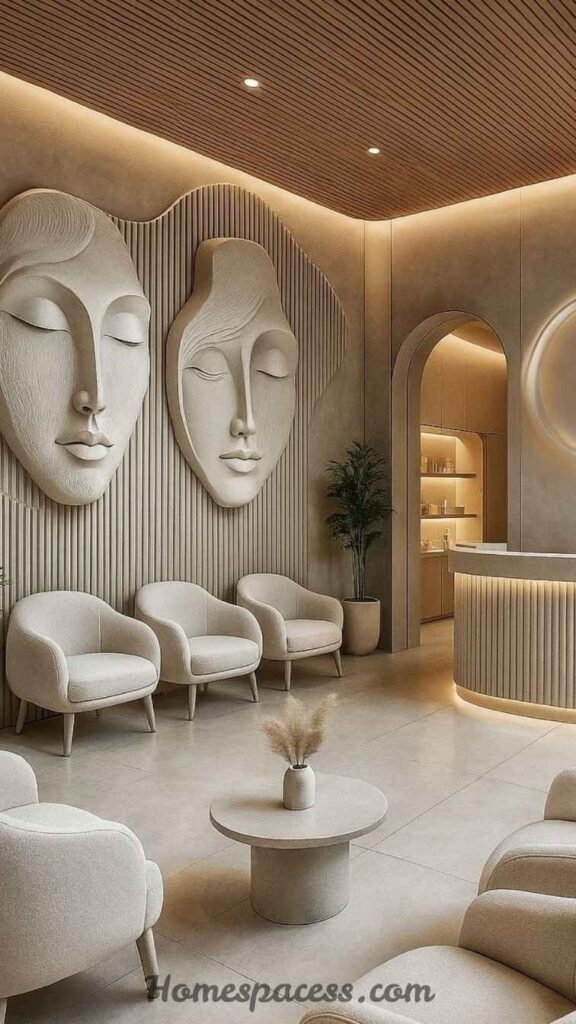
Brand design extends far beyond your logo. In a well-designed salon, your brand colors appear in the upholstery, accent walls, packaging, cups, uniforms, towels, and even small details like the color of the pens on your reception desk. This level of cohesion creates a powerful, professional impression that clients may not consciously notice but they always feel. It’s the difference between a salon that feels designed and one that feels assembled.
Typography is equally important. The font used on your signage, menus, and social media should appear consistently across your printed materials, retail stickers, and any in-salon display boards. This brand consistency is called “visual grammar” by brand designers and when it’s present, even a photo taken in your salon immediately reads as belonging to your brand, dramatically increasing social media brand recognition.
Add a Private Suite or VIP Room for High-Value Services
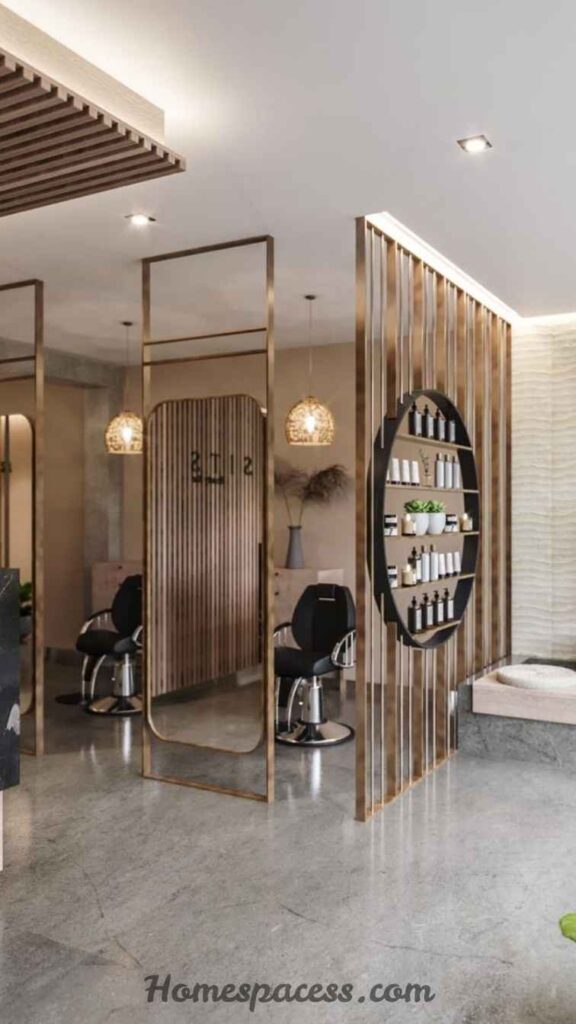
If your service menu includes high-ticket offerings full color transformations, bridal hair, extensions, or semi-permanent treatments a dedicated private suite justifies premium pricing and creates an experience that commands loyalty. A private room doesn’t need to be large: even an 80-square-foot alcove separated by a curtain or frosted glass partition creates a sense of exclusivity that clients will pay significantly more for.
Design the private suite as the best version of your salon’s aesthetic the most curated lighting, the most comfortable chair, the finest detail work. Consider adding a small side table with a complimentary drink service. This space photographs extraordinarily well for marketing purposes and becomes a powerful upsell when presenting service packages to high-value clients.
Integrate Technology Seamlessly Into the Design
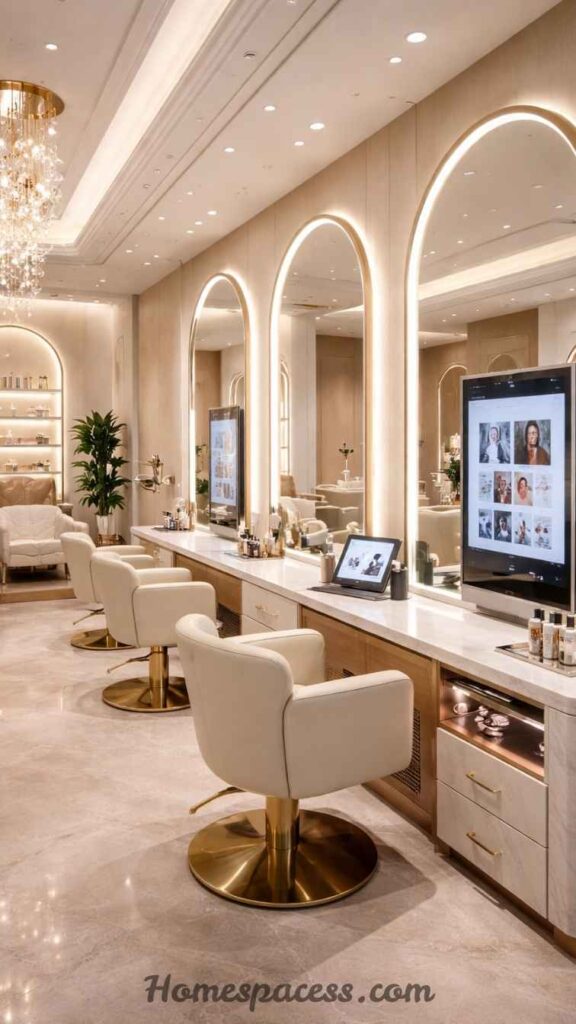
Technology in salons has advanced rapidly: digital color consultation screens, UV-sanitizing stations, integrated booking tablets at reception, and contactless payment systems are all becoming standard in premium salons. The design challenge is integrating these technologies without them looking bolted on or disrupting the aesthetic. Cable management, custom enclosures, and intentional placement make technology feel native rather than retrofitted.
Consider a dedicated digital display in your reception area cycling through your portfolio, testimonials, and current promotions this reduces reliance on physical printed materials and updates easily. QR codes embedded in tasteful table cards at stations allow clients to instantly book their next appointment, follow your social media, or access your product recommendations. Technology should serve the experience, not interrupt it.
Design for Accessibility Without Compromising Aesthetics
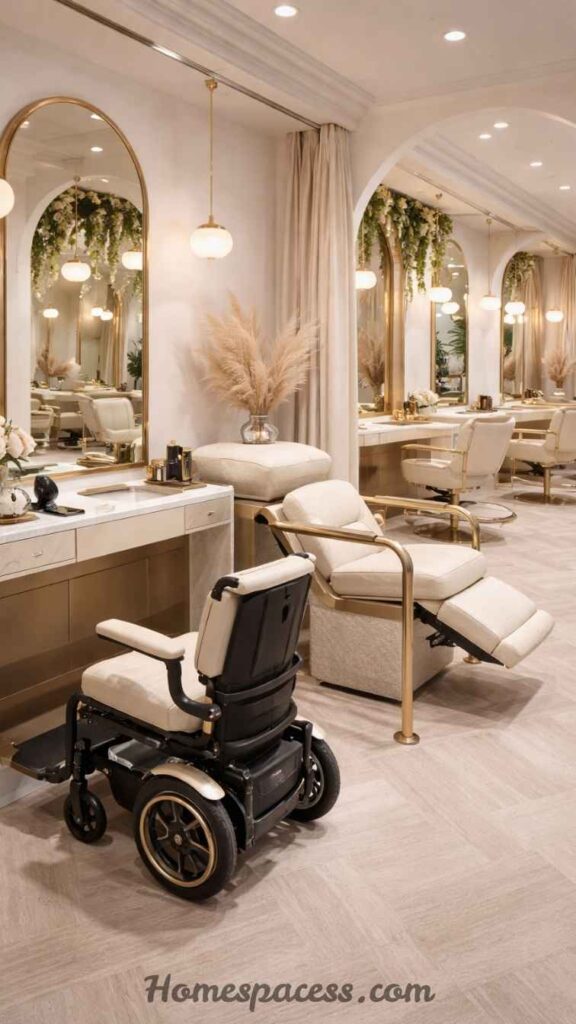
Accessible design is both a legal requirement and a powerful business differentiator. Many salons still fail to accommodate clients who use wheelchairs, have mobility challenges, or have sensory sensitivities and this is a significant gap in the market. Thoughtful accessibility design includes wide station aisles (36 inches minimum), an adjustable-height hydraulic styling chair accessible from a wheelchair, unobstructed paths from entrance to all service areas, and clear sightlines to exits.
Sensory-friendly design elements dimmable lighting, quieter zones, unscented product options available on request serve clients with sensory processing differences and also benefit all clients during stressful appointments. These choices communicate genuine inclusion and generate authentic positive reviews from communities that are often poorly served. Accessible design, done well, is simply good design.
Use Scent Branding as a Signature Design Element
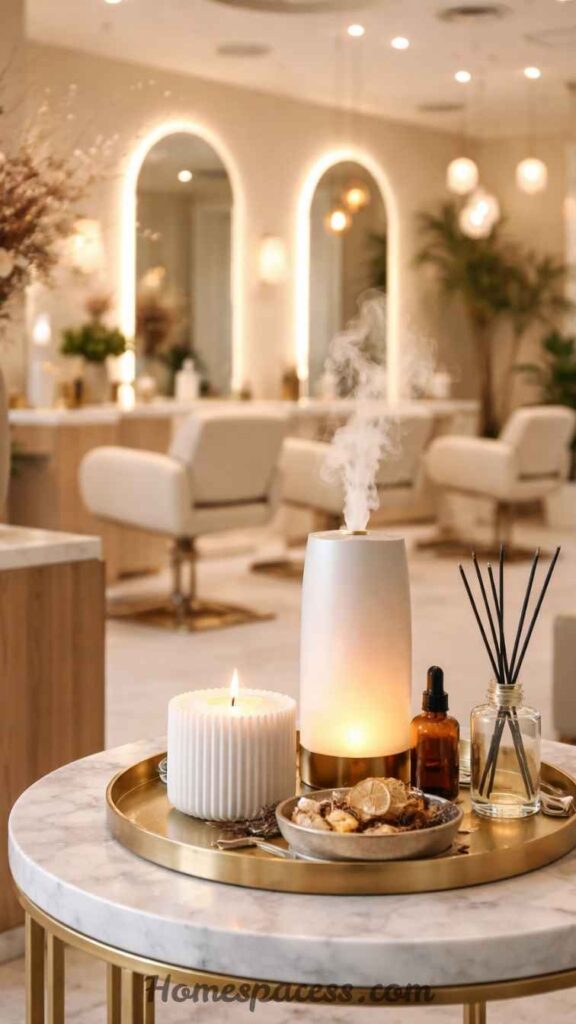
Scent is the most underused yet most powerful design tool available to salon owners. Research from the Smell Institute shows that humans remember scents with 65% accuracy after one year, compared to only 50% for visual scenes after three months. A signature scent creates an invisible but deeply memorable brand touchpoint. Top salons are increasingly partnering with fragrance designers to create completely bespoke scent profiles that are exclusive to their space.
Implement scent branding through professional cold-air diffusion systems (superior to heated diffusers that alter fragrance compounds), scented candles in waiting areas, or linen sprays on towels and capes. Choose a scent that complements not masks the natural chemical smells of your salon. Fresh, green, or spa-like fragrances work best in environments with strong chemical product use. Extend your scent brand to your retail packaging for a truly immersive brand experience.
Create a Seasonal Design Refresh Strategy
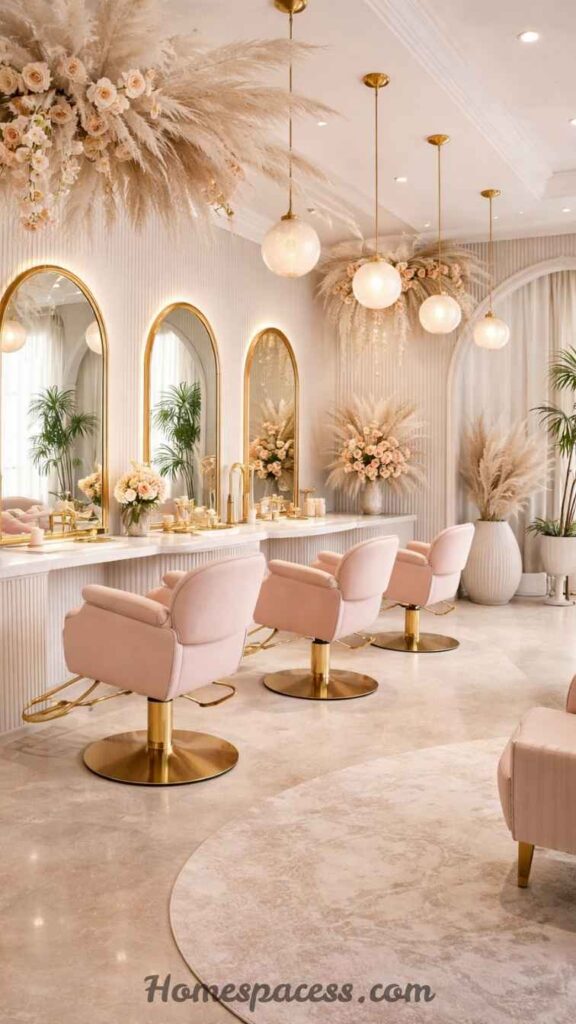
Permanent design decisions should be timeless but great salons also embrace seasonal updates to give regular clients a reason to notice and comment. A seasonal design refresh doesn’t require renovation: swap cushion covers in warm-toned autumn hues, add a curated vase arrangement for spring, introduce a festive installation for December, or rotate your gallery wall artwork quarterly. These small changes signal that your salon is alive, curated, and attentive to detail.
Document your seasonal refreshes on social media to create anticipation and encourage repeat visits from design-curious clients. Many salons create an annual “salon reveal” moment after a major refresh generating press coverage, social media engagement, and client re-engagement all at once. A seasonal strategy also extends the life of your interior investment by keeping it feeling current without the cost of full renovations.
Tell Your Brand Story Through Every Design Decision
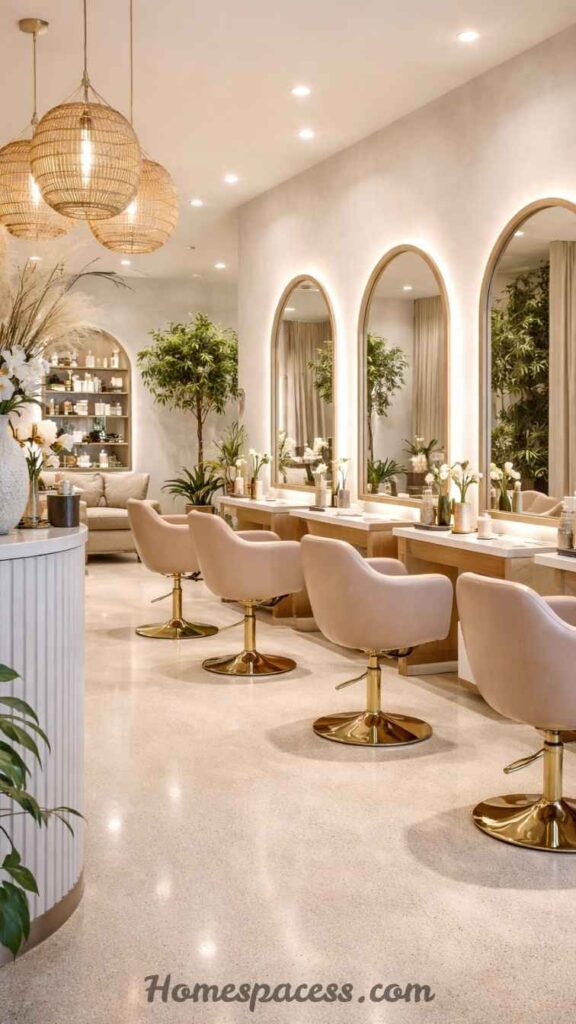
The most powerful salon interiors don’t just look beautiful they tell a story. Your design should answer the question: who are you, and why does this space exist? A salon founded by a stylist passionate about sustainable beauty should have that story woven into its design: reclaimed wood surfaces, local art, eco-certified paint, plants. A salon celebrating cultural heritage might incorporate textile patterns, colors, and motifs from that culture. Authenticity in design creates emotional resonance that no competitor can copy.
Your brand story is your most defensible competitive advantage. Clients who connect with your story don’t just visit they become advocates. Incorporate story-telling elements through a brief “about the founder” card at reception, a timeline of the salon’s history on one wall, or a small display of the founder’s inspiration and creative process. When the design and the story align, the salon becomes a place not just a service provider.
Conclusion
Salon interior design is ultimately about creating an environment where clients feel cared for, stylists can work brilliantly, and your brand makes a clear and memorable impression. From the warmth of natural wood to the precision of layered lighting, from the nostalgia of retro velvet to the forward-thinking principles of sustainable design, the ideas above offer a comprehensive foundation for any salon at any scale and at any budget.
Intentionality. Every element in your salon should be a deliberate choice that communicates something about who you are and what you stand for. When design and brand values are perfectly aligned, clients don’t just notice they come back.
Trend Analysis
2026 Salon Interior Design Trends What’s Now, Next & Future
Understanding where salon design is heading allows you to make investment decisions that remain relevant for five to ten years rather than three. These are the trends shaping the industry right now and those that will define it by 2030.
Happening Now
Warm Minimalism
Clean lines with tactile natural materials linen, rattan, plaster walls replacing the cold, stark minimalism of the 2010s. Warmth is the differentiator.
Fluted & Reeded Details
Fluted wood panels on cabinetry, reception desks, and accent walls are dominating premium salon renovations globally in 2026–2027
Lime wash Walls
Organic, textured lime wash paint creates artisanal warmth. It photographs beautifully and signals artisan credibility a favorite for boutique salons.
Coming Soon
Sensory-First Design
Acoustic panels, scent zoning, tactile contrast surfaces, and circadian lighting systems designed to optimize client experience across multiple senses.
Neuroaesthetics-Led Design
Applying neuroscience research on how spaces affect cognition and emotion. Expect design consultants specializing in salon neurodesign by 2027–2028.
2028 & Beyond
AI-Adaptive Environments
Smart lighting, scent, and sound systems that automatically adjust based on appointment type, time of day, and client preference profiles.
One trend competitors rarely discuss: the shift from “Instagrammable” design to “experiential retention” design. Salons that built spaces primarily for social media in 2020–2024 are now discovering those spaces don’t necessarily retain clients. The 2026 shift is toward spaces that feel genuinely relaxing, personally meaningful, and return-worthy not just photo-worthy. The most successful salon interiors of the next decade will be built for human experience first, content creation second.
Expert Insights
Practical Tips That Industry Experts Actually Use
These are the insights that experienced salon designers and consultants apply in real projects the kind of advice rarely covered in generic design articles.
The “5 Second Rule” for Entrance Design
Test your entrance by timing how long a first-time visitor takes to understand what kind of salon you are. Premium salons should communicate their positioning in under five seconds through lighting, materiality, and signage not through service menus.
Design for Your Slowest Day
A salon that looks beautiful when packed with clients can feel dead and uninviting on a quiet Tuesday morning. Design for low-occupancy days: ambient music, warm lighting at all times, and staff positioned visibly not hiding in the back room.
Invest in Your Ceiling
Ceilings are the most neglected surface in salon design. A painted ceiling in a rich, deep color, exposed industrial beams, decorative tin tiles, or a dramatic pendant installation transforms the entire room from the top down. Clients sitting in styling chairs look up constantly.
The 60-30-10 Color Rule
60% dominant neutral (walls, floor), 30% secondary tone (furniture, upholstery), 10% bold accent (décor, cushions, signage). This formula creates balanced, visually coherent interiors that feel designed rather than assembled.
Never Skip an Acoustic Audit
Before finalizing your layout, test the acoustics. Hard surfaces (tile, glass, concrete) create echo and noise that makes conversations feel strained. Add acoustic panels in soft material finishes many now look like art pieces or fabric wall installations.
Prototype Before Committing
Before painting an entire accent wall or installing new flooring, buy a sample and live with it in the space for three to five days. Light conditions change dramatically from morning to evening, and what looks perfect in a showroom can read completely differently under your specific lighting conditions.
Designer’s Rule
The highest-ROI design investment for most salons isn’t furniture or décor it’s lighting. A $3,000 investment in a proper layered lighting system will outperform $10,000 of new furniture in terms of client perception and photo quality. Always upgrade your lighting first.
Sustainability & Long-Term Value
Sustainable Salon Design Built to Last, Better for the Planet
The sustainable salon is no longer a niche concept it’s a growing consumer expectation, especially among millennial and Gen Z clients who research a brand’s values before committing. Sustainable design also offers measurable business benefits: lower operating costs, higher client loyalty, and differentiation in a crowded market.
Critically, sustainable design decisions are long-term value investments. Durable, ethically sourced materials cost more upfront but require less frequent replacement. Energy-efficient lighting and HVAC systems reduce monthly operating costs year over year. Choosing suppliers with transparent supply chains protects you from reputational risk as consumer awareness grows.
- Low-VOC Paints and Finishes: Chemical off-gassing from standard paints affects air quality a significant concern in a space where clients and staff spend many hours. Low-VOC and zero-VOC paints are now available in the same quality and range as standard options at minimal cost difference.
- Reclaimed and FSC-Certified Wood: Reclaimed timber for shelving, flooring, or feature walls has a beautiful, authentic character that new wood cannot replicate. FSC certification ensures new wood products come from responsibly managed forests. Both choices communicate sustainability credibility to clients.
- Durable, Commercial-Grade Materials: The most sustainable design choice is longevity. Commercial-grade furniture, flooring, and surfaces last three to five times longer than residential-grade alternatives, meaning fewer replacements and less waste over the salon’s lifetime.
- Water-Efficient Shampoo Stations: Water is a significant resource in salons. Low-flow shampoo bowl faucets with aerators reduce water consumption by 30–50% without affecting rinsing performance. This is both environmentally responsible and reduces utility costs over time.
- Green Certification and Marketing: Salons that can document their sustainability practices certified products, waste reduction programs, green energy use can apply for certifications from organizations like Green Circle Salons. This provides marketing credibility and attracts a rapidly growing environmentally-conscious clientele.
Future Predictions
The Salon Interior of 2030 What’s Coming That Most Owners Don’t See Yet
The convergence of technology, neuroscience, sustainability pressure, and shifting consumer behavior is reshaping what “salon design” means. Here’s what progressive salon owners are already preparing for.
2026–2027
Circadian Lighting Systems
Automated lighting that shifts color temperature throughout the day, supporting client mood and stylist alertness mirroring natural daylight cycles.
2027–2028
AI Consultation Zones
Dedicated digital consultation areas where AI-assisted hair color and style simulations are shown on client photos in real time before service begins.
2027–2029
Modular Salon Furniture
Reconfigurable, flat-pack professional furniture systems that allow salon layouts to adapt to different service mixes without full renovation cycles.
2028–2030
Biometric Personalization
Client preference profiles that automatically adjust a private suite’s lighting, scent, temperature, and music the moment they book in integrated with your POS system.
2028–2030
Zero-Waste Design Integration
Closed-loop material systems built into salon cabinetry integrated color tube recycling stations, reusable tool storage, and compostable consumable dispensers as standard.
2029–2031
Augmented Reality Mirrors
Smart mirrors that overlay virtual color or style simulations over the client’s reflection allowing real-time co-creation between client and stylist before committing.
The most significant future shift is the move from space as backdrop to space as service. By 2030, the salon interior itself its sensory calibration, personalization, and emotional intelligence will be part of the service offering, priced and marketed as such. Salons that treat design as a strategic asset today are building the infrastructure for this future. Those that treat it as an afterthought will find it increasingly difficult to compete at any price point above entry-level.
Common Mistakes
7 Salon Interior Design Mistakes That Silently Cost You Clients
Avoiding these mistakes is as valuable as implementing the best ideas. Most are subtle, widely made, and rarely discussed in mainstream design advice which is exactly why they persist.
- Ignoring Natural Light Planning: Many salons choose window treatments based on privacy needs without considering how they affect light quality throughout the day. Direct morning sunlight creates harsh glare on mirrors; afternoon western light can overheat color stations. Plan your layout around your building’s solar orientation from day one.
- Designing for Full Capacity Only: A salon that looks vibrant when fully booked can feel sad and empty on slow days. Design for low-occupancy ambiance: warm ambient lighting that works independently of staff presence, music systems set to play automatically, and visual density that doesn’t require filled stations to look complete.
- Underestimating Storage in the Design Plan: Insufficient storage forces stylists to keep personal tools, product bottles, and equipment visible on workstations creating visual clutter that undermines any design investment. Build generous storage into every station from the beginning. Hidden clutter is the enemy of a premium aesthetic.
- Choosing Trend Over Longevity: A salon designed around a passing trend geometric hexagon tiles, millennial pink, Edison bulb overload ages visibly within three to four years and requires costly renovation to update. Choose timeless design foundations and add trends only through easily swappable elements like cushions, décor, and paint.
- Not Testing the Client Perspective: Most salon owners design their space from a standing adult perspective but clients spend most of their visit seated in a styling chair or lying at a shampoo bowl. Sit in every client chair and shampoo station in your final layout. What they see ceiling details, lighting fixtures, blank walls is what they experience for 45 to 120 minutes.
- Overlooking the Staff Experience: Stylists spend more time in your salon than any client. A space that’s beautiful but ergonomically poor bad mat placement, insufficient task lighting, no personal storage contributes to fatigue and turnover. Staff retention is directly influenced by working environment. Design for your team as much as your clients.
- Skipping a Professional Design Consultation: Many salon owners attempt full design without professional input to save costs and spend more correcting mistakes than a consultation would have cost. Even a two-hour session with a commercial interior designer or brand consultant before making major decisions can save significant money, time, and regret. Consider it an insurance policy for your renovation budget.
Team Home Spacess shares simple, practical design ideas that work for real families. The team focuses on cozy décor, soft colors, and natural textures that make a space feel truly lived-in. From everyday decorating tips to creative home projects, Team Home Spacess is dedicated to helping readers create warm, comfortable, and inviting spaces with a fresh and personal touch.