
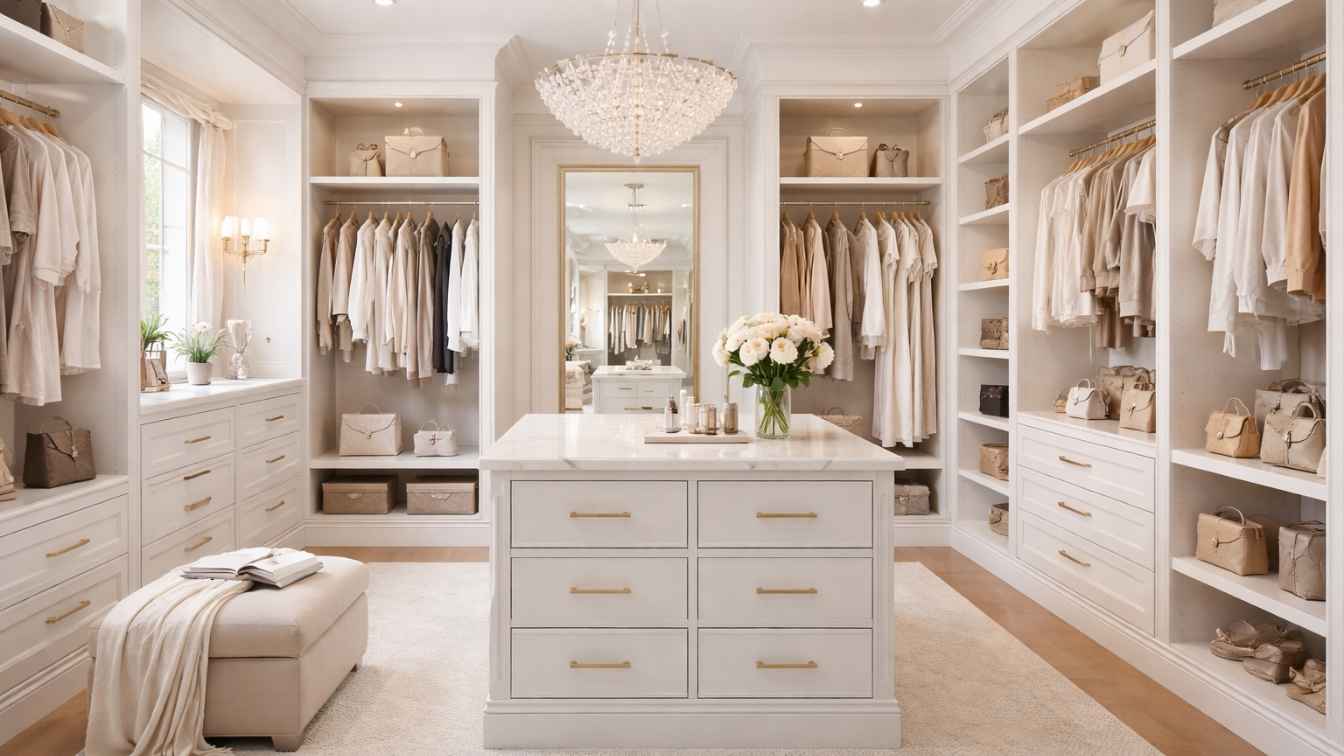
20 Walk In Closet Ideas To Transform Your Space

A walk in closet is more than a storage room it’s the first space you enter every morning and the last you leave every night. Yet most homeowners treat it as an afterthought, stuffing it with mismatched hangers and wire shelving. The result? Wasted time, wasted space, and unnecessary stress.
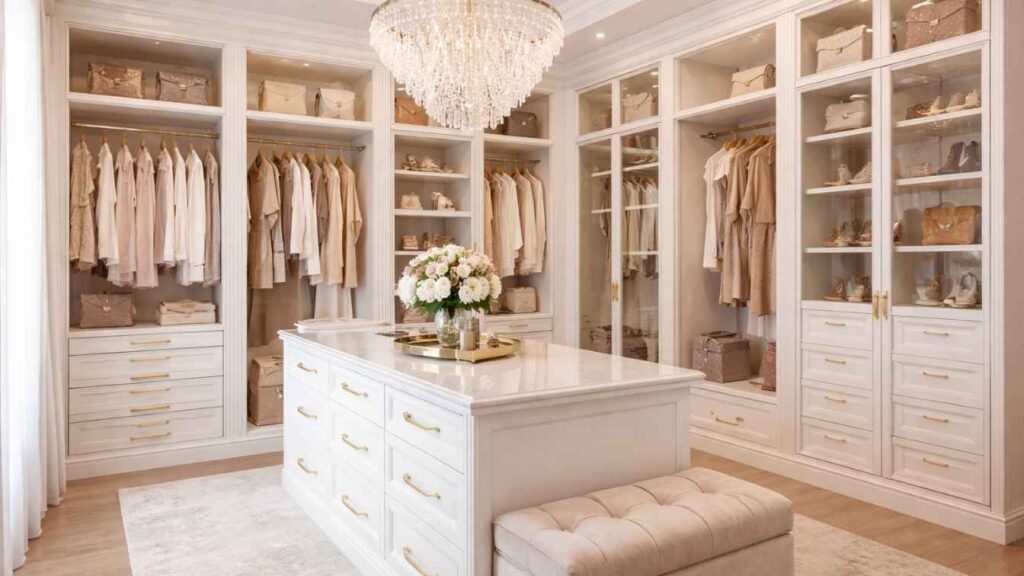
In this guide, we break down 20 actionable walk in closet ideas from budget-friendly DIY tweaks to full luxury buildouts backed by real design principles and emerging trends shaping closet design through 2027 and beyond. Whether you have a 5×5 reach-in or a 12×14 suite, these ideas scale to your space.
Island Dresser with Centered Mirror
A freestanding island dresser placed at the center of a walk in closet instantly elevates the space from functional to boutique-level. It creates a natural focal point and provides drawer storage for folded items that would otherwise clutter shelving. Think of it as the kitchen island equivalent for your wardrobe practical and beautiful.
For smaller closets, a scaled-down version (36 inches wide) with a quartz or marble top still adds elegance without dominating the footprint. Pair it with a framed mirror overhead to maximize the sense of depth. Interior designers consistently cite this element as the single highest-impact upgrade for walk in closets under 150 square feet.
Must Read: 18 Brilliant Laundry Room Ideas That Actually Transform the Space
Floor-to-Ceiling Shelving Systems
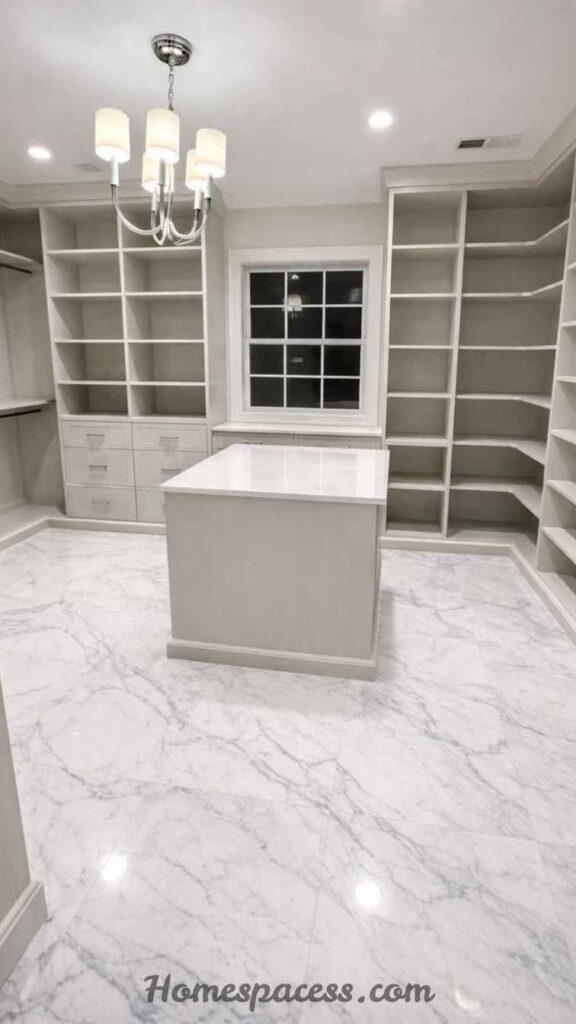
Vertical space is the most underused asset in any walk in closet. Floor-to-ceiling shelving, installed with a sliding library ladder, can nearly double your usable storage without expanding the room’s footprint. The upper zone (above eye level) is ideal for seasonal items, luggage, or rarely used accessories in labeled bins.
Custom built-ins from companies like California Closets or IKEA PAX can be combined to fill any wall precisely. The key design principle here: use closed cabinets for the lower third (to hide everyday clutter), open shelving in the middle zone for display-worthy items, and deep shelves at the top for bulkier storage. This three-zone system creates visual order even in a busy closet.
Don’t Miss: 25 Dressing Table Ideas That Transform Your Daily Ritual Into a Luxury Experience
Dedicated Shoe Wall or Shoe Shelving
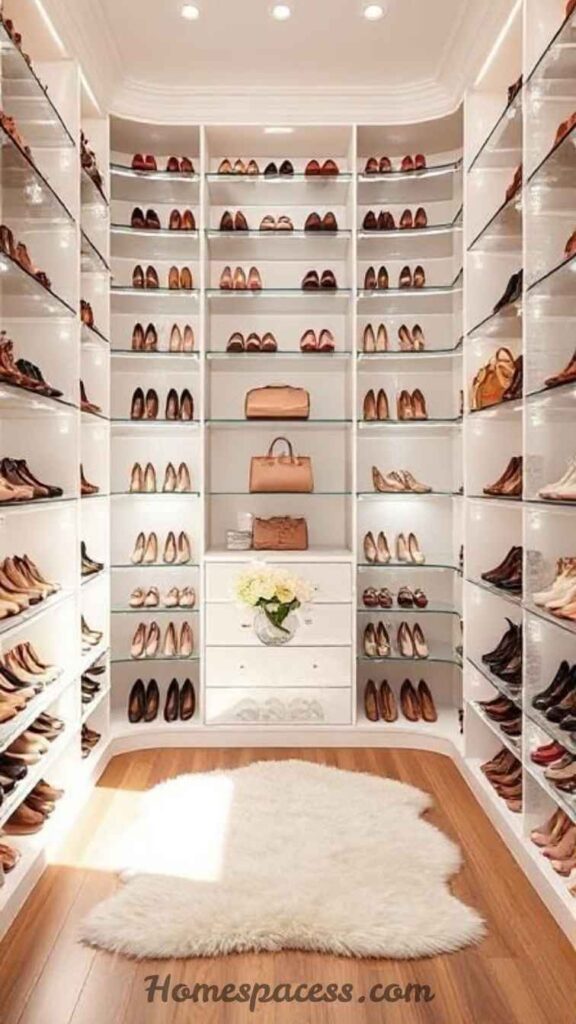
Shoes are consistently the hardest category to organize in walk in closets they’re bulky, oddly shaped, and multiply quickly. A dedicated shoe wall with angled or flat shelves arranged by category (flats, heels, sneakers, boots) solves this instantly. Slanted shoe shelves at a 20–25 degree angle display footwear at an appealing angle while saving vertical space.
If floor space allows, a deep drawer at floor level can store oversized boots lying flat. For high-end collections, clear acrylic shelves with individual LED strip lighting turn your footwear into a display feature something commonly seen in fashion-forward walk in closets shared on platforms like Pinterest and Houzz. Lighting alone can make a $300 shoe shelf look like a $3,000 boutique display.
Read More: 27 Library Room Ideas to Transform Any Space Into a Dream Home Library
Double Hanging Rods for Short Garments
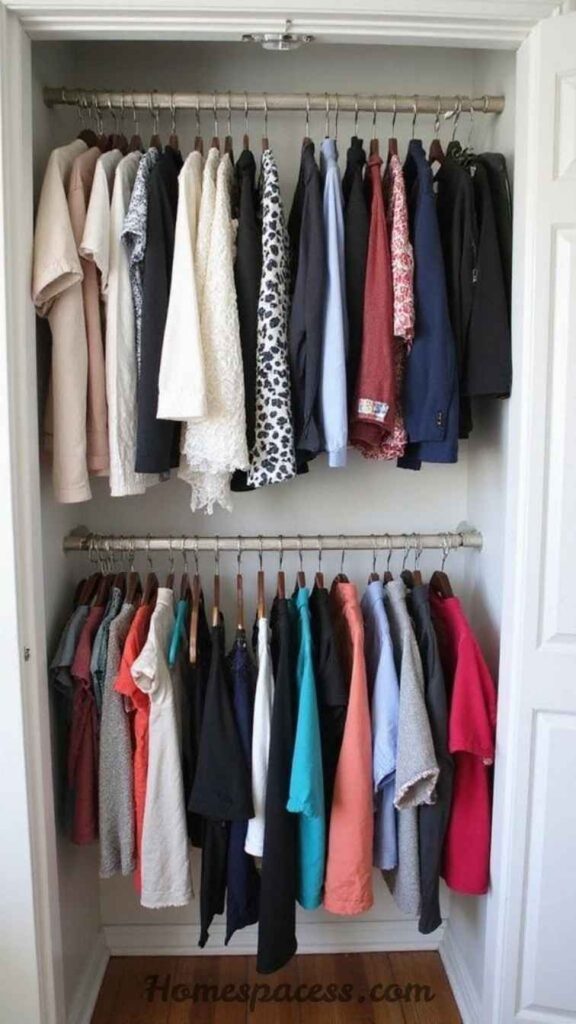
One of the most space-efficient walk in closet upgrades costs almost nothing: add a second hanging rod below your existing one. For shirts, blazers, folded trousers, and jackets any garment under 40 inches double-rod hanging immediately doubles your hanging capacity. This is particularly powerful on sidewalls where depth allows for a second rod without collision.
Stagger rod heights based on your actual wardrobe. A 42-inch top rod with a 36-inch bottom clearance works for most shirts and folded pants. If you have many long items (gowns, coats, formal wear), designate one full-length wall for single rods only. Strategic zoning by garment type makes daily dressing faster you stop scanning the entire closet and go directly to the right zone.
Don’t Skip: 20 Stunning Flower Garden Ideas to Transform Your Outdoor Space
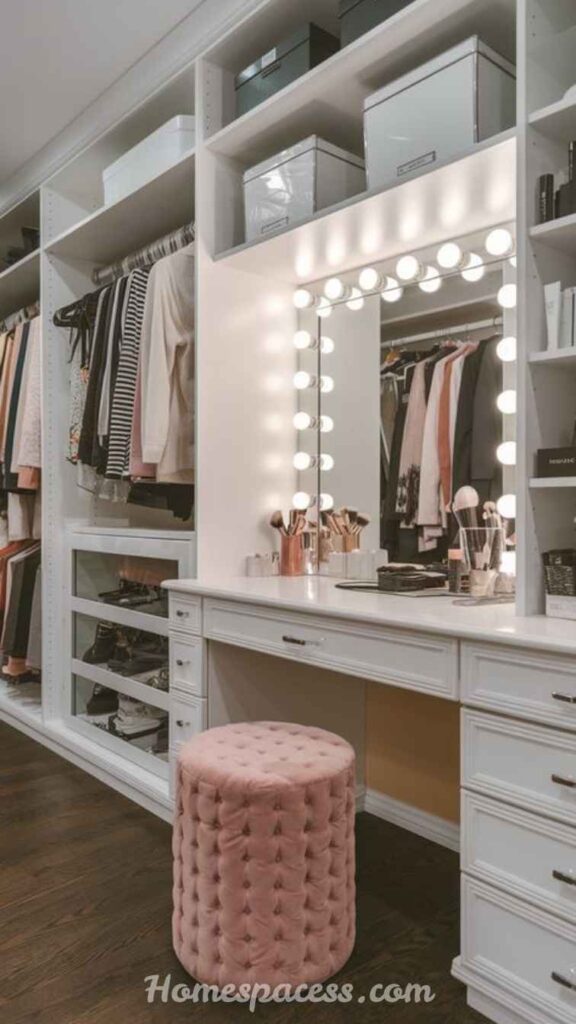
Built-In Vanity and Makeup Station
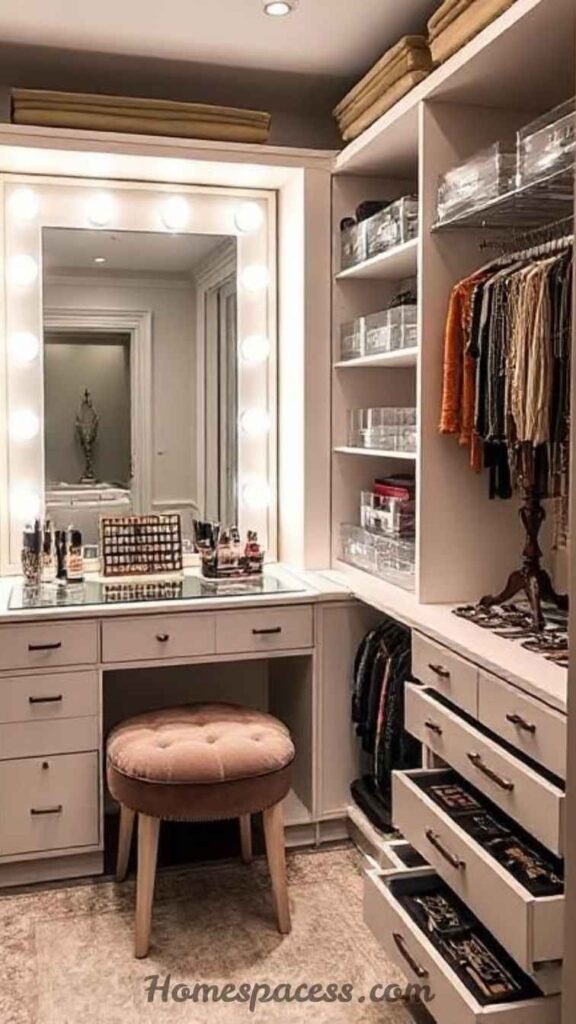
Combining a walk in closet with a vanity station is the most space-efficient design decision a homeowner can make when renovating. Instead of occupying bathroom counter space or a separate bedroom corner, a built-in vanity integrates seamlessly into the closet’s end wall. It typically features a lighted mirror, shallow drawer sets for cosmetics, and a cushioned stool that tucks neatly under the countertop.
Hollywood-style LED mirror lighting (5000K color temperature) is the preferred choice among professional makeup artists because it closely mimics natural daylight. For the countertop, honed marble or a white quartz surface resists staining while giving the space a refined, editorial feel. This feature consistently adds perceived value to homes and is a favorite selling point in luxury real estate listings.
Pull-Out Accessories and Tie Drawers
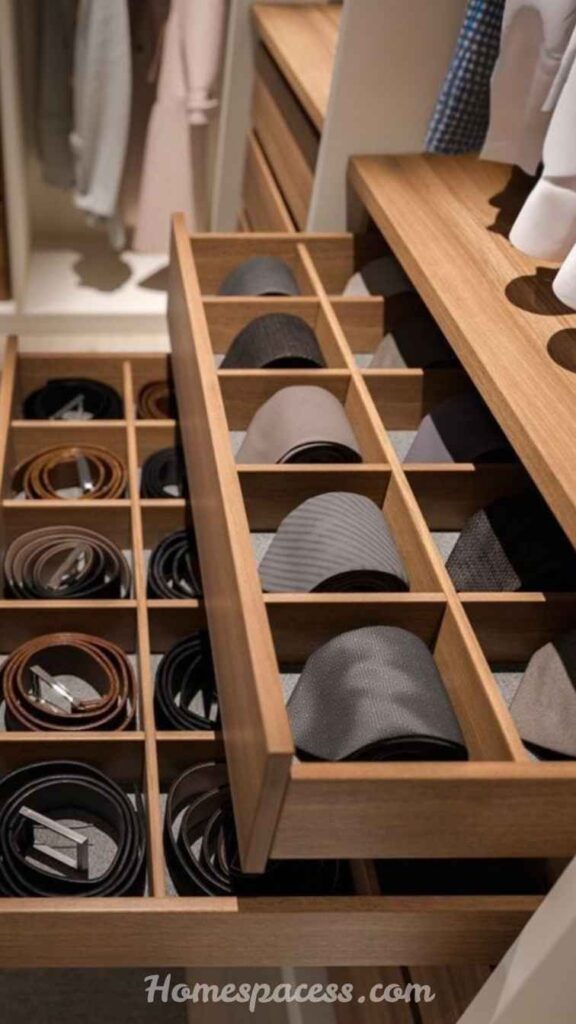
Accessories belts, ties, scarves, sunglasses are the chaos creators of any closet. A single tangled drawer can waste five minutes of your morning. Pull-out specialty drawers with built-in dividers or velvet-lined inserts solve this problem permanently. Tie and belt racks that pull out horizontally let you scan everything at a glance without disturbing the arrangement.
These narrow pull-outs (typically 6–12 inches deep) can be integrated into existing cabinetry or purchased as standalone modular inserts. The real insight: position these drawers at eye level, not at the bottom. Accessories used daily should be the most accessible, not the most buried. This “frequency-based storage” principle is widely used in professional organizer methodology but rarely applied in standard closet design.
Glass-Front Cabinet Doors
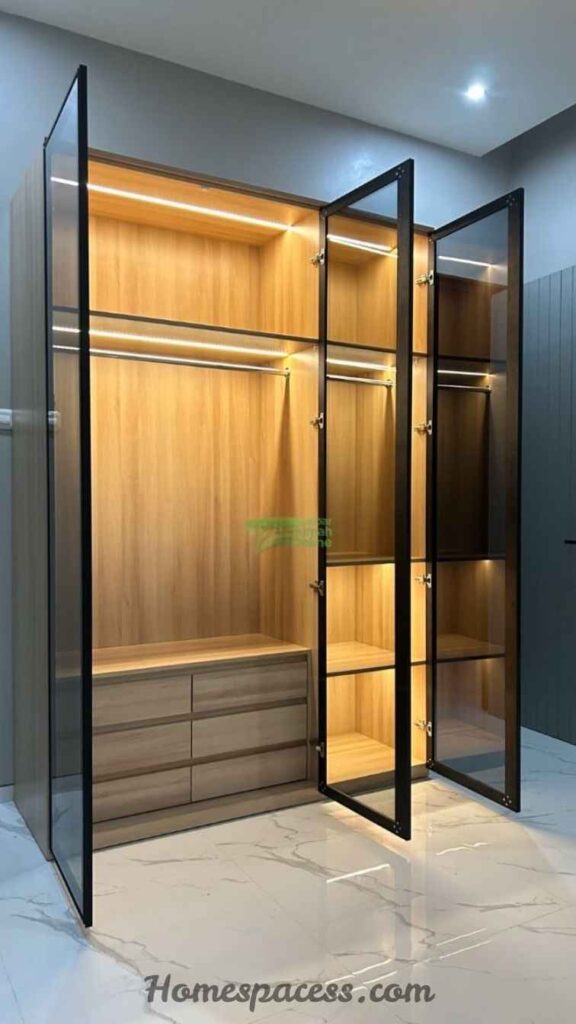
Solid cabinet doors hide everything including well-organized spaces that deserve to be seen. Glass-front cabinet doors allow display without full exposure, making your closet feel intentional and curated rather than packed. Fluted or ribbed glass adds texture and softly obscures the interior while still reading as “organized,” which is the sweet spot between exposed shelving and opaque storage.
From a design perspective, glass-front uppers with solid lowers follow the same logic as kitchen design it’s a proven aesthetic formula that creates visual lightness. If you’re concerned about showing less-photogenic contents, use smoked or bronze-tinted glass panels. They look sophisticated and provide just enough opacity to keep everyday reality tastefully concealed.
Velvet-Lined Jewelry and Watch Inserts
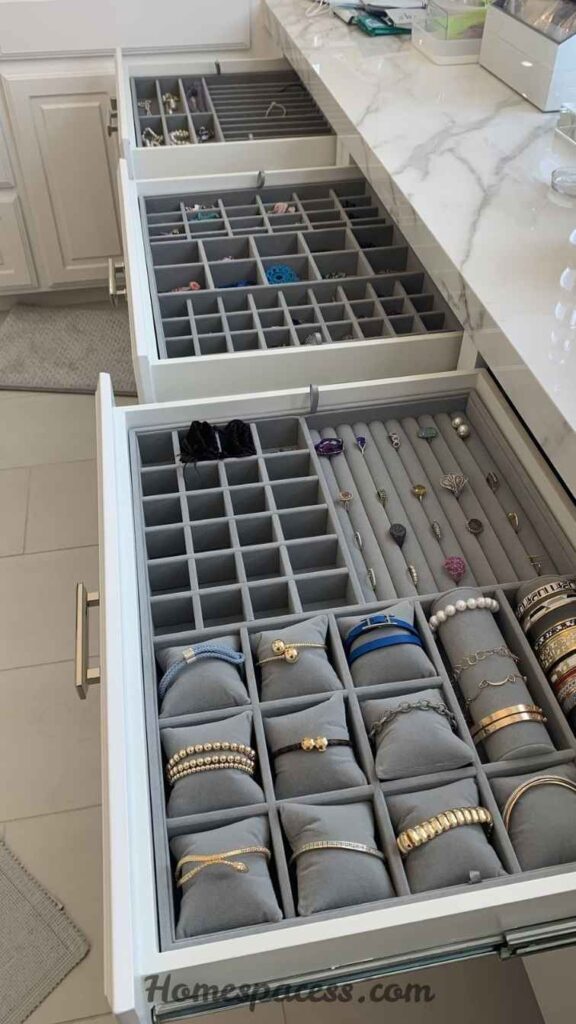
Jewelry and watches are among the most valuable and easiest-to-lose items in any wardrobe. A velvet-lined insert inside a dedicated drawer transforms an ordinary storage box into a jeweler’s display. Custom inserts with individual ring slots, necklace hooks, and watch pillows keep items separated, preventing scratching and tangling while making selection effortless each morning.
For high-value collections, built-in inserts with locking mechanisms provide security without requiring a separate safe. Midnight navy or deep forest green velvet is currently the preferred color choice in luxury closet design because it creates a striking contrast with gold and silver pieces. This detail is often overlooked in budget walk in closet builds but costs very little relative to the perceived luxury it adds.
Calm, Neutral Color Palette
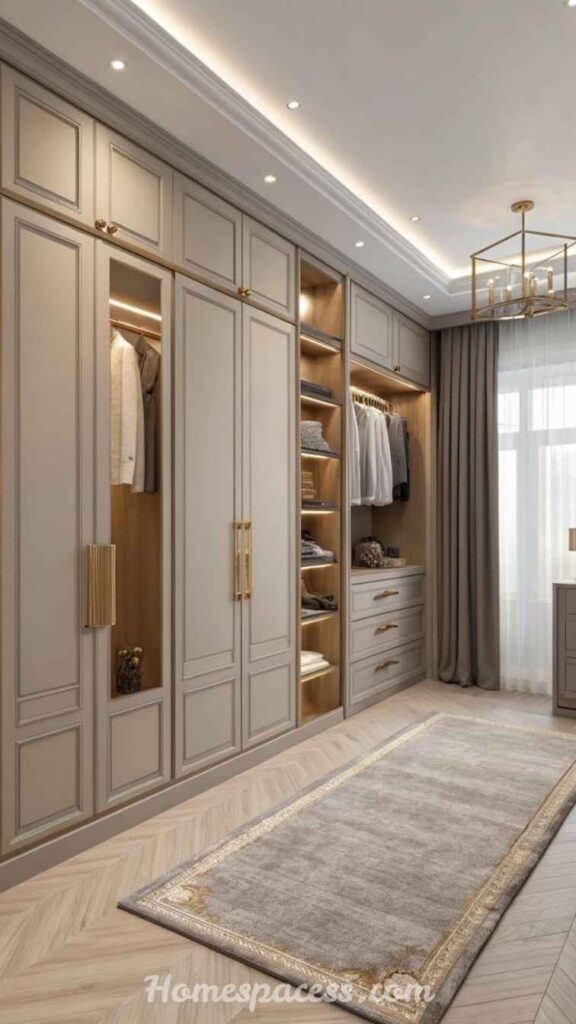
Color psychology plays a powerful role in how a closet feels to use. Warm neutrals greige, warm white, soft taupe create a calm backdrop that allows your clothing to take center stage. Avoid cool stark whites, which can feel clinical, or bold colors that compete visually with the items you’re storing. The goal is a space that feels serene and deliberate, like a high-end boutique fitting room.a
A common upgrade: paint the interior walls one shade darker than the main bedroom to create a sense of depth and intentionality. Using the same wood tone or laminate finish across all cabinetry creates a cohesive, custom-built feel even with mixed modular components. This color continuity is one of the most impactful, lowest-cost improvements a walk in closet renovation can make.
Statement Lighting Design
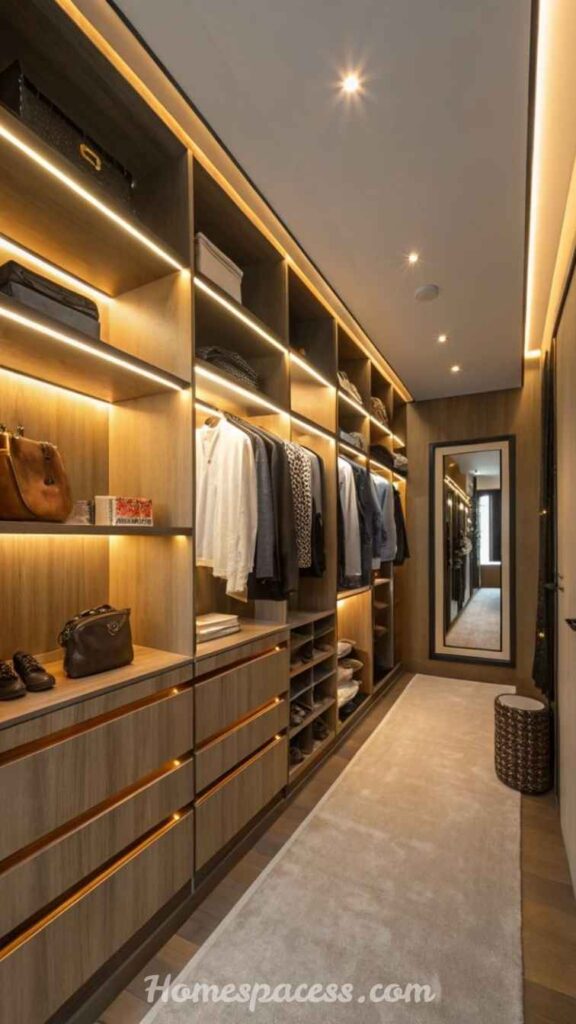
Lighting is the single most underinvested element in walk in closet design, yet it has the highest impact on usability and atmosphere. A central overhead fixture alone is insufficient it creates shadows at the back of shelves and behind hanging garments. A layered approach combining overhead ambient lighting, under-shelf LED strips, and rod-mounted accent lighting eliminates dead zones and makes color matching accurate and effortless.
A small chandelier or pendant light in a walk in closet is no longer a luxury statement it’s become a mainstream design choice signaling intentionality. Warm white LEDs (2700K–3000K) are preferred for everyday use as they render colors naturally and flatteningly. Motion-activated lighting on a timer is an increasingly popular practical addition, especially in closets accessed in early morning hours when reaching for a light switch is disruptive.
Open Shelf and Basket System
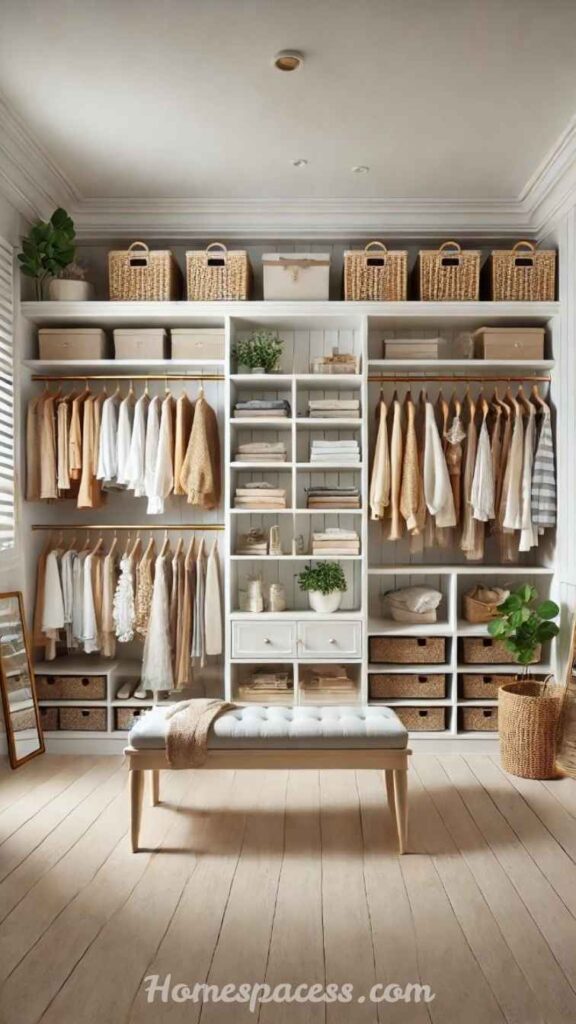
Open shelving paired with matching baskets or bins is one of the most affordable paths to a high-end walk in closet look. The baskets contain visual chaos miscellaneous items that resist categorization while the uniform containers give shelves a curated, intentional appearance. Woven seagrass baskets add warmth; matching linen or canvas bins offer a modern, minimal look.
Label every basket. This seems basic but is frequently skipped, causing the organizational system to collapse over time. Printed labels in a clean font (or handwritten on linen tags for a more artisan feel) take five minutes to create and save hours over months of use. The basket-and-label system is also highly adaptable: as your wardrobe and needs change, the system reconfigures without any reconstruction.
Full-Length Mirror Wall or Oversized Mirror
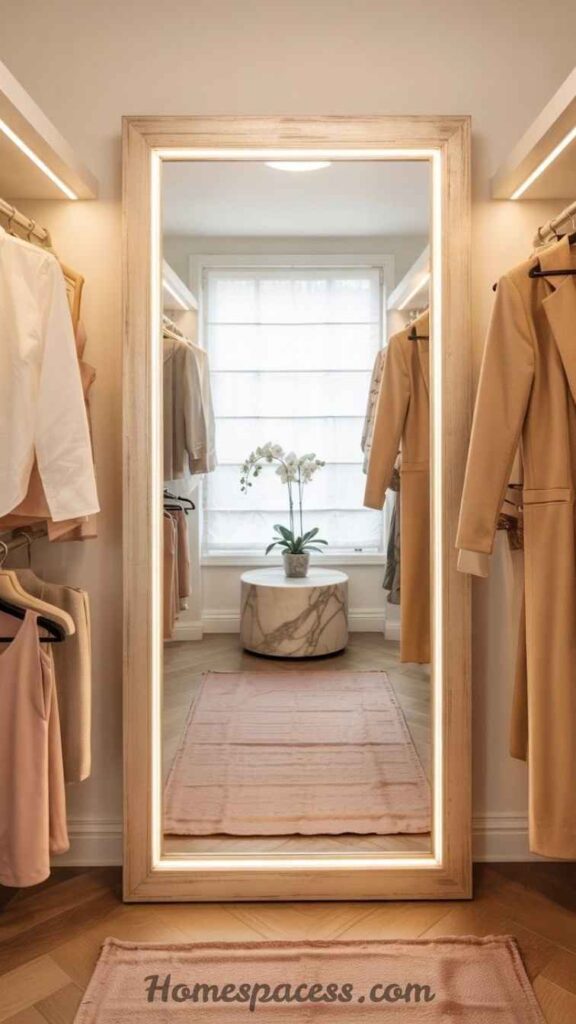
A full-length mirror is non-negotiable in a functional walk in closet but its placement and scale make the difference between good and great design. A floor-to-ceiling mirror panel on one wall visually doubles the space and brings natural light deeper into the room. It also serves as a daily tool: you need to see the full effect of an outfit without tilting or repositioning.
Frameless mirror panels leaning against the wall have become a popular contemporary choice, offering flexibility and an editorial, fashion-studio aesthetic. Alternatively, a series of smaller framed mirrors arranged in a grid creates a more curated gallery-style effect. The key principle: position your primary mirror so that it catches and bounces light from your main lighting source for maximum brightness and flattery.
Upholstered Bench with Hidden Storage
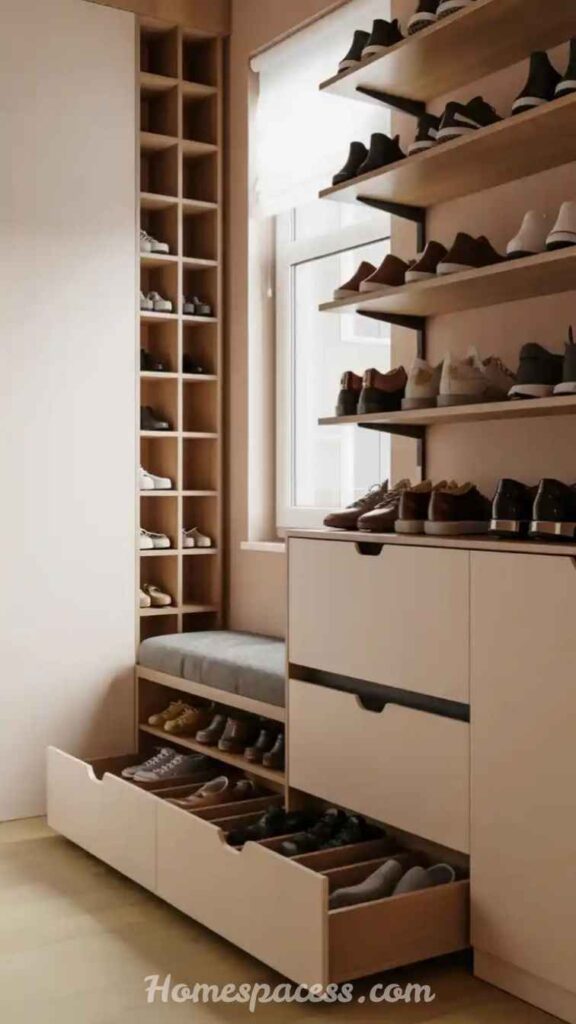
A bench at the end of a central island or along one wall provides a place to sit while putting on shoes, trying on outfits, or simply pausing in the space. More importantly, an upholstered bench with a lift-top or base drawer provides critical additional storage for out-of-season items, extra bedding, or gym gear without cluttering shelving systems.
Velvet, linen, or boucle upholstery materials are popular choices that add softness and texture to what can otherwise feel like a hard, utilitarian space. A bench that matches your cabinetry finish creates a built-in look even if it’s a freestanding piece. For smaller closets, a low tufted ottoman serves the same purpose with a smaller footprint and a more fashion-forward aesthetic.
Adjustable Modular Closet System
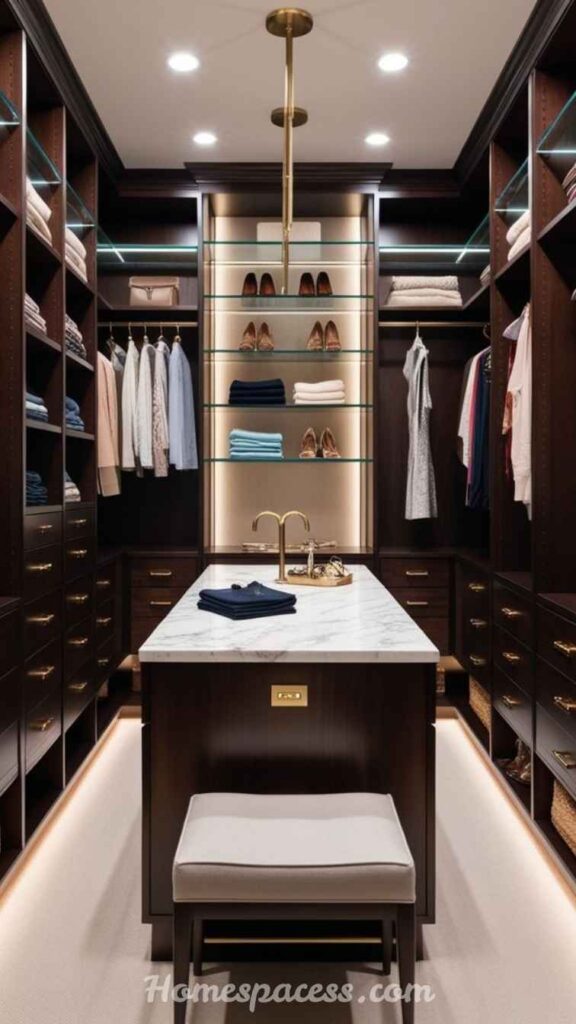
Fixed shelving seems permanent and professional, but it locks you into a configuration that may not suit your wardrobe in two years. Adjustable modular systems with configurable rod heights, shelf positions, and drawer counts grow with your needs. Brands like Elfa, PAX, or custom configurations from Modular Closets allow you to reconfigure without tools in many cases.
The smarter approach: design the modular layout around your current wardrobe categories, but leave 20% of any zone unallocated as a buffer for growth and seasonal variation. Professional organizers call this “breathing room” and it’s the most commonly overlooked principle in closet design. An overfilled modular system fails just as quickly as a fixed one; the system’s flexibility is only useful if space is preserved to use it.
Scent and Humidity Control
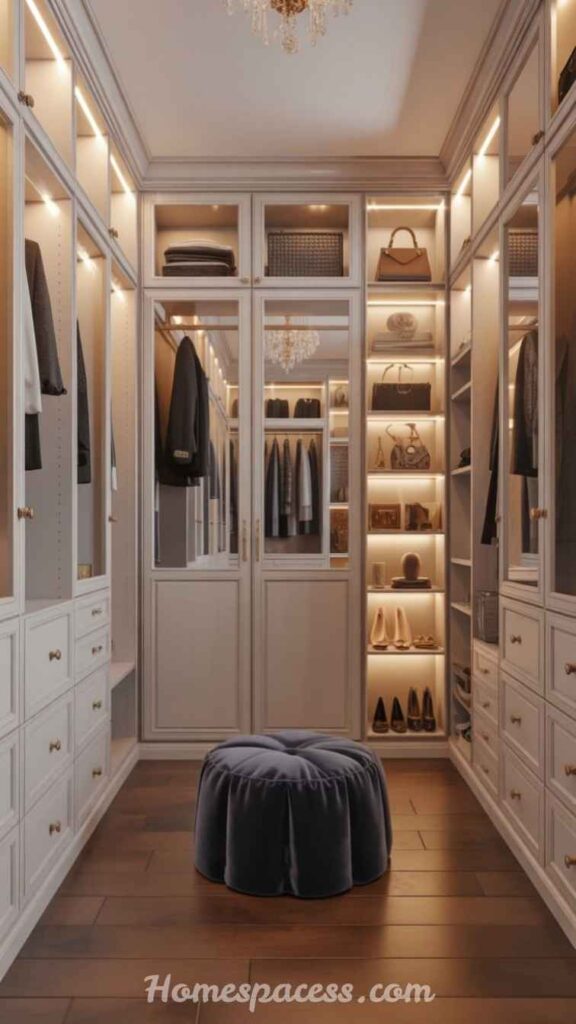
This is the most overlooked walk in closet idea on every competitor list and one of the most practical. Walk in closets are typically low-ventilation spaces, which makes them prone to musty odors, humidity buildup, and eventual fabric damage. Cedar blocks or cedar panels mounted to the back of shelving absorb moisture naturally while repelling moths a centuries-old preservation technique with zero maintenance requirements.
For larger closets, a compact dehumidifier (running just a few hours daily) maintains optimal humidity levels between 40–55%, which is the sweet spot for textile preservation. High-end closet designers now often specify a small HVAC vent routed into the closet space as a standard feature. Adding a cedar sachet or fine fragrance diffuser in the corner completes the sensory experience and turns a functional space into something genuinely enjoyable to enter.
Color-Coded Wardrobe Organization
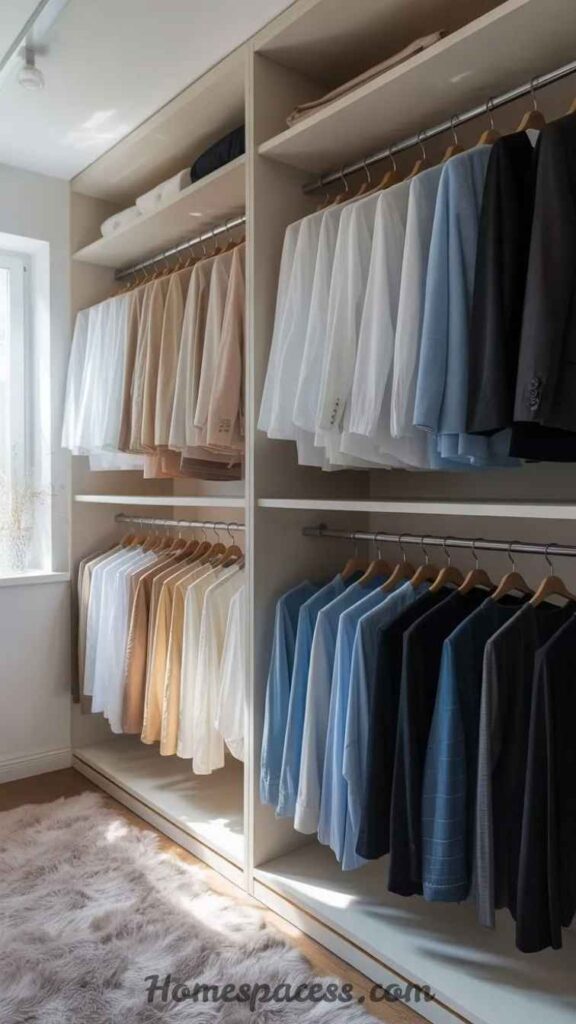
Color-coding your wardrobe is one of the most psychologically effective organization strategies available and it requires zero additional products. Arranging garments from light to dark within each category (whites, creams, pastels, mid-tones, darks) creates an immediate visual order that makes outfitting faster and more intuitive. It also reveals wardrobe gaps and overcrowded categories at a glance.
The secondary benefit: color-coded closets are significantly more aesthetically pleasing, which encourages ongoing maintenance. A visually rewarding space is one people actively keep organized. This approach pairs especially well with matching slim velvet hangers the uniform hanger width and color create a grid-like visual consistency that photographs beautifully and functions even better in daily use.
Vintage Rug or Patterned Runner
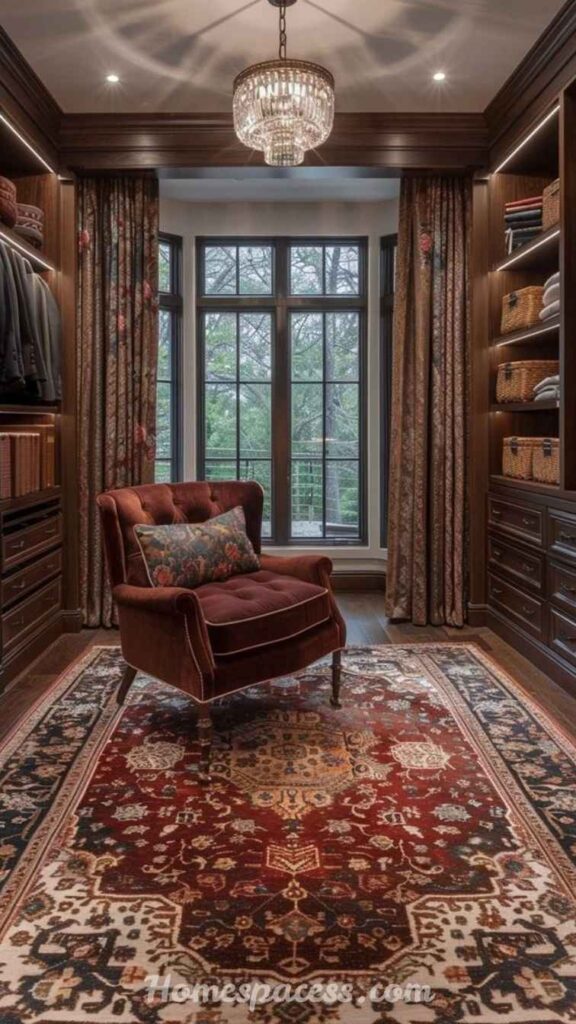
Walk in closets are often treated as purely functional spaces, stripped of any decorative warmth. A vintage Persian rug or a patterned wool runner on the floor fundamentally changes the atmosphere of the room. It softens acoustics, adds warmth underfoot (especially on tile or hardwood), and creates the boutique-dressing-room energy that elevates the entire experience of getting dressed.
For high-traffic closet floors, a flatweave kilim is more practical than a pile rug it doesn’t snag heels and is significantly easier to clean. Choose a rug with warm terracotta, dusty pink, or deep blue tones if your closet palette is neutral it provides that single moment of visual character without overwhelming the space. This is one of those ideas that costs under $200 but photographs like a $10,000 renovation.
Seasonal Rotation Zones
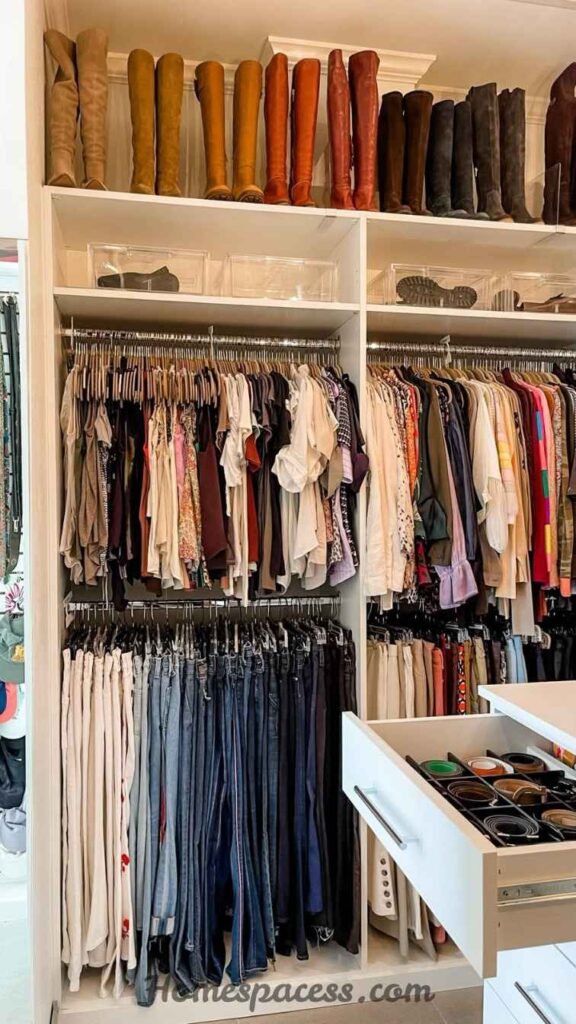
Most wardrobe inefficiency comes from mixing active and inactive items in the same space. Designating clear seasonal zones a primary zone for current-season clothing and an upper or secondary zone for off-season storage keeps your daily area uncluttered and easy to navigate. Seasonal rotation takes two hours twice a year and pays dividends in daily time savings throughout each season.
Vacuum storage bags for bulky knitwear, down coats, and bedding can dramatically reduce off-season storage volume. Clear labeled bins on upper shelves make retrieval straightforward when the season changes. The deeper principle at work: a walk in closet designed around seasonal rotation is designed around actual human behavior not an idealized, static wardrobe that never exists in real life.
Smart Closet Technology Integration
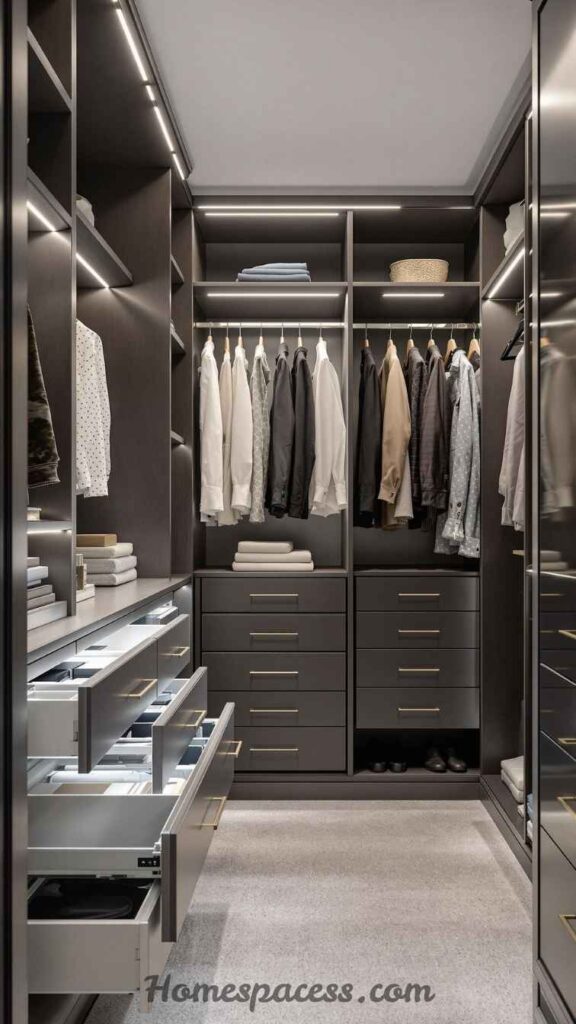
Smart home technology has reached the walk in closet in meaningful ways. Automated LED lighting on occupancy sensors eliminates the need for light switches entirely. Smart inventory apps which allow you to photograph and catalog your wardrobe have gained significant traction, letting users plan outfits and track what they actually wear versus what’s taking up space. Some systems integrate with weather apps to suggest outfits based on the day’s conditions.
Motorized clothing carousels (like those used in commercial dry cleaning facilities) are entering high-end residential closet design, bringing every item to you at the press of a button. While this technology currently serves the luxury tier, costs are declining rapidly. Voice-controlled lighting and temperature integration through platforms like Google Home or Apple HomeKit is now accessible at mid-range price points and is a natural fit for a morning routine space.
Dedicated Handbag Display System
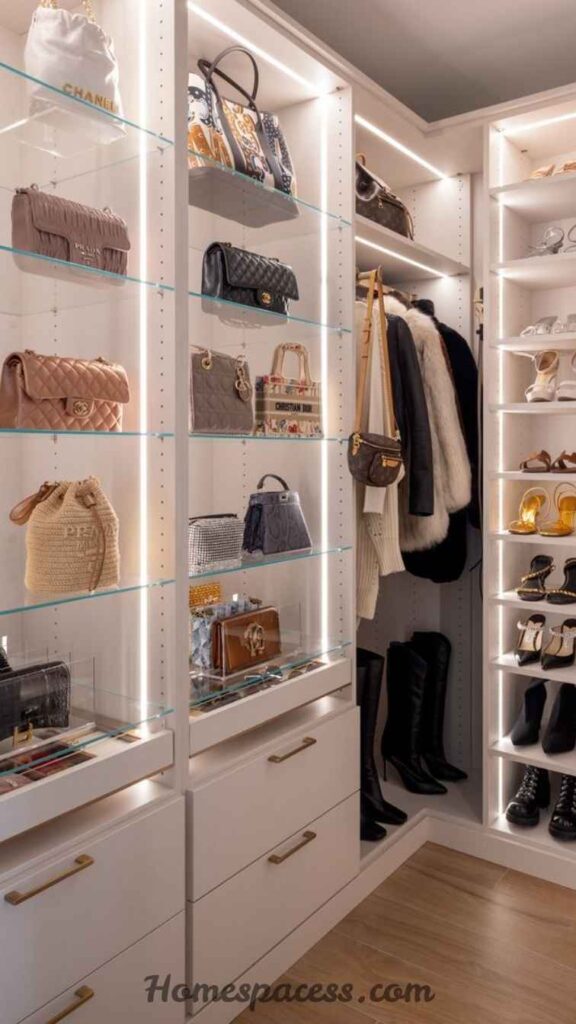
Luxury handbags are among the most valuable items in a wardrobe and deserve storage that reflects that. A dedicated bag display using custom-built shelves with individual purse risers, acrylic display stands, or wall-mounted hooks keeps bags visible, accessible, and in their optimal shape. Storing bags upright and stuffed with tissue paper prevents slouching and crease marks that devalue them over time.
Clear acrylic risers at varying heights add a museum-display quality that makes even everyday bags feel special. For the highest-value pieces, individual dust bags stored in closed cabinet sections maintain condition while keeping the display visually clean. This approach treats the handbag as a collectible which, at today’s resale market values, is exactly what it is. Closet designers now regularly cite the dedicated bag display as a feature that meaningfully increases client satisfaction scores.
Conclusion
The best walk in closet ideas aren’t the most expensive ones they’re the ones that solve your specific problems and support your daily routine. A $50 lighting upgrade can be more impactful than a $5,000 cabinetry job if the closet was previously dim and frustrating to use. Start with the problems: what slows down your morning routine? What never has a home? What makes you dread opening the door?
Then apply ideas from this guide systematically starting with layout and storage structure, layering in organization systems, and finishing with aesthetic and atmospheric details. The result isn’t just a prettier closet. It’s a calmer, more confident start to every single day. That compounding daily benefit is the real return on investment of a thoughtfully designed walk in closet.
Advanced Analysis · Trend Report
Walk In Closet Trends in 2026 And What’s Coming Next
The dominant walk in closet trend of 2026–2027 is the shift from utility-first to experience-first design. Homeowners are increasingly treating their closets as lifestyle spaces rooms that should feel good to be in, not just rooms that store things efficiently. This has driven a surge in investments like statement lighting, upholstered elements, decorative rugs, and fragrance systems that were once considered unnecessary in a storage space.
67%
of new home buyers rank closet design as a top-5 renovation priority
$3.2B
closet organization market size globally in 2026, growing at 4.8% CAGR
2.4×
higher ROI reported from closet renovations vs. bathroom updates in surveys
A second major trend is the rise of the “curated wardrobe” philosophy influencing closet design. Inspired by minimalist fashion movements and the growing secondhand clothing market, many homeowners are building closets specifically designed for smaller, more intentional wardrobes with higher-quality storage for fewer, better items. This has increased demand for specialty storage (individual bag shelves, watch winders, jewelry drawers) over bulk hanging rod space.
Looking ahead to 2027 and beyond, the most significant trend signal is the integration of AI wardrobe management. Several startups are developing closet-mounted cameras and inventory software that automatically catalog your wardrobe, identify under-worn items for donation, and suggest outfit combinations based on your calendar, weather, and personal style profile. This technology will reshape how closets are designed within the decade
Expert Insights
Practical Tips That Professional Organizers Actually Use
“The mistake almost every client makes is designing for the wardrobe they have instead of the wardrobe they’re building toward. I always ask: what does your closet need to hold in three years, not three weeks?”
The 80/20 Hanging Rule
Professional organizers recommend filling hanging rods to no more than 80% capacity. The remaining 20% buffer prevents garments from wrinkling due to compression and makes daily selection significantly faster. Most people operate at 110–120% capacity which is why their closets feel chaotic even when clean
Drawer Depth Calibration
Standard closet drawers are 18–20 inches deep too deep for most folded clothing, which gets lost at the back. File-folding (storing clothes vertically, like file folders) solves this entirely. It was popularized by the KonMari method and increases drawer capacity by 30–40% while making every item visible at once.
The Hanger Audit Trick
At the start of each season, hang all your clothes with the hanger hook facing outward. After wearing an item, rehang it normally. After 6 months, everything still hanging outward hasn’t been worn. This reveals what to donate with zero guesswork and without requiring a full wardrobe edit session.
Zone by Morning vs. Evening
Divide your closet into zones based on time of use, not garment type. Morning-use items (work wear, gym clothes, everyday shoes) should be at eye level and maximally accessible. Evening or occasional items (formal wear, seasonal pieces) can occupy harder-to-reach areas. This “time-of-use” zoning is rarely taught but immediately practical.
Lighting Kelvin Selection
Use 2700K (warm) lighting for atmospheric evening ambiance and 4000K (neutral white) for practical task lighting near the vanity and shoe area. Running both on separate switches or a smart dimmer lets you shift between moods without adding additional fixtures.
The “Hotel Closet” Principle
Hotel closets feel calm because they hold only what’s needed, in a structured format, with no visual noise. Apply this principle by keeping surfaces (island tops, open shelves, bench surfaces) 70% clear at all times. Visual clear space is what makes a closet feel like a sanctuary rather than a storeroom.
Long-Term Value
Sustainability and Long-Term Value in Closet Design
A well-designed walk in closet is a sustainability investment in ways that are rarely discussed. When clothing is properly stored on the right hangers, at the right humidity, protected from light it lasts significantly longer. A cashmere sweater stored correctly can last 20+ years. The same sweater crushed in an overflowing drawer might pill beyond repair in 3. Thoughtful closet design extends the usable life of your wardrobe, reducing the replacement cycle and overall consumption.
From a materials perspective, the closet renovation industry has made meaningful progress. FSC-certified plywood and solid wood cabinetry, low-VOC finishes, and recycled metal hardware are now widely available at mainstream price points. Choosing durable natural materials (solid hardwood, natural stone, linen-wrapped inserts) over MDF and plastic laminates produces a closet that will outlast several renovation cycles without needing replacement.
Material Longevity
Solid hardwood cabinetry lasts 25–50 years. High-quality MDF lasts 10–15. The upfront cost difference is typically recovered within one renovation cycle when you account for reinstallation costs.
Garment Preservation
Cedar lining, proper humidity control, and adequate spacing between garments can extend clothing lifespan by 2–3x reducing fast fashion dependency and long-term wardrobe spend.
Energy Efficiency
LED strip lighting in a full walk in closet consumes as little as 20 watts total. Occupancy sensors reduce runtime by 60–70%, making even a feature-rich lighting system nearly negligible in energy terms.
From a real estate perspective, a finished walk in closet is consistently cited in agent surveys as one of the top features that accelerates home sales and supports above-ask offers. A 2024 National Association of Realtors report noted that walk in closets in the primary bedroom were among the five most requested features by buyers in the $400K+ market. The ROI of a thoughtfully built closet both in daily quality of life and eventual resale value is rarely matched by other home upgrades of similar cost.
What’s Next
Future Innovations Coming to Walk In Closet Design
AI-Powered Wardrobe Management
Multiple companies are currently in beta with AI systems that use closet-mounted cameras and machine learning to catalog your wardrobe automatically, tracking what you wear, when, and in what combinations. These systems can surface under-worn items, flag garments for donation, and generate outfit combinations you haven’t considered all from your phone.
The design implication is significant: closets will increasingly be designed to accommodate camera sight lines, well-lit display zones, and integrated screens or smart mirrors that serve as the user interface for these systems. The “smart mirror” that overlays outfit suggestions on your reflection is already commercially available and will become mainstream within 3–5 years.
Motorized Carousels
Rotating clothing storage systems that bring items to you currently luxury, approaching mass market by 2028.
Chromotherapy Lighting
Adjustable-color lighting that shifts from energizing daylight tones in the morning to relaxing warm tones in the evening already available via smart bulbs.
Biometric Security
Fingerprint or facial recognition locks on jewelry and valuables cabinets, replacing traditional key locks in high-end residential closets.
Integrated Climate Zones
Micro-HVAC systems that maintain precise temperature and humidity within the closet independently of the rest of the home for textile preservation at a new standard.
Modular Robotics
Automated drawer and shelf retrieval systems, similar to warehouse automation scaled for home use in prototype phase with several startups as of 2026.
Virtual Try-On Integration
Smart mirrors that let you virtually overlay new clothing purchases against your existing wardrobe to check compatibility before buying reducing returns and over-purchasing.
What to Avoid
Common Walk In Closet Mistakes That Most Guides Miss
Most walk in closet advice focuses entirely on what to add more shelves, better lighting, smarter organization. But some of the highest-impact improvements come from identifying and removing design errors. These are the mistakes that consistently appear in renovation projects, often invisible until you’ve lived with the closet for a month.
- Designing Around the Current Wardrobe, Not Future Needs: A closet designed perfectly for today’s wardrobe becomes inadequate the moment you add a new category of clothing, change jobs, or move climates. Always build in 20–25% flexible or unallocated storage. Closets that feel permanently maxed out on move-in day are a design failure, not a wardrobe problem.
- Installing Only a Single Overhead Light: A center overhead fixture creates significant shadows at the back of deep shelves, inside hanging zones, and at the sides of the room exactly the areas where you need to see clearly. Shadow-free closets require multiple light sources at different heights. This is the most commonly cited post-renovation regret in closet remodel surveys.
- Mismatched Rod and Shelf Heights: Standard single rod height is set at 66–68 inches but this is too high for most folded items and too low for formal floor-length gowns. Rod height should be calibrated to your tallest hanging category, with secondary lower rods sized to your short-hang category. One size does not fit all wardrobe types.
- Ignoring the Door Swing and Entry Path: Walk in closet doors that swing inward can block an entire wall of shelving when open. Many renovators finalize a layout without modeling the open-door footprint and discover on installation day that shelving conflicts with the door arc. Pocket doors, barn doors, or outward-swinging doors prevent this problem entirely and are worth the slight additional cost.
- Prioritizing Aesthetics Over Actual Wardrobe Inventory: Social media walk in closet inspiration often features spaces with very few items displayed beautifully a visual effect that’s impossible to maintain in a real, actively used wardrobe. Design your closet around your actual item count and categories, not an aspirational wardrobe that doesn’t exist. A system that works for real life will always outlast one designed to photograph well.
- Overlooking Ventilation and Odor Control: Walk in closets are sealed rooms. Without adequate air circulation, they accumulate humidity, body odor from worn clothing, and eventually mildew all of which damage textiles. Even a simple louvered door or an HVAC vent extension makes a significant difference. This is the one functional detail that virtually every aesthetic-focused closet guide forgets to mention.
Aliza Noor founded Home Spacess to share simple, practical design ideas that work for real families. She focuses on cozy décor, soft colors, and natural textures that make a space feel truly lived-in. Based just outside Toronto, Aliza spends her days juggling family life, experimenting with home projects, tending to her plants, and occasionally moving things around just to create a fresh vibe.
