
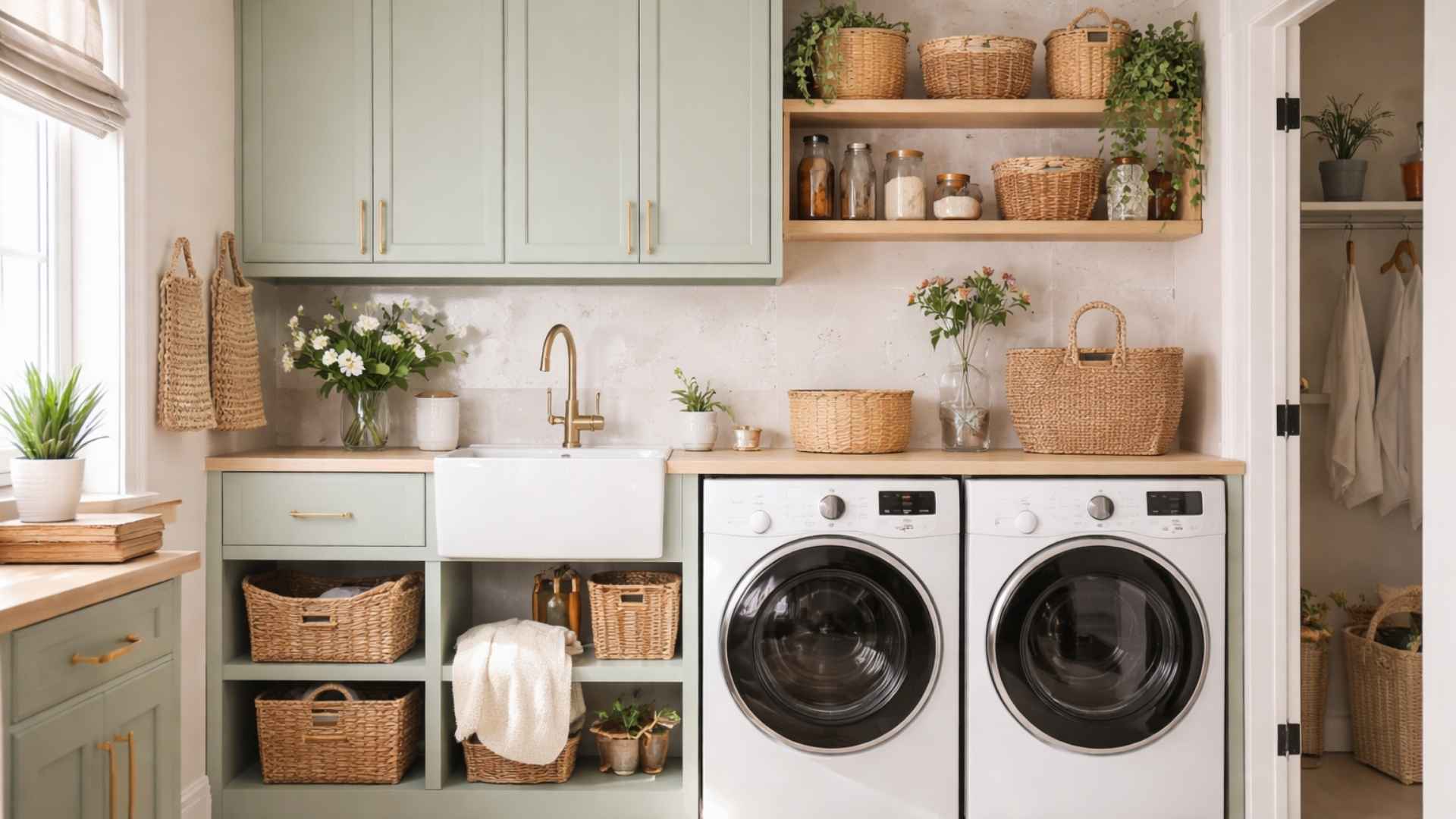
18 Brilliant Laundry Room Ideas That Actually Transform the Space

The laundry room is one of the most underestimated spaces in any home. Most people treat it as a purely functional afterthought a place to dump dirty clothes and forget about it.
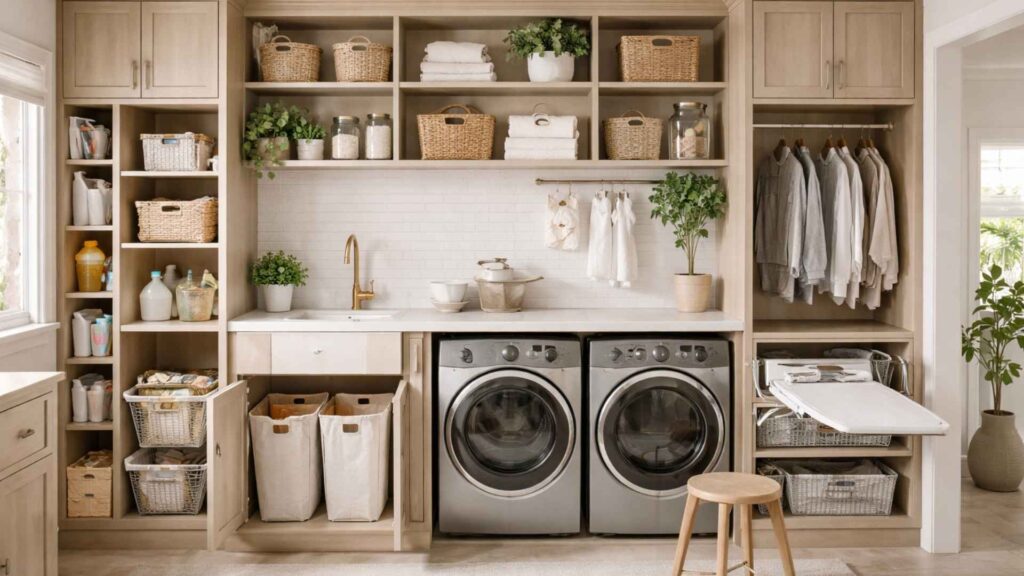
In this guide, you’ll find 18 expert-curated laundry room ideas with real-world insights, advanced trend analysis, sustainability strategies, and a look at what the future holds for this evolving space. Yet interior designers and home efficiency experts consistently point to it as one of the highest-ROI renovation investments, both for daily livability and resale value.
Whether you have a dedicated laundry room, a narrow closet setup, or a basement corner, the right laundry room ideas can dramatically reduce the time and frustration associated with one of life’s most repetitive chores. Modern design principles, smart technology, and sustainability thinking have converged to make the laundry room a genuinely exciting design challenge.
Build a Vertical Storage Wall System
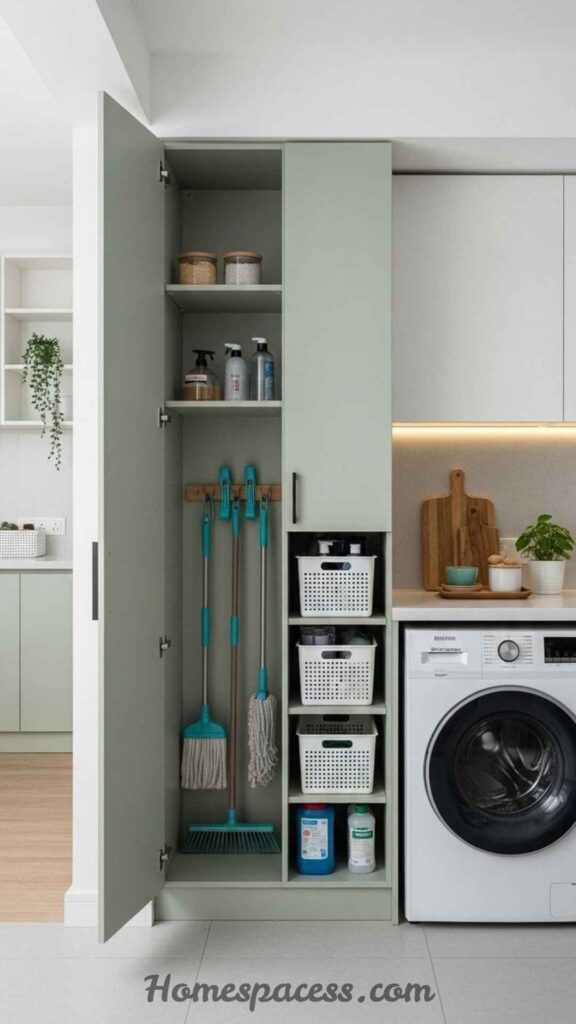
Floor-to-ceiling shelving is the single most impactful change you can make in a small laundry room. Most homeowners think horizontally when they plan storage, completely ignoring the vertical dimension. A properly designed vertical wall system can triple your storage capacity without adding a single square foot of floor space a critical advantage in compact layouts.
The most effective setups combine open upper shelves for detergent, fabric softeners, and dryer sheets with closed lower cabinets that hide visual clutter like cleaning tools, rags, and bulk-buy supplies. For renters, modular systems like IKEA’s KALLAX or freestanding pantry shelves deliver the same effect without permanent installation. Consider adding a ladder shelf in corners for a stylish, space-efficient solution.
Pro Tip
Install the highest shelf at a height you can comfortably reach with a small step stool about 84 inches. Anything higher becomes a storage dead zone.
Must Read: 25 Dressing Table Ideas That Transform Your Daily Ritual Into a Luxury Experience
Install a Wall-Mounted Fold-Down Ironing Board
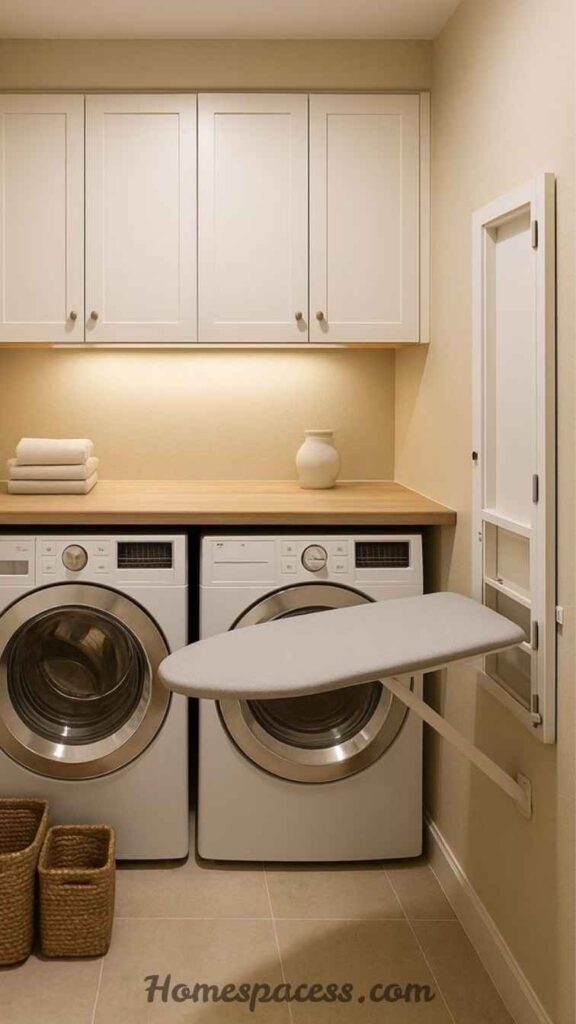
A fold-down ironing board is one of the cleverest space-saving laundry room ideas available. Traditional ironing boards take up enormous closet space or create trip hazards when set up in a laundry room. A wall-mounted version folds completely flat when not in use, taking up just 4–5 inches of wall depth yet deploys in under 3 seconds. Several models even include a built-in sleeve board and iron rest.
The key is placement. Mount it at a height that allows you to iron comfortably while standing (typically 36–38 inches to the board surface). Install it adjacent to your washer or dryer so you can iron items straight from the machine while they’re still slightly warm a technique professional dressers use to cut ironing time by nearly half. Look for models with a built-in outlet or USB strip for plugging in the iron directly.
Pro Tip
Choose a fold-down board rated for at least 30 lbs if you plan to iron heavier items like denim or tablecloths.
Don’t Skip: 27 Library Room Ideas to Transform Any Space Into a Dream Home Library
Go Vertical with a Stacked Washer-Dryer Setup
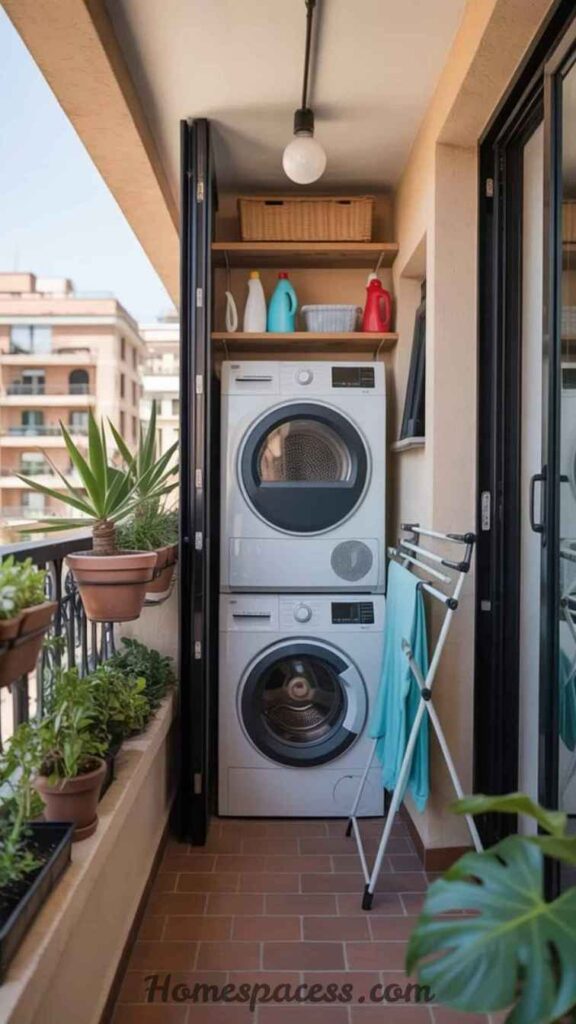
Stacking your washer and dryer is the most space-efficient laundry room layout for small homes and apartments. This configuration frees up roughly 9–12 square feet of floor space enough to add a folding table, a utility sink, or simply a more breathable, less claustrophobic feel to the room. Modern stackable units are purpose-designed pairs with unified controls, not just afterthought stacking kits.
One underappreciated benefit: stacked units often improve workflow ergonomics. The dryer at eye level means you don’t have to bend constantly to retrieve clothes, reducing back strain during large laundry sessions. Brands like LG, Samsung, and Miele offer ventless condensation dryers that are ideal for stacked installs, as they don’t require an external vent a game-changer for interior spaces or apartments.
Pro Tip
Always verify the stacking kit compatibility between washer and dryer before purchase not all same-brand units are stackable pairs.
Read More: 20 Stunning Flower Garden Ideas to Transform Your Outdoor Space
Add a Deep Utility Sink with Extended Counter
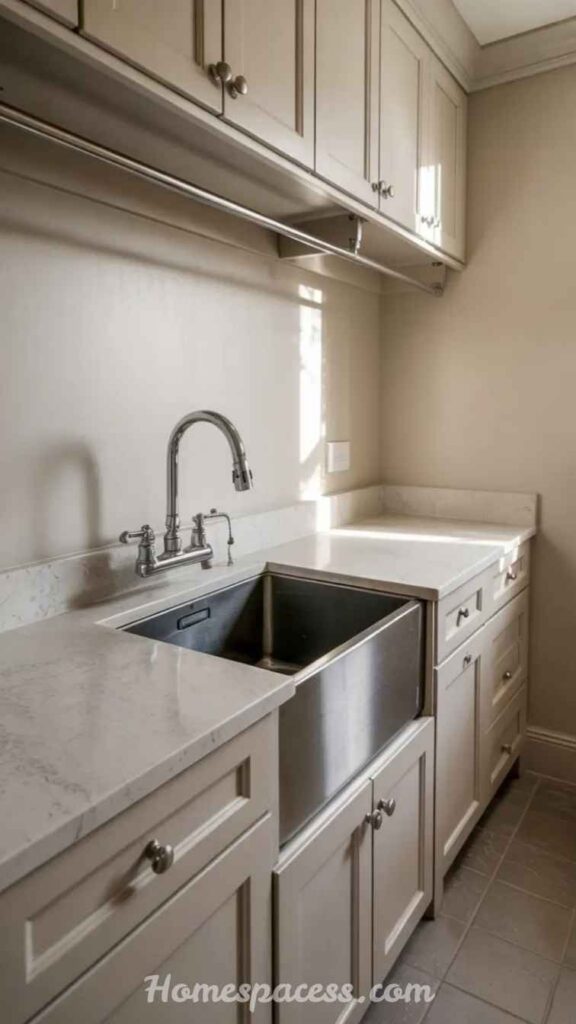
A utility sink is one of the highest-functionality additions to any laundry room. Unlike a standard sink, a deep utility (or laundry) sink handles tasks that no other room can: hand-washing delicate garments, soaking stained clothes, cleaning muddy shoes, filling buckets, and even bathing small pets. This single fixture effectively transforms your laundry room into a multi-purpose utility hub.
The smartest installations extend the countertop beside the sink to create a continuous work surface. This counter becomes your primary folding and sorting station one of the most workflow-transforming laundry room ideas available. Material matters: choose a waterproof surface like quartz, laminate, or solid-surface acrylics that can handle splashes and stain removers without degrading. Under-counter pull-out shelves make excellent storage beneath this configuration.
Pro Tip
Fireclay utility sinks are extremely durable and easy to clean, though heavier verify your cabinet base can support the weight before ordering.
Don’t Miss: BBQ Patio Ideas That Transform Your Outdoor Space
Hide the Laundry Zone Behind Custom Cabinet Doors
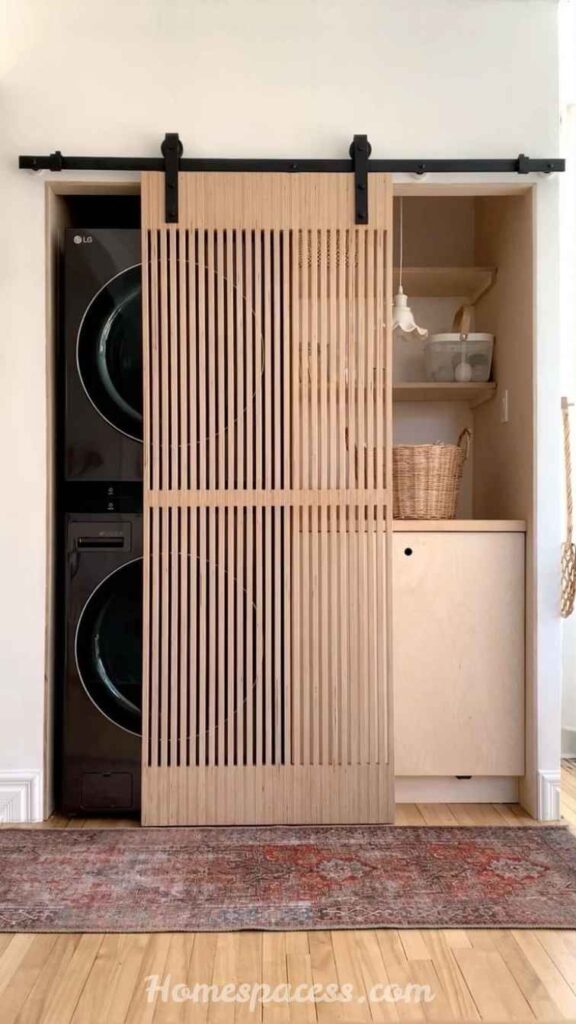
Not every home has the luxury of a dedicated laundry room. Many households deal with washer-dryer units in hallways, kitchens, or open-plan living areas. The solution? Concealment. A set of floor-to-ceiling custom cabinet doors that enclose the entire laundry zone creates a seamless, furniture-like appearance that disguises the functional area entirely. When doors close, it becomes part of the cabinetry wall.
Bi-fold doors work especially well in narrow spaces since they don’t require swing clearance. Sliding barn doors are increasingly popular for this application they’re easy to operate with full hands, add a design statement, and are available in wood, metal, and even mirrored finishes that make spaces feel larger. For ventilation, ensure the door design includes louvers or a bottom air gap to prevent moisture buildup and comply with appliance clearance requirements.
Pro Tip
Paint the inside of the cabinet doors a contrasting color it creates a delightful surprise element and feels intentionally designed.
Combine Floating Shelves with a Pegboard Wall
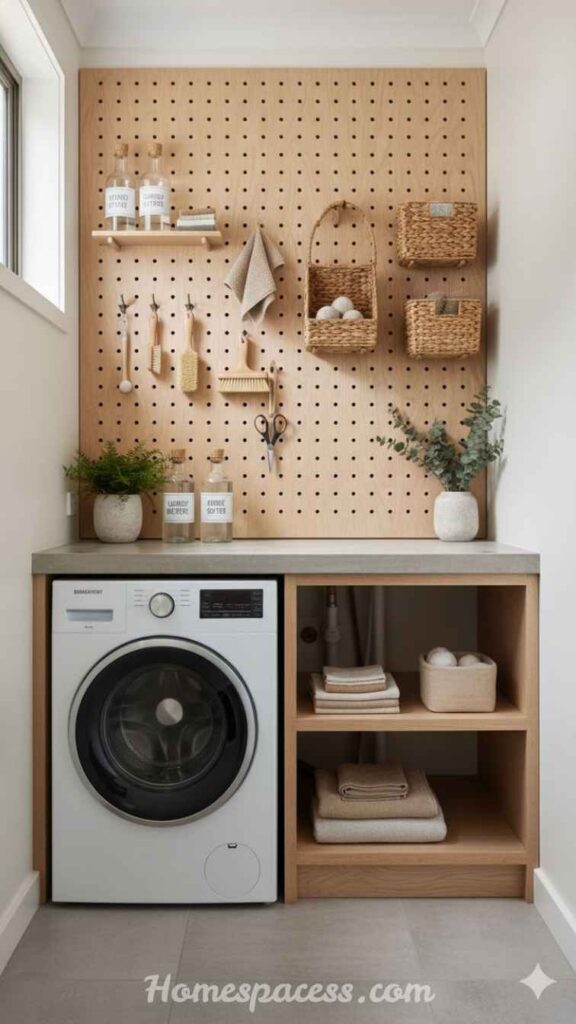
Floating shelves paired with a pegboard wall represent the most flexible laundry room storage system available. Pegboard often dismissed as a garage-only solution is experiencing a massive resurgence in interior design, particularly in Scandinavian and industrial-influenced laundry rooms. Painted white or in a bold accent color, pegboard becomes a design feature rather than a utility eyesore.
The real power is adaptability. Hooks, baskets, shelves, and bins can be repositioned in minutes as your storage needs evolve. Hang everything from lint rollers and stain pens to scissors and a small calendar for tracking delicate garment care schedules. Combine with two or three floating shelves above for heavier items detergent bottles, folded towels, or decorative storage jars. This laundry room idea costs as little as $50 to implement and delivers disproportionate organizational value.
Pro Tip
Use metal pegboard instead of wood for laundry rooms it handles humidity far better and never warps or swells.
Design a Three-Bin Sorting Station
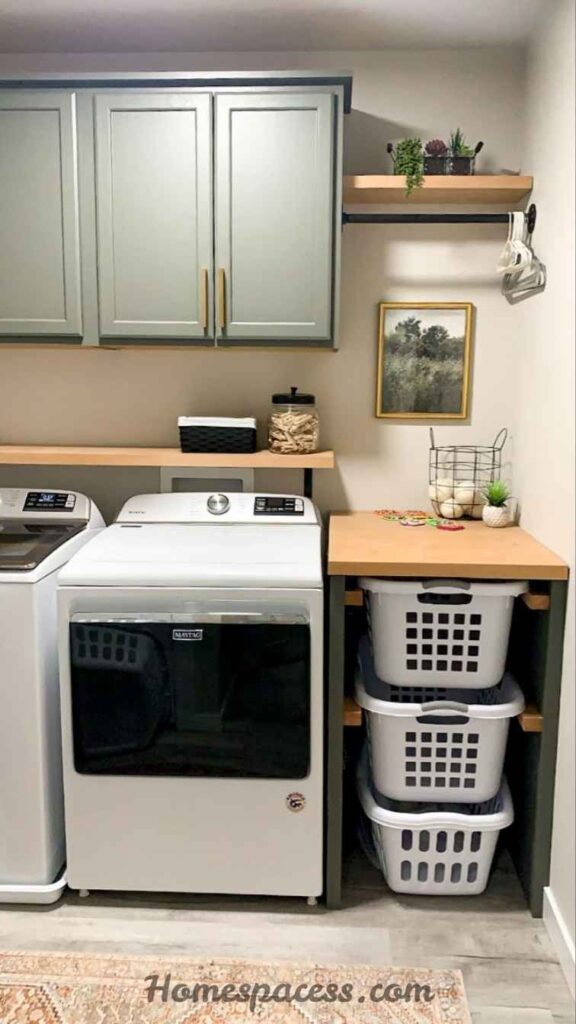
Pre-sorting laundry is one of the most effective time-saving systems you can build into your laundry room, yet it remains remarkably underutilized. A three-bin sorting station typically organized by lights, darks, and delicates (or colors) eliminates the pre-wash sorting step entirely. When a bin is full, it’s ready to run. This single habit change can reduce weekly laundry time by 15–20 minutes.
The best implementations use labeled canvas hampers or ventilated wire baskets mounted on a custom rack. Ventilation matters: enclosed bins trap moisture and create mildew problems in damp laundry rooms. Rolling systems are ideal for households with multiple family members each person has their own labeled bin that rolls to the machine. Wall-mounted tilt-out bins offer the cleanest built-in aesthetic for those who prefer a furniture-grade look.
Pro Tip
Add a fourth “hand wash only” bin. It prevents delicate items from accidentally going through a normal cycle a mistake that ruins more garments than any other laundry error.
Design Layered Lighting for Function and Atmosphere
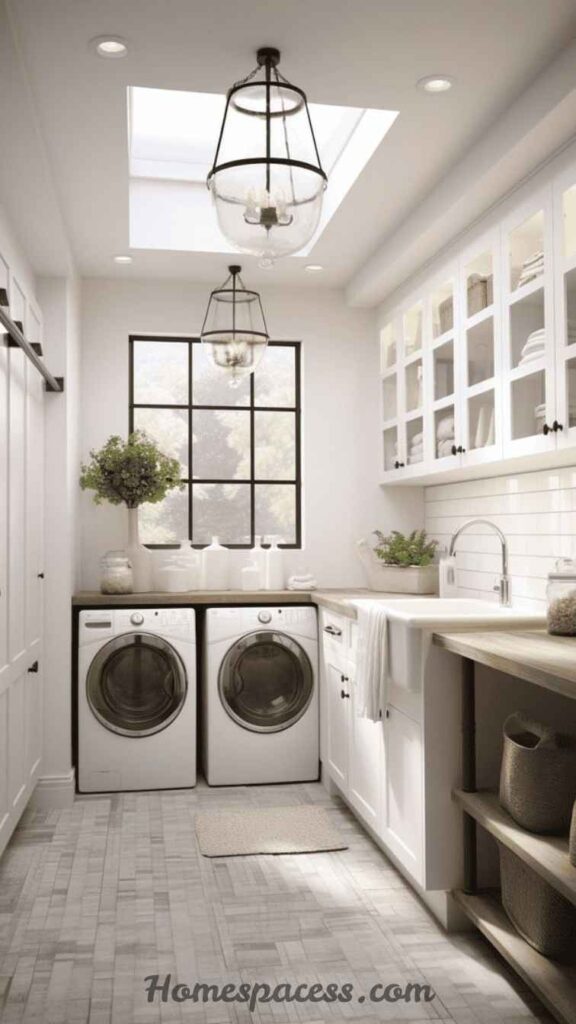
Lighting is the most overlooked laundry room idea on most renovation lists. A single overhead fixture creates flat, harsh light that makes stain detection difficult and the entire experience feel institutional. Professional interior designers specify layered lighting for this space: bright task lighting under cabinets for work surfaces, overhead ambient lighting for general visibility, and accent lighting to create warmth and visual interest.
Under-cabinet LED strips are transformative they cost under $30 and dramatically improve the visibility of your folding and sorting surfaces. For the overhead fixture, choose a high-CRI (Color Rendering Index 90+) bulb in the 4000K range, which renders true-to-life colors and makes stain detection far more accurate. Motion-sensor lighting is increasingly popular in laundry rooms it activates when you enter hands-full and turns off automatically, saving energy and eliminating the light-switch fumble.
Pro Tip
A warm-toned pendant light over the folding station creates a surprisingly pleasant atmosphere it’s the difference between dreading laundry and tolerating it.
Install a Pull-Out or Ceiling-Mounted Drying Rack
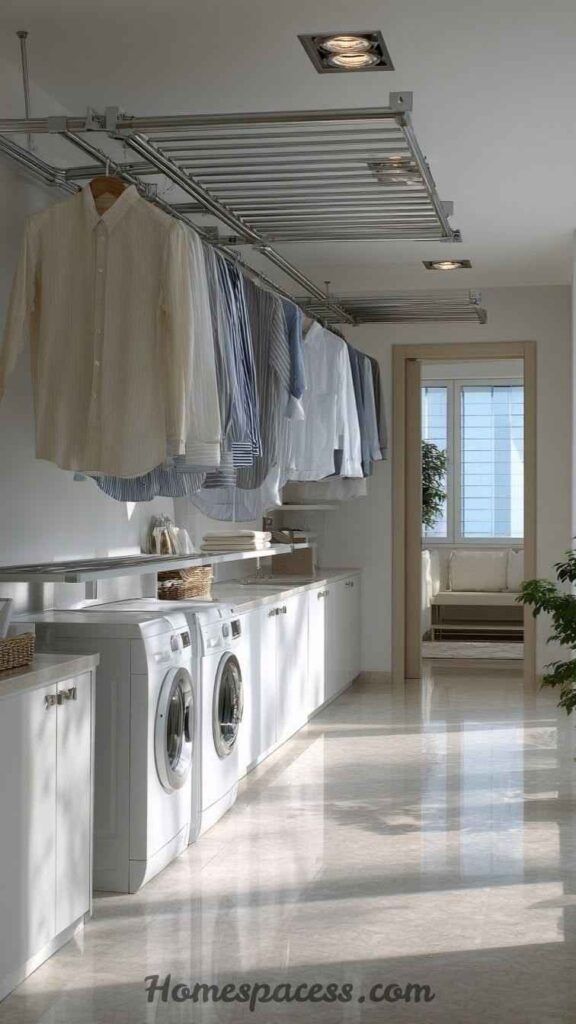
Air-drying is better for clothes, better for energy bills, and better for the environment yet most laundry rooms don’t have a good solution for it. Freestanding drying racks are unwieldy and create obstacles. The answer is a built-in drying solution that appears only when needed. Pull-out drying racks that slide from behind a cabinet door are elegant, functional, and completely invisible when not in use.
For larger laundry volumes, a ceiling-mounted pulley drying rack (also called a laundry airer or Sheila Maid) is exceptionally practical. It hoists up to a position near the ceiling where warm air naturally accumulates and lowers when you need to hang items. This approach is standard in UK and European homes but underused in North America, despite offering superior drying performance in any climate. Some modern versions integrate with smart home systems for automated lowering on a schedule.
Pro Tip
Position ceiling drying racks above a heat source if possible even passive warmth from HVAC vents cuts drying time by 30–40%.
Use a Signature Color Palette to Define the Space
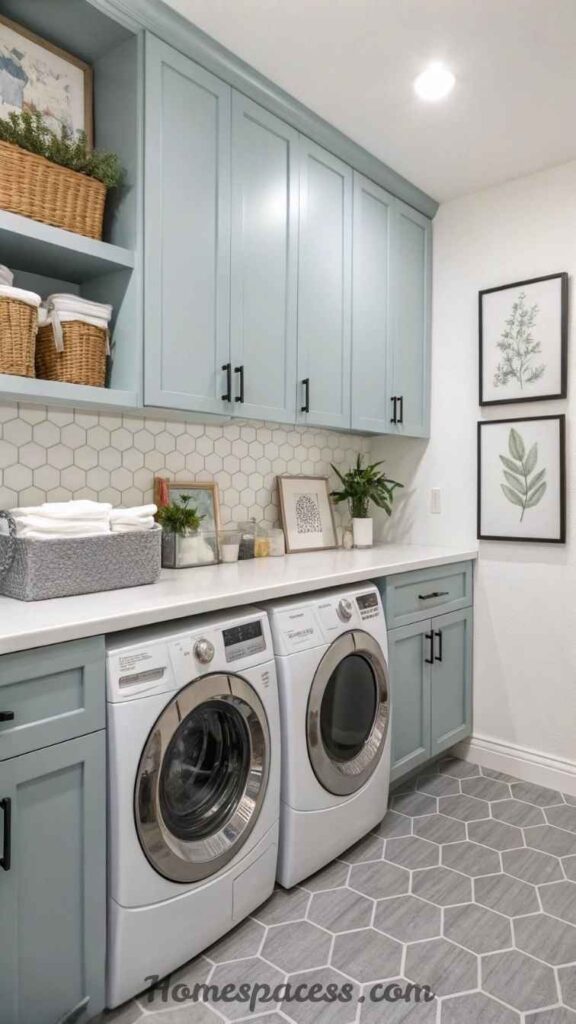
Color transforms a laundry room more dramatically than almost any other change and it costs very little. The growing trend is moving away from all-white “clean” aesthetics toward confident color choices: deep navy cabinetry, sage green walls, terracotta tile, or matte black hardware. These choices signal that the laundry room is a designed space, not an afterthought.
A well-chosen color palette creates a psychological effect that designers call “task association” when the space feels pleasant and intentional, people are more motivated to use and maintain it. For small laundry rooms, don’t automatically reach for white. A medium-value color with good natural lighting often feels more spacious than stark white, which can feel clinical. Pair your wall color with complementary tile, consistent hardware finishes, and matching accessories (hampers, jars, dispensers) for a cohesive look.
Pro Tip
Use semi-gloss or satin paint finish in laundry rooms it handles moisture and humidity better than matte, and cleans easily.
Create a Mudroom-Laundry Hybrid Entry Zone
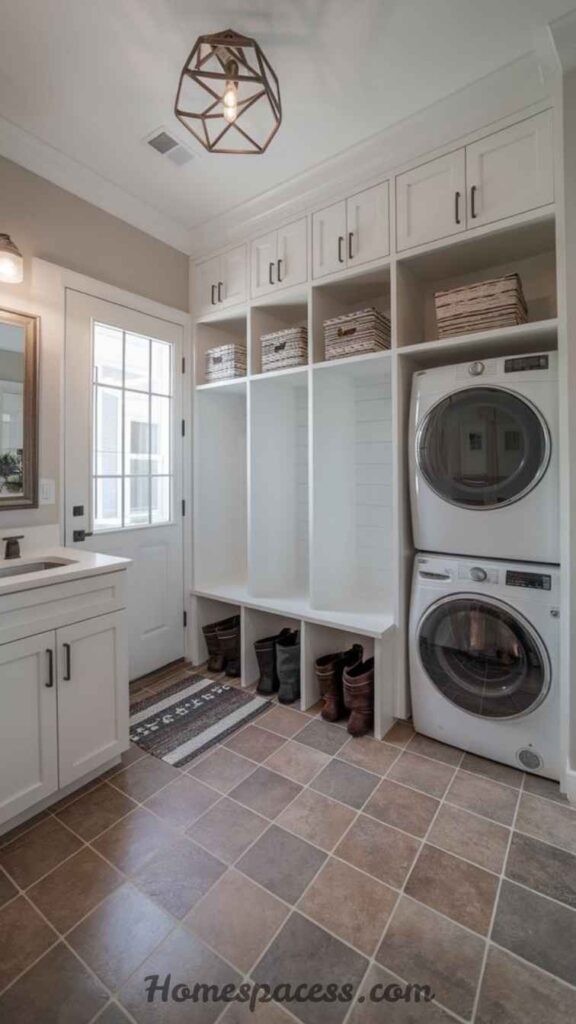
One of the most functionally powerful laundry room ideas is combining the laundry area with a mudroom entry zone. This hybrid layout addresses two of the most problematic household spaces simultaneously. Dirty clothes come off at the door, go straight into sorted bins, and travel a minimal distance to the washer. Shoes, coats, bags, and keys have dedicated storage right beside the laundry zone. The result is dramatically less mess throughout the rest of the home.
The best mudroom-laundry hybrids include a bench with under-seat storage for shoes, hooks at varying heights for adults and children, a utility sink for rinsing muddy items, and sorting bins integrated into the cabinetry. This design is especially valuable for households with children, athletes, or pet owners anyone who generates high volumes of dirty gear regularly. If you’re renovating a garage entry, this layout is almost always the highest-impact configuration available.
Pro Tip
Use durable, water-resistant flooring in this hybrid zone luxury vinyl plank (LVP) is ideal: completely waterproof, easy to clean, and available in handsome wood looks.
Maximize Under-Machine Space with Rolling Storage
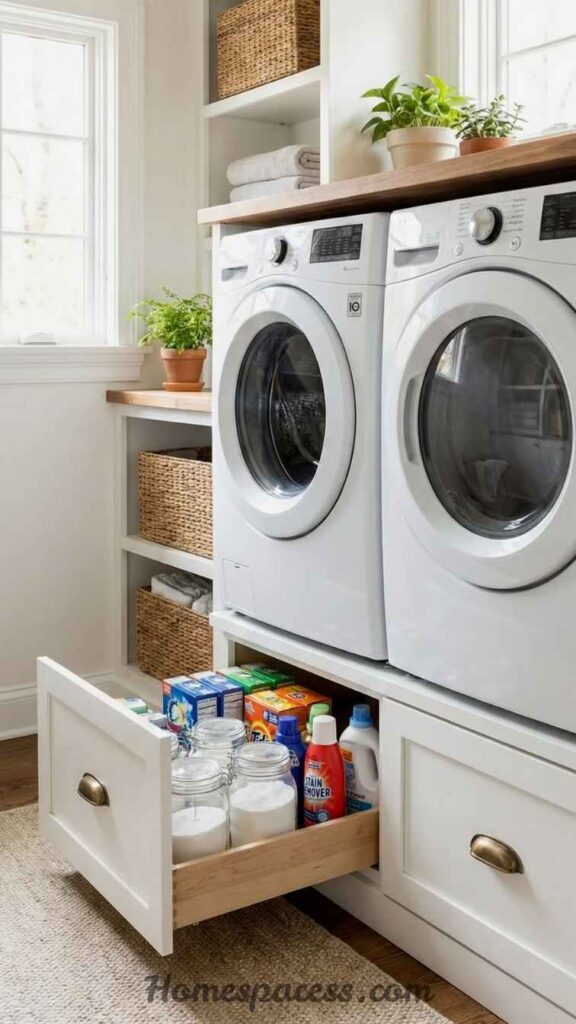
The space beneath front-loading washers and dryers is one of the most consistently wasted areas in laundry rooms. Pedestals sold by manufacturers often cost $200–400 per appliance for what amounts to a hollow box. Instead, custom-built drawer pedestals or deep rolling storage drawers deliver the same height benefit with dramatically more functional storage. These can be built from basic cabinetry components for a fraction of the manufacturer cost.
Roll-out bins beneath the machines are ideal for single-household laundry volume, providing in-machine-access storage without bending to floor level. If you prefer the elevated ergonomic benefit of pedestals without storage, poured concrete platforms painted to match cabinetry are an increasingly popular alternative in modern-industrial laundry designs. They’re durable, cost-effective, and can be precisely sized to your appliances.
Pro Tip
Install soft-close drawer slides in any under-machine storage the vibration from appliances causes standard slides to rattle constantly during cycles.
Use Open Shelving with Styled Storage Baskets
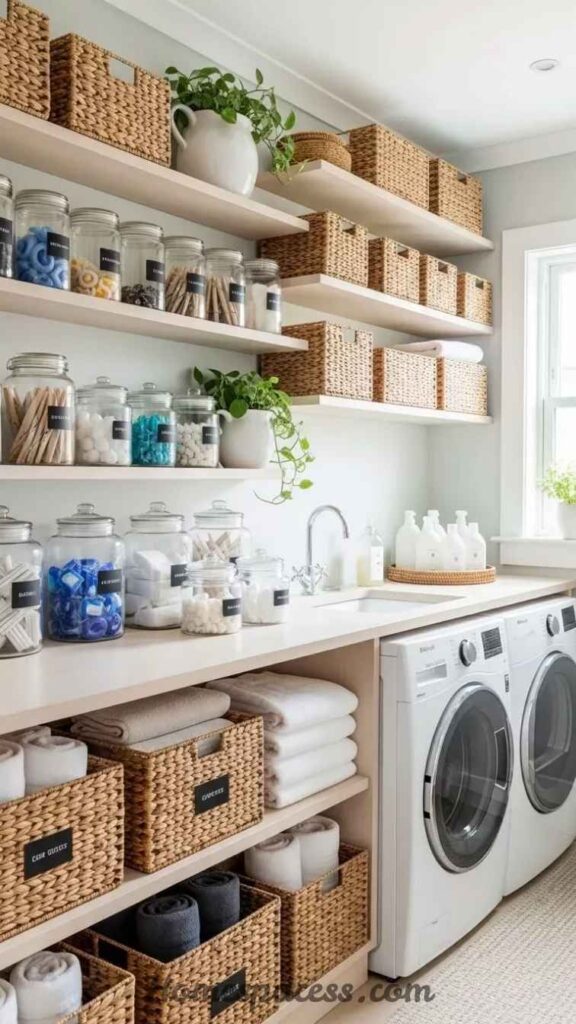
Open shelving with coordinated storage baskets creates a laundry room that functions well and photographs beautifully it’s no coincidence this aesthetic dominates design platforms. The baskets conceal clutter while adding texture and warmth. When baskets are labeled (with metal tags, chalkboard labels, or custom stamps), they add navigational clarity that makes the entire household more efficient family members can independently find and return items without asking.
Material selection matters enormously here. Seagrass and water hyacinth baskets are popular but handle humidity poorly over time. Wicker with a sealed finish or canvas storage bins are far more durable in the moisture-prone laundry environment. For a contemporary look, wire baskets with leather handles offer excellent ventilation (critical for laundry items) and an industrial aesthetic that pairs beautifully with black hardware and concrete countertops.
Pro Tip
Limit open-shelf displays to three basket types maximum more variety creates visual chaos that negates the intentional design effect.
Integrate Smart Washer-Dryer Technology
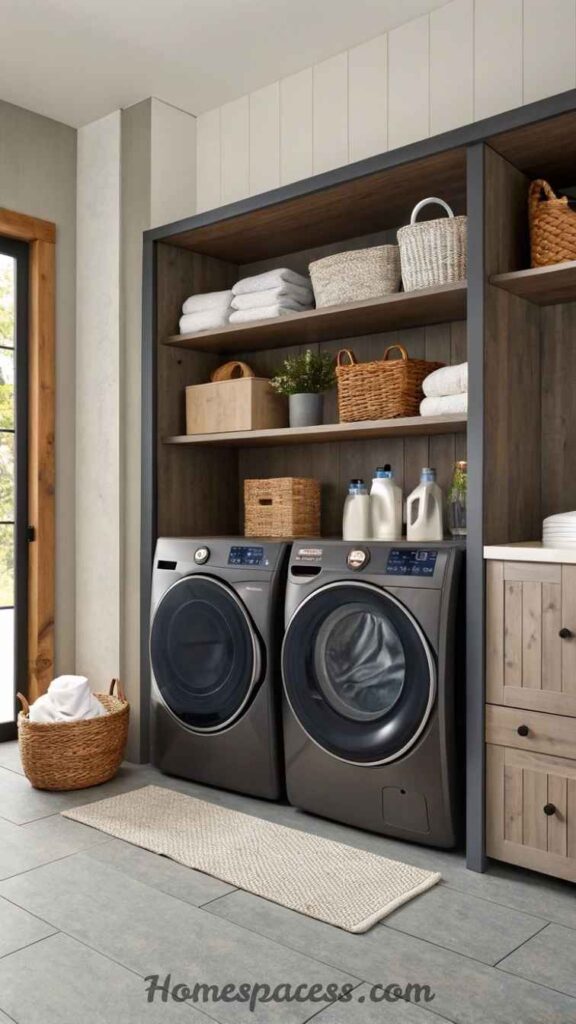
Smart appliances have fundamentally changed the laundry room experience, and the technology gap between smart and standard units is now substantial enough to justify the investment for most households. Modern smart washers can detect load size and fabric composition, automatically adjusting water temperature, cycle length, and spin speed. Some models communicate cycle completion via smartphone notification ending the forgotten-laundry-in-the-machine problem entirely.
The most advanced systems like LG’s ThinQ AI or Samsung’s SmartThings integration allow remote cycle management, track energy and water consumption per wash, and even diagnose mechanical issues before they become expensive repairs. Some smart dryers include sensor-drying technology that monitors moisture levels and stops automatically when clothes are optimally dry preventing the over-drying that degrades fabric quality and accelerates wear. For households doing 8+ loads per week, these features deliver measurable time, energy, and garment-longevity savings.
Pro Tip
Check if your smart washer-dryer is compatible with your preferred voice assistant (Alexa, Google Home, Apple Home Kit) before purchase integration quality varies widely by brand.
Build a Dedicated Countertop Folding Station
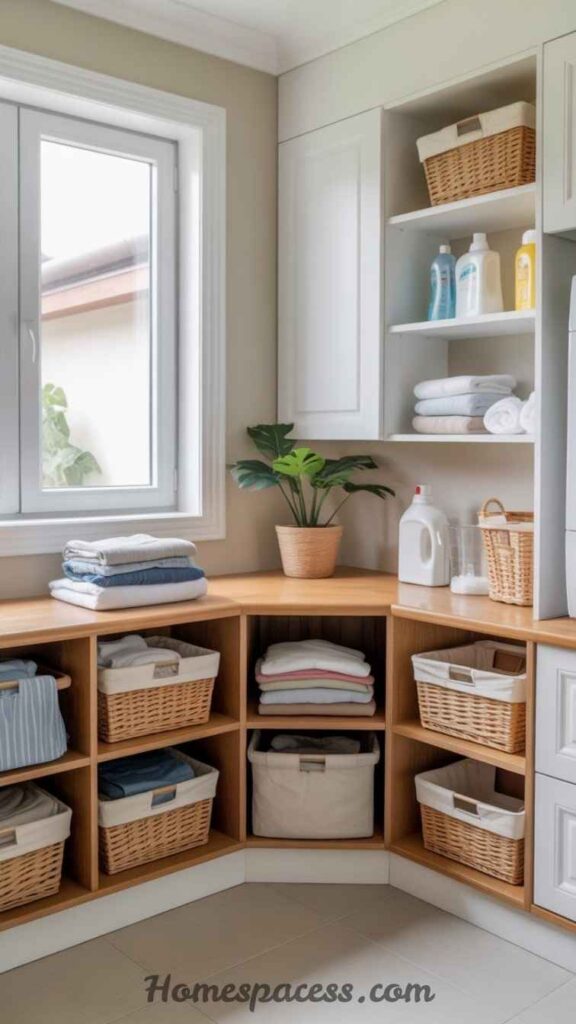
The absence of a proper folding surface is the most common workflow failure in residential laundry rooms. Without one, clothes get folded on beds, kitchen counters, or sofas then frequently left there unput-away. A dedicated folding counter directly adjacent to the dryer creates a natural workflow endpoint: open dryer, transfer to counter, fold, organize. The sequence becomes automatic rather than effortful.
The ideal folding counter is 24–30 inches deep and at a standing height of 34–36 inches lower than a standard kitchen counter, which reduces arm fatigue over long folding sessions. For small spaces, a fold-down murphy-style folding table mounted to the wall is an elegant solution that provides full counter functionality when deployed and disappears completely when folded. Some homeowners install a counter directly over a front-loading washer-dryer stack, utilizing what would otherwise be dead space.
Pro Tip
Install a small tension rod above or beside the folding area for hanging items that come out of the dryer shirts, dresses, and blouses benefit from immediate hanging to prevent wrinkle setting.
Mount Retractable Clothesline or Drying Lines
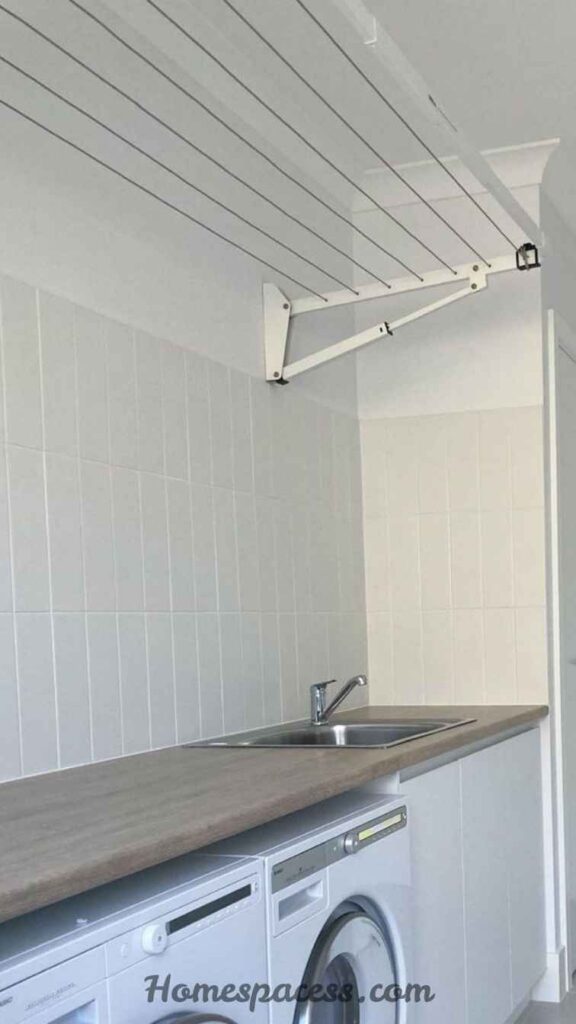
A wall-mounted retractable clothesline is a small installation with outsized laundry room value. Unlike a permanent clothesline, retractable models extend across the room when needed and retract into a compact wall-mounted housing when not in use taking up no more space than a large book. Multiple lines can handle a full laundry load of delicates, activewear, or items that shouldn’t go in the dryer.
Households that switch from tumble-drying all items to air-drying at least 50% report meaningful reductions in clothing replacement frequency a cost saving that accumulates significantly over years. Items like wool sweaters, structured bras, silk blouses, and athletic gear all benefit dramatically from air drying versus machine drying. The return on the $30–80 investment in a quality retractable drying system is remarkably rapid when measured against reduced energy bills and extended garment lifespan.
Pro Tip
Position retractable lines near a window or vent airflow is the most important factor in fast, mildew-free air drying, more so than temperature.
Design a Pet-Friendly Laundry Station
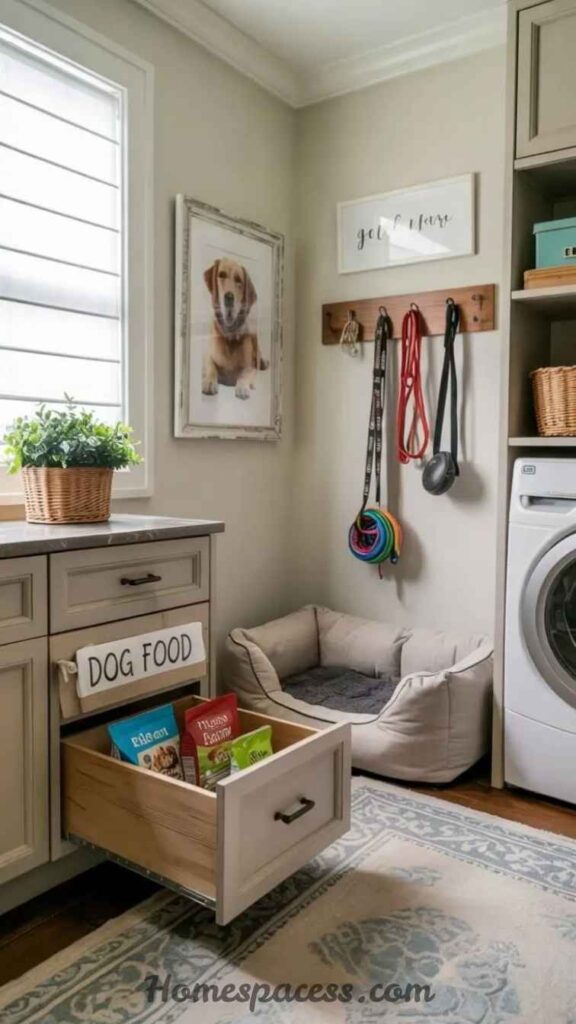
For pet-owning households, the laundry room presents a unique dual-purpose opportunity that most designers miss entirely. A purpose-built pet station integrated into the laundry room addresses two household needs simultaneously: dedicated pet care (bathing, grooming, feeding) and laundry functions. The deep utility sink becomes a pet washing station; a fold-down grooming surface mounts beside it; storage for pet supplies lives in the lower cabinetry; and a built-in pet door from the garage into this zone keeps muddy animals contained.
The most sophisticated versions include a raised dog-washing basin with a hand-spray attachment at a height that eliminates back strain, non-slip flooring, and a small warming drawer for pet towels. Given that over 67% of U.S. households own a pet, this is a laundry room feature with exceptional broad appeal and one that real estate agents increasingly cite as a genuine differentiating feature for resale. It addresses a real, daily pain point that standard laundry room designs completely ignore.
Pro Tip
Install a high-CFM exhaust fan in a pet-integrated laundry room wet dog smell combined with laundry humidity creates persistent odor without strong ventilation.
Conclusion
The 18 laundry room ideas in this guide span a wide range of budgets, spaces, and priorities from a $30 pegboard installation to a full smart-appliance integration. What they share is a common design philosophy: treat the laundry room as a functional system, not just a storage closet with appliances in it.
The most impactful transformations typically combine three elements: purpose-built storage that eliminates clutter, a dedicated work surface that makes folding and sorting effortless, and at least one design-forward element (color, tile, lighting, hardware) that makes the space feel intentional and pleasant. You don’t need all 18 ideas you need the right three or four for your specific situation.
As you plan your laundry room renovation or refresh, consider the sections below on emerging trends, sustainability, and common pitfalls. They contain insights that most laundry room guides miss entirely and they’ll help you make decisions that hold up not just today, but for the next decade of use.
Trend Analysis
2026 Laundry Room Trend Analysis: What’s Driving Design Decisions Now
The laundry room design landscape has shifted more dramatically in the past three years than in the previous two decades. Here’s what’s actually driving those changes.
The most significant macro-trend reshaping laundry room design in 2026 is the elevation of utility spaces to lifestyle spaces. Post-pandemic home spending patterns dramatically increased investment in previously ignored functional rooms laundry rooms, mudrooms, and home offices saw the largest per-square-foot renovation spending increases of any room category. This isn’t just aesthetics: it reflects a cultural shift in how people value time spent at home and demand that every room earn its square footage.
A second major trend is the decline of all-white laundry rooms. For nearly a decade, the dominant aesthetic was bright white cabinetry, white appliances, and white walls a clinical “clean” look. In 2026, interior design data from platforms like Houzz, Pinterest, and Wayfair consistently shows a pivot toward warmer, more saturated palettes: warm sage, clay terracotta, charcoal navy, and even deep jewel tones. This shift reflects a broader movement toward spaces that feel lived-in and humanized rather than showroom-ready.
The third defining trend is appliance concealment and integration. As laundry rooms move into more central home positions (main-floor hallways, kitchen adjacency), the visual demand for appliances to disappear has intensified. Paneled appliances that match cabinetry long standard in Europe are now mainstream in North American renovations. The laundry room is becoming a room that doesn’t look like a laundry room, and that integration challenge is producing genuinely innovative design solutions.
Warm Color Palettes
Sage, terracotta, and navy replacing all-white dominance in laundry spaces.
AI-Powered Appliances
Load-sensing, auto-dosing, and remote-monitored washing systems entering mainstream.
Eco-Conscious Design
Water-efficient machines and sustainable materials are now buyer expectations, not upgrades
Natural Textures
Wood accents, stone countertops, and woven baskets adding warmth to functional zones.
Hybrid Room Concepts
Laundry-mudroom, laundry-pantry, and laundry-home office hybrids gaining popularity.
Appliance Concealment
Paneled, integrated appliances designed to blend with cabinetry rather than stand out.
Expert Insights
Practical Tips and Workflow Optimization Strategies from Design Professionals
Real-world laundry room improvements that interior designers and professional organizers actually recommend not the generic advice you’ve already read.
Professional Organizer Insight
“The single most impactful change in any laundry room isn’t a product it’s reducing the number of decisions required. When sorting, locating supplies, and identifying what needs hand-washing are all systematized, the entire task takes half the mental energy. Design for zero decisions at point of use.”
One of the most consistently underestimated workflow improvements is supply decanting and proximity placement. Laundry detergent, fabric softener, stain remover, and other supplies that arrive in large, unwieldy containers perform far better when decanted into smaller, labeled dispensers placed directly above or beside the machine. This eliminates reaching for heavy jugs, reduces spill risk, and allows you to see supply levels at a glance. Professional organizers call this “point-of-use storage” every supply lives exactly where it’s first needed.
The most overlooked ergonomic improvement in laundry rooms is appliance height optimization. Standard washer-dryer installations at floor level require repetitive bending that causes genuine physical strain for frequent users. Raising appliances on pedestals or custom platforms to a height where the door opening aligns with your hip rather than your knee eliminates this strain entirely. For households doing multiple loads weekly, this single change can prevent cumulative lower back injury over years of use. It’s an accessibility and ergonomics consideration that no standard laundry room guide addresses.
Cycle batching is another expert-level efficiency strategy rarely discussed in consumer laundry guides. Rather than running individual loads as items accumulate, professional household managers batch laundry into dedicated weekly or twice-weekly sessions and run machines consecutively, transferring heat from one cycle to the next. Modern heat-pump dryers retain warmth between cycles, reducing per-load energy consumption by 12–18% when cycles are run back-to-back. This approach also consolidates the mental overhead of laundry into defined time blocks a productivity strategy borrowed from professional services and applied to household management.
Sustainability & Long-Term Value
The Sustainable Laundry Room: Design Decisions That Pay Off for Decades
The laundry room is one of the most resource-intensive spaces in any home. The average household runs 300+ laundry loads annually, consuming approximately 13,500 gallons of water and 1,100 kWh of electricity per year through washing and drying combined. Even modest improvements to appliance efficiency, water temperature choices, and drying methods compound into significant savings over a 10–15 year appliance lifespan. A heat-pump dryer, for example, uses approximately 50% less energy than a conventional resistance dryer saving an estimated $200–300 annually for the average household.
Beyond appliances, sustainable material selection for laundry room finishes and fixtures has long-term implications. Recycled-content flooring (such as cork or recycled rubber), low-VOC paints formulated for high-humidity environments, and FSC-certified wood cabinetry all reduce environmental impact without sacrificing performance. The key insight most homeowners miss: sustainable materials in laundry rooms often outperform conventional alternatives on durability metrics cork flooring is naturally antimicrobial and moisture-resistant; recycled glass countertops are non-porous and impervious to staining.
High-Impact Sustainability Upgrades for Laundry Rooms
- Switch to cold-water washing heating water accounts for ~90% of washing machine energy use. Modern detergents perform equally in cold water.
- Install a heat-pump dryer uses 50% less energy than conventional dryers, with no performance sacrifice for most fabric types.
- Add a greywater diverter captures washer discharge water for garden irrigation, reducing household water consumption by 15–20%.
- Choose ENERGY STAR certified appliances they use 20–25% less energy than standard models and qualify for utility rebates in most regions.
- Install a low-flow utility sink faucet reduces water consumption during hand-washing by up to 60% with no functional compromise.
- Use concentrated detergent in recycled-material packaging reduces plastic waste and packaging volume while maintaining cleaning performance.
From a long-term value perspective, energy-efficient laundry rooms are increasingly recognized by real estate appraisers as value-adding features particularly as utility costs continue their upward trajectory. Buyers in the 35–50 age demographic, who represent the largest segment of home purchase transactions, now actively inquire about appliance efficiency ratings. A laundry room designed around sustainability principles is both a present-day operational advantage and a future resale differentiator a genuinely rare combination in home improvement.
Future Innovations
The Next Decade of Laundry Room Innovation: What’s Coming and When
The laundry room is on the verge of its most dramatic transformation in 50 years. These aren’t distant concepts they’re in development or early commercial deployment right now.
The most consequential near-term innovation is ultrasonic washing technology. Unlike conventional washing, which uses water, agitation, and heat, ultrasonic washers use high-frequency sound waves to create microscopic bubbles that dislodge dirt particles from fabric at the molecular level. The result: cleaning that is 95% faster, uses 90% less water, and is completely gentle on even the most delicate textiles. Samsung’s experimental ultrasonic units have achieved commercial cleaning standards in lab settings. Early consumer products (including portable ultrasonic wand-style devices) are already on market, but full-scale ultrasonic washers are projected to enter mainstream pricing by 2027–2028.
Smart laundry rooms will increasingly incorporate RFID garment tagging and inventory management within the next 5 years. Embedded RFID tags in clothing already standard in retail and commercial garment tracking will allow future washing machines to automatically read garment care labels, select the correct cycle, and track each item’s wash count and condition over time. Paired with smart wardrobe systems, this technology will eventually generate real-time alerts when a garment has been washed enough times to warrant replacement inspection extending garment lifespan through optimized care rather than habit.
2026–2027
AI-Optimized Cycle Selection
Machine learning systems that analyze load composition and optimize cycle parameters in real-time already in Samsung and LG flagship models.
2027–2029
Mainstream Auto-Dosing Detergent Systems
Washers that automatically calculate and dispense precise detergent quantities per load, eliminating overuse (the most common laundry mistake) and waste.
2029–2030
Consumer Ultrasonic Washers
Water-minimal ultrasonic washing technology reaching affordable consumer price points potentially eliminating the conventional washer as we know it.
2030+
RFID Garment Intelligence & Robotic Folding
Clothing tags that communicate care data to appliances, combined with commercial-grade robotic folding units entering residential market at scale
Robotic folding currently available only in commercial-scale units will reach residential reality within this decade. Foldimate’s attempts pioneered the category concept; subsequent engineering generations from multiple startups have dramatically improved garment recognition accuracy and speed. The implications for laundry room design are substantial: a robotic folding station integrated into the cabinetry will become a premium but attainable luxury appliance category, much as robotic vacuums transitioned from novelty to mainstream in the 2010s.
Common Mistakes
Laundry Room Design Mistakes Most Homeowners Make (And How to Avoid Them)
These are the design and planning errors that result in expensive renovations underperforming and almost no guide covers them honestly.
Most laundry room renovations are planned in showrooms or from Pinterest boards environments that look nothing like real homes. The result is a set of persistent design mistakes that experienced interior designers see repeatedly. Understanding these errors before you renovate saves both money and frustration. The mistakes below aren’t obvious they’re the nuanced decisions that separate a laundry room that works beautifully from one that creates new problems.
- Underestimating Ventilation Requirements: Most homeowners install powerful exhaust fans in bathrooms but ignore ventilation in laundry rooms. High humidity from washers, lint and heat from dryers, and cleaning product fumes create air quality issues that cause mold, odor, and cabinetry warping within 2–3 years. A minimum 110 CFM dedicated exhaust fan is essential not optional.
- Choosing Style Over Durability in Flooring: Beautiful ceramic tile looks stunning but is unforgiving dropped appliance components, laundry baskets, and heavy detergent bottles will chip it. More critically, grout lines absorb detergent and become permanently stained within months. Luxury vinyl plank or large-format porcelain tile (with minimal grout lines) dramatically outperforms standard ceramic in this environment.
- Planning Storage Without Measuring Actual Supplies: Laundry room cabinet and shelf depth is frequently designed without measuring the actual products that will live there. Oversized detergent containers from warehouse clubs often don’t fit in standard 12-inch deep cabinets. Measure your largest supply items before specifying any cabinetry a simple step that prevents a costly mismatch.
- Ignoring Electrical and Plumbing Upgrade Costs: Budget renovations frequently stall when homeowners discover that upgrading to a more capable washer-dryer requires a 240V circuit upgrade, new drain configuration, or water pressure improvements costs that weren’t in the renovation budget. Always get an electrical and plumbing assessment before finalizing appliance selections.
- Buying Appliances Before Measuring Door Clearance: This mistake costs thousands annually across North America. Front-loading washers and dryers require substantial door swing clearance often 20+ inches that isn’t apparent until installation day. Measure your space with a cardboard mock-up of the door swing before purchase. Also verify that the appliance can physically fit through your home’s narrowest doorway during delivery.
- Treating Lighting as an Afterthought: A single overhead fixture is the default in virtually every laundry room renovation and it consistently underperforms. Stain detection requires high-CRI task lighting; sorting requires even, shadow-free illumination; and the overall experience is dramatically improved by deliberate lighting design. The cost difference between one fixture and a layered lighting plan is usually under $150 the experience improvement is enormous.
Aliza Noor founded Home Spacess to share simple, practical design ideas that work for real families. She focuses on cozy décor, soft colors, and natural textures that make a space feel truly lived-in. Based just outside Toronto, Aliza spends her days juggling family life, experimenting with home projects, tending to her plants, and occasionally moving things around just to create a fresh vibe.


