
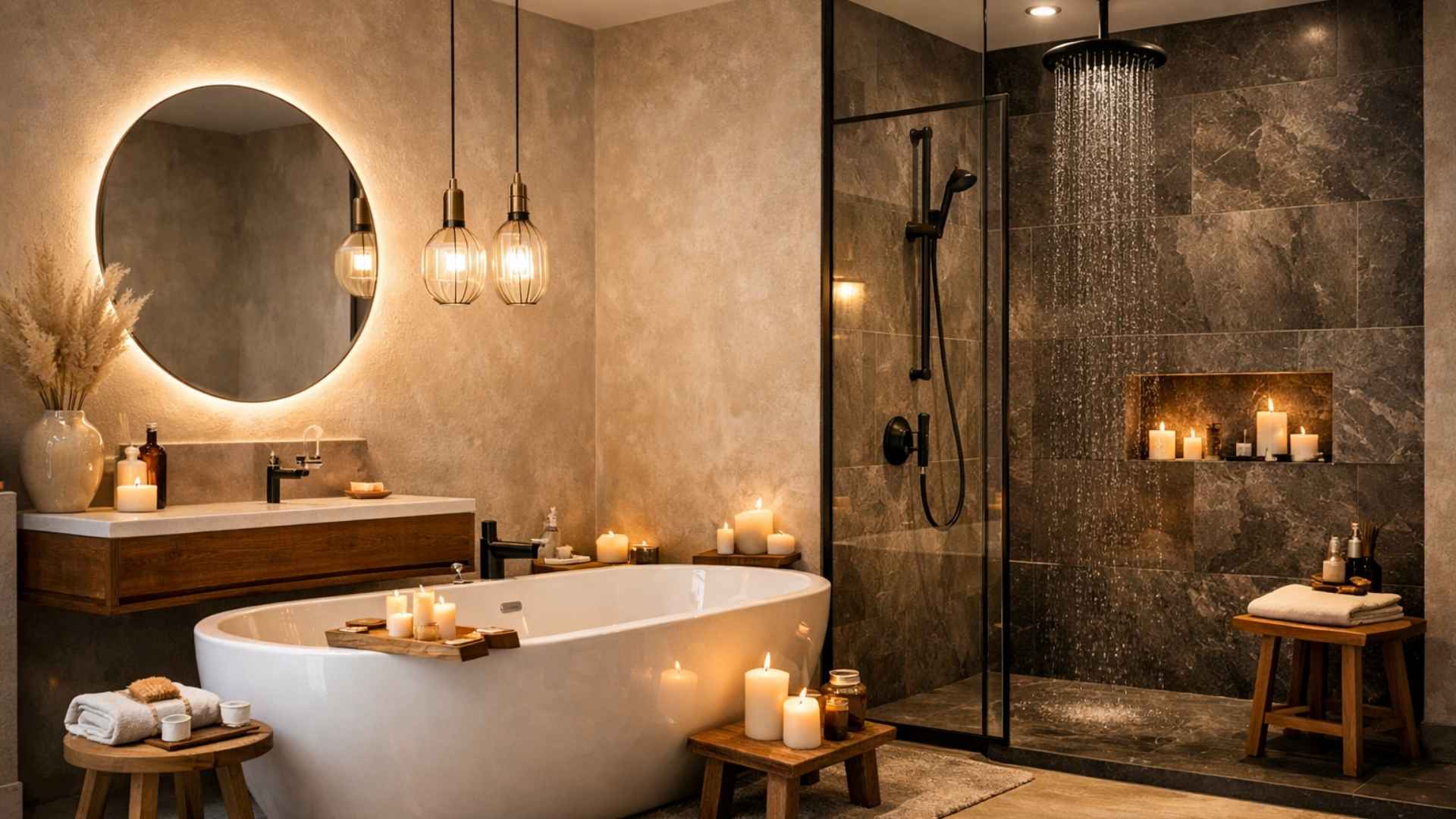
From budget-friendly updates to full renovations a complete guide grounded in real design principles, not trend-chasing.
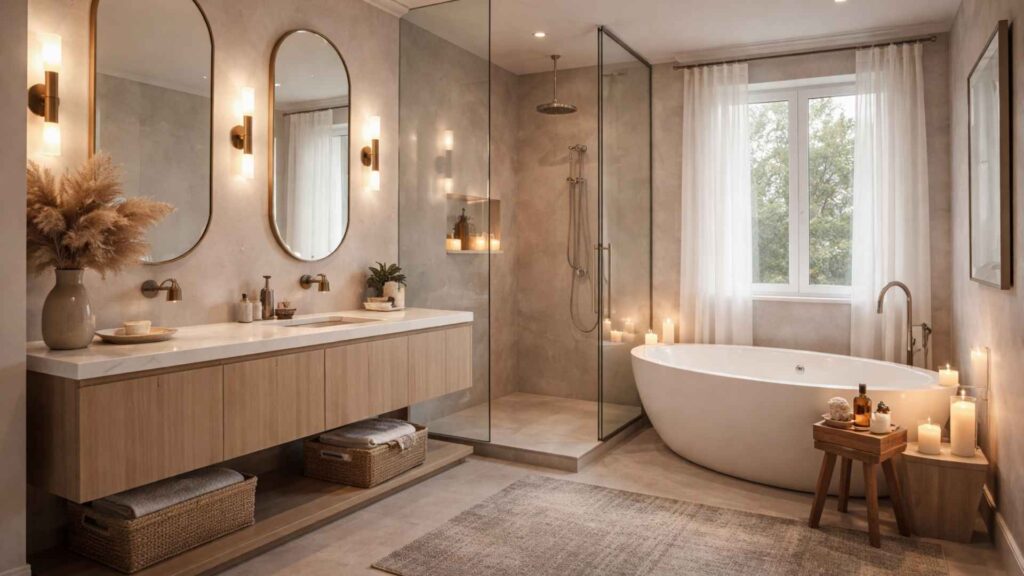
Most people treat the bathroom as an afterthought a purely functional space that gets a quick coat of paint and a shower curtain. But the bathroom is the first room you enter every morning and the last you leave every night. It sets your mental tone for the entire day. The ideas in this guide will help you turn that overlooked space into something you actually look forward to being in.
Whether you have a cramped apartment bathroom, a dated ensuite, or a spacious main bath crying out for personality there is a design solution for you here. These 29 bathroom decor ideas range from zero-cost rearrangements to considered material upgrades, covering color, texture, lighting, greenery, storage, and more. Each one is grounded in interior design principles that work long after the trend cycle has moved on.
Lighting
The most underrated element of bathroom design and the one with the highest return on effort.
Layer Your Lighting With Three Distinct Sources
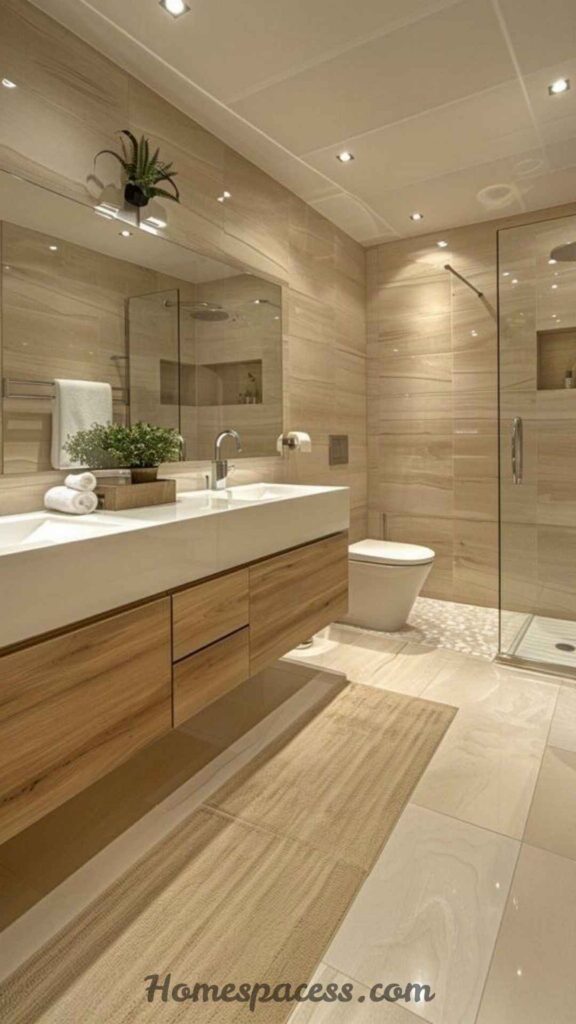
A single overhead light is the defining flaw of most residential bathrooms. Good bathroom lighting uses three layers: ambient (general illumination), task (for grooming, directly flanking the mirror), and accent (to create atmosphere and visual depth). Missing even one of these layers makes the room feel flat or harsh.
For task lighting, wall sconces positioned at eye level on either side of the mirror are far superior to overhead fixtures, which cast shadows downward across the face. In practical terms, two sconces at 60–65 inches from the floor give the most flattering, accurate light for daily grooming. This single change transforms how a bathroom feels morning and evening.
Designer Tip:
Use dimmable bulbs rated 2700K for all ambient fixtures and 3000K for task lights. The subtle difference creates a layered glow that feels both functional and relaxing.
Must Read: 23 Front Porch Ideas That Will Transform Your Home’s First Impression
Install Backlit or LED-Framed Mirrors
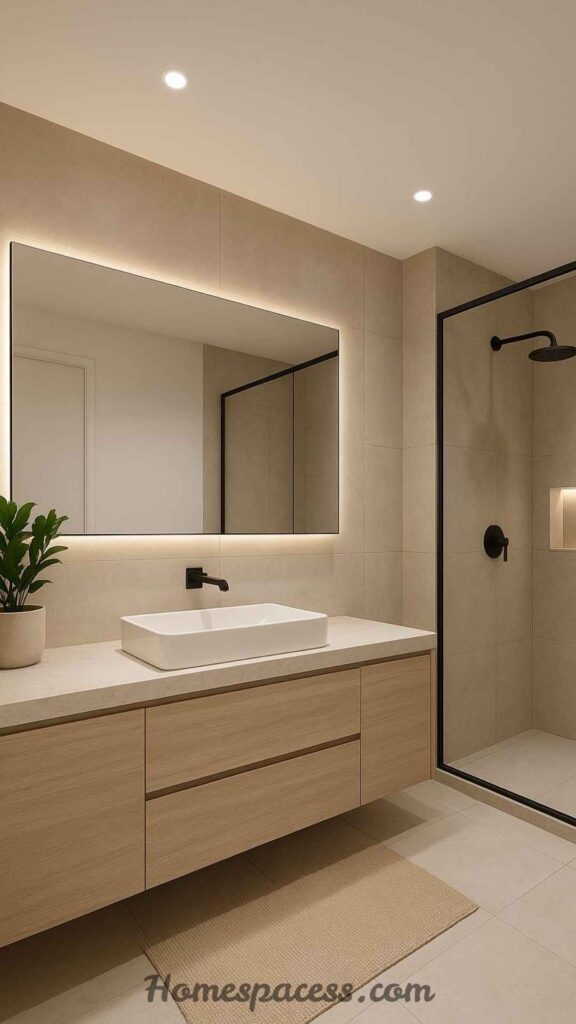
Backlit mirrors do something ordinary mirrors cannot: they eliminate harsh shadows entirely while simultaneously making the wall behind appear to recede, creating an illusion of depth in small spaces. For bathrooms under 60 square feet, this effect can make the room feel 20–30% larger. The technology has also become significantly more affordable good-quality LED mirror panels now start at accessible price points.
The best versions include adjustable color temperature, allowing you to shift between warm light for relaxation and cooler daylight tones for makeup or shaving. This level of control used to be exclusive to high-end hotel bathrooms. Now it is available for any home renovation budget.
Mini Scenario:
Replace a standard 24-inch mirror with a 30×40-inch backlit version the room will feel transformed without touching a single tile
Don’t Skip: 22 Home Gym Ideas That Actually Work For Every Space & Budget
Add Candle Sconces or Flameless Candles for Evening Ambience
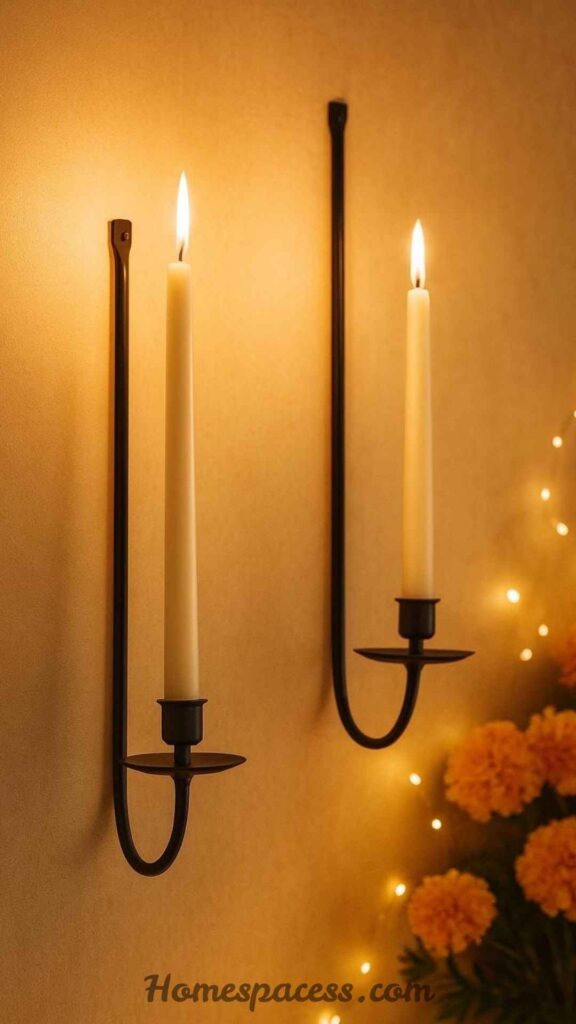
No designer finish can replicate the psychological shift that warm, flickering light creates. A pair of wall-mounted candle sconces or high-quality flameless LED candles on a ledge or shelf introduce warmth that overhead fixtures simply cannot achieve. This is especially effective in bathrooms that double as a wellness sanctuary long baths, evening skincare routines, or meditation spaces.
Flameless options with realistic flicker modes have improved enormously. Many now include timers, remote controls, and scent diffuser inserts, making them genuinely practical rather than a decorative compromise.
Read More: 25 Stunning Home Exterior Ideas That Actually Boost Curb Appeal
Try Under-Vanity Toe-Kick Lighting
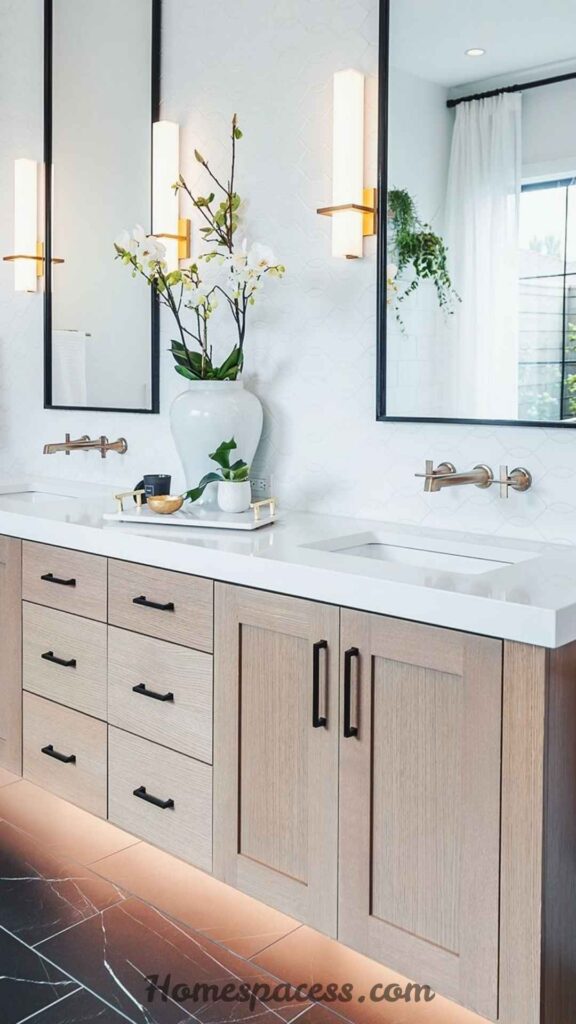
Recessed LED strips along the toe-kick of a vanity or beneath a freestanding tub create a floating effect that immediately elevates the bathroom’s perceived quality. More practically, they serve as low-level night-lighting, eliminating the eye-shock of bright overheads during night-time visits. This feature appears in high-end hotel designs for exactly this reason.
The installation is straightforward enough for a confident DIYer LED strip tape, a small driver, and a motion sensor switch. The total cost is typically under $60, but the visual impact rivals far more expensive upgrades.
Don’t Miss: 27 Salon Interior Design Ideas That Turn Clients Into Loyal Fans
Color & Paint
Color changes the emotional register of a room. These ideas go beyond “paint it white.”
Embrace Deep, Moody Wall Colors
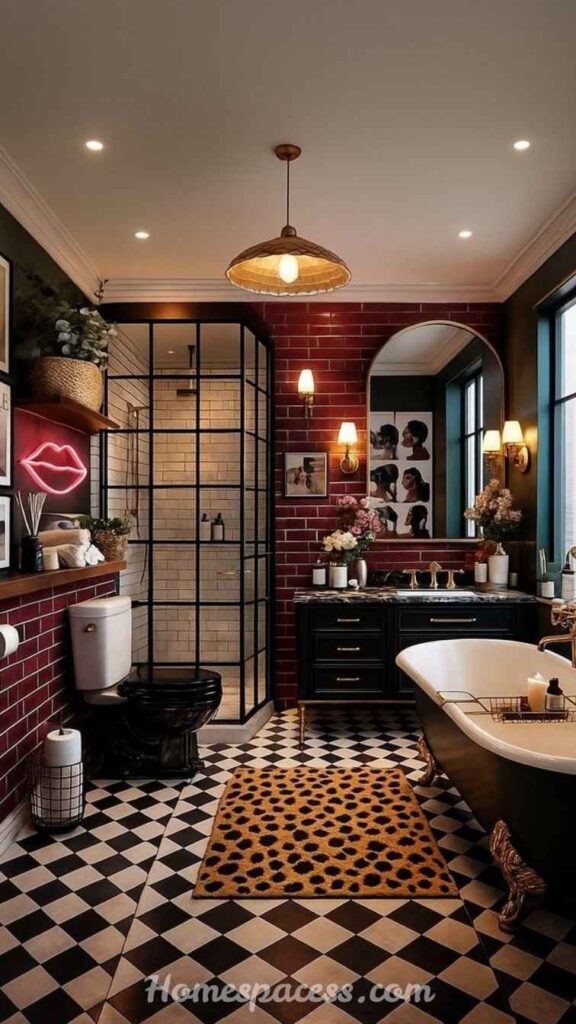
The idea that small bathrooms must be white to feel larger is one of interior design’s most persistent myths. Deep colors forest green, navy, charcoal, dusty mauve actually help small rooms feel more intentional and immersive rather than accidentally cramped. The key is consistency: take the deep color all the way to the ceiling, paint the trim the same shade, and let the room become a cohesive envelope.
Farrow & Ball’s “Hague Blue,” Benjamin Moore’s “Black Beauty,” and Sherwin-Williams’ “Pewter Green” have become benchmarks for this look, though many excellent alternatives exist at lower price points. The technique works equally well in large bathrooms, where it creates a spa-like cocooned feeling that white simply cannot.
Key Insight:
In small bathrooms, dark colors work best when the floor is kept light this maintains visual grounding without making the room feel like a cave.
Use Limewash or Textured Paint Finishes
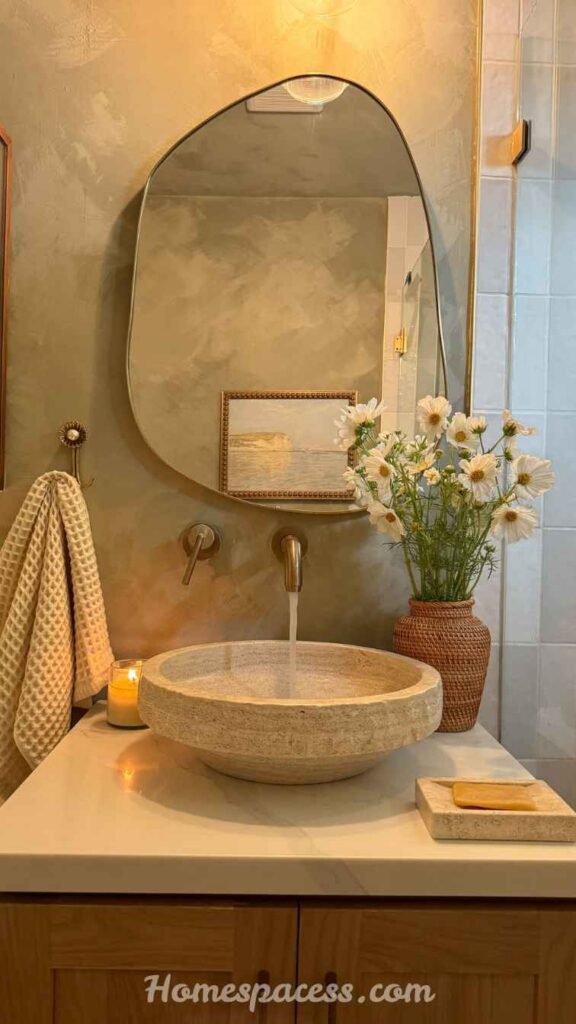
Flat paint in bathrooms is both practically wrong (moisture-resistant finishes are essential) and aesthetically limiting. Limewash and venetian plaster techniques introduce organic texture and depth that transforms walls from a background element into a design feature. The irregular, layered quality of these finishes catches light differently throughout the day, making the room feel alive.
Limewash is especially compatible with bathroom environments because it is inherently breathable and mildew-resistant when applied over a sealed surface. Brands like Portola Paints have made limewash more accessible to DIY application, though professional application gives more consistent results for feature walls.
Paint the Ceiling a Contrasting Color
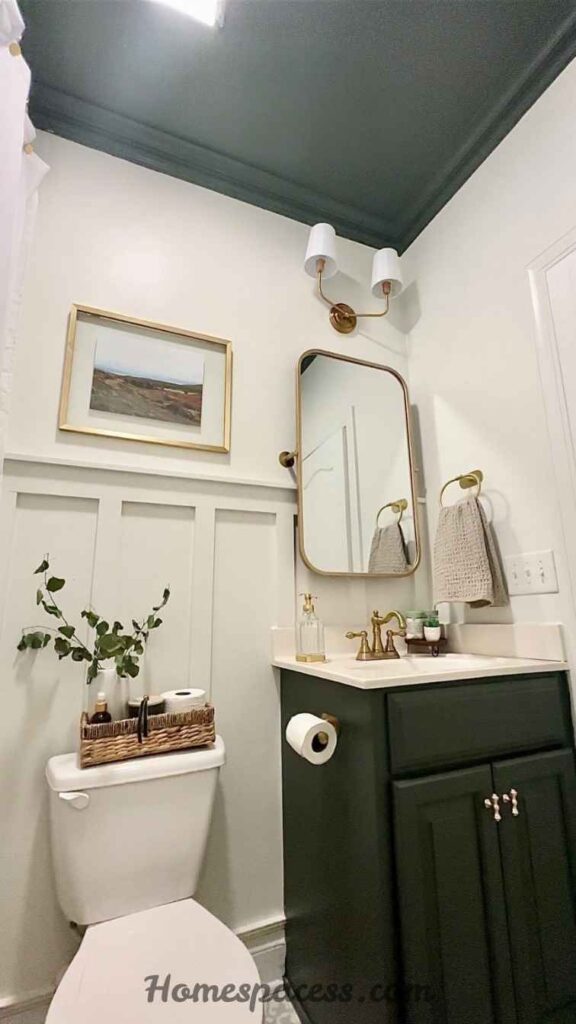
The fifth wall of any room the ceiling is consistently ignored. In bathrooms, painting the ceiling a contrasting or complementary shade to the walls creates an immediate sense of enclosure and intention. A terracotta ceiling in an otherwise white bathroom, a dusty blush above sage green walls, or a deep navy ceiling in a soft gray room all work beautifully.
This approach is also one of the most cost-effective bathroom decor ideas available. A ceiling requires far less paint than four walls, making it an excellent place to experiment with an expensive designer shade without significant financial commitment.
Introduce Color Through Grout, Not Just Tile
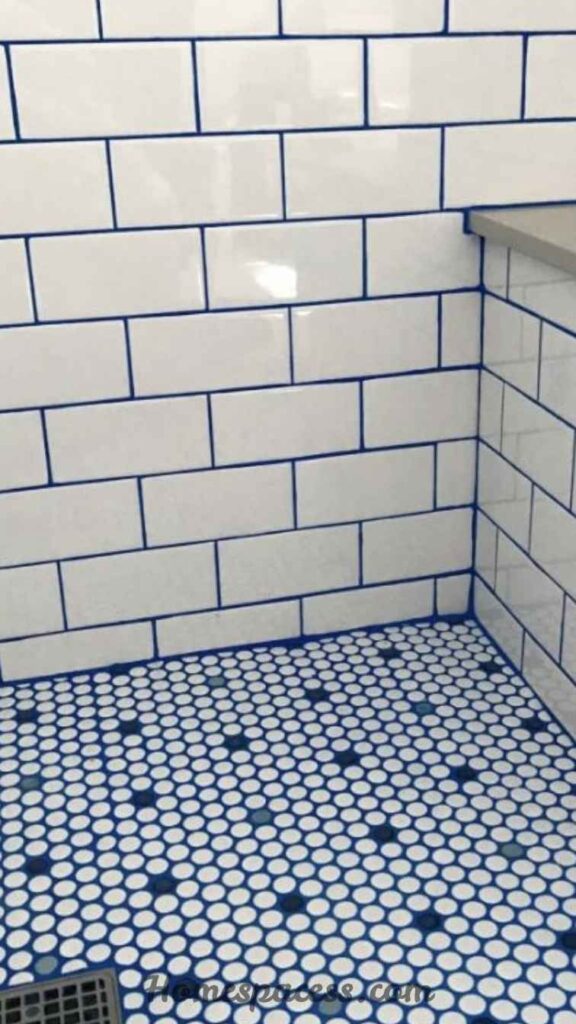
Colored grout is a genuinely overlooked design tool. Most homeowners default to white or gray grout, which is practical but anonymous. Dark grout charcoal, black, or deep brown with white tile creates a graphic grid pattern that adds visual interest without replacing a single tile. Conversely, warm-toned grout in a terracotta or sand color with neutral tiles gives the surface a sun-baked, European quality.
Changing grout color during regrouting is significantly less expensive than retiling. Grout colorant products also allow existing grout to be recolored without full replacement a budget-friendly route to a noticeably different look.
Storage & Organization
Beautiful bathrooms are not cluttered. These ideas make function feel like design.
Install Recessed Niches in Shower Walls
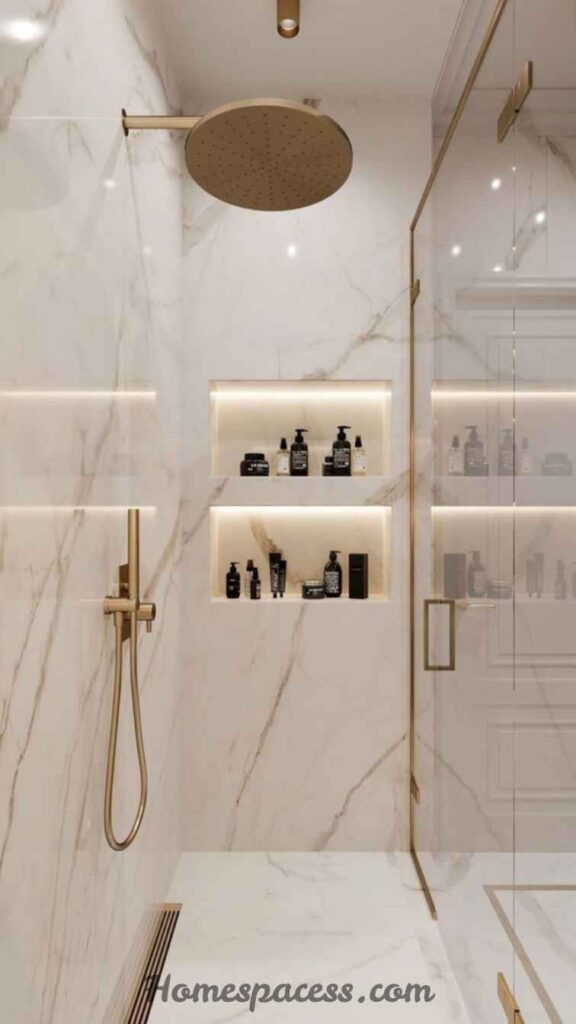
Shower caddies are universally despised by interior designers and for good reason. They clutter the visual field, corrode over time, and make cleaning more difficult. Recessed shower niches, built directly into the wall between studs, eliminate all of these problems. A niche lined with contrasting tile becomes a genuine design element rather than a storage apology.
The ideal niche dimensions are around 12 inches wide, 24 inches tall, and 4 inches deep accommodating most shampoo and body wash bottles upright. During a full renovation, adding a niche adds minimal cost. Even retrofitting one into an existing tiled wall is achievable, though it requires temporary waterproofing work.
Pro Tip:
Line your niche with a small-format mosaic or zellige tile in a color that contrasts with the main shower wall for a high-end, considered look.
Use Open Shelving Strategically Not Everywhere
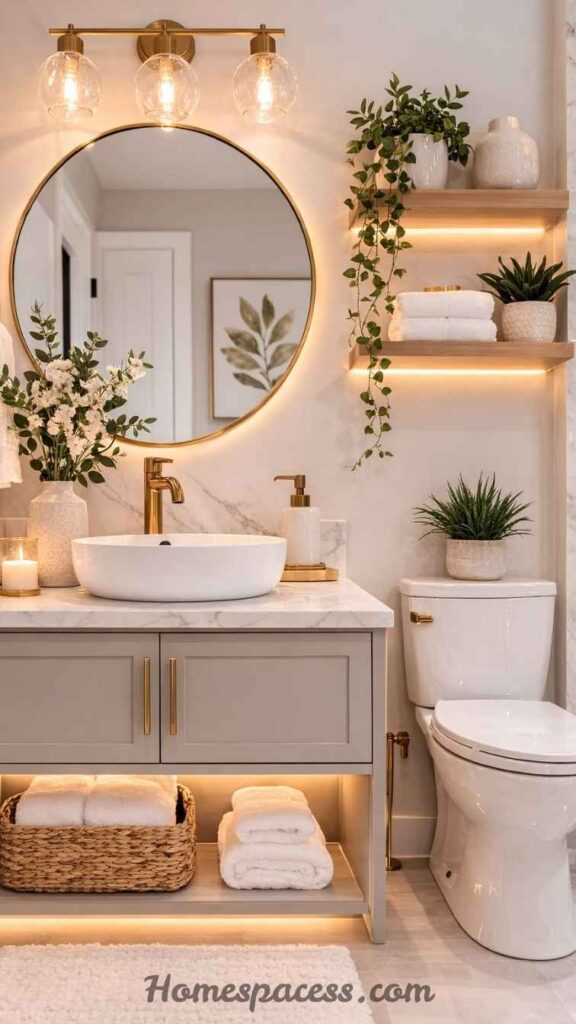
Open shelving works in bathrooms when it is used sparingly and styled with intention. A single floating shelf above the toilet, holding a small plant, a candle, and two or three attractive objects, reads as designed. Five open shelves of chaotically arranged products reads as clutter. The discipline is knowing what to show and what to hide.
Floating shelves in natural wood tones add warmth to bathrooms that trend toward cold, hard surfaces. White oak, walnut, and mango wood all work well, but any timber sealed with a waterproof finish performs adequately in typical bathroom humidity levels.
Swap Builder-Grade Vanities for Custom or Furniture-Style Pieces
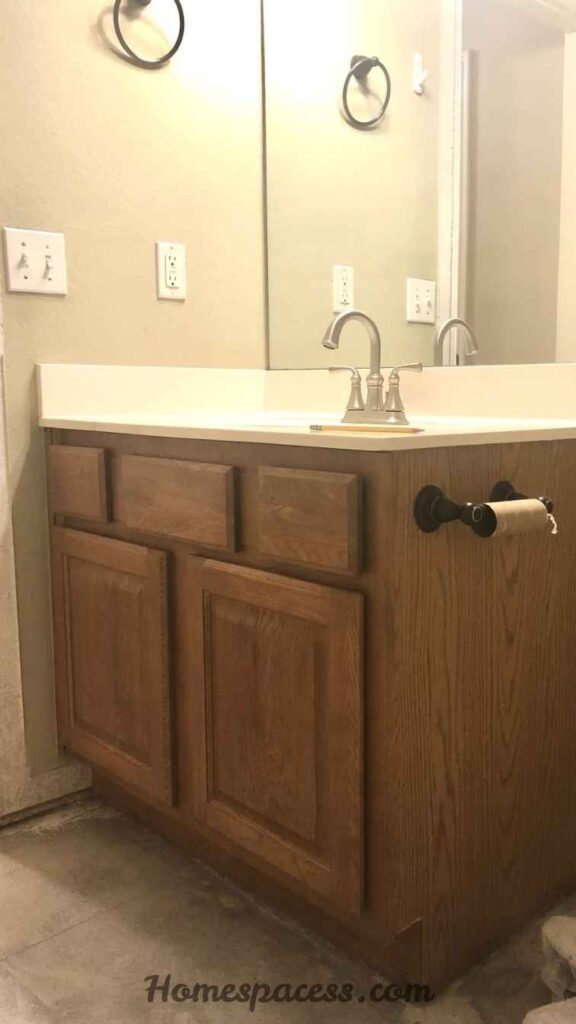
Standard flat-pack vanities are functionally adequate but rarely beautiful. Replacing them with a furniture-style console, an antique dresser converted to a vanity, or a custom-built piece instantly elevates the room’s character. The “furniture in the bathroom” trend has sustained itself in interior design for over a decade because it brings warmth and personality that manufactured vanities cannot replicate.
For those who cannot replace a vanity entirely, painting it with proper primer and a durable enamel finish and changing the hardware makes a significant visual difference. Brushed brass, matte black, and unlacquered brass are currently the most design-forward hardware choices across all interior styles.
Add a Slim Ladder Shelf or Towel Ladder
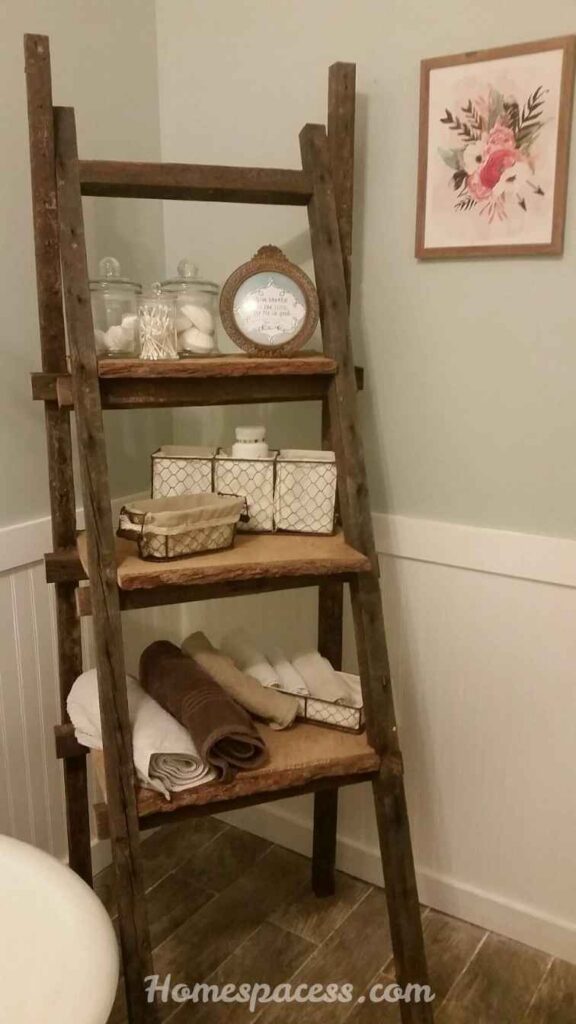
A leaning ladder shelf is one of the most versatile bathroom additions available at any budget. It provides vertical storage without requiring wall fixings, displays towels in an organized and attractive way, and adds a natural material (usually bamboo, pine, or oak) that softens the typically hard surfaces of a bathroom. Even in very small bathrooms, a slim ladder against a wall occupies roughly 18 inches of floor space.
The most effective use of a ladder shelf is not loading it with products but layering it: rolled towels on the lower rungs, a small plant or candle on a middle shelf, and a minimal arrangement at the top. This creates visual rhythm without visual noise.
Tile & Texture
Surfaces do the most visual heavy lifting in a bathroom. Choose them with intention.
Tile the Floor in a Herringbone or Chevron Pattern
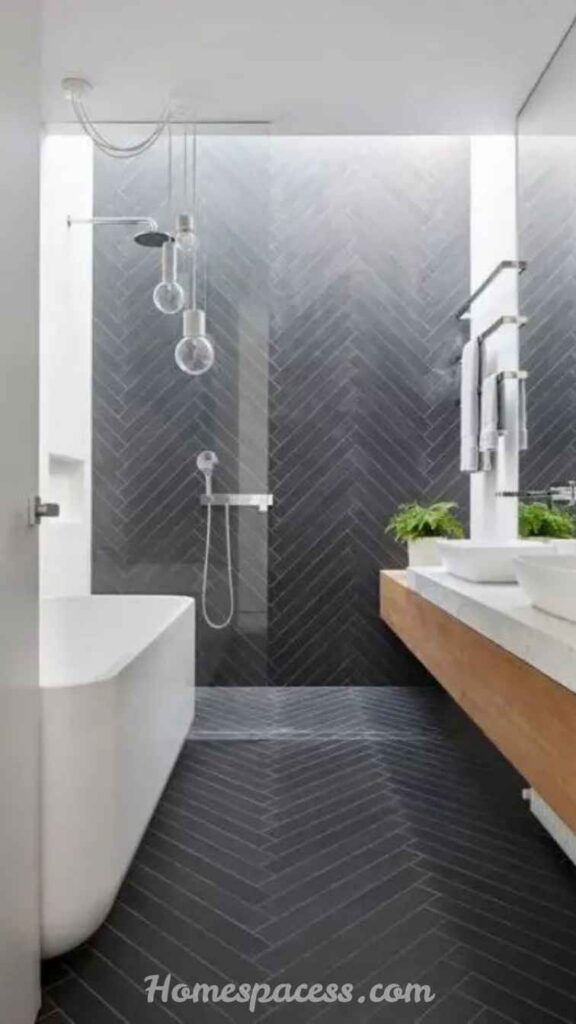
The same tile laid in different configurations creates entirely different moods. A standard 3×6-inch subway tile laid in a herringbone pattern on the floor introduces movement, craftsmanship, and visual interest that a straight-set arrangement cannot. Herringbone reads as high-end precisely because it requires more cuts and more labor so even in a modest home, it signals care and intentionality.
For smaller bathrooms, a micro-herringbone using 1×3-inch or 1×4-inch tiles creates the same effect with more delicacy. Natural stone, cement, and porcelain all work well in this pattern. Grout color becomes particularly important in herringbone layouts contrasting grout emphasizes the pattern, while matching grout subtly suggests it.
Cost vs. Impact:
Using herringbone only on the floor (not walls) keeps tile cost manageable while still delivering significant visual impact.
Introduce Zellige or Handmade Tile for Character
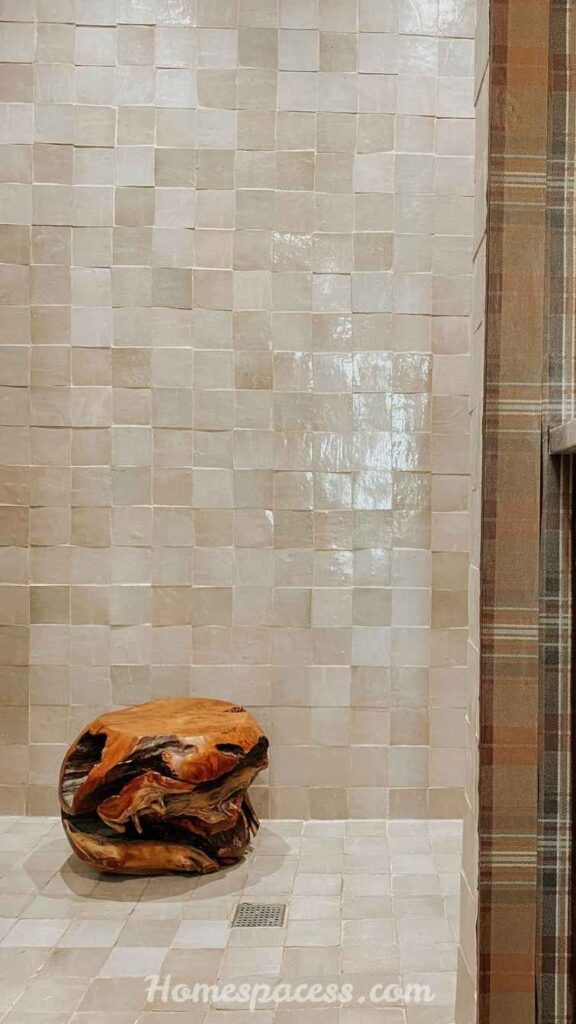
Zellige is a hand-chiseled Moroccan tile with a deliberately imperfect surface each piece varies slightly in color, thickness, and glaze. This variability is the feature, not the flaw. A zellige backsplash behind a vanity or a full zellige shower wall creates a surface that shifts in color and light throughout the day, behaving more like a material than a surface coating. It is one of the most visually alive tile options available.
Handmade and artisanal tiles from makers in Portugal, Spain, Morocco, and Mexico are increasingly accessible through online retailers. They carry a premium over factory tiles but deliver a quality and character that no machine-made product can match. Even a single zellige feature wall among otherwise standard tile creates a justified focal point.
Use Natural Stone or Stone-Effect Porcelain for Countertops
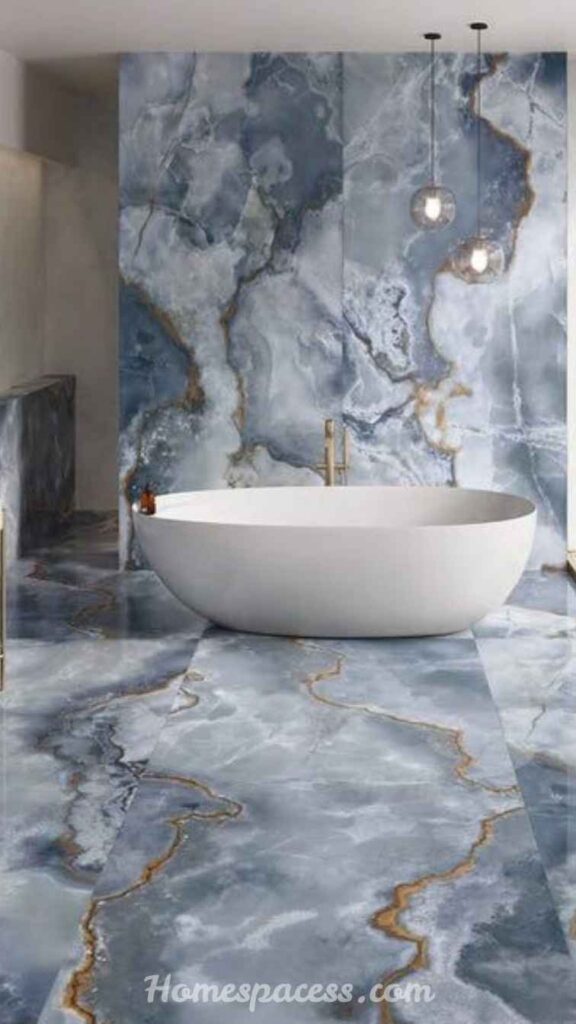
Natural stone marble, travertine, limestone, slate in bathroom countertops and vanity tops has a tactile and visual quality that synthetic materials cannot fully replicate. The veining, tonal variation, and surface warmth of stone make it worth the maintenance consideration. For those who prefer lower maintenance, large-format stone-effect porcelain has improved dramatically and can now be nearly indistinguishable at a glance.
The key distinction is surface finish. Honed or leathered stone surfaces outperform polished in bathrooms they show less watermarks, age more gracefully, and feel warmer underhand. This is a preference most homeowners discover too late, after installing highly polished marble that requires constant wiping.
Add a Textured Feature Wall With Tongue-and-Groove Paneling
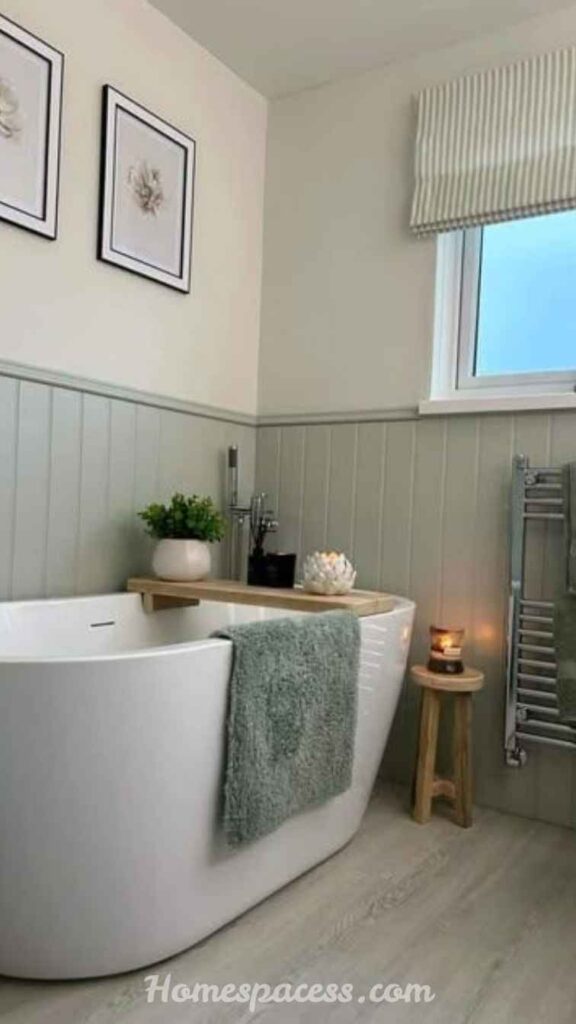
Vertical or horizontal timber tongue-and-groove paneling behind a bathtub, on a feature wall, or on the lower half of a bathroom wall adds architectural interest and warmth. Painted in the same color as the walls, it creates subtle texture. Painted in a contrasting shade usually a deeper version of the wall color it creates genuine depth and character.
Modern moisture-resistant MDF paneling products are specifically designed for bathroom environments and install relatively easily. The look references Scandinavian, coastal, and traditional design languages making it broadly compatible with many aesthetic directions.
Plants & Greenery
Living material in a bathroom does something no object can it breathes, and it makes the room feel less sterile.
Hang Eucalyptus in the Shower for a Spa Effect
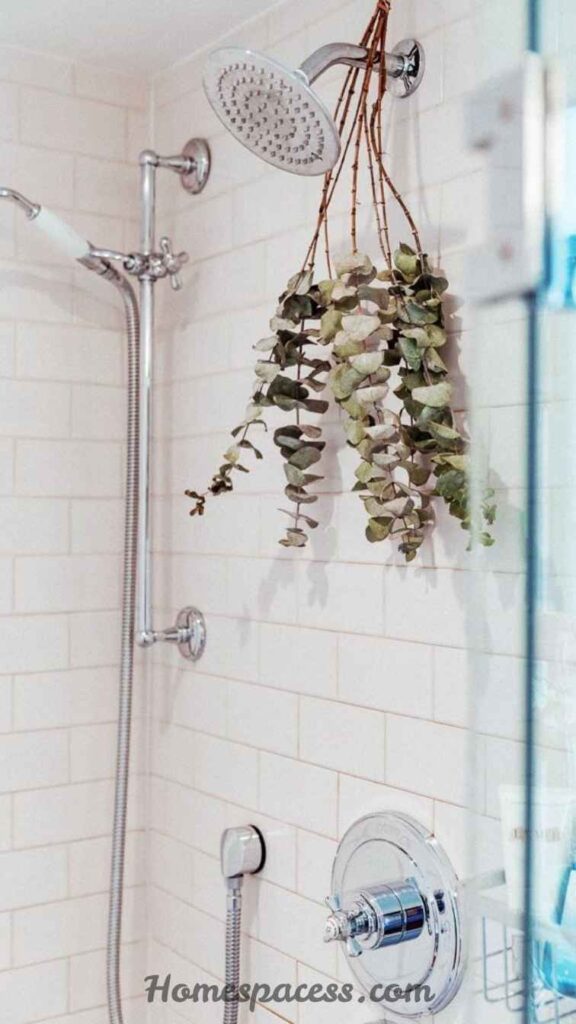
A bundle of fresh or dried eucalyptus hung from the showerhead using a biodegradable twine is one of the simplest, most effective bathroom decor ideas in this entire guide. Steam from the shower releases eucalyptus’s natural aromatic oils, creating a genuine spa atmosphere without any diffuser or product. Fresh bundles last one to two weeks; dried bundles maintain their scent for several months.
Beyond eucalyptus, fresh lavender, rosemary, and mint work similarly and add varying scent profiles. The visual effect a casual, natural bundle against a tiled wall photographs beautifully and has genuine functional value. Cost is minimal and the effect is immediate.
Bonus:
Eucalyptus also has natural antimicrobial properties, making it a doubly practical addition to a shower environment.
Choose Plants That Thrive in Bathroom Conditions
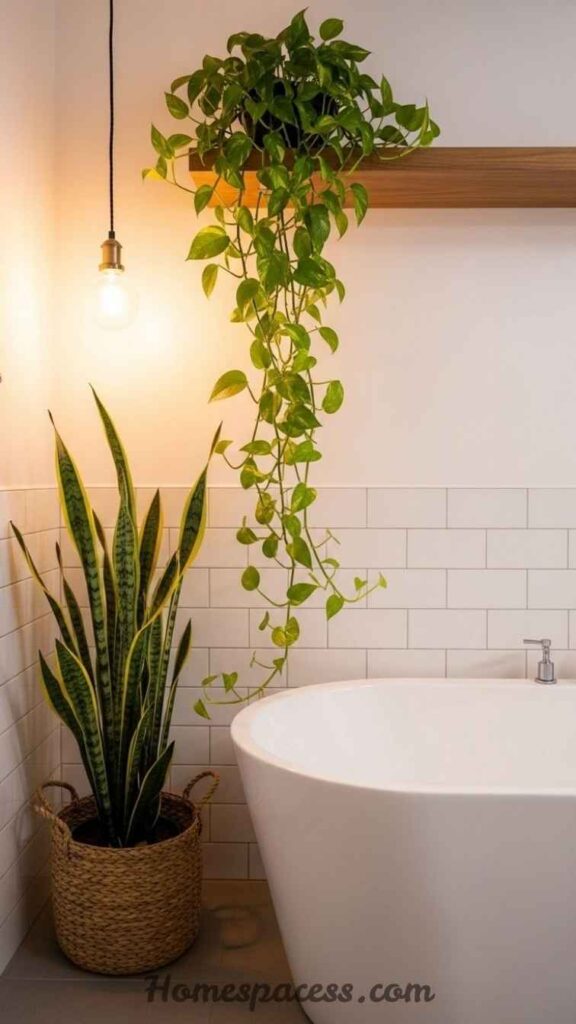
The bathroom’s combination of humidity, low light, and temperature fluctuations is hostile to most common houseplants. However, a select group of plants actively thrives in these conditions: pothos, peace lily, ferns (Boston, maidenhair, asparagus), snake plants, and ZZ plants all perform reliably. Selecting the right plant for bathroom conditions is the step most guides skip it is why so many bathroom plants die within weeks.
For bathrooms with minimal natural light, a well-styled artificial plant from a quality manufacturer is a more honest choice than a struggling real one. High-end artificial greenery has improved to the point where it is frequently indistinguishable at conversational distance and it requires no care whatsoever.
Create a Small Indoor Garden Wall or Plant Ledge
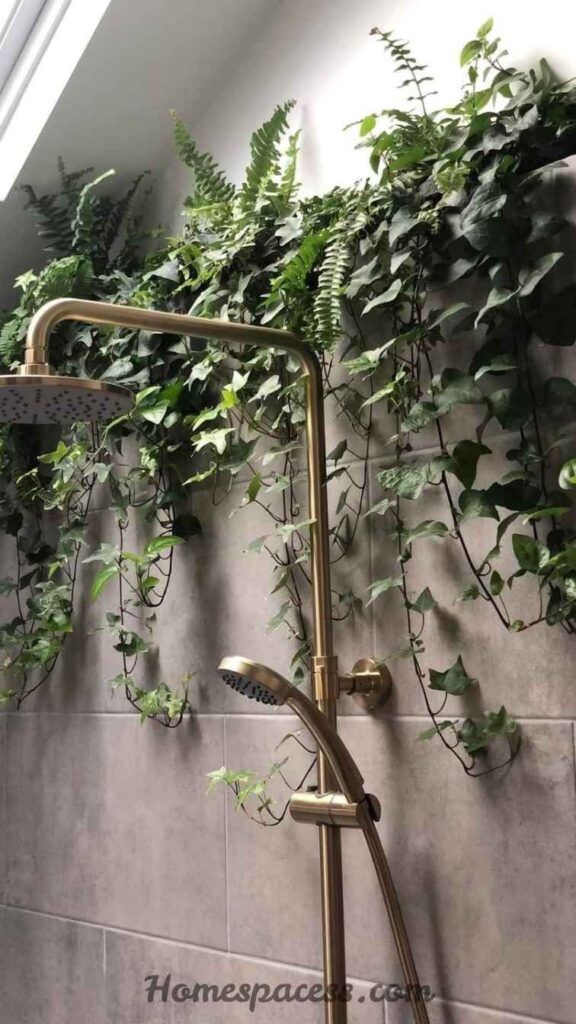
A dedicated plant ledge a narrow shelf running along one wall at shoulder height turns a collection of individual plants into a curated display. By grouping plants at a single height and in complementary containers, the arrangement reads as intentional design rather than accumulated objects. Varying the container materials (ceramic, terracotta, concrete, woven) adds textural interest.
For bathrooms with sufficient natural light, a small vertical garden frame or a series of wall-mounted planters creates a living focal point that replaces art. This is an approach more commonly seen in restaurant and hotel bathroom design but is entirely achievable in residential settings.
Accessories & Styling
The details are what separate a beautiful bathroom from an ordinary one.
Upgrade Every Hardware Piece to a Single Finish
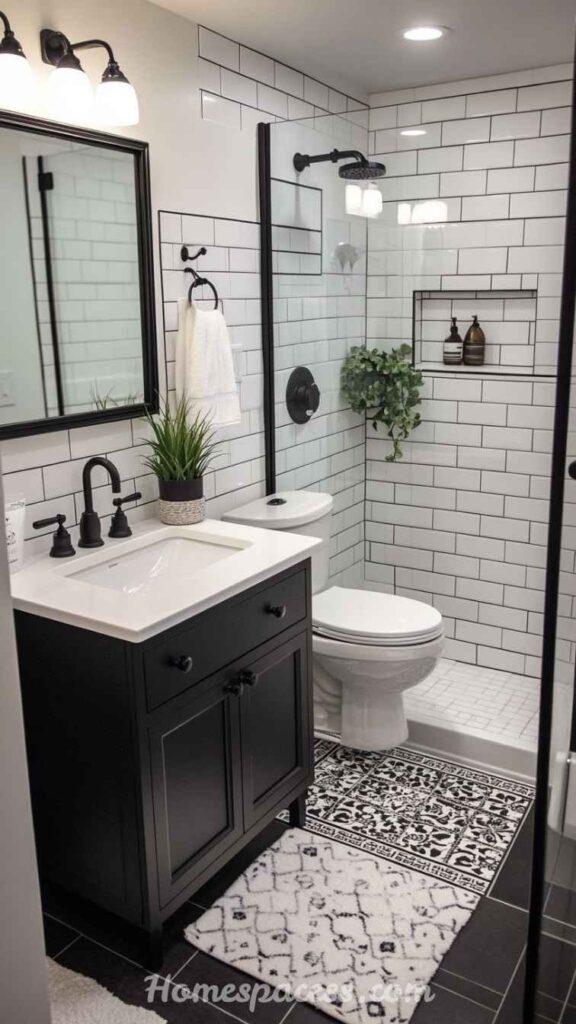
Mismatched hardware chrome towel bars, brushed nickel faucets, gold toilet paper holder is one of the most common causes of a bathroom feeling unfinished. Committing to a single hardware finish throughout immediately creates cohesion. The most versatile choices for 2026 and beyond are brushed brass, matte black, and brushed nickel each of which coordinates broadly with both warm and cool tile choices.
Replacing hardware requires no tools beyond a screwdriver in most cases. Towel bars, robe hooks, toilet paper holders, and faucet handles can all be swapped within an afternoon at a relatively modest budget. The impact on the room’s perceived quality is disproportionately large.
Key Rule:
Choose your hardware finish first, then select everything else to coordinate with it not the other way around.
Style the Countertop Like a Still Life
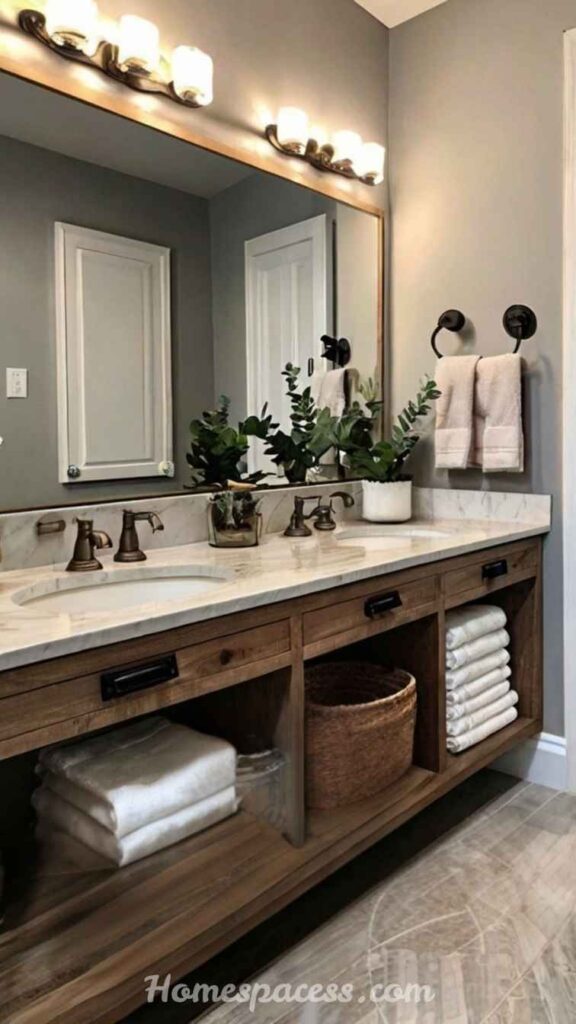
A cluttered bathroom counter is one of the most common design complaints. The solution is not a cabinet it is curation. Select three to five objects that genuinely belong on the surface and arrange them thoughtfully. A small ceramic tray holding a handwash dispenser and a sprig of dried botanicals, a single sculptural object, and a candle is more effective than a row of mismatched products.
The concept of “shelfie” culture has taught many people to arrange objects with an awareness of height, material, and negative space. Apply the same logic to bathroom surfaces: group items, vary heights, leave breathing room between arrangements. What is absent from a counter is as important as what is present.
Hang Art in the Bathroom
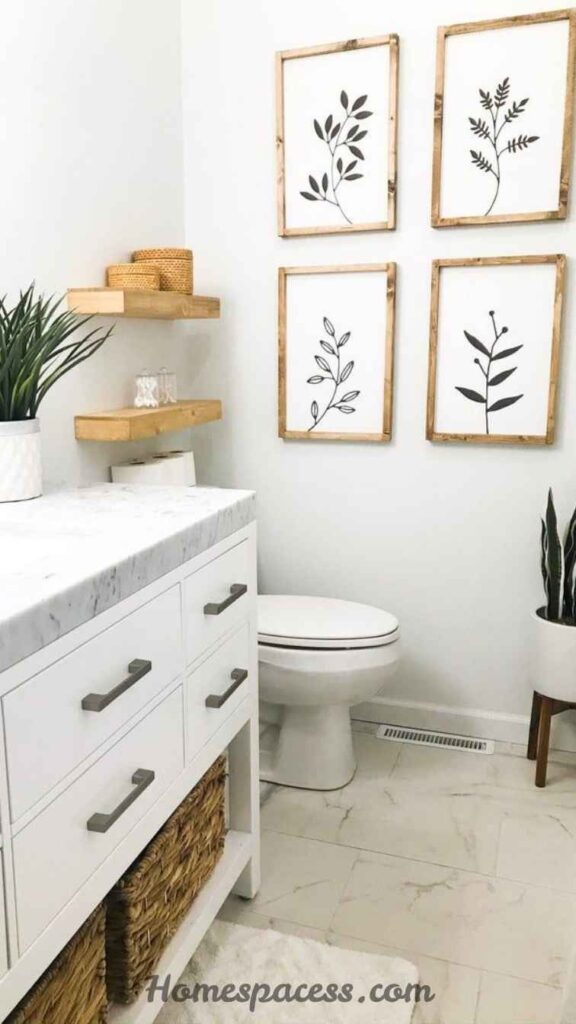
The cultural prohibition against art in bathrooms has no practical basis in rooms with proper ventilation. Art on bathroom walls immediately signals that the space is treated with the same consideration as any other room in the house. It also provides a focal point for the eye in a room where surfaces are typically monotone and reflective. Even a single framed print changes the atmosphere.
For humid bathrooms, choose metal-framed prints rather than wooden frames prone to warping, and opt for canvas or photography prints rather than paper-based work. Position art away from direct water splash zones. In terms of subject matter, botanical prints, abstract work, and photography all suit bathroom environments well the specific choice matters less than the commitment to including art at all.
Invest in High-Quality Towels and Display Them Intentionally
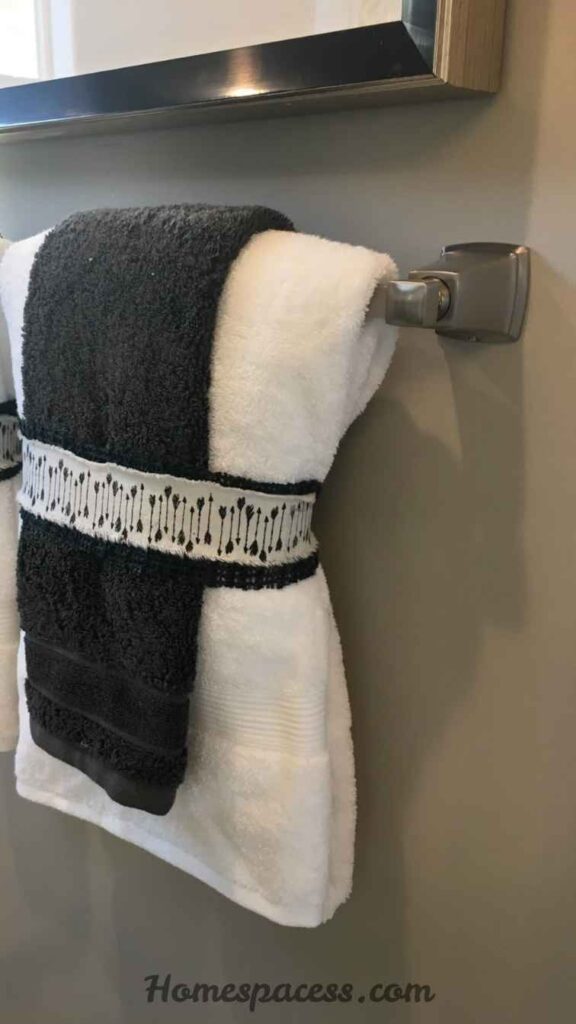
Towels in a bathroom function as both utility and soft furnishing. Inexpensive, mismatched towels in conflicting colors undermine even the most considered design scheme. A matched set of high-quality towels in a single color that complements the room’s palette contributes significantly to the overall impression. Turkish cotton, waffle weave, and linen-cotton blends all offer better texture and longevity than standard terry cloth.
Display matters as much as quality. Loosely rolled towels in a basket, neatly folded towels in a consistent orientation on a towel bar, or towels casually draped from a ladder shelf each communicates a different aesthetic. Choose one method and maintain it consistently, rather than leaving towels in various states of arrangement.
Statement Features
For when you want one element to do all the talking.
Install a Freestanding Bathtub as the Room’s Centerpiece
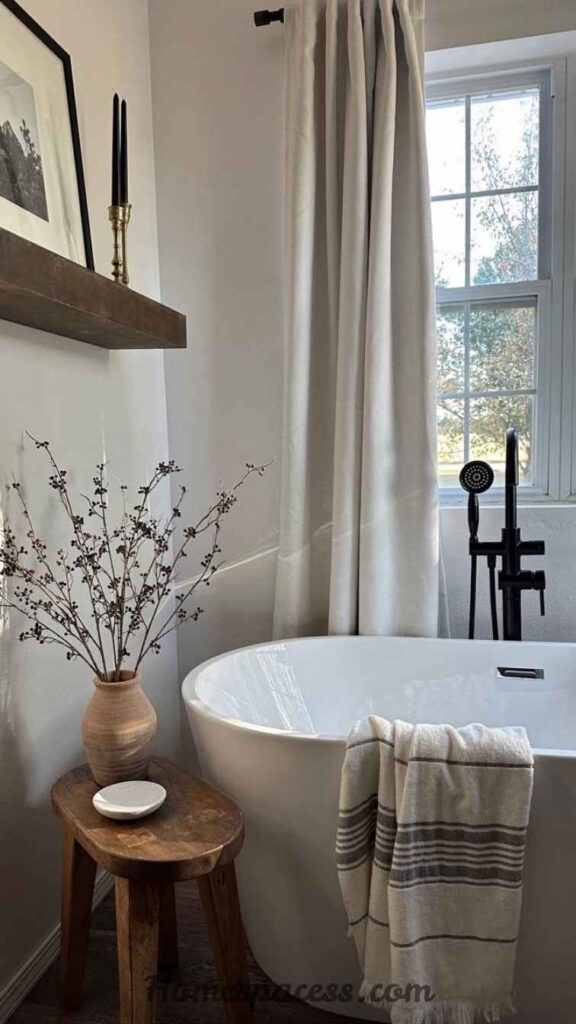
A freestanding tub is the single most impactful upgrade available to a bathroom renovation. Unlike built-in alcove tubs that disappear into the room, a freestanding tub functions as furniture as a sculptural object in the center of the space. Modern options include classic roll-top clawfoot designs, minimalist oval forms, Japanese-inspired soaking tubs, and contemporary rectangular shapes.
The positioning is critical. Placed in the center of a room or beneath a window with a view, a freestanding tub becomes a destination, not just a fixture. The practical consideration is floor space a freestanding tub requires at least 24 inches of clearance on all sides to function and feel deliberate rather than wedged in
Create a Walk-In Wet Room or Doorless Shower
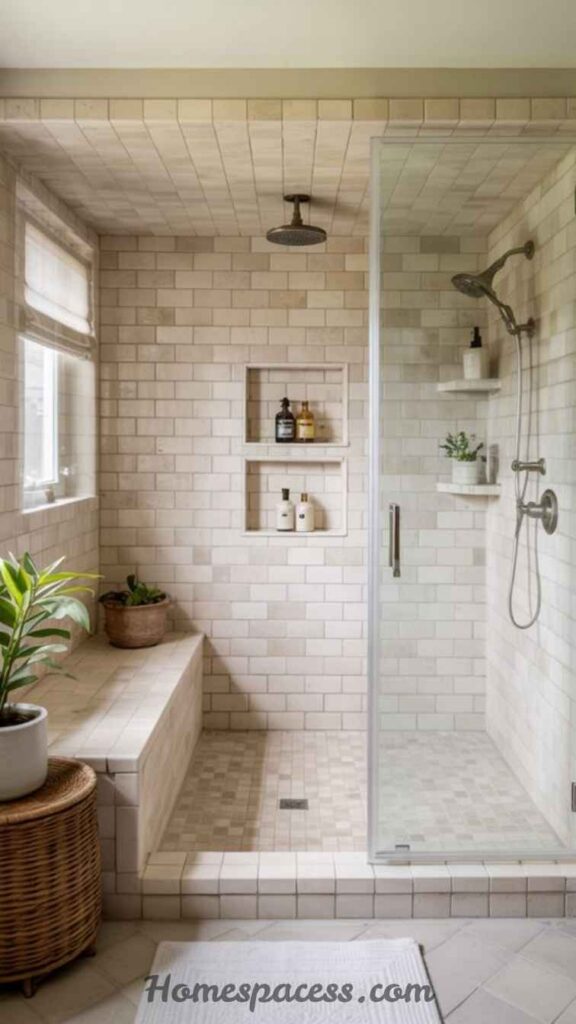
The wet room a fully waterproofed, tileable room where the shower area flows seamlessly into the rest of the bathroom with no door or enclosure is the most dramatic and functional evolution in residential bathroom design of the last decade. By eliminating the shower enclosure, the room reads as larger, cleaner, and more architecturally considered. The glass panels, tracks, and frames of traditional shower enclosures are some of the hardest things to keep clean in any bathroom.
A properly designed wet room includes a linear drain at one end or in the floor, a slight slope toward the drain, and full waterproofing of walls and floor. The cost is higher than a standard shower installation, but the reduction in maintenance no tracks to clean, no seals to replace, no glass to squeegee makes it worthwhile over time.
Long-term Value:
Wet rooms consistently add resale value and are increasingly expected in premium property markets.
Add Underfloor Heating Beneath Tile
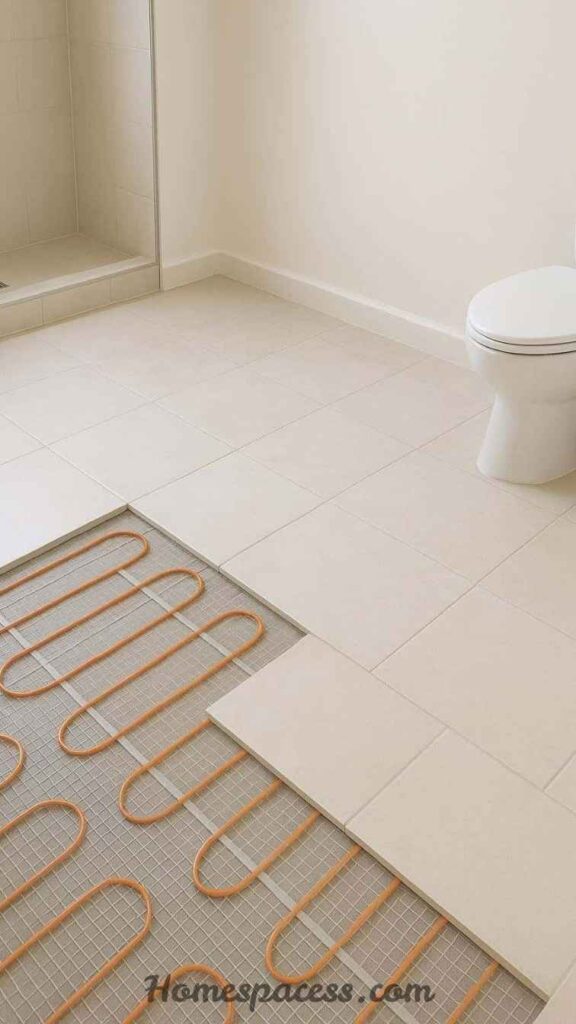
No single comfort upgrade transforms daily bathroom use more completely than underfloor heating beneath a tiled floor. Cold tile against bare feet is one of the most universally disliked aspects of the bathroom experience particularly in temperate climates. Radiant underfloor heating eliminates this entirely and, unlike forced-air heating, provides a consistent warmth that rises naturally through the room.
Electric mat systems are installable as a DIY project during a tile replacement and cost significantly less than wet underfloor systems. Many modern electric mats are WiFi-enabled, allowing the floor to be programmed to warm before your typical morning wake time a small luxury with a significant daily quality-of-life impact.
Small Bathroom Decor Ideas
Compact doesn’t mean compromised. These three ideas are designed for tight spaces.
Use Large-Format Tiles to Reduce Visual Noise
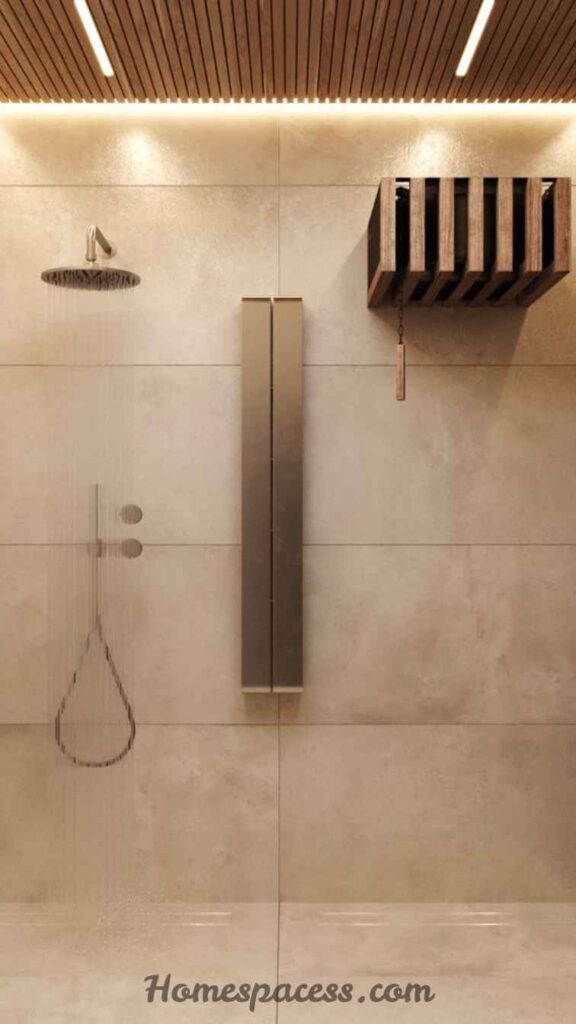
The conventional wisdom that small rooms need small tiles is incorrect. Large-format tiles 24×24 inches, 24×48 inches, or even larger reduce the number of grout lines in the room, which reduces the visual “noise” that makes spaces feel smaller. A small bathroom tiled entirely in 24×24-inch porcelain in a continuous color reads as a calm, unified space. The same room in 4×4-inch mosaic has significantly more complexity at every surface.
The practical benefit is also maintenance: fewer grout lines mean less grout to clean. Large-format tiles in matte or honed finishes work particularly well in small bathrooms, avoiding the reflective excess that glossy tiles can create in compact spaces.
Replace a Swing Door With a Pocket or Barn Door
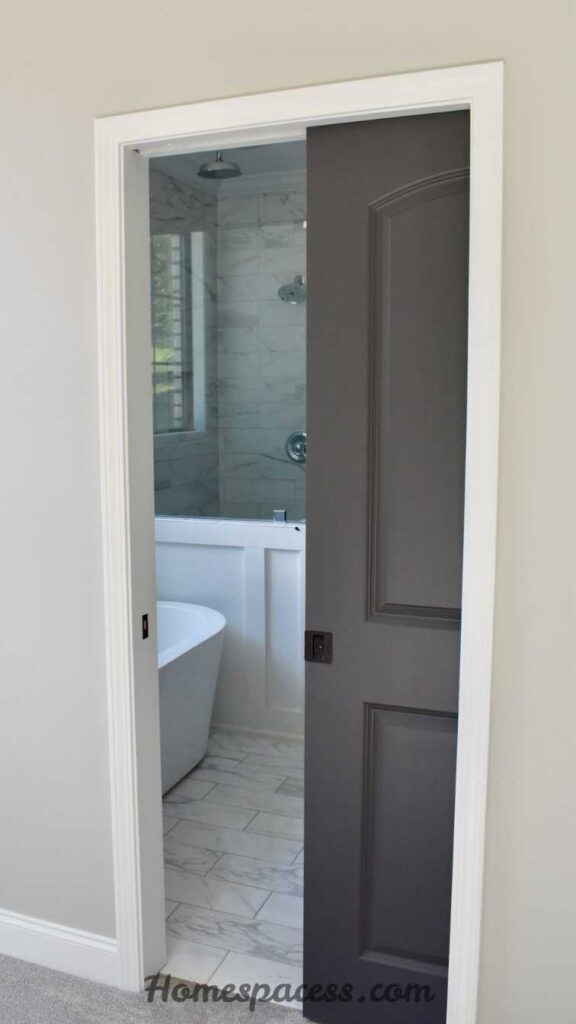
A standard swing door requires 9–12 square feet of clear floor space to operate. In a small bathroom, that arc of swing dictates furniture placement and limits the room’s functional layout. A pocket door one that slides into the wall or a barn-style door that slides along the wall face reclaims that entire area. The spatial impact in a 40–50 square foot bathroom is immediately noticeable.
Pocket door installation requires some wall work but is well within professional contractor scope during any renovation. Barn doors require no structural work at all and add a distinctive design element. For bathrooms between a bedroom and hallway, the barn door adds character from both approaches.
Use a Continuous Material From Floor to Wall in the Shower
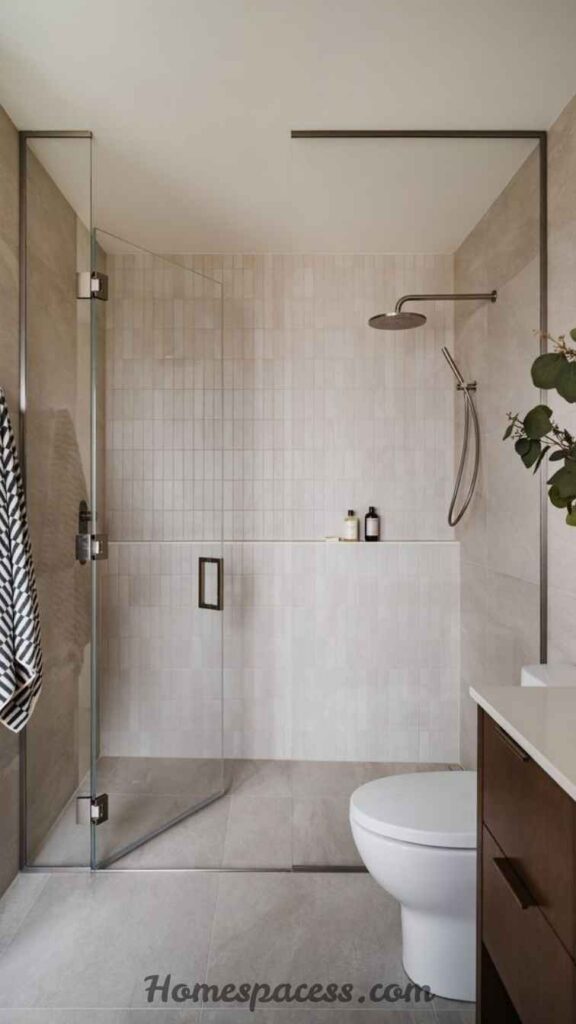
Running the same tile or material from the shower floor up the walls and potentially across the bathroom floor too is the most effective single technique for making a small bathroom feel larger. The eye has no interruption, no contrasting boundary to fix on, and the space reads as a continuous whole rather than a collection of separate zones. This technique appears universally in the most celebrated small bathroom designs.
The same material does not mean the same format the shower floor can use a smaller version of the wall tile for safety and drainage purposes. What matters is the continuity of color and texture. Natural stone in particular works beautifully with this approach, and stone-effect porcelain makes it accessible at a lower cost point.
Designer Secret:
Continue the floor tile from inside the shower to outside it without a threshold strip the seamless continuation adds several perceived feet to the room’s depth.
Conclusion:
The most common mistake in bathroom design is not a bad choice it is paralysis. The sheer number of decisions involved in even a modest bathroom refresh causes many people to make no decisions at all, living with a space they dislike indefinitely. The antidote is to identify the single highest-impact change available to you often the lighting and make that one change well. Build from there.
A beautiful bathroom is not the result of an unlimited budget. It is the result of consistent decision-making, attention to materials and proportion, and the discipline to do fewer things at a higher standard. The 29 ideas in this guide offer a range of entry points. Choose the one that resonates most, then begin.
Trend Analysis
Where Bathroom Design Is Heading And Why
Design trends in bathrooms tend to move slowly tiles and fixtures are expensive to replace which means the trends gaining momentum now will be visible in new builds and renovations for the next five to eight years. Understanding them helps you make choices that feel current today and hold their visual appeal longer.
Warm Neutrals Over Cold Whites
Cream, off-white, sand, and warm greige have displaced cool gray as the dominant neutral. The shift reflects a broader cultural move toward warmth and organic texture
Japandi Bathroom Aesthetics
The Japanese-Scandinavian hybrid minimal, natural, quiet, functional continues to dominate aspirational bathroom design globally. It resists trend obsolescence because it rejects trendiness.
Expressive Maximalism Returns
After a decade of minimalism, design-forward bathrooms are embracing pattern-on-pattern, bold color combinations, and maximalist tile designs particularly in powder rooms.
Tactile, Handmade Surfaces
Zellige, handmade ceramics, fluted glass, and textured lime renders are commanding premium positioning as a counter-reaction to perfected, machine-made sameness.
The Color Trend Most Designers Are Watching
Terracotta, rust, and burnt sienna dismissed a decade ago as outdated have undergone a full rehabilitation in interior design. Their warmth complements natural materials, reads as unpretentious, and ages gracefully. In bathrooms specifically, terracotta floor tiles, rust-toned grout, and warm amber lighting are appearing in high-end hospitality design and filtering into residential spaces. Expect these tones to peak in 2026–2027 before softening into the mainstream.
Simultaneously, the appetite for maximalist print in wallpaper botanical, geometric, and art nouveau-influenced patterns is returning to the powder room in particular. Because the powder room is used briefly by guests, it can sustain a bolder design statement than a daily-use bathroom. Designers are treating it as a gallery space with plumbing.
Expert Insights
Practical Design Principles That Most Guides Miss
The gap between a beautiful bathroom in a magazine and a beautiful bathroom in real life is usually not money it is understanding which decisions have the highest impact per dollar and effort spent. The following insights come from the principles that interior designers and professional renovators apply consistently, but rarely articulate in public-facing advice.
The 60-30-10 Rule Applied to Bathrooms
Color theory’s classic 60-30-10 rule 60% dominant color, 30% secondary, 10% accent applies directly to bathroom design and explains why so many bathrooms feel unbalanced. Most homeowners work with two materials (tile and paint) and accidentally end up with 50/50 splits that create tension rather than harmony. In a well-composed bathroom, the primary tile or wall finish (60%) is supported by a secondary material like cabinetry or countertop (30%), and punctuated by accent hardware and accessories (10%). Thinking in these proportions before making any purchase decision prevents the visual discord that is so common in DIY renovations.
Why Proportion Matters More Than Style
A Victorian-style mirror in a contemporary bathroom can work beautifully. A mid-century vanity in a traditional space can work beautifully. What never works is incorrect scale a mirror that is too small for the wall, a vanity that overwhelms the room, or a freestanding tub in a space too small to accommodate it. Before committing to any significant bathroom decor purchase, tape out its footprint and height on the floor and wall with masking tape. This costs nothing and prevents extremely expensive mistakes.
The Single Most Overlooked Upgrade: Ventilation
Most designers and design guides skip this entirely, but inadequate ventilation is the cause of mold, failing grout, peeling paint, and persistent odor in bathrooms all of which undermine every other design investment. A proper bathroom exhaust fan, sized for the room’s cubic footage and rated for humidity, is the invisible infrastructure that protects everything else. Upgrading to a quiet, high-efficiency fan with a humidity sensor (which runs automatically when moisture is detected) is a $100–200 investment that extends the life of all surface finishes significantly.
Sustainable Design
Long-Term Value and Environmental Perspective
Water Efficiency
Low-flow showerheads now deliver full pressure at 1.5 GPM versus the standard 2.5 GPM a 40% water reduction with no perceptible quality difference.
Material Longevity
Natural stone, ceramic, and properly maintained timber outlast synthetic materials by decades. Choosing durability over cheapness is the most sustainable design decision.
VOC-Free Finishes
Low and zero-VOC paints and sealants have reached performance parity with conventional products. In enclosed bathroom spaces, they meaningfully improve indoor air quality.
The most sustainable bathroom renovation is often the one that avoids a renovation entirely or delays it by maintaining and refreshing existing elements rather than replacing them. Regrouting instead of retiling, painting instead of replacing cabinetry, and upgrading fixtures rather than full vanity replacement all reduce material consumption and cost significantly. This is not a compromise it is a design discipline that often yields more considered results than wholesale replacement.
Reclaimed and salvaged materials are underused in bathroom design. Reclaimed terracotta floor tiles, antique mirrors, vintage light fixtures, and salvaged stone carry a material history and character that no new product replicates. Sourcing even one element from a salvage yard or antique dealer introduces authenticity that transforms a room from decorated to designed.
Future Innovations
The Bathroom of 2028–2030: What’s Coming
Bathroom design is approaching a period of significant technological integration not in a gadget-heavy, novelty-driven way, but in a meaningful improvement of core functions. The following developments are already in commercial deployment or active development and will likely define premium residential bathrooms within the next four years.
Now → 2026
Smart Glass and Switchable Privacy Film
Electrochromic glass that shifts from transparent to opaque at the touch of a switch already in high-end hotels is becoming cost-accessible for residential bathroom windows and shower enclosures. It eliminates the need for curtains or blinds entirely.
2026 → 2028
Integrated Health Sensing Surfaces
Mirror-embedded health sensors that passively track blood pressure, skin hydration, UV damage, and even early signs of health changes during a normal morning routine are in clinical trials. Smart mirrors will evolve from displays to diagnostic tools.
2026 → 2027
Antimicrobial Surface Coatings
Titanium dioxide and copper-infused coatings for tile, grout, and hard surfaces that actively neutralize bacteria and viruses without cleaning agents are entering the residential market. Bathrooms will become genuinely self-sanitizing at the surface level.
2027 → 2030
Greywater Recycling Systems
Compact in-home systems that capture, filter, and redirect shower and bath water to toilet flushing are approaching cost-effectiveness in water-stressed markets. They will become code-required in new construction in many regions within this decade.
The most important design implication of these technologies is that fixture and surface selection will need to accommodate integration conduit for wiring, rough-in points for sensors, and substrate compatibility for smart coatings. Designers recommend future-proofing renovations now by including this infrastructure even before the technology is installed, much like running ethernet during construction “just in case.”
Common Mistakes
The Errors That Quietly Ruin Good Bathroom Design
Most bathroom design failures are not dramatic. They are quiet accumulated missteps decisions that each seem reasonable in isolation but combine into a result that never quite feels right. These are the mistakes that experienced designers identify most consistently.
- Installing storage that doesn’t match actual usage:Deep base cabinets store products that get lost and forgotten. Open shelving stores products that collect dust and moisture. The ideal bathroom storage system combines a mix: drawers for daily-use items (easy access, no rummaging), cabinets for back-stock, and one small area of open display for curated items only. Planning storage around real behavioral habits rather than aesthetic preferences is the key insight most renovation advice misses.
- Buying tile before seeing it in context: A tile sample card viewed in a showroom under fluorescent light behaves completely differently on a full wall in your specific bathroom’s light conditions. Always order sample tiles and live with them in position for at least 48 hours across different times of day before committing to a full order.
- Choosing fashion over finish durability: Highly polished chrome and bright white grout look beautiful in showrooms and photographs. In daily use, both require constant maintenance to maintain that appearance. Matte and honed finishes, darker grout, and unlacquered metals age more gracefully and demand far less upkeep.
- Under-lighting the mirror: The vast majority of residential bathrooms have overhead-only lighting that casts downward shadows across the face. Side-mounted task lighting at mirror level is the professional standard for a reason. This is the most commonly identified error in finished bathroom renovations.
- Neglecting the floor when planning the budget: Floors are touched, quite literally, every single time the bathroom is used. Yet floor tile budgets are routinely cut in favor of wall tile or fixtures. Upgrading the floor material even in a small bathroom has a disproportionate impact on perceived quality because it is the surface most continuously in contact with the occupant.
FAQ’S About Bathroom Decor Ideas
What is the most impactful bathroom decor change for a small budget?
Lighting is consistently the highest-impact, lowest-cost change. Adding side-mounted sconces at mirror level and switching to warm-toned dimmable bulbs transforms how a bathroom looks and feels. Second highest impact: replacing all hardware to a single consistent finish.
What bathroom decor trends will last beyond 2026?
Warm neutrals, natural materials (stone, timber, terracotta), handmade and artisanal surfaces, and the Japandi aesthetic are all durable directions that avoid rapid trend obsolescence. They are rooted in material quality and timeless proportions rather than momentary fashion.
How do I make a small bathroom feel bigger without expanding it?
Use large-format tile continuously across floor and shower walls, install a backlit or frameless mirror, replace a swing door with a pocket door, and maintain a single dominant color throughout. Avoid clutter and mismatched storage accessories.
What bathroom plants are best for low-light conditions?
Pothos, snake plants, ZZ plants, peace lilies, and Boston ferns all tolerate the combination of humidity and low light typical of many bathrooms. For bathrooms with no natural light at all, high-quality artificial plants are a more honest design choice than struggling real ones.
Is bathroom wallpaper practical?
Yes, with the right product. Vinyl-coated and non-woven wallpapers are specifically designed for bathroom humidity and moisture. The powder room is the safest starting point it sees less direct humidity than a shower bathroom and carries the most visual impact per square foot.

Team Home Spacess shares simple, practical design ideas that work for real families. The team focuses on cozy décor, soft colors, and natural textures that make a space feel truly lived-in. From everyday decorating tips to creative home projects, Team Home Spacess is dedicated to helping readers create warm, comfortable, and inviting spaces with a fresh and personal touch.