

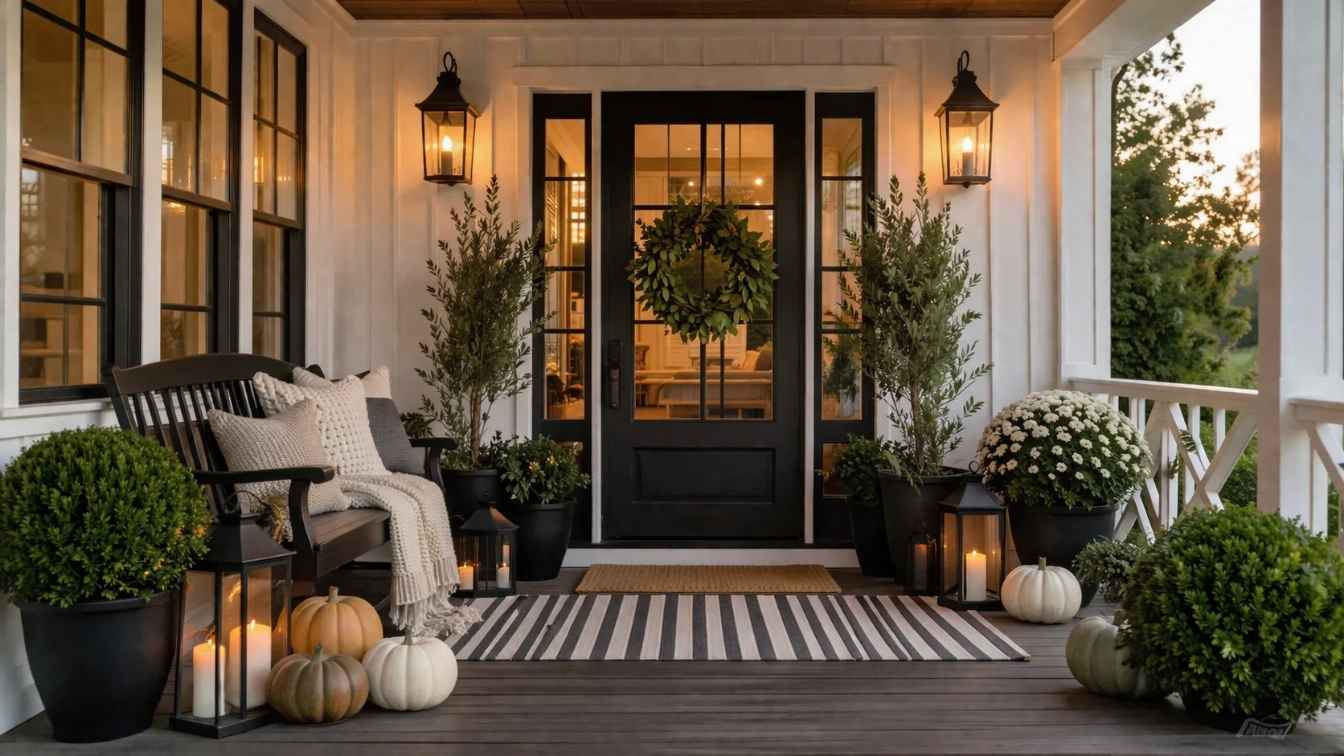
Most homeowners spend thousands perfecting interiors while completely ignoring the space that forms every visitor’s first opinion the front porch.
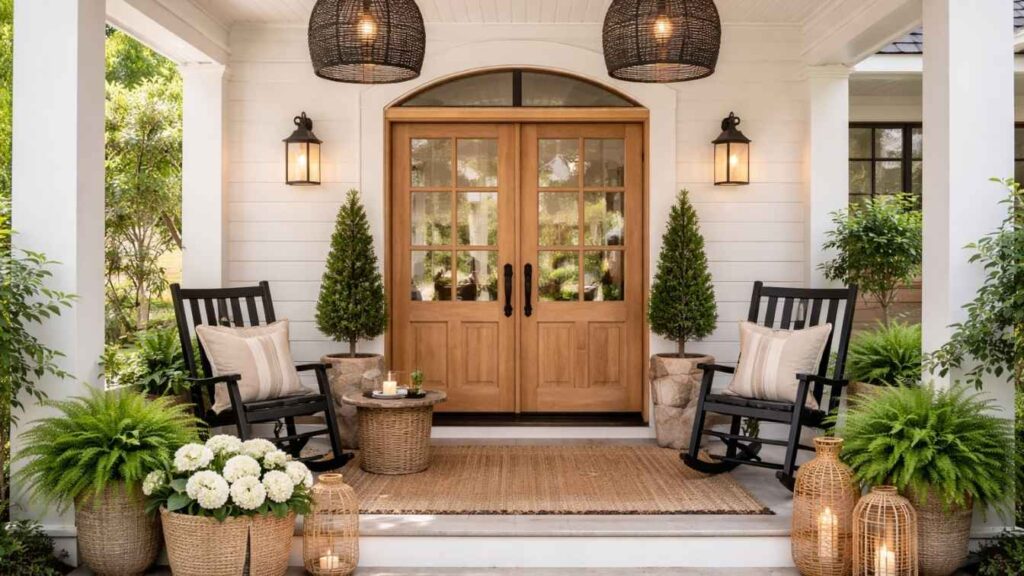
Whether yours is a narrow 4-foot stoop or a sprawling wraparound, the front porch is your home’s handshake. A well-designed porch can increase perceived home value by 5–15%, improve livability, and create a seamless indoor-outdoor transition that modern buyers and guests genuinely crave.
This guide covers 23 practical, stylish, and budget-aware front porch ideas from architectural upgrades and seasonal decor to smart tech integrations and eco-friendly landscaping. Each idea includes design context, real-world application, and pro-level insights you won’t find in a basic home improvement list.
Layered Porch Seating Arrangements
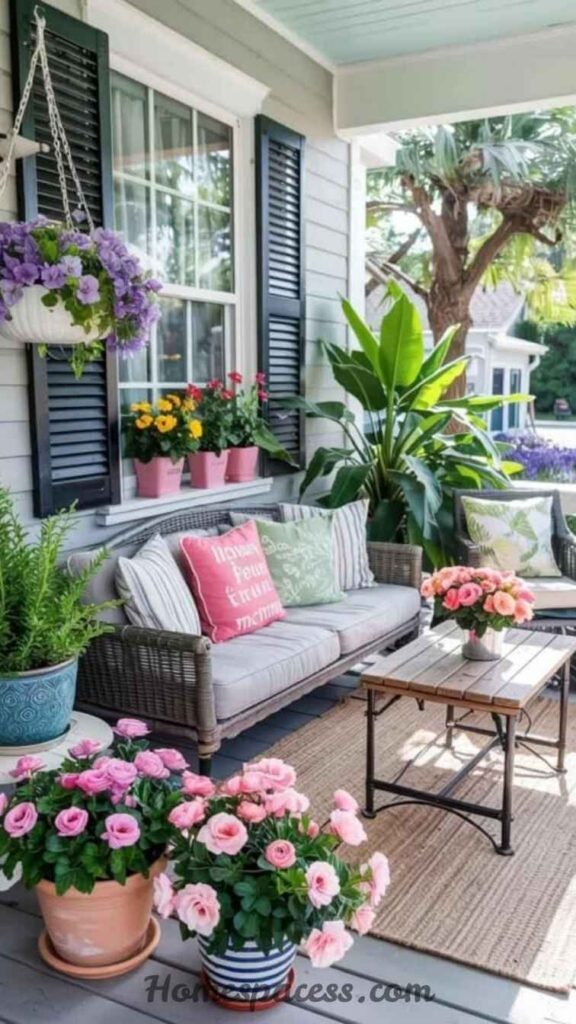
The biggest mistake most homeowners make is treating a porch like a furniture showroom placing two identical chairs and calling it done. Instead, think in layers: a primary seating area (two chairs with a small side table), a secondary perch (a bench or swing), and a flexible piece like a pouffe or footstool. This creates visual depth and makes the space feel genuinely livable rather than staged.
For small porches under 80 square feet, folding or nesting furniture is your best friend. Brands now offer weather-resistant teak, HDPE lumber, and powder-coated aluminum that visually mimic indoor furniture. For larger porches, an L-shaped sectional with a coffee table creates a defined “room” that encourages lingering which is exactly what increases perceived home value when buyers visit.
PRO TIP
Angle your chairs at 30–45 degrees facing each other rather than facing the street. This creates a conversational layout and makes the porch feel intimate and intentionally designed not like a waiting room.
Must Read: 22 Home Gym Ideas That Actually Work For Every Space & Budget
Layered Porch Lighting The Three-Level Rule
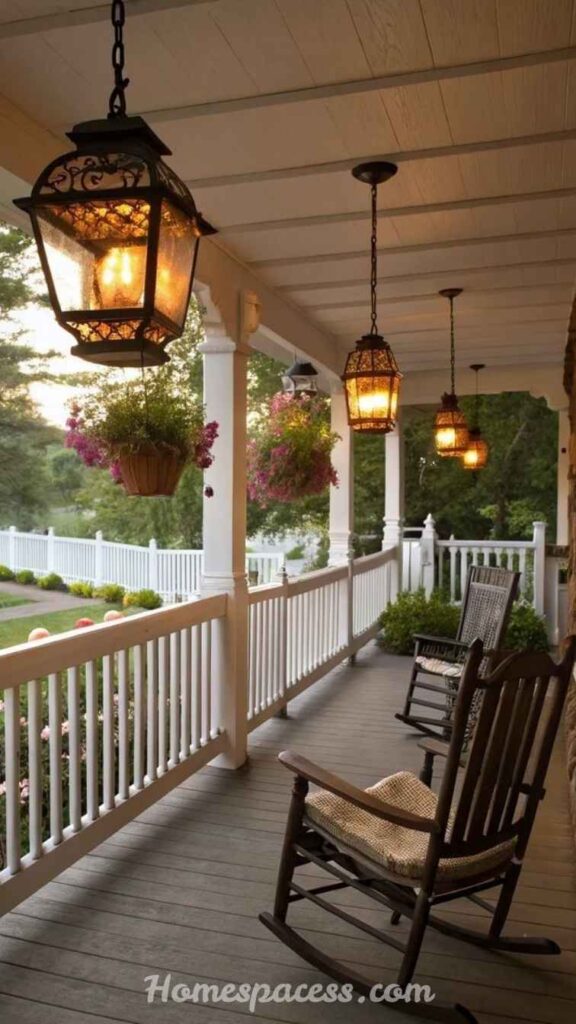
A single overhead porch light is the design equivalent of a bare bulb in a dining room. Effective porch lighting works on three levels: ambient (overhead fixtures or recessed lights), task (motion-sensor path lights or step lights), and accent (string lights, lanterns, or LED strip lighting under railings). This hierarchy creates warmth after sunset and significantly boosts security without looking utilitarian.
The warmth of your bulbs matters enormously here. Use 2700K–3000K color temperature bulbs for a golden, welcoming glow anything cooler reads as sterile and institutional. Solar-powered string lights have improved dramatically in 2026–2027, with newer models offering 12+ hours of runtime and automatic dusk-to-dawn sensors. For a cohesive look, match your fixture metal finish to your door hardware (brushed brass, matte black, or oil-rubbed bronze are trending).
PRO TIP
Install a smart dimmer for overhead porch lights. Being able to lower brightness at night creates ambiance, extends bulb life, and counterintuitively makes the porch feel more private and cozy rather than “on stage.”
Don’t Skip: 25 Stunning Home Exterior Ideas That Actually Boost Curb Appeal
Oversized Statement Planters Go Big or Go Boring
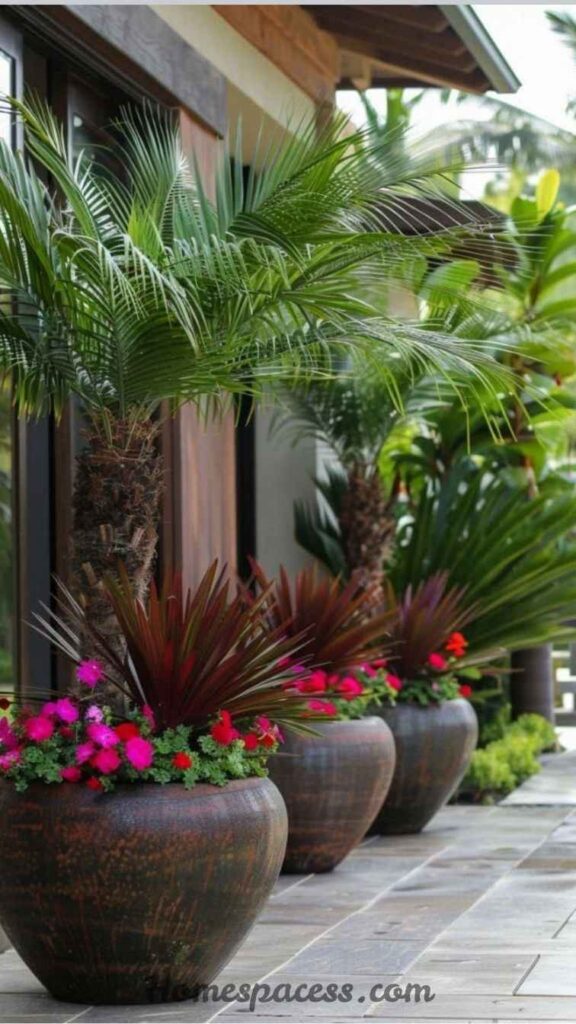
Small planters are the single most common and most correctable front porch decorating mistake. A pair of 18-inch pots flanking a front door reads as an afterthought. Commit to oversized containers 24 to 30 inches or larger planted with “thriller, filler, spiller” combinations: one tall architectural plant (like a dwarf evergreen or ornamental grass), filled with mounding plants (petunias or sweet potato vine), and a trailing element that softens the planter edge.
Fiberglass and lightweight concrete planters have revolutionized large-scale container gardening for porches. They’re frost-resistant, UV-stable, and can weigh 80% less than actual terracotta or stone while appearing indistinguishable. For year-round interest, consider a mix of seasonal annuals (changed 3–4 times per year) combined with a permanent evergreen anchor plant that stays in the pot across seasons.
PRO TIP
Paint the inside of dark planters white before filling. This reflects light to roots and dramatically extends plant health in hot climates where dark containers absorb heat and can literally cook root systems.
Don’t Miss: 27 Salon Interior Design Ideas That Turn Clients Into Loyal Fans
Porch Ceiling Treatments The Underutilized Canvas
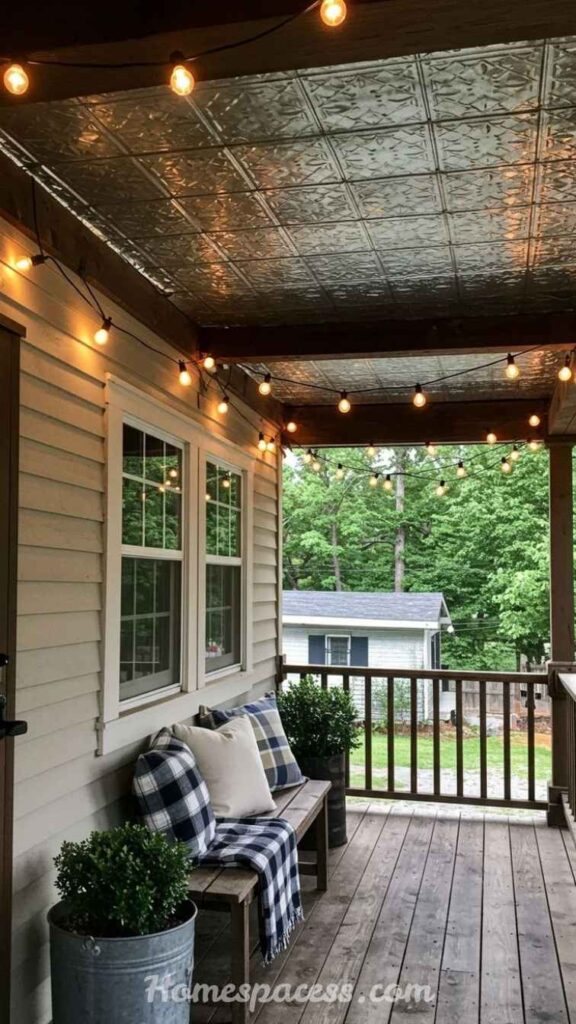
The porch ceiling is one of the most overlooked design opportunities in residential architecture. Painting it a classic “haint blue” a tradition dating back to Lowcountry South Carolina serves double duty as both a design statement and (according to tradition) a bug deterrent. The pale blue-green color visually recedes, making the ceiling feel higher, and creates a sky-like effect that transforms the porch atmosphere entirely.
Beyond color, tongue-and-groove wood ceiling planks (or realistic PVC alternatives) add warmth and texture. Adding a ceiling fan with LED lighting to a covered porch extends usability by 3–4 hours on hot evenings a feature home buyers consistently rate as high value in warm-climate markets. For covered porches, cedar or cypress planks are naturally rot-resistant and don’t require painting, developing a beautiful silver-gray patina over time.
PRO TIP
If you install tongue-and-groove porch ceiling boards, run them perpendicular to the house. This directs the eye outward, making a shallow porch appear deeper and more spacious than it actually is.
Read More: 20 Walk In Closet Ideas To Transform Your Space
Porch Swing or Daybed The Irresistible Feature
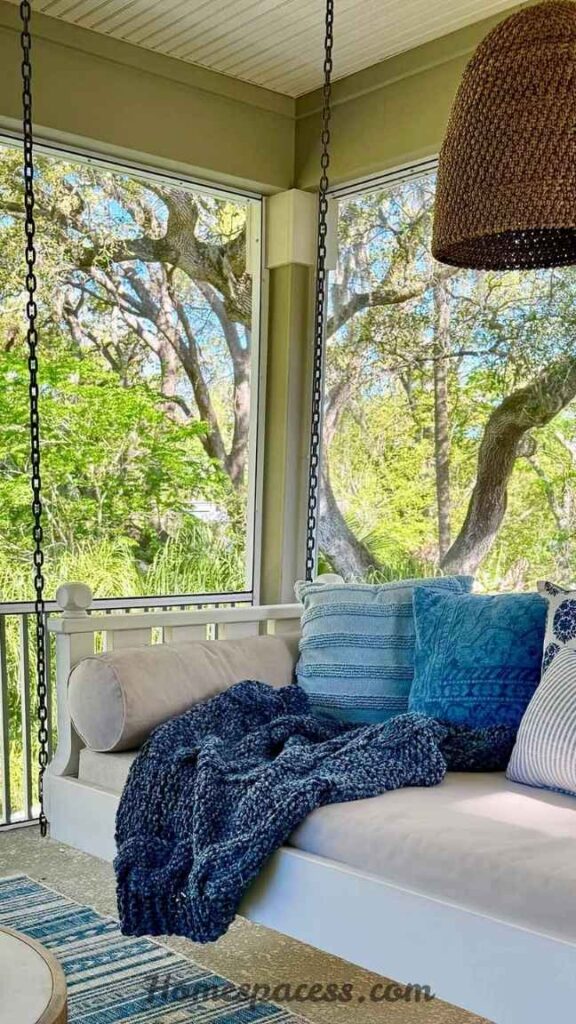
Among all front porch furniture choices, a porch swing has the single strongest emotional resonance with homebuyers and visitors. Studies from the National Association of Realtors have consistently found that outdoor swing seating registers as one of the top desired exterior features across all buyer demographics. It signals unhurried comfort, community connection, and a home that invites lingering values that have only grown since 2020’s shift toward home-as-sanctuary.
Modern porch swings go well beyond the traditional wooden plank-and-chain design. Hanging daybeds with canopies (sometimes called “egg swings” or “swing beds”) have become major statement pieces for spacious porches. For smaller spaces, a two-person Adirondack-style swing with a low profile and wide armrests balances function and form. Always ensure your ceiling joists can support at minimum 500 pounds when choosing hanging hardware use lag screws into joists, not just ceiling drywall anchors.
PRO TIP
Add a thin outdoor cushion with a removable, machine-washable cover to your porch swing. The cushion increases comfort exponentially and signals that the space is actively used which makes it far more inviting than bare wood.
Bold Front Door Color Your Porch’s Power Move
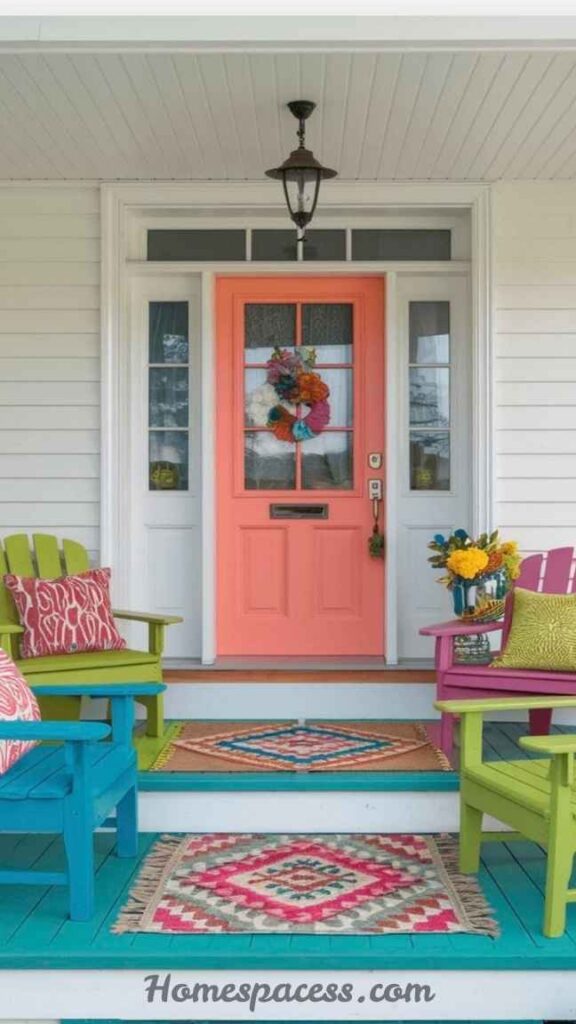
No single investment under $200 produces a more dramatic porch transformation than a freshly painted front door in a confident color. Research from Zillow’s 2024 data science team found that certain front door colors black, charcoal gray, and deep navy specifically can increase perceived home value by $6,000 or more compared to neutral tan or brown doors. The front door is the focal anchor of your entire porch composition; everything else frames it.
For 2026, trending front door palettes have shifted toward deeper, more complex tones: forest green, terracotta, moody burgundy, and oxidized copper-blue. These colors photograph exceptionally well for real estate listings and create a memorable identity for the home. When choosing a color, consider the undertone of your home’s exterior warm-toned brick pairs beautifully with deep green or terracotta, while cool-toned gray or white siding suits navy, black, or sage.
PRO TIP
Use exterior-grade satin or semi-gloss paint on your front door (not flat). The slight sheen reflects light attractively, makes the color richer, and cleans far more easily than matte finishes that absorb grime and fingerprints.
Column or Pillar Upgrades Structural Elegance
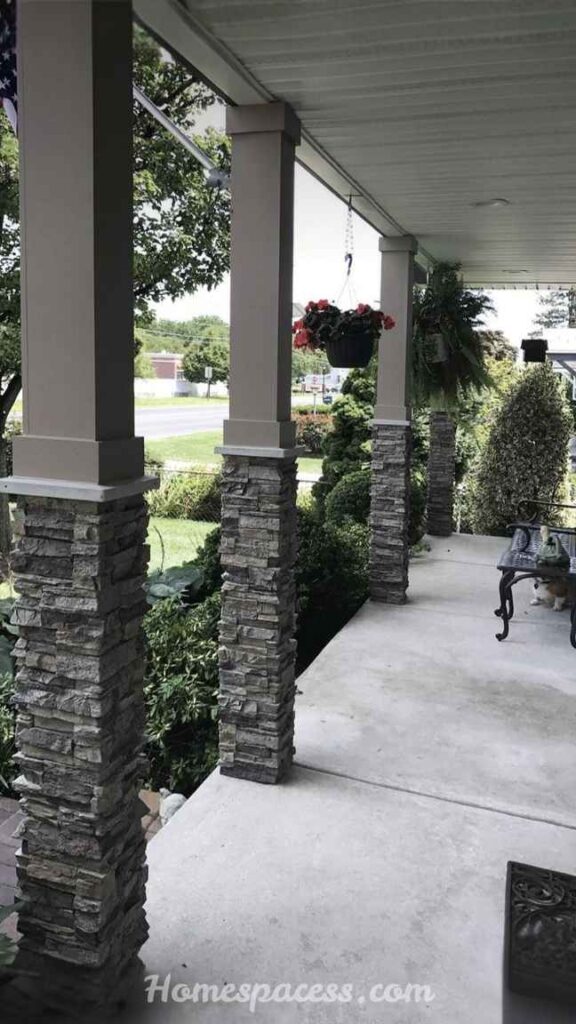
Porch columns do visible heavy lifting in defining your home’s architectural style yet most are either neglected builder-grade 4×4 posts or deteriorating hollow columns. Wrapping existing square posts with craftsman-style box columns (using PVC trim boards or composite lumber) instantly elevates a basic porch to a character-rich structure. The material cost is modest ($100–$250 per column), but the visual impact is disproportionately large.
Matching your column style to your home’s period architecture matters. Craftsman and Bungalow-style homes suit tapered square columns on brick or stone piers. Colonial and traditional homes benefit from round fluted columns. Contemporary homes look best with clean, square columns in smooth composite or fiber cement. For mid-century modern properties, minimalist steel posts or slender wood columns with a dark stain create the right visual vocabulary.
PRO TIP
If your porch columns show cracking paint or wood rot at the base (the most common failure point), address the structural problem before cosmetic upgrades. Wrapping a rotted column just delays a costly structural repair.
Outdoor Rugs for Zone Definition
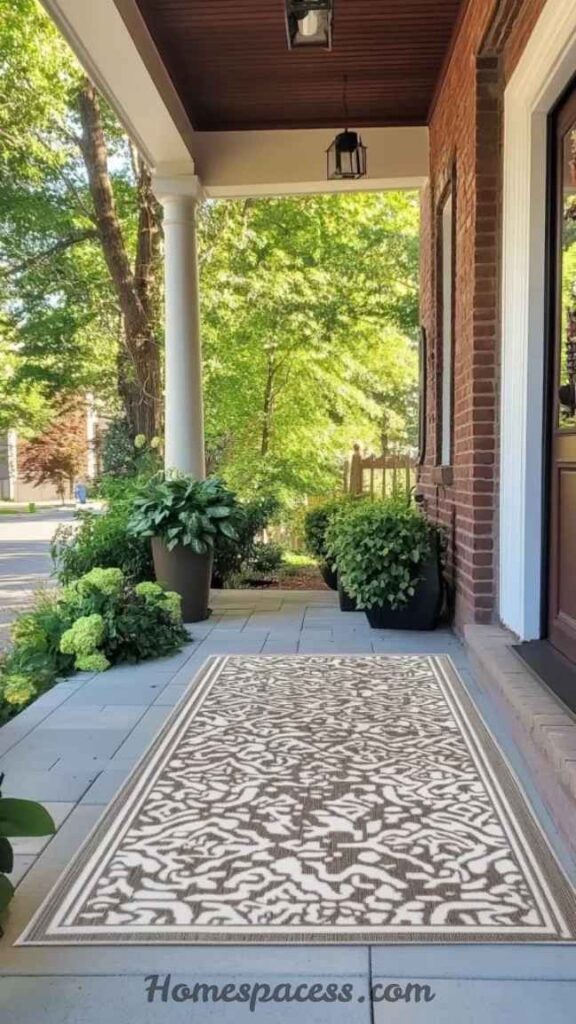
An outdoor rug is one of the fastest, most affordable ways to transform raw porch concrete or worn decking into a defined, intentional living space. The key is sizing most people buy outdoor rugs that are far too small. For a typical porch seating area, the rug should be large enough for all furniture legs to rest on it (or at minimum, the front legs). A correctly sized rug anchors the furniture grouping into a cohesive “room.”
Look for polypropylene or solution-dyed nylon rugs specifically rated for outdoor use these resist UV fading, mold, and moisture. Flat-weave and low-pile constructions drain quickly and don’t harbor mildew as aggressively as looped or high-pile alternatives. For visual impact in 2026, geometric patterns, woven stripes, and medallion motifs in earthy terracotta, warm sand, and forest green tones are dominating porch and patio design.
PRO TIP
Lift your outdoor rug and allow it to dry face-down after heavy rain. This one habit prevents 80% of outdoor rug mold issues and doubles the effective life of even budget-priced rugs.
Railing Makeovers Safety Meets Style
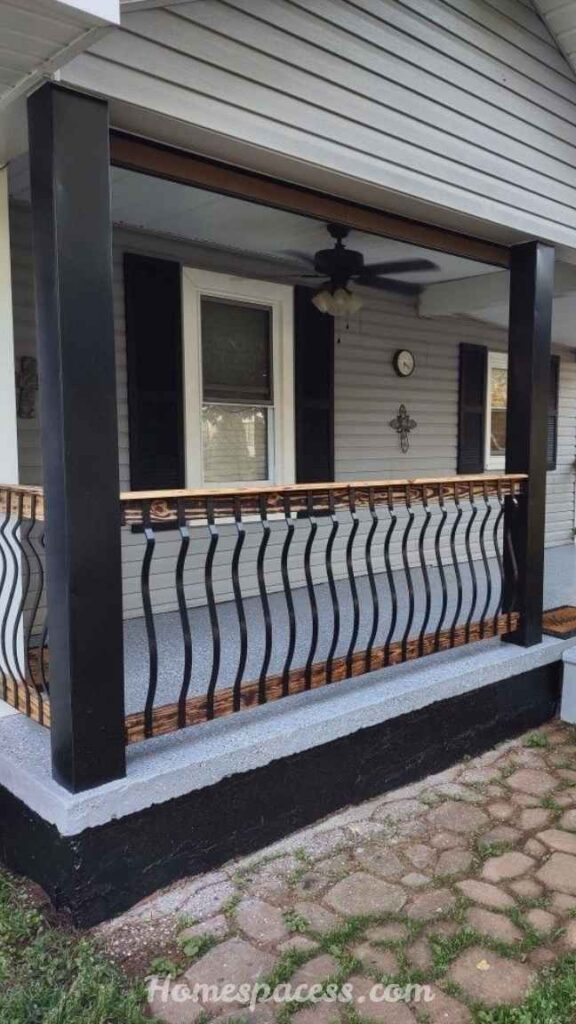
Porch railings are required by code for most elevated porches, but they’re also a prominent visual element that many homeowners treat as purely utilitarian. Replacing or upgrading deteriorating wood railings with cable railing, horizontal metal bar railings, or composite systems transforms the porch’s character completely and can actually open up sightlines to landscaping or street views that wood spindles were blocking.
Cable railings (stainless steel cables running horizontally between posts) have surged in popularity for contemporary and coastal homes, offering nearly unobstructed views while meeting building codes. Composite railings in dark colors like charcoal or black photograph strikingly well and require zero painting or sealing. For traditionalists, rectangular Trex-style balusters in a “stacked” pattern offer a fresh alternative to round turned spindles without abandoning classic porch character.
Upgraded Mailbox & Address Numbers
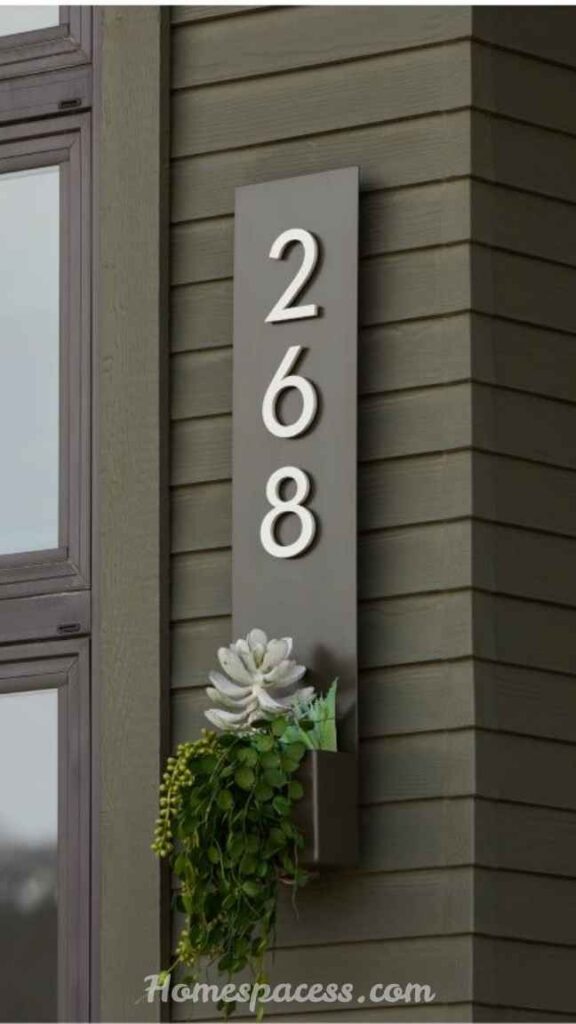
The mailbox and house numbers are the smallest details on your porch and simultaneously the details most visitors consciously process. A dented mailbox or faded plastic house numbers send an unconscious signal of neglect that undermines even an otherwise beautiful porch. Replacing these costs $50–$200 total and produces an outsized improvement in perceived property care and attention to detail.
For 2026, oversized modern address numbers (4–6 inches in brushed bronze, matte black, or polished chrome) mounted with visible standoffs for a floating 3D effect are among the most popular porch upgrade searches. Match the finish to your other door hardware for a curated, intentional look. Wall-mounted or column-mounted mailboxes in architectural styles (craftsman, modern farmhouse, mid-century) are replacing post-mounted mailboxes in upscale markets.
PRO TIP
Install your address numbers where they’re clearly visible from the street at night. First responders lose critical seconds finding addresses with poorly placed or unlit numbers. Backlit or solar-lit address plates solve both visibility and safety simultaneously.
Water Feature or Small Fountain
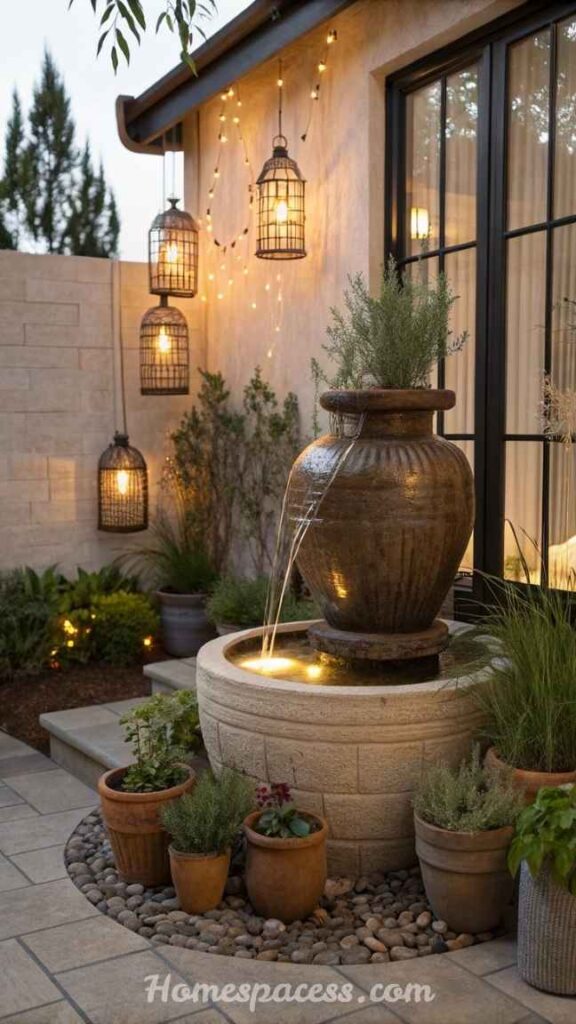
A tabletop or freestanding water fountain on a front porch adds a sensory dimension that photographs, plants, and furniture simply cannot replicate the sound of moving water. Research in environmental psychology consistently links the presence of water sounds to reduced cortisol levels and increased perceived relaxation. For a porch designed to be a decompression zone, a small fountain is a surprisingly powerful tool.
Modern solar-powered fountain pumps have made self-contained water features genuinely maintenance-light. Tiered stone fountains, bamboo shishi-odoshi designs, and sleek ceramic bowl fountains all work within a front porch scale. Position the fountain near the seating area so the sound is audible from where people sit, but away from areas where splash could damage wood decking or rugs. Scale is critical a fountain that’s too small vanishes visually and acoustically.
Porch Pergola Extension
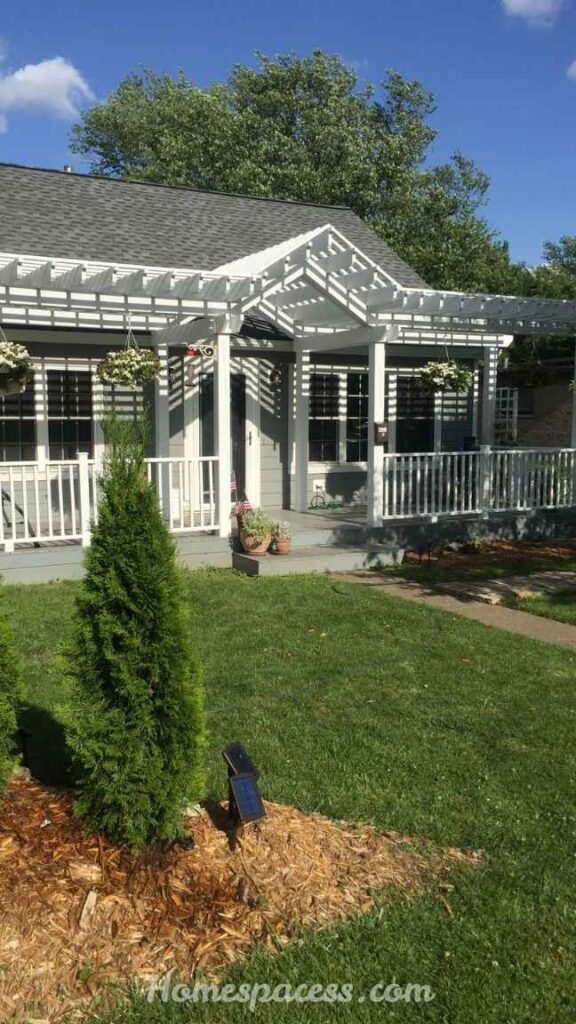
For homes with open, uncovered front stoops, adding a pergola structure (attached to the house fascia and supported by two or four front posts) creates architectural definition and expands the usable shade area. A pergola transforms an entry from a transitional space into a destination it creates a sense of arrival and shelter that even a modest 8×10-foot structure delivers effectively.
Cedar and Douglas fir pergolas hold paint and stain beautifully and provide a natural, warm aesthetic. Aluminum and composite pergolas eliminate maintenance entirely and are increasingly competitive in cost. For a dramatic upgrade, louvered-roof pergola systems (where the slats rotate to control sun and rain) have become the aspirational choice in 2026–2027, combining the aesthetic of a pergola with the function of a retractable cover.
Screened-In Porch Conversion
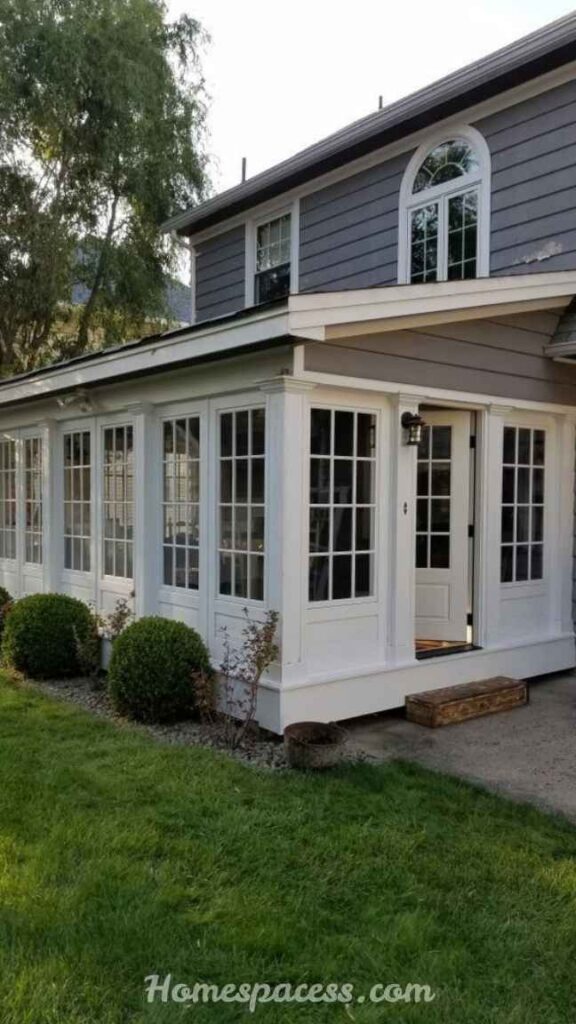
Converting an open porch to a screened-in room is one of the highest-return outdoor improvements available in warm-climate markets. It creates an entirely new functional living space bug-free, shade-protected, and usable on rainy days at a fraction of the cost of a full addition. According to Remodeling Magazine’s Cost vs. Value report, screened porch additions consistently rank among the top outdoor improvements for ROI in the Southeast, Mid-Atlantic, and Midwest.
The screening system you choose matters. Traditional fiberglass screening is affordable but shows wear faster than pet-resistant or 20/20 visibility screens, which offer better airflow and durability. For premium screened porches, systems like EZE-Breeze™ vinyl glazed panels or phantom retractable screens allow the space to convert between open-air and enclosed modes seasonally a feature that maximizes the room’s year-round versatility.
Porch Flooring Refresh
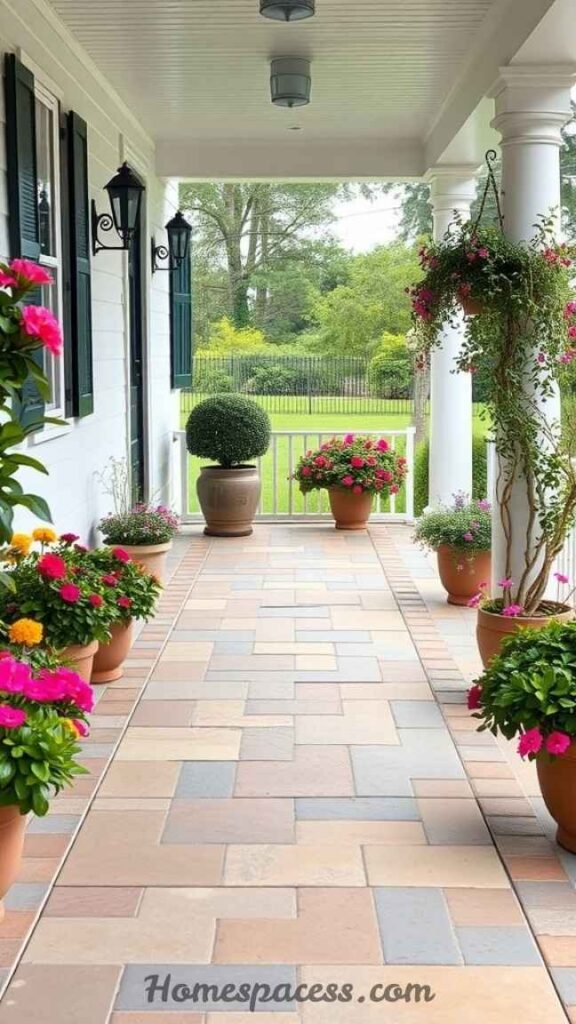
Cracked concrete, faded deck paint, or deteriorating wood planks are the most damage-doing visual elements on any front porch. Fortunately, each has accessible solutions that don’t require tearing out and starting over. For concrete stoops, a micro-topping overlay or acid stain can produce a polished, tile-like appearance that completely reframes the space. Stenciled concrete patterns are having a major resurgence in 2026, offering Mediterranean, Moroccan, and geometric designs at minimal cost.
For wood porch decks, the decision between repair and replacement depends on structural integrity. Boards that are soft, punky, or have visible rot need replacement fresh stain on compromised wood just fails faster. When replacing, pressure-treated pine with a solid-color stain in a deep charcoal, navy, or warm gray is a sophisticated alternative to the natural brown tone most people default to. Composite decking brands like Trex or Fiberon now offer porch-specific planks with reduced scratch visibility and extended fade warranties.
PRO TIP
Before applying any porch paint or stain, use a floor sander or random-orbit sander with 60-grit on the existing surface. This single step triples the adhesion of new coatings and prevents the peeling that causes most DIY porch floor projects to fail within 12–18 months.
Outdoor Curtains for Privacy and Drama
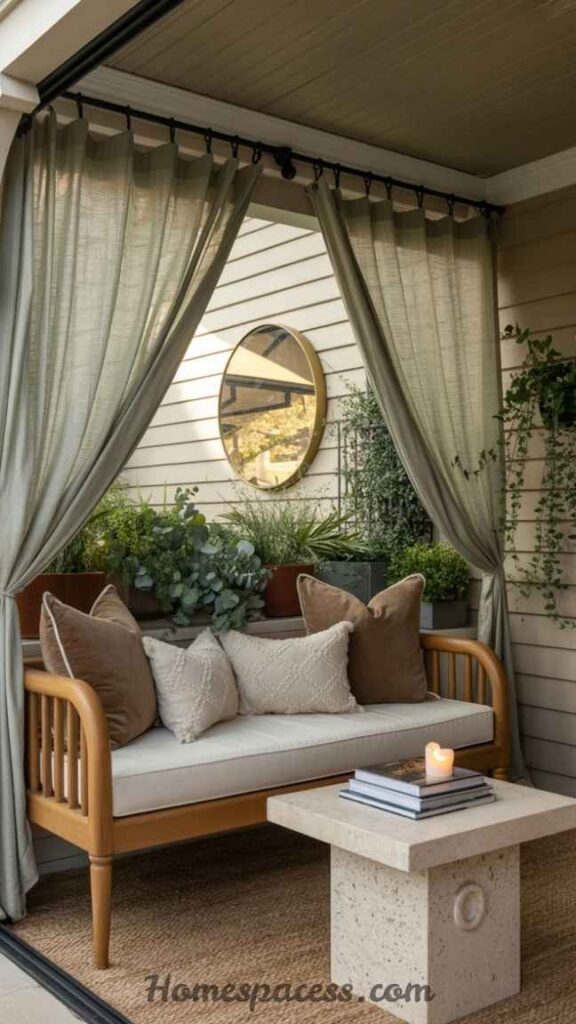
Outdoor curtains on a porch serve three simultaneous functions: they create privacy from street view, provide flexible shade control, and add a dramatic design element that instantly elevates the space. Hung from a tension wire, curtain rod, or pergola beam with weatherproof ring clips, floor-length panels transform an exposed porch into a sheltered, intimate retreat in minutes.
Look for solution-dyed acrylic or polyester fabrics specifically designed for outdoor use brands like Sunbrella offer 5-year fade warranties and resist moisture well. White and linen-colored panels maximize light while still filtering UV. Navy or terra cotta panels create more drama and pair beautifully with natural wood and rattan elements. Keep panels 10–15% wider than the opening so they gather gracefully rather than stretching flat like shower curtains.
Layered Front Porch Garden
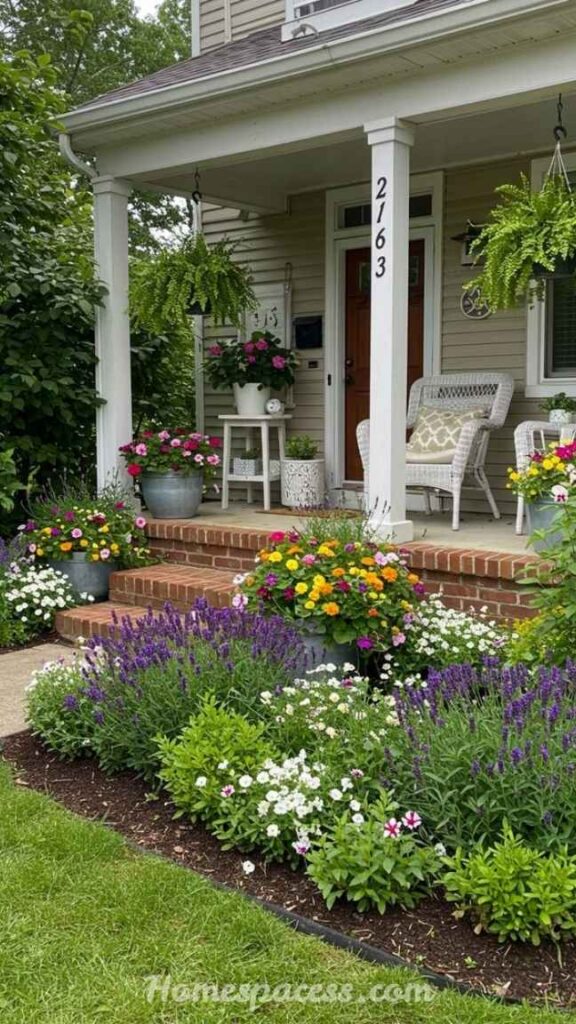
A front porch garden that uses height variation from ground-level groundcovers up through mid-height shrubs to tall architectural plants creates the “designed by a landscape architect” look that most homeowners admire from the street but struggle to replicate. The secret is using three distinct height layers within five feet of the porch: a low-growing layer (ajuga, creeping thyme, or mondo grass), a mid-layer (ornamental grasses, boxwoods, or compact hollies), and an upper layer (dwarf Japanese maple, climbing rose on a trellis, or a trained vine).
Seasonal continuity is the distinguishing mark of a truly excellent porch garden. Plan for overlapping bloom times: spring bulbs give way to early summer perennials, which transition to summer annuals, and finally fall mums and ornamental kale. Incorporating evergreen structural plants means the garden never goes “empty” in winter a common failure point of gardens that are only planned for peak-season performance.
Smart Porch Technology The 2026 Standard
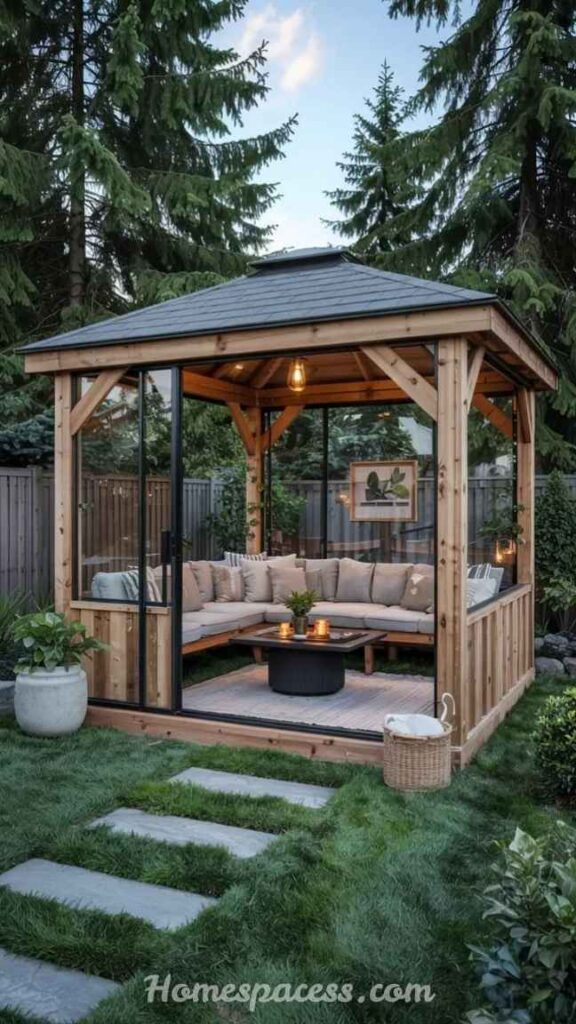
Front porch smart technology has moved from luxury novelty to practical standard in just a few years. A video doorbell (like Ring, Nest Hello, or the newer Arlo Essential) with a two-way intercom is now expected by home buyers under 45. These devices integrate with phone apps to allow package monitoring, visitor communication, and security alerts and they install in under an hour using existing doorbell wiring or battery power.
Beyond doorbells, smart porch lighting with automated dusk-to-dawn sensors, motion triggers, and phone-controllable color temperature is gaining rapid adoption. For tech-forward homeowners, smart lock systems that allow keyless entry via app, PIN, or NFC fob eliminate key management entirely and provide audit trails of who enters and when. In 2026, integration between porch lighting, locks, and doorbell cameras into a unified home security dashboard is the standard that move-in-ready buyers expect.
PRO TIP
Position your video doorbell so it captures face-level imagery of visitors typically 48 inches from the floor. Mounting it too high (above 60 inches) produces top-of-head footage that’s essentially useless for security identification purposes.
The Seasonal Porch Decor System
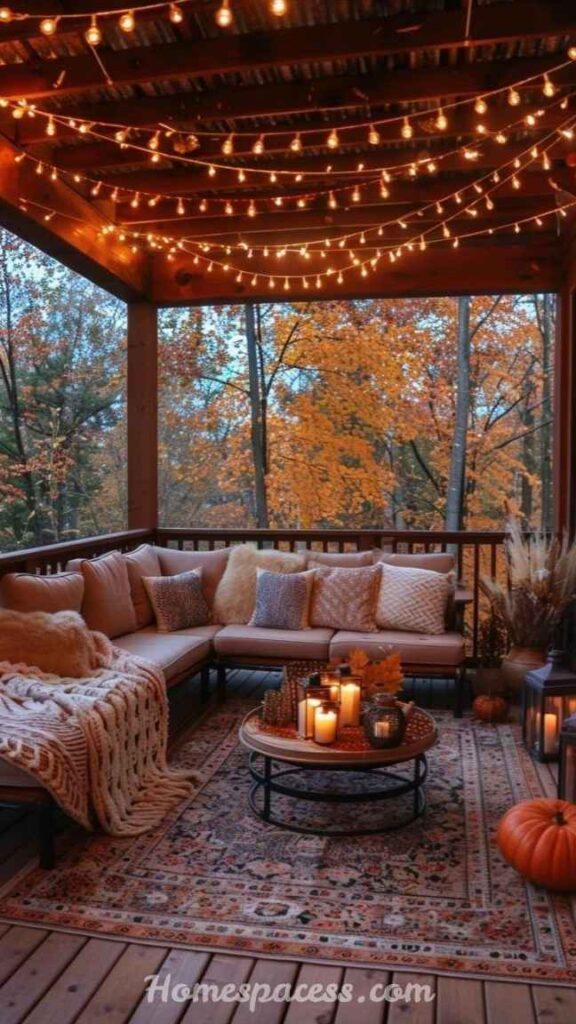
The homes that always seem to have a beautiful, current-looking porch aren’t endlessly buying new decor they’ve built a seasonal swap system. The approach works like this: invest in high-quality, weather-resistant foundational pieces (furniture, lighting fixtures, planters, rug) that stay year-round, then swap a small “decor kit” of seasonal accents four times per year. This might include seasonal wreaths, doormat swaps, pillow covers, and seasonal plant selections.
Storing seasonal decor in a dedicated lidded bin (one per season, clearly labeled) makes the twice-yearly swap genuinely fast under 30 minutes. For spring/summer, lean toward botanicals, bright textiles, and herbs in containers. Fall calls for dried grasses, gourds, layered pumpkins, and warm amber tones. Winter decor beyond holiday themes can lean into evergreen garlands, lanterns with pillar candles, and weathered natural textures that last through February without looking dated.
Farmhouse Porch Elements Done Right
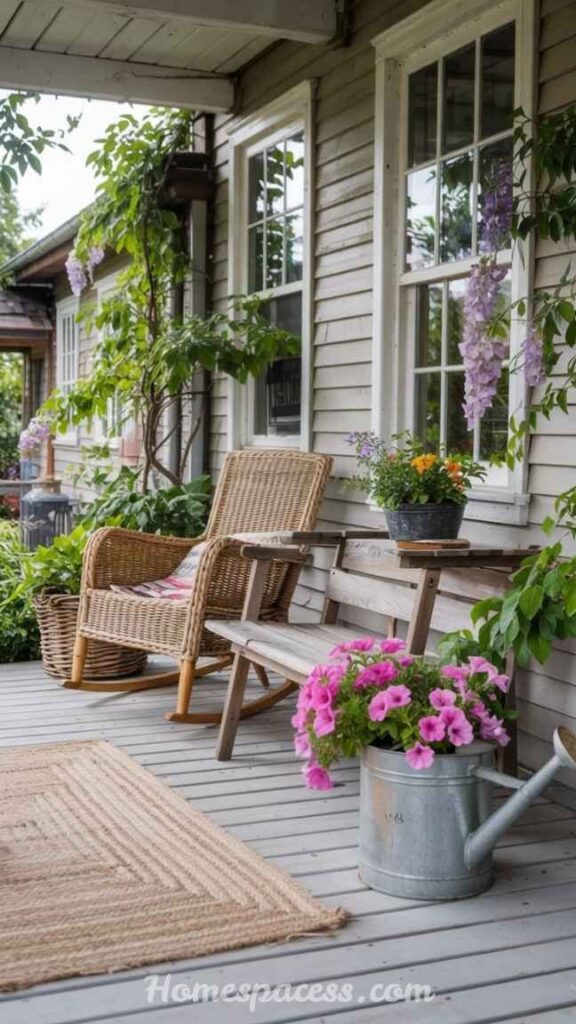
The farmhouse aesthetic shiplap, galvanized metal, wood crates, and cotton throw blankets has saturated home decor so thoroughly that poorly executed versions now read as dated rather than charming. However, done with restraint and material quality, farmhouse porch design remains one of the most livable and photogenic aesthetics available. The key is editing ruthlessly: choose two or three authentic materials rather than stacking every farmhouse signifier onto a single porch.
A sophisticated farmhouse porch in 2026 might feature a white tongue-and-groove ceiling, a classic wooden porch swing with a neutral cushion, two galvanized metal planters with seasonal plantings, and a haint blue painted porch floor nothing more. That restraint is what separates elevated farmhouse design from the cluttered, sign-heavy version that defined the early 2010s trend wave. Authentic vintage pieces (an old milk crate, a genuine weathervane) outperform mass-produced “farmhouse” replicas every time.
Coastal Porch Aesthetic Beyond Anchors and Rope
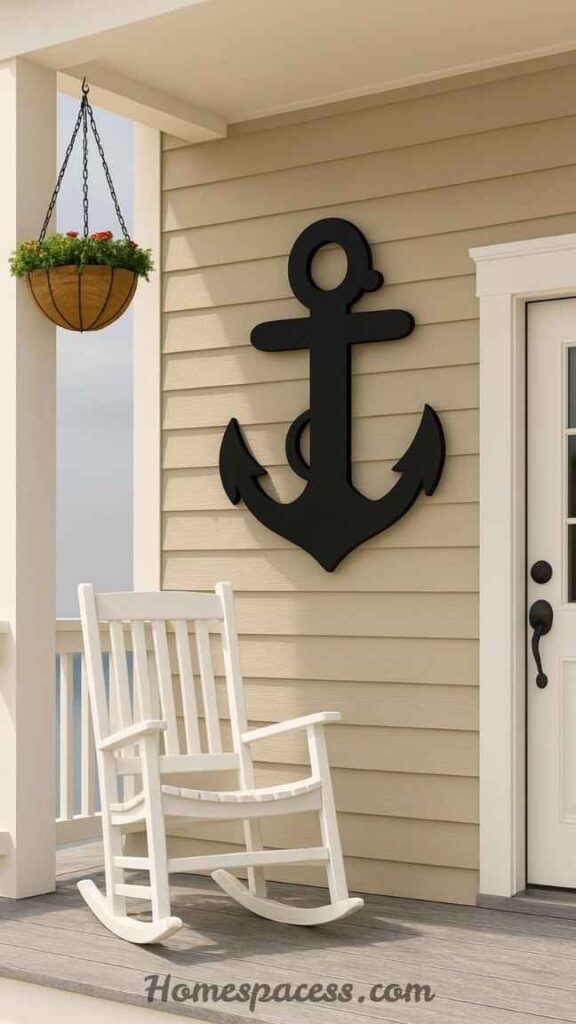
Coastal porch design in 2026 has matured well past the nautical kitsch of anchor motifs, ship wheels, and seashell wreaths. The modern coastal aesthetic draws from actual beach architecture clean white structures, natural woven textures, sun-bleached woods, and a palette of soft blues, greiges, and salt whites. It evokes the feeling of coastal living through materiality and light rather than literal maritime symbols.
For a convincing contemporary coastal porch, focus on material choices: natural teak or weathered gray composite furniture, jute or sisal rugs, linen-colored outdoor cushions, driftwood-finish accessories, and planters filled with coastal-native plants (sea lavender, ornamental grasses, or agapanthus). White-painted brick or cedar shiplap cladding on the house front enhances the coastal atmosphere even for inland properties. The goal is creating the sensory experience of a beach house breezy, relaxed, and genuinely restful.
Small Front Porch Optical Illusion Tricks
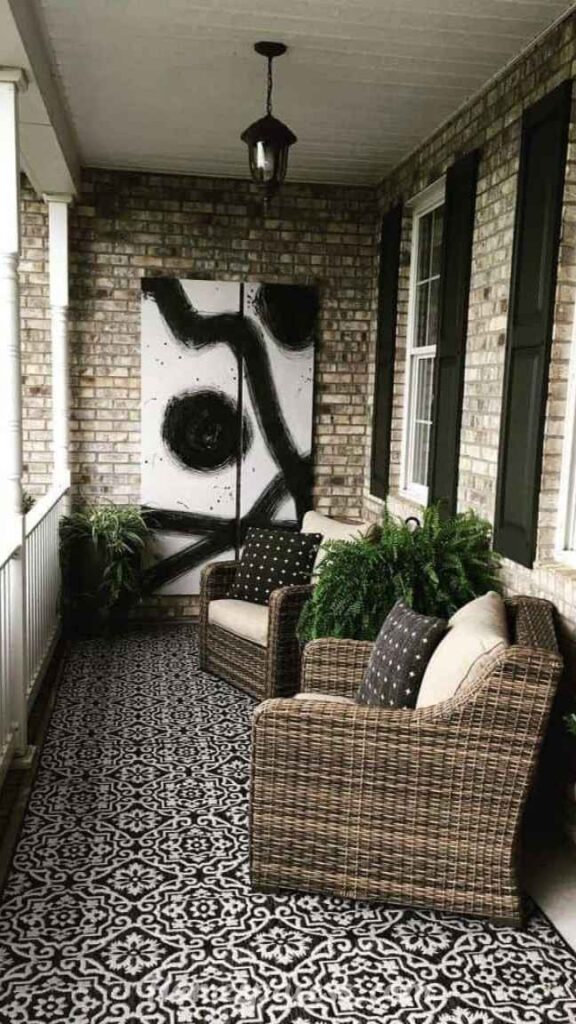
A porch under 40 square feet presents a genuine design challenge but it’s one with elegant solutions once you understand the principle that governs small-space perception. The key isn’t reducing everything to miniature scale; it’s selecting one or two properly scaled focal pieces and keeping everything else minimal. A small porch with one excellent chair, one striking planter, and strong lighting reads as intentionally curated while the same space crammed with four mismatched pieces reads as cluttered and smaller.
Vertical design elements are your most powerful tool in small porch spaces. A tall, narrow planter (rather than wide and low), vertical wall art or a mirror, a climbing plant on a slim trellis all draw the eye upward and expand perceived space without consuming floor area. Light paint colors on porch ceilings and walls (especially crisp white or light gray) visually recede and open up the space. A diagonal-pattern porch floor or diagonal-oriented rug makes narrow porches appear wider through simple optical geometry.
PRO TIP
Install a weather-resistant mirror on a small porch wall (at a slight downward angle to reflect greenery rather than the street). Even a modest 24-inch round mirror can make a tiny porch feel dramatically more spacious and garden-like.
Hidden Porch Storage Solutions
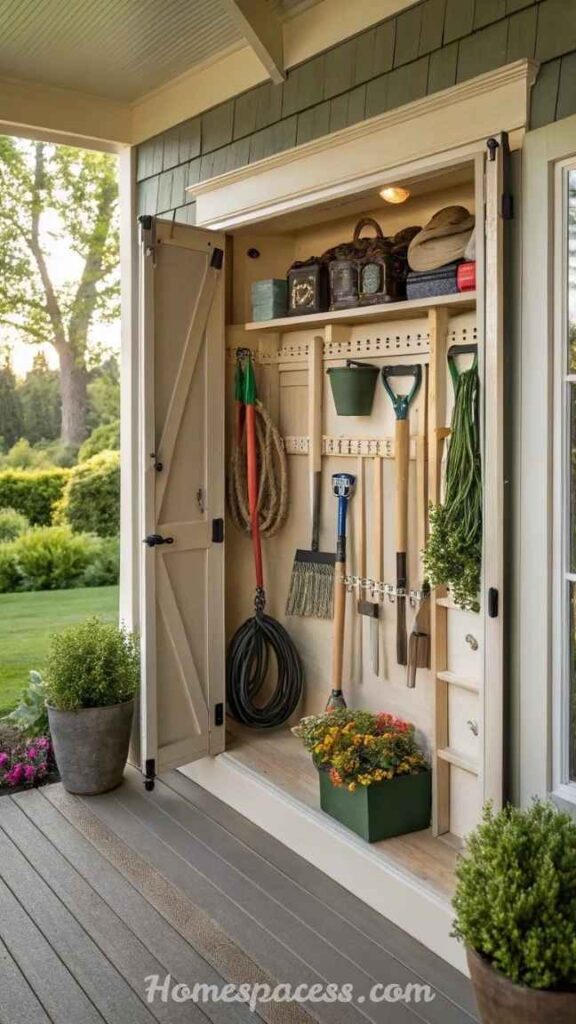
A porch covered in visible clutter stacked flowerpots, a visible garden hose, children’s toys, shoes left by the door negates even a beautifully designed space. Hidden storage integrated into the porch design solves this problem elegantly. Storage benches with lift-top lids are the most versatile option, providing seating, storage, and a flat surface simultaneously. Positioned flanking a front door, they create a symmetrical, welcoming entrance with practical utility hidden inside.
For covered porches with room for larger storage, porch storage cabinets (in weather-resistant cedar or composite materials) that look like furniture rather than utility boxes are increasingly available from specialty outdoor furnishing brands. For homes with space under elevated porches, lattice-enclosed underporch storage with a hinged access panel creates significant hidden storage without consuming porch surface area.
Accessible & Universal Design The Future-Proof Porch
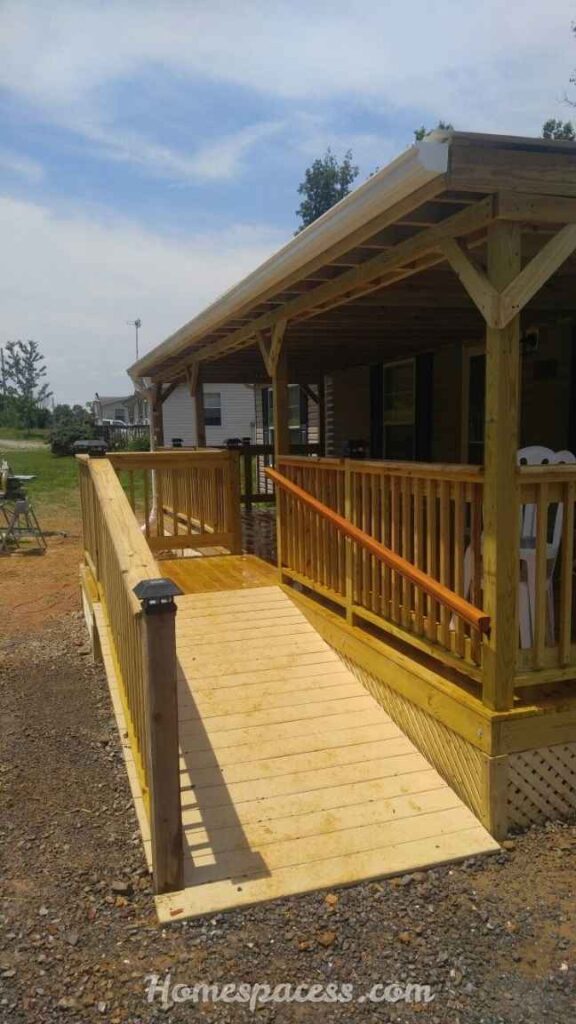
Universal design principles designing spaces that work for people of all mobility levels, ages, and abilities are increasingly being applied to front porch design, both for personal need and as a proactive investment in long-term livability. A porch that requires navigating steps without handrails, has a narrow doorway, or lacks stable footing is a liability for aging homeowners and a deterrent for buyers with family members who have mobility considerations.
Practically, this means: ensuring any porch steps have secure, continuous handrails on both sides; considering a gently sloped ramp option alongside (not instead of) steps; ensuring the porch floor surface has a slip-resistant texture (especially when wet); and sizing the landing area in front of the door to allow a wheelchair to approach the door, open it, and move through without reversing awkwardly. These changes cost relatively little when incorporated into renovations but add significant inclusivity and are increasingly valued by the growing market of aging-in-place buyers.
PRO TIP
Install grab bars near the front door that are stylized to look like decorative handles rather than medical equipment. Many manufacturers now offer ADA-compliant grab bars in brushed brass and matte black that are visually indistinguishable from premium door hardware
Up to 15% ROI
According to the National Association of Realtors, well-executed front porch improvements rank in the top five exterior upgrades for return on investment with new porch additions specifically recouping an average of 84% of project cost at resale.
Conclusion:
The front porch serves as a timeless bridge between the private sanctuary of home and the wider community beyond, offering endless opportunities for creative expression and functional design. Whether adorned with classic rocking chairs and hanging ferns or transformed into a modern lounge space with string lights and weather-resistant furniture, the front porch reflects the personality and lifestyle of those who inhabit it. Thoughtful design choices from color palettes and flooring materials to decorative accents and seasonal touches can elevate even the simplest porch into a welcoming retreat that enhances a home’s curb appeal and creates lasting first impressions.
Ultimately, the best front porch is one that balances aesthetics with comfort, making it a space that invites both relaxation and connection. By incorporating elements such as cozy seating arrangements, potted plants, ambient lighting, and personalized décor, homeowners can craft an outdoor living area that extends the warmth of the indoors outward. Regardless of size or budget, a well-designed front porch not only adds value to a property but also fosters a sense of belonging and neighborly charm that enriches daily life throughout every season.
Trend Analysis
2026 Front Porch Design Trends What’s Actually Driving Change
Understanding not just what’s trending but why gives you design choices that age gracefully rather than becoming next year’s renovation regret.
The dominant force shaping front porch design in 2025–2026 is the “outdoor room” philosophy treating exterior spaces with the same intentionality, material quality, and layered comfort as interior rooms. This shift was accelerated by the post-pandemic re-evaluation of home as a social sanctuary, but it’s showing no signs of reversing. Homeowners are no longer satisfied with a functional porch; they want a genuinely livable space that earns its place in daily life.
Biophilic design incorporating natural materials, living plants, water sounds, and natural light rhythms into built environments is influencing porch design at every price point. This explains the simultaneous surge in interest for large container gardens, natural wood finishes over synthetic alternatives, and water features. The underlying human drive to connect with natural environments is finding a new outlet in carefully designed transitional spaces like front porches.
Color psychology is driving the bold door and exterior color trends. As interiors have shifted toward calmer, more neutral palettes, designers are channeling personality and expressiveness to the facade particularly the front door. This aligns with research showing that emotionally resonant exterior color choices influence buyer perception and neighborhood identity in measurable ways.
🌿
Biophilic integration
Living walls, specimen plants, and natural wood features dominate 2026 porch searches.
🏡
Louvered roof pergolas
Motorized adjustable-slat structures offering sun/rain control at the push of a button.
🔌
Solar-integrated design
Solar-powered lighting, fountains, and fans removing electrical constraints from porch design.
🎨
Moody door palettes
Forest green, terracotta, and burgundy replacing gray as the dominant bold door choice.
♿
Invisible accessibility
Ramps and grab bars designed to be architecturally integrated and aesthetically cohesive.
📱
AI-integrated security
Video doorbells with facial recognition, package detection, and smart lock integration.
Expert Insights
7 Expert-Level Porch Optimization Insights Most Guides Miss
These are the insights that separate porches that merely look good in photographs from ones that function brilliantly over years of real-world use.
- Design for the approach, not just the destination: Most porch design focuses on the space itself but 60% of the visual experience happens during the 20-step walk from the sidewalk to the door. Edging the path, anchoring it with plants, and ensuring lighting illuminates the walkway as a sequence matters as much as the porch itself.
- Hardscape first, softscape second: Structural improvements (flooring, railings, columns, ceiling) have 10–20 year payoffs and form the bones of the space. Plant and decor choices should be layered onto a sound structural foundation not used to distract from structural problems that will worsen over time.
- Material consistency creates cohesion: Choosing two to three materials and sticking to them across all porch elements (natural wood + black metal + white trim, for example) creates visual coherence that “feels designed.” Mixing five or six different materials creates a space that feels assembled rather than intentional.
- Smell is part of porch design: Planting fragrant species within reach of seating areas jasmine, gardenia, lavender, or sweet alyssum engages an often-forgotten sensory dimension. A front porch that smells wonderful creates a memory imprint that photographs of furniture simply cannot.
- The street-view test is non-negotiable: Stand at the sidewalk or street and photograph your porch. This is the view that buyers, visitors, and appraisers see first. Many design problems invisible up close (asymmetry, visual clutter, a dominant ugly element) become immediately obvious from 30 feet away.
- Manage the transition zone carefully: The area immediately inside the front door (mudroom or entry foyer) should visually relate to the porch similar material tones, lighting warmth level, and decor style. A jarring visual disconnect between porch and interior undermines the welcoming continuity that makes a home feel cohesive.
- Budget for maintenance, not just installation: A painted wood porch floor needs recoating every 2–4 years. A teak furniture set needs annual oiling. Natural stone needs sealing. Factor annual maintenance costs into material selection decisions sometimes a slightly higher upfront investment in low-maintenance materials saves thousands over a decade.
Sustainability & Long-Term Value
Sustainable Front Porch Design Built to Last, Built Responsibly
The most environmentally responsible porch is one you never have to replace. Here’s how sustainability and smart material choices intersect.
Sustainability in porch design operates on two parallel tracks: reducing environmental impact during construction and selection, and maximizing material longevity to avoid premature replacement. The single most sustainable choice in porch construction is selecting materials with verifiably long service lives even if their initial cost is higher. A composite porch deck that lasts 30 years with minimal maintenance is far more sustainable than a pressure-treated pine deck that requires replacement in 10–12 years and is stained with harsh chemicals annually.
Reclaimed wood has surged as both a sustainable and aesthetically distinctive material for porch design. Reclaimed barn wood, factory flooring, or antique longleaf pine brings extraordinary character and density (old-growth wood is significantly harder and more rot-resistant than modern plantation lumber) while diverting material from landfills. For structural elements like porch posts and beams, reclaimed timber treated with low-VOC boron-based preservatives is a genuinely excellent alternative to virgin-harvested lumber.
Native plant landscaping
Native plants require 60–70% less water and zero fertilizers compared to non-native ornamentals, while supporting local pollinators and requiring far less seasonal replacement.
Composite & recycled materials
PVC composite boards contain up to 95% recycled content, require no sealants, and last 25–50 years making them the most lifecycle-responsible choice for structural porch elements.
Solar-powered features
Solar lighting, fountain pumps, and fans eliminate ongoing electricity consumption. Modern panels charge in 4–6 hours of indirect sunlight even functioning well in partial shade conditions.
Low-VOC paints & stains
Exterior porch paints and stains are available in zero-VOC formulations from most major brands. They perform comparably to traditional formulations while eliminating harmful off-gassing during application.
Permeable paving for walkways
Permeable pavers, gravel, or flagstone pathways allow rainfall to recharge groundwater rather than running off into storm drains reducing local flooding risk and supporting groundwater systems.
Longevity as sustainability
Investing in quality once a cedar porch swing that lasts 20 years vs. a box-store resin version that deteriorates in 3 is the single most impactful sustainability decision available to most homeowners.
Future Predictions
The Front Porch of 2030 What’s Coming That You Should Plan For Now
Building materials, smart home integration, and cultural shifts are converging to define what front porches will look like and do within this decade.
2026–2027
AI-powered porch security becomes standard:
Video doorbells with on-device AI that identifies familiar faces, detects unusual loitering patterns, and integrates with neighborhood alert networks will reach mass-market pricing. Package theft detection with instant notification will be a baseline feature rather than a premium add-on.
2027–2028
Biophilic building materials emerge
Hempcrete, mycelium-based insulation panels, and bio-based composite lumber products will reach porch-construction viability at consumer price points. These materials offer structural performance comparable to conventional lumber with dramatically lower embodied carbon.
2028–2029
AR-assisted porch design tools democratize professional results
Augmented reality tools accessible via smartphone already in early forms from Houzz and Sherwin-Williams will allow homeowners to preview full porch redesigns, including architectural changes, in real-time photorealistic overlays before spending a dollar on materials.
2029–2030
Climate-adaptive outdoor structures
Louvered roof systems, automated retractable screens, and electrochromic glass panels (that tint automatically based on sun intensity) will converge into integrated porch enclosure systems offering year-round all-weather usability effectively creating a weatherproof outdoor room without the visual weight of a full addition.
2030+
Porch as community interface
Urban planners and architects are actively researching front porch revival as a tool for community cohesion and mental health in dense urban environments. New residential developments in the 2030s will likely feature porch-forward designs as a health infrastructure investment, not just an aesthetic choice.
The common thread across these predictions is the convergence of technology, sustainability, and human-centered design in a space that was already the original intersection of public and private life. The front porch isn’t being reinvented it’s being rediscovered and upgraded for conditions that the original Victorian and Craftsman architects could never have anticipated.
Common Mistakes
7 Front Porch Mistakes That Undermine Everything Else You’ve Done
Even well-intentioned porch renovations routinely fall into these preventable traps. Knowing them ahead of time is the advantage.
- Choosing furniture that’s too small for the space (creates a sparse, unfinished look)
- Using interior-grade furniture or rugs outdoors (deteriorates within one season)
- Neglecting the porch ceiling (an unfinished or peeling porch ceiling undermines the entire space)
- Over-decorating with too many small objects (visual clutter reads as chaos from the street)
- Mismatched metal finishes (mixing three or four different hardware metals kills design cohesion)
- Installing string lights that sag or droop (sagging lights read as neglect, not charm)
- Painting over wood rot or structural damage without addressing the underlying problem
ne of the most overlooked front porch mistakes is designing exclusively for warm-weather photography rather than genuine year-round livability. A porch with only wicker furniture, lightweight cotton cushions, and annual flowers looks stunning in May but communicates abandonment by October. Building in durable, all-season elements a solid ceiling fan, weather-resistant cushion covers that can stay out in light rain, and evergreen structural plants means the porch looks cared-for and welcoming through every season.
The second most common mistake professionals observe is ignoring scale relationships between house size and porch design. A minimal door number swap might suffice for a massive 2,500-square-foot Colonial, while a small bungalow with the same change gains disproportionate visual impact. Understanding your home’s scale and architectural vocabulary and designing porch elements that fit within (and complement) that vocabulary rather than fighting it is what separates design that looks “right” from design that looks “off” even to observers who can’t articulate why.
Common Mistake
Buying two matching wicker chairs because they were on sale, regardless of space dimensions or style.
Better Approach
Measure your porch, identify your home’s architectural style, then select furniture that fits both scale and design language
Common Mistake
Using solar lights that flash or flicker due to poor battery quality making the porch feel unreliable and cheap.
Better Approach
Invest in mid-tier solar lighting from reputable brands. Consistent, steady illumination reads as quality and care.
Common Mistake
Planting fast-growing annual-only containers that require replacing every 6 weeks or look dead in off-seasons
Better Approach
Anchor containers with perennial or evergreen structural plants, then add seasonal annuals around them for color rotation.
FAQ’S About Front Porch Ideas
What is the most affordable front porch upgrade that makes the biggest visual impact?
Repainting the front door in a bold, quality color is consistently the highest-impact, lowest-cost upgrade available typically under $75 in materials and achievable in a single afternoon. Address number replacement and new outdoor lighting fixtures rank closely behind it in terms of impact-to-cost ratio.
How do I design a front porch for a small house or narrow stoop?
Focus on vertical elements over horizontal spread: tall narrow planters, a wall-mounted light fixture, a vertical trellis with climbing plants. Use one properly scaled focal piece (a single excellent chair or a compact bench) rather than crowding multiple pieces. A diagonal-pattern outdoor rug can make a narrow porch appear wider. Above all, resist the temptation to fill every inch negative space reads as intentional curation in small spaces.
What porch improvements add the most value to a home?
Based on consistent data from real estate studies, the highest-value porch improvements are: (1) screened-in porch additions in warm climates, (2) new porch additions on homes that lack them, (3) structural railing and column upgrades on older homes, (4) outdoor lighting system upgrades, and (5) bold front door painting combined with fresh exterior trim painting. The common factor is structural or functional improvement over purely decorative changes.
How do I choose between different porch design styles (farmhouse, coastal, modern, etc.)?
The most effective approach is to follow your home’s existing architectural style rather than imposing a contrasting aesthetic. A Victorian or Craftsman home will always look best with period-appropriate porch elements; a contemporary home suits clean lines and minimal ornamentation. However, if your home’s architecture is neutral or nondescript, your porch is an opportunity to establish a personal design identity just commit fully to one cohesive direction rather than blending several.
What are the best low-maintenance plants for a front porch?
For consistently low-maintenance porch container plants, consider: dwarf boxwood or Japanese holly (evergreen, slow-growing, highly adaptable), ornamental grasses (drought-tolerant, four-season interest), succulents and sedums in hot dry climates, caladiums for shade porches, and lantana or calibrachoa for sunny spots. Combining one low-maintenance structural plant with one easy annual dramatically reduces the effort required to maintain a good-looking porch year-round.

Team Home Spacess shares simple, practical design ideas that work for real families. The team focuses on cozy décor, soft colors, and natural textures that make a space feel truly lived-in. From everyday decorating tips to creative home projects, Team Home Spacess is dedicated to helping readers create warm, comfortable, and inviting spaces with a fresh and personal touch.