

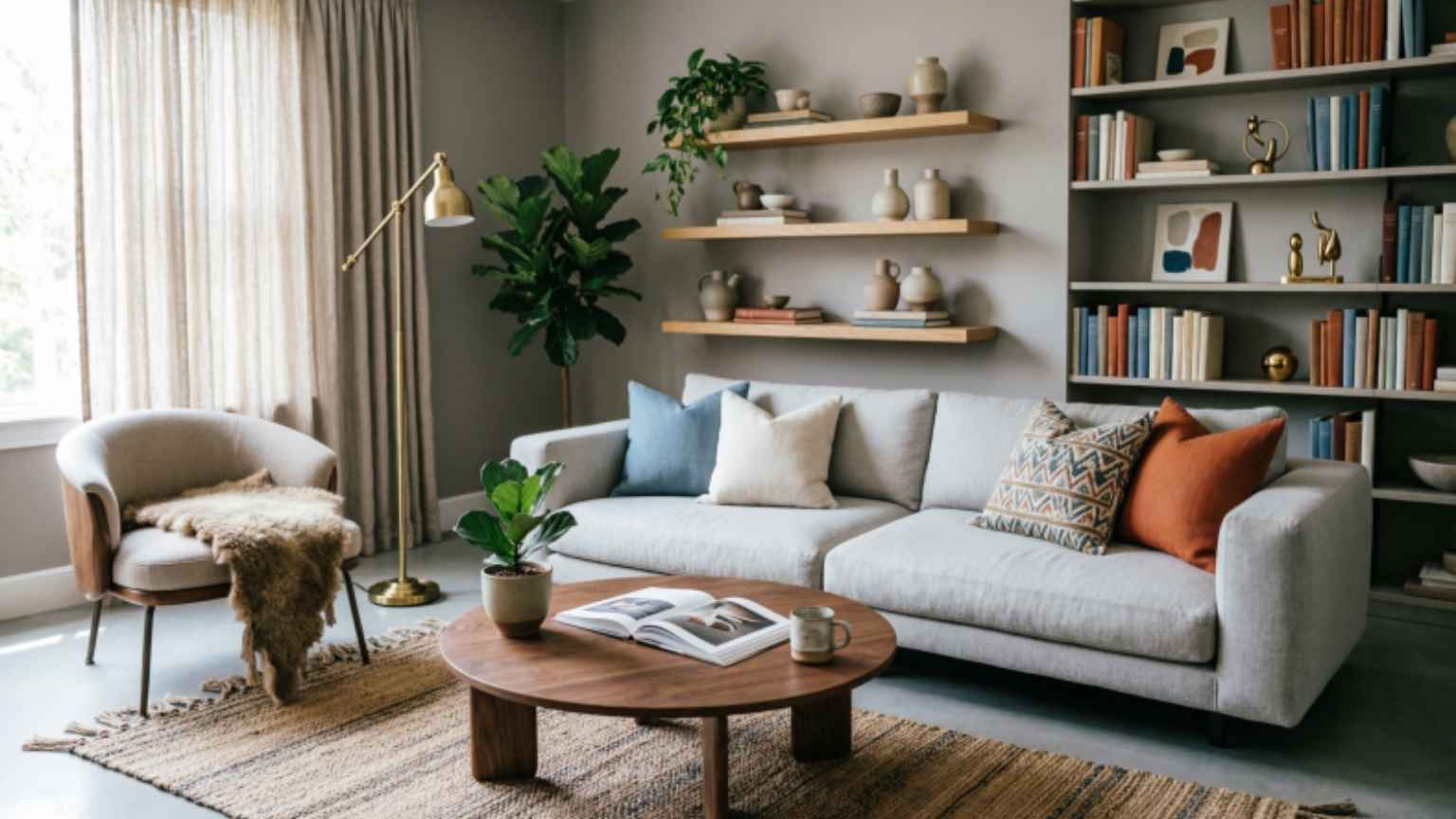
A complete expert guide from budget friendly updates to future forward design strategies that top ranking articles won’t tell you.
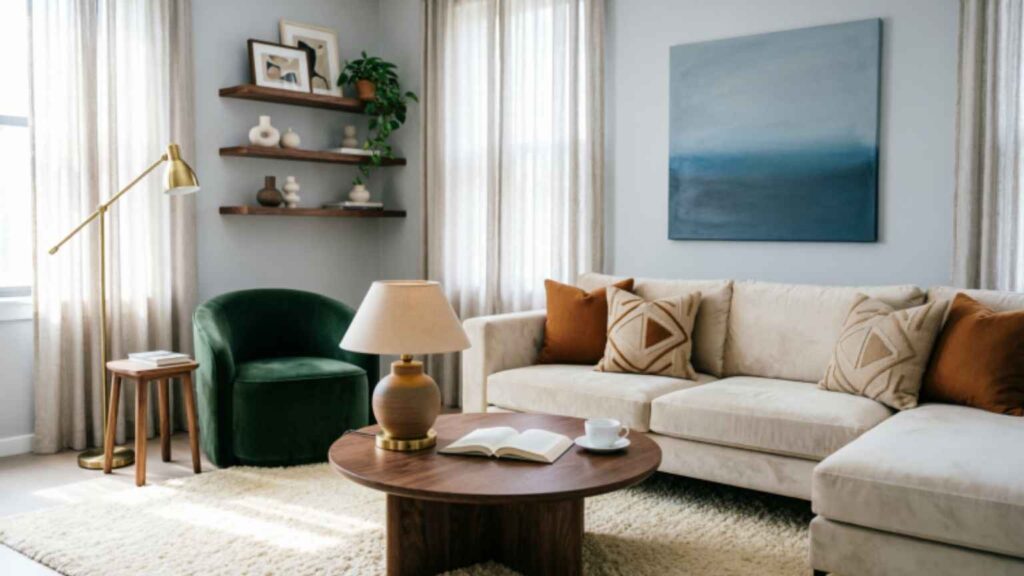
Your living room is the most used space in your home yet most people redecorate it wrong. They focus on aesthetics without thinking about flow, scale, or how the room will age. This guide covers 22 practical and visually striking living room decor ideas, followed by deep dive sections on trends, sustainability, and the design pitfalls that cost homeowners both money and style. Whether you’re working with a blank canvas or refreshing a tired space, these insights will help you make smarter, longer lasting decisions.
Purposeful Layout Design: Stop Pushing Furniture Against Walls
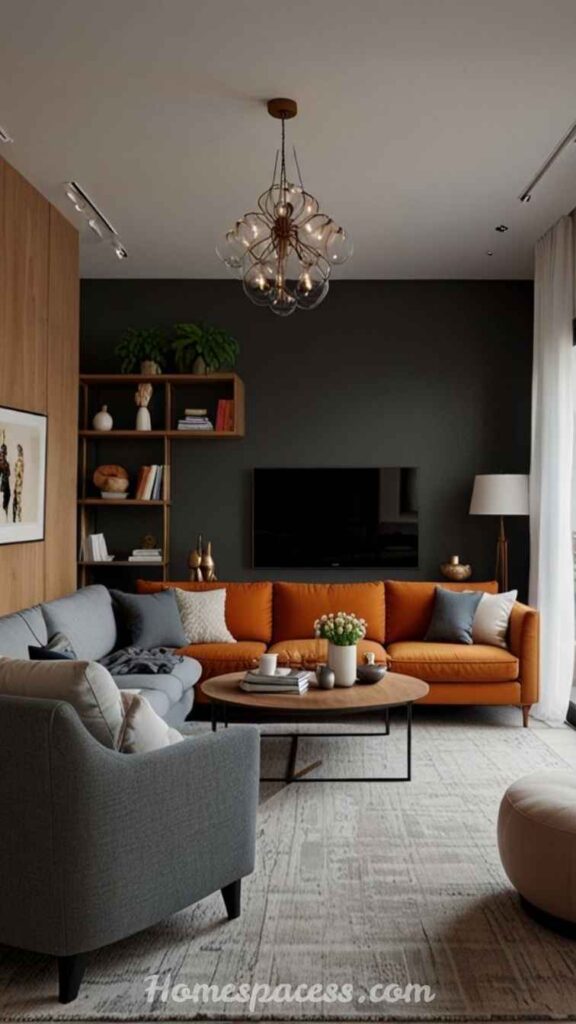
One of the most common mistakes in living room decor is pressing every piece of furniture flush against the walls. Interior designers call this “the furniture island problem” it creates dead zones in the room’s center and makes conversations feel like shouting across a cafeteria. Instead, float your sofa at least 18 inches from the wall and group seating around a central anchor like a coffee table or rug.
A well planned living room layout follows the principle of conversation zones: no two seats should be more than eight feet apart for comfortable discussion. If your space allows, consider an L shaped seating arrangement that naturally creates intimacy without closing off traffic flow. For larger rooms, two distinct zones a conversation area near a fireplace and a reading nook near a window — can make one room feel like two thoughtfully designed spaces.
★ Expert Insight
“The biggest layout shift I recommend: stop orienting everything toward the TV. Design the room for conversation first, and let the screen be a secondary element. You can always rotate toward it you can’t rotate away from an awkward layout.”
Must read: 15 Baby Nursery Ideas That Are Beautiful, Safe & Built to Grow With Your Child
Create a Gallery Wall with Intentional Curation
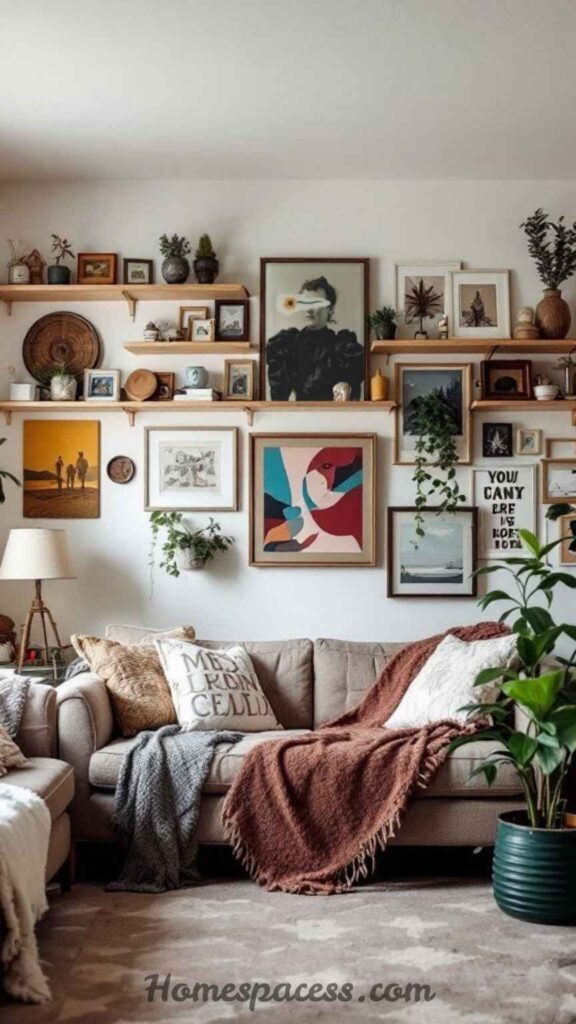
Gallery walls work best when they tell a visual story rather than just filling empty space. Mix framed art with functional items a small mirror, a woven piece, a sculptural object to add dimension. Stick to a consistent frame finish (all black, all gold, all natural wood) while varying the sizes and subjects for a curated, editorial feel.
Lay your arrangement out on the floor first before hammering a single nail. The most common gallery wall mistake is starting from one corner and working outward instead, start with your largest piece as a visual anchor at eye level (around 57 inches from floor to center), then build around it symmetrically or asymmetrically based on your style.
Don’t Miss: 24 Bedroom Interior Ideas That Actually Work in Real Homes
Statement Color Schemes: Beyond Beige Without Going Bold
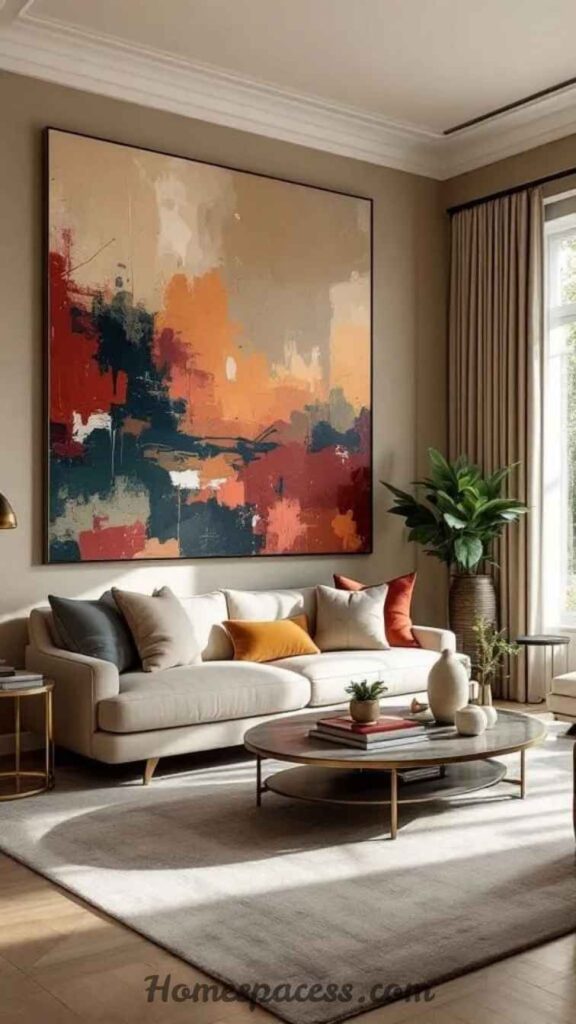
The shift away from all white living rooms is accelerating. In 2026, deeply saturated yet livable hues like terracotta, forest green, warm clay, and dusty blue are dominating the most compelling living room decor ideas. These colors are rich enough to feel intentional but grounded enough to stay comfortable long term. The trick is to use them strategically on a single feature wall, a sofa, or through layered textiles rather than on every surface at once.
Color drenching is an advanced technique gaining serious traction: painting walls, ceiling, trim, and woodwork all in the same hue for a cocooning, immersive effect. Studies in environmental psychology show that color drenched rooms feel more calming and spacious than rooms with high contrast white trim, which creates visual choppiness. Choose a mid toned sage green or warm ochre, and drench the entire room for a result that looks architectural rather than bold.
■ Color Psychology Note
Warm neutrals creamy whites, biscuit tones, warm taupes perform better than cool grays in living rooms. Research from behavioral design labs shows warm toned rooms are rated as 23% more welcoming and comfortable than identical rooms painted in cool grays. The era of “greige” is giving way to genuinely warm palettes.
Read More: Small Kitchen Ideas: 18 Expert Transformations That Actually Work
Use the 60-30-10 Color Rule Deliberately
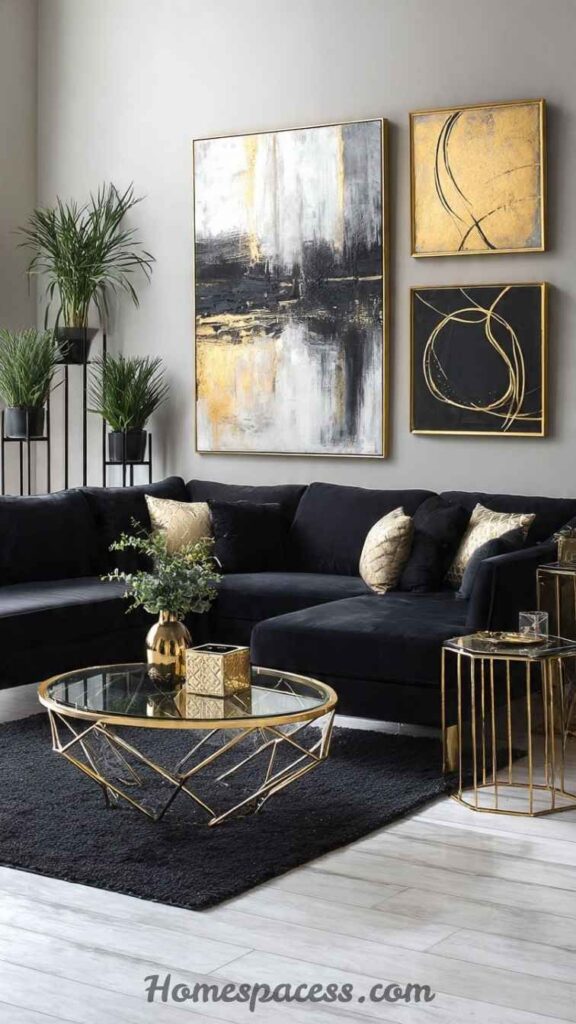
The 60-30-10 color rule is the foundation of balanced interior design 60% dominant color (walls and large furniture), 30% secondary color (upholstery, curtains), and 10% accent color (throw pillows, vases, art). What most guides skip is that this rule works because of visual weight, not just percentage area. A small, highly saturated accent color on a dark coffee table reads differently than on a pale cushion.
In 2026, designers are stretching this rule by using a tonal third color a shade that bridges dominant and accent rather than a sharp contrast. For example, a room with warm greige walls and navy accents might use a dusty sage as its bridge tone, creating a more sophisticated palette than a stark black-white-gold combination.
More Info: Small Bathroom Ideas:25 Clever Ways to Make Every Inch Count
Incorporate Indoor Plants Strategically
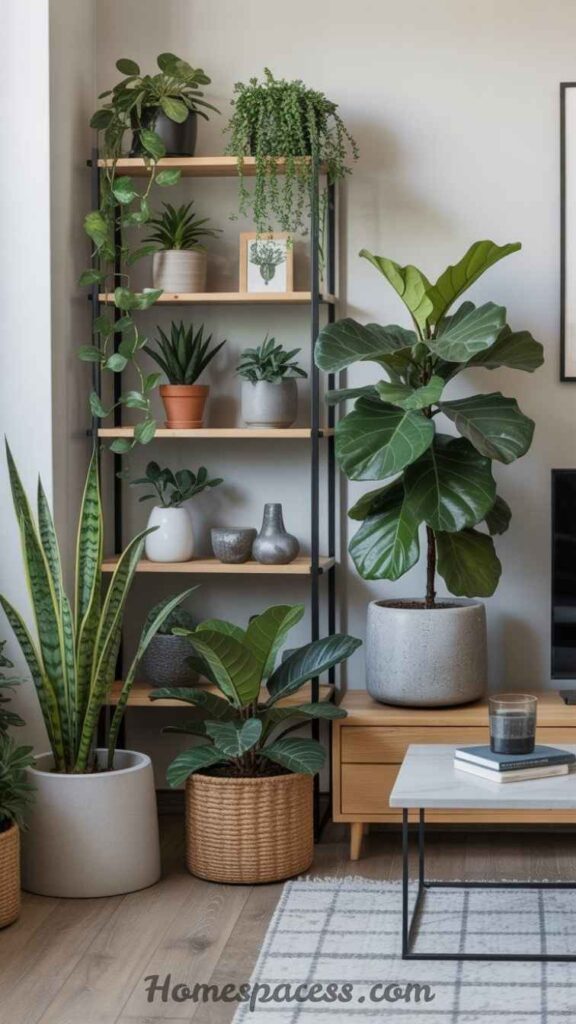
Plants add life, literally and visually. Large statement plants like fiddle leaf figs, olive trees, or monstera deliciosa work best in corners to soften right angles and fill dead space. Smaller plants grouped in odd numbers (three or five) on shelves or a coffee table create a more naturalistic, less “catalog” look. Vary the heights and pot textures rather than using matching containers throughout.
Beyond aesthetics, plants improve perceived air quality and reduce stress a psychological benefit increasingly supported by environmental psychology research. If natural light is limited, choose low maintenance varieties like pothos, ZZ plants, or snake plants. Faux botanicals have improved significantly in quality high end silk and preserved moss options are nearly indistinguishable from live plants when placed thoughtfully.
Rethink Your Sofa Placement
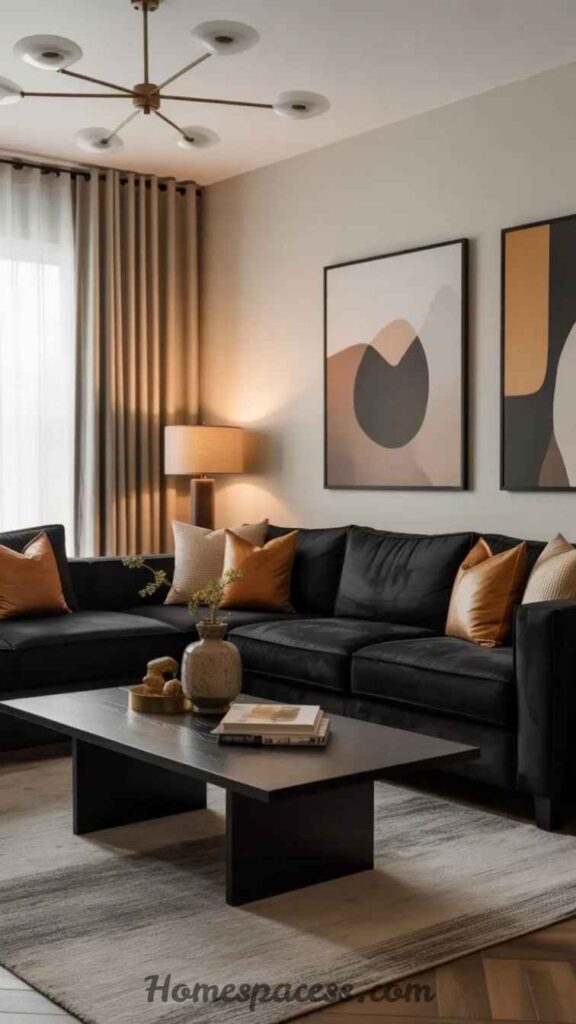
The reflexive instinct is to push the sofa against the wall but this often makes rooms feel smaller and conversations more awkward. Floating your sofa at least 12–18 inches from the wall creates a more intimate conversation zone and gives the room visual breathing room. In narrow rooms, push only one side against the wall and float the other seating pieces to create a less rigid arrangement.
Your sofa’s back facing toward an entry point can actually work beautifully in open plan spaces it creates zones and gives a sense of entering a private room within a room. A console table placed behind a floating sofa also solves the functional problem of nowhere to put a drink without a side table, while filling the gap visually.
Hang Curtains Higher and Wider Than the Window
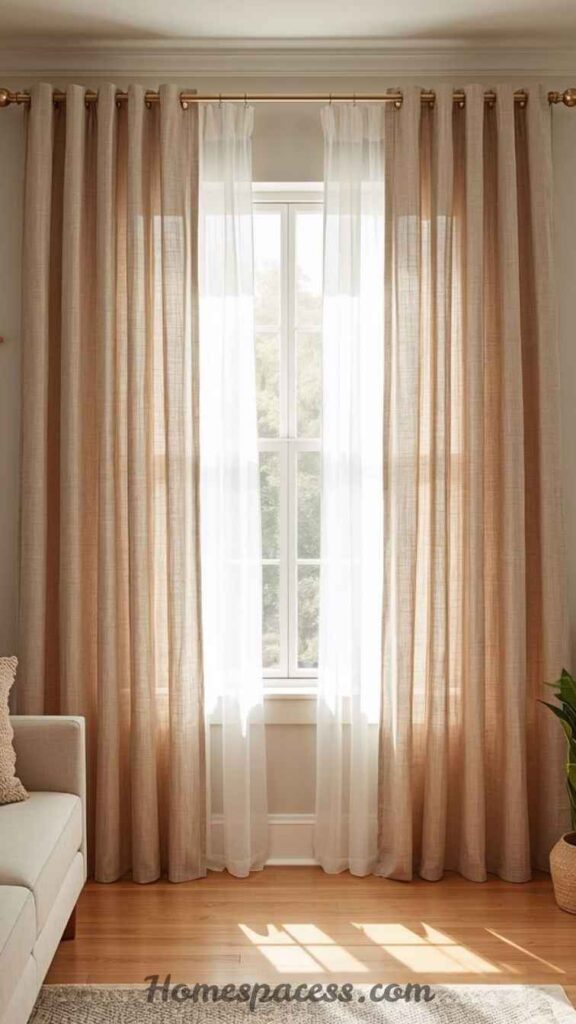
This single change can transform the perceived height and grandeur of any room. Hang curtain rods 4–6 inches above the window frame (or just below the ceiling for maximum drama) and extend the rod 8–12 inches beyond each side of the window. When the curtains are drawn, the window appears dramatically larger. This is one of the cheapest visual tricks in interior design and one of the most effective.
Choose curtains that just kiss the floor or pool slightly for an intentional, luxurious look. Curtains that hover above the floor read as a mistake; curtains that are several inches short read as amateur. Linen and velvet are currently the fabrics of choice in high end design linen for airy, relaxed spaces and velvet for richly textured, cozy environments.
Build a Bookshelf That Doubles as Art
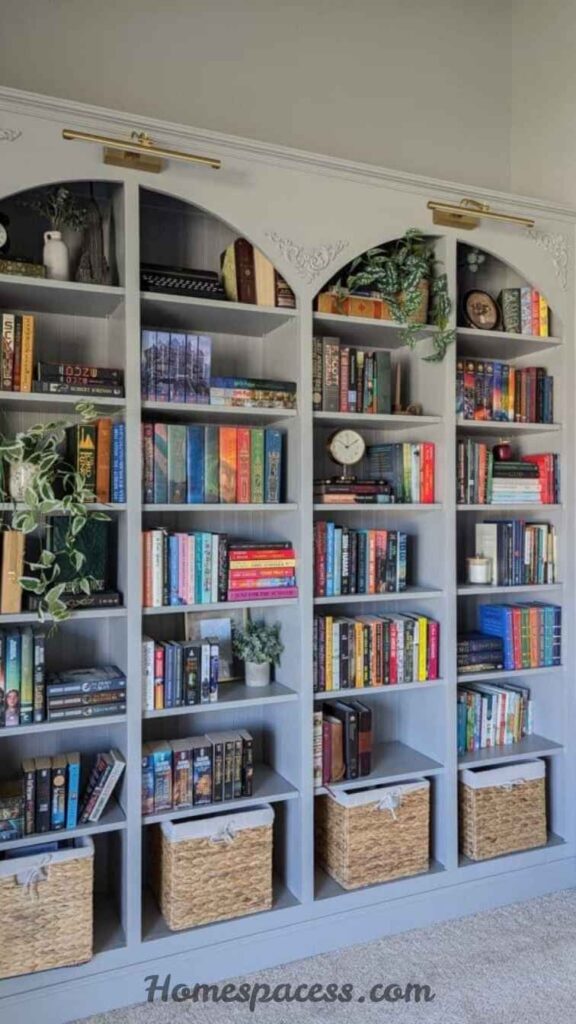
Bookshelves are functional furniture, but a well styled shelf is visual architecture. The key is rhythm alternate books with objects, vary spine orientations (some stacked horizontally, some standing vertically), and leave deliberate negative space. Every shelf should contain a mix of heights and textures. Think: tall plant, stack of books, small sculpture, leaned art print.
Color coding a bookshelf by spine color is visually striking but only works if you actually own enough books to do it authentically. A more sophisticated approach is organizing by theme or genre while interleaving art objects. Dedicate 20–30% of each shelf to breathing room overcrowded shelves read as clutter, not character.
Use Mirrors to Amplify Light and Space
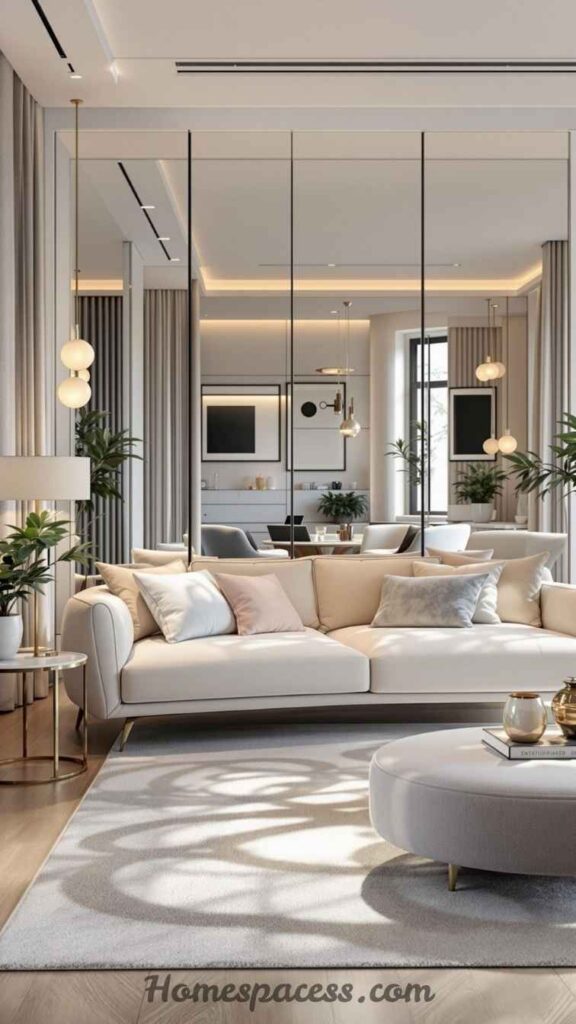
A strategically placed mirror can double a room’s perceived size. The best placement is directly opposite a window to reflect natural light back into the space. Large, leaned floor mirrors add a casual, editorial quality; framed wall mirrors add formality. Avoid placing mirrors so they reflect an unattractive view like a blank wall or cluttered corner because you’ve just doubled the visual problem.
Arch top mirrors are currently dominating interior design in 2026, replacing the long dominance of rectangular frames. Their soft shape also counteracts the hard geometry typical of modern furniture. Vintage and antique mirrors with foxed glass add warmth and a sense of history that new mirrors simply can’t replicate.
Add Texture Through Textiles
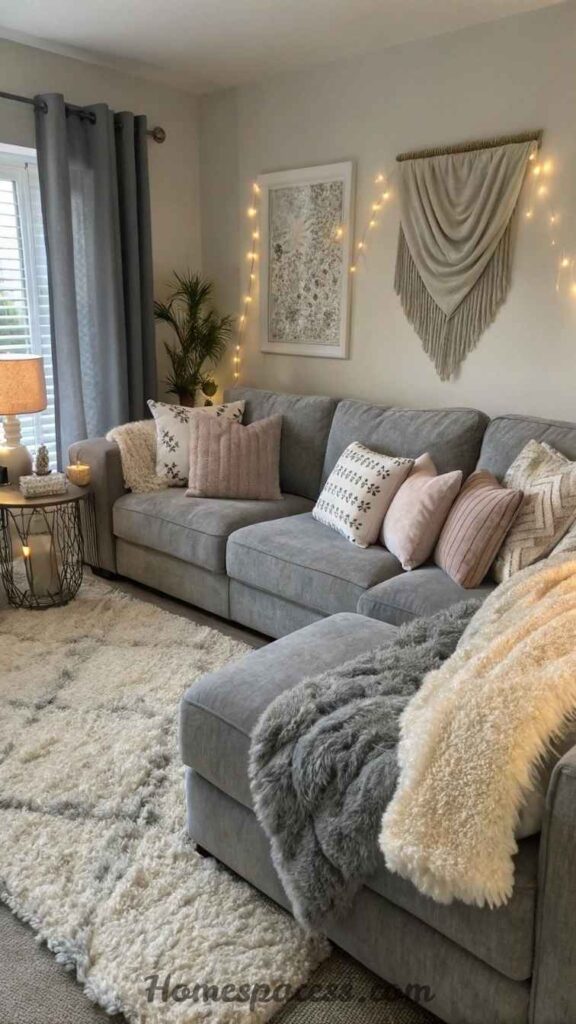
Texture is the unsung hero of sophisticated living room design. When a room feels bland but everything seems stylistically correct, it’s almost always a texture deficiency. Layer materials that invite touch a chunky knit throw, velvet cushions, a nubby linen sofa, a jute rug. The contrast between smooth and rough, matte and sheen, tight and loose weave is what creates visual richness.
In neutral rooms especially, texture does the work that color might do in bolder spaces. A monochromatic room in shades of cream and oat can feel luxurious or flat the difference is almost entirely in the material contrast. For example, pairing a polished marble coffee table with a chunky boucle sofa creates enormous visual interest without a single bright color.
Invest in One Hero Piece of Art
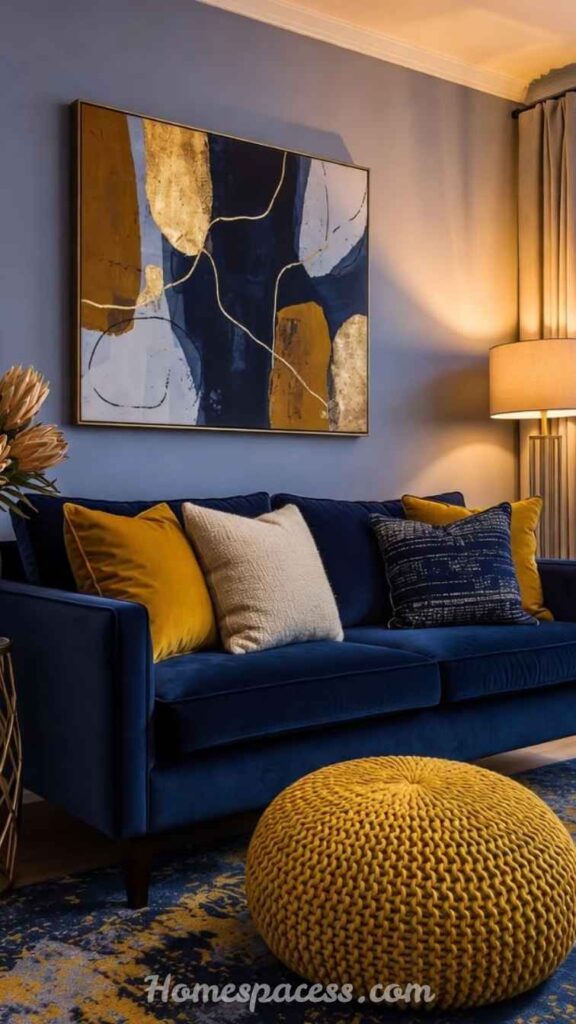
A single large scale art piece can define the entire personality of a living room. Instead of filling every wall with medium sized prints, consider investing in one oversized original, print, or even a large format photograph. Hung above the sofa at the correct height (center at 57 inches), it creates an immediate focal point and signals that the room has been thoughtfully designed rather than assembled from a catalog.
You don’t need to spend thousands. Print on demand services, local artists, and even art schools sell high quality large format work at accessible prices. A canvas at 40×60 inches or larger on an empty wall creates a dramatically different impression than three smaller prints would. Size and singular focus are the keys.
Design Around a Focal Point
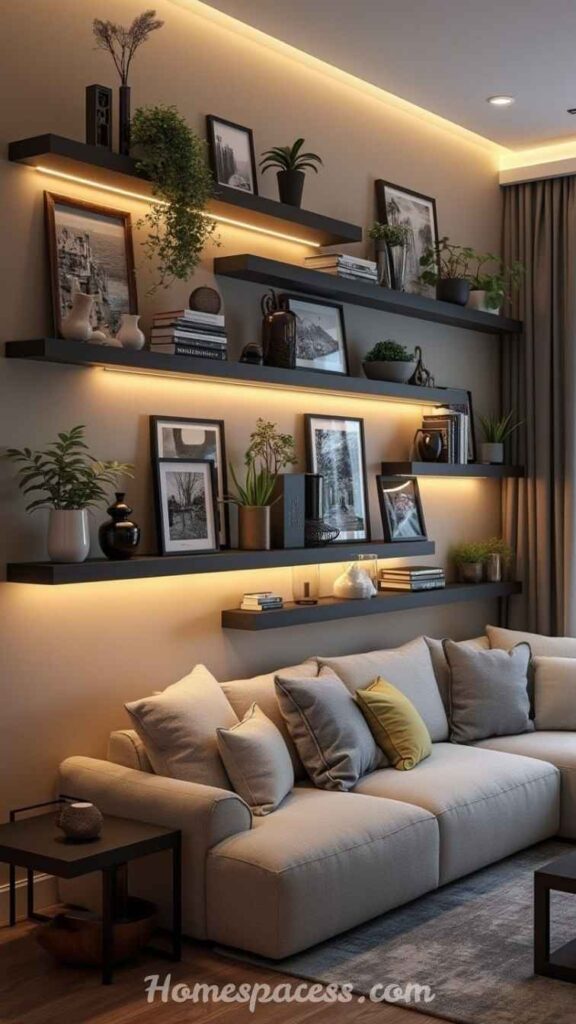
Every well designed living room has a clear focal point the one element the eye travels to first. In older homes, this is often a fireplace. In modern apartments, it might be a feature wall, a large TV, or a statement piece of furniture. The problem arises when rooms have two competing focal points that fight for attention, leaving the space feeling visually unsettled.
If your focal point is a TV, embrace it rather than trying to hide it. A gallery wall arrangement built around the TV, or a custom built media console that frames it, makes it intentional rather than accidental. Alternatively, a blackboard paint panel behind a TV blends it into the wall when off and adds texture when on. The goal is visual hierarchy one star, several supporting players.
Introduce Earthy, Natural Materials
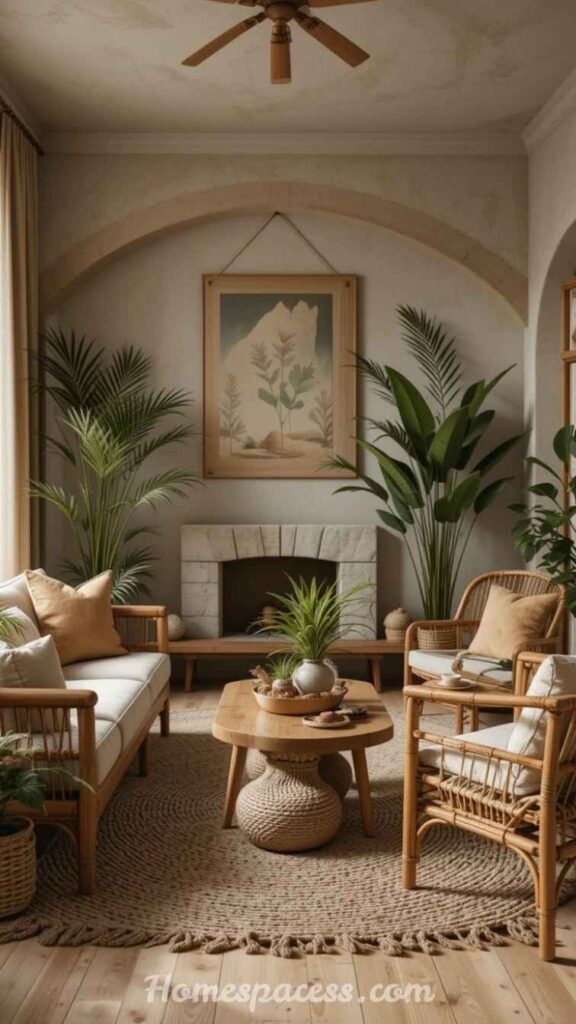
The biophilic design movement creating environments that connect humans to nature is no longer a trend but a design standard. Natural materials like rattan, travertine, wood, linen, and stone bring warmth and organic irregularity that manufactured materials can’t replicate. Even a single rattan side chair in a modern room softens the hard geometry of contemporary furniture significantly.
Travertine in particular has had a remarkable resurgence once associated with 1990s hotel lobbies, it’s now one of the most sought after materials in contemporary interiors. A travertine tray, side table, or even a small tile element added to a fireplace surround immediately elevates a space. Natural materials also improve with age, developing patina that adds character rather than looking worn.
Create Cozy Corners with Intentional Nooks
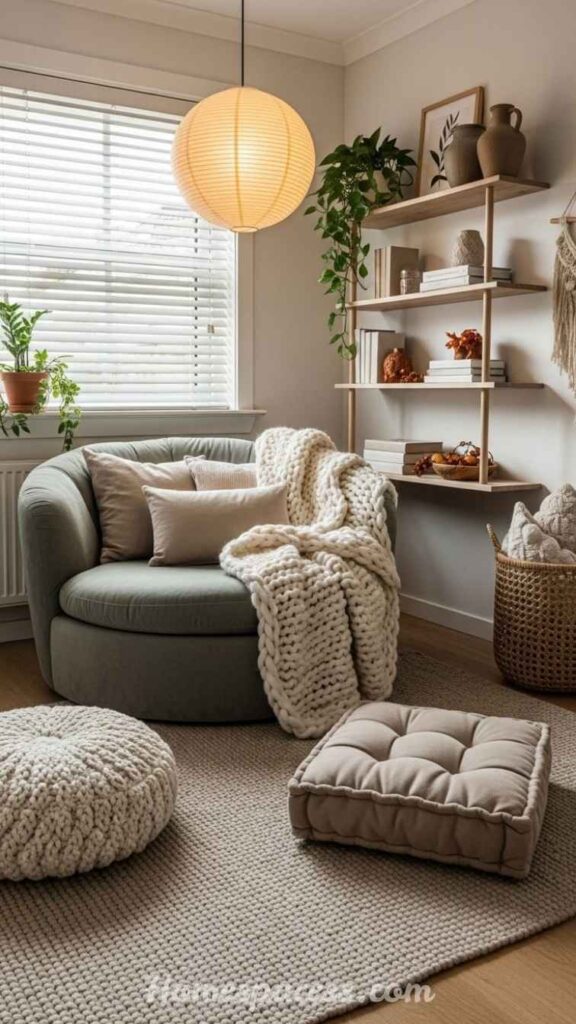
Not all seating needs to be in the main conversation zone. A single armchair angled toward a window with a floor lamp and a small side table creates an irresistible reading nook that adds both function and visual layering. These secondary seating zones make larger rooms feel more intimate and give the space a lived in quality that purely formal arrangements lack.
The Danish concept of hygge a feeling of cozy contentment is best created in corners rather than center stages. Layer the nook with a soft throw, a small collection of books, and a candle or two to create a space that looks genuinely inviting rather than staged. These zones photograph beautifully and tend to become people’s favorite spot in the home.
Upgrade Hardware and Small Details
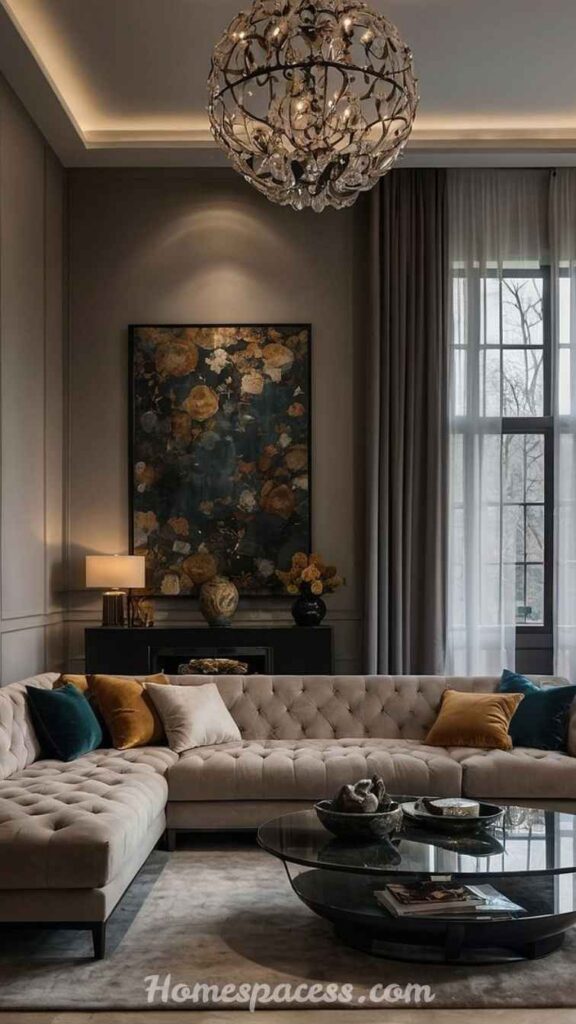
Cabinet handles, light switch plates, candle holders, and decorative trays are the equivalent of accessories in fashion they complete the look. Replacing builder grade hardware with brass, matte black, or unlacquered bronze finishes across a room creates a cohesive, intentional feel for under $200 in most cases. This is one of the most underrated upgrades in interior design.
Consistency in metal finishes is important but doesn’t need to be absolute. A dominant metal (say, brushed gold) can be mixed with a single secondary metal (matte black) for contrast but introducing a third metal finish almost always feels chaotic. Choose your primary finish and apply it consistently to the highest visibility pieces: lamp bases, picture frame finishes, and hardware.
Use Wallpaper as an Accent, Not a Cover Up
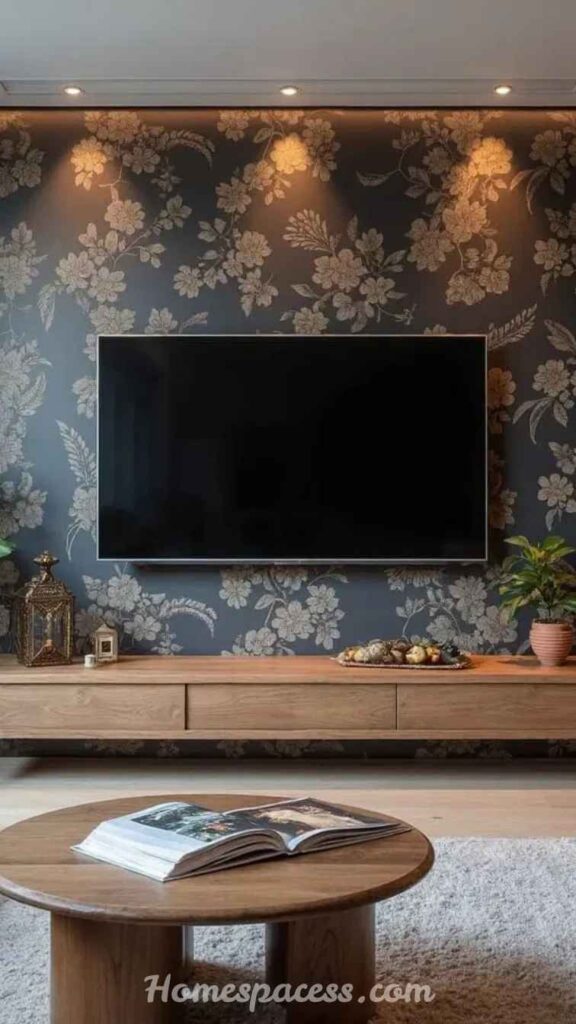
Full room wallpaper is a major commitment, but an accent wall in wallpaper can entirely transform a living room’s character without overwhelming it. The wall behind the sofa or facing the entry is the ideal choice. In 2026, large scale botanical and abstract painterly prints are leading the wallpaper revival a marked shift from the geometric and marble patterns that dominated the previous decade.
Peel and stick wallpaper has evolved dramatically in quality, making it renter friendly and risk free. High end versions with linen or embossed textures are nearly indistinguishable from traditional wallpapers at a glance. For a more subtle approach, paneling paint or limewash painting on a single wall creates similar drama with a material focused aesthetic.
Style a Coffee Table Like a Curated Vignette
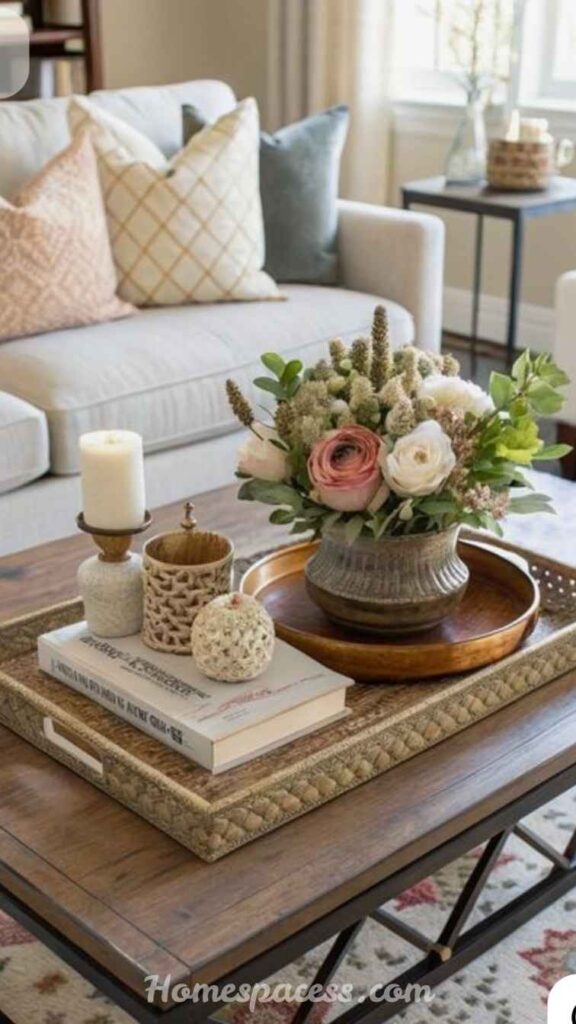
The coffee table is the room’s social centerpiece, yet it’s one of the most commonly neglected styling opportunities. A well styled coffee table should have height variation (a tall vase or candle), a flat base element (a tray or stack of coffee table books), a textural element (a small woven basket or stone object), and one living element (a small plant or fresh flowers). This formula works regardless of the table’s shape or material.
Avoid the temptation to cover every inch negative space is part of the composition. A tray corrals accessories and makes the whole grouping look intentional rather than scattered. Change the vignette seasonally to keep the room feeling fresh without redecorating. Swapping dried grasses for tulips in spring or a pumpkin for a candle cluster in autumn costs almost nothing but makes a significant visual impact.
Maximize Vertical Space with Tall Furniture
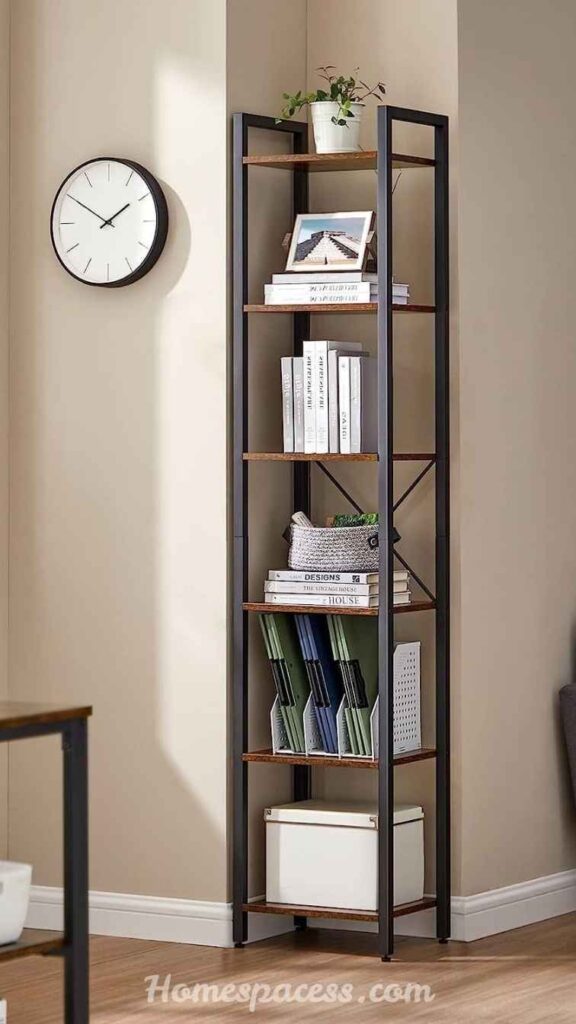
Most people furnish rooms horizontally, leaving the upper third of the wall completely bare. Floor to ceiling bookcases, tall floor lamps, and vertical artwork draw the eye upward and make ceilings feel higher. In rooms with low ceilings, this is especially powerful vertical lines create an optical illusion of height that no amount of light paint color can fully replicate.
Tall plants like olive trees, fiddle leaf figs, and bird of paradise plants placed in corners are the most affordable way to add vertical emphasis. A ladder shelf leaned against a wall adds both storage and vertical interest without the permanence of built ins. When ceilings are particularly low (under 8 feet), choose furniture with legs rather than pieces that sit directly on the floor the visible floor space between furniture and floor makes the room breathe.
Scent as the Invisible Design Layer
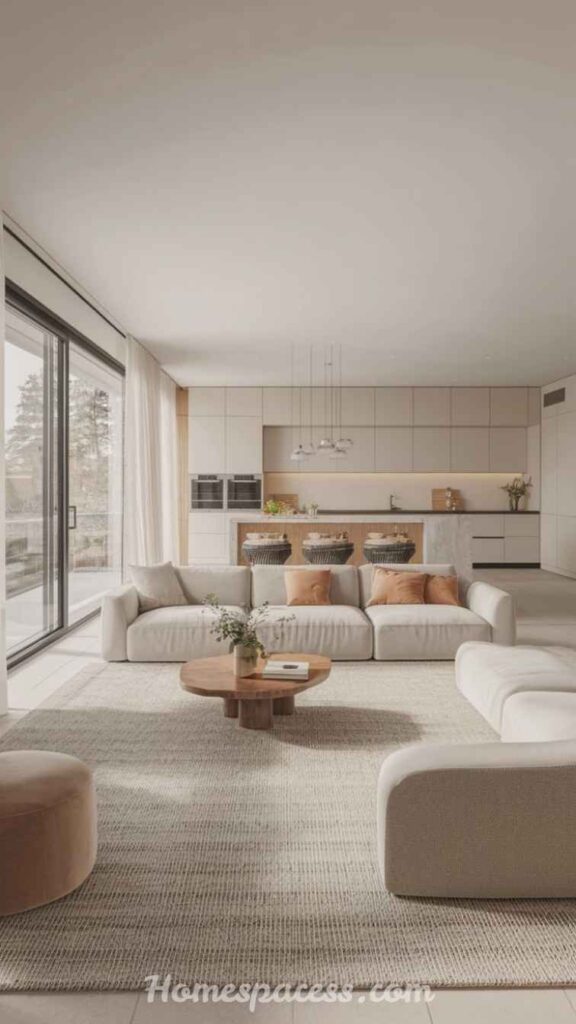
Professional stagers and luxury hotel designers know that scent is the most emotionally powerful design element and the most overlooked. A living room that smells intentionally of sandalwood, white tea, or cedar is remembered differently than one that is visually beautiful but scent neutral. This is the detail that competitors never discuss but experienced designers never skip.
Reed diffusers offer long lasting, consistent scent without the fire risk of candles. For special occasions, a lit candle adds both scent and warm flickering light that no electric source replicates. Choose one signature scent for your living room and use it consistently over time, guests will associate it with your space in the same way a luxury hotel lobby has an unmistakable signature fragrance.
Create Zones in Open Plan Spaces
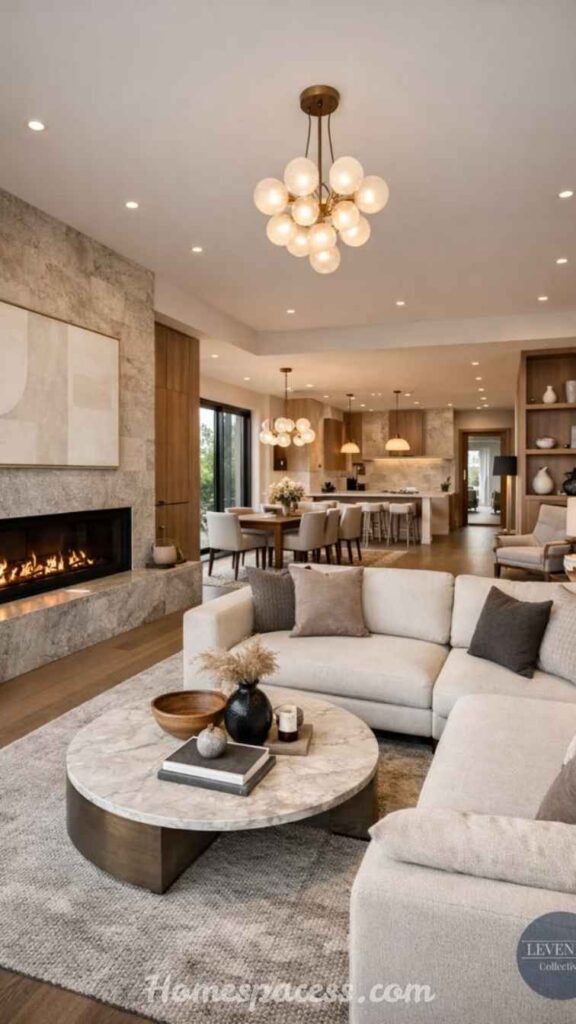
Open plan living is practical but can feel shapeless without deliberate zoning. Use rugs, lighting, and furniture arrangement to define distinct zones a conversation area, a reading nook, a dining zone within the larger footprint. Each zone should feel self contained while still connecting visually to the others through consistent color or material threads.
Room dividers don’t have to be walls. A large bookcase placed perpendicular to the wall, a row of tall plants, or even a dramatic hanging light over the dining table signals a zone change without blocking light or sight lines. This approach is especially valuable in studio apartments and open lofts where every square foot must work harder than it would in a traditionally divided home.
Embrace Negative Space and Restraint
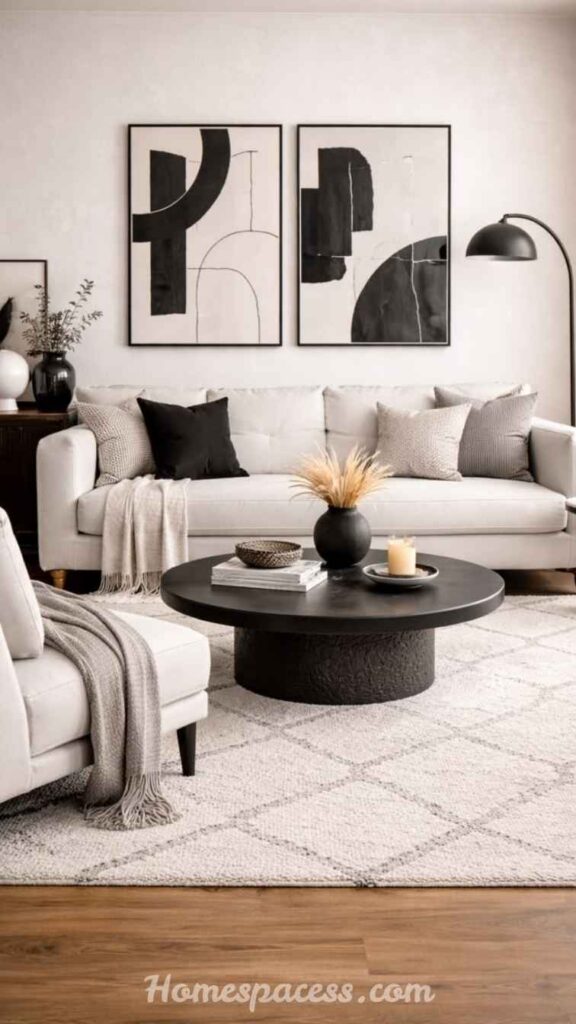
The most overlooked decorating principle is knowing when to stop. Overcrowded rooms feel anxious; rooms with breathing room feel expensive and calm. Professional designers routinely remove 20–30% of the accessories they place to achieve the “edited” look. If every surface is occupied, every wall is covered, and every corner is filled, the room has no room to breathe and neither does the person living in it.
This is especially important in smaller living rooms where scale is unforgiving. A single large piece of art instead of six small ones, one substantial plant instead of five small ones, and three well chosen throw pillows instead of twelve all contribute to a feeling of intentionality over accumulation. The Japanese wabi sabi philosophy finding beauty in imperfection and incompleteness offers a useful framework for knowing when enough is genuinely enough.
Personalize with Meaningful Objects
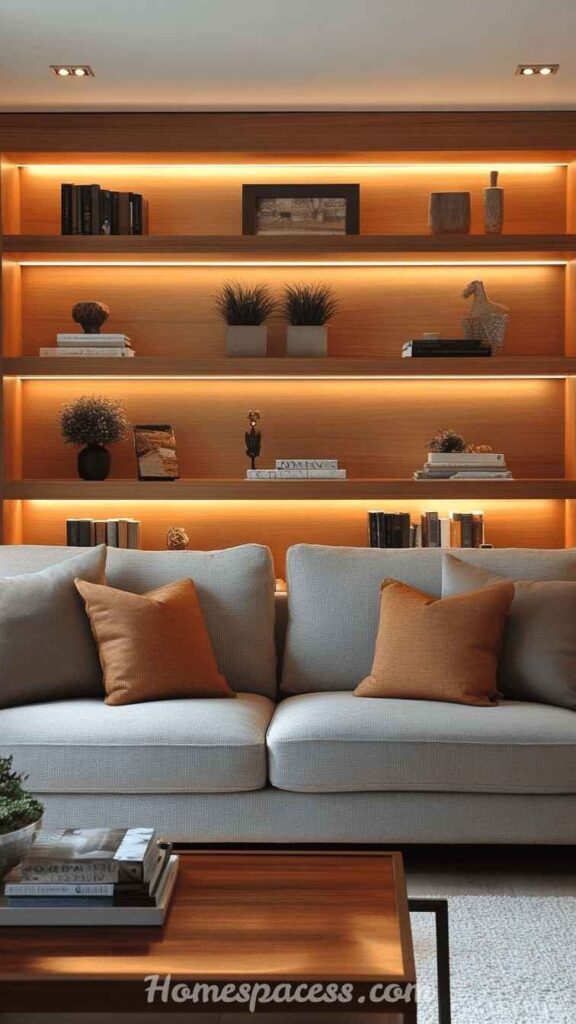
The difference between a beautifully designed room and a beautifully designed home is the presence of personal artifacts. Travel souvenirs, inherited objects, handmade items, and books that are actually read add authenticity that no store bought collection of accessories can replicate. The risk of over curating a space is that it starts to feel like a showroom rather than a lived in environment.
The key is editing rather than excluding. Display meaningful objects with the same intentionality you’d bring to purchased decor group similar items, elevate them on a tray or pedestal, and frame them against negative space. A grandmother’s ceramic vase placed alone on a shelf with breathing room around it commands the same attention as a gallery piece. Personal objects treated with respect become the most compelling design elements in any room.
Conclusion
Living room decor ideas are everywhere Pinterest boards, design blogs, social media feeds overflow with them. What’s rare is the deeper design thinking that separates a room that looks good in a photograph from one that feels exceptional to live in every day. The 22 ideas in this guide are a starting point, but the expert insights, trend analysis, and honest mistakes section are where the real value lies for anyone serious about creating a lasting, beautiful space.
Start with one change rather than attempting a full redesign simultaneously. Lighting is the highest impact, lowest cost starting point in most rooms. Then address scale and proportion are your rugs large enough, your curtains hung high enough, your art piece substantial enough? Once those foundations are in place, the accessories and personal touches fall naturally into place. The rooms that feel most distinctive are always the ones designed from the inside out built around how people actually live rather than how spaces look in catalog photography.
Great living room design is ultimately an ongoing conversation between the space, the objects within it, and the people inhabiting it. It evolves. It responds to new seasons, new objects, new needs. Treat it not as a project to complete but as a practice to enjoy.
2026–2027 Living Room Design Trend Analysis
Understanding where design is heading not just where it has been is what separates reactive decorators from strategic ones. The dominant living room trends of 2026 reflect a broader cultural response to digital saturation, economic uncertainty, and a renewed desire for tactile, authentic environments.
Rising Strong
Warm Minimalism
Peak Popularity
Organic Shapes
Emerging 2026
Quiet Maximalism
Accelerating
Natural Textures
Declining
Millennial Gray
Rebounding
Earth Tones
Warm minimalism a reaction to the cold, sterile gray and white aesthetic of the 2010s is the defining look of 2026. It combines the restraint of minimalism with the warmth of natural materials and organic tones. Think warm oat walls, travertine surfaces, aged brass, raw linen, and a single well chosen piece of art. This look is durable because it ages beautifully and isn’t tied to a single color cycle.
Looking ahead to 2027 and beyond, “quiet maximalism” is beginning to appear in design publications and high end showrooms. Unlike the bold, eclectic maximalism of the early 2020s, quiet maximalism layers richness gradually adding a fourth or fifth texture, deepening a color palette, mixing more periods and styles but always within a controlled framework of neutral backgrounds. It’s the aesthetic equivalent of speaking quietly but saying something profound.
Design Insight
Color forecasters at major paint brands are already pointing toward terracotta, warm burgundy, and aged mustard as the accent colors of 2026 a shift away from the sage greens and dusty blues that have dominated the mid 2020s palette.
Expert Practical Tips for a Better Living Room
After years of interior design observation, certain principles separate rooms that photograph well from rooms that actually live well. Here are practical, real world optimization strategies that most how to content skips over entirely.
The first expert principle: always shop your own home before buying anything new. Walk through every room and look for objects that might work better in the living room. A lamp from a guest room, a throw from a bedroom, a tray from the kitchen rearranging existing pieces before purchasing creates the clarity to know what’s actually missing versus what just feels stale from familiarity. Interior designers call this “shopping your stash” and it’s the most underutilized redesign strategy available to homeowners.
The second principle: photograph your room with your phone before and after any change. Our eye adapts remarkably quickly to the spaces we inhabit we stop seeing what’s actually there. A photograph from the doorway reveals the room as a guest sees it, with fresh objectivity. You’ll immediately notice the sofa cushions that need fluffing, the lamp cord that’s visible, the wall that’s too bare, or the shelf that’s too crowded. Design professionals use this technique constantly it’s one of the most practical habits you can adopt for maintaining a well designed space.
Sustainability & Long Term Design Value
Fast furniture the interior design equivalent of fast fashion is one of the most environmentally and financially costly habits in home design. Flat pack furniture assembled from particleboard rarely lasts more than 5–7 years under normal use, meaning most buyers end up spending significantly more over a decade than they would have on one solid, well made piece. The sustainability argument and the financial argument for quality furniture are identical.
When budgeting for living room decor, apply the cost per year framework: a sofa that costs $1,500 and lasts 15 years costs $100/year. A sofa that costs $600 and needs replacing after 4 years costs $150/year and adds significantly more to landfill. This reframe makes quality feel affordable rather than extravagant. Prioritize investment in pieces with the highest daily use and visibility: the sofa, the main rug, and the lighting. Save on accessories, which can be changed cheaply and frequently.
Secondhand and vintage furniture offers both sustainability and uniqueness benefits that new furniture can’t match. A solid wood credenza from the 1970s has already proven its durability across 50 years it will almost certainly outlast anything manufactured today at a comparable price. Apps and marketplaces for secondhand furniture have made sourcing dramatically easier, and restored vintage pieces are among the most sustainably and financially sound decorating decisions a homeowner can make.
Future Predictions & Upcoming Innovations in Living Room Design
Several converging forces will reshape living room design by 2027–2030. The most significant is the continued integration of smart home technology in ways that are aesthetically invisible. The current generation of smart home devices visible speaker grilles, plastic bezels, cable management challenges is already being replaced by built in, architectural solutions. Expect future living rooms to have technology embedded in walls, furniture, and lighting systems in ways that leave no visible trace.
Adaptive furniture pieces that change configuration based on use is moving from concept to commercial reality. Modular sofas that rearrange easily, coffee tables that transform into dining tables, and media walls that shift between work and entertainment modes reflect the reality that modern living rooms serve multiple functions simultaneously. As urban housing costs continue to rise globally, the per square foot value of a living room must increase. Every piece of furniture will be expected to justify its footprint with either greater utility or greater beauty.
Biophilic design connecting interiors to natural systems and materials will move beyond aesthetic trend into a design standard supported by building codes and wellness certifications. Living walls, circadian lighting systems that shift color temperature to match natural daylight cycles, and natural ventilation design are already standard in commercial buildings. By 2030, these elements will be increasingly common in residential living rooms, particularly in new construction. The living room as a wellness environment rather than simply a social or entertainment space represents the most significant paradigm shift coming to residential interior design.
Common Living Room Decor Mistakes (That Competitors Don’t Mention)
- Matching everything too precisely.
Furniture collections sold as sets are optimized for the showroom floor, not real rooms. A perfectly matched sofa loveseat armchair combination reads as institutional. Mix a sofa from one source with chairs from another, different but complementary, for a more sophisticated, evolved over time feel. - Ignoring acoustics entirely.
Hard floors, bare walls, and minimal soft furnishings create echo prone rooms that feel cold and unsettling. Rugs, curtains, upholstered furniture, and bookshelves filled with books all absorb sound. A room that sounds good feels better to occupy even if the person in it can’t identify why. - Buying furniture online without checking dimensions.
A sofa that looks proportional in a warehouse photograph can overwhelm a real apartment’s living room entirely. Always map your room dimensions in tape on the floor before any furniture purchase, and check the sofa’s arm height, seat depth, and diagonal measurement (for getting it through doors and stairwells). - Treating the TV as an afterthought.
Most living rooms are designed as if the television doesn’t exist, then the TV is added and immediately becomes the room’s largest and most dominant element. Design the room around the TV’s presence from the beginning build a media wall, create symmetry on either side of it, or develop a concealment strategy before buying other furniture. - Neglecting the transition from day to night.
A living room that looks beautiful in daylight but feels harsh or dim in the evening hasn’t been fully designed. Walk through your room at 7pm, 9pm, and 11pm to assess how the lighting feels at each hour. A room needs to work as beautifully by lamplight as by daylight and this almost always requires more and warmer lighting sources than people initially install.

Team Home Spacess shares simple, practical design ideas that work for real families. The team focuses on cozy décor, soft colors, and natural textures that make a space feel truly lived-in. From everyday decorating tips to creative home projects, Team Home Spacess is dedicated to helping readers create warm, comfortable, and inviting spaces with a fresh and personal touch.