

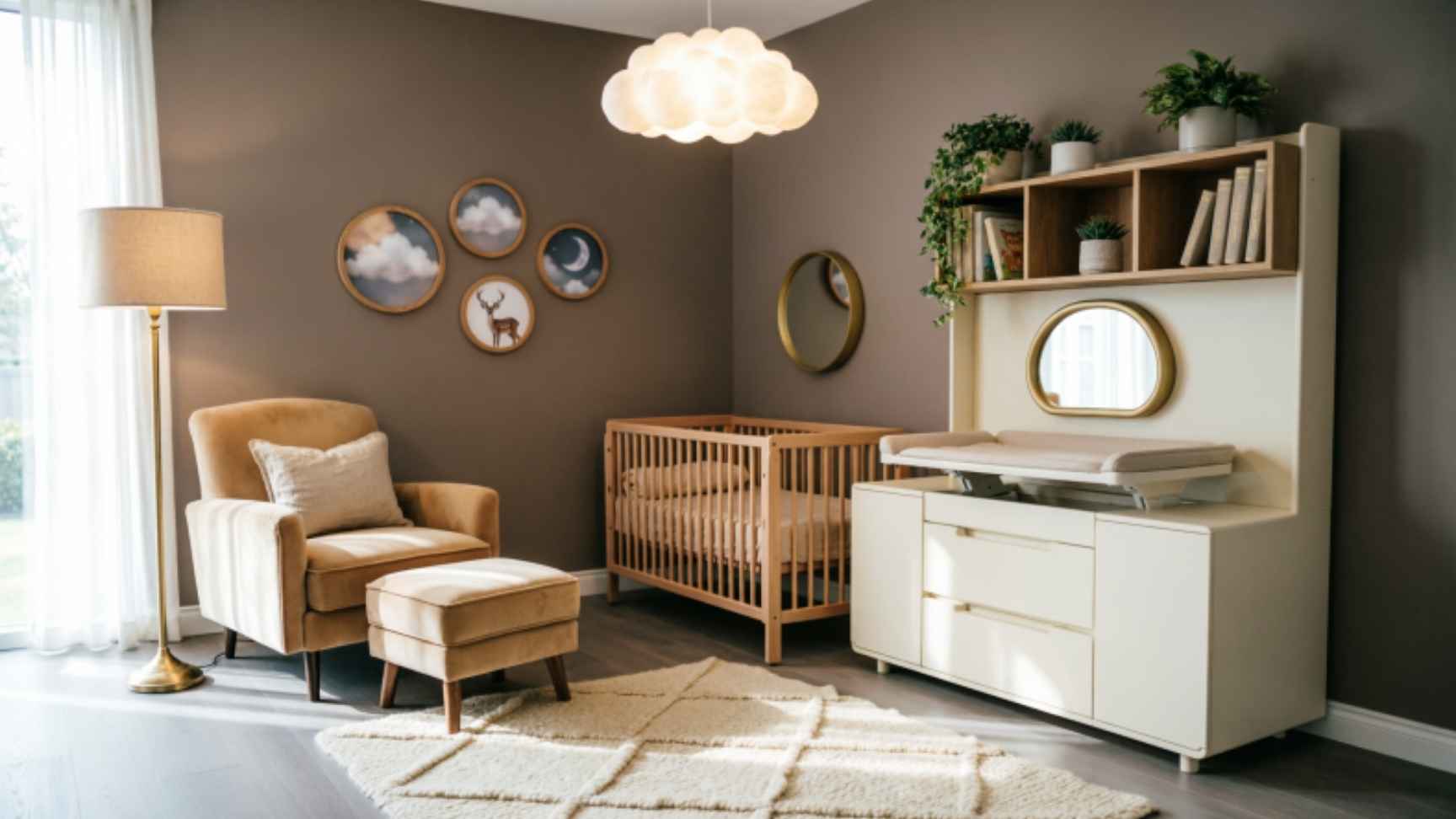
Designing a baby nursery feels exciting at first, but most parents quickly realize the challenge: how do you create a space that’s safe, functional, beautiful, and flexible enough to grow with a rapidly changing child? The average nursery gets redesigned at least once before a child turns three a costly and exhausting process that proper planning can almost entirely prevent.
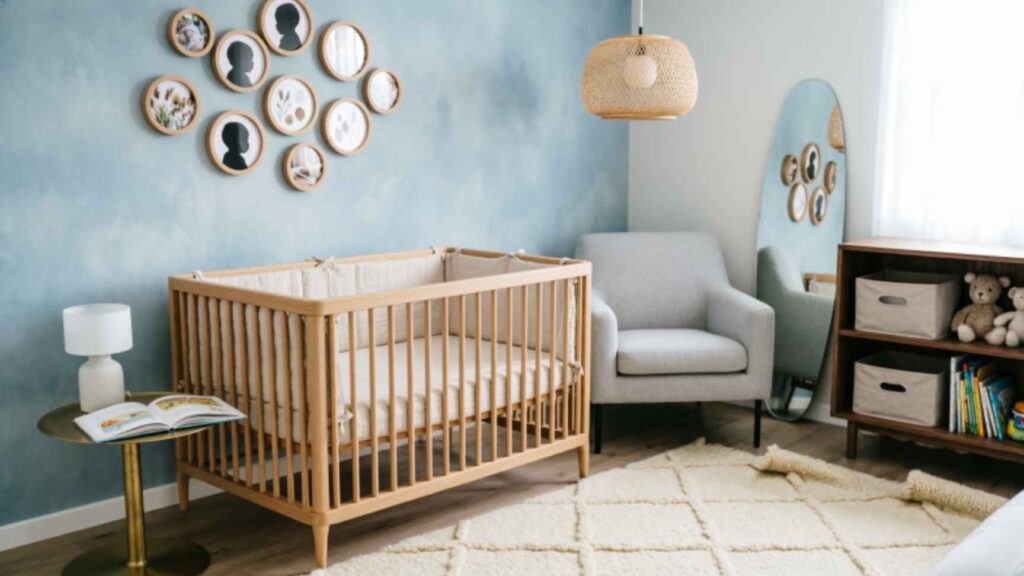
Designing a baby nursery is one of the most exciting and overwhelming parts of preparing for a new arrival. Beyond aesthetics, the right nursery setup can support infant sleep, sensory development, and even your own postpartum wellbeing. This guide goes far deeper than color swatches and crib styles, offering design intelligence that most listicles completely miss.
The best baby nursery ideas are rooted in a simple philosophy: design for the parent as much as the child. A nursery that works at 3 a.m., when you’re exhausted, stressed, and stumbling in the dark, is worth ten times more than one that photographs beautifully on Instagram. This guide combines current design trends, real-world functionality, and long-term thinking so you build a nursery you’ll love using not just looking at.
Throughout this guide, we cover 15 actionable baby nursery ideas organized by theme, followed by deeper expert analysis covering trend forecasts for 2026–2027, sustainability strategies, upcoming tech innovations, and the mistakes most parents make. Whether you’re designing from scratch or refreshing an existing room, you’ll find everything you need here.
Biophilic Nursery: Bringing Nature Indoors
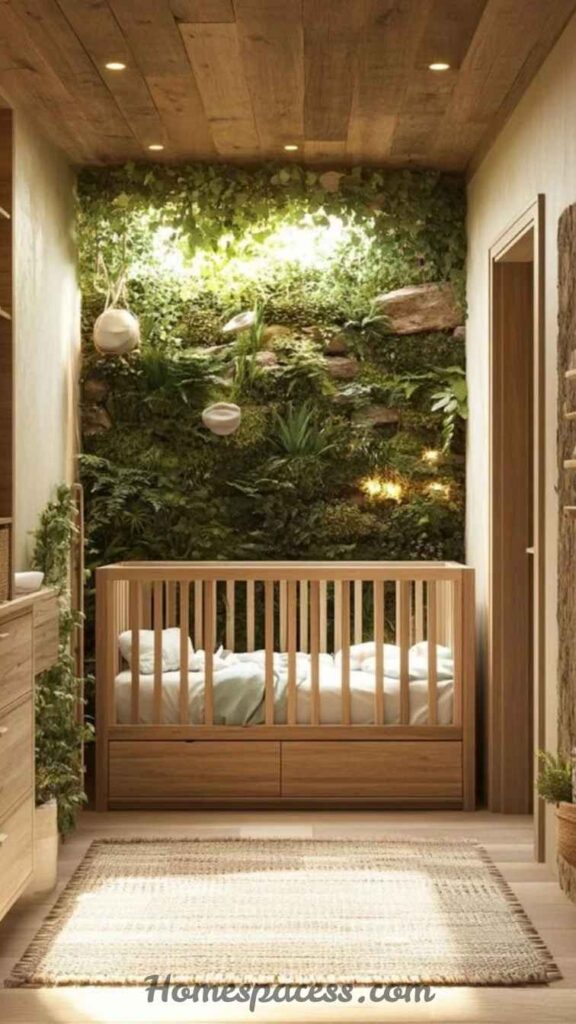
A biophilic nursery uses natural materials, organic textures, and earthy tones to create a sensory-rich environment for your baby. Think rattan mobiles, jute rugs, wood-grain furniture, and a palette of warm sage, terracotta, and cream. Unlike trend-driven themes, this design approach has roots in developmental psychology infants respond positively to natural patterns, textures, and diffused light.
The key is layering: a wooden crib paired with a linen canopy, potted non-toxic plants like spider plants or peace lilies (air purifiers!), and nature-themed wall murals or removable wallpaper. The result feels calm and grounded rather than artificially cheerful. Many interior designers now recommend this style as the single most future-proof nursery approach because it adapts naturally as your child grows.
Practical note: avoid heavy drapes near the crib and keep plants on high shelves once your baby becomes mobile. The visual richness of a biophilic nursery provides passive stimulation without overstimulation a balance pediatric occupational therapists frequently recommend for infant sleep quality.
Expert Tip:
Use Forest Bathing principles research shows that exposure to natural textures even in images can lower cortisol. A botanical-print ceiling mural above the crib is a surprisingly underused idea with real developmental benefits.
Must Read: 24 Bedroom Interior Ideas That Actually Work in Real Homes
Gender-Neutral Nursery with Warm Earth Tones
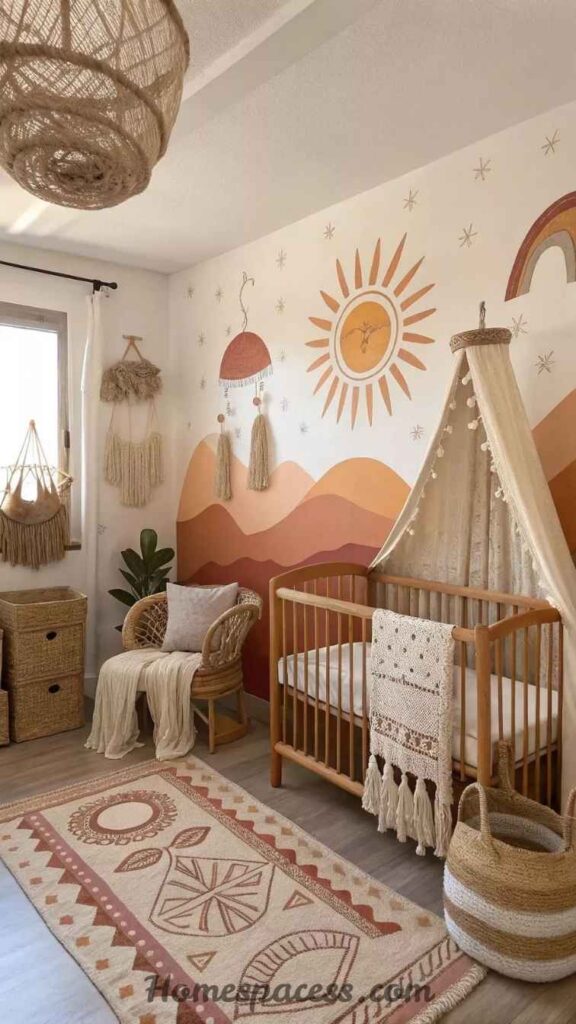
Gender-neutral nursery design has evolved well beyond plain white walls. In 2026, the most sophisticated neutral nurseries use warm terra cotta, dusty mauve, camel, and linen tones colors that feel inviting and rich without skewing masculine or feminine. This approach also has real resale value if you’re planning multiple children or will eventually repurpose the room.
The secret to making a gender-neutral nursery feel intentional rather than safe is contrast and texture. Pair a warm-toned wall with deep-stained wood furniture, add a geometric rug with two or three of your palette colors, and choose textiles in natural fibers. Avoid the trap of going too beige a room without enough contrast can feel flat and uninspiring, which doesn’t serve infant visual development.
Design Insight:
Babies see high contrast best in the first 3 months. Add a black-and-white pattern element (framed art, a mobile) in the crib zone even within a neutral palette.
Read More: Small Kitchen Ideas: 18 Expert Transformations That Actually Work
The Functional Reading Nook Within the Nursery
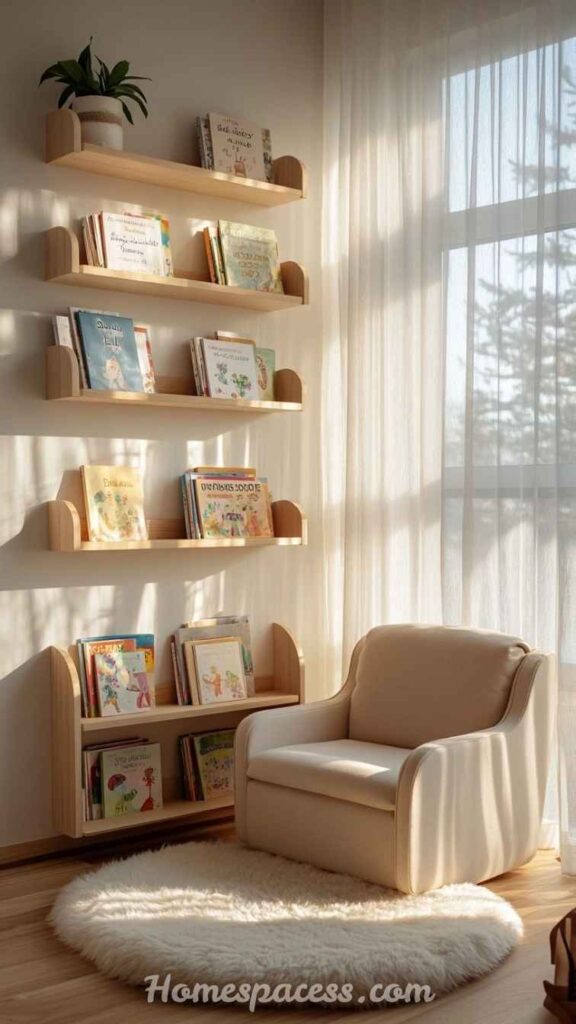
One of the most underrated nursery ideas is carving out a dedicated reading corner not just for aesthetics, but as a behavioral anchor. A low bookshelf at baby’s level, a glider or rocker with good lumbar support, and warm lighting sets the stage for a lifelong reading habit. Pediatricians and early literacy researchers agree: the physical environment shapes reading behavior from infancy.
Choose a forward-facing bookshelf (covers visible) rather than a spine-out style studies from children’s libraries show children select books 3x more often when covers are displayed. Pair this with a soft rug, a basket of plush toys, and a dimmable floor lamp. This nook also serves a crucial function for overnight feeds a parent-friendly chair with arm support reduces strain during those 2 AM sessions dramatically.
Pro Tip:
Install a picture rail above the bookshelf. You can rotate seasonal prints, holiday cards, or your child’s own artwork keeping the space visually fresh without patching walls.
Don’t Skip This: Small Bathroom Ideas:25 Clever Ways to Make Every Inch Count
Montessori-Inspired Floor Bed Setup
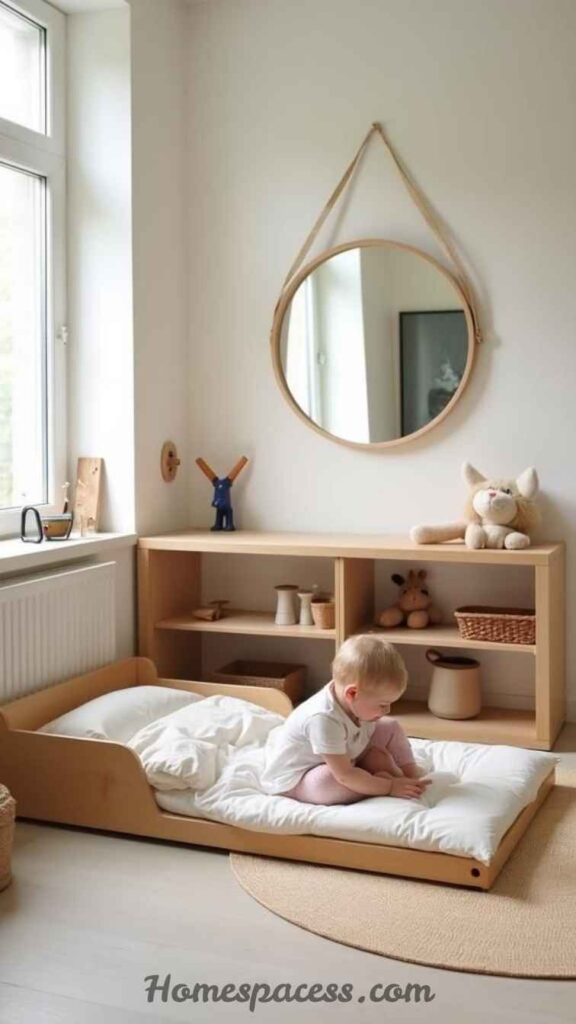
The Montessori nursery replaces the traditional raised crib (once baby is past the newborn stage, typically 6–12 months) with a low floor bed or floor mattress enclosed by a simple rail or bumper. This design philosophy prioritizes independence and freedom of movement babies can roll onto the floor safely, explore the room, and eventually get in and out of bed themselves.
A Montessori nursery also features a low mirror along one wall (typically the play area), open low shelves with a curated selection of toys, and minimal visual clutter. The room is organized from the child’s perspective, not the parent’s. This design approach tends to reduce sleep transition challenges later because children develop a healthy relationship with their sleep space from the beginning.
Parents often worry about floor beds and safety the key is ensuring the room itself is thoroughly childproofed, using a firm mattress, and covering all electrical outlets. Many families find that Montessori nurseries significantly reduce bedtime battles as the child reaches toddler age.
Important Note:
Floor beds are not recommended for newborns due to SIDS risk. Always follow AAP safe sleep guidelines and consult your pediatrician before transitioning from a crib.
Don’t Miss: 20 Home Office Ideas to Boost Productivity in 2026
Celestial & Stargazing Nursery Theme
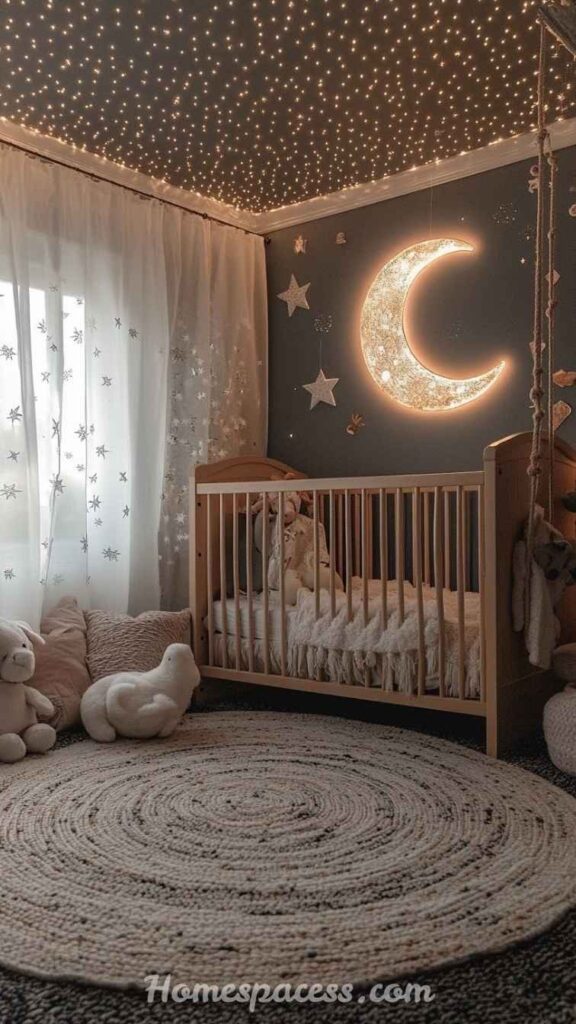
A celestial nursery taps into a timeless human fascination the night sky and translates it into a space that grows beautifully with children. Deep navy or midnight blue walls, crescent moon mobiles, star constellation prints, and a ceiling projector that casts moving stars create a multi-sensory environment that’s both calming and visually stunning. Unlike themed nurseries that feel childish by age two, a well-executed celestial room has an almost timeless quality.
The design works especially well in smaller nurseries where you want to create depth and atmosphere. A navy ceiling with a star decal installation makes even a small room feel expansive. Pair with warm-white furniture and gold or brass hardware for contrast the metallic tones echo the warmth of stars without going over-the-top. This is one of the most searched nursery aesthetics on Pinterest and Instagram in 2025–2026.
Unexpected Upgrade:
A star projector with adjustable color temperature can serve double duty use warm tones for bedtime wind-down and cooler tones during daytime play. Light color temperature measurably affects melatonin production.
Maximizing Small Nursery Spaces with Vertical Design
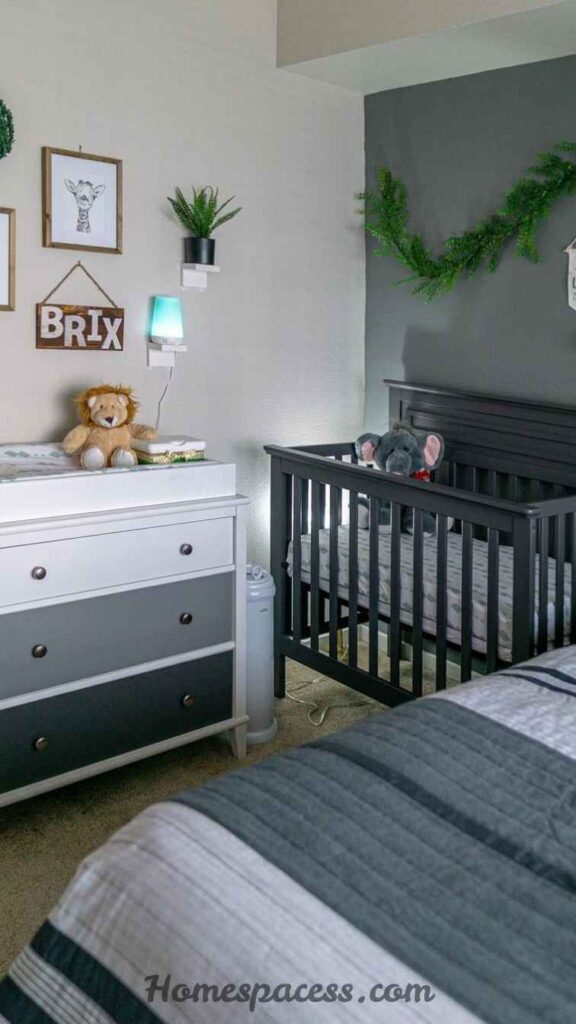
Not every family has a large spare room to dedicate to a nursery. In apartments, co-housing situations, or older homes, nurseries often need to fit into 80–120 square feet. The key strategy here is vertical thinking: tall bookshelves (secured to walls), wall-mounted diaper changing stations that fold flat, floating shelves above the crib for storage, and pegboard organizer walls that hold everything from extra onesies to toy rotations.
Furniture with dual purpose is non-negotiable in small nurseries. A convertible crib that becomes a toddler bed saves a future purchase. An ottoman with hidden storage serves as seating and organizer. A narrow dresser with a changing topper eliminates the need for a separate changing table entirely. The best small nurseries don’t feel cramped they feel edited and intentional, because every piece earns its place.
Color strategy matters more in small spaces. Light walls with a single accent wall (wallpaper, bold paint, or a mural) create the illusion of depth. Avoid too many competing patterns in a small nursery two textures maximum creates cohesion rather than chaos.
Space Hack:
Over-the-door organizers for nappies, wipes, and bath supplies are used by less than 20% of parents yet they free up significant drawer and shelf space instantly.
Japandi Nursery: Japanese-Scandinavian Minimalism
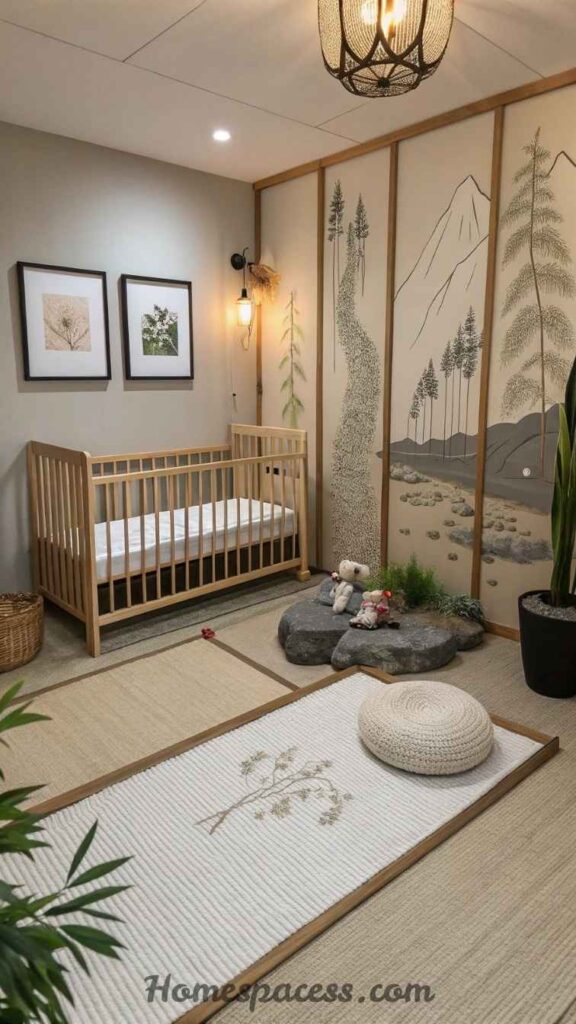
Japandi is the design world’s portmanteau for Japanese-Scandinavian fusion, and it’s become one of the most compelling nursery aesthetics of the mid-2020s. It combines the warmth of Scandinavian wood tones with the restraint and intentionality of Japanese wabi-sabi philosophy. The result is a nursery that feels serene, uncluttered, and deeply calming qualities that directly support infant sleep and nervous system regulation.
Core elements include low-profile furniture in natural wood (ash, oak, or pine), a muted palette of white, grey-green, and charcoal, shoji-inspired paper lanterns or diffused pendant lighting, and a radical commitment to minimal clutter. A Japandi nursery typically has fewer toys on display, stored in beautiful baskets or simple wooden boxes toy rotation rather than toy accumulation. This approach aligns closely with pediatric advice around reducing overstimulation.
Design Philosophy:
Japandi is about “ma” the Japanese concept of meaningful negative space. An empty corner with a single beautiful object is intentional, not unfinished. This mindset reduces new-parent spending on unnecessary décor significantly.
Vintage & Heirloom-Inspired Nursery
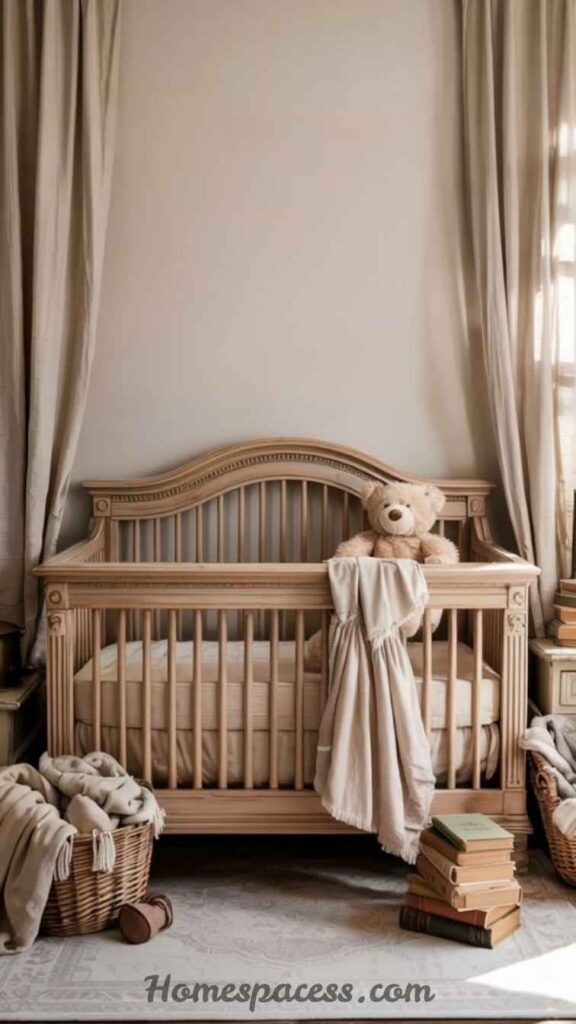
A vintage nursery celebrates nostalgic craftsmanship antique wooden rocking chairs, hand-stitched quilts, floral or toile wallpaper, brass light fixtures, and heirloom-style cribs with spindle details. This aesthetic resonates deeply with parents who want the nursery to feel warm, storied, and personal rather than fresh-off-the-showroom. It also offers tremendous budget flexibility thrift stores, estate sales, and antique markets are goldmines for nursery pieces at a fraction of retail cost.
The crucial consideration with vintage nurseries is safety: antique cribs rarely meet modern safety standards, and older furniture may contain lead paint or lacquers unsafe for infants. The rule is to buy vintage for everything decorative the rocker, the dresser, the lamp, the frames and invest in a new, certified-safe crib. This gives you the aesthetic warmth of vintage without compromising on infant safety standards.
Hidden Gem Strategy:
Look for vintage changing tables from the 1970s–80s many are solid wood and built to last. Sand, repaint in a safe zero-VOC paint, and add a modern waterproof changing pad for a bespoke piece at very low cost.
Smart Nursery Technology Integration
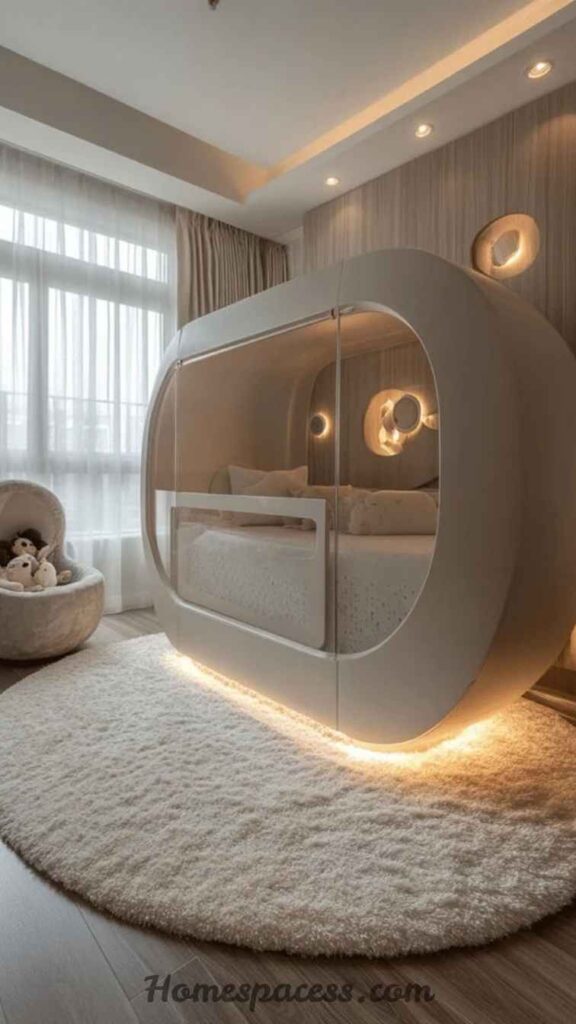
The modern nursery increasingly incorporates smart technology that genuinely improves infant care quality. A smart baby monitor with breathing and movement tracking (like those using mattress pads or under-crib sensors) gives parents peace of mind without constant checking. Smart sound machines can be programmed to adjust volume automatically as background noise changes. Smart plugs on lamps allow voice-controlled lighting without disturbing a sleeping infant.
However, not all nursery tech is equally valuable. Video monitors with AI-powered sleep analytics are genuinely useful. Smart cribs with built-in soothing motion are a premium upgrade that many families with colicky babies find transformative. On the other hand, smart toys with screens for under-12-month infants are actively discouraged by the American Academy of Pediatrics. The best smart nursery is one where technology serves the parents and supports sleep not one that fills the room with beeping, flashing devices.
2026 Technology Note:
Wi-Fi 6-enabled baby monitors now offer encrypted video feeds with near-zero latency a significant security and reliability upgrade over older 2.4GHz models that were vulnerable to interference and, in older generations, digital eavesdropping
Accent Wall Murals: Custom vs. Removable Wallpaper
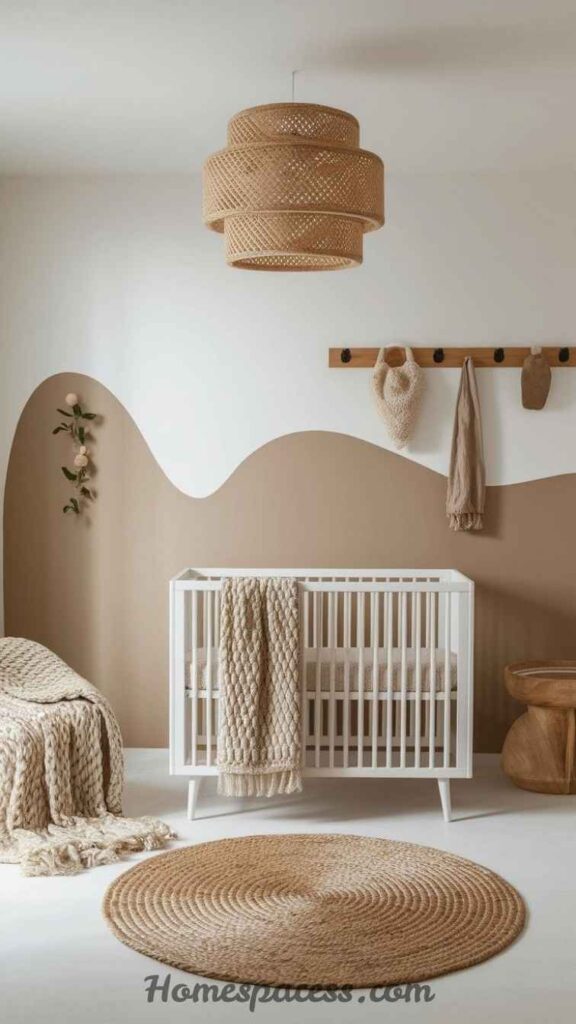
The focal wall of a nursery typically behind the crib is the most impactful design decision in the room. In 2026, two main approaches dominate: custom hand-painted murals (a growing cottage industry with muralists bookable through Etsy and Instagram) and peel-and-stick removable wallpaper. Each has a distinct value proposition. Custom murals are deeply personal, often stunning, and have resale appeal in family-oriented neighborhoods. Removable wallpaper is renter-friendly, easily updated as tastes change, and now available in extraordinarily high-quality prints.
The most sophisticated approach is to combine both: use removable wallpaper for the first year (when your design instincts are still developing), then commission a mural once you know the room and the child’s personality better. Botanical, forest, and abstract landscape murals consistently outperform character-based themes in longevity a forest mural works for a 6-month-old and a 6-year-old equally well.
Muralist Insight:
Many parents overlook the ceiling as a mural surface. A cloud scene or starscape on the ceiling costs the same as a wall mural but creates a uniquely magical effect especially for a child lying in a crib looking up.
Blackout and Lighting Strategy for Better Infant Sleep
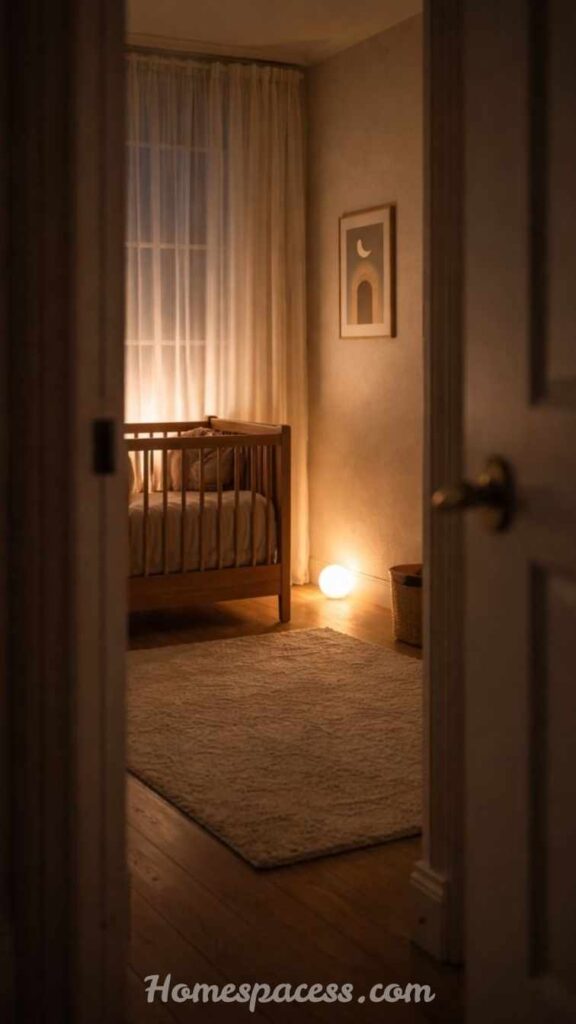
Lighting design is one of the most functionally important and consistently overlooked aspects of nursery planning. Infants don’t have a fully developed circadian rhythm until around 3–4 months, and their sleep cycles are heavily influenced by light exposure. A nursery without proper blackout blinds can result in early morning wake-ups and disrupted naps not just a design inconvenience but a significant sleep health issue for both baby and parents.
The gold-standard setup includes true blackout blinds (fabric-based, not cheap plastic) plus blackout curtains layered over them for maximum darkness. A separate dim nightlight (red-spectrum lighting is best, as it least disrupts melatonin production) for nighttime feeds completes the setup. Avoid using your phone’s flashlight during night feeds the blue light exposure, even briefly, can reset a baby’s circadian rhythm and prolong settling time.
For daytime naps, the same blackout setup creates a sleep-associated environment that over time becomes a powerful sleep cue. Pediatric sleep consultants consistently cite this as one of the highest-ROI changes families can make often costing under $100 and meaningfully improving infant sleep duration.
Pro Setup:
Install a smart bulb in the nursery lamp and program a warm (2200K) scene for nighttime and a brighter (5000K) scene for morning. The light temperature shift becomes a gentle circadian anchor for your baby.
The Capsule Wardrobe Approach to Nursery Furniture
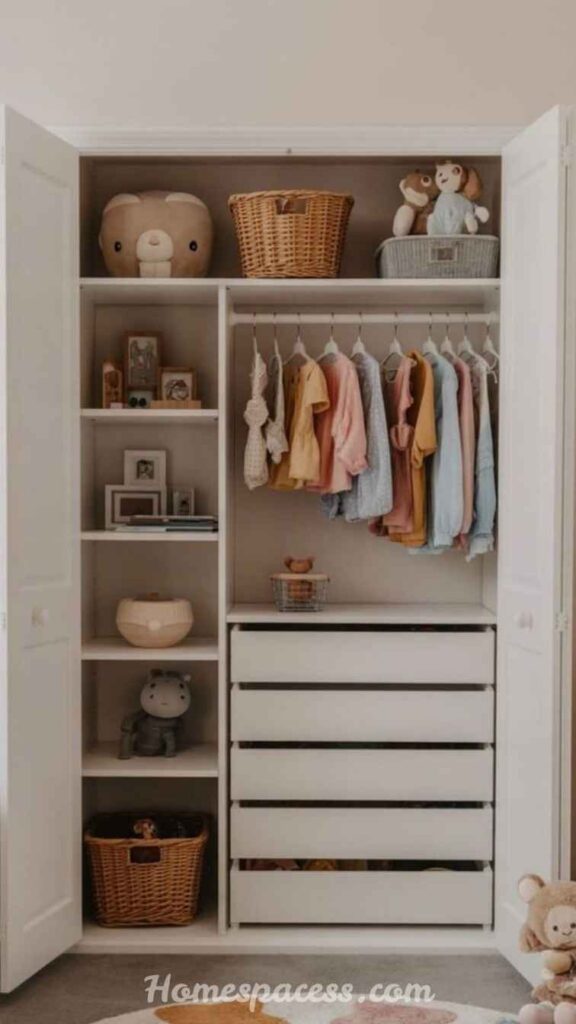
Inspired by the fashion world’s capsule wardrobe concept, a “capsule nursery” means buying fewer, higher-quality, multi-functional pieces rather than accumulating specialty items that quickly become obsolete. The core capsule includes: one convertible crib (crib → toddler bed → daybed), one dresser-changing table combo, one comfortable nursing/feeding chair, and one solid storage unit. That’s it. Everything else is seasonal or rotational.
This approach runs counter to the baby industry’s relentless upselling but aligns with what parents actually use. Studies of new parent purchasing behavior consistently show that specialty nursery items dedicated wipe warmers, elaborate changing stations, themed storage sets are used for weeks before being abandoned. The capsule approach invests more per item but spends significantly less overall, and the furniture actually lasts through multiple children or retains resale value.
Budget Intelligence:
The IKEA HEMNES dresser with a changing topper from any compatible brand is used in more design-forward nurseries than almost any other piece of furniture because it’s honest about what it is: a simple, quality, affordable anchor piece that gets out of the way.
Scandian Woodland Nursery Theme
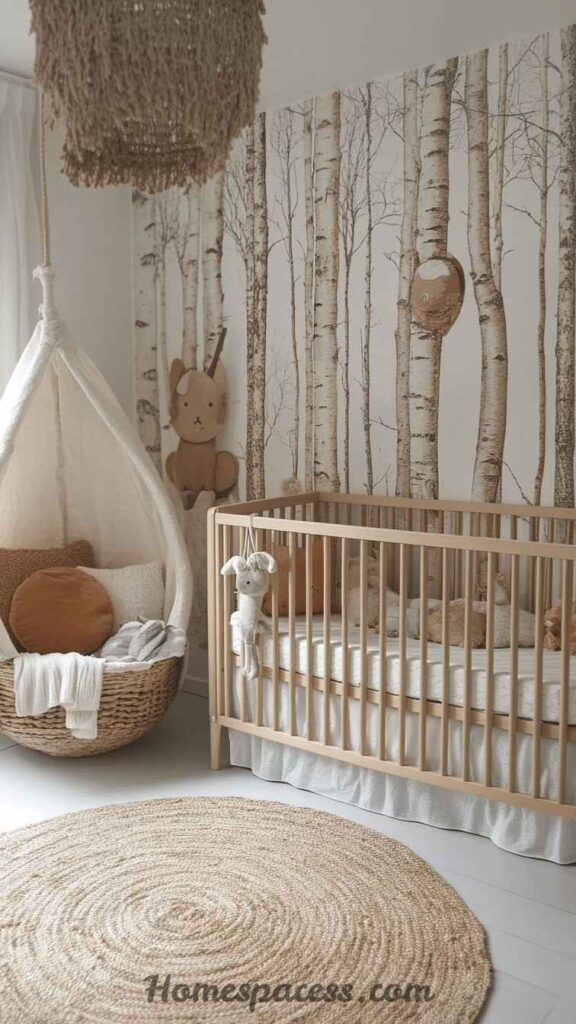
The Scandinavian woodland nursery blends the soft warmth of Scandi design with enchanted forest motifs illustrated foxes, owls, mushrooms, and birch trees in muted, sophisticated color palettes. Unlike American cartoon-style forest themes (bright primary colors, over-simplified characters), the Scandi woodland aesthetic uses a softer, more painterly illustrative style that’s visually sophisticated enough for adult eyes and developmentally appropriate for infants.
Key pieces include a forest-themed removable wallpaper or a mural in one corner, natural wood furniture, plush animal toys in muted tones, and a woven canopy or macramé over the crib for a treehouse effect. Complement with mushroom-shaped nightlights, botanical prints in simple frames, and a forest-green accent wall. This theme has remarkable longevity it works from newborn through early childhood without feeling babyish or dated.
Supplier Note:
Scandinavian brands like Ferm Living, Sebra, and Cam Cam Copenhagen specialize in this aesthetic with non-toxic, certified-safe materials their nursery ranges are pricier but eliminate material safety research entirely.
Boho Nursery with Layered Textiles
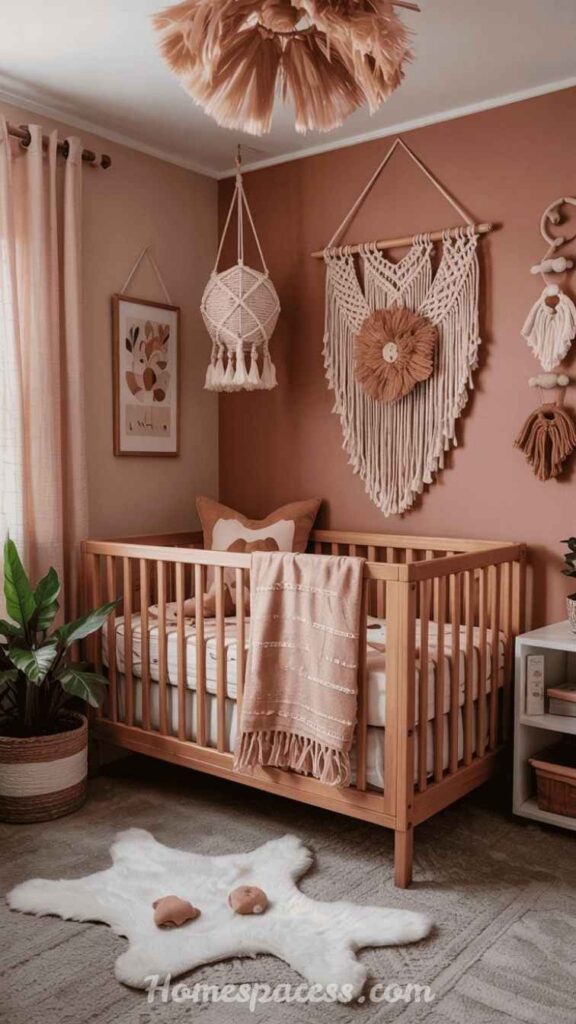
The bohemian nursery is defined by its layered, collected-over-time aesthetic a mix of global textiles, handmade elements, and organic materials that together create a room that feels uniquely personal. Macramé wall hangings, Moroccan-style rugs, pom-pom garlands, dreamcatchers, and crocheted baskets are hallmark elements. The color palette typically includes terracotta, dusty rose, mustard, cream, and warm wood tones a combination that photographs beautifully and feels inherently cozy.
What makes the boho nursery more than an aesthetic exercise is its sustainability credentials: many boho elements are handmade, secondhand, or artisan-produced in small batches. A macramé wall hanging from an independent artist, a vintage Kilim rug, and a collection of secondhand rattan baskets create a beautiful nursery with a significantly lower carbon footprint than buying everything new from mass-market baby retailers.
Boho Budget Strategy:
Invest in one statement piece (a large macramé wall hanging above the crib, typically $80–200 from Etsy artisans) and build the rest of the room affordably around it. The statement piece anchors the aesthetic and everything else can be thrifted or DIY’d.
The Adaptable “Grow-With-Me” Nursery
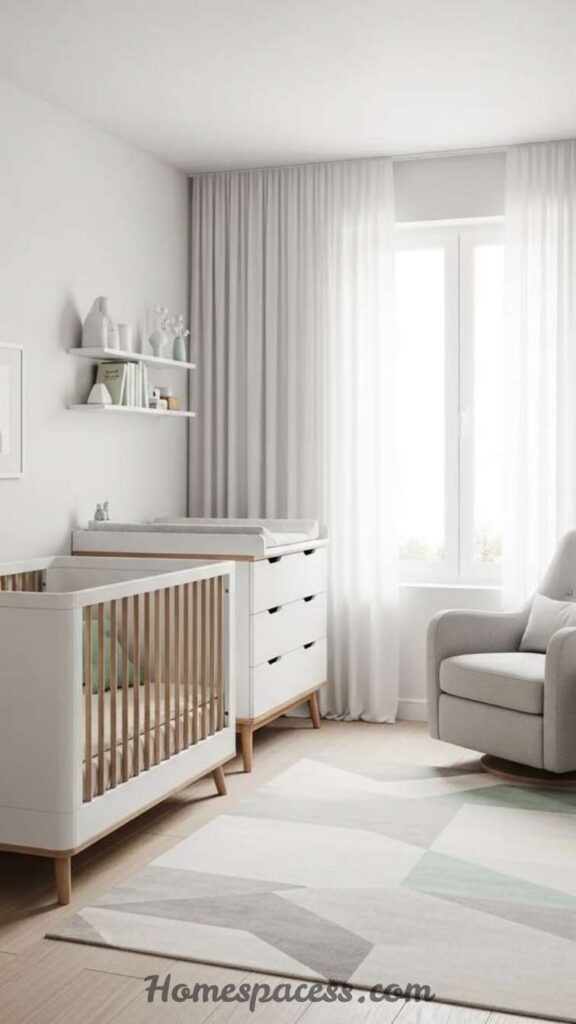
The most strategically intelligent nursery design choice is one specifically built for evolution. Rather than designing around a theme that will be outgrown in 18 months, a “grow-with-me” nursery uses a neutral architecture wall color, flooring, core furniture that remains constant while the decorative layers (art, textiles, toys, accessories) swap out seasonally and developmentally. This approach acknowledges that a child’s personality, interests, and spatial needs change dramatically from 0 to 5 years.
Practical implementation: choose warm white or soft sage walls (repaintable but enduring), invest in convertible furniture as outlined in Idea 12, and use gallery rails or ledge shelves for art so pieces can be swapped without repainting. Keep approximately 30% of the nursery visually “open” blank wall space, a clear rug area so the room can grow with the child’s changing play patterns without requiring a full redesign.
This approach is also deeply parent-empowering: instead of committing to a whale theme or a dinosaur motif before your baby is born, you leave room for the room to reflect your actual child. Many parents report that their grow-with-me nurseries are the ones they’re still proud of three years later.
Five-Year Vision:
Design your nursery to be 70% functional and 30% decorative. The functional 70% (storage, sleep zone, play surface, feeding space) never changes. Only the decorative 30% needs periodic updating and that’s both affordable and fun.
Conclusion
The perfect baby nursery isn’t the one that looks best in photos it’s the one that makes a genuinely hard season of life a little easier. Every idea in this guide points toward the same north star: design for the parent first, because a calm, functional, well-rested parent creates a better environment for their baby than any color palette or furniture set ever could.
Start with your workflow triangle, invest in good lighting and a great chair, choose furniture that grows, and layer in personality over time. Keep sustainability in mind not just for the planet but for your wallet quality nursery furniture bought wisely can return 50–70% of its value when resold. And stay curious about the rapid innovations in smart nursery technology arriving in 2026–2027.
Your nursery doesn’t have to be perfect before baby arrives. It has to be safe, functional, and ready to evolve. Everything else is a beautiful bonus.
2026 Nursery Trend Analysis: What’s In, What’s Fading & What’s Coming
+47%
Increase in biophilic nursery searches (2023–2026)
62%
Of millennial parents prefer gender-neutral nursery design
3x
Growth in removable wallpaper market for nurseries since 2020
The dominant shift in 2026 nursery design is the move from themed rooms to philosophy-driven rooms. Parents are no longer asking “what theme do I want?” but rather “what values do I want this room to embody?” This is a maturation of the market driven partly by social media exposure to global design traditions (Japandi, Montessori, Waldorf) and partly by a generation of parents who are more research-literate about infant development than any previous generation.
Trending in 2026: biophilic design, Japandi minimalism, celestial themes, and warm earth tones. Fading fast: chevron patterns, shiplap accent walls, highly gendered color schemes (all-pink or all-blue), and character-licensed themes for newborns. The trend toward “quiet luxury” in adult interiors has migrated directly into nurseries parents are choosing investment pieces with clean design over cheap character-branded merchandise.
Looking into 2026 and beyond, watch for three emerging trends: (1) circadian-optimized nursery design, where every design decision is evaluated for its sleep impact; (2) modular nursery systems that reconfigure as the child grows (similar to adult modular shelving but designed specifically for nursery use cases); and (3) heritage and cultural identity integration, where families intentionally incorporate design elements from their cultural backgrounds rather than defaulting to Western-standard nursery aesthetics.
Expert Practical Tips: Optimizing Your Nursery for Real-Life Use
The gap between a beautifully photographed nursery and a functional nursery is enormous. Professional interior designers who specialize in children’s spaces consistently emphasize the same overlooked priorities: traffic flow, middle-of-the-night usability, and surface cleanability. A rug that photographs beautifully but can’t be machine-washed becomes a hygiene nightmare. A changing station on the opposite side of the room from the wipes and diapers means scrambling at 3 AM with a squirmy, wet baby.
“Design the nursery for 2 AM, not 2 PM. The decisions that seem minor in the day become critical in the dark.” Common advice among pediatric interior design specialists
Here are expert-level optimizations that most nursery guides omit: First, install a light switch dimmer on entry a bright overhead light to full darkness during night feeds disrupts both baby and parent sleep architecture significantly. Second, use a hospital-grade moisture-barrier crib mattress cover under the decorative fitted sheet it’s not glamorous but it extends mattress life by years and eliminates the 3 AM complete bedding change scenario. Third, keep a second set of everything at the changing station: two complete outfit changes, full wipe supply, spare changing cover for the inevitable blowout that happens when you’re alone.
Also massively underutilized: labeling storage. In the exhausted early months, a clearly labeled drawer system (sized by age: 0-3M, 3-6M, etc.) prevents parents from hunting through clothing sizes and reduces morning stress substantially. This sounds mundane but sleep-deprived decision-making is genuinely impaired any system that removes decisions from the nursery routine pays dividends immediately.
Sustainable Nursery Design: Low-Toxin, Long-Term, Lower-Waste
Baby products exist in a uniquely concerning space for toxins: infants spend more time indoors, breathe more air per pound of body weight, and spend significant time in extremely close contact with their environment. This makes material choices in the nursery meaningfully more important than in other rooms. VOC emissions from new furniture and paint, flame retardants in mattresses and upholstered pieces, and formaldehyde from certain composite wood products are real concerns, not parental paranoia.
The actionable sustainable nursery framework has three pillars. First, material certification: look for GREENGUARD Gold for furniture and mattresses (tests for over 10,000 chemical emissions), GOTS or OEKO-TEX for textiles, and Zero-VOC certification for paints. Second, longevity over novelty: buying fewer, higher-quality pieces that grow with the child reduces lifecycle waste and overall spending. A well-made convertible crib serves from birth to age 5 or 6 a cheap crib that requires replacement at 18 months creates more waste and costs more over time. Third, the secondhand premium: well-made secondhand furniture in solid wood is often safer than cheap new furniture because it has already off-gassed its VOCs over years of prior use.
The long-term financial case for sustainable nursery design is compelling and rarely discussed. A GREENGUARD-certified crib at $600 that converts to a toddler bed and then a daybed costs significantly less per year of use than buying a $200 crib, a $150 toddler bed, and eventually a twin bed frame. Add the avoided healthcare costs of lower chemical exposure genuinely difficult to quantify but not zero and the premium for quality, certified materials makes clear economic sense, not just environmental sense.
Future Innovations: The Nursery of 2027 and Beyond
What’s Coming in Nursery Design & Technology
The next generation of nursery innovation sits at the intersection of materials science, AI, and developmental psychology. Here are the most credible near-future developments:
- AI-powered sleep optimization: Systems that track infant sleep architecture and dynamically adjust room temperature, sound, and light to optimize sleep cycles already in early-stage development by several baby tech companies.
- Bio-responsive materials: Crib mattresses with pressure-mapping that detect positional concerns and alert parents via app an evolution of existing breathing-monitor technology.
- Modular nursery furniture systems: IKEA and several design startups are reportedly developing nursery-specific modular systems where shelving, sleeping, and storage components reconfigure via simple mechanisms as the child ages.
- Low-EMF smart home integration: As parents become more aware of electromagnetic field concerns, nursery-specific smart devices designed to minimize EMF output while maintaining functionality are entering development pipelines.
- Biophilic integration at scale: Living wall systems designed specifically for nurseries pre-configured with non-toxic, low-maintenance plants in sealed hydroponic panels are in development, combining air purification with sensory enrichment.
The most significant future shift, however, may not be technological but philosophical. As developmental science continues to validate the impact of the early physical environment on cognitive and emotional development, nursery design will increasingly be understood as an investment in child outcomes, not just an aesthetic exercise. This framing will elevate the conversation around nursery quality and material safety in ways that child health advocates have been pushing for years.
Common Nursery Mistakes (And How to Avoid Them)
The Over-Decorating Trap:
More is not more in a nursery. Overcrowded walls, excess stuffed animals in the crib, and visual noise from too many competing patterns can overstimulate infants and undermine sleep quality. A curated, intentional approach with breathing room consistently outperforms the urge to fill every surface.
The single most common nursery mistake is designing for the Instagram photo rather than for daily life. This manifests as choosing furniture that photographs beautifully but is impractical (a stunning dresser with no soft-close drawers that slams shut loudly during sleeping hours), using rugs that are beautiful but impossible to clean (a Moroccan-style shag rug in a space where blowouts happen), or creating an elaborate canopy over the crib that looks magical but accumulates dust and collects mold in humid climates. Every design decision should pass a functional test first.
Another extremely common mistake: buying everything before the baby arrives and before you know the room. Parents frequently purchase a full set of nursery furniture that turns out to be wrong for the actual layout, traffic flow, or the way they end up using the space. A better approach is to start with the absolute essentials crib, changing surface, feeding chair and live in the space for 4–6 weeks before completing the design. You’ll discover that the feeding chair needs to be closer to the window, that you need more accessible storage on the left side, and that the wall you planned to leave blank is actually perfect for a low bookshelf. Real-world use reveals what no amount of planning can predict.
Finally, neglecting acoustic design is a mistake with real consequences. Hard floors, bare walls, and few soft furnishings create a reverberant room where every door close, toilet flush, or conversation from another room echoes loudly enough to wake a sleeping infant. A rug, curtains, a fabric wall hanging, and an upholstered chair together absorb enough sound to transform nursery acoustics meaningfully. White noise machines help, but they work best in a room that’s already acoustically managed.

Team Home Spacess shares simple, practical design ideas that work for real families. The team focuses on cozy décor, soft colors, and natural textures that make a space feel truly lived-in. From everyday decorating tips to creative home projects, Team Home Spacess is dedicated to helping readers create warm, comfortable, and inviting spaces with a fresh and personal touch.