

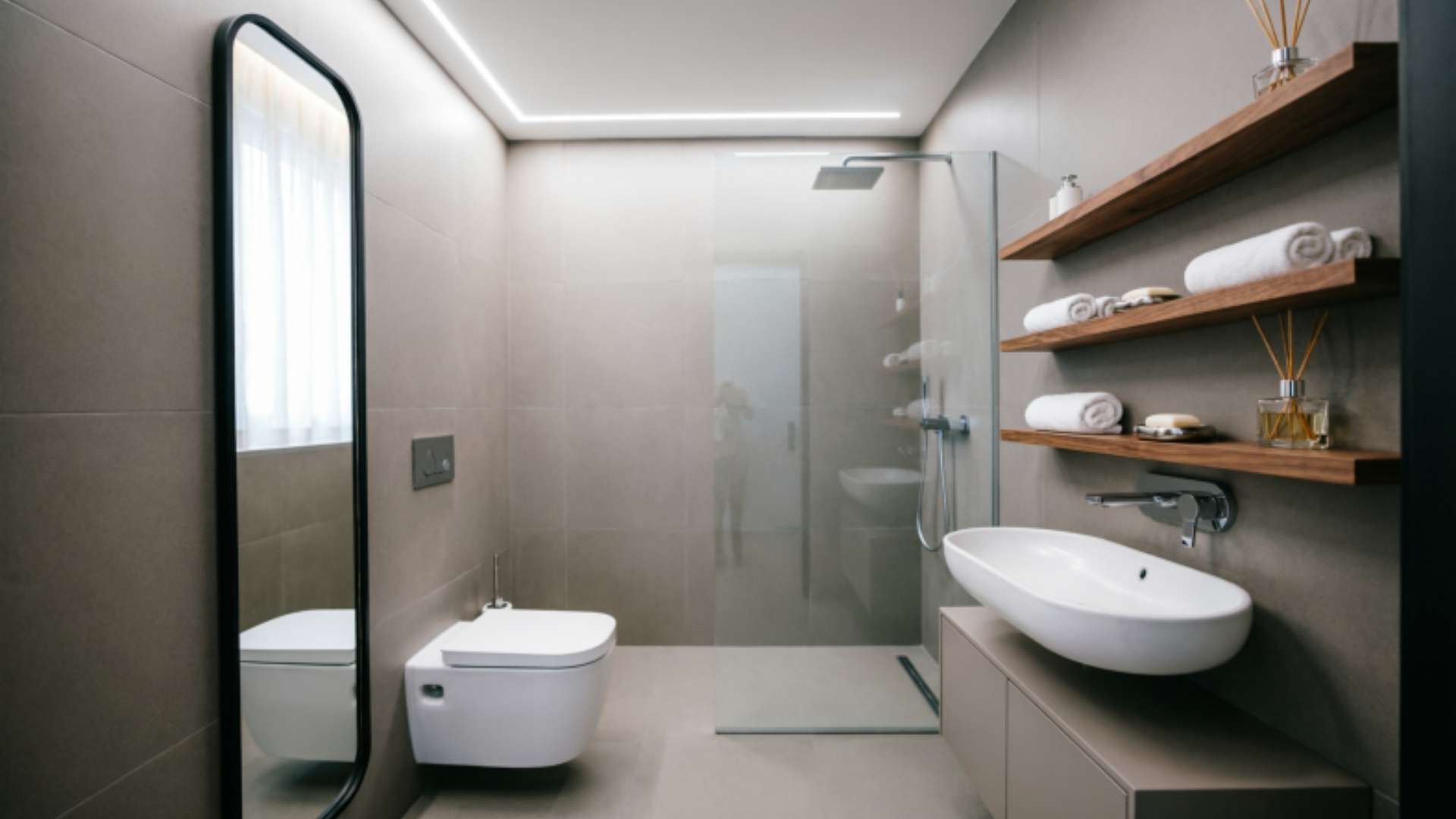
Transform your compact bathroom into a stylish, functional retreat with insights that go far beyond the basics.
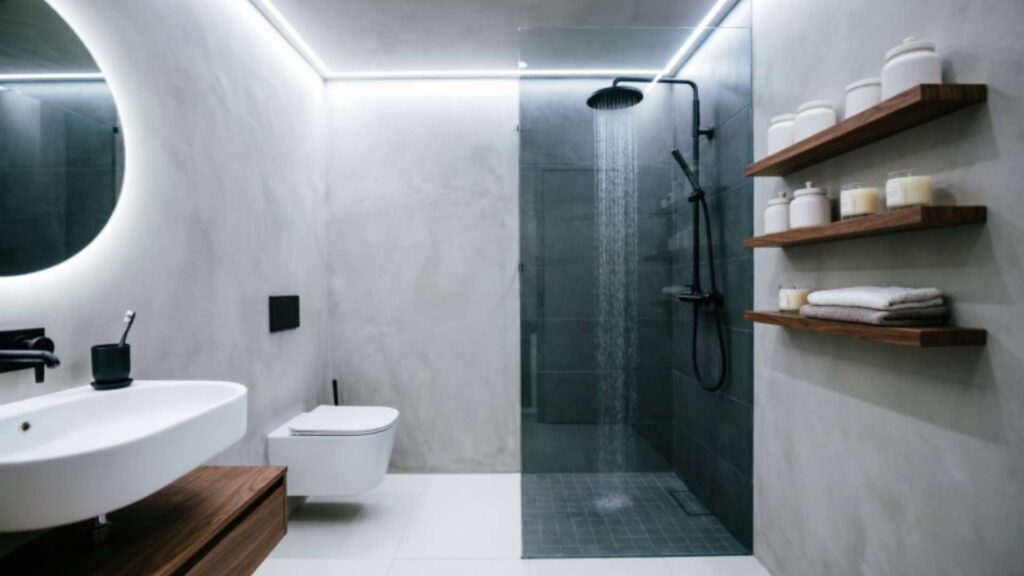
“A small bathroom isn’t a design problem it’s a design opportunity. The constraints force creativity, and the best small bathrooms in the world outshine many large ones simply because every decision was intentional.”
Whether you’re working with a 40-square-foot powder room or a narrow ensuite, the right combination of layout, light, storage, and materials can make your bathroom feel twice its size. This guide covers 25 actionable small bathroom ideas grouped by strategy and goes deeper than typical design lists by including trend data, sustainability insights, expert tips, and future innovations that most guides miss entirely.
Light & Visual Illusion
Use Large-Format Tiles to Reduce Visual Noise
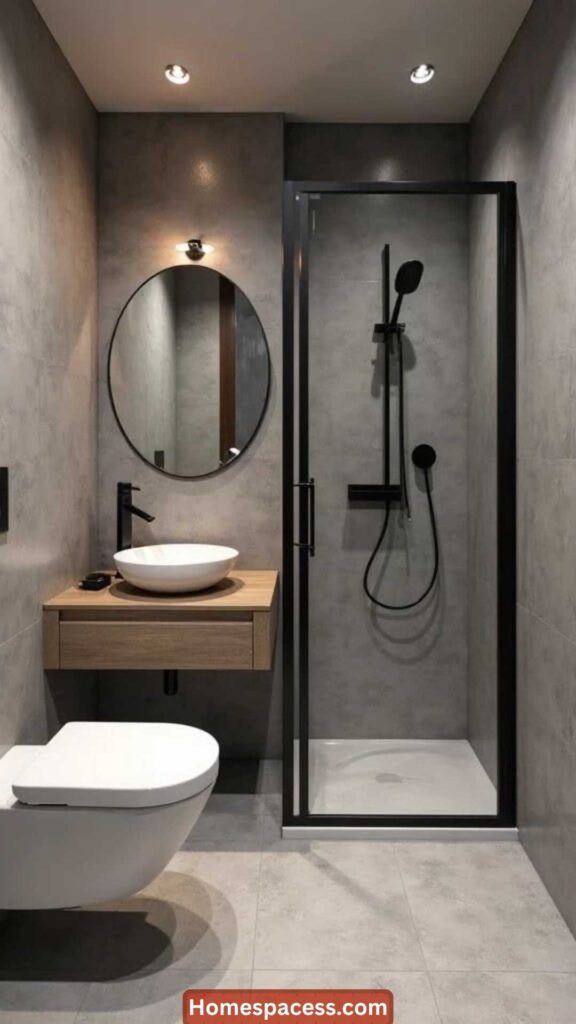
One of the most counterintuitive truths in small bathroom design: bigger tiles actually make a space feel larger. When you use small mosaic tiles, the grout lines multiply and each line tells your eye “there’s a boundary here.” Large-format tiles (600×600mm or even 1200×600mm) minimize those lines, letting the eye travel further without interruption. The result is a calmer, more expansive feel.
For maximum impact, continue the same large tile from the floor up one or two walls a technique called “tile continuity.” Designers in Scandinavian and Japanese interiors have used this for decades. It’s especially powerful in ensuites where the shower wall bleeds into the main floor, making the boundary between zones disappear visually.
Must Read: 20 Home Office Ideas to Boost Productivity in 2026
Install a Wall-Hung Vanity to Float the Floor
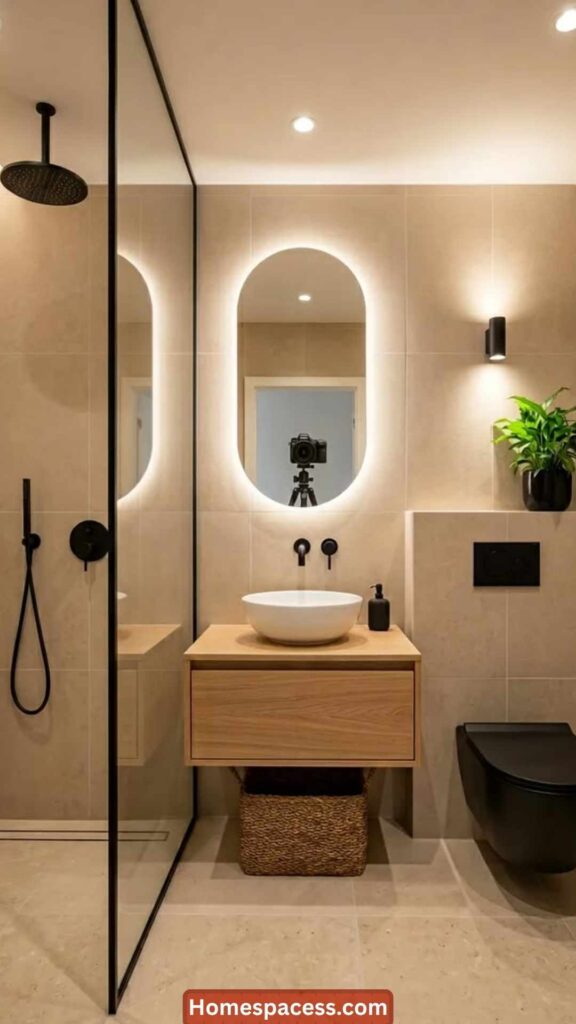
A wall-mounted vanity does two things simultaneously: it frees up floor space and exposes more of the floor surface, both of which signal “room” to the brain. When you can see more floor, you perceive more space even if the square footage is identical. In bathrooms under 50 sq ft, this single change can feel transformative. Pair it with a continuous tile floor that runs beneath the vanity for even greater effect.
The practical bonus is cleaning ease. No awkward mopping around pedestal bases. For small bathrooms shared by families, this also means storage can be relocated upward leaving the vanity area uncluttered and the floor visually open.
Replace a Tub with a Walk-In Shower
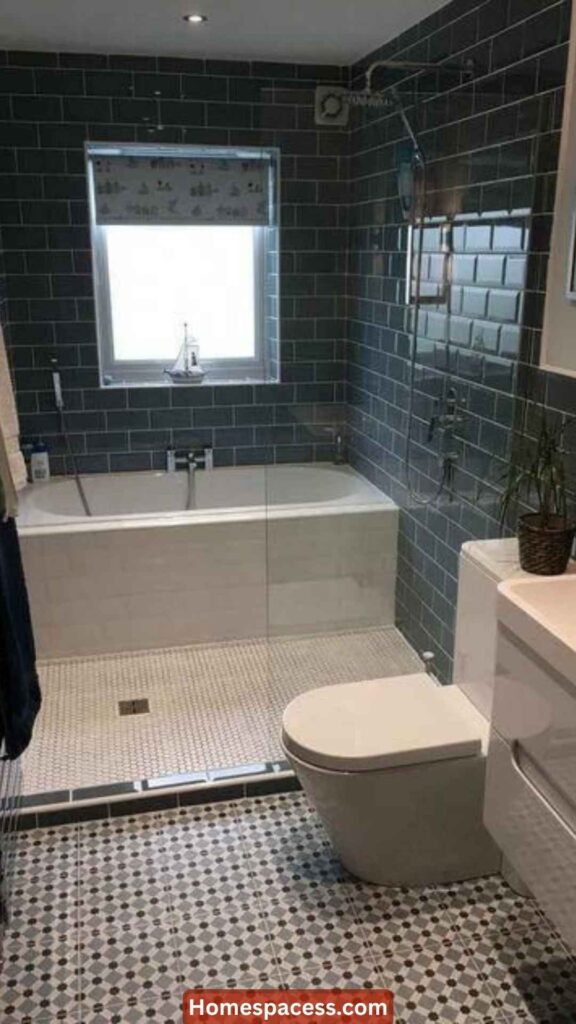
In bathrooms under 60 sq ft, a full-size bathtub is frequently the biggest space thief. Swapping it for a walk-in shower with a simple drain and no curb (a “curbless” or “zero-entry” design) reclaims several square feet and opens sight lines dramatically. A well-designed walk-in shower can actually feel more luxurious than a bathtub in a cramped space because you’re not squeezing past the tub just to brush your teeth.
Curbless showers also have accessibility advantages, which can matter both now and in the long term. For resale value, in urban markets where many buyers are apartment dwellers without children, a stylish shower-only bathroom often appeals more than a dated tub-shower combo. If you have young children, consider a fold-down tub or a freestanding basin nearby instead.
Must Read: Small Kitchen Ideas: 18 Expert Transformations That Actually Work
Use a Frameless Glass Shower Screen
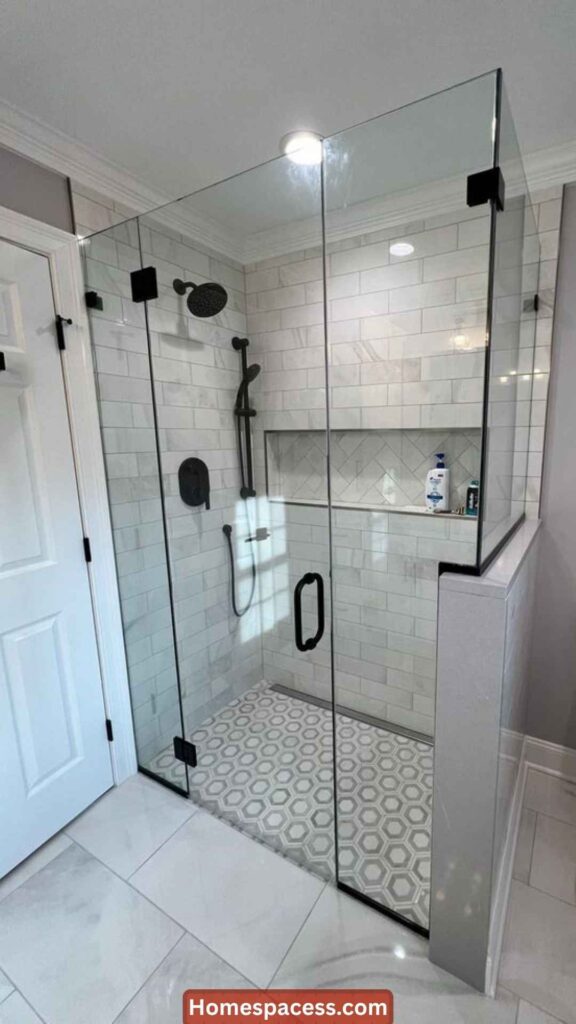
Framed shower screens or shower curtains create hard visual stops. A frameless glass panel or a full frameless enclosure allows the eye to continue past the shower boundary. The result is that the shower zone blends into the bathroom rather than dominating it. This is particularly effective in narrow bathrooms where any visual division makes the space feel like two tiny rooms instead of one.
Opt for clear glass over frosted in small spaces. Frosted glass still acts as a visual block; clear glass lets light pass freely. If privacy is a concern, a single panel of fluted (reeded) glass on the entry side gives partial screening while maintaining an open feel elsewhere.
Add a Mirror That Spans the Full Vanity Width
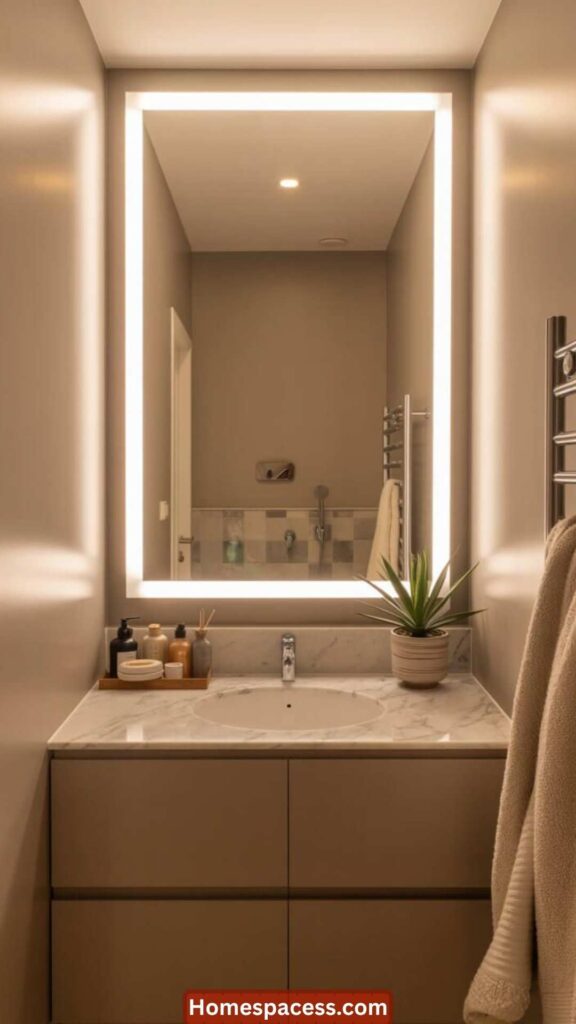
Most designers recommend “go bigger than you think.” A mirror that spans the full width of the vanity or even wall-to-wall reflects the room back on itself, effectively doubling the visual depth. A mirror above a sink is often too small; it’s a grooming tool rather than a spatial tool. Think of your mirror the way a painter thinks about negative space: it’s not decoration, it’s architecture.
For extra effect, position the mirror so it reflects a window or the most light-filled part of the bathroom. This bounces natural light deep into the room. Backlit mirrors (with an LED halo behind the panel) also add soft, diffused illumination that eliminates the shadows that small bathrooms are prone to.
Design Principle:
The “borrowed light” technique Placing a mirror directly opposite a window doesn’t just reflect light it creates the illusion of a second window. In basements or interior bathrooms with no natural light, a well-placed mirror with a warm-toned LED light behind it can convincingly mimic daylight. This is a favorite trick of hotel bathroom designers working with tight budgets.
Smart Storage Without Clutter
Build Recessed Shelves Into the Shower Wall
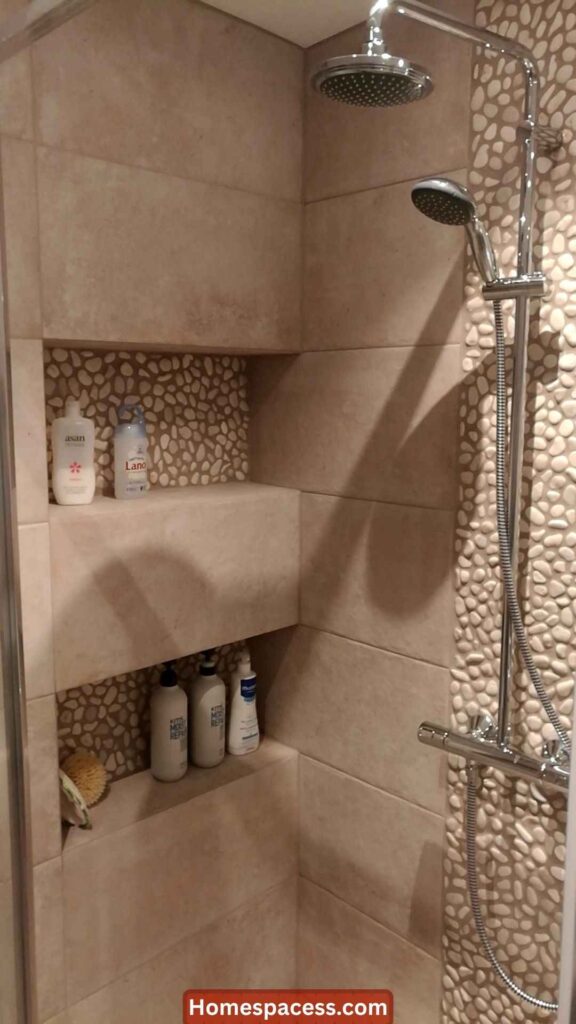
Recessed niches shelves built between studs in the wall give you storage without protruding into the room at all. In a small shower, a 20cm-deep recessed niche can hold shampoo, soap, and razors without ever catching an elbow or looking cluttered. They’re especially valuable in wet rooms where any freestanding shelf gets in the way. Install one at shoulder height and one lower for different users.
The installation requires finding the stud spacing (usually 400mm or 600mm apart) and tiling the niche to match the wall. The payoff is significant: zero floor-space used, zero shower curtain interference, and a clean, hotel-like finish that makes even a very small shower feel considered and premium.
Use Vertical Space with Tall Ladder Shelves
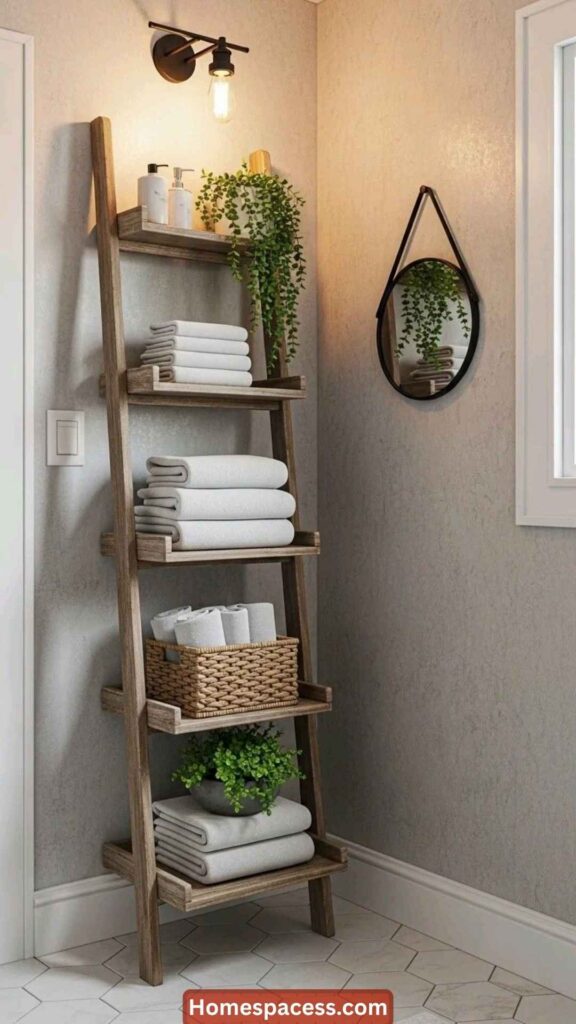
Small bathrooms rarely use their full ceiling height. A slim ladder shelf leaning against the wall or freestanding can add 5–8 shelf levels in a 30cm-wide footprint. This is dramatically more efficient than wide, low furniture. A well-chosen ladder shelf in natural wood or matte metal also adds a design element without occupying the visual weight of a full cabinet.
The key is keeping ladder shelves intentional: don’t treat them as a dumping ground. Use matching baskets on the lower shelves for hidden storage (towels, cleaning supplies) and the upper shelves for display items that add personality a small plant, a candle, rolled hand towels.
Mount Storage Over the Toilet
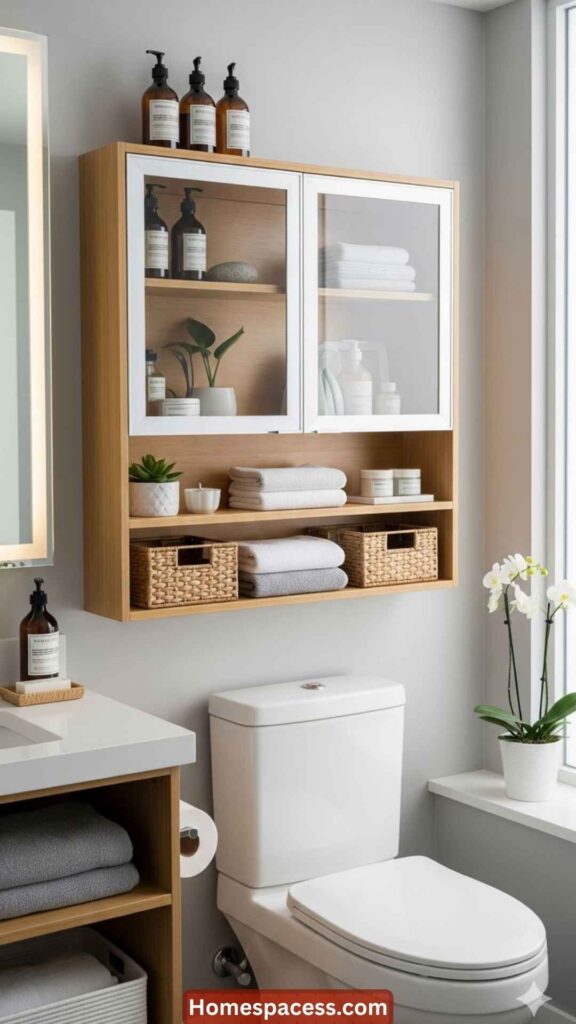
The space above the toilet is one of the most consistently underused areas in any bathroom. A floating shelf, an over-toilet cabinet, or a custom niche at this height adds significant storage without touching the floor plan. The only caveat: avoid anything so heavy it feels oppressive over a seat. Lightweight shelves with glass or open shelving feel airy; closed cabinets can feel cave-like if too dark.
For renters, tension-rod shelving units designed for over-toilet use require no drilling and can be removed. These have improved dramatically in quality over the past five years and are now available in designs that look intentional rather than temporary.
Use a Pocket Door or Barn Door
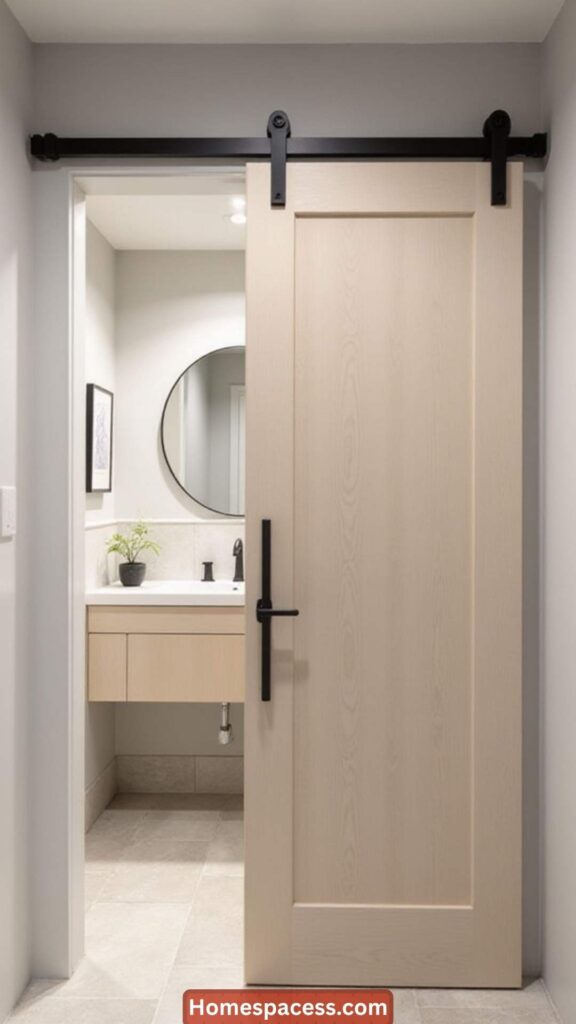
A standard hinged door in a small bathroom eats 8–12 sq ft of swing space. A pocket door which slides into the wall eliminates that swing entirely, freeing up room that can be used for shelving, a wider vanity, or simply movement. For bathrooms where a full pocket door isn’t structurally feasible, a barn-style sliding door on a surface rail gives the same space-saving benefit with easier installation.
Sliding doors are now available in glass, which has an additional space-expanding effect: you can see through the door when it’s closed to the hallway beyond, making both spaces feel larger. Frosted or reeded glass maintains privacy while still borrowing depth from the adjacent room.
Space-Saving Layout Strategies
Design a Wet Room for Maximum Flexibility
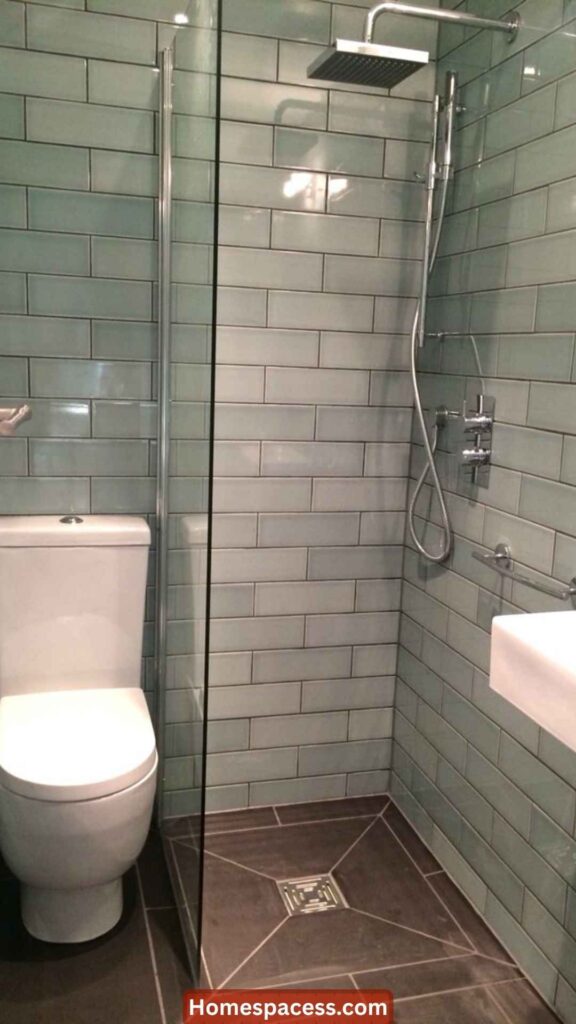
A wet room where the entire floor is waterproofed and the shower has no enclosure at all is the ultimate space-saver. There are no screens, no curtains, no trays. The floor slopes gently to a drain, and the whole room becomes the shower zone when needed. This is particularly effective in very narrow bathrooms where even a single shower screen panel would block circulation.
Wet rooms require good tanking (waterproofing) during installation, so they’re best done as part of a bathroom renovation rather than a retrofit. However, the long-term payoff in terms of usability, cleanliness (no mold-prone shower tray edges), and visual space is substantial. Many high-end Japanese and German bathrooms have operated on wet room principles for decades.
Install a Corner Toilet to Open the Center
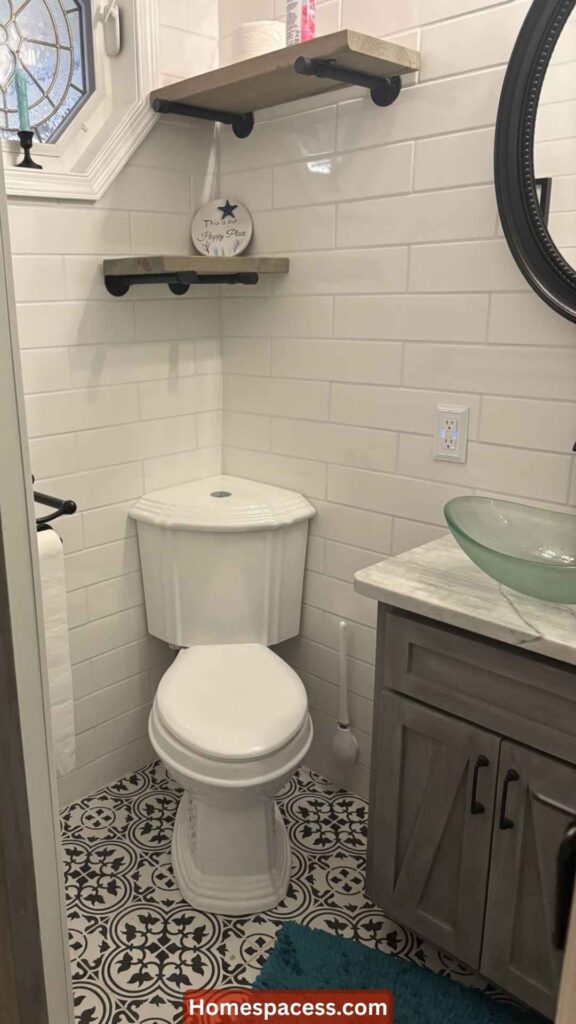
Most toilets are rectangular and positioned parallel to one wall, but corner toilets are designed to fit diagonally into a corner freeing up the center and side walls for better traffic flow. In bathrooms where the toilet placement is the primary bottleneck, a corner unit can make the room feel significantly more navigable. They’re especially effective in L-shaped bathrooms or rooms with awkward plumbing locations.
Corner toilets are less common and slightly more expensive, but they represent one of those rarely-discussed ideas that can solve an otherwise unsolvable layout problem. Pair with a concealed cistern for an even cleaner look.
Use a Concealed Cistern for a Streamlined Profile
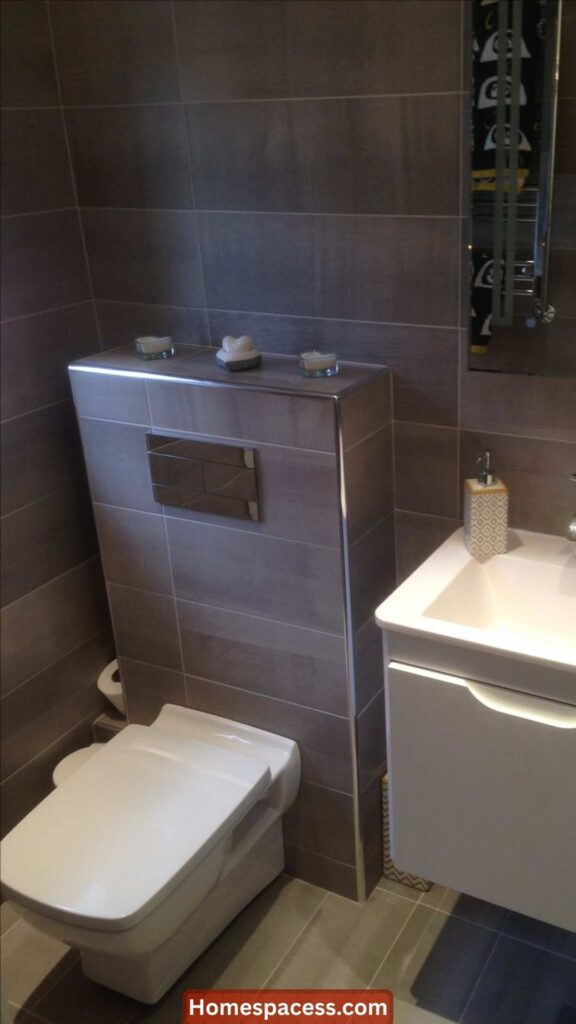
Traditional close-coupled toilets have the cistern sitting visibly on top of the pan a bulky combination that takes up significant vertical and horizontal space and is also harder to clean. A concealed cistern hides the tank inside the wall, leaving only the toilet bowl (and a flush plate on the wall). This reduces the toilet’s visual and physical footprint considerably and also allows the toilet to project further into the room if needed.
Beyond space, concealed cisterns also look dramatically more contemporary. In a small bathroom, every surface you simplify contributes to a less visually cluttered space. Combined with a wall-hung toilet pan (which lifts the bowl off the floor entirely), this is one of the most impactful single upgrades for both space and style.
Add a Light Tube or Enlarged Window for Natural Light
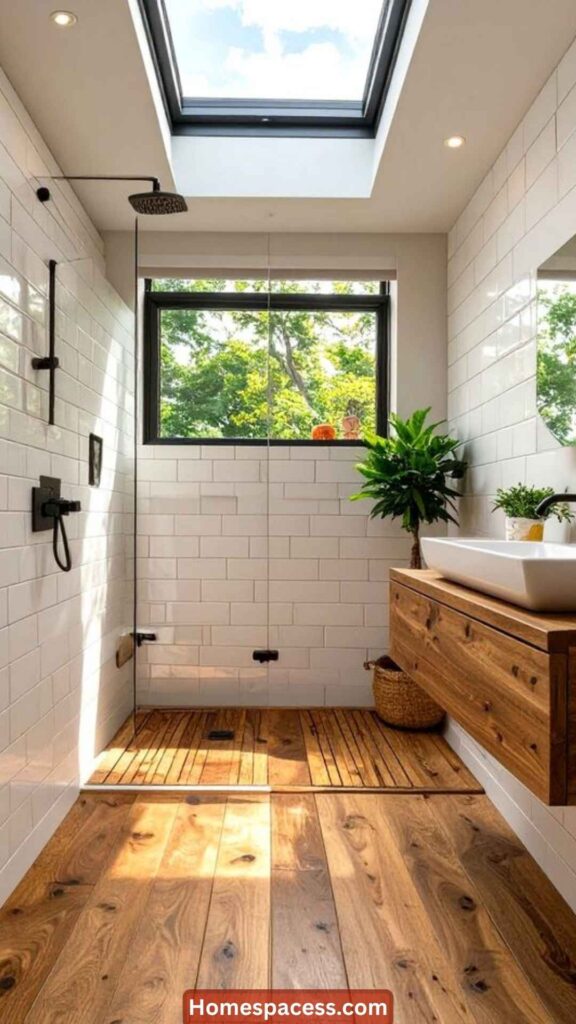
Natural light has a psychological space-expanding effect that no fixture can fully replicate. If your bathroom has no window or only a very small one, a tubular skylight (Solatube or similar) can pipe daylight down from the roof through a 25cm diameter tube even around corners. The result is a pool of daylight in rooms that were previously cave-like. On overcast days it still outperforms most electric lighting for quality.
For ground-floor bathrooms with exterior walls, enlarging an existing window even by 20% makes a meaningful difference. Privacy glazing or obscured glass allows this without sacrificing modesty. In renovations, this is one of the higher-ROI investments for improving daily quality of life in a small bathroom.
Tile & Surface Strategy
Use a Single-Color or Tonal Palette Throughout
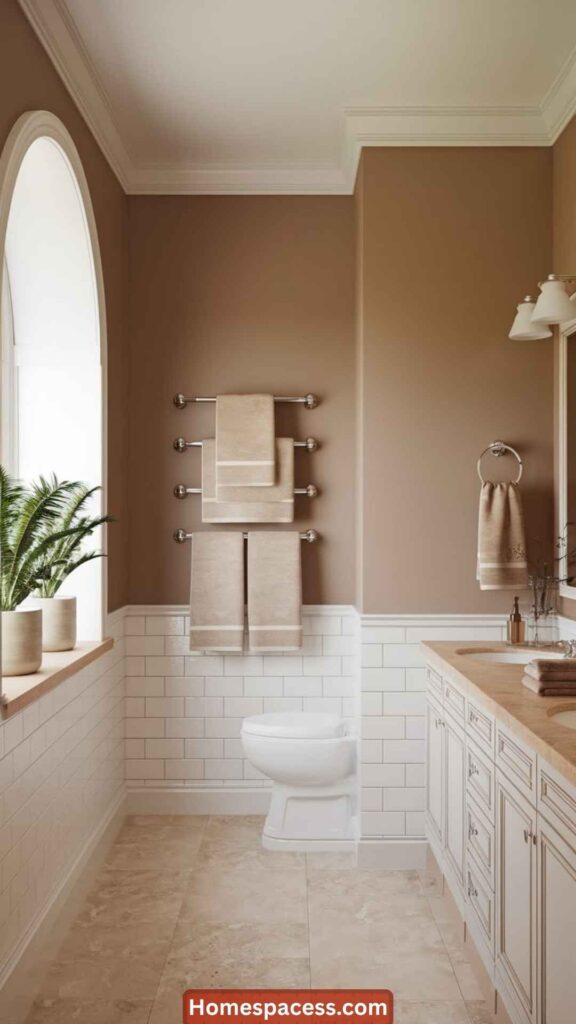
Color contrast between surfaces creates visual boundaries and more boundaries mean a smaller-feeling room. A monochromatic or tonal scheme (floor, walls, and ceiling in the same color family) blurs those boundaries and lets the room read as a single, continuous space. This is why all-white bathrooms became a design staple: they work by reducing the number of edges the eye registers.
However, all-white can feel clinical. The more interesting modern approach is to use a single warm tone terracotta, sage green, dusty blue across all surfaces. A terracotta bathroom where the floor, wall tile, and even the ceiling are within the same rust-and-warm-clay family feels intimate and spacious simultaneously. It’s a sophistication level that generic design advice consistently misses.
Lay Floor Tiles Diagonally to Stretch the Room
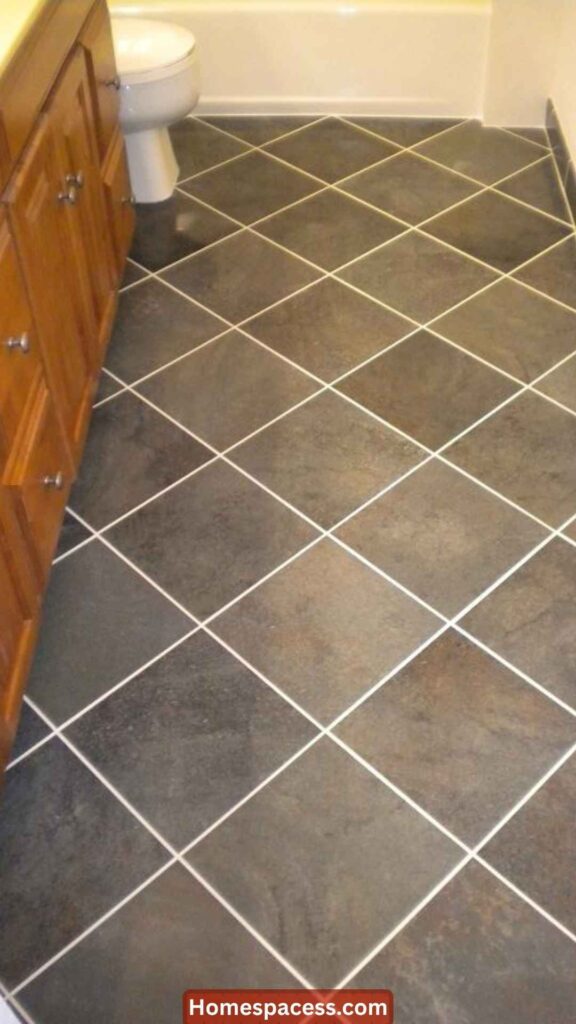
Diagonal tile installation is one of the oldest visual tricks in architecture and still one of the most effective. When tiles are laid at 45 degrees to the walls, the eye follows the diagonal lines to the furthest corners of the room a longer visual path than horizontal or vertical grids. In narrow bathrooms especially, this can make the space feel significantly wider. The effect is strongest with square tiles in a contrasting grout color.
Diagonal installation adds roughly 10–15% to tile wastage (for cuts at the perimeter), so budget accordingly. But for a small bathroom where you’re already using limited tile quantities, this cost difference is usually modest in absolute terms and the spatial payoff is substantial.
Extend the Same Flooring Into the Shower for Continuity
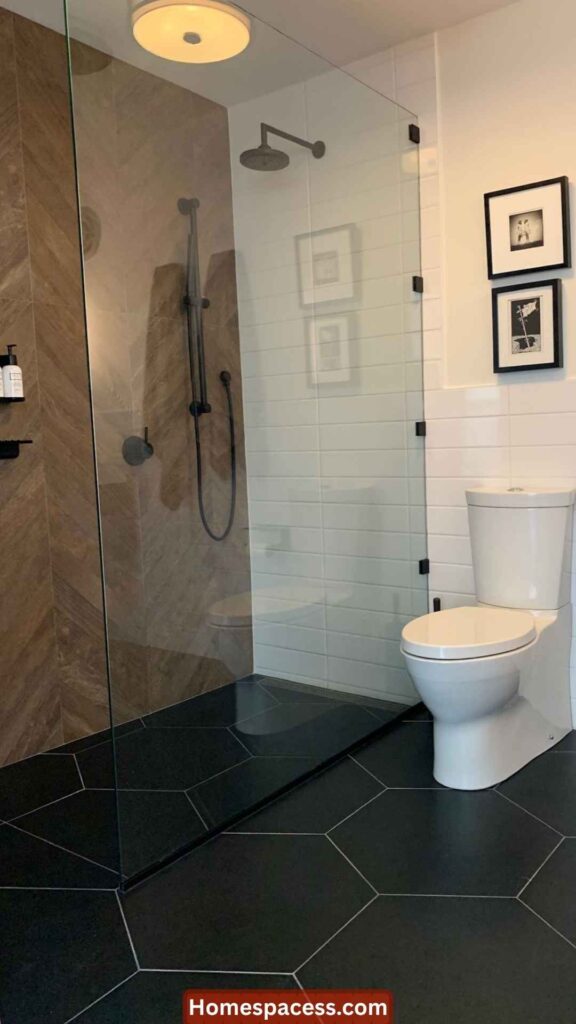
One of the most impactful and underused techniques: using the same tile on the shower floor and the bathroom floor, with no threshold or tray. This is visually identical to a wet room but can be done with a conventional shower drain. The uninterrupted surface makes the room read as one larger space instead of two smaller ones. Even bathrooms with a physical shower screen can benefit from tile continuity beneath the glass.
This approach also simplifies grout maintenance you’re keeping one surface type consistent rather than managing two different zones with different materials and cleaning needs. Designers in Italy and Portugal have used this approach as a default for generations.
Use a Bold Accent Wall to Add Depth Instead of Pattern Everywhere
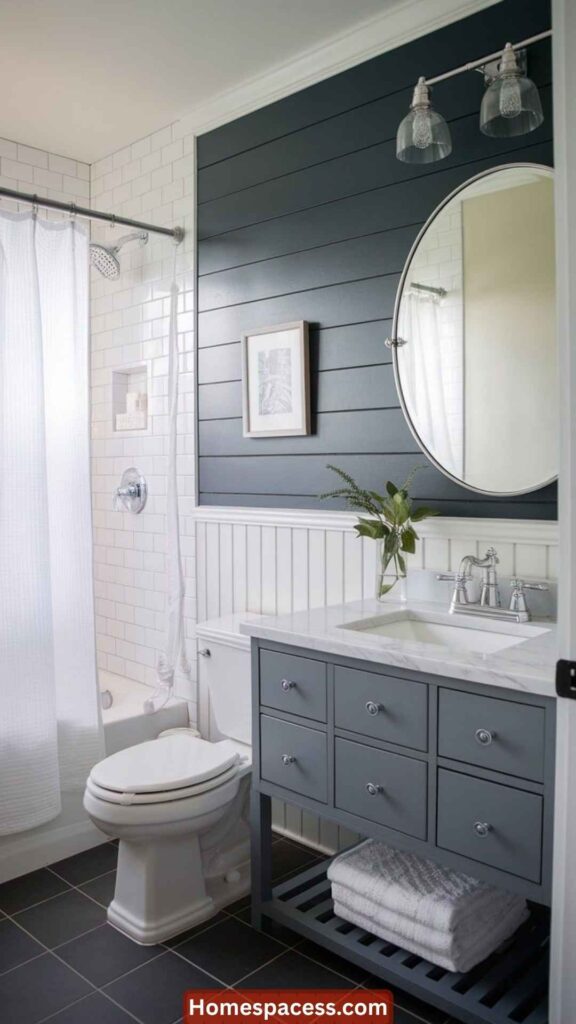
An all-over pattern in a small bathroom competes with itself every square inch is asking for attention. A single bold accent wall (typically the wall behind the toilet or behind the vanity) gives the eye a focal point and allows the other three walls to recede. This creates a sense of layered depth rather than a flat, busy box. Dark-toned or richly textured tiles on one wall, paired with simple light tiles elsewhere, is a widely underused approach in small bathrooms.
The psychological mechanism: a wall with strong visual interest “pushes” the eye into the room rather than stopping it at the surface. Deep navy, forest green, or even terracotta zellige tiles on a single wall can transform the personality of an otherwise unremarkable space, all without altering the layout at all.
Fixtures & Fittings
Choose a Slimline Basin or Vessel Sink
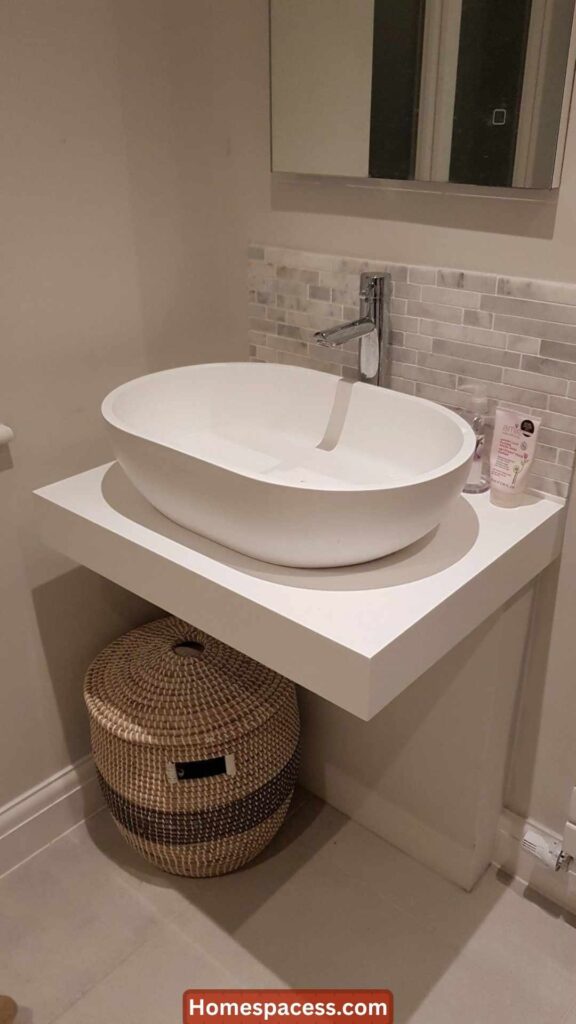
Standard vanity basins are often deeper than necessary. A slimline wall-hung basin can project as little as 28–30cm from the wall versus the 45–55cm of a typical sink dramatically improving circulation in tight bathrooms. In cloakrooms (powder rooms), a cloakroom basin specifically designed for the purpose can reduce the vanity footprint to under 25cm, allowing a door to open freely that couldn’t otherwise.
Vessel sinks bowls that sit on top of a counter add a sculptural quality that makes even a plain bathroom feel designed. They also elevate the visual plane of the sink, which can make low vanities feel taller and more intentional. Pair with a tall wall-mounted faucet for a hotel-inspired look.
Install a Rain Shower Overhead Instead of a Wall Mount
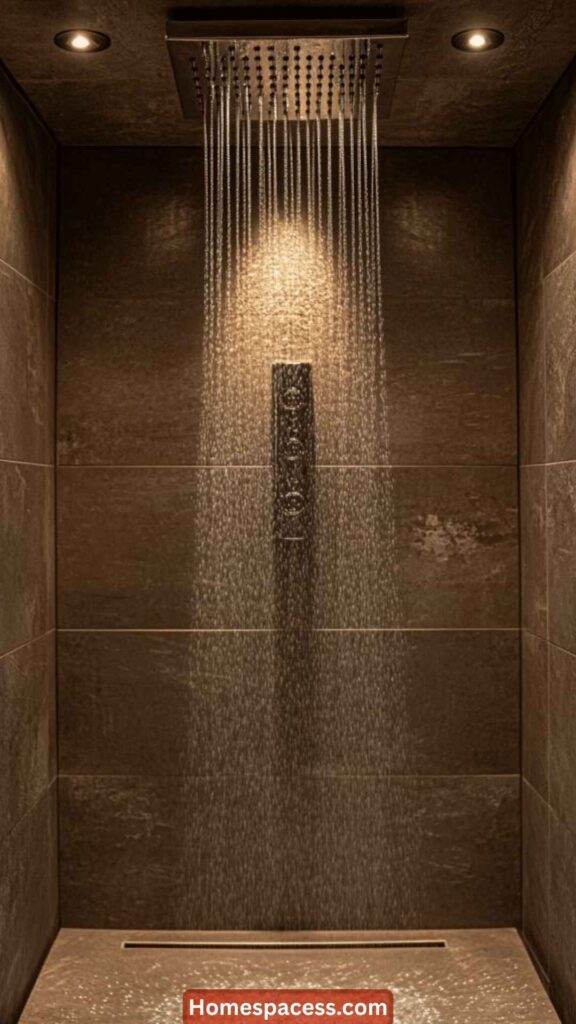
Wall-mounted shower heads angle the water spray into the center of the shower, which psychologically reduces the usable area (you instinctively stay away from the spray zone edges). An overhead rain shower ceiling-mounted or on a ceiling arm directs water straight down. This allows the full shower footprint to feel usable and opens up the perimeter wall space for the frameless screen or shelves. It also looks considerably more luxurious.
For small showers under 80cm wide, this is especially significant: a wall-mounted shower in that space feels like standing in a car wash. A ceiling-mounted head transforms the same dimensions into something that feels deliberate and comfortable.
Use Matte Black or Brushed Brass Tapware as a Visual Anchor
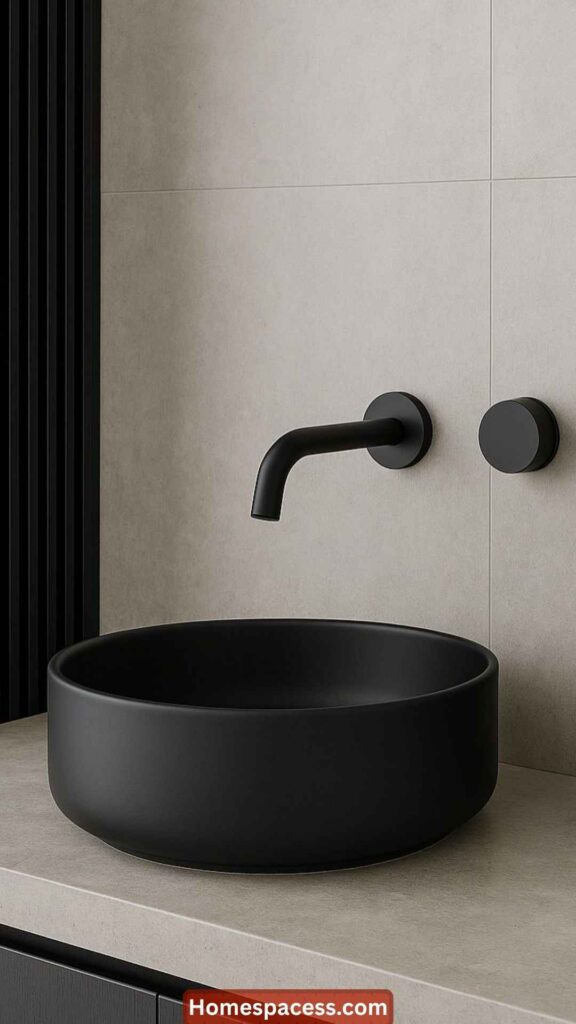
In a small bathroom, taps and fittings serve as jewelry small but impactful finishing elements that define the room’s personality. Matte black tapware creates crisp contrast in light-toned bathrooms; brushed brass or unlacquered brass warms up cool-tiled rooms. These finishes are now available at mid-market price points and make a bathroom feel custom-designed even without a full renovation.
The often-missed trick: coordinate all hardware towel rail, toilet roll holder, mirror frame, cabinet handles in the same finish. In a small room, consistency across these small elements creates a visual coherence that makes everything feel more intentional and higher-end.
Add a Fold-Down Seat in the Shower
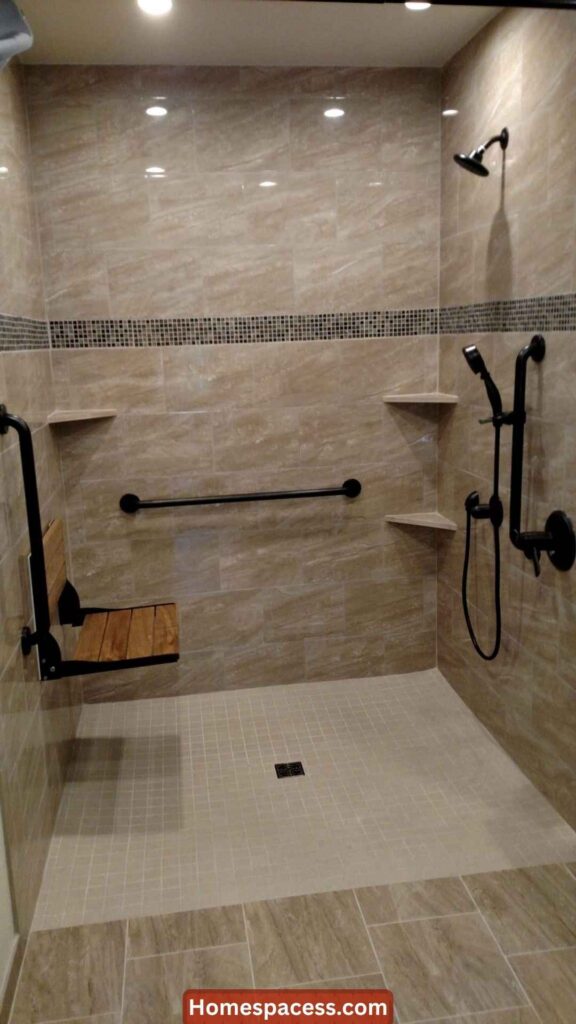
A fold-down teak or stainless steel shower bench attaches to the wall and folds flat when not in use taking up zero floor space in its resting position. Beyond accessibility (it makes showering easier for children, elderly users, or anyone who wants to shave their legs), it also adds a spa-like quality that small bathrooms don’t usually achieve. When folded down, it adds no more than 3–4cm to the wall profile.
This is one of those additions that seems minor but significantly changes how a bathroom feels to use daily. It’s particularly valuable in small curbless showers where circulation is tight, because it gives users the option to pause without sitting on the floor.
Install Sconce Lighting Beside the Mirror, Not Above It
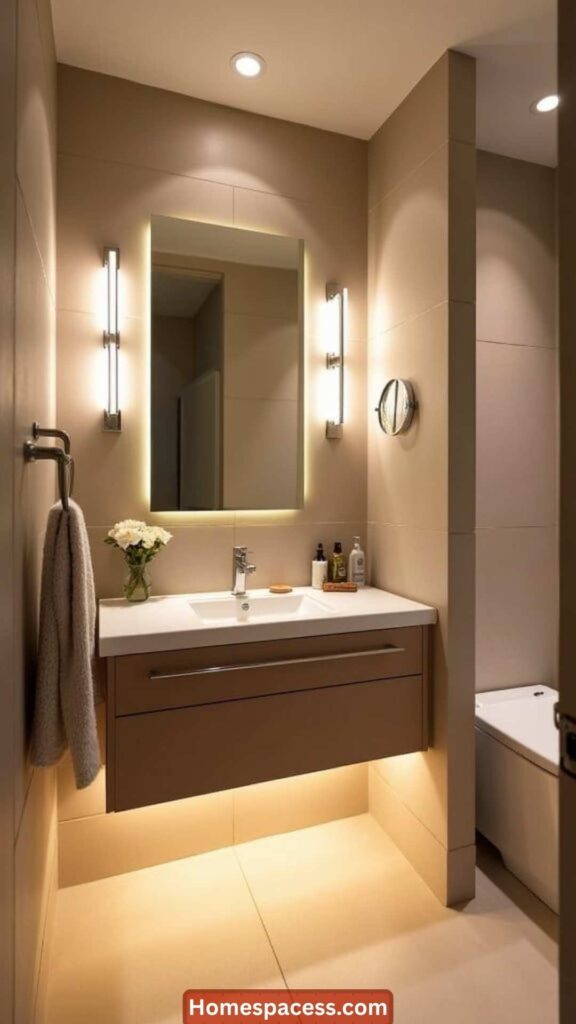
Overhead lighting above a mirror casts downward shadows on faces unflattering and practically poor for tasks like makeup or shaving. Sconces positioned at face height on either side of the mirror provide even, shadow-free illumination and also spread light horizontally across the room rather than pooling it at the ceiling. In a small bathroom, this distributed lighting makes the whole room feel brighter and more welcoming.
Use warm-white LED bulbs (2700–3000K color temperature) in sconces for a flattering, daylight-adjacent light quality. Pair with a cooler-toned overhead light (4000K) for task lighting when needed. Layered lighting two light sources at different temperatures and heights is a luxury hotel standard that any small bathroom can achieve for a modest electrical cost.
Add a Floating Glass Shelf for Transparent Storage
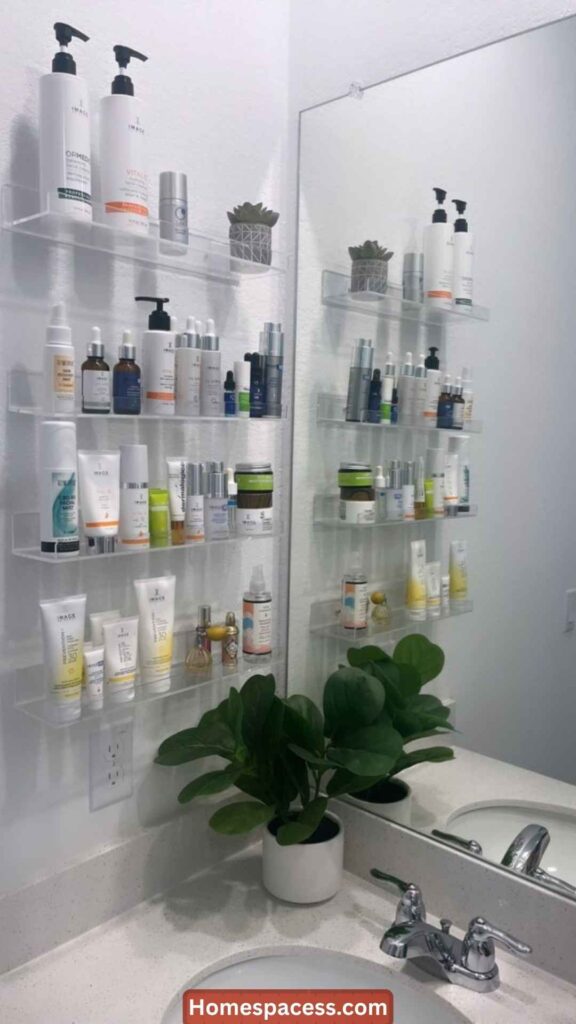
Solid shelves add visual weight. A tempered glass shelf, by contrast, is almost invisible it stores items while barely registering as a surface at all. In a small bathroom where every shelf would otherwise reduce the sense of space, glass shelving allows you to have functional storage while maintaining visual openness. A single 60cm glass shelf above the toilet or beside the sink can replace a full cabinet in terms of daily-use storage.
Keep the items on glass shelves curated and attractive. The transparency of the shelf means everything on it is fully visible. Matching containers, rolled towels in a coherent color, and attractive product bottles turn a storage zone into a display which is the essence of small-space design done well.
Install a Smart Mirror with Built-In Lighting and Storage
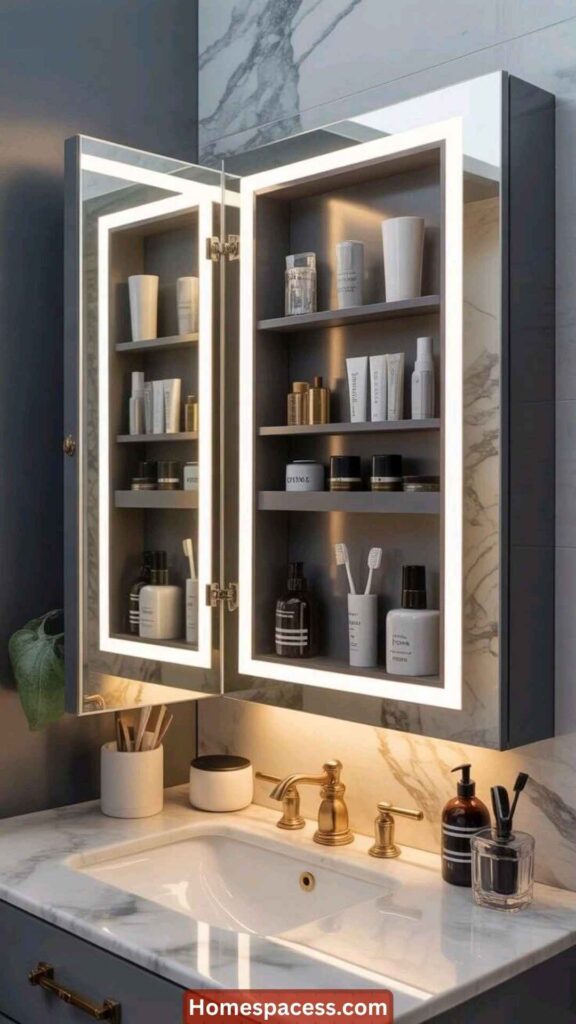
Smart mirrors have evolved significantly. Modern versions include built-in LED surround lighting, demist pads (no more wiping the mirror after a shower), and some include integrated Bluetooth speakers, clock displays, or even touch-screen interfaces. For a small bathroom, the most practical version combines a medicine cabinet with a front-facing mirror hidden storage behind the reflective surface, giving you the space-expanding effect of a large mirror alongside concealed shelving.
Demist pads are frequently overlooked but genuinely change daily bathroom use. A mirror that’s clear immediately after a shower means you can continue your morning routine without waiting a small improvement in daily friction that compounds meaningfully over time.
Run Continuous Flooring Into the Hallway for Visual Extension
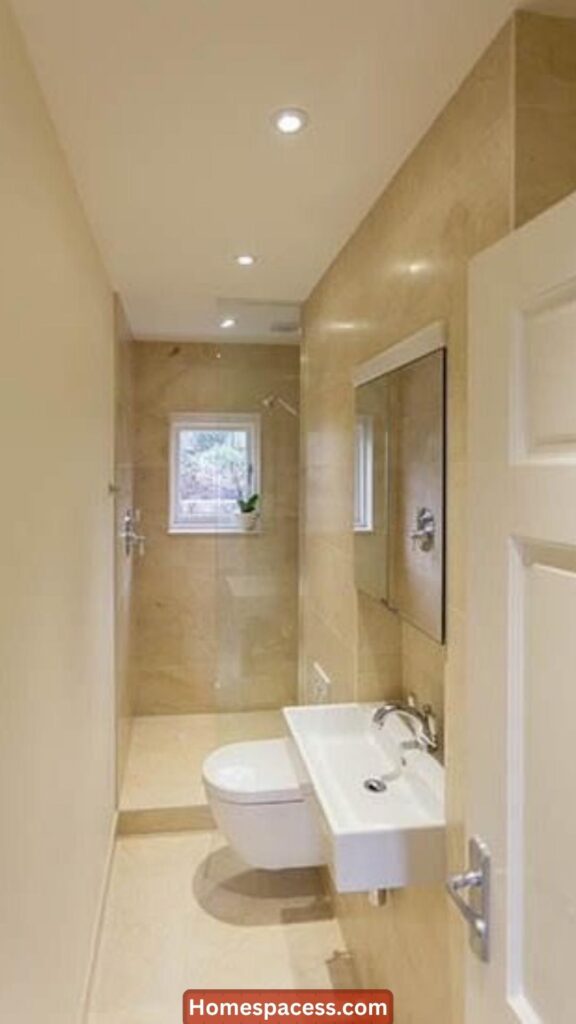
When the bathroom floor tile stops at the door threshold and changes to a different hallway material, the boundary is announced clearly and the bathroom reads as small. When the same tile (or a complementary tile from the same family) continues into the hallway, the bathroom’s floor visually extends, making it feel larger than its walls suggest. This is a technique used in luxury hotel room design where transition zones are minimized deliberately.
For apartments and homes with limited renovation budgets, this can often be achieved simply by choosing a bathroom tile that coordinates with existing hallway flooring rather than contrasting with it. Even approximate visual continuity makes a measurable difference in perception.
Conclusion:
A small bathroom becomes a great bathroom not by solving for size but by solving for intention. Every choice matters more than in a larger room: a tile decision affects the whole space, a lighting choice changes the mood entirely, a poor fixture placement makes mornings frustrating for years.
The 25 ideas in this guide aren’t a checklist to complete wholesale. They’re a toolkit. Start with the ideas that address your specific constraint whether that’s storage, light, layout, or visual clutter and layer from there. The most successful small bathroom renovations typically apply 5–7 ideas deeply rather than 20 ideas superficially.
Looking ahead, the best small bathrooms will be those that embrace their scale rather than fight it. Warmth, texture, precision craftsmanship, and sensory design will matter more than square footage and that’s genuinely good news for anyone working within tight dimensions. The tools, materials, and design knowledge available today make a world-class small bathroom achievable at almost any budget with the right priorities.
2026–2027 Trend Analysis: What’s Shaping Small Bathrooms Now
Understanding trends isn’t about following fashion it’s about understanding which ideas have cultural momentum, which materials are improving, and which design directions will hold their resale value. Here’s what the data and design community are pointing toward right now.
| Trend | What It Means for Small Bathrooms | Momentum |
| Japandi Aesthetic | Japanese minimalism meets Scandinavian warmth. Neutral palettes, natural materials (wood, stone, linen), zero clutter. Perfect for small spaces. | Peak here to stay |
| Zellige & Handmade Tile | Organic, textured tiles (Moroccan zellige, handcrafted terracotta) replace glossy white subway. Add character without loud color. | Rising fast |
| Wet Room Design | No trays, no screens, no thresholds. Full waterproofing = total spatial flexibility. Driven by accessibility awareness and minimalist design. | Strong & growing |
| Fluted Glass | Reeded/fluted glass in shower screens, cabinet fronts, and mirrors. Diffuses light beautifully while maintaining privacy. Space-neutral by design. | At peak now |
| Earthy, Dark Tones | Forest green, deep navy, burnt sienna replacing all-white. Works in small spaces when used as tone-on-tone rather than high contrast. | Rising will plateau 2026 |
| Integrated Technology | Smart mirrors, heated floors, sensor taps, chromotherapy lighting. Moving from luxury to mid-market accessibility. | Building steadily |
| Reclaimed & Sustainable Materials | Recycled glass tiles, FSC-certified wood, low-VOC grout. Consumer demand meeting supply. Better long-term performance than many older materials. | Accelerating |
One trend that most design publications underreport is the return of maximalist small bathrooms where the small size is embraced with bold pattern, rich color, and layered texture rather than minimized with white and glass. This approach, dominant in Victorian and mid-century design, is experiencing a genuine revival. A tiny bathroom tiled floor-to-ceiling in midnight blue zellige with brass fixtures is making more design impact than many large, neutral bathrooms.
The convergence trend is perhaps the most significant: bathrooms are increasingly designed to serve as brief retreat spaces places to decompress intentionally rather than purely functional rooms. This changes the design brief considerably. A small bathroom optimized for this purpose prioritizes sensory experience (textural surfaces, scent, targeted lighting, warmth) over square footage. This is the direction the market is clearly moving, and it has profound implications for how small bathrooms should be designed going forward.
Expert Insights: What Interior Designers Know That Most Guides Skip
◆ On mirrors and light
“Interior designers consistently report that clients underestimate the mirror. “The first thing I tell clients with a small bathroom: get the largest mirror you can fit, light it correctly, and the room will feel 30% bigger before we touch anything else. It’s the highest-ROI single item in bathroom design.”
One insight that competitors rarely mention: the ceiling. In small bathrooms, the ceiling is almost always ignored painted white and forgotten. However, painting the ceiling the same color as the walls (or tiling it in a wet room) removes the visual “lid” that makes a small room feel enclosed. Japanese bathrooms do this routinely. Removing the ceiling/wall color contrast makes the room feel taller and more expansive, even though nothing structural has changed.
◆ On storage hierarchy
Professional organizers recommend a “zone-and-contain” method for small bathrooms: define three zones (daily use, weekly use, rarely used), store daily items within arm’s reach, weekly items at cabinet level, and rarely-used items in high or deep storage. This prevents the “everything within reach” clutter that makes small bathrooms feel chaotic.
Another overlooked expert insight: scent engineering. In a small bathroom, smell is disproportionately significant because the space is enclosed. A consistent, subtle scent (reed diffuser, essential oil blend, or a small indoor plant like eucalyptus) programs the brain to associate the room with wellbeing. This is why high-end spa bathrooms even small ones feel luxurious in a way that’s hard to attribute to decor alone. The olfactory dimension is deliberately curated.
◆ On the “15-minute test”
Before finalizing any small bathroom layout, experienced designers conduct a 15-minute walk-through simulation physically miming every morning routine action (brushing teeth, showering, reaching for towels) in the proposed layout. This reveals collision points and workflow failures that blueprints never show. Many layouts that look efficient on paper are frustrating in practice.
Sustainability, Long-Term Value & Strategic Perspective
Small bathrooms have an inherent sustainability advantage: they require fewer materials, less water heating, and less energy to ventilate than large ones. But this advantage is easily squandered with poor material choices and inefficient fixtures. The most sustainable small bathroom design combines material longevity, water efficiency, and low maintenance and these goals almost always align with good design choices anyway.
◆
Water Efficiency
A 4-star WELS-rated showerhead uses 6L/min vs 15L/min for a standard head. Over a year for a two-person household, that’s approximately 65,000L saved in a small bathroom, this is easily achievable without any sacrifice in shower quality.
◆
Material Longevity
Porcelain tiles last 50+ years with minimal maintenance. Engineered quartz vanity tops outlast laminate by decades. Choosing durable materials upfront is both more sustainable and more cost-effective over a 20-year ownership horizon.
◆
Energy
LED lighting in a bathroom uses 80% less energy than halogen equivalents and lasts 15–20 years. Underfloor heating on a smart thermostat uses less energy than a bathroom radiator because it operates at lower temperatures more efficiently.
One strategic perspective that’s frequently overlooked: accessible design is future-proof design. Features like curbless showers, grab rails (or concealed structural backing to add them later), lever taps, and fold-down seating aren’t just for elderly or disabled users. They benefit every user daily and significantly increase the resale value and market breadth of a property as populations age. Designing an accessible small bathroom today is not a compromise it’s a strategic investment.
The concept of “biophilic design” is also relevant here. Incorporating natural materials (unglazed terracotta, wood tones, stone-effect porcelain), living plants where light permits, and natural light where possible has measurable effects on stress reduction and wellbeing. For a room used daily, often during high-stress morning routines, these qualities genuinely improve quality of life a return on investment that has no dollar figure but is arguably the most significant of all.
Future Predictions: The Next Wave in Small Bathroom Innovation
The bathroom is one of the fastest-evolving rooms in residential design, driven by technology convergence, sustainability regulation, and changing attitudes toward self-care. Here’s what’s coming and how it applies to small bathrooms specifically.
Smart Shower Systems Become Mainstream
Digital shower controls (preset temperatures, flow rates, duration limits) will move from luxury to mid-market. In small bathrooms, this enables precision that reduces water waste and improves the morning routine. Voice or app control means the shower reaches temperature before you step in.
Modular Bathroom Pods
Factory-built bathroom modules fully assembled units shipped to site will become increasingly viable for renovations. In small bathrooms where a full refit is disruptive and expensive, plug-in pods offer precision engineering and faster installation. Scandinavian and Japanese manufacturers are already at this frontier.
Antimicrobial Surface Technology
Tiles and sanitary ware with baked-in antimicrobial properties (silver-ion or photocatalytic coatings) are in commercial production now and will reach the consumer market more broadly. For small bathrooms with less natural ventilation, this reduces mold risk substantially without chemical cleaning.
Greywater Recycling Integration
Built-in greywater recycling systems capturing sink and shower water to flush toilets will become standard in new builds in water-stressed regions. As systems miniaturize, they’ll be retrofittable in small bathrooms. This will be regulatory-driven in many markets.
AI-Assisted Humidity & Ventilation
Smart ventilation fans that detect humidity, occupancy, and VOC levels and respond automatically will replace timer-based fans. In small bathrooms, this is particularly impactful: precise ventilation prevents condensation and mold without over-ventilating in winter.
Transformable Bathroom Furniture
Furniture that converts a vanity that folds into a desk, a shower seat that becomes a hamper following the pattern of transformable furniture in micro-apartments. Japanese bathroom design is already exploring this territory seriously.
The most significant long-term shift, however, is cultural: the bathroom is evolving from a purely functional room to a wellness room. This drives investment upward and makes small bathrooms viable targets for high design spend. A well-designed 45 sq ft bathroom is increasingly seen as a more valuable asset than a poorly designed 90 sq ft one because function and experience matter more than raw square footage to the growing wellness-conscious consumer segment.
Common Mistakes in Small Bathroom Design (And How to Avoid Them)
Most guides focus on what to do. Equally important and frequently ignored is what not to do. These are the mistakes that designers see repeatedly in small bathroom projects, most of which are invisible until the room is finished and living with them becomes frustrating.
- Installing a shower screen that opens inward. In a small shower, an inward-opening door means you have to step back against the wall to open it. Always choose frameless glass that opens outward or slides or go screenless entirely.
- Choosing grout color that contrasts sharply with tiles. Dark grout on light tiles creates a grid pattern that multiplies visual boundaries and makes every surface look smaller. Use grout that matches or is close in tone to your tile especially on floors.
- Installing an extractor fan too close to the door. The fan should be positioned as far from the door as possible ideally above or near the shower to create a cross-draft that pulls humid air across the room rather than just recycling air near the entrance.
- Mixing too many materials and finishes. Chrome taps, a bronze towel rail, brushed steel cabinet handles, and a gold mirror frame in one small room creates visual chaos. Choose one metal finish and apply it consistently across all hardware.
- Under-tiling the shower. Stopping tile at a standard height (1.8m) in a shower area leaves a paint zone above that gets wet, grows mold, and looks unfinished. In a small bathroom, tile the shower zone fully to the ceiling or at minimum to 2.1m and seal the junction properly.
- Neglecting ventilation in the design phase. Small bathrooms without adequate extraction suffer from persistent condensation, which leads to mold, peeling paint, and damaged walls. A silent, high-flow fan (at least 15L/s) with a humidity sensor is not a luxury it’s essential infrastructure.
- Buying furniture before measuring the door swing and circulation path. A vanity that looks perfect in the showroom may mean you can’t fully open the bathroom door. Always cut out paper templates at 1:1 scale and lay them on the floor before purchasing any piece of furniture.
One overlooked mistake that deserves special mention: over-optimizing for storage at the expense of comfort. It’s tempting, in a small bathroom, to fill every inch with shelving, cabinets, and organizers. But this transforms the room into a warehouse rather than a sanctuary. Leave some breathing room. One intentionally empty wall. One uncluttered surface. The most livable small bathrooms have less in them than you’d expect because their owners made deliberate choices about what to keep.

Team Home Spacess shares simple, practical design ideas that work for real families. The team focuses on cozy décor, soft colors, and natural textures that make a space feel truly lived-in. From everyday decorating tips to creative home projects, Team Home Spacess is dedicated to helping readers create warm, comfortable, and inviting spaces with a fresh and personal touch.