
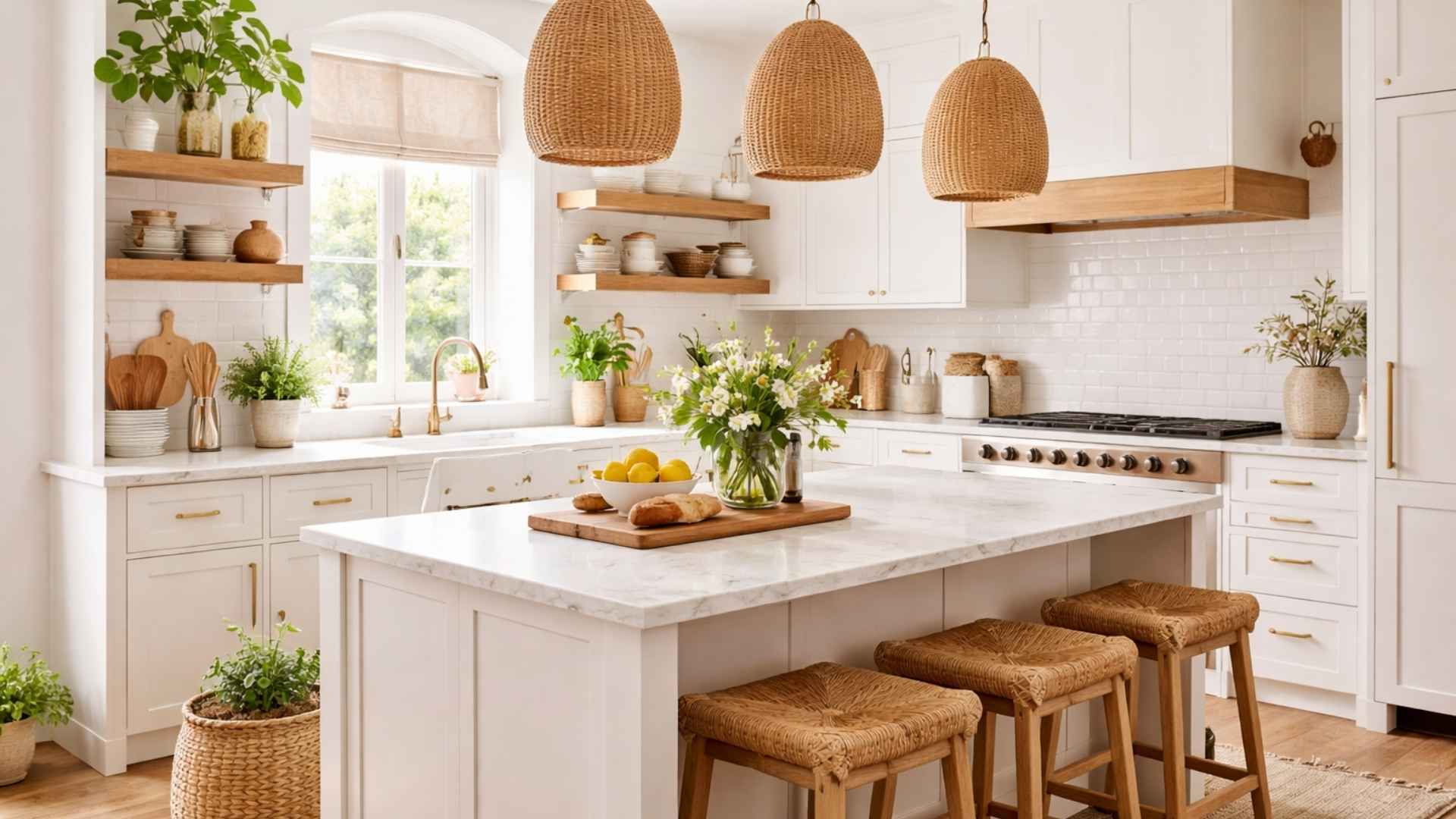
21 Kitchen Decor Ideas That Transform an Ordinary Kitchen Into a Space You Actually Love

Most kitchens are functional but few are beautiful. If yours feels more like a utility room than a living space, you’re not alone. The good news: meaningful kitchen decor doesn’t require a full renovation.
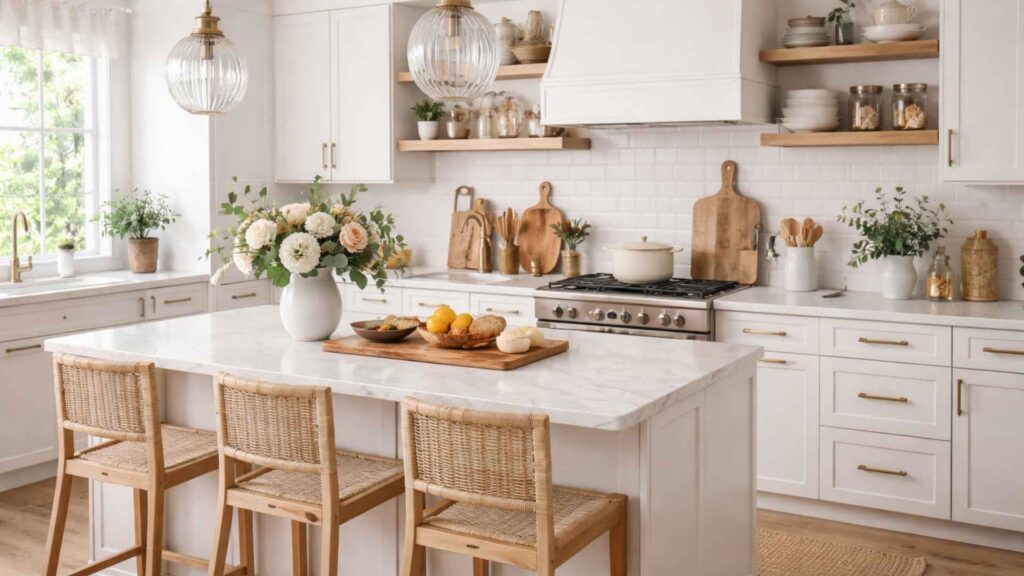
It requires the right ideas, applied with intention. This guide covers 21 expert-curated kitchen decor ideas, from budget-friendly styling to long-term design investments with trend forecasts, sustainability insights, and common mistakes most homeowners never catch.
Whether you’re working with a tiny galley kitchen or a sprawling open-plan space, the right kitchen decor ideas can completely redefine how the room feels and how you feel inside it. This guide covers 21 deeply researched, actionable ideas backed by design expertise, current trend data, and real-world application. We’ve gone beyond surface-level tips to give you insights that most home decor articles simply skip.
Open Shelving
The Decor Move That Earns Its Space
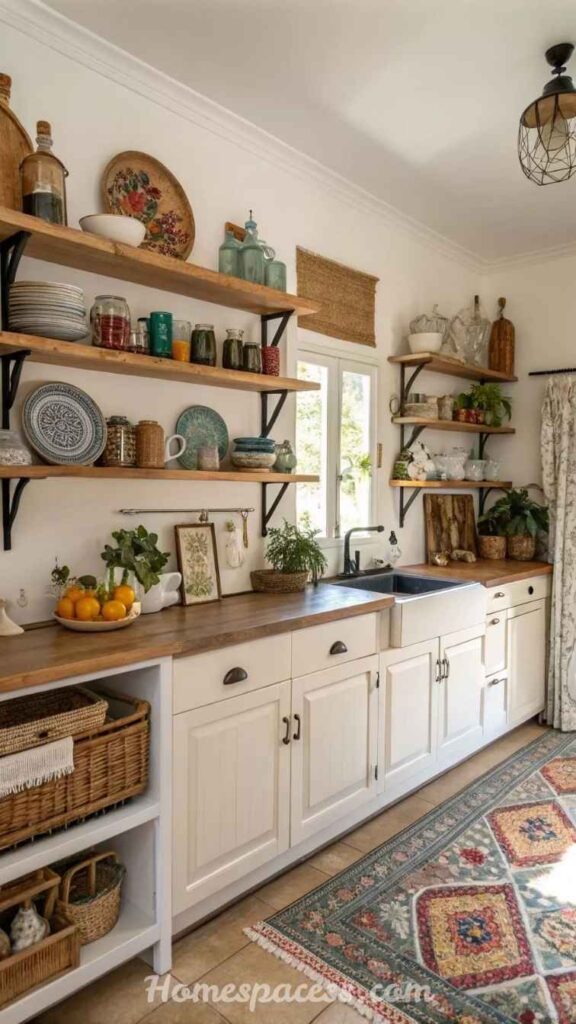
Open shelving is one of the most impactful kitchen decor ideas because it forces intentionality. Every object you place becomes a design decision. The most Instagram-worthy kitchens aren’t stuffed with things they curate. Think three matching canisters, a stack of linen-colored plates, and a single trailing pothos vine. The restraint is the point.
The practical benefit beyond aesthetics is accessibility. Frequently used items come to hand faster, and visual inventory means you shop smarter. Interior designers increasingly recommend floating shelves in walnut or white oak over upper cabinets in smaller kitchens they create vertical depth without the heaviness of solid cabinet boxes pressing down on the space.
Expert insight:
Style shelves in odd numbers. Three items or five items feel balanced. Four or six feel symmetrically static. Also, vary heights a tall olive oil bottle next to a short spice jar creates rhythm that flat arrangements lack.
Must Read: 29 Bathroom Decor Ideas That Transform Any Space
Statement Backsplash
Where Personality Meets Function
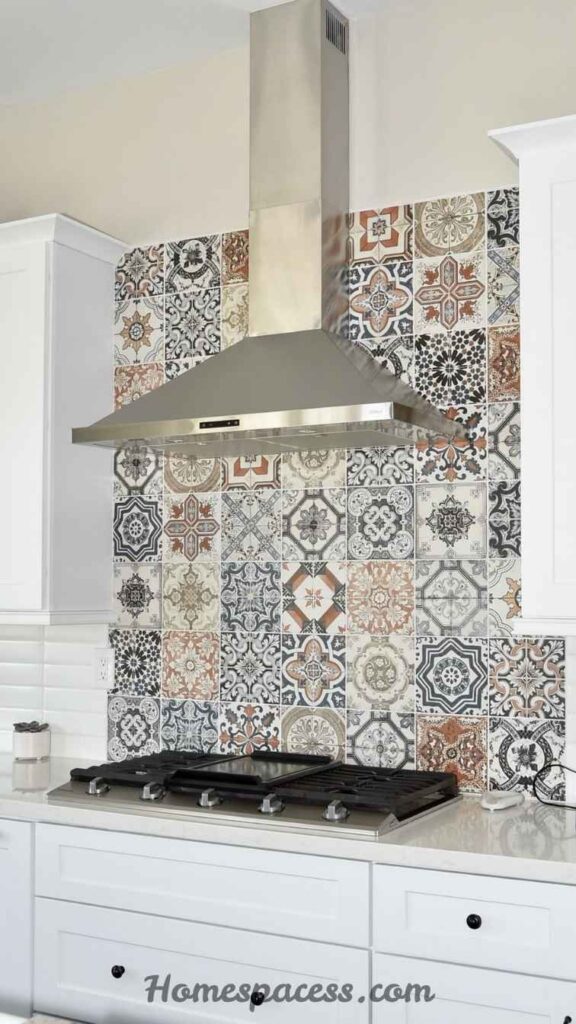
The backsplash is the most underused canvas in kitchen design. While most homeowners default to white subway tile, designers are increasingly recommending handmade zellige tile, terrazzo slabs, or even raw plaster textures to inject genuine character. A statement backsplash that runs floor-to-ceiling behind the range creates a focal point that no amount of accessorizing can replicate.
The key is contrast calibration. If your cabinets are white or greige, your backsplash can absorb more color and pattern. If your cabinetry is already bold, a simple textural tile like a rippled ceramic or brushed stone adds depth without visual competition. Mixing these incorrectly is one of the most common kitchen decor mistakes.
Design note:
Slab backsplashes (a single sheet of stone or quartz behind the range) photograph beautifully and clean even more easily than grout-heavy tile. They’re a premium choice but offer long-term maintenance savings.
Don’t Skip: 23 Front Porch Ideas That Will Transform Your Home’s First Impression
Mixed Metal Hardware
The Finishing Touch That Pulls Everything Together
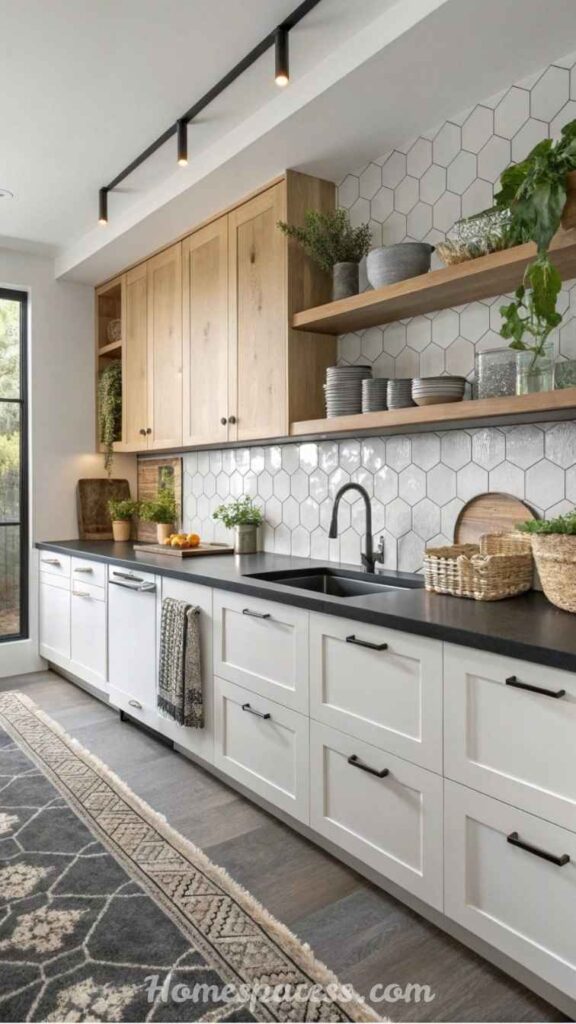
The era of perfectly matched hardware is over. Mixing metals for example, brass cabinet pulls with a brushed nickel faucet and matte black pendant lights creates a layered, collected aesthetic that feels evolved rather than decorated. This approach mirrors how high-end hotels and design-forward restaurants style their kitchens.
The rule most guides miss: mix metals intentionally, not randomly. Establish a dominant metal (say, brushed brass), a secondary (matte black), and let all others be accidents you “happen to love.” Two metals feel deliberate. Three or more, done carelessly, feel chaotic. The key is ensuring at least two elements repeat each chosen metal so your eye reads pattern, not noise.
Quick upgrade:
Swapping cabinet hardware is one of the highest ROI kitchen decor upgrades often under $150 total that visually refreshes an entire kitchen in under two hours.
Don’t Miss: 22 Home Gym Ideas That Actually Work For Every Space & Budget
Indoor Herb Garden Window
Biophilic Meets Practical
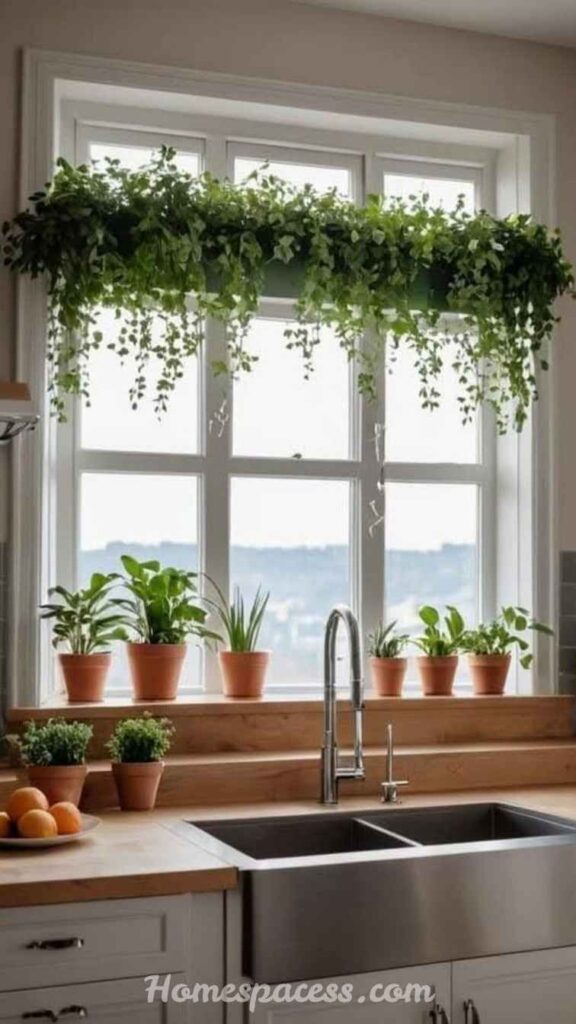
A kitchen herb garden positioned at a sunny window isn’t just decor it’s a living, sensory feature. Basil, rosemary, mint, and thyme in matching ceramic pots along a deep sill introduce fragrance, color, and texture simultaneously. This approach blends function with beauty in a way that few purely decorative objects can match.
For smaller sill spaces, tiered hanging planters have become one of the fastest-rising kitchen decor trends of 2026–2027. They free up counter and sill space while doubling planting capacity. Alternatively, magnetic herb pods on the refrigerator side panel create an unexpected vertical garden that stops visitors in their tracks.
Read More: 23 Front Porch Ideas That Will Transform Your Home’s First Impression
Bold Island Color
One Decision That Changes Everything
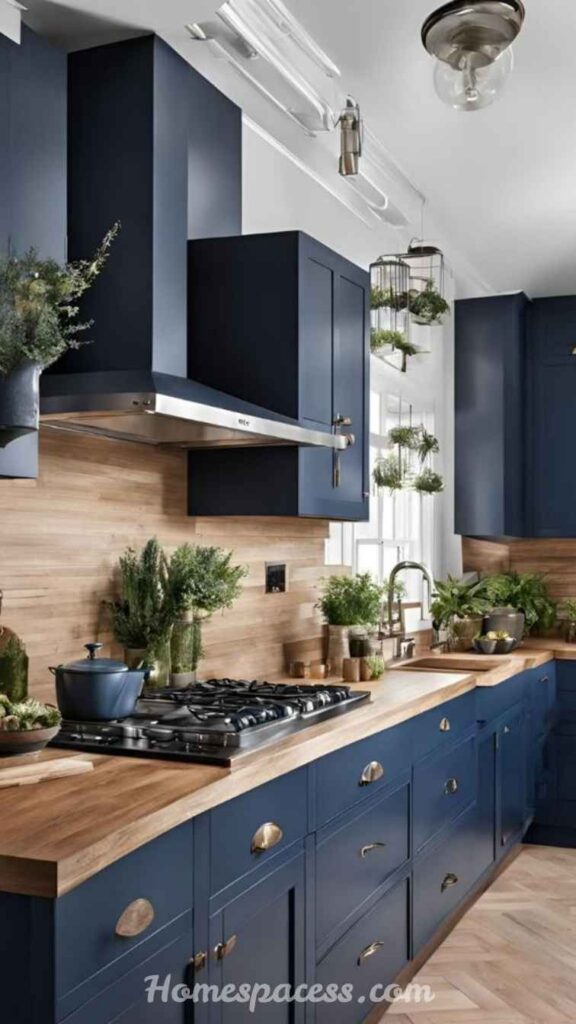
If your kitchen has an island, painting or refinishing it in a contrasting color is one of the single most transformative kitchen decor decisions you can make. Deep navy, forest green, terracotta, or dusty sage against white perimeter cabinets creates the kind of two-tone kitchen that tops design polls annually. It signals that the space was considered, not just assembled.
Functionally, a differently finished island also signals a zone shift prep area here, dining over there which improves how families move through the kitchen. Designers often recommend a warmer island tone (amber-based neutrals, warm greens) to counterbalance the cooler whites of appliances and light fixtures common in most kitchens.
Vintage and Artisan Lighting
Atmosphere Begins Overhead
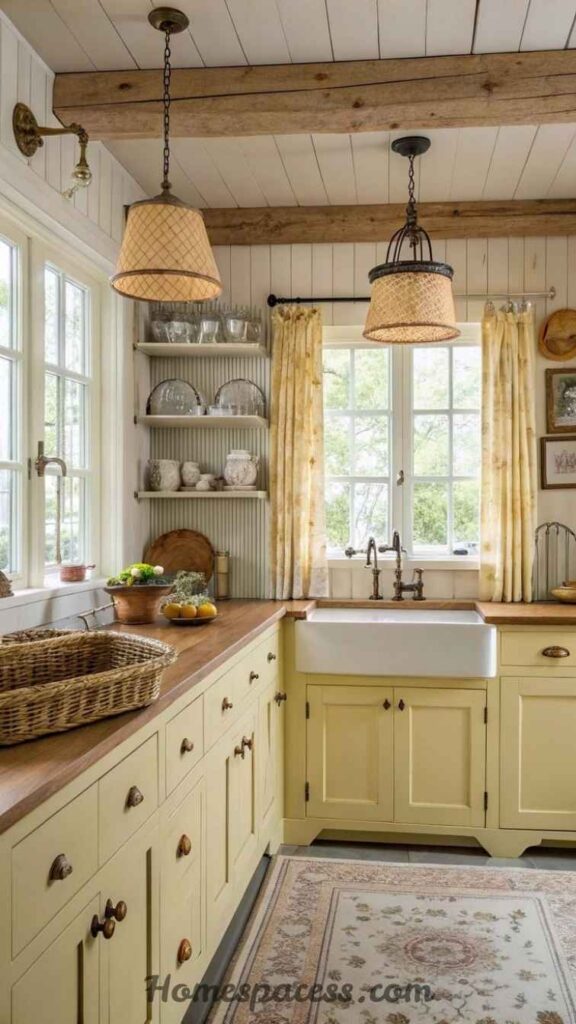
Lighting is the most underestimated element in kitchen decor. Recessed downlights create a flat, clinical environment regardless of how well everything else is styled. Introducing a vintage-inspired pendant or an artisan rattan chandelier over a dining table or island immediately adds warmth, texture, and intimacy. This single swap changes how a kitchen feels in the evening entirely.
Layered lighting ambient, task, and accent is the professional design standard. Practically, this means: under-cabinet strips for work surfaces, a statement pendant or two over the island, and a dimmer on overhead circuits so you can shift from full bright during meal prep to atmospheric during dinner. The decor impact of a well-lit kitchen on its worst structural day exceeds that of a poorly lit kitchen on its best material day.
Trend note:
Pleated fabric shades, exposed Edison bulbs in smoked glass, and sculptural ceramic pendants are leading kitchen lighting choices heading into late 2026.
Warm Wood Accents
The Antidote to Cold, Sterile Kitchens
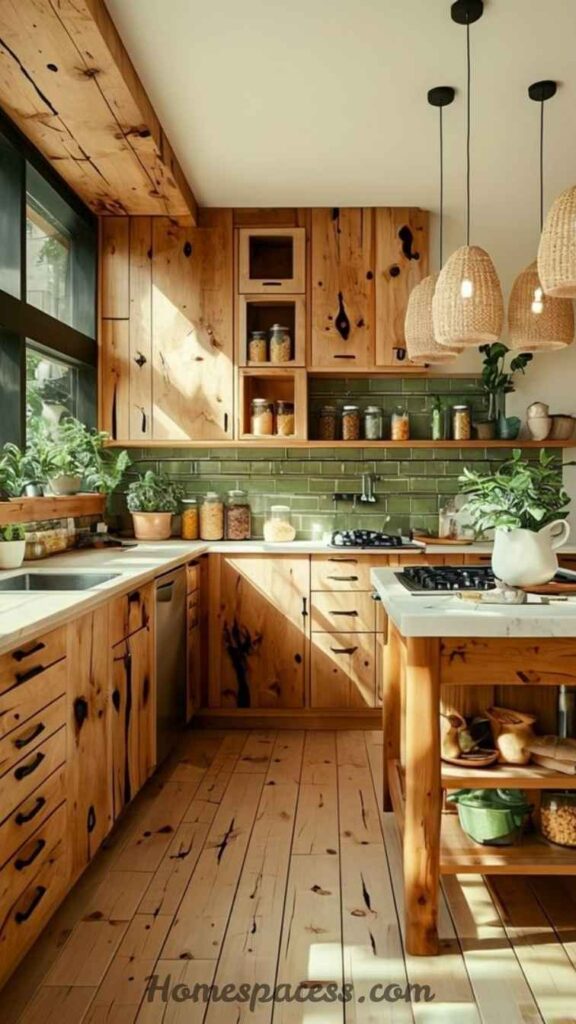
White kitchens peaked, and now the pendulum swings toward warmth. Introducing warm wood accents a butcher block section of countertop, open shelves in white oak, wooden bar stools, a cutting board displayed on the counter softens hard edges and brings tactile richness to kitchen environments dominated by stone, steel, and ceramic.
Designers refer to this as “warm minimalism” spaces that are still clean and orderly but feel lived-in and human. The material itself carries story: wood grain is inherently variable, subtly referencing the natural world in a space otherwise built from manufactured surfaces. The warmth isn’t just visual wood surfaces are warmer to the touch, which makes kitchens feel more inviting during casual use.
Textured Ceilings
The Fifth Wall Nobody’s Using
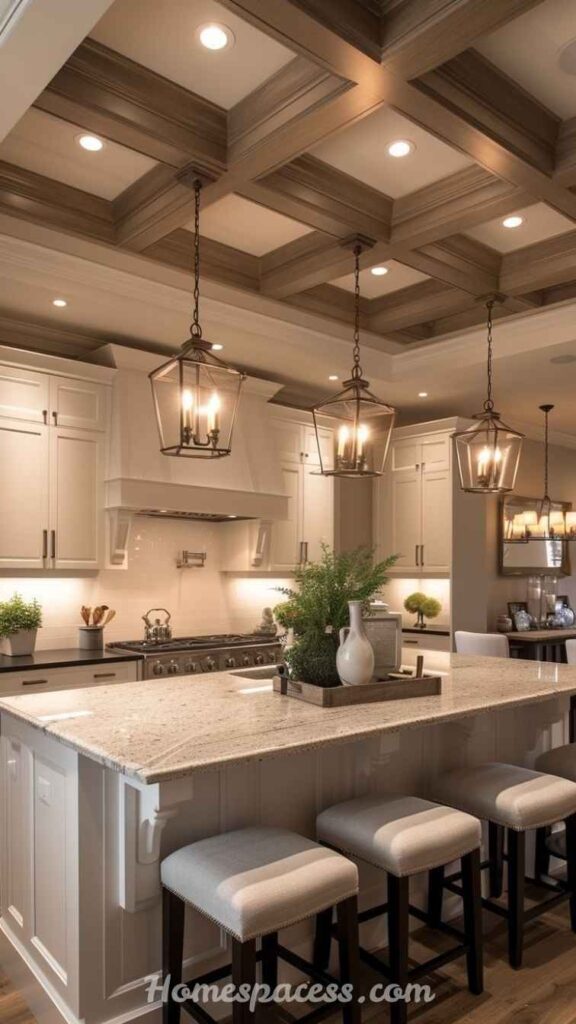
The ceiling accounts for roughly one-sixth of your kitchen’s total visible surface and most homeowners paint it white and forget it exists. A textured ceiling treatment (limewash, a subtle slat wood panel, pressed tin tiles, or even a deep paint color) transforms the room’s perceived volume and adds an unexpected layer of design sophistication.
A particularly effective technique is running wood slat paneling across the ceiling over a kitchen island. This visually defines the zone, adds acoustic softness in echo-prone kitchens, and introduces a natural element overhead that complements stone counters and wood floors below. In open-plan layouts, it helps the kitchen feel like its own deliberate space rather than a functional appendage of the living room.
Chalkboard and Whiteboard Walls
Function as Design
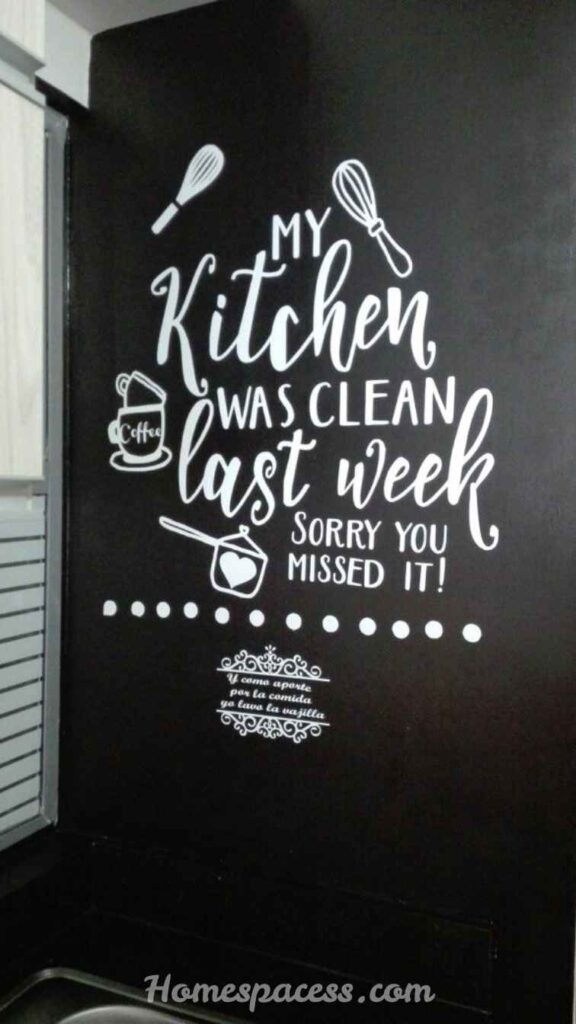
A chalkboard wall section typically applied to the inside of a pantry door, a narrow end wall, or even a full refrigerator-side panel serves as a menu board, grocery list, and family message center simultaneously. It introduces a matte, dark surface that creates contrast in light kitchens and communicates a relaxed, lived-in personality.
Magnetic chalkboard paint upgrades this concept considerably: the surface accepts chalk writing and magnets, which means recipe cards, school schedules, and notes can all coexist. For households with children, this feature is particularly popular it keeps the design organized while allowing functional chaos to happen in one contained zone.
Smart Storage as Visible Decor
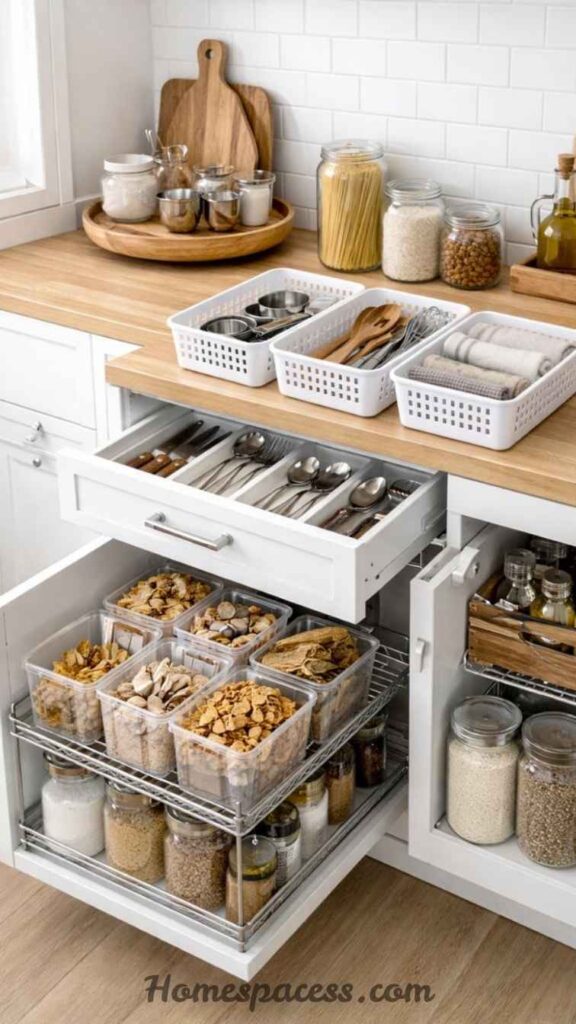
Storage doesn’t have to be concealed to be attractive. A row of identical glass jars containing dry goods lentils, oats, pasta, rice arranged by height creates a pantry display that is simultaneously practical and visually pleasing. The uniformity of containers creates order; the variety of contents creates color. When placed at eye level on open shelving, this creates the kind of kitchen organization display that earns its aesthetic merit.
Knife blocks in natural wood, hanging copper pots, woven baskets for produce, and wall-mounted spice racks with consistent labeling all fall into this category. The key principle: when storage is beautiful, it becomes display. When it’s mismatched or chaotic, it subtracts from every surrounding design choice you’ve made.
Kitchen Gallery
Wall Art in Unexpected Places
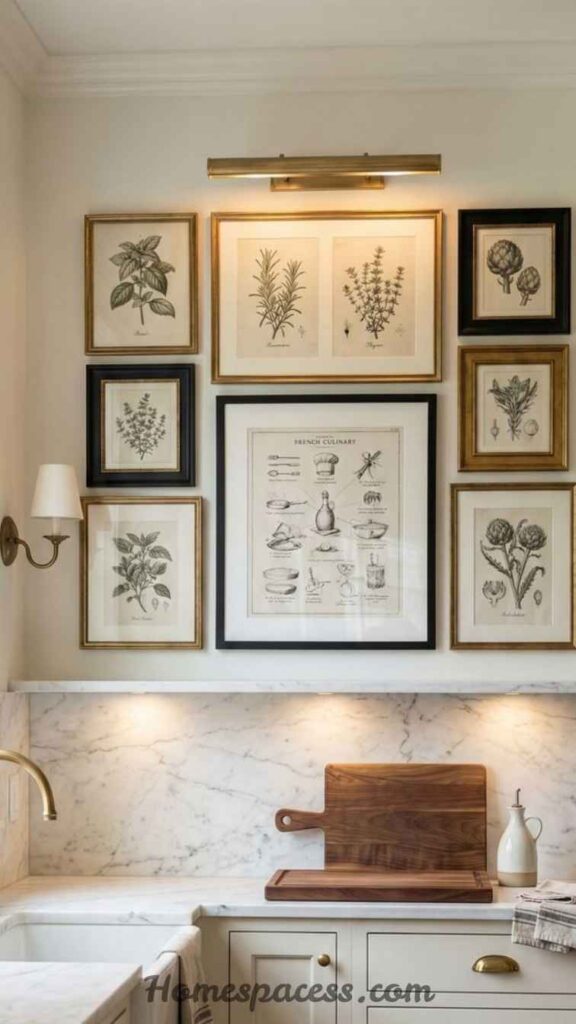
Gallery walls aren’t exclusively a living room feature. A curated collection of food-themed prints, vintage botanical illustrations, handwritten recipe cards framed in matching wood, or even abstract art above a breakfast nook transforms a blank kitchen wall into a storytelling surface. This works particularly well in eat-in kitchens where there’s a wall adjacent to the table that often goes underused.
The key difference between a gallery wall that elevates a kitchen and one that clutters it is curation. Stick to a consistent frame finish (all black, all wood tone, or all white), vary the sizes thoughtfully, and choose a unifying color thread across the images. Three to five pieces are often more powerful than eight to ten.
Two-Tone Cabinetry
The Design Choice With the Most Resale Upside
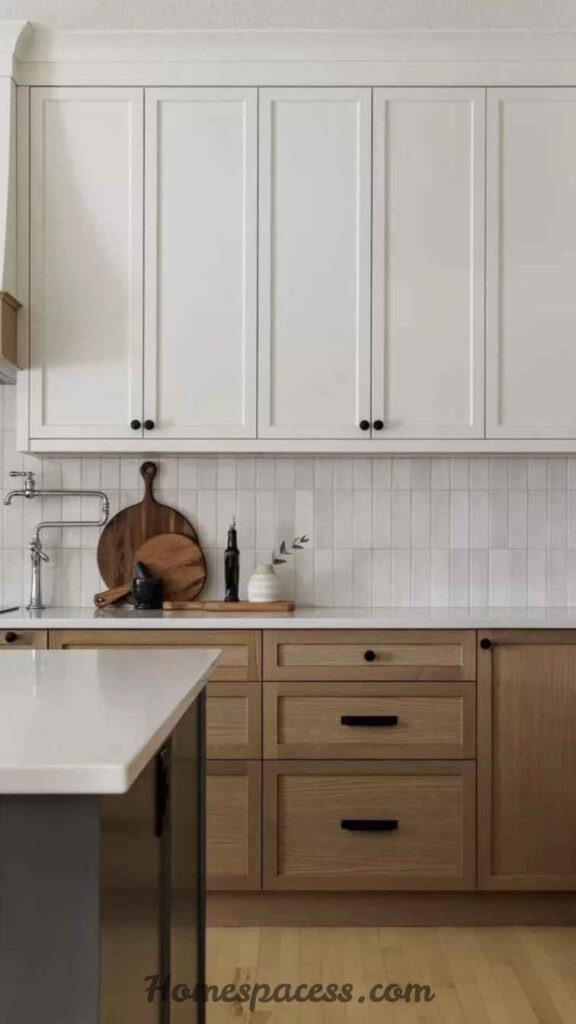
Two-tone cabinetry has proven staying power because it solves a persistent design problem: all-white kitchens feel sterile; all-dark kitchens can feel heavy. The two-tone approach typically lighter uppers, darker lowers naturally grounds the space, creates visual contrast, and directs the eye in a way that single-tone cabinets simply can’t.
The lower cabinet color choice is everything. Navy, deep green, charcoal, and warm terra cotta are performing well in 2026 design surveys. Muted, complex tones with some gray in the undertone tend to age better than pure saturated colors. Pair with natural stone counters and you’ve created a kitchen that will photograph beautifully and sell well.
Resale note:
According to real estate staging professionals, kitchen updates offer the highest ROI of any room. Two-tone cabinetry especially with a neutral-leaning lower color consistently appeals to the widest buyer pool.
Woven and Textile Textures
Softening the Hardest Room
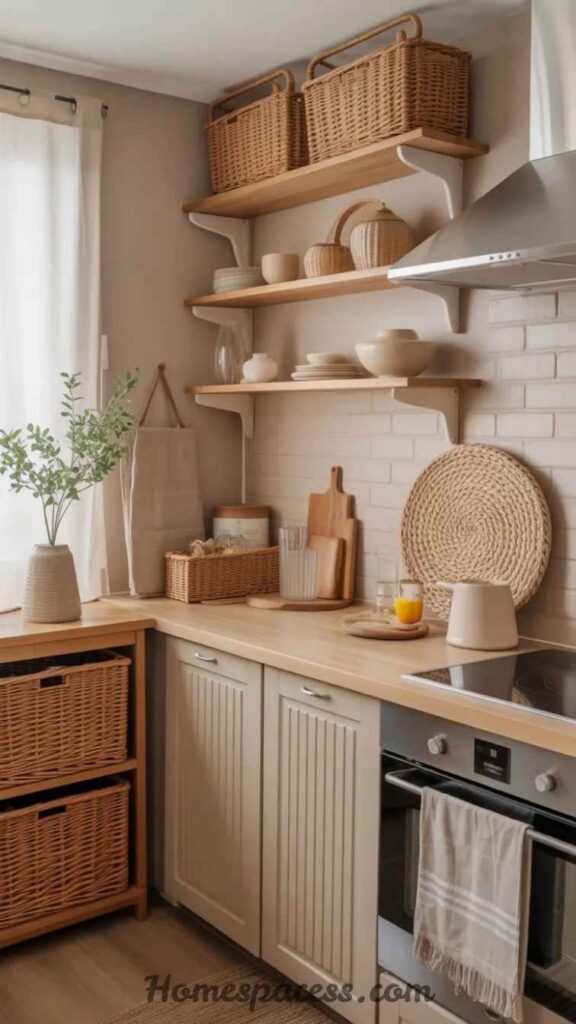
Kitchens are architecturally hard: stone, metal, glass, ceramic. Adding woven textures a rattan pendant shade, a jute rug underfoot, linen window treatments, or woven baskets on open shelves introduces softness and acoustic warmth that changes how a kitchen feels on a sensory level. This technique is borrowed from how high-end resort kitchens and chef’s tables are styled.
Textile layering doesn’t require much investment. A single quality jute or wool runner between the sink and the stove provides anti-fatigue comfort and a natural material anchor. Paired with linen cafe curtains on a lower window, these additions create a farmhouse-coastal-warm aesthetic that consistently tops search trends for kitchen decor ideas.
Colorful Retro Appliances
Bold Statement, Clear Personality
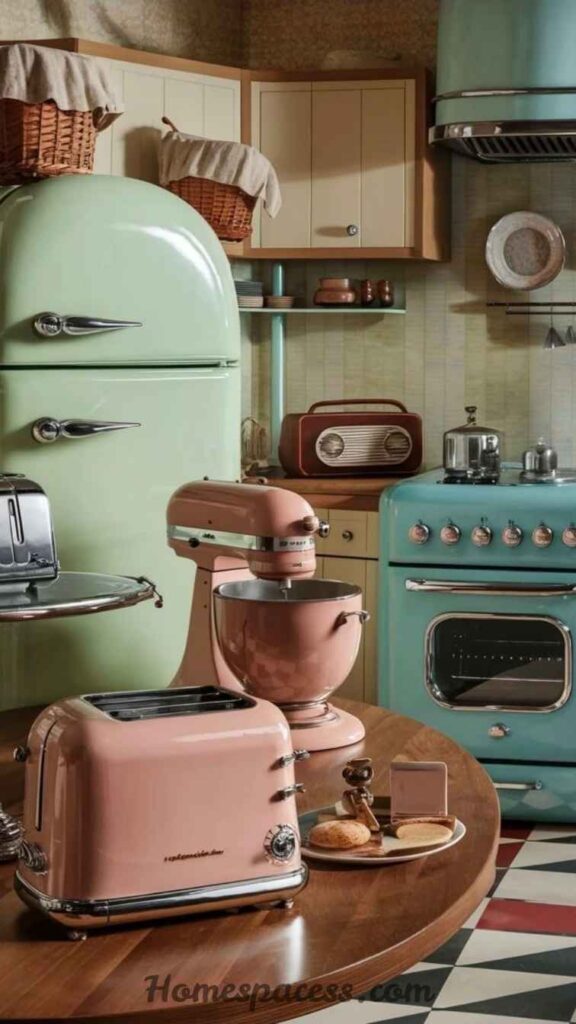
A powder-blue KitchenAid mixer, a cherry-red toaster, a cream-colored vintage-style refrigerator colorful retro appliances don’t just function, they anchor an aesthetic narrative. This approach works best in otherwise neutral kitchens where a single color-forward appliance becomes a deliberate focal point rather than competing with other bold elements.
Brands like SMEG, Big Chill, and Elmira Stoveworks have built entire product lines around this insight. Their appliances sell not primarily on technical specification but on emotional resonance they make kitchens feel playful, curated, and personal. For renters who can’t change cabinets or backsplash, a statement appliance is one of the highest-impact, fully portable kitchen decor investments available.
Scalloped and Curved Details
The Softening Edge Trend
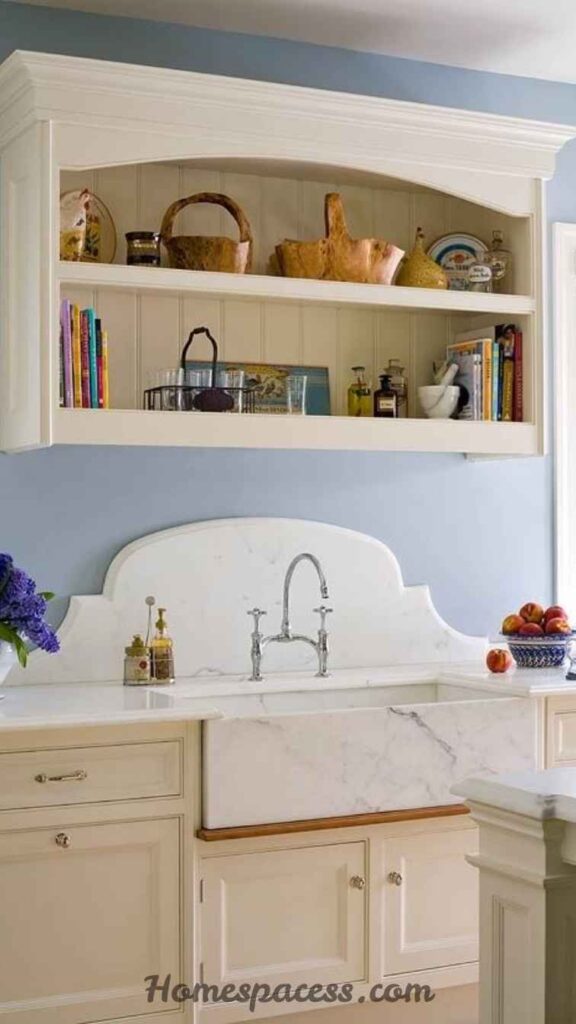
Scalloped edges on cabinet fronts, arched interior niches, and curved countertop overhangs represent one of 2026–2027’s most significant design departures from the sharp-lined, rectilinear kitchen of the past decade. These organic curves reference Mediterranean architecture, Spanish Colonial interiors, and mid-century California kitchens all aesthetics experiencing serious revival.
You don’t need a renovation to introduce curves. Scalloped fabric valances over windows, round barstools, curved cabinet handles, and circular cutting boards on display all introduce the visual rhythm of organic shapes without structural commitment. Even a round dining table in an otherwise angular kitchen creates noticeable spatial softness.
A Statement Kitchen Rug
Grounding the Entire Space
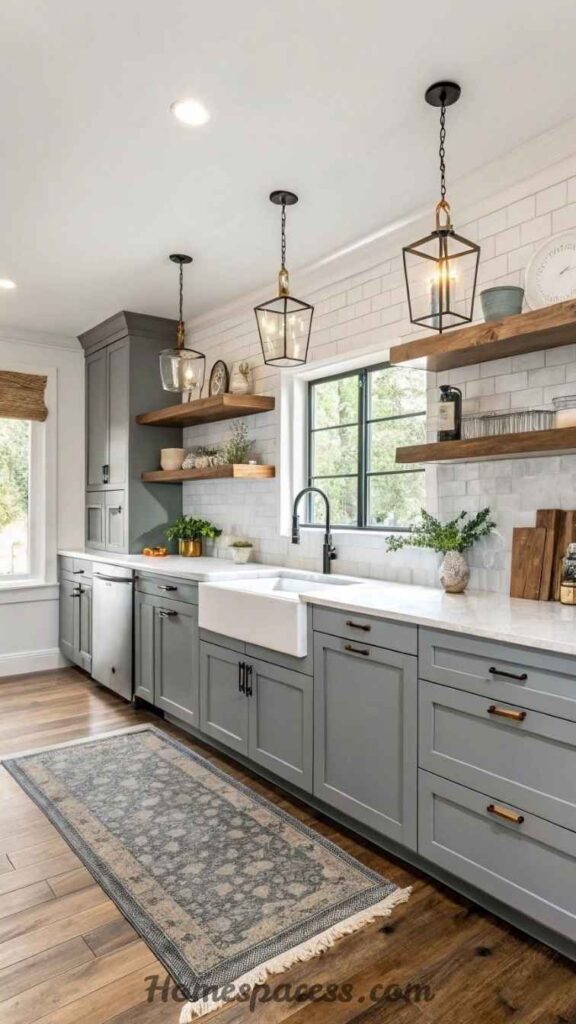
A well-chosen kitchen rug does something no other accessory can: it defines zones, adds color, introduces softness, and signals “this space was designed.” In open-plan layouts, a rug under a kitchen island or breakfast table separates the kitchen zone from adjacent living or dining areas far more elegantly than furniture placement alone.
The material choice is critical for kitchen environments. Flatweave cotton, polypropylene, and natural fiber blends clean best and resist moisture. Avoid thick pile rugs near the stove or sink they absorb spills and odors quickly. Patterns over solids are generally more forgiving. A vintage-style Persian runner is particularly versatile it works in modern kitchens as a deliberate contrast element and in traditional kitchens as a natural fit.
Hidden Tech Integration
Smart Kitchens That Don’t Show Their Wiring
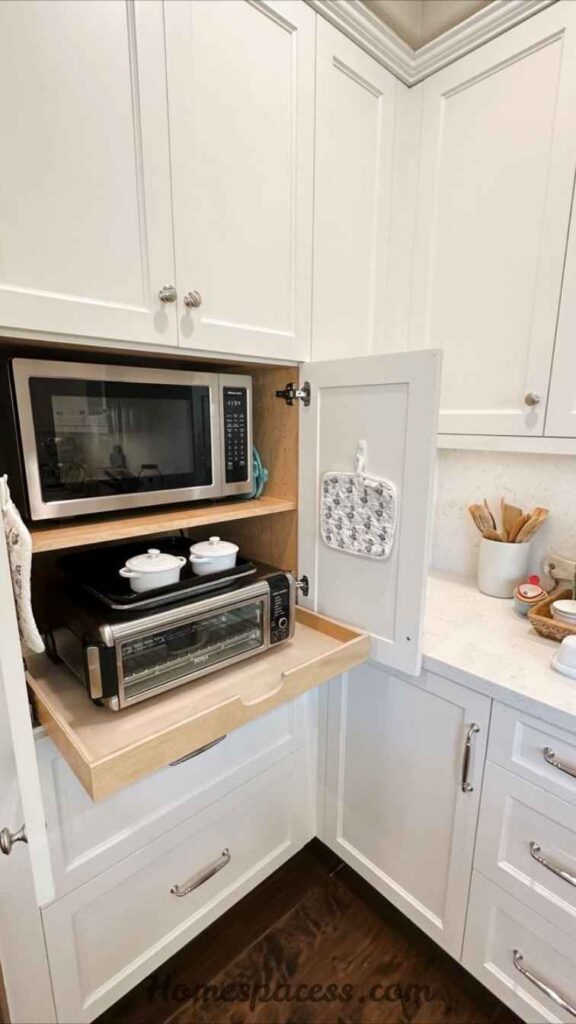
The most design-forward kitchens of 2026 are integrating technology invisibly. Panel-ready refrigerators that disappear behind cabinet fronts, charging drawers hidden beneath the counter, under-cabinet LED strips with smart dimming, and built-in tablet mounts that fold flat when not in use these features deliver full smart kitchen functionality without the visual clutter of exposed tech.
For homeowners who want technology without the aesthetic compromise, the philosophy is “conceal or curate.” Either hide the tech entirely, or make it beautiful enough to display. A matte black smart speaker doubles as a design object. A cable management system hidden inside a hollow decorative column keeps countertops clear. The guiding principle: technology should serve the design, not override it.
Arched Doorways and Niches
Architecture as Decor
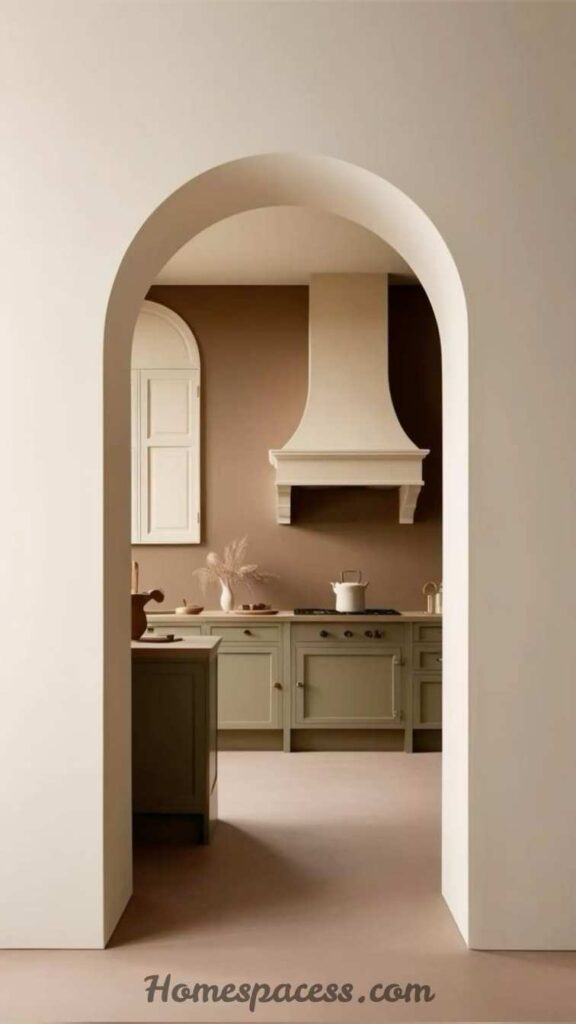
A round-top arch above a doorway leading into the kitchen, or an arched niche carved into a wall to display a cherished object or spice collection, is an architectural detail that adds enormous perceived value and visual interest. Arches reference historic architecture while feeling fresh against contemporary kitchens they’re timeless in a way that square-cut openings simply aren’t.
For homeowners in drywall-construction homes, adding a simple arched niche above the stove is a weekend project that costs under $200 in materials. Finished with limewash plaster or a complementary paint tone, it creates the impression of hand-crafted Mediterranean architecture. Display a single sculptural object inside it a clay vase, an oil lamp, a small plant and the effect is striking.
Curated Countertop Display
The Art of Showing Less
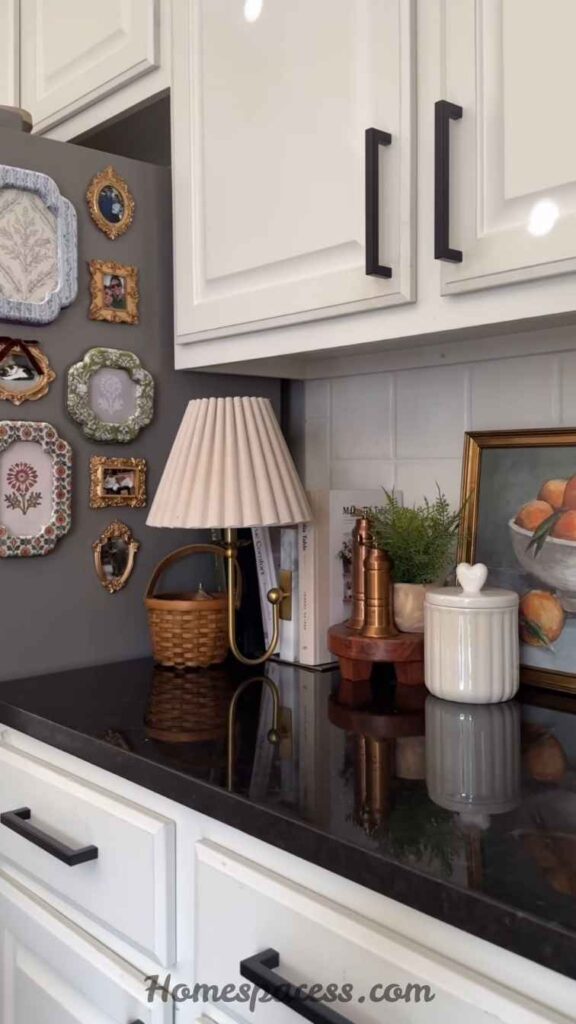
Countertop clutter is the single most common thing that makes kitchens feel chaotic, regardless of how well-designed the underlying materials are. The most beautiful kitchens display three to five intentional objects on visible counter space. A wooden cutting board, a small bowl of seasonal fruit, a single plant in a ceramic pot, and a cookbook propped open that’s a display, not clutter.
The editing process is the design move. Move appliances into cabinets unless used daily. Consolidate cooking oils into a small tray so they read as a grouped object rather than scattered bottles. Use a knife magnet strip on the wall instead of a block on the counter. Every square foot of clear counter adds perceived space and intentionality. The counter is a stage curate what performs on it.
Ceiling-Height Cabinets
Visual Luxury That Also Solves Storage
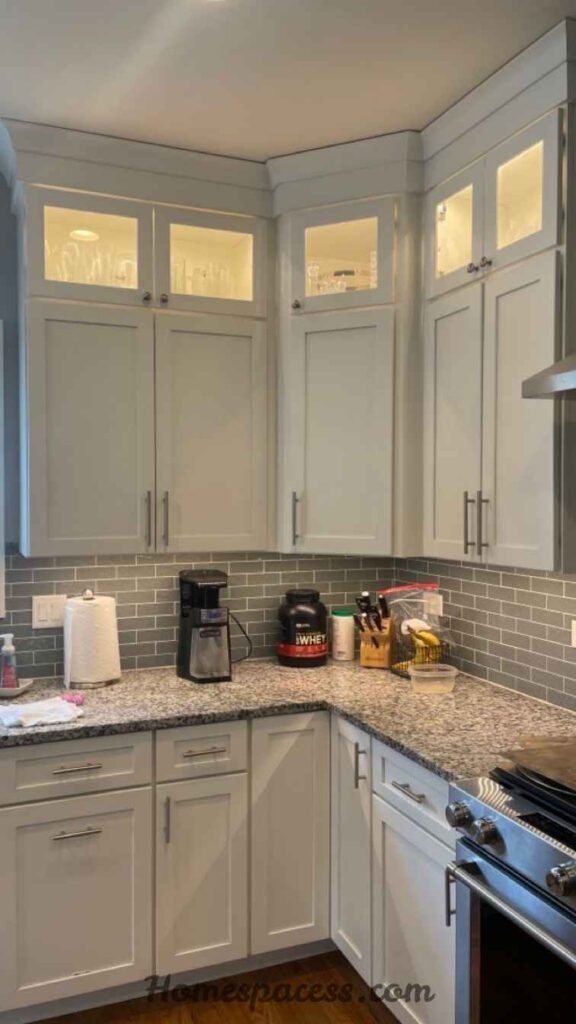
Cabinets that extend to the ceiling rather than stopping 12–18 inches short eliminate the awkward gap that collects dust and forces homeowners to fill with random baskets and objects. Ceiling-height cabinetry creates a clean, architectural line, makes ceilings appear taller, and adds significant storage capacity which typically gets used for rarely-accessed items like large entertaining platters.
If a full renovation isn’t in reach, adding a simple floating ledge shelf in the cabinet gap at the same depth as the cabinets below costs very little and creates a display shelf for objects that are beautiful enough to live at height: a collection of pitchers, vintage crockery, or trailing plants that cascade downward.
Biophilic Design Elements
Bringing the Outside In
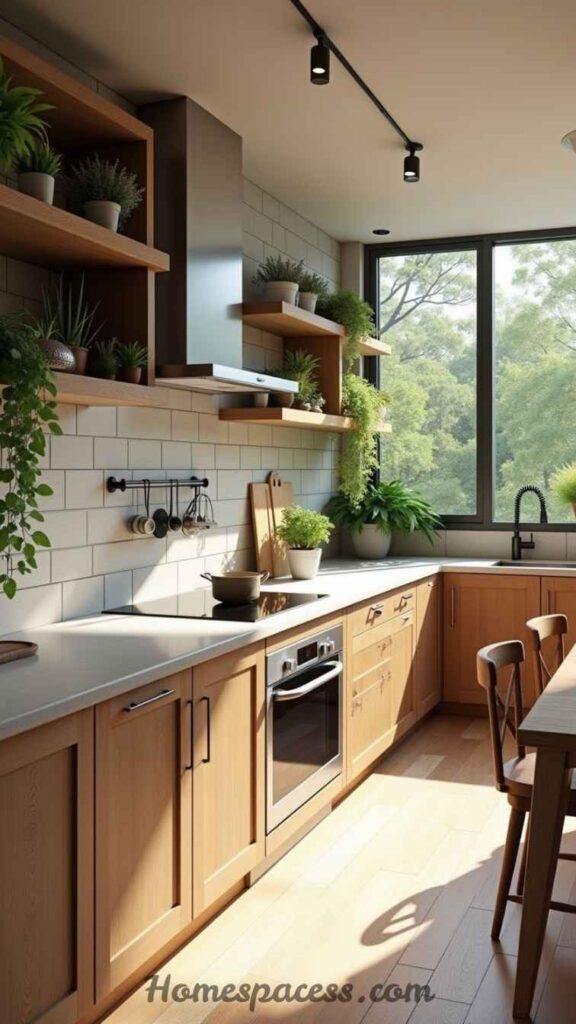
Biophilic design the intentional incorporation of natural elements into built environments has moved from trend to established design philosophy in kitchen spaces. Large plants like fiddle-leaf figs or monsteras positioned near kitchen windows, natural stone surfaces with visible veining, wood grain cabinet fronts, and woven textures all qualify. The evidence is clear: natural elements reduce stress and increase the perceived quality of living spaces.
Water features small countertop fountains, or even just the sound-accessible design of an open kitchen window above a garden extend biophilic design beyond visuals into acoustics and airflow. Kitchens that incorporate even three to four biophilic elements consistently score higher in homeowner satisfaction surveys than those relying on material quality or appliance technology alone.
Conclusion:
The best kitchen decor ideas share a single underlying quality: they serve both function and feeling simultaneously. They make the space easier to use, more beautiful to inhabit, and more expressive of the people living in it. You don’t need a renovation budget to achieve this. You need clarity about what matters, confidence to edit out what doesn’t, and the willingness to invest in fewer, better things.
Start with one wall, one shelf, or one lighting change. The momentum of a single improvement well executed will show you clearly what the next move should be. Kitchens that feel designed don’t happen all at once they develop, layer by layer, with intention over time.
Trend Analysis
Kitchen Decor Trends in 2026 and What’s Coming Next
+38%
Rise in searches for “warm kitchen decor” vs. 2023
72%
Designers recommending biophilic elements in 2026
2.4×
Higher engagement on curved-detail kitchen content vs. straight-line
#1
Kitchen remains the most renovated room globally for ROI
The dominant movement in kitchen decor for 2026 is the full-scale departure from the sterile, all-white, handle-less Scandi kitchen that defined the 2010s. Homeowners want warmth warm tones, warm materials, warm lighting, and warm personalities expressed through handmade objects and imperfect textures. The “imperfect finish” is itself the trend: limewash plaster, handmade tile, thrown pottery, and visible grain. Mass-produced perfection has become the uncanny valley of kitchen design.
Looking forward to 2027–2028, three macro shifts are emerging. First, AI-assisted kitchen design tools will allow homeowners to visualize changes in real time before purchasing, dramatically increasing design confidence and reducing renovation regret. Second, modular kitchen systems furniture-grade cabinets that can be rearranged or sold on will appeal to mobile, sustainability-minded demographics. Third, the “chef’s table” aesthetic will filter further into residential design: concrete, steel, butcher block, and open storage presenting the kitchen as a professional creative space rather than a domestic utility.
Expert Insights
What Professional Kitchen Designers Know That Most Guides Don’t Tell You
One of the most consistently overlooked principles in kitchen decor is the importance of visual weight distribution. Every element in a kitchen cabinets, appliances, lighting, decor objects carries a visual weight. Dark colors are heavier; light and transparent elements are lighter. The most balanced kitchens distribute visual weight evenly: heavy dark lowers balanced by lighter uppers, heavy stone counter offset by an airy open shelf. When one zone becomes visually overloaded, the eye has nowhere to rest.
Professional designers also treat the kitchen as a sequence of views, not a single panoramic scene. The view from the entryway, the view while cooking, the view from the dining table each has its own focal hierarchy. Designing for all three ensures your kitchen looks great from every inhabited angle, not just in a wide-angle photograph. This is why a single statement element on one wall (a dramatic backsplash, a sculptural light) consistently outperforms evenly distributed decor it gives every sightline a clear destination.
Finally, the best designers always “shop the room” before purchasing anything new. They walk around with a phone camera, photograph every corner, and edit existing elements before adding. Most kitchens don’t need more decor they need less, arranged with more intention. Addition is easy; confident subtraction is what separates decorated from designed.
Designer Secret
When specifying cabinet hardware, always order extras at the time of initial purchase. Hardware styles are discontinued constantly trying to match hardware three years later for a replacement is one of the most frustrating and frequently reported kitchen renovation regrets.
Sustainability & Long-Term Value
Kitchen Decor Choices That Age Well and Serve the Planet
Sustainable kitchen decor is no longer a niche concern it’s a mainstream value reshaping purchasing decisions globally. The most enduring sustainability principle in kitchen design is “buy less, buy better.” A single handmade ceramic bowl that lasts 30 years has a smaller environmental footprint than 12 mass-produced bowls replaced across the same period. Investing in quality, natural materials real wood, natural stone, hand-thrown pottery, linen textiles creates a kitchen that ages into beauty rather than degrading into obsolescence.
From a long-term value perspective, classic design choices consistently outperform trend-driven ones. Neutral cabinet colors, natural stone or quartz counters, quality brass or brushed nickel hardware, and simple white or cream tiles retain appeal across design cycles. They can be refreshed with swapped textiles, new paint on an accent wall, or updated lighting without capital investment. Kitchens designed on classic bones with trend-driven accessories rather than trend-driven structures are the most economically and ecologically intelligent approach.
Water-based, low-VOC paints have advanced significantly in durability and finish quality, making them the clear choice for cabinet and wall refresh projects. Similarly, reclaimed wood shelving and recycled glass countertops deliver premium aesthetics while telling a material provenance story that increasingly resonates with both homeowners and buyers in a resale context.
Future Innovations
The Kitchen of 2030 What’s Being Developed Right Now
Smart kitchen technology is rapidly moving from novelty to necessity, and it’s beginning to shape decor decisions in real ways. The rise of refrigerators with transparent smart-glass doors (that show contents without opening), induction countertops embedded directly into the surface, and retractable pop-up outlets means that kitchen design will increasingly need to account for technology invisibility. The kitchen of 2027 will be cleaner-looking than ever, because technology will disappear into surfaces rather than sitting on top of them.
AI-assisted kitchen personalization is another near-future shift. Apps and tools are emerging that allow homeowners to photograph their kitchen and receive real-time AI styling recommendations dynamically updated based on their existing furniture, the room’s natural light, and current design trends. Several furniture and paint companies are already testing this technology. Within two to three years, it will fundamentally change how people make kitchen decor decisions.
Watch for:
Biophilic kitchen design integrating living walls, interior growing systems, and natural water features is transitioning from luxury showroom concept to practical home option, driven by falling costs for hydroponic indoor growing systems and smart planters.
Material science is also opening new possibilities. Self-healing countertop surfaces (that repair minor scratches with heat), antibacterial paint infused with copper nanoparticles, and bio-based cabinet materials made from agricultural waste are all either available now or within 18 months of mainstream accessibility. Kitchen decor decisions made today should, where possible, leave room for these integrations avoiding over-built, inflexible installations that can’t adapt.
Common Mistakes
Kitchen Decor Mistakes Most Homeowners Make and How to Avoid Them
- Ignoring the work triangle: Styling a kitchen without considering how you physically move through it. Beautiful decor that blocks workflow becomes frustrating within a week of installation.
- Over-accessorizing open shelves: More objects rarely mean more style. Density signals hoarding; negative space signals confidence. Remove three items from your current shelf the remaining ones will immediately look better.
- Buying decor before fixing lighting: Bad lighting makes everything look bad, regardless of what you style beneath it. Upgrade your light sources before investing in any decorative accessories.
- Choosing trend over tone: Following a color trend in a kitchen that has warm undertones everywhere else creates dissonance. Your decor must respond to the room’s existing palette, not override it.
- Forgetting the vertical axis: Most homeowners style at counter height and forget about the wall space from counter to ceiling, the ceiling itself, and the floor. All three vertical planes matter.
- Mixing too many aesthetic languages: A farmhouse sink, Japanese minimalist floating shelves, maximalist pattern wallpaper, and Scandi pendant lights don’t belong in the same kitchen. Choose one or two design influences and edit everything else out.
Aliza Noor founded Home Spacess to share simple, practical design ideas that work for real families. She focuses on cozy décor, soft colors, and natural textures that make a space feel truly lived-in. Based just outside Toronto, Aliza spends her days juggling family life, experimenting with home projects, tending to her plants, and occasionally moving things around just to create a fresh vibe.
