
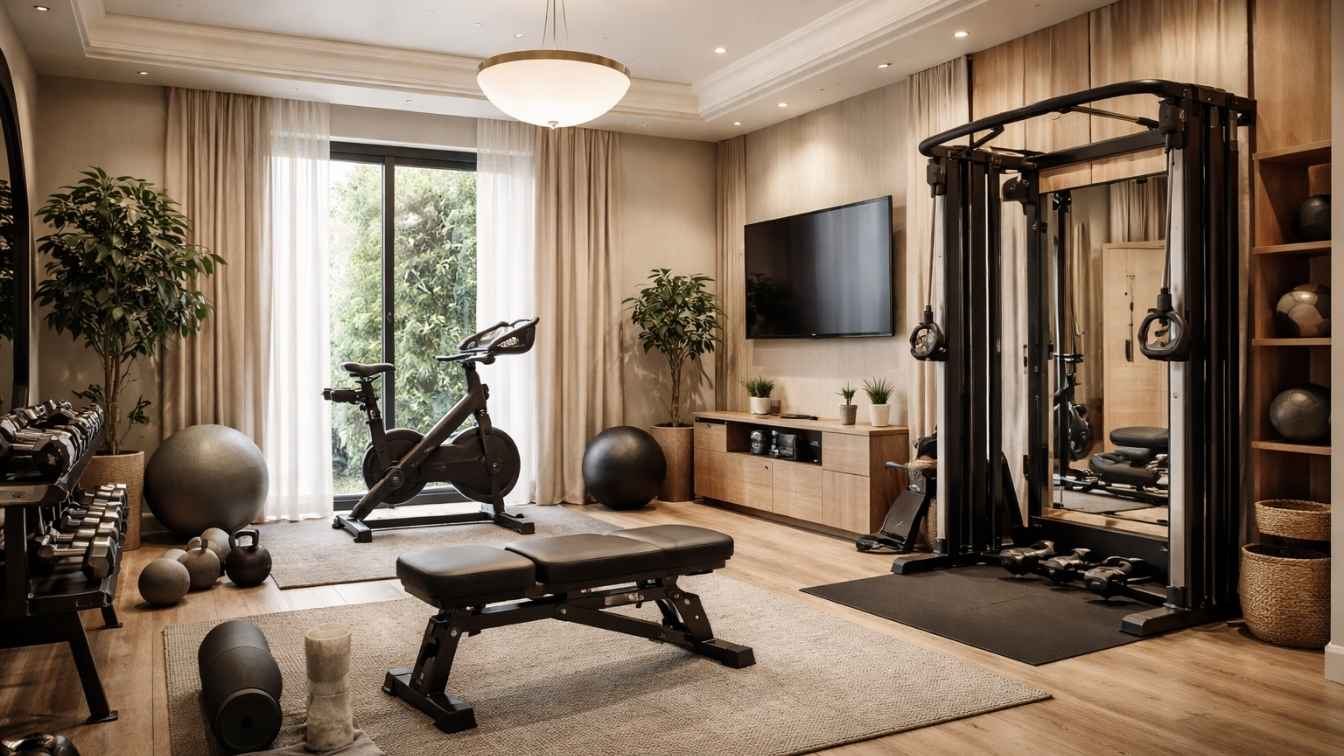
22 Home Gym Ideas That Actually Work For Every Space & Budget

Most home gyms fail before the first rep. The equipment ends up as an expensive coat rack, the space feels uninspiring, and motivation disappears within weeks. The problem isn’t dedication it’s design. A poorly planned home gym creates friction, and friction kills habits.
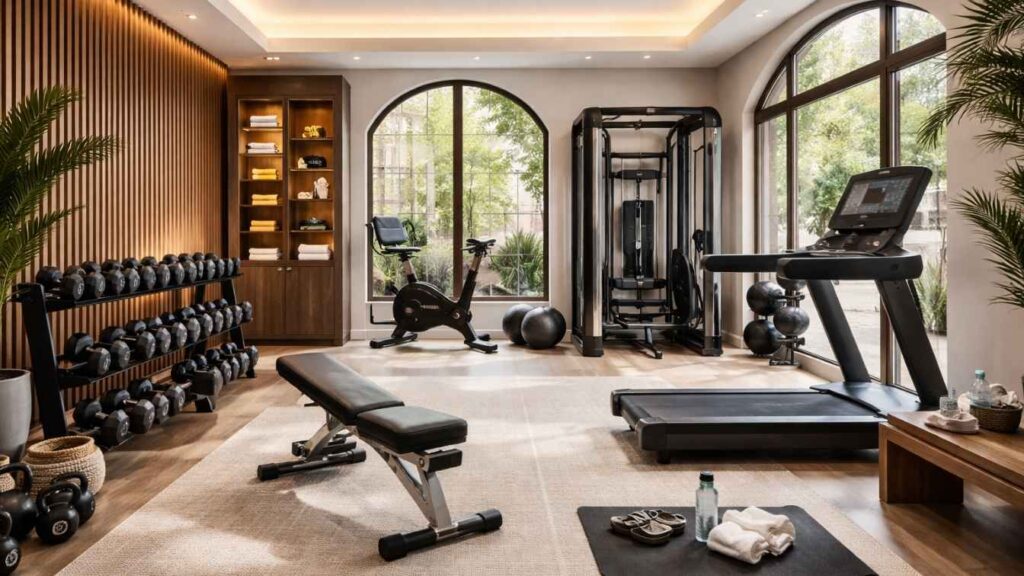
The good news? Building an effective home gym in 2026 is easier, smarter, and more versatile than ever before. Whether you have a full basement, a spare bedroom corner, or just a patch of garage floor, this guide gives you 22 actionable home gym ideas backed by fitness science, space psychology, and real-world usability not just pretty Instagram setups.
From budget-first builds to high-tech smart gyms, from minimalist rubber-mat setups to fully themed training caves, these ideas span every lifestyle. Each one includes practical depth you won’t find in generic listicles because the best home gym is the one you’ll actually use, every single day.
73%
Gym-goers prefer training at home post-pandemic
$4,200
Avg. annual gym membership cost (with travel + fees)
18 mo.
Avg. break-even vs. commercial gym for home setups
3×
More likely to train consistently with a dedicated space
The Minimalist Power Corner
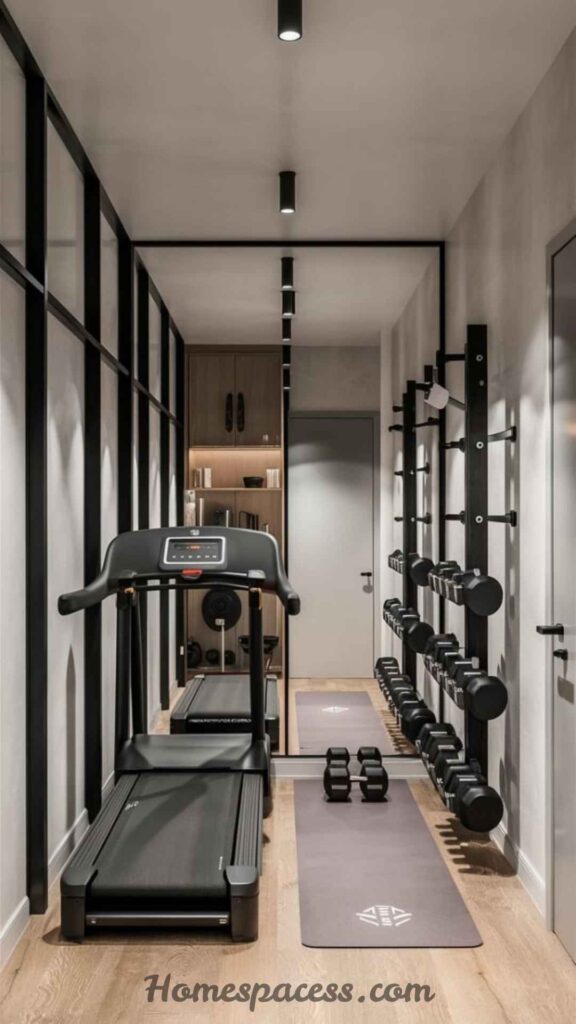
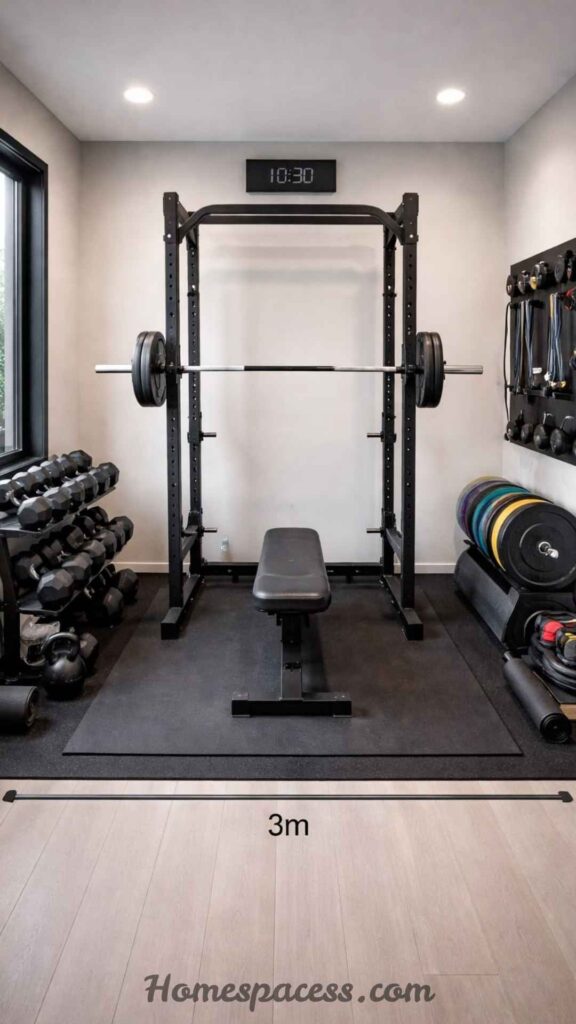
You don’t need a full room to build serious strength. A 6×6 foot corner with a power rack, adjustable barbell set, and a rubber floor mat can deliver 90% of what a commercial gym offers. The key is vertical thinking wall-mounted storage for plates, hooks for bands, and a fold-flat bench turn dead space into a functional powerhouse.
The minimalist approach actually has a psychological advantage: fewer choices mean faster decisions, and faster decisions mean more reps. Fitness researchers note that “decision fatigue” before a workout is one of the top reasons people skip sessions. When your setup is focused and intentional, you walk in and get to work without hesitation.
Pro Tip
Position your rack near a wall stud line so you can anchor it safely without using floor space for stabilizing weights. Use a 3-inch rubber mat base under the rack to protect flooring and dampen vibration for downstairs neighbors.
Must Read: 25 Stunning Home Exterior Ideas That Actually Boost Curb Appeal
Garage Gym Transformation
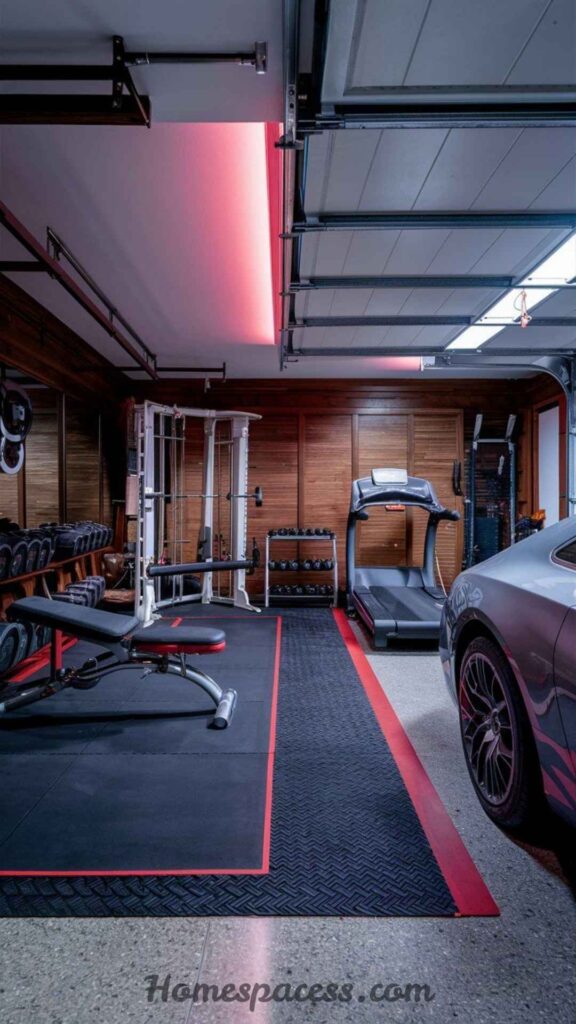
The garage is the undisputed king of home gym real estate and for good reason. High ceilings, concrete floors, and a large open footprint allow equipment configurations that simply aren’t possible indoors. A one-car garage (~160 sq ft) comfortably fits a power rack, a full set of bumper plates, a rowing machine, and still leaves room to deadlift with room to spare.
However, raw garages come with real challenges: temperature extremes, humidity, poor lighting, and acoustic echo. Insulate the walls and ceiling with rigid foam panels before buying equipment this single investment extends the usability of your garage gym to year-round training regardless of climate. Add 4,000K LED shop lights on a track system for flat, shadow-free lighting that rivals a commercial gym.
Pro Tip
Install an epoxy floor coating over your concrete before laying rubber mats. It resists moisture, prevents mold under equipment, and makes cleaning chalk and sweat dramatically easier. Peel-and-stick epoxy kits run $80–$150 for a one-car bay.
Don’t Skip: 27 Salon Interior Design Ideas That Turn Clients Into Loyal Fans
Basement Strength Studio
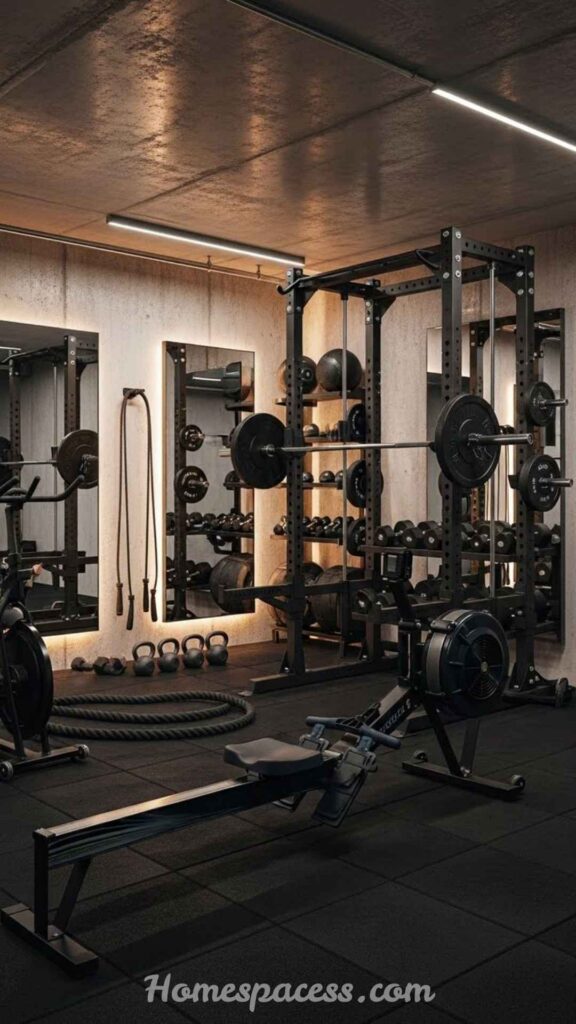
Basements offer climate stability and noise isolation that no other home space can match your training doesn’t disturb the household, and the temperature stays moderate year-round. This makes basements ideal for heavy compound lifting, HIIT sessions, and even early morning training without waking anyone up.
The biggest basement challenge is moisture. Before installing any rubber flooring or drywall gym finishes, run a dehumidifier for 30 days to establish baseline humidity levels. Aim for 40–50% relative humidity anything above 60% will degrade rubber mats, cause rust on iron plates, and create hygiene issues with upholstered benches. A proper vapor barrier under any foam or rubber flooring is non-negotiable in unfinished basements.
Pro Tip
Paint basement walls with a light semi-gloss paint before setting up. It dramatically brightens the space with existing lighting, makes the room feel less cave-like, and the semi-gloss finish is easily wiped clean of chalk and sweat mist.
Read More: 20 Walk In Closet Ideas To Transform Your Space
Spare Bedroom Gym Conversion
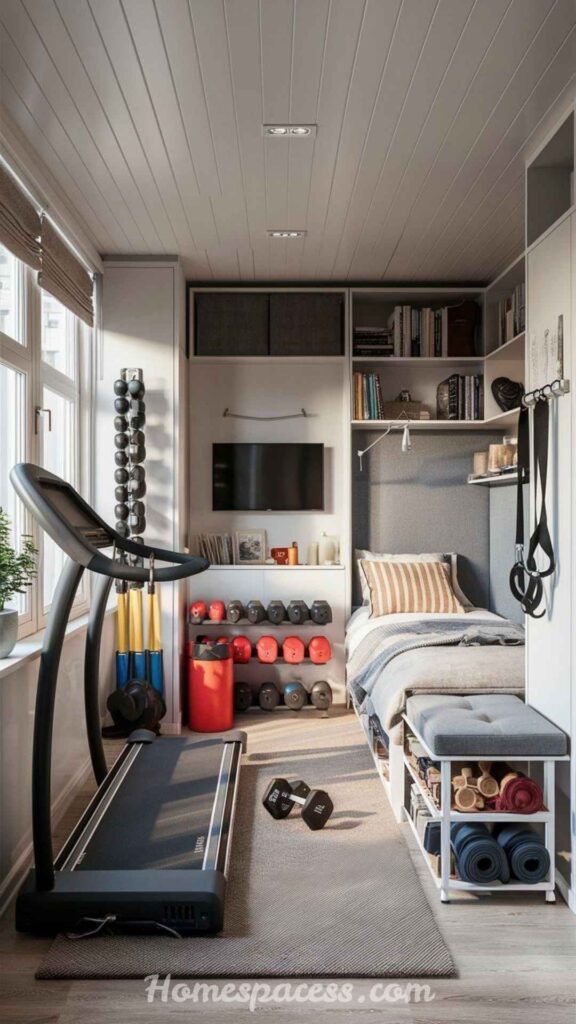
Converting a spare bedroom into a dedicated gym is one of the highest-ROI home improvement decisions you can make. Unlike shared spaces, a dedicated room holds its identity it stays a gym, which means your equipment stays set up and your warm-up doesn’t involve clearing laundry off the bench first. This psychological ownership of space translates directly into training consistency.
For a standard 10×12 bedroom, the optimal layout places cardio equipment (treadmill or bike) along the longer wall and the free weight area on the shorter wall adjacent to a mirror. This allows natural traffic flow and eliminates the “back-to-the-door” discomfort that subconsciously elevates stress hormones during training. Install a ceiling fan for airflow most bedrooms lack the ventilation of commercial gyms, and elevated core temperature accelerates fatigue.
Pro Tip
Remove the closet door and convert it into an open equipment storage alcove. It adds usable vertical storage without floor footprint sacrifice and keeps the main floor open for functional movement.
Don’t Miss: 18 Brilliant Laundry Room Ideas That Actually Transform the Space
Apartment-Friendly Home Gym Setup
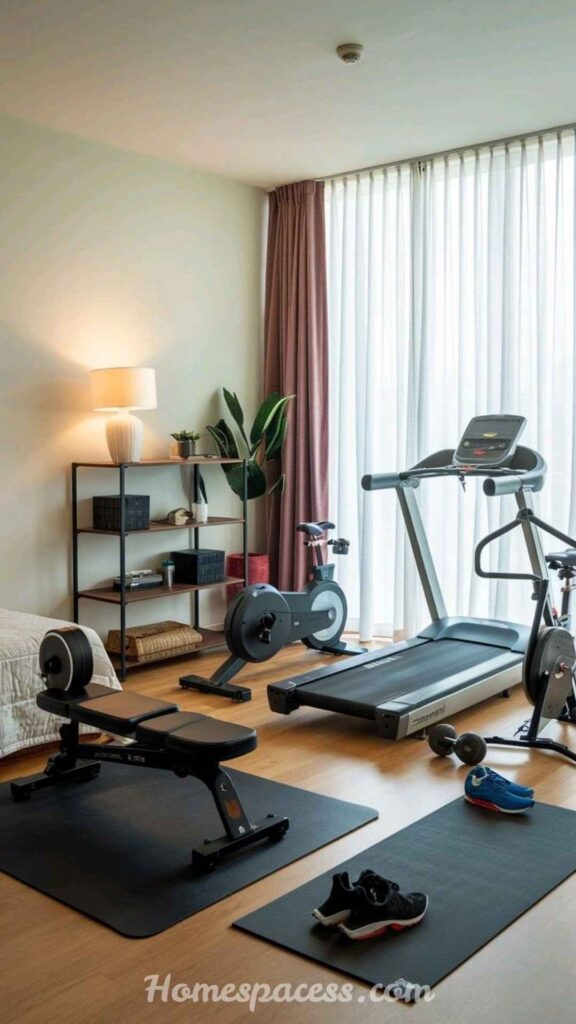
Apartment training is a constraint but constraint breeds creativity. The best apartment gym ideas lean into compact, multi-function equipment: resistance bands (replace 12+ dumbbell weights), a foldable pull-up bar, a set of adjustable dumbbells (5–50 lbs in one unit), and a door-frame suspension trainer like a TRX. This entire setup stores in a single duffle bag and costs under $300.
Noise and floor impact are the real apartment gym challenges. High-impact jumping, heavy deadlifts, and dropped weights create vibration that travels through floors and immediately generates neighbor complaints. Instead, design workouts around tempo training slow eccentric movements and replace box jumps with broad jumps on impact-absorbing foam tiles. Many lifters find this approach actually builds more muscle, since slower movement increases time-under-tension.
Pro Tip
Invest in 3/4-inch horse stall mats (available at farm supply stores for ~$1.50/sq ft) rather than thin yoga mats. They provide serious impact absorption, are durable enough for years of use, and don’t slip on hardwood floors.
Outdoor Backyard Gym
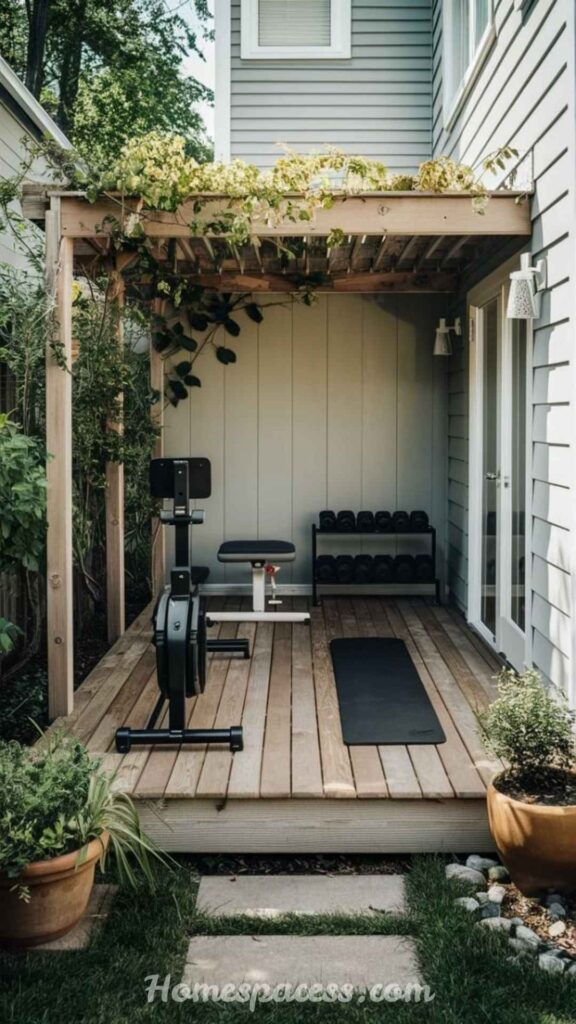
Training outdoors has measurable performance benefits that indoor gyms can’t replicate. Studies show that outdoor exercise reduces cortisol levels 15–20% more than identical indoor sessions, and natural light exposure during morning workouts significantly improves circadian rhythm meaning better sleep and faster recovery. A backyard gym capitalizes on all of this while eliminating the commute entirely.
The primary outdoor gym concern is weather resistance. Choose powder-coated steel racks rated for outdoor use, galvanized or zinc-plated weight plates, and UV-resistant rubber flooring. Cover the setup with a 10×12 shade sail or build a simple pergola frame this blocks 90% of rain and direct sun without enclosing the space and losing the outdoor feel. Always store barbells and steel accessories indoors or in a weatherproof box when not in use.
Pro Tip
Lay a 4-inch poured concrete pad (or use interlocking concrete tiles) as your gym floor base before any rubber matting. This prevents sinking, levels the surface, and dramatically extends the life of your flooring and equipment.
Smart Technology-Integrated Home Gym
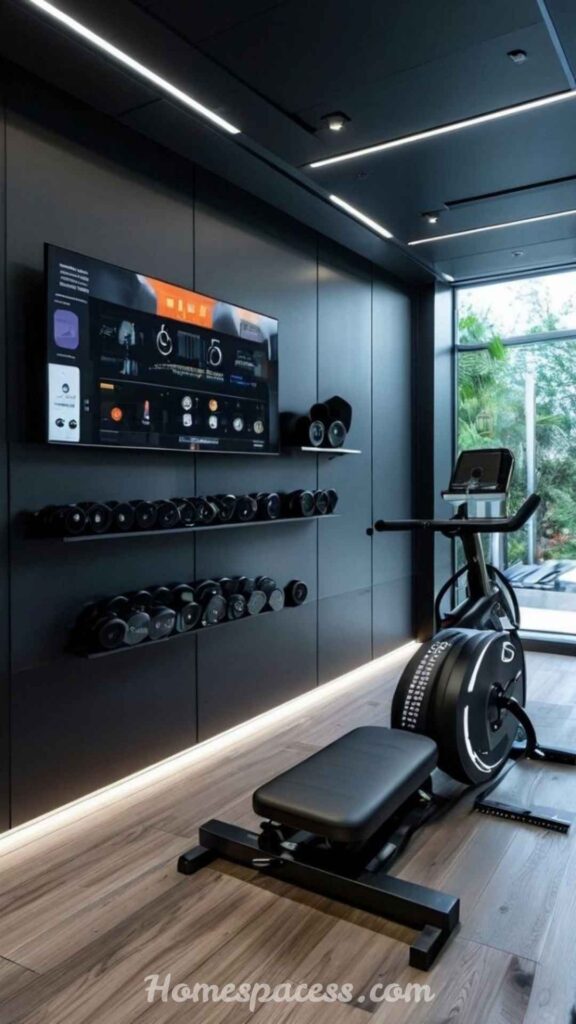
The smart home gym isn’t just about flashy screens it’s about removing the mental load of programming, tracking, and progressing your training. In 2026, connected gym systems like smart mirrors, AI-coaching apps, and sensor-embedded barbells can automatically adjust workout recommendations based on your recovery data, sleep score, and previous performance. This removes the guesswork that causes most self-programmed home gym trainees to plateau.
The most practical smart gym investment isn’t a $3,000 interactive mirror it’s a $200 smart watch paired with a free fitness app like Hevy or Strong. These tools track progressive overload, rest timers, and weekly volume automatically. Add a 55-inch TV on a wall mount connected to a fitness app subscription ($15–$40/month), and you have live coaching, hundreds of programs, and a massive visual interface for a fraction of the cost of branded smart gym systems.
Pro Tip
Place your TV or display at eye level when standing (not when seated). Most people make the mistake of mounting screens too high, causing neck extension during cardio and reducing engagement with workout cues by 40% according to UX fitness research.
Home Cable Machine Setup
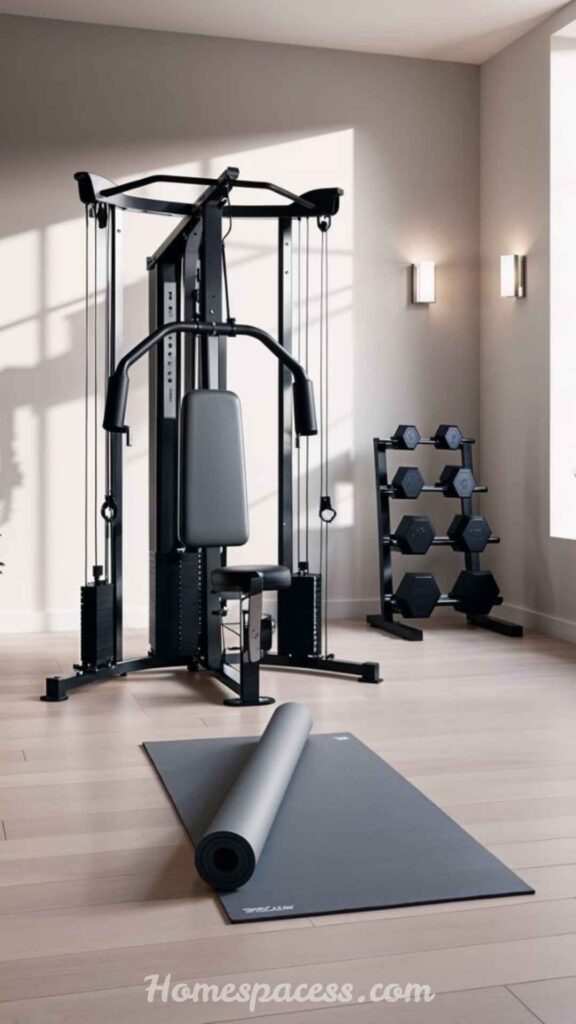
Cable machines are arguably the most underrepresented equipment in home gyms, yet they offer something barbells and dumbbells can’t: constant tension through a full range of motion. This is especially valuable for muscle hypertrophy the mechanism that makes muscles grow. A good home cable system (like the REP Fitness FT-100 or Titan Fitness cable machine) fits into roughly the same footprint as a power rack and replaces dozens of dumbbell exercises.
For smaller spaces, functional trainers with dual adjustable pulleys are the gold standard. They allow cable flyes, tricep pushdowns, lat pulldowns, cable rows, face pulls, and nearly every isolation movement all from one machine. The key buying insight most guides miss: prioritize weight stack size (aim for 200+ lbs per side) and pulley ratio (1:1 is the most accurate for weight feel). Cheap cable machines with 2:1 pulleys halve the effective resistance and limit long-term progression.
Pro Tip
Mount your cable machine so the high pulley is at least 8 feet off the ground. This is the minimum height needed for proper lat pulldown mechanics. Anything lower forces a forward lean that shifts load away from the lats and onto the spine.
The Calisthenics Station
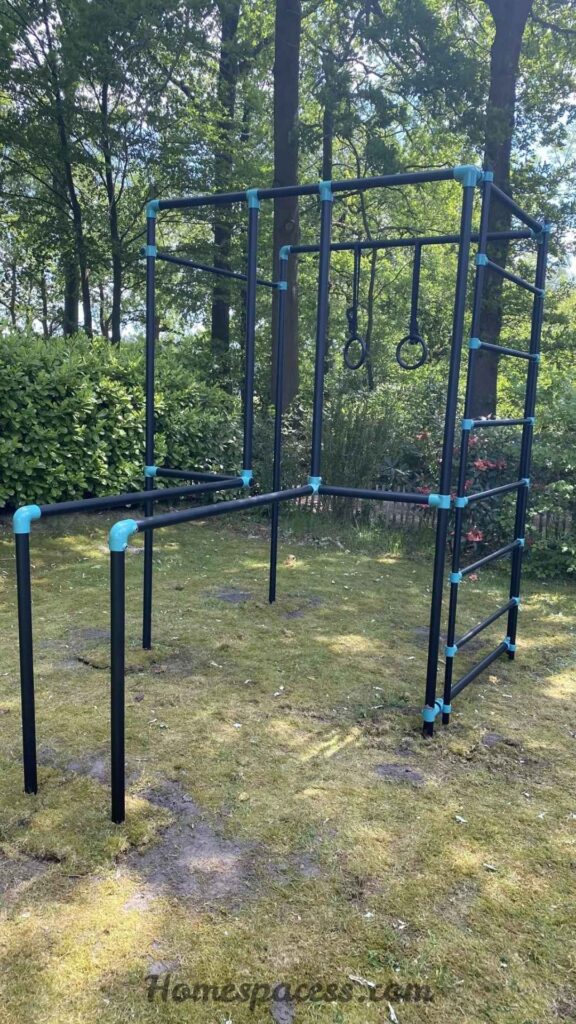
Calisthenics training has seen a dramatic resurgence and for good reason. Using only body weight, practitioners develop extraordinary strength-to-weight ratios, joint stability, and movement quality that machine-based training often neglects. A calisthenics home gym requires minimal space and minimal investment: a wall-mounted pull-up bar, parallel bars (or dip station), gymnastics rings, and floor space for push-ups and L-sits.
The progression system is where calisthenics home gyms really shine. Unlike weight training where you simply add plates, bodyweight progressions demand creative problem-solving: archer push-ups before one-arm push-ups, tuck front levers before full front levers. This built-in progression ladder keeps training intellectually engaging and eliminates the need for expensive equipment upgrades as you advance.
Pro Tip
Install gymnastic rings at adjustable height (6–8 feet) rather than a fixed pull-up bar. Rings allow pull-ups, dips, rows, push-up variations, and progressions like muscle-ups and ring levers all from a single $30 piece of equipment.
Yoga & Mobility Studio at Home
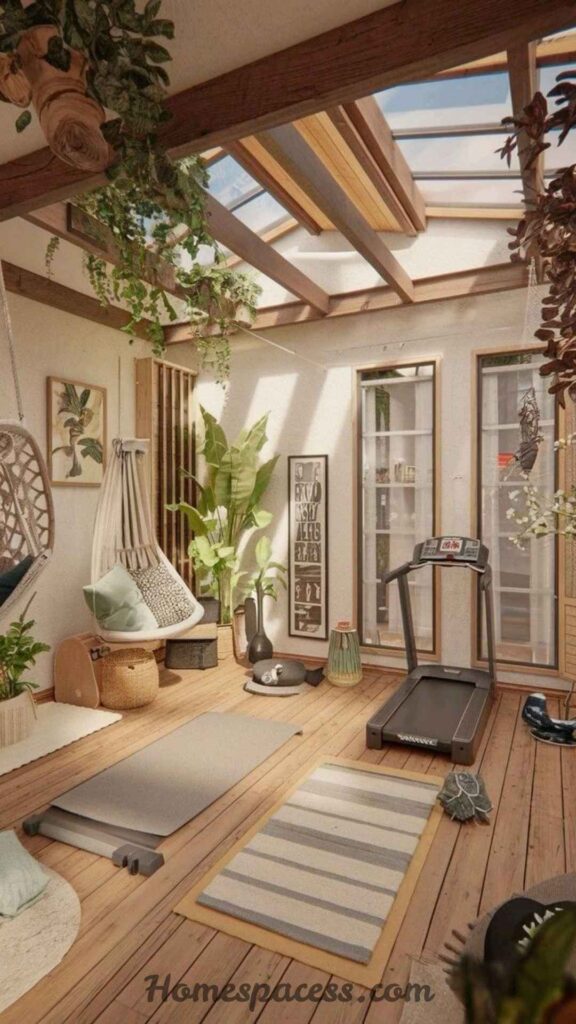
A dedicated yoga and mobility space isn’t just for yogis it’s one of the highest-value additions any serious athlete can make to their home gym setup. Mobility work, stretching, and mindful movement are chronically undertrained in most fitness routines, and having a calm, dedicated space for it dramatically increases the likelihood that you’ll actually do it. Joint health and movement quality are the foundations of long-term training longevity.
The design philosophy for a home yoga studio is opposite to a strength gym: soft surfaces, calming colors (earth tones and neutrals), and minimal visual clutter. Store blocks, bolsters, and straps in attractive wicker baskets rather than plastic bins. Consider blackout curtains on a dimmer switch system so you can transition from bright morning flows to dim evening restorative sessions without changing anything except the light level.
Pro Tip
Lay your yoga mat on a 1/4-inch foam underlayer (furniture moving pad works perfectly). This adds cushioning for knee and wrist work without making the surface unstable for balancing poses the sweet spot most premium studio floors are designed around.
CrossFit-Style Functional Training Zone
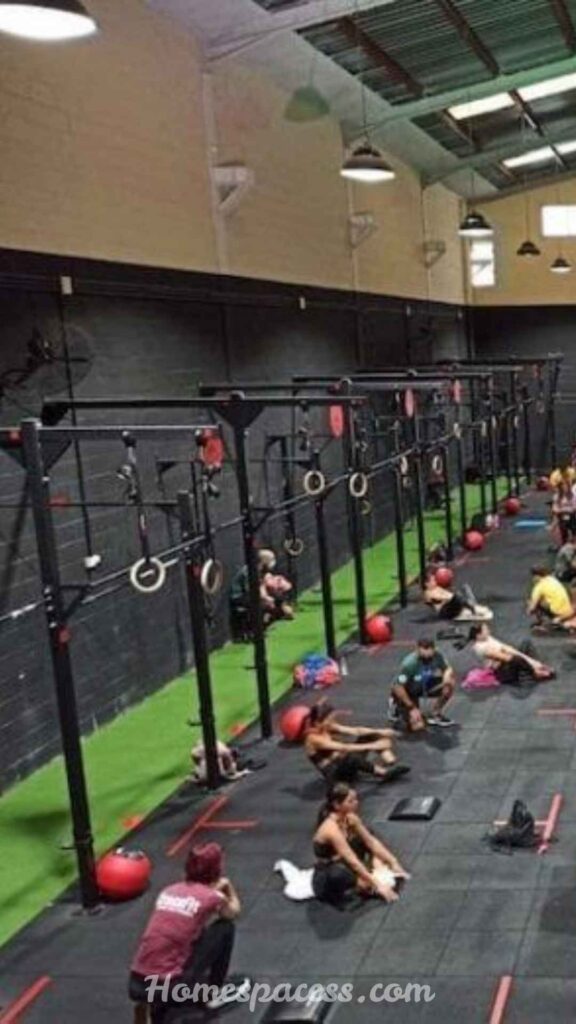
CrossFit-style training demands variety, intensity, and versatility and a home version of this setup delivers all three without a membership fee. The core equipment list: a 7-foot Olympic barbell, 260 lbs of bumper plates, a pull-up rig, a rowing machine or assault bike, kettlebells (one heavy, one light), and a jump rope. This covers 95% of classic WOD (Workout of the Day) formats and allows real progressive overload in all three energy systems.
The layout is critical for functional gym setups. You need a minimum 12×12 foot open floor area no equipment within arm’s reach of your central workout zone. Many home CrossFit setups fail because equipment encroaches on the movement space, creating a safety hazard during high-rep, high-fatigue WODs when movement awareness degrades. Place the pull-up rig along one wall, cardio equipment along another, and keep the center completely clear.
Pro Tip
Invest in a wall-mounted whiteboard for programming your daily WOD. The physical act of writing your workout before training has been shown to increase session adherence and perceived motivation it creates a psychological commitment loop.
Mirror Gym Aesthetic Setup
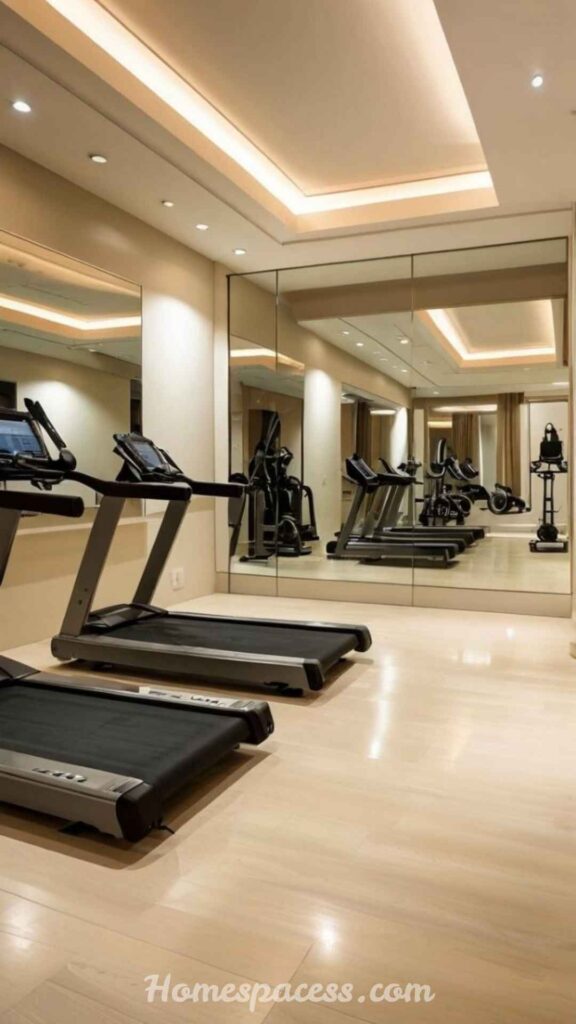
Floor-to-ceiling mirrors do more than feed vanity they are a legitimate training tool. Mirrors provide real-time form feedback that improves technique for squats, deadlifts, pressing movements, and posture-dependent exercises. Research in sports performance shows that visual biofeedback during resistance training reduces technique errors by up to 28%, making mirrors as important as any coaching cue in a solo training environment.
Creating a mirrored home gym doesn’t require expensive custom glass. Large frameless bathroom mirrors (72×36 inches) from big-box stores run $80–$120 each and can be mounted side-by-side to create a full wall of reflection. Use mirror mounting clips with foam backing avoid adhesive mounting directly to drywall in gym environments where vibration, humidity, and temperature fluctuations can cause adhesive failure over time.
Pro Tip
Place mirrors only on the wall you face during your primary movements. Avoid mirrors on side walls peripheral mirror reflections create visual disorientation during heavy compound lifts and subtly impair balance and spatial awareness.
Budget Home Gym Under $500
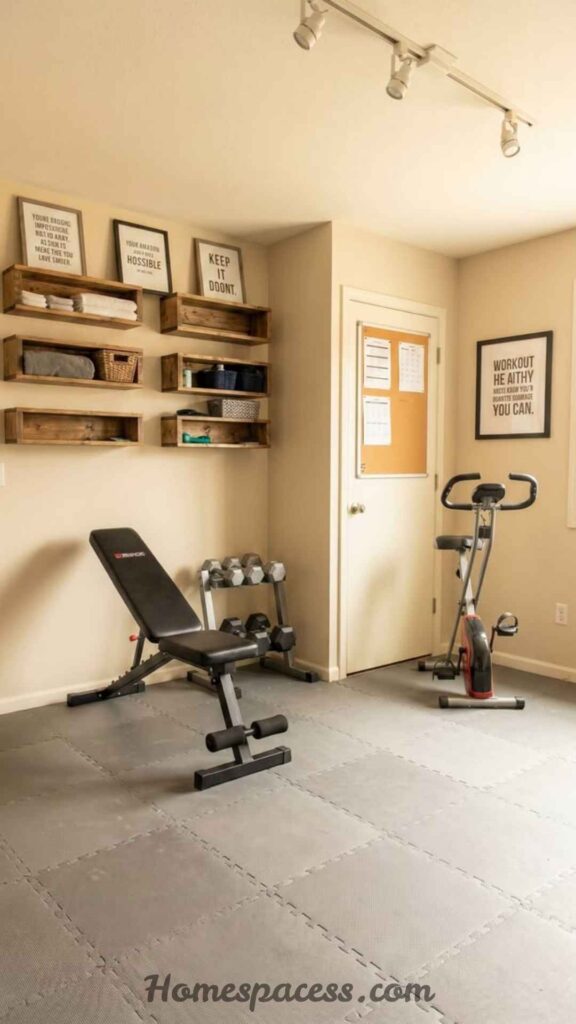
A $500 home gym, built strategically, outperforms a $2,000 gym built without a plan. The proven budget formula: adjustable dumbbells (second-hand, $60–$120), a pull-up bar ($25–$45), resistance bands set ($30), a jump rope ($15), and a quality 6×4 rubber mat ($80–$100). Everything else ab wheels, push-up handles, and ankle weights is under $20 each and adds significant variety. Total: well under $400, with $100 left for accessories.
The secret to budget gym success is buying used intelligently. Olympic barbells, plates, and power racks depreciate heavily after initial purchase a $600 barbell set bought new is often available for $150–$200 on Facebook Marketplace because the seller upgraded or moved. Gyms that close also frequently sell quality commercial-grade equipment at residential prices. Patience in sourcing used equipment can turn a $500 budget into what would cost $1,500 new.
Pro Tip
Check Facebook Marketplace, Craigslist, and OfferUp every Monday morning weekend fitness enthusiasm produces a surge of “equipment I’m selling” posts that appear Sunday night and Monday morning.
Dual-Purpose Home Gym and Office
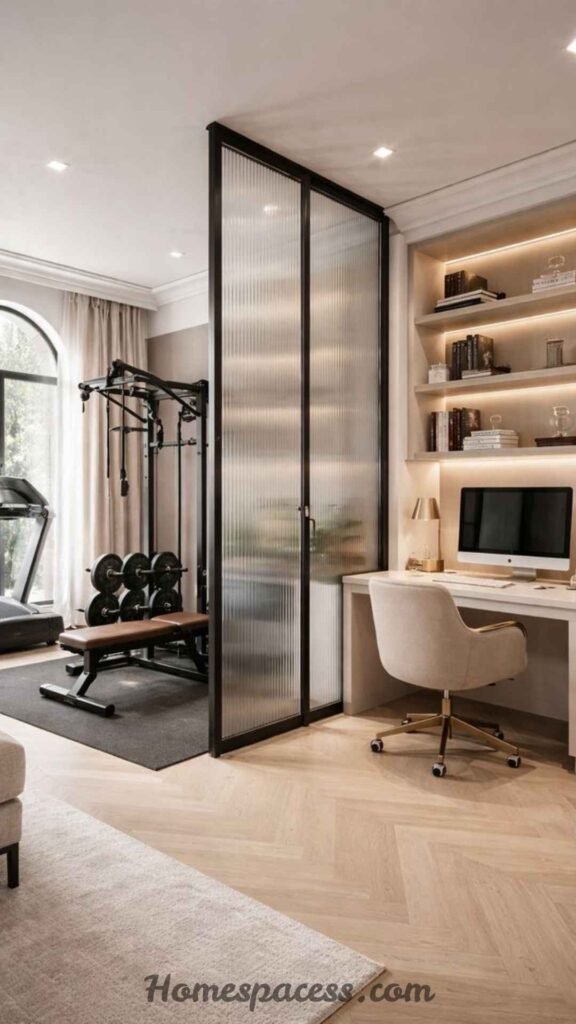
The hybrid gym-office has become one of the most searched home gym configurations since the remote work revolution and smart design makes it genuinely functional rather than a compromise. The core principle: zone separation. Use a visual divider (bookshelf, curtain, or area rug) to clearly separate the “work mode” desk zone from the “train mode” equipment zone. This psychological zoning helps your brain switch contexts and prevents the workout space from feeling like the office and vice versa.
Under-desk cycling bikes and treadmill desks are the underrated heroes of this setup. Light pedaling during calls or creative work sessions burns 200–400 extra calories per day with zero interruption to focus studies at Stanford and Harvard confirm that light physical activity during cognitive tasks often improves, not impairs, analytical thinking. Pair with a standing desk converter and you’ve created a space that promotes movement throughout the workday, not just during dedicated gym time.
Pro Tip
Choose equipment with low visual profile for your office-gym combo adjustable dumbbells in a closed storage cube, a wall-mounted pull-up bar, and a folding bench look like furniture rather than gym equipment when guests are present.
Compact All-in-One Home Gym Machine
All-in-one home gym machines (like the Bowflex, BodyCraft, or Force USA Monster series) get a bad reputation largely because cheap versions deliver terrible experiences. However, the upper-tier functional trainers and cable-based all-in-ones genuinely rival commercial gym setups in exercise variety. For users who want a single equipment purchase that handles strength, cables, pull-ups, and functional movement, these machines are hard to beat.
The key metric most buyers miss is footprint versus exercise count. A quality all-in-one machine in a 5×7 foot space can deliver 50–80 different exercises. That’s more exercise variety per square foot than almost any other gym configuration. This makes them especially valuable for spare bedrooms, condo gyms, or any situation where space efficiency is the primary constraint but training quality cannot be compromised.
Pro Tip
Before purchasing, map out the 10 exercises you perform most frequently and verify the machine accommodates them specifically not just generically. Many all-in-one machines advertise 100+ exercises but restrict the most important compound movements due to pulley angles or weight stack limits.
Home Boxing & Combat Training Corner
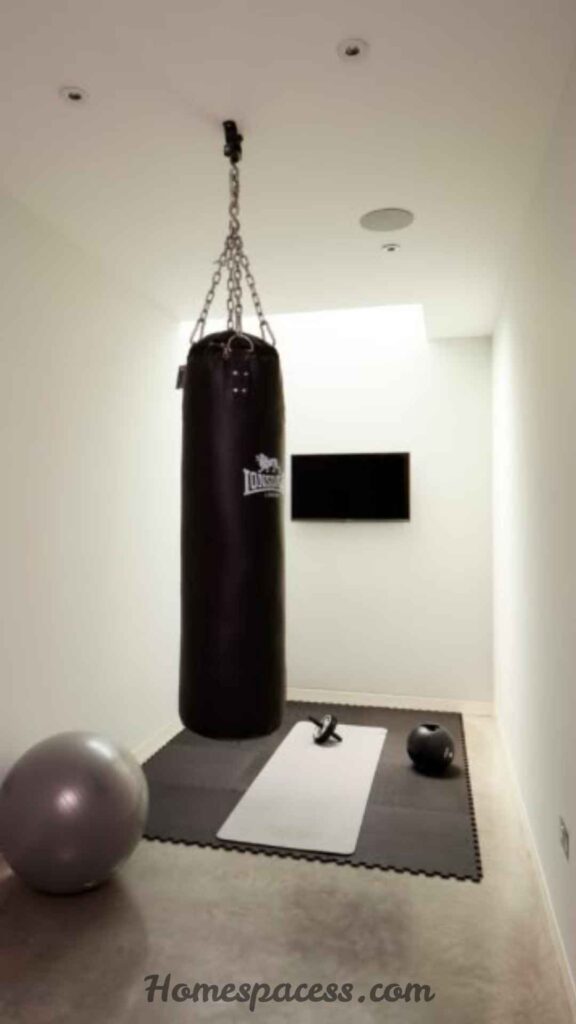
A boxing or combat sports corner is one of the most intense and enjoyable home gym setups you can build and it’s accessible at almost any budget level. A freestanding heavy bag ($150–$300), wall-mounted speed bag platform ($80), a set of boxing gloves and hand wraps ($40–$80), and a skipping rope ($15) give you a complete cardio and upper-body conditioning system that most commercial gyms don’t even offer adequately.
Boxing training is particularly well-suited for home gyms because the training doesn’t require a partner to be effective. Shadow boxing, bag work, speed bag, and jump rope drills are all solo activities that build real cardiovascular fitness, coordination, and upper-body endurance simultaneously. This makes boxing corners one of the highest engagement home gym ideas the skill element keeps training interesting far longer than a treadmill or stationary bike ever could.
Pro Tip
Mount your heavy bag from a ceiling joist rated for dynamic loads not just static weight. A 70 lb bag swinging during use creates impact forces 3–5× its static weight. Use a heavy bag spring mount between the joist and the chain to absorb these forces and protect your ceiling structure.
The Wellness & Recovery Zone
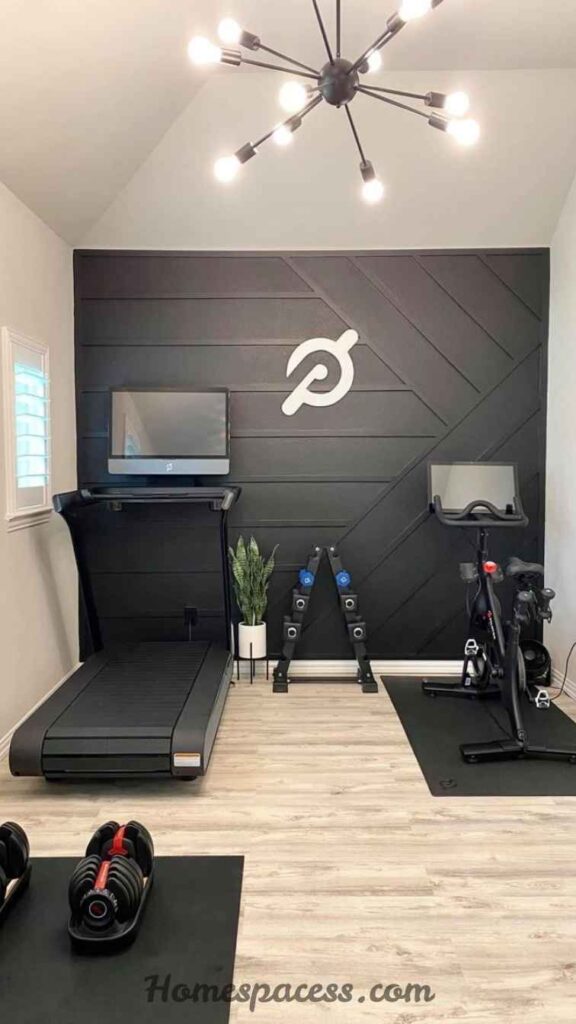
Recovery isn’t passive rest it’s an active process, and building a dedicated recovery zone at home accelerates adaptation, reduces injury risk, and makes training sustainable for decades rather than years. A recovery zone doesn’t need to be large: a 4×6 foot area with a quality foam roller, massage gun, stretching strap, and if budget allows, a percussive therapy device covers the recovery needs of 95% of recreational athletes.
For those willing to invest further, home infrared saunas (now available in single-person portable models for $300–$800) have become one of the most evidence-backed recovery tools available. Multiple peer-reviewed studies confirm that post-exercise infrared sauna use increases growth hormone release, reduces delayed-onset muscle soreness (DOMS), and improves cardiovascular markers when used 2–4 times weekly. Cold plunge tubs (or simply a chest freezer filled with ice water at ~50°F) are the high-performance complement to heat therapy.
Pro Tip
Designate your recovery zone with different flooring than your training area a soft foam tile or thick area rug creates a subconscious shift from “effort mode” to “recovery mode” that improves parasympathetic activation and makes recovery sessions feel more intentional.
Women-Focused Home Gym Design
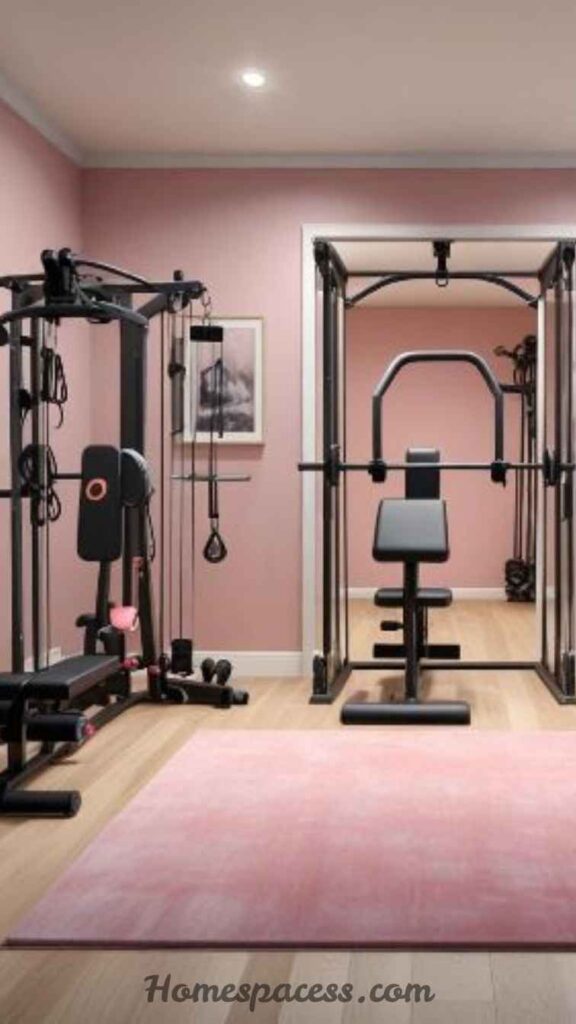
The best home gym for women isn’t defined by pink equipment or light dumbbells it’s defined by personal training goals, movement preferences, and design choices that create a space you genuinely want to spend time in. For many women, this means a gym that feels calming and empowering simultaneously: a neutral color palette, full-length mirrors, good ambient lighting, and equipment scaled to the actual movements they prioritize (hip thrusts, split squats, Romanian deadlifts, cable pull-throughs).
The most important equipment decisions for women focused on body recomposition and strength are a glute-focused setup: a hip thrust pad or bench with appropriate weight storage, a cable machine for cable kickbacks and pull-throughs, and adjustable dumbbells from 10–50 lbs. Resistance bands especially mini loop bands for abductor activation are the most versatile and underutilized tool for lower-body training and belong in every home gym setup regardless of gender.
Pro Tip
Install a dimmer switch and use warm-tone (2700–3000K) LED bulbs for the ambient layer of your gym lighting. Bright task lighting for training, warm ambient lighting for recovery and stretching this dual-layer lighting system creates an experience that feels like a premium boutique studio.
Kids & Family Home Gym Space
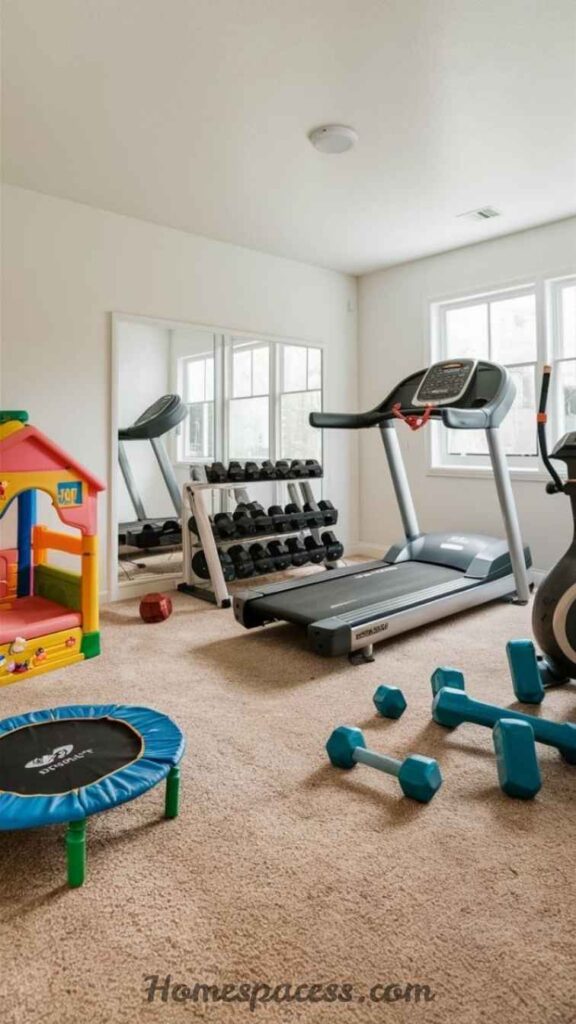
A family gym space is one of the most powerful investments in your children’s long-term health children who grow up in homes where physical activity is normalized are statistically more likely to maintain active lifestyles into adulthood. The family gym concept works best when it’s designed for play as much as structured exercise: a gymnastics mat, a youth pull-up bar, a basketball hoop, and open floor space create an environment where movement feels like fun rather than obligation.
Safety engineering is paramount when children share gym space. Anchor all freestanding equipment (including racks, cable machines, and benches) to studs or concrete children climb on everything. Use corner guards on all metal edges, store weight plates flat in closed storage, and establish clear rules about unsupervised gym access. A simple keyed lock on the door provides an easy safety barrier for younger children.
Pro Tip
Include a small chalkboard wall in your family gym for kids to draw workout plans, record their pull-up PRs, or simply make it their space. Ownership creates engagement children who feel invested in the gym use it far more consistently.
Senior-Friendly Home Gym Design
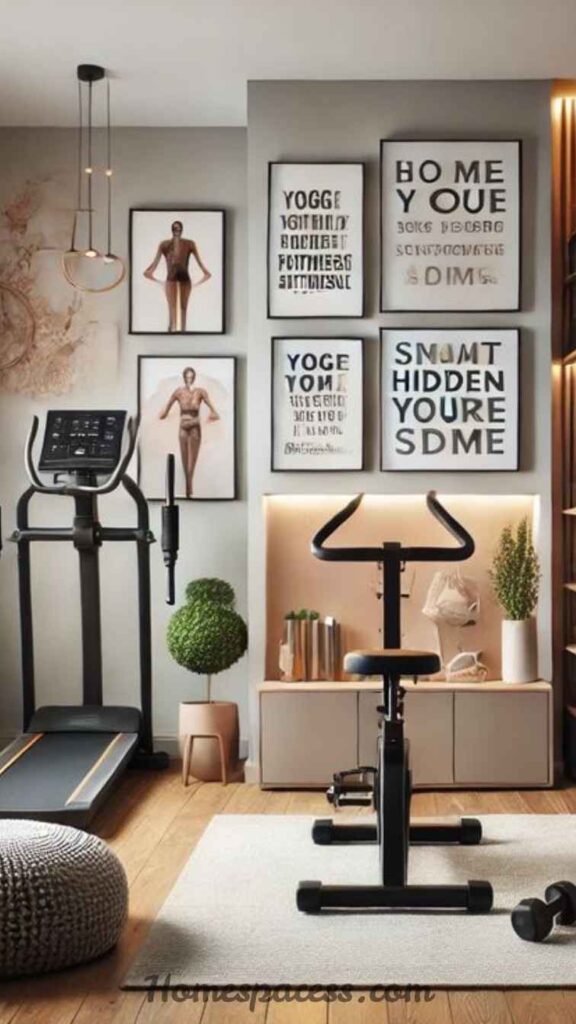
Exercise becomes more important not less as we age. Resistance training after 60 prevents sarcopenia (muscle loss), improves bone density, and reduces fall risk by up to 30% according to comprehensive geriatric exercise studies. A senior-focused home gym prioritizes safety, accessibility, and the specific exercises most relevant to functional longevity: goblet squats, seated rows, band pull-aparts, step training, and balance work.
Equipment selection for seniors should emphasize cable machines and resistance bands over free weights they allow resistance training through a full range of motion without the balance demands of a barbell, reducing fall risk during exercise itself. A stable chair for seated exercises, a foam pad for kneeling movements, and non-slip rubber flooring throughout are non-negotiable safety features. Install grab bars near any elevated platform or step element used in the space.
Pro Tip
Place a full-length mirror in the senior gym at slightly wider angle than for younger users 10–15 degrees off-axis from head-on. This provides full-body form feedback while reducing the self-critical visual comparison that can demotivate older adults early in their fitness journey.
Shed-to-Gym Conversion
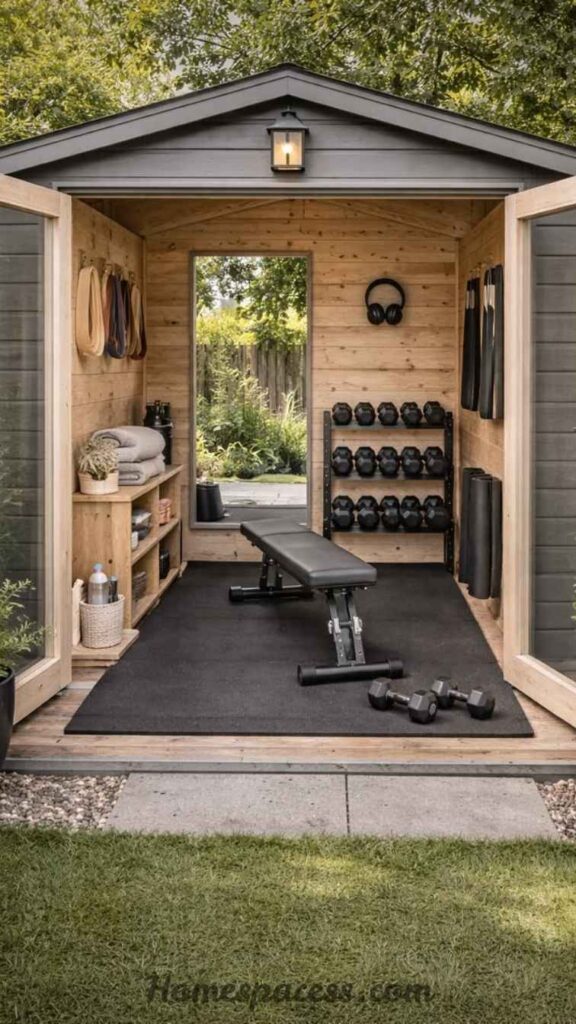
Converting a garden shed into a private gym is one of the most satisfying home improvement projects a fitness enthusiast can undertake and the separation from the house creates a psychological boundary between home life and training that many people find dramatically improves their focus and training quality. Even a 100 sq ft shed can become a capable strength and conditioning gym with smart layout planning.
Key considerations for shed gyms: electrical capacity (install a dedicated 20-amp circuit for powered equipment and good lighting), ventilation (at least two windows or a small exhaust fan sheds heat up significantly during summer), and insulation (spray foam insulation makes a small shed usable year-round and pays for itself in equipment longevity by controlling humidity and temperature). A mini-split heat pump is the gold standard climate solution for shed gyms and runs efficiently even in small spaces.
Pro Tip
Reinforce your shed floor with 3/4-inch plywood over the existing floor before laying rubber mats. Most residential shed floors aren’t built to handle the concentrated point loads of a power rack or heavy barbell drops sister joists and plywood reinforcement prevent floor damage and equipment stability issues.
The Luxury High-End Home Gym
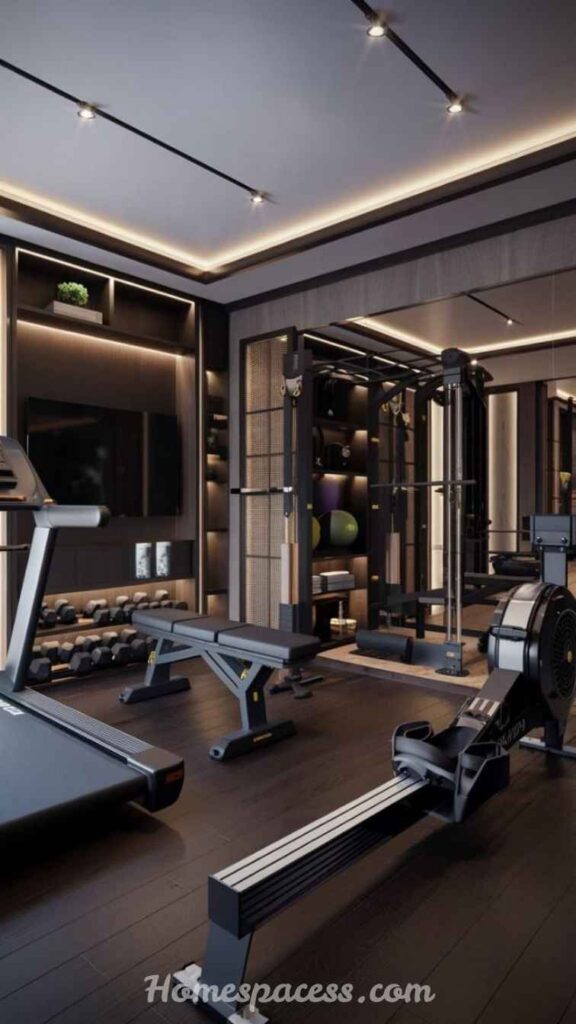
A truly high-end home gym isn’t just about expensive equipment it’s about designing a training environment that eliminates every possible friction point between you and an extraordinary workout. This means commercial-grade equipment (Eleiko barbells, Rogue racks, Technogym cardio), professional-grade rubber flooring, custom cabinetry for storage, climate control, premium sound systems, and lighting design with separate circuits for different training moods.
The details that separate a luxury gym from an expensive gym: a dedicated electrical panel for gym-only circuits (prevents tripped breakers mid-workout), in-ceiling speakers on a zone-separated audio system, anti-fatigue matting at stations, and a dedicated bathroom or at minimum a sink the ability to wash hands between equipment and hydrate without leaving the space dramatically improves training flow. At the pinnacle, integrated biometric tracking systems (HRV monitors, blood oxygen sensors) connected to a centralized display create a genuinely elite training environment.
Pro Tip
Commission a professional interior designer with sports facility experience to plan your luxury gym layout before purchasing a single piece of equipment. The fee (typically $800–$2,000) saves multiples of that in equipment placement mistakes, circulation issues, and aesthetic choices that would otherwise require costly do-overs.
Conclusion:
Setting up a home gym is one of the most rewarding investments you can make in your health and lifestyle. With the right combination of equipment whether it’s resistance bands, dumbbells, a pull-up bar, or a full rack setup you can create a space that fits your fitness goals, budget, and available room. The beauty of a home gym lies in its flexibility: you train on your schedule, skip the commute, and build an environment tailored entirely to your needs. Over time, the upfront cost pays for itself many times over compared to a gym membership.
Ultimately, a successful home gym isn’t about having the most expensive gear it’s about consistency and intentionality. Even a small, well-organized corner of your home can become a powerful training space if it’s set up with purpose. As you grow stronger and your fitness goals evolve, your home gym can grow with you. The key is to start with what you have, stay committed to your routine, and let your home become the foundation of a healthier, more disciplined life.
Trends Analysis
Home Gym Trends in 2026 And What’s Coming Next
The home gym industry has undergone a structural shift that extends well beyond the pandemic surge. In 2026, three dominant trends are reshaping how people build, equip, and use home training spaces and understanding them now helps you invest smarter, not just spend more.
AI-Adaptive Training Systems
The most significant emerging trend is AI-driven training personalization at the home gym level. Systems like Tonal and newer competitors now use load cell sensors embedded in equipment to detect velocity, power output, and fatigue in real time adjusting resistance mid-set rather than requiring manual plate changes. This “autoregulation” approach, previously available only to elite athletes with coaching staff, is now accessible to home gym users at a $3,000–$5,000 price point that will likely halve within three years as the technology matures.
Biophilic Gym Design
Biophilic design incorporating natural elements, plants, natural light, and organic materials into gym spaces is moving from boutique studios into residential gym planning. Research from the University of Exeter confirms that exercising in environments with natural elements (even simulated: nature sounds, plant walls, daylight-spectrum lighting) improves workout duration by an average of 12% and perceived exertion by 14%. Moss walls, cedar wood accents, and living plant walls are appearing in residential gym builds at all price points as the science becomes mainstream awareness.
Modular & Reconfigurable Equipment Systems
The next frontier in home gym equipment is modularity. Rather than buying fixed machines, next-generation home gym systems (like VITRUVIAN’s Trainer+ or the emerging Kabuki Strength systems) use a single base unit that transforms between 50+ equipment configurations via app-controlled magnetic resistance and adjustable geometry. By 2028, analysts expect modular gym systems to represent 35% of premium home gym equipment sales a dramatic shift from the current 8%.
Market Growth
The home gym equipment market is projected to reach $14.7 billion globally by 2028, up from $10.2 billion in 2024 driven by remote work persistence and equipment innovation.
Space Trend
New home construction increasingly includes dedicated “fitness rooms” as standard features up 340% in new development floor plans since 2021.
AI Coaching
85% of connected fitness devices sold in 2025 included some form of AI coaching feature up from 22% in 2021. This will reach near-100% by 2027.
Sustainability
Used/refurbished gym equipment sales grew 87% between 2022–2025, driven by both economic factors and growing environmental consciousness among buyers.
Expert Insights
What Gym Designers and Coaches Know That You Don’t
Building an effective home gym isn’t just about buying good equipment it’s about understanding the environmental psychology, exercise science, and operational realities that determine whether a space gets used daily or becomes a storage room within six months. These insights come from certified strength coaches, interior designers specializing in sports facilities, and exercise scientists perspectives rarely consolidated in standard gym setup guides.
The “Activation Energy” Principle
Behavioral psychologist BJ Fogg’s “activation energy” concept applies directly to home gyms: the more steps required to begin a workout, the less likely you are to start one. Elite home gym designers focus obsessively on reducing friction everything should be exactly one step away from ready. This means equipment stored at the ready (bench in position, bar loaded to warm-up weight), workout clothes in the gym room rather than the bedroom, and pre-mixed pre-workout on the shelf rather than in the kitchen. These micro-optimizations collectively reduce the psychological barrier to starting by 60–70%.
Lighting Architecture for Performance
Professional gym designers use a three-layer lighting system that most home gym builders never consider. Layer one is ambient (overhead LEDs, 4,000–5,000K for alertness). Layer two is task lighting (directed spots over specific equipment zones the power rack, the cable machine). Layer three is accent lighting (colored LED strips behind mirrors or along the floor perimeter) for atmosphere and motivation cues. This three-layer system allows the space to feel energizing during heavy training and calming during recovery a single overhead fixture cannot do both.
Equipment Placement for Traffic Flow
The most overlooked home gym planning mistake is failing to map traffic flow before placing equipment. Draw your gym on paper first and trace the path you take from entrance to each piece of equipment and back. Any crossing paths or narrow passages become dangerous under fatigue a 200 lb person carrying a loaded barbell through a 24-inch gap has caused serious accidents in poorly planned home gyms. Leave minimum 36-inch clear paths between all equipment, and keep the center floor completely open for functional movement.
Audio Environment Optimization
Sound design in home gyms is underappreciated but scientifically validated. A 2020 meta-analysis in the Journal of Sport and Exercise Psychology confirmed that music tempo above 130 BPM increases power output by 6–15% during resistance training. However, poor acoustics (echo-heavy rooms) partially negate this benefit by reducing music clarity and increasing perceived cognitive load. Acoustic panels on two facing walls eliminate echo without deadening the room and gym acoustic panels double as impact-absorbing wall protection.
Long-Term Value
Long-Term Value, ROI, and Building a Gym That Lasts Decades
The financial case for a well-planned home gym is compelling but only if the equipment you buy holds its value and continues serving your evolving fitness needs over years, not months. Most people approach home gym buying as a one-time purchase decision when it should be viewed as an ongoing infrastructure investment with a deliberate upgrade path.
The Durability Hierarchy
Not all gym equipment depreciates equally. At the top of the durability hierarchy are Olympic barbells, cast iron and bumper plates, and solid steel power racks from reputable manufacturers (Rogue, Rep Fitness, Titan) these maintain 70–85% of their purchase value after 10 years of use and are essentially lifetime purchases. At the bottom are consumer-grade cardio machines (treadmills, ellipticals), which typically fail mechanically within 5–8 years of regular use and carry near-zero resale value at that point. The investment insight: spend premium on barbells, plates, and racks; spend budget-cautiously on cardio equipment.
Sustainable Equipment Sourcing
The environmental footprint of new gym equipment is significant steel production, rubber manufacturing, and global shipping represent considerable carbon costs per piece of equipment. Buying used not only saves 40–60% of purchase price but eliminates the manufacturing footprint entirely. Platforms like Facebook Marketplace, Iron Swap, and GymTrader specialize in used fitness equipment and regularly list commercial-grade gear from closing gyms at 20–30 cents on the dollar. One closing commercial gym can single-handedly equip 10–15 serious home gym setups.
Planning for Fitness Evolution
Your fitness goals in 5 years will almost certainly differ from today’s. A 28-year-old building a powerlifting-focused gym may be 40 and prioritizing joint health, mobility, and metabolic conditioning a decade later. The most future-proof home gym investments are those that serve multiple training modalities: a quality power rack with adjustable safeties serves strength training, calisthenics, band work, and suspension training. An adjustable dumbbell set grows with your strength. Buying specialized, single-purpose equipment (a specific curl machine, a dedicated leg press) carries the highest risk of becoming obsolete as your training evolves.
Future Predictions
The Future of Home Gyms: 2027–2032 Predictions
The home gym of 2030 will be unrecognizable to someone who built their setup in 2020 not because the fundamental principles of training will change, but because the technology layer surrounding those principles will transform the training experience entirely. Here are the most credible and consequential predictions for where home gym technology and design are heading.
Fully Immersive Training Environments
Augmented reality gym systems where a standard room transforms into a fully immersive training environment via AR glasses or projected overlays are in active development at multiple startups and major fitness brands. By 2028, expect consumer-available AR systems that project a live coach into your garage gym, overlay real-time form correction graphics onto your moving body, and gamify training sessions with competitive leaderboards against global users doing the same workout simultaneously. Meta, Apple, and several fitness-focused startups have all filed relevant patents in this space within the past 18 months.
Biomarker-Responsive Training
Wearable sensors that continuously monitor biomarkers not just heart rate, but blood lactate, muscle oxygenation (via near-infrared spectroscopy), and cortisol levels through sweat analysis will integrate directly with gym equipment to create truly adaptive training sessions. Imagine a barbell that automatically lightens when your muscle oxygen saturation drops below a threshold indicating imminent failure, or a treadmill that adjusts incline and speed based on your current stress hormone levels. These systems exist in sports science labs today and will reach commercial home gym pricing within 5–7 years.
Modular Smart Gym Ecosystems
The gym equipment industry is shifting toward ecosystem-based purchasing where all equipment communicates with a central hub, shares data, and creates a unified training intelligence layer. Within this model, your cable machine, barbell, rowing machine, and treadmill all feed data into a single AI coach that has complete context of every session you’ve ever done and optimizes each day’s training based on cumulative fatigue, performance trends, and goal proximity. This is analogous to how smart home devices shifted from standalone gadgets to integrated ecosystems and it will transform home gym personalization at a fundamental level.
Common Mistakes
Common Home Gym Mistakes And How to Avoid Every One
After the initial excitement fades, most home gyms fail for the same predictable reasons. These aren’t equipment quality issues or budget problems they’re planning, psychology, and prioritization failures that are entirely avoidable if you know what to watch for before you make your first purchase.
- Buying equipment before measuring the space: Always measure ceiling height, door width, and floor area first. A power rack that fits in the floor plan may not fit through the basement door or may contact the ceiling during overhead press. Minimum ceiling height for overhead pressing in a power rack is 9 feet most homes have 8-foot ceilings.
- Prioritizing appearance over function: The most common expensive mistake: buying equipment that looks impressive in photos but creates friction in actual training. Aesthetic-driven purchases often lack adjustability, have limited weight capacity, or require awkward body positioning. Always buy based on the exercises you do most, not the photo that looks best.
- Ignoring flooring as the foundation: Flooring is the single most important investment in a home gym and the most frequently underestimated. Thin yoga mats crack under equipment weight, slide during dynamic movements, and absorb odors permanently. Minimum investment: 3/4-inch horse stall mats or purpose-built gym flooring in your primary training zone.
- Skipping ventilation planning: An enclosed gym space without adequate airflow becomes unbearable within 20 minutes of intense exercise elevated CO₂, accumulated heat, and humidity spike. At minimum, install a box fan for air circulation. Ideally, create cross-ventilation with two airflow points. This directly affects workout quality, duration, and safety.
- Overbuying equipment upfront: Decision fatigue is real. A gym with too many equipment options creates choice paralysis you spend training time deciding what to do rather than training. Start with five or fewer pieces of core equipment, master programming around them for 6 months, then add strategically based on actual gaps in your training. The 80/20 rule applies: 20% of equipment will drive 80% of your results.
- No programming plan for the space: Equipment without a training program is furniture. Before your home gym is complete, have a minimum 12-week structured program written or purchase a programming subscription that uses your specific equipment. This ensures you bought the right equipment for your actual training style and prevents the “I don’t know what to do” paralysis that follows motivation-driven equipment purchases.
The home gym builders who succeed long-term treat their space as a system rather than a collection of purchases. Every element flooring, lighting, equipment, audio, storage serves the single goal of making training so effortless to start and so rewarding in execution that it becomes the most enjoyable part of the day.
Aliza Noor founded Home Spacess to share simple, practical design ideas that work for real families. She focuses on cozy décor, soft colors, and natural textures that make a space feel truly lived-in. Based just outside Toronto, Aliza spends her days juggling family life, experimenting with home projects, tending to her plants, and occasionally moving things around just to create a fresh vibe.


