
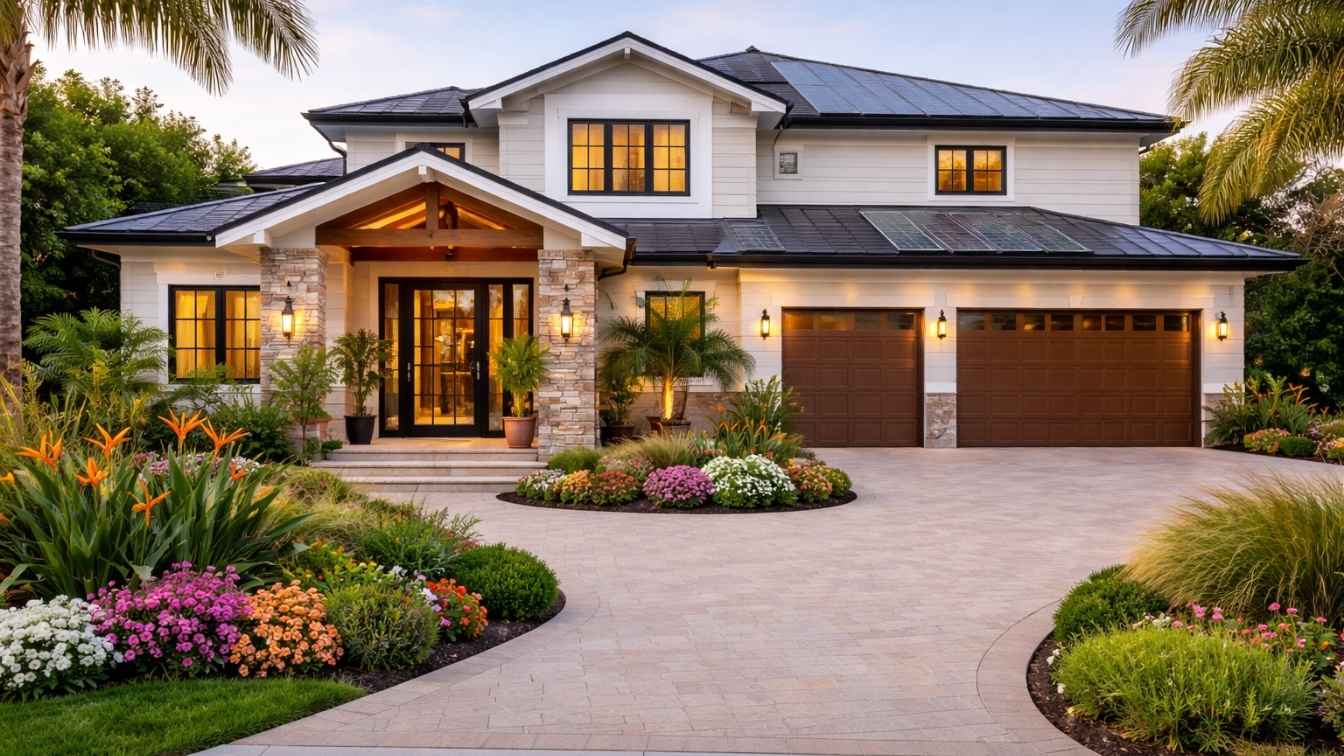
25 Stunning Home Exterior Ideas That Actually Boost Curb Appeal

Most homeowners invest thousands in interior renovations while neglecting the one thing every visitor, buyer, and neighbor sees first: the exterior. A worn façade, outdated cladding, or lifeless front yard can quietly slash your property’s perceived value sometimes by 10% or more. Transforming your home’s exterior doesn’t require a full rebuild. It requires the right ideas, applied in the right order.
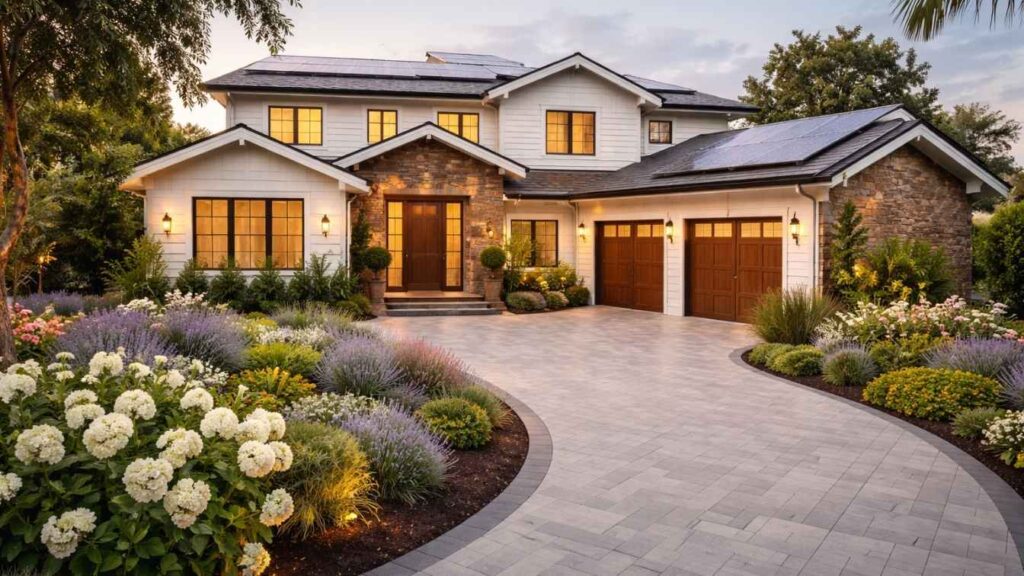
This guide brings together 25 of the most impactful home exterior ideas for 2026 from façade materials and front door upgrades to landscaping, lighting, and everything in between. Each idea is grounded in design trends, real-world ROI data, and sustainability principles that matter now and in the decades ahead. Whether you’re preparing to sell or simply want a home you’re proud to come back to, these ideas will help you make every decision count.
94%
of buyers are influenced by curb appeal
7–10%
avg. property value increase from exterior upgrades
$15K
median spend on exterior renovations in 2026
152%
average ROI on fiber cement siding replacement
Modern Fiber Cement Siding
Facade Materials
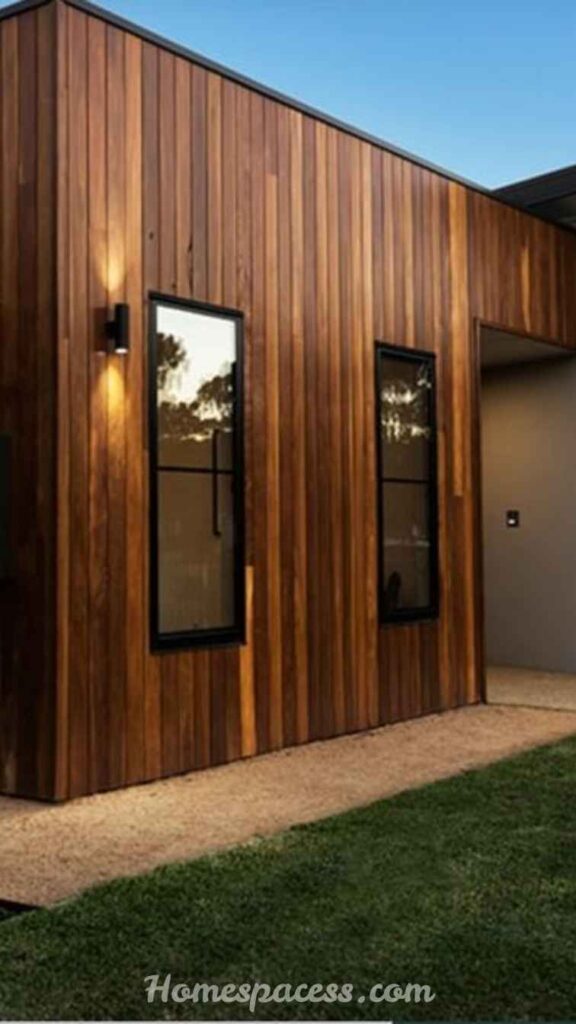
Fiber cement siding has become the gold standard in exterior cladding and for good reason. It mimics the look of wood, brick, or stone at a fraction of the cost while offering remarkable durability against moisture, fire, and pests. Brands like James Hardie have made it a top choice for homeowners across climates.
What competitors rarely mention is that fiber cement’s real value lies in its paint retention. Unlike wood, it holds exterior paint 25–50% longer, dramatically reducing maintenance frequency. Over a 20-year horizon, the lifecycle cost beats vinyl, wood, and most stucco alternatives.
Pro Tip
Choose pre-primed, pre-painted boards where available. On-site painting adds cost and may void the manufacturer’s moisture warranty if done improperly.
Must Read: 27 Salon Interior Design Ideas That Turn Clients Into Loyal Fans
Bold Front Door Color Statement
High ROI
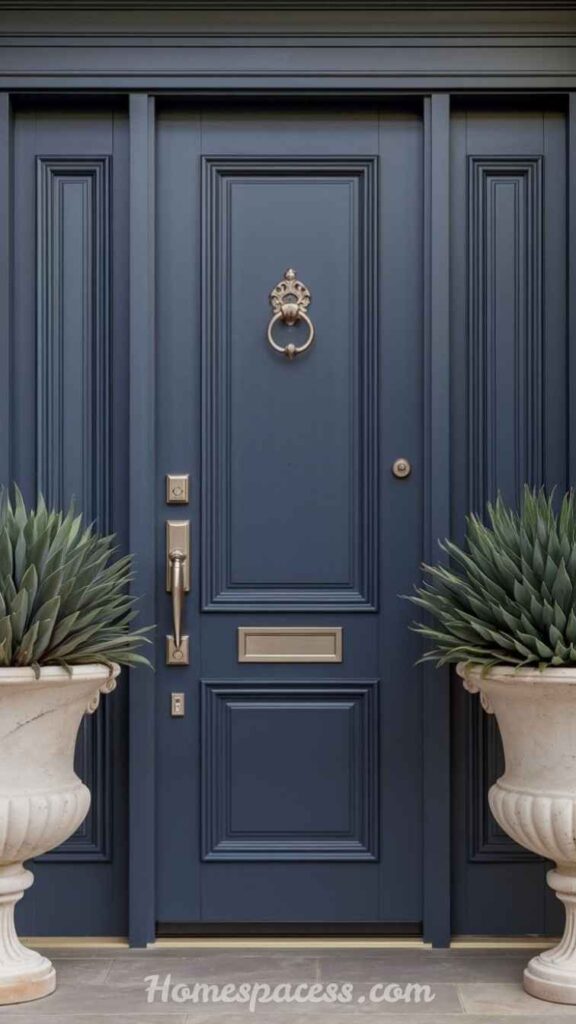
A front door refresh is the single highest-ROI exterior upgrade per dollar spent. A deep forest green, matte black, or rich navy door against a neutral façade creates an instant focal point that signals both confidence and character. Zillow research has confirmed that certain door colors particularly black can add thousands to a home’s sale price.
The key is contrast: your door color should work with, not compete against, your trim, shutters, and siding. Most design professionals recommend choosing your door color last, after all other exterior colors are confirmed. This prevents the common mistake of picking a beautiful door that clashes with the rest of the palette.
Pro Tip
Test paint swatches on the actual door and observe them at different times of day. Exterior colors shift dramatically between morning, afternoon, and evening light.
Don’t Skip: 20 Walk In Closet Ideas To Transform Your Space
Board-and-Batten Accent Walls
Architectural Detail
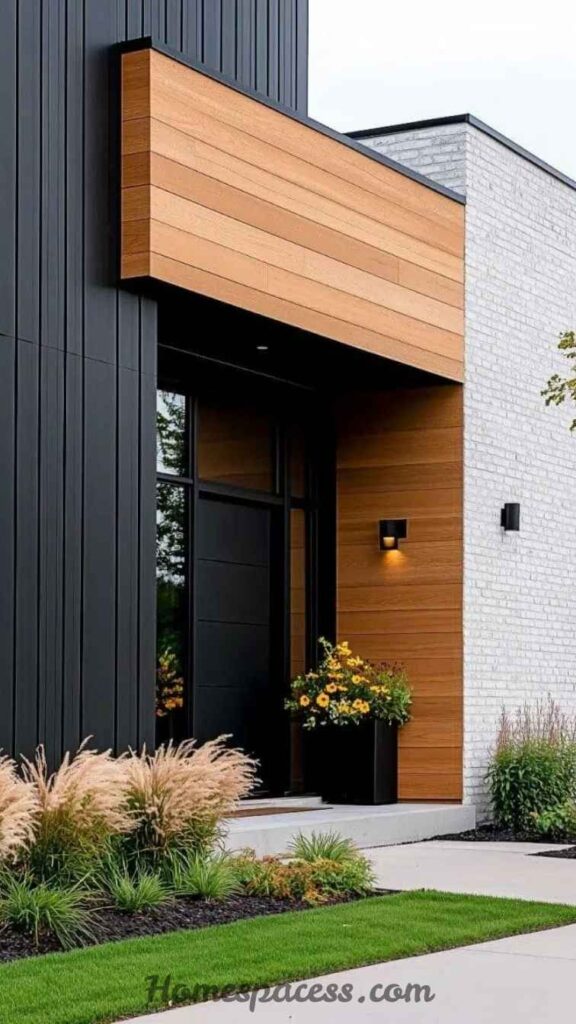
Board-and-batten cladding vertical boards separated by narrow strips adds instant architectural depth to otherwise flat façades. It pairs beautifully with modern farmhouse, craftsman, and transitional styles. Applied to the gable end, garage surround, or as a lower-half treatment, it creates the illusion of a more complex, custom-designed home.
Importantly, board-and-batten doesn’t have to be wood. Composite and PVC versions eliminate the warping, cracking, and rot issues associated with traditional timber making them a smarter long-term investment, especially in humid or rainy climates.
Pro Tip
Space battens 16 inches apart to align with standard stud spacing this makes installation faster and reduces waste from odd-width cuts.
Read More: 18 Brilliant Laundry Room Ideas That Actually Transform the Space
Statement Exterior Lighting
High Impact
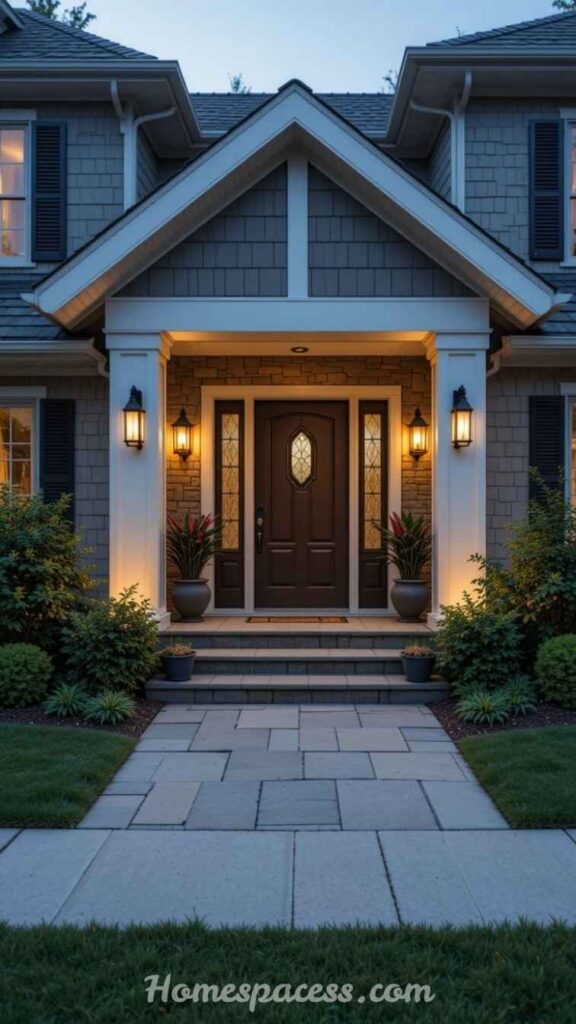
Exterior lighting is one of the most underutilized design tools in residential architecture. Beyond safety and security, strategic lighting sculpts your home’s appearance at night turning a modest structure into something that looks architecturally considered and intentional. Uplighting trees, wall-washing the façade, and illuminating pathways each serve a distinct purpose.
In 2026, smart exterior lighting with tunable color temperature is becoming mainstream. The ability to shift from warm amber (2700K) in summer to a crisper white (3000K) in winter months creates year-round visual appeal. Solar-powered path lights have also matured significantly quality models now hold charge for 12+ hours, eliminating the need for trenching or electrician fees.
Pro Tip
Always use downlights near entryways rather than upward-facing fixtures it reduces glare for visitors and creates a more welcoming, hotel-quality effect.
More Info: 25 Dressing Table Ideas That Transform Your Daily Ritual Into a Luxury Experience
Natural Stone Veneer Accents
Luxury Finish
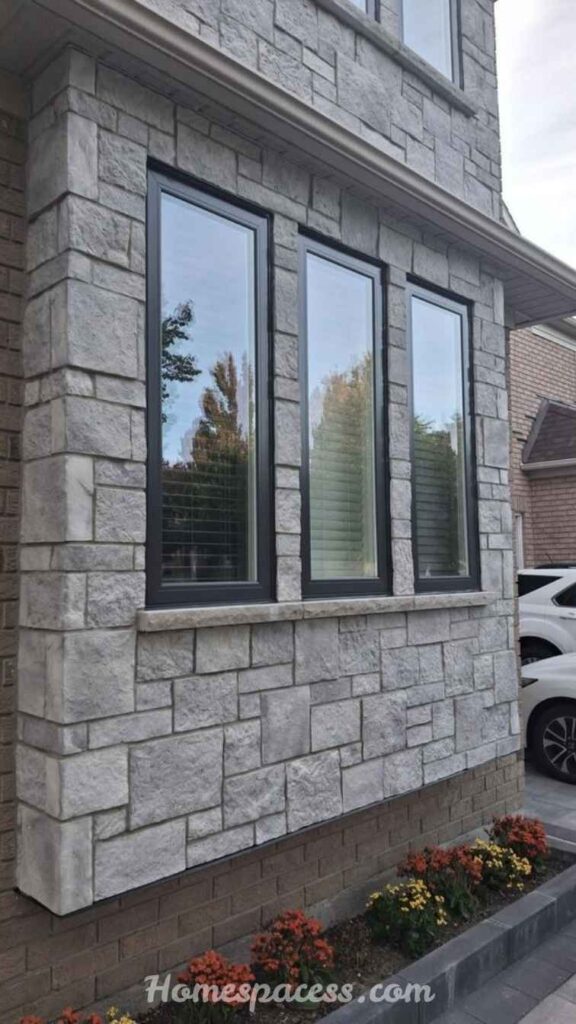
Real or manufactured stone veneer applied to a foundation, chimney stack, or front porch column elevates a home’s curb appeal more than almost any other single element. It signals permanence, quality, and craftsmanship. Today’s manufactured stone products have become indistinguishable from natural stone to the untrained eye and weigh far less, making them suitable for retrofit installations.
The strategic placement matters enormously. Stone veneer works best as a grounding element applied at grade level, on chimneys, or around entryways rather than covering large wall sections. Used sparingly, it creates visual hierarchy. Overused, it can make a home feel heavy or dated.
Pro Tip
Seal manufactured stone veneer annually with a penetrating masonry sealer. Unsealed joints absorb moisture and can cause spalling within 5–7 years in freeze-thaw climates.
Landscaping with Native Plants
Eco-Smart
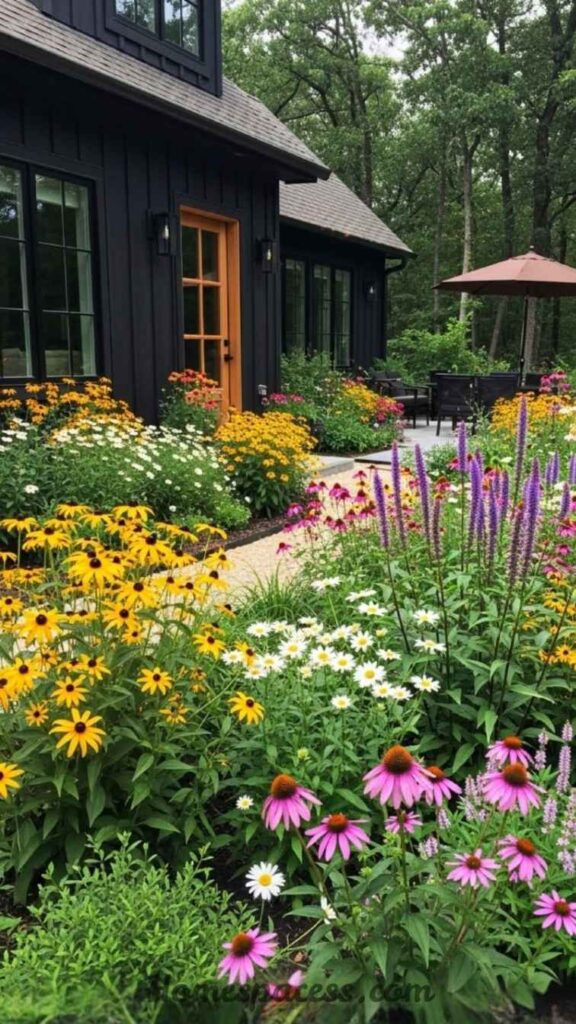
Landscaping accounts for up to 28% of a home’s perceived curb appeal score, yet most homeowners underinvest here compared to hardscape or façade upgrades. Native plants those naturally occurring in your region are the smart choice: they’re adapted to local rainfall patterns, require minimal irrigation, and provide habitat for pollinators and birds that add life and movement to your exterior.
The trend in 2026 is moving away from manicured, high-maintenance lawns toward layered native plantings with structured borders. This “naturalistic” approach looks intentional, not neglected, and can reduce water bills by 50–75% compared to conventional turf-heavy landscaping.
Pro Tip
Plant in odd-numbered groupings of 3, 5, or 7 per species it’s a classic landscape design rule that makes beds look intentional rather than scattered.
Black Window Frames & Trim
Trending Now
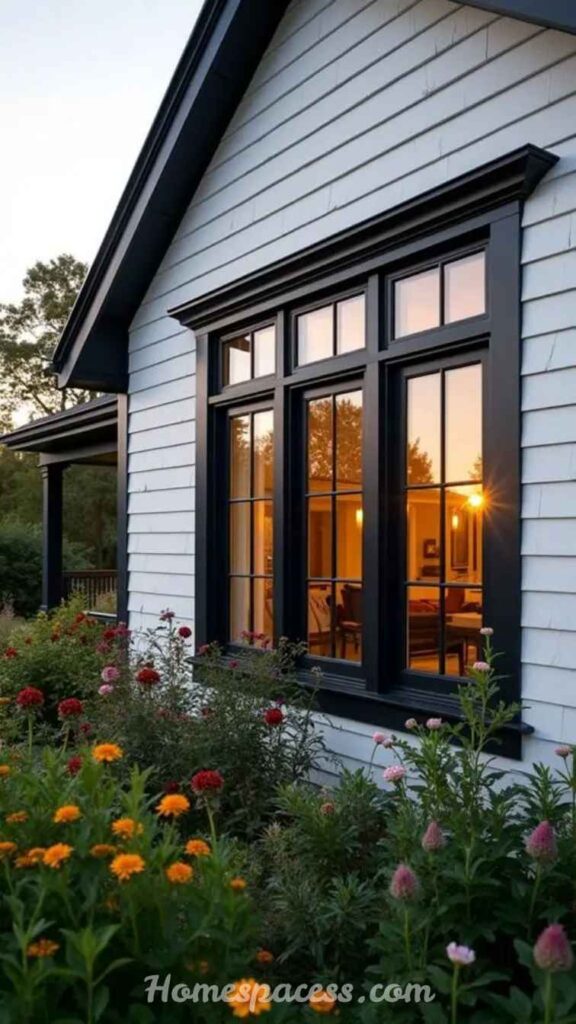
Black-framed windows are having a major architectural moment and the trend shows no sign of fading. The contrast of dark frames against light siding creates a crisp, editorial quality that immediately modernizes almost any home style. From farmhouse to contemporary, black windows add definition and graphic strength that white frames simply can’t match.
What’s less commonly discussed is that the black trim effect doesn’t require window replacement. Exterior-grade paint on existing aluminum or wood frames properly prepped and primed can achieve a near-identical look for a fraction of the cost. This makes it one of the highest-value cosmetic upgrades available to existing homeowners.
Pro Tip
Use an exterior enamel rated for temperature extremes. Dark colors absorb significantly more heat, and cheaper paints will bubble or peel on south-facing window frames within one season.
Covered Front Porch Addition
Structural Upgrade
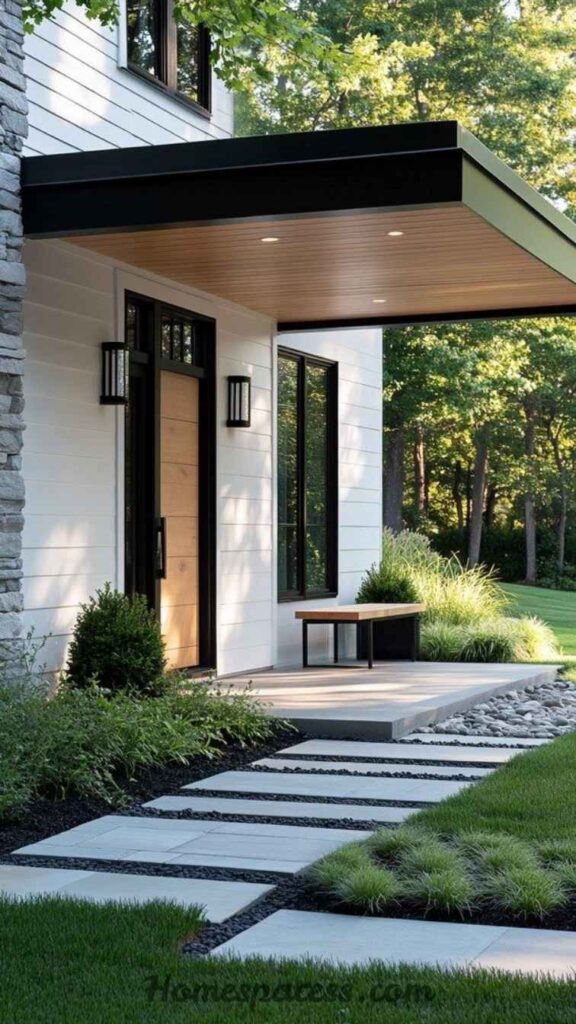
A covered front porch is the most structurally significant exterior upgrade on this list and often the most transformative. It adds architectural mass to a bare façade, creates a transitional space between street and interior, and signals a home that invites connection rather than just shelter. In residential real estate appraisals, a well-built porch consistently returns 60–80% of its cost in added value.
Modern porch designs have moved toward cleaner lines with slim steel or composite columns rather than thick ornate posts. Paired with a ceiling fan, warm lighting, and durable composite decking, a front porch extends livable space in three seasons and becomes a defining architectural feature year-round.
Pro Tip
A porch roof pitch should always match or closely complement the main roof pitch. A mismatch even subtle reads as an afterthought and undermines the renovation’s perceived quality.
Two-Tone Exterior Color Palette
Color Design
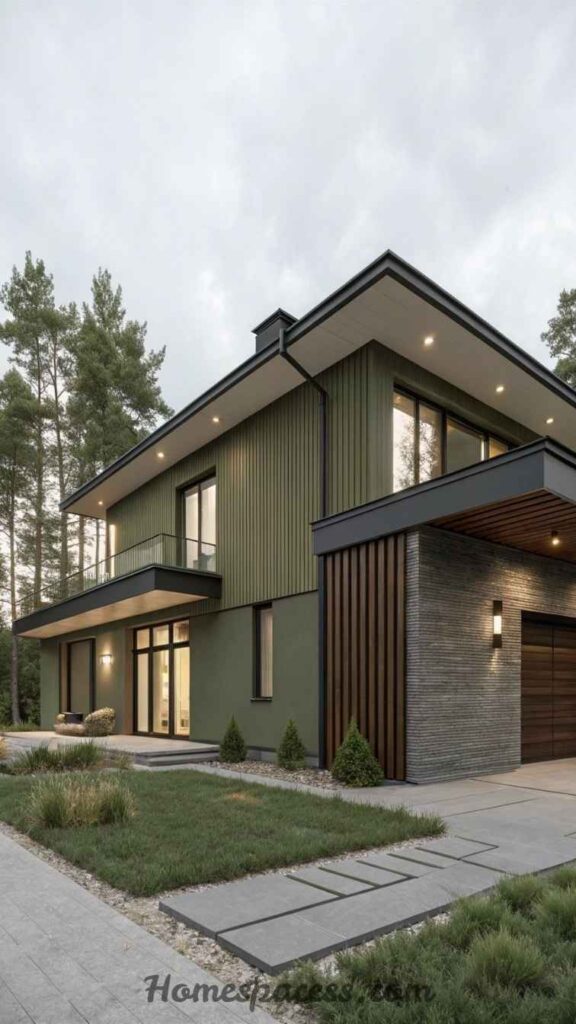
A single flat color across an entire façade flattens architectural detail and makes homes look smaller. A carefully chosen two-tone palette a primary color for the main body and a contrasting or complementary shade for trim, shutters, and fascia creates depth, highlights architectural features, and adds visual interest at zero structural cost. This is pure design leverage.
In 2026, the most sophisticated pairings use earthy, muted tones: warm taupes with deep charcoal trims, soft sage with cream accents, or slate blue with terracotta details. These combinations photograph well, weather gracefully, and avoid the trend-dependent risks of bolder choices.
Pro Tip
Use the 60-30-10 color rule: 60% dominant body color, 30% secondary trim color, 10% accent on the door and light fixtures. This formula is borrowed from interior design and works equally well outdoors.
Driveway Upgrade with Pavers
Hardscape
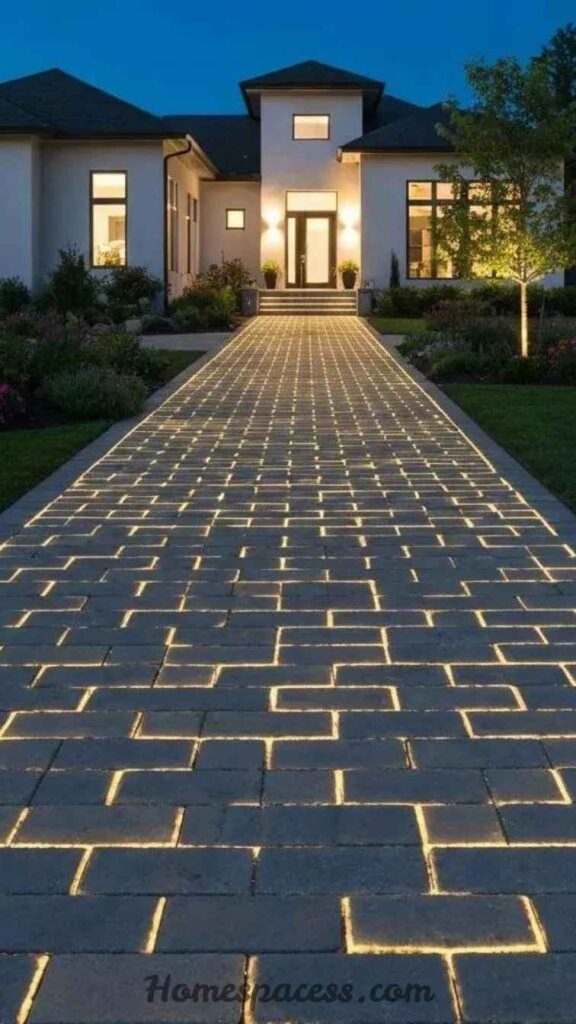
The driveway occupies one of the largest visible surfaces of any residential exterior and a cracked, stained concrete slab or deteriorating asphalt strip can undermine every other improvement you make. Concrete pavers, clay brick, or natural stone driveway surfaces immediately elevate the approach to a home and signal investment in quality. The visual effect is disproportionate to the cost difference versus basic concrete resurfacing.
Permeable pavers engineered to allow rainwater infiltration rather than runoff are increasingly required or incentivized by local municipalities concerned with storm water management. They serve a dual purpose: they look premium and they perform an environmental function that plain concrete cannot match.
Pro Tip
Establish a 4-inch compacted gravel base before laying pavers. This is where most DIY driveway projects fail an inadequate base leads to shifting and settlement within 2–3 winters.
Metal Roof Accents
Modern
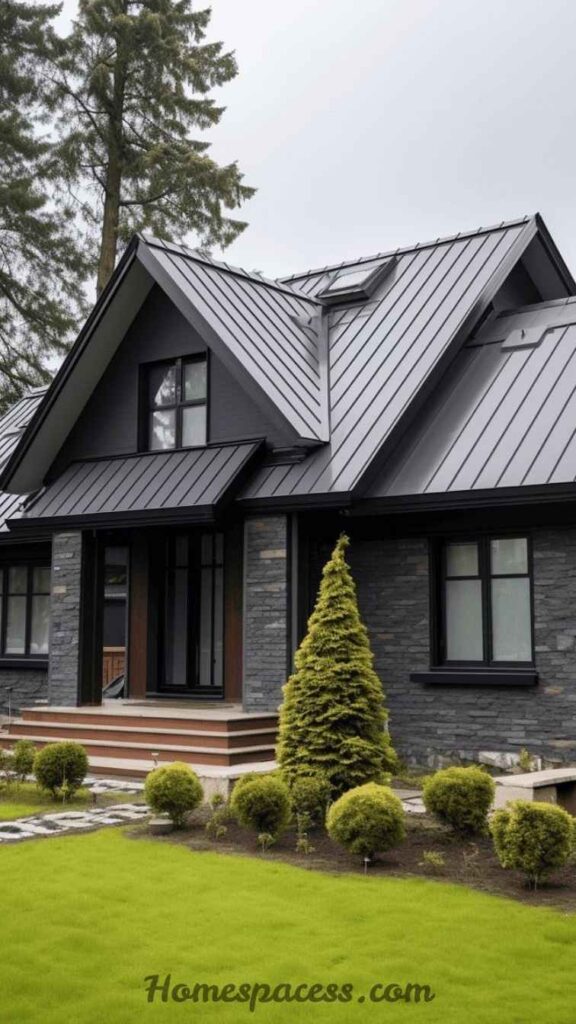
Full metal roof replacements are growing in popularity but even a partial application of standing-seam metal on a porch, dormer, or garage wing creates a high-end architectural signature at manageable cost. Metal roofing reflects solar radiation more effectively than asphalt shingles, reducing attic temperatures by 10–20 degrees and cutting cooling costs in warmer climates.
The longevity argument is compelling: quality metal roofing carries 40–70 year lifespans, compared to 15–25 years for standard asphalt shingles. Over a 50-year ownership period, a homeowner with metal roofing may avoid two full roof replacements, making the upfront premium cost-neutral or better.
Pro Tip
Cor-ten (weathering steel) accents are a growing design trend they develop a patinated rust finish that’s actually a protective surface layer, requiring no painting or sealing.
Smart Garage Door Replacement
High ROI
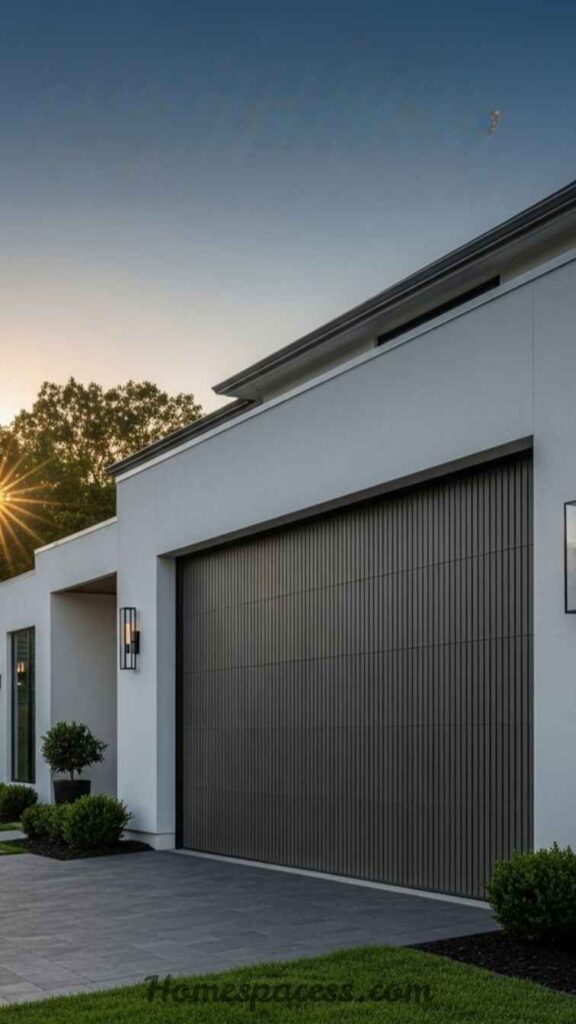
For homes with front-facing garages, the garage door can occupy 30–40% of the visible façade making it arguably the single most impactful upgrade for many properties. A carriage-style door with windows and decorative hardware transforms the streetscape instantly. The 2026 Cost vs. Value report consistently ranks garage door replacement among the top 5 renovation projects by ROI, frequently exceeding 90% return.
Modern insulated steel doors also deliver a thermal benefit: an R-value of 12–18 can meaningfully reduce heating and cooling loads in attached garages that share walls with living spaces. This performance benefit is separate from and additional to the visual improvement.
Pro Tip
Coordinate the garage door color and hardware finish with your front door. When these two elements share a design language, the entire façade reads as intentionally composed rather than assembled from parts.
Architectural Window Shutters
Architectural Detail
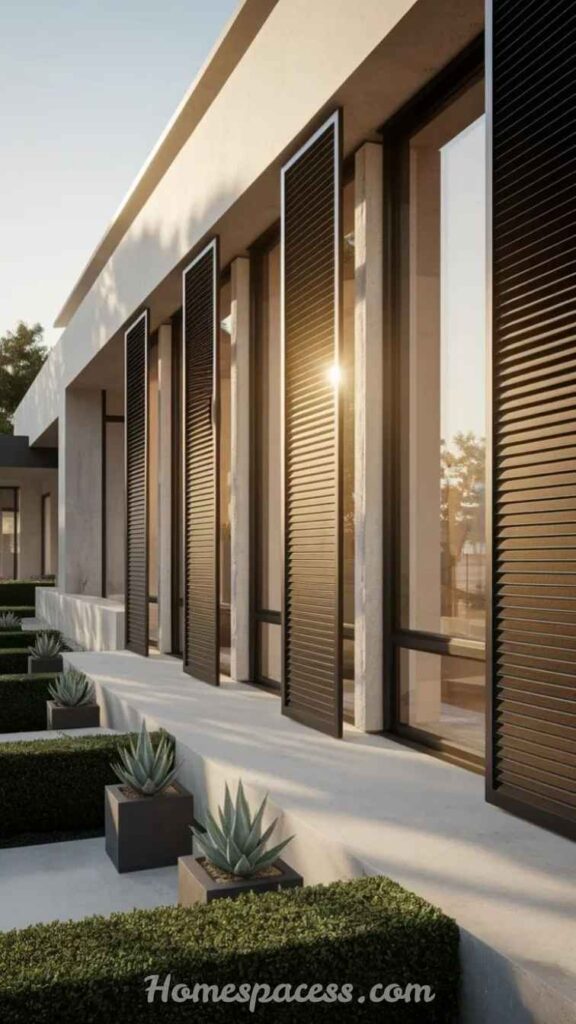
Shutters have a long and complex history in residential architecture and in 2026, the design community has largely settled on a clear verdict: functional shutters look substantially better than decorative ones. A shutter that’s sized correctly to actually cover the window when closed, and is mounted on proper hardware, signals authenticity. Proportionally incorrect shutters read immediately as decorative props and cheapen a façade.
If you’re adding shutters, choose board-and-batten, raised panel, or louvered styles in composite or PVC to eliminate maintenance. Pair with quality pintles and shutter dogs for authentic hardware details that photograph beautifully and hold up over decades.
Pro Tip
The width of each shutter should equal exactly half the window width. Two shutters closed should cover the window perfectly. If your windows aren’t standard, have shutters custom cut the wrong proportion is worse than no shutters at all.
Outdoor Living Spaces & Decks
Living Space
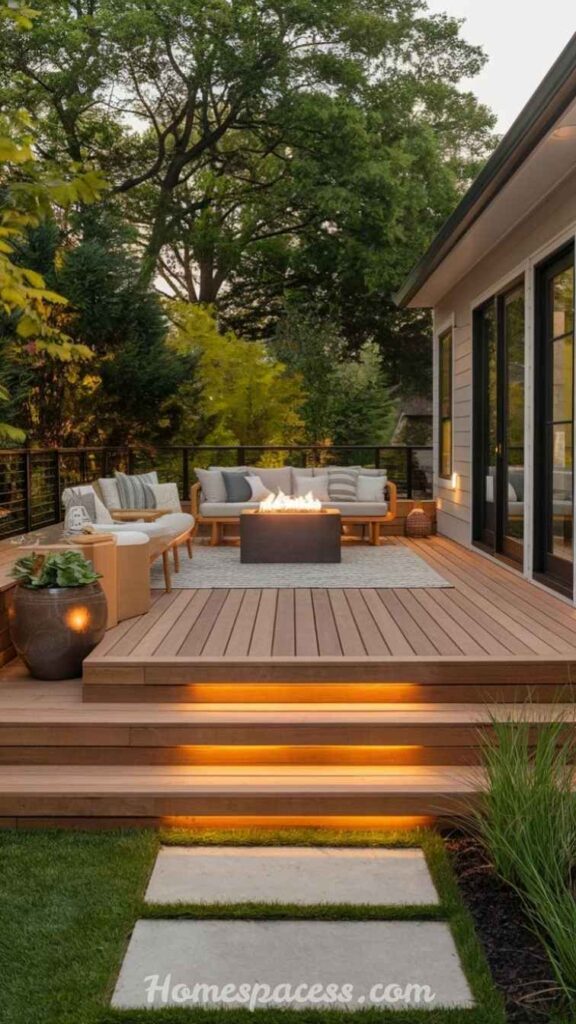
The distinction between interior and exterior living has blurred significantly post-2020 and this shift is permanent. Rear and side outdoor living spaces decks, patios, pergolas, and outdoor kitchens extend functional square footage while dramatically enriching the quality of daily life. In property appraisals, outdoor living areas in warm climates are increasingly being assigned measurable value per square foot.
Composite decking in 2026 has reached a level of realism and durability that makes natural wood an objectively harder case to make. Products from Trex, TimberTech, and Fiberon offer 25+ year fade and stain warranties, are resistant to splintering, and require only occasional washing with a garden hose.
Pro Tip
Size outdoor dining furniture and plan your deck dimensions at the same time. A 10×10 deck is too small for a table and four chairs the minimum functional size for outdoor dining is typically 12×14 feet.
Exterior Wainscoting with Brick
Texture & Depth
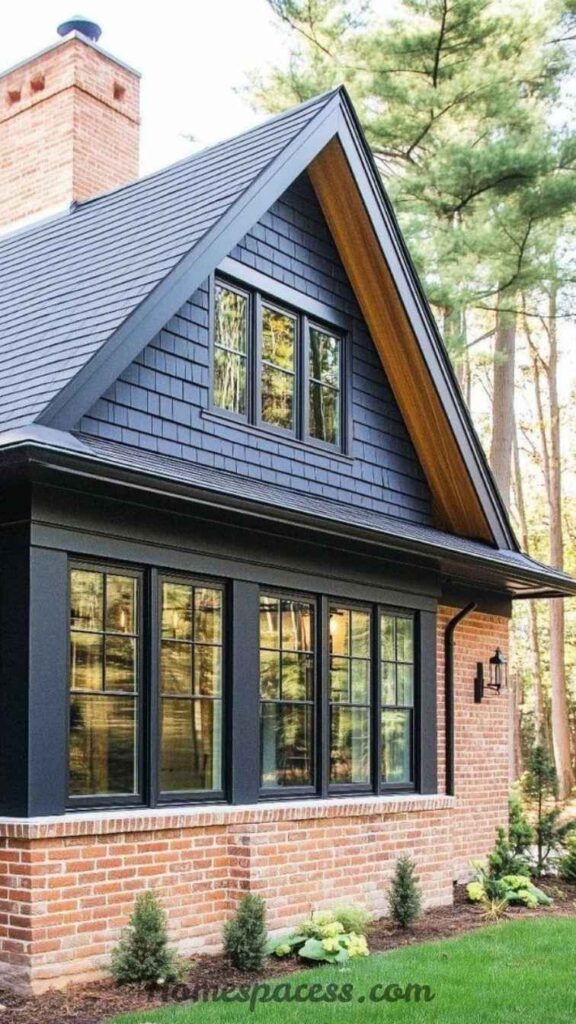
Applying real or thin-veneer brick to the lower third of a façade known as exterior wainscoting is a classic technique that grounds a home visually and adds material richness that paint alone cannot achieve. It signals permanence and quality to an observer’s eye in a way that’s difficult to articulate but immediately felt. This works especially well on ranch-style and colonial homes that need visual weight at the base.
Thin brick veneer systems have democratized this look considerably. At roughly 1 inch thick, these products can be applied over existing siding with appropriate substrate preparation, avoiding the cost and structural complexity of true masonry construction.
Pro Tip
Tumbled or reclaimed brick textures with their irregular edges and varied tones look far more authentic than perfectly uniform modern brick on residential applications. The imperfections are the point.
Vertical Garden & Green Walls
Biophilic Design
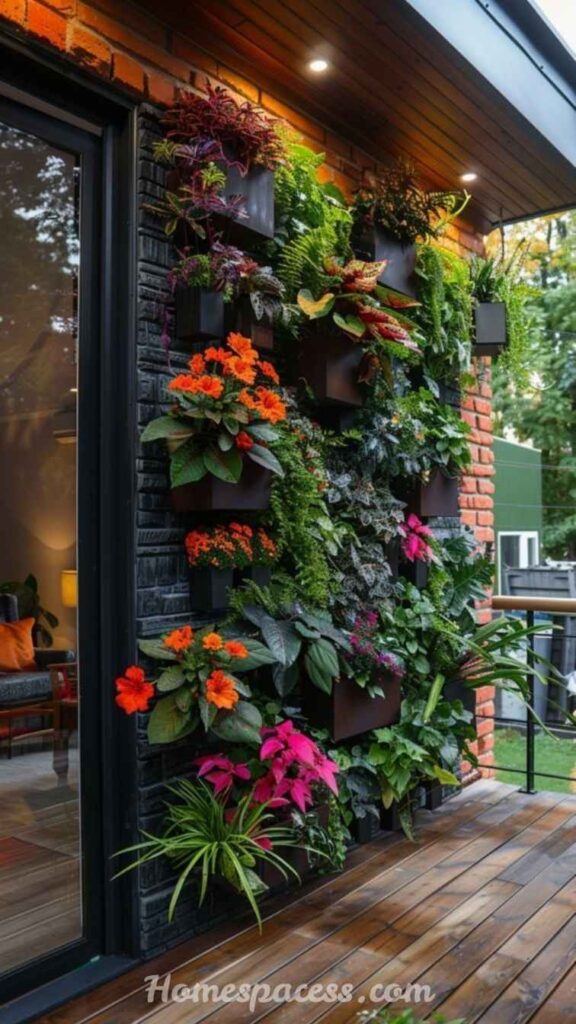
Living walls vertical planting systems mounted to exterior surfaces are transitioning from commercial architecture into high-end residential design. A well-executed exterior green wall on a fence, garage wall, or side elevation is visually stunning, ecologically beneficial, and creates a talking point that no other exterior feature can match. In urban environments, they also provide measurable noise buffering and thermal insulation to the surfaces they cover.
Simpler versions espalier fruit trees trained flat against a wall, climbing hydrangeas on a trellis, or modular pocket planting panels are accessible at almost any budget and require far less infrastructure than full irrigation-integrated systems.
Pro Tip
Mount any trellis or climbing support system at least 2 inches away from the wall surface. This air gap prevents moisture retention against the cladding and extends both the structure and the plant’s lifespan significantly.
Mailbox & Address Number Upgrade
Quick Win
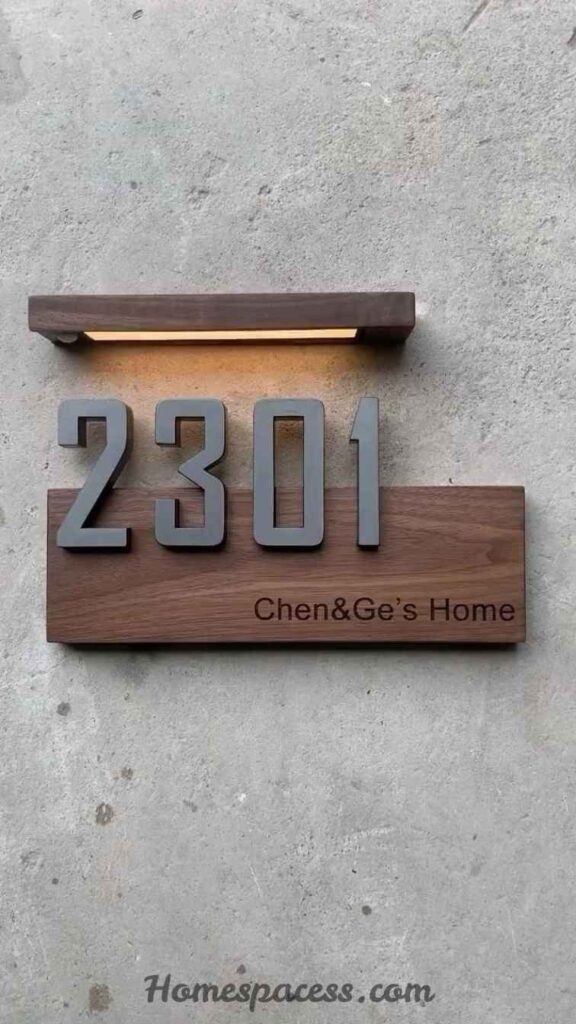
This is the overlooked detail that interior designers notice immediately and most homeowners never think about. A mounted mailbox from the 1990s, mismatched house numbers in plastic fonts, or a rusted post these micro-details collectively broadcast a “no one is paying attention” message to anyone approaching your home. Upgrading to a well-proportioned mid-century modern or industrial-style mailbox with matching cast iron or brushed brass house numbers takes an afternoon and costs under $200.
The address number treatment in particular has become a design opportunity. Floating metal numbers, illuminated displays, or laser-cut custom plaques introduce personality without overwhelming the façade and they’re among the few exterior changes that require no permits, no contractors, and no planning.
Pro Tip
Check local code requirements for number size and visibility before ordering. Most jurisdictions require address numbers to be a minimum height (typically 3–4 inches) and visible from the street especially important for emergency services.
Pergola with Climbing Vines
Garden Architecture
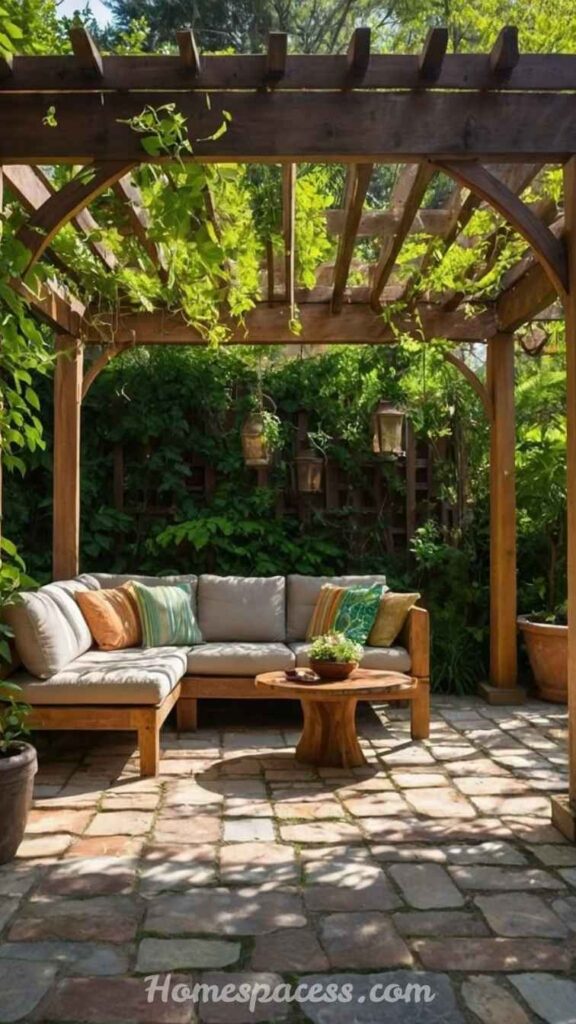
A pergola serves as outdoor architecture it defines space, creates enclosure without enclosing, and provides a framework for one of nature’s most beautiful design elements: climbing plants. Whether attached to the house over a patio or freestanding at the garden’s edge, a pergola with wisteria, jasmine, or clematis becomes a romantic, layered focal point that photographs like a countryside estate.
Modern pergola kits from aluminum or powder-coated steel eliminate the maintenance burden of traditional wood frames no painting, no staining, no rot. Retractable louvered roof systems add a smart layer of weather adaptability, allowing the space to be used in light rain while still providing full sun when desired.
Pro Tip
Size the pergola to cover at least 80% of the outdoor seating area beneath it. A pergola that’s too small looks like a decoration rather than functional structure and casts inadequate shade in summer.
Resurfaced or Stained Concrete Driveway
Budget-Friendly
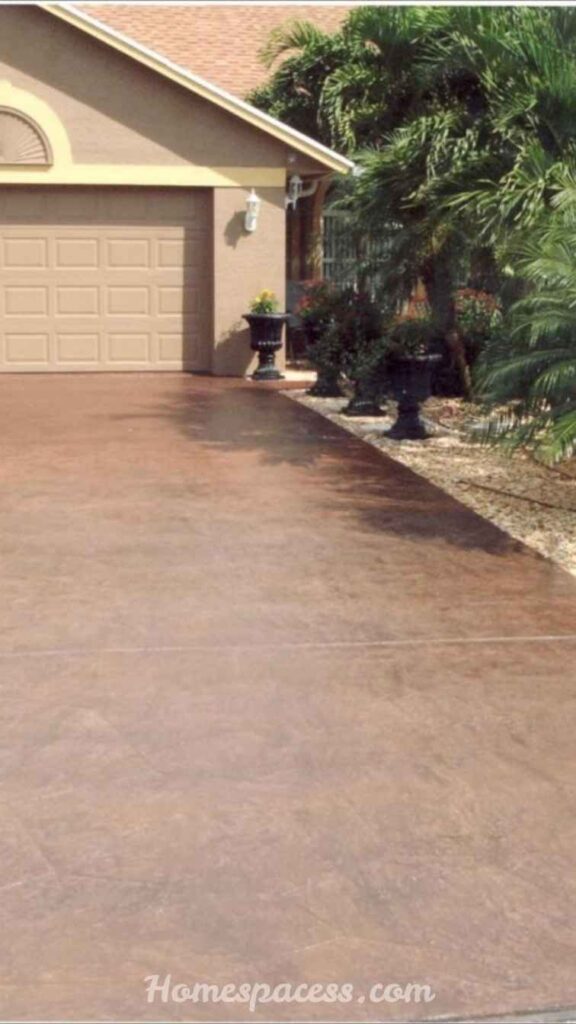
Not every homeowner has the budget for paver replacement but a structurally sound concrete driveway can be dramatically improved through professional resurfacing and staining. Concrete stains in charcoal, slate, or warm sand tones can transform a tired gray slab into something that reads as a deliberate design choice. Combined with saw-cut expansion joints arranged in a geometric pattern, the result can look custom-designed at a fraction of the cost of full replacement.
Epoxy coatings with decorative chip or mica finishes represent another tier of upgrade typically used in garage floors but increasingly applied to driveways for a polished, low-maintenance surface that resists oil, chemicals, and freeze-thaw cycles better than raw concrete.
Pro Tip
Acid stains penetrate the concrete and can’t chip or peel because the color becomes chemically bonded to the substrate. They’re a far superior option to surface-applied pigmented sealers, which wear through within 2–4 years.
Decorative Fencing & Garden Gates
Boundary Design
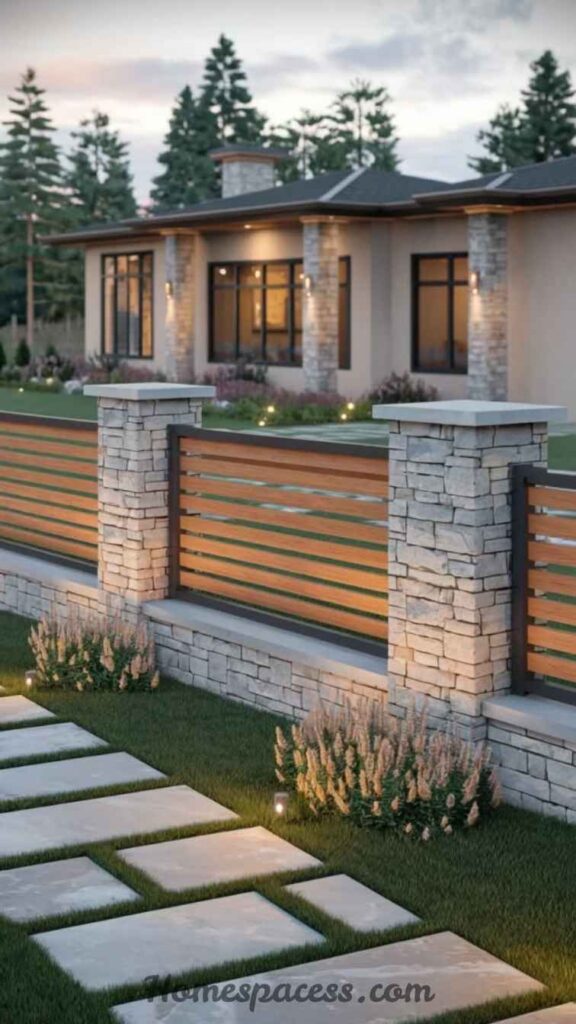
Fencing defines boundaries and establishes privacy but a well-chosen fence does much more. It contributes to the visual language of the entire property, frames the garden like a picture, and adds a layer of security without a security-system aesthetic. In 2026, the most considered fence designs combine materials: horizontal cedar boards with steel posts, or white picket sections with stone pillars, create combinations that feel architecturally resolved rather than off-the-shelf.
A garden gate deserves particular attention as a design moment. The gate is the first physical interaction a visitor has with your home a beautifully proportioned wooden gate with a hand-forged latch is a sensory experience, not just a barrier. This micro-detail elevates the approach to a home more than its modest scale would suggest.
Pro Tip
Set fence posts in concrete to a depth of at least one-third their total length. Shallow-set posts shift and lean within a few winters in freeze-thaw climates, and replacing a leaning fence post after the fact is disproportionately labor-intensive.
Exterior Paint Refresh with Premium Paint
Highest Impact/Cost
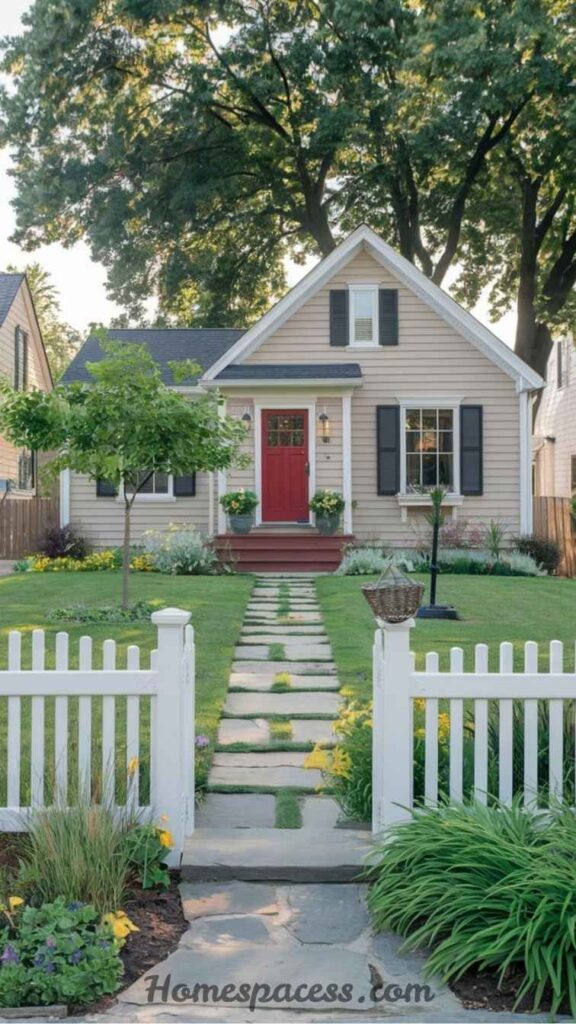
If you can only do one thing to your home’s exterior, make it a professional repaint with premium exterior paint. A quality repaint with a respected product Benjamin Moore Aura, Sherwin-Williams Duration, or equivalent transforms a home’s appearance more completely than almost any other single investment. The color choice alone can make a home look younger, larger, and more architecturally interesting.
The difference between premium and budget exterior paints isn’t just longevity it’s application quality. Premium products level out brush and roller marks more effectively, achieve higher hide in fewer coats, and maintain color vibrancy significantly longer without chalking, fading, or tannin staining.
Pro Tip
In humid climates, always use a mold-and-mildew-resistant primer before top-coating north-facing and shaded walls. These surfaces stay damp longer and are disproportionately prone to biological growth that shortens paint life.
Outdoor Water Features
Luxury Element
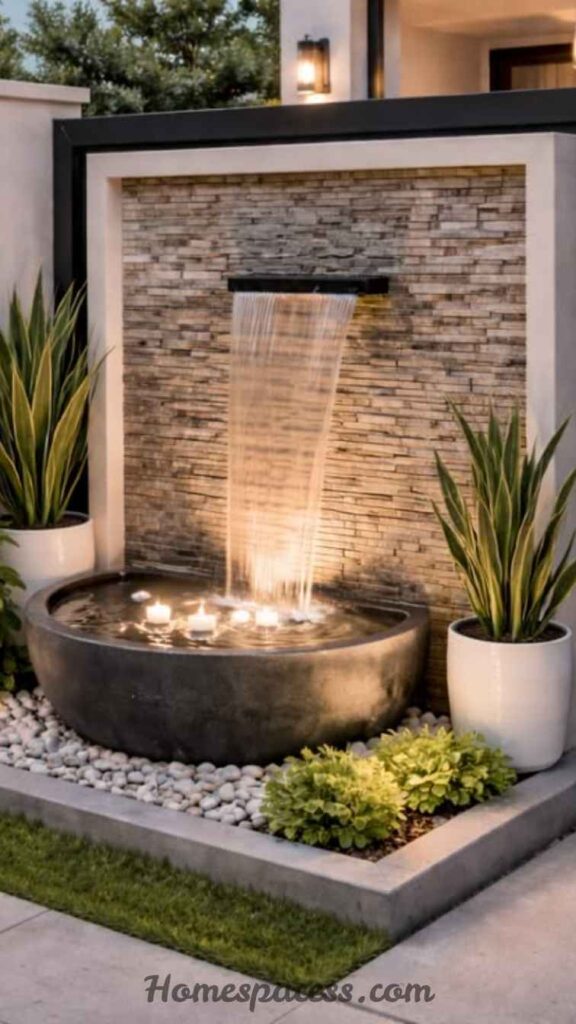
A well-placed water feature a wall fountain at an entryway, a naturalistic pond in a front garden, or a minimalist rill running parallel to a front path introduces sound, movement, and life to an exterior that static plantings and hardscape cannot provide. The sound of moving water has documented psychological benefits and creates a sensory experience that permanently elevates a property’s perceived prestige.
Modern water feature designs favor clean lines and integration with the landscape rather than the ornate tiered fountains of earlier decades. A sheet-water wall feature in corten steel, or a simple black granite basin with a low recirculating pump, requires minimal maintenance and makes a sophisticated design statement that ages beautifully.
Pro Tip
Install a dedicated GFCI-protected outdoor circuit for any water feature from the outset. Daisy-chaining extension cords to outdoor outlets is both a safety hazard and the leading cause of pump failure in DIY water feature installations.
Solar Panel Integration
Future-Ready
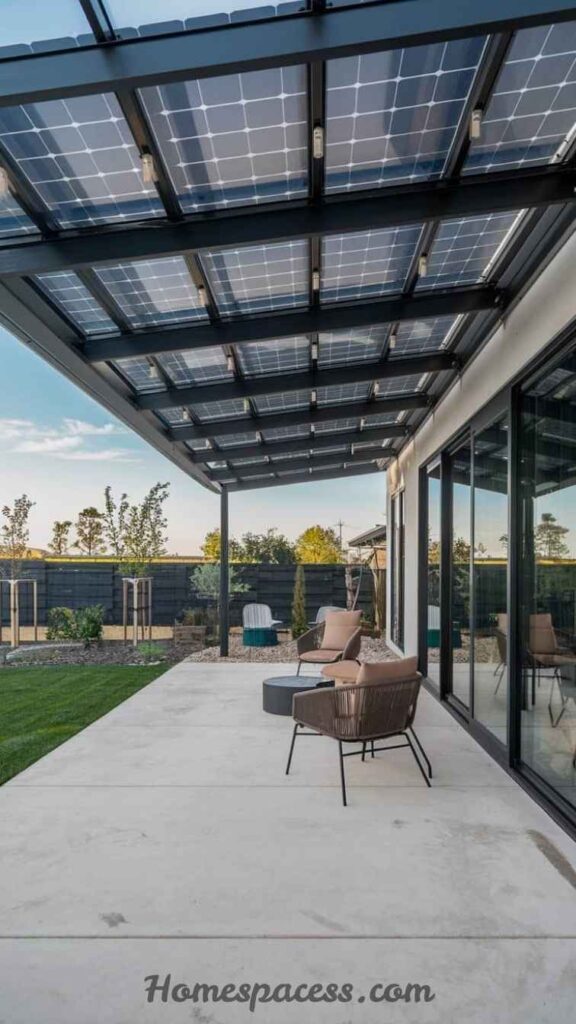
Solar panels have crossed the threshold from niche sustainability statement to mainstream exterior feature particularly in sun-belt climates and high-electricity-cost markets. In 2026, solar installation demand continues to accelerate driven by improving panel aesthetics (all-black designs now dominate), decreasing costs, and expanding battery storage options. Well-integrated solar arrays are increasingly becoming a curb-appeal asset rather than a liability in prospective buyers’ eyes.
Building-integrated photovoltaics (BIPV) solar cells embedded in roofing tiles or façade panels represent the frontier of aesthetic integration. Tesla Solar Roof tiles and equivalent products from other manufacturers have matured to a point where a fully solar roof is visually indistinguishable from conventional roofing at street level.
Pro Tip
Before solar installation, evaluate your roof age. Installing panels on a roof within 7 years of needing replacement means costly disassembly and reinstallation fees. Replace the roof first, then go solar.
Corten Steel Landscape Edging
Design-Forward
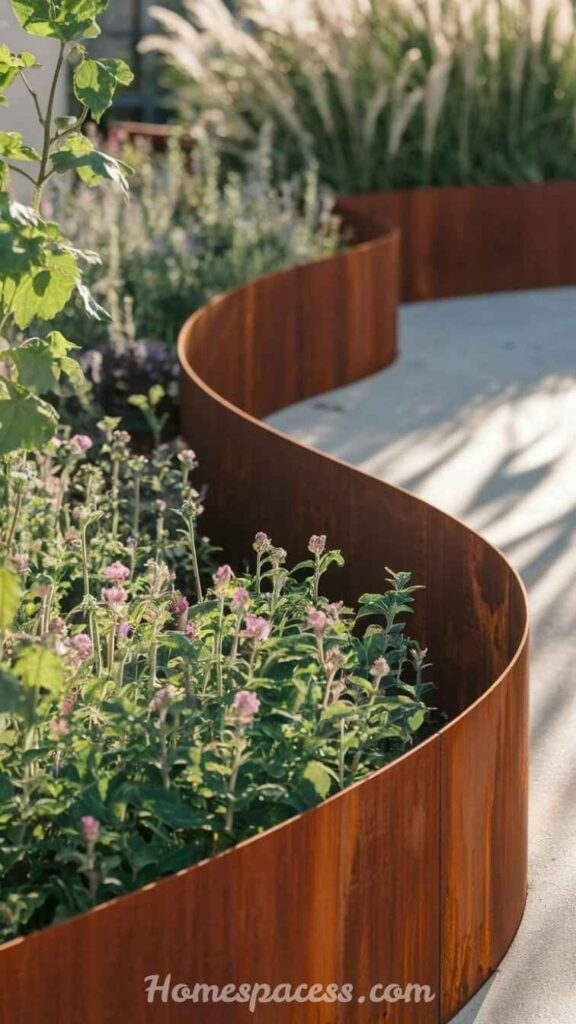
Weathering steel (corten) edging strips, retaining walls, and raised garden beds have become a signature element of contemporary landscape design and they’re beginning to appear in mainstream residential applications for good reason. The warm amber-rust patina of corten steel provides a striking counterpoint to green planting and gray hardscape, creating a sense of considered design that sets a property apart immediately.
Unlike painted steel or aluminum edging, corten actively improves with age. The oxidized surface layer is protective it doesn’t rust through, it becomes its finish. This means zero maintenance after the initial patina development period of roughly 6–18 months, depending on local humidity and rainfall.
Pro Tip
Avoid corten in coastal environments the salt air chemistry interferes with the self-passivating rust process and can cause the steel to degrade rather than stabilize. Powder-coated aluminum is the better choice within 1 mile of salt water.
Smart Irrigation & Exterior Automation
Smart Home
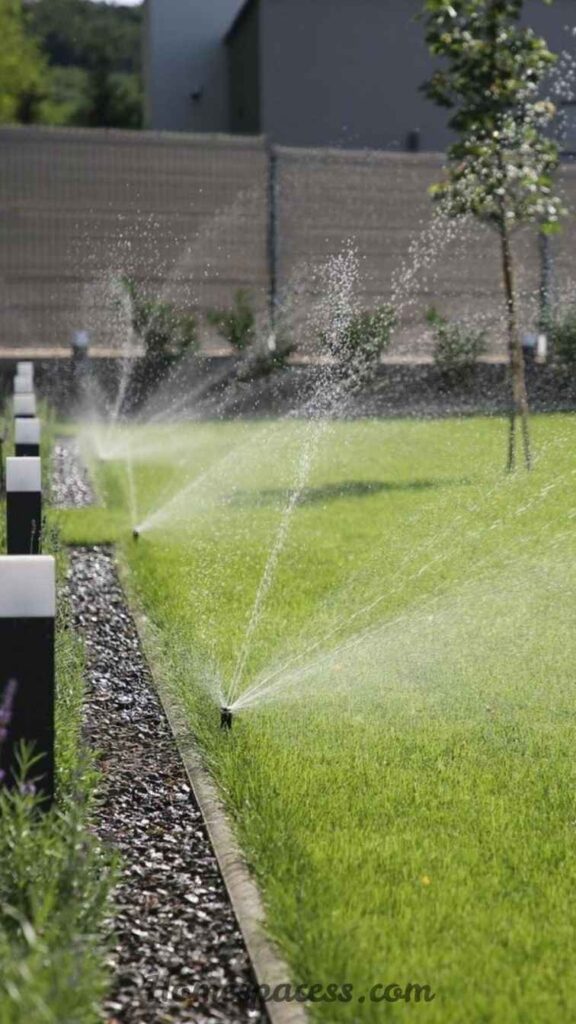
A well-maintained exterior is only possible with systems that make maintenance achievable and smart irrigation is the infrastructure that makes beautiful landscaping sustainable. Modern smart irrigation controllers connect to local weather data and adjust watering schedules automatically, reducing outdoor water consumption by 30–50% compared to timer-based systems. They represent the kind of invisible infrastructure that supports everything visible on your property’s exterior.
Exterior automation is expanding beyond irrigation: smart exterior outlets, automated outdoor lighting with geofencing, and even AI-powered cameras that monitor plant health are becoming accessible consumer products. Homes with integrated exterior automation are increasingly differentiated in the market, particularly among tech-forward buyers in higher price brackets.
Pro Tip
Install a weather-based smart controller (Rachio, RainBird, or equivalent) and connect it to a soil moisture sensor. The combination pays for itself in water savings within the first full summer season in most climates.
conclusion:
Your home’s exterior is far more than aesthetics it’s structural protection, energy management, ecological interface, and the first statement you make to the world about who you are and how you live. The 25 ideas in this guide represent a spectrum of investment levels, complexity, and impact but they share a common thread: they are all grounded in function, durability, and design intelligence rather than momentary trend-chasing.
The most important takeaway is sequencing and systems thinking. An exterior renovation that addresses drainage, envelope integrity, and material durability before cosmetic concerns will outperform a beautifully curated project built on inadequate preparation every time. Work from the fundamentals outward, allocate budget toward longevity over fashionableness, and use design trends as inspiration rather than instruction.
In 2026 and beyond, the homes that age best aesthetically, structurally, and financially will be those whose exteriors are conceived as integrated systems rather than collections of independent upgrades. Start with a clear vision of the whole, execute thoughtfully, and your investment will compound for decades.
Trend Analysis
2026 Home Exterior Trends What’s Dominant Now & What’s Coming Next
Understanding trend cycles is essential to making exterior investments that age well. The worst outcome of a renovation is spending significant money on an aesthetic that feels dated five years later. Equally problematic is ignoring trends entirely and producing a home exterior that feels out of step with its neighborhood and market. The goal is to ride sustainable design movements rather than fleeting fads.
2024–2025 ESTABLISHED
The “Quiet Luxury” Exterior
Muted, sophisticated palettes warm greige, aged olive, dusty terracotta replacing the all-white “farmhouse” look that peaked in 2018–2022. Homeowners are choosing materials and colors that whisper quality rather than shout newness. This trend is driven partly by a consumer fatigue with overly processed Instagram aesthetics.
2026–2027 DOMINANT NOW
Material Honesty & Textural Contrast
Mixing raw materials board-formed concrete with weathered cedar, steel with rammed earth is replacing the clean monotone exteriors of the 2010s. Texture is being used as a design language in itself, with rough-hewn finishes, hand-troweled stucco, and unpolished stone gaining ground over smooth, uniform surfaces. This reflects a broader cultural turn toward authenticity and craft.
2027–2028 EMERGING
Climate-Adaptive Architecture
Exterior design is increasingly being influenced by climate risk extended overhangs for solar shading, rainwater harvesting systems integrated into landscaping, and passive cooling strategies built into the building envelope. This isn’t purely an environmental trend; it’s driven by insurance pressures, energy costs, and a growing awareness that home exteriors must perform, not just look good.
2028–2030 FUTURE
Biophilic Integration at Scale
The relationship between built structure and living systems is becoming architectural philosophy rather than decorative choice. Green roofs, living walls, pollinator gardens designed to professional ecological standards, and water management systems that mimic natural hydrology cycles these will become standard premium exterior features rather than rare curiosities within the decade.
“The most timeless home exteriors don’t follow trends they respond to their environment, their climate, and their vernacular architecture. Trend-aware, but place-rooted.”
The key insight for homeowners in 2026 is that the most durable exterior investments are those that simultaneously track relevant design trends and respond to site-specific conditions. A beautiful material choice that’s climatically inappropriate dark cladding in a hot-sun climate, exposed wood in a high-humidity zone will look terrible within a decade regardless of how fashionable it was at installation. Choose what works for your specific environment, then express it beautifully.
Expert Insights
Expert Insights & Pro Tips Most Guides Never Share
After reviewing hundreds of exterior renovation projects, certain patterns emerge insights that experienced architects and landscape designers know intuitively but rarely articulate in accessible terms. The following expert insights address the decisions that most homeowners get wrong, and the optimizations that separate a good result from an exceptional one.
- Observe Before You Choose Color: Spend two weeks photographing your home’s exterior at different times of day before selecting a color palette. Light quality varies dramatically between morning and afternoon, between overcast days and direct sun. The colors that look best in your specific light conditions your microclimate, your site orientation should drive the selection, not the paint chip in the store.
- Work from Top to Bottom, Not Bottom to Top: Professional exterior renovators always begin at the roof plane and work downward. Roof pitch, material, and color influence all subsequent choices: siding, trim, doors, and landscaping should all respond to the roof, not precede it. Homeowners who choose siding first frequently end up with combinations that fight rather than harmonize.
- Scale is Everything: The single most common mistake in exterior upgrades is mismatched scale. Oversized coach lights on a small bungalow, tiny window boxes on a large colonial, a modest front door on a grand façade these scale mismatches read as errors even to observers who can’t articulate why. Every element should be proportioned to the overall structure. When in doubt, err larger: most exterior elements look better slightly oversized than undersized.
- Respect the Existing Architecture: Resist the temptation to retrofit a Victorian home with farmhouse exterior elements, or to add industrial-modern features to a Cape Cod. The most successful exterior renovations amplify what’s already architecturally authentic about a home rather than layering foreign styles. Work with your home’s existing language update it, refine it, refresh it but don’t overwrite it with a style that’s fashionable but contextually inappropriate.
- Budget for Sequencing, Not Just Materials: Many homeowners budget for materials and labor but underestimate sequencing costs. Doing exterior renovations out of order painting before finishing carpentry, landscaping before driveway work, installing lighting before final grade is established wastes money and often requires rework. A professional exterior consultant can map the correct renovation sequence before a single dollar is spent on materials, frequently saving 15–20% of total project cost.
Sustainability
Sustainability, Long-Term Value & Strategic Exterior Investment
The most sophisticated approach to exterior renovation treats your home’s exterior as a long-term asset one that should grow in value, reduce ongoing costs, and perform better environmentally with each investment cycle. This perspective shifts the question from “what looks good now?” to “what pays dividends over decades?” and produces meaningfully different decisions.
Material durability is the foundation of sustainable exterior strategy. Every time a material is replaced siding, roofing, decking, paving the environmental cost of manufacturing, transporting, and disposing of the old material is incurred again. Choosing materials with 40–60 year lifespans over those lasting 15–20 years isn’t just economically rational; it’s the environmentally responsible choice, even when the upfront cost is higher. The greenest material is often the one that never needs replacing.
🌤️
Passive Solar Design
Properly sized overhangs, deciduous shade trees, and light-colored exterior finishes can reduce cooling loads by 15–30%, reducing energy bills and carbon footprint simultaneously.
💧
Water Management
Rain gardens, permeable paving, and rain barrel systems reduce storm water runoff, recharge groundwater, and can significantly reduce landscape irrigation costs in drought-prone regions.
🌱
Ecological Landscaping
Native plant gardens require 70–90% less water and zero synthetic fertilizers compared to conventional turf, while providing essential habitat that monoculture lawns cannot support.
♻️
Recycled Materials
Reclaimed brick, recycled composite decking, and repurposed structural timbers add character and reduce material waste frequently at lower cost than new equivalents.
From a property value perspective, sustainable exterior features increasingly command market premiums that exceed their installation costs. Solar panels, high-efficiency windows, smart irrigation, and heat-reflective roofing are measurably valued by buyers in most markets and as energy costs continue rising, this premium is only likely to increase. Strategic exterior investment in sustainability is, increasingly, simply good financial planning dressed in environmental clothing.
Future Innovations
Future Innovations Reshaping Home Exteriors by 2030
The exterior of the home is about to become dramatically more technologically sophisticated driven by advances in materials science, smart home integration, and climate adaptation requirements. Homeowners planning major exterior renovations today should be aware of emerging technologies that may become standard within the next 5–7 years, both to avoid premature obsolescence and to take advantage of early-adopter advantages.
Electrochromic windows: glazing that tints or clears on demand via an electrical signal are moving from commercial buildings into premium residential applications. They eliminate the need for window treatments entirely on south and west exposures, dynamically managing solar gain throughout the day. Combined with building management systems, they represent a new layer of climate-responsive exterior design that no static window product can match.
Photovoltaic siding :cladding panels embedded with solar cells is the next frontier of building-integrated renewables. Companies including Mitrex and SolarBotanic are developing aesthetic BIPV siding products that generate electricity across the entire wall plane, not just the roof. As efficiencies improve and costs fall, the idea of an energy-generating façade visually indistinguishable from conventional siding moves from aspiration to practical reality.
AI-powered exterior maintenance systems :cameras and sensors that monitor moisture levels in cladding, detect early paint failure, identify pest activity, or alert homeowners to drainage issues before they become structural problems are a near-term reality. Several proptech startups are already deploying these systems in new construction; retrofit versions for existing homes are expected within 3–5 years. The implications for preventive maintenance and insurance cost reduction are substantial.
Phase-change materials (PCMs): embedded in exterior cladding systems represent a passive thermal innovation with significant potential. PCMs absorb heat as they transition from solid to liquid, releasing it as temperatures drop essentially turning the building envelope into a thermal battery. Early commercial applications have demonstrated reductions in peak cooling loads of 15–30%. Residential-scale applications are in advanced development from several building materials manufacturers.
Common Mistakes
Common Mistakes & Overlooked Factors That Derail Exterior Renovations
Even well-intentioned, well-funded exterior renovation projects frequently produce disappointing results not from lack of effort, but from avoidable mistakes that experienced professionals rarely make. Understanding these failure patterns is as valuable as knowing what to do, because a mistake in sequencing or material selection can negate an otherwise excellent decision.
Ignoring Drainage Before Aesthetics
The most expensive mistake in exterior renovation is making beautiful improvements over a drainage problem. If your foundation, driveway, or landscape grades water toward the house, no aesthetic upgrade will protect you from the moisture damage that inevitably follows. Always resolve grading and drainage before any other exterior investment.
Choosing Color in Isolation
Selecting a new exterior color without considering fixed elements roof color, brick, stone, concrete is extremely common and frequently produces clashing results. Your roof may have 10–15 years of life remaining; its undertones must inform every other color decision. Many homeowners forget this until they’ve already committed to paint.
Underinvesting in Site Preparation
Skimping on surface preparation before painting or cladding is the single most reliably career-limiting mistake a contractor can make and the one most often proposed as a cost-saving measure. Paint fails, cladding warps, and stone veneers crack when applied to surfaces that weren’t properly cleaned, primed, and allowed to cure. Preparation is 60% of quality exterior work.
Landscaping Without a Master Plan
Planting trees, shrubs, and perennials without a scaled landscape plan accounting for 10-year and 20-year growth habits is how you end up with roots in your foundation, branches rubbing your siding, and overgrown shrubs blocking windows. A one-time landscape plan from a professional is a fraction of the cost of removing a mature tree that was planted 15 feet too close to the house.
Prioritizing Trends Over Climate Suitability
Installing materials or features that are fashionable but climatically inappropriate untreated wood in a damp PNW climate, dark siding in a Phoenix sun exposure, standing water features in a freeze-thaw zone without winterization planning creates maintenance burdens and failure modes that erode both the aesthetic and the investment within years.
Neglecting Permit Requirements
Homeowners frequently assume small exterior projects don’t require permits. In reality, fences above a certain height, decks over a certain square footage, structural overhangs, and new electrical for outdoor lighting frequently require permits in most jurisdictions. Unpermitted work can complicate property sales, void insurance claims, and result in costly removal orders.
FAQ’S About Home Exterior Ideas
What are the best home exterior ideas to increase property value?
The highest-ROI exterior upgrades are, in order: garage door replacement (90–95% ROI), exterior paint refresh with premium paint (85–90% ROI), front door replacement with steel or fiberglass (80–85% ROI), fiber cement siding installation (75–85% ROI), and stone veneer accents on the entry (70–80% ROI). These figures vary by market, but the pattern holds across most regions functional improvements that enhance curb appeal consistently outperform purely decorative changes.
What home exterior color is trending in 2026?
In 2026, the dominant exterior color trends center on warm, earthy neutrals: aged olive, warm mushroom, dusty sage, and deep terracotta. These palettes reflect a “quiet luxury” sensibility sophisticated, muted, and material-focused. Black and charcoal remain strong for trim and doors, while the all-white farmhouse look continues to fade. Regional variations apply significantly: coastal markets favor pale blues and warm whites; southwestern markets embrace terracotta and adobe tones; Pacific Northwest homes are trending toward forest greens and warm grays.
How much does a home exterior renovation cost in 2026?
Exterior renovation costs span a very wide range. A basic paint refresh on a 2,000 sq ft home runs $4,000–$8,000 professionally completed. A full siding replacement ranges from $10,000–$40,000 depending on material choice (vinyl being cheapest, fiber cement mid-range, engineered wood higher). Comprehensive exterior renovations including siding, windows, roofing, and landscaping for a mid-size home typically run $50,000–$120,000. The most important principle: prioritize high-ROI upgrades first, then allocate remaining budget to aesthetic improvements.
What exterior material lasts the longest?
Brick masonry and natural stone are the longevity leaders at 100+ year lifespans with minimal maintenance. Standing-seam metal roofing lasts 40–70 years. Fiber cement siding carries 50-year manufacturer warranties and realistic 40–50 year lifespans when properly maintained. Composite/PVC trim elements are rated at 25–30 years without rot or paint maintenance. At the other end of the spectrum, standard asphalt shingles last 15–25 years and vinyl siding typically 20–30 years before needing replacement.
What is the first thing to upgrade on a home exterior?
Always address structural and drainage issues before any aesthetic upgrade this is the non-negotiable first step. Once the envelope is sound, the sequencing recommendation from experienced renovation professionals is: (1) roofing condition, (2) window and door sealing, (3) exterior paint or cladding, (4) front door and entry details, (5) lighting, (6) landscaping and hardscape. This sequence prevents spending money on finishes that will be damaged by underlying failures you haven’t yet addressed.
Aliza Noor founded Home Spacess to share simple, practical design ideas that work for real families. She focuses on cozy décor, soft colors, and natural textures that make a space feel truly lived-in. Based just outside Toronto, Aliza spends her days juggling family life, experimenting with home projects, tending to her plants, and occasionally moving things around just to create a fresh vibe.


