
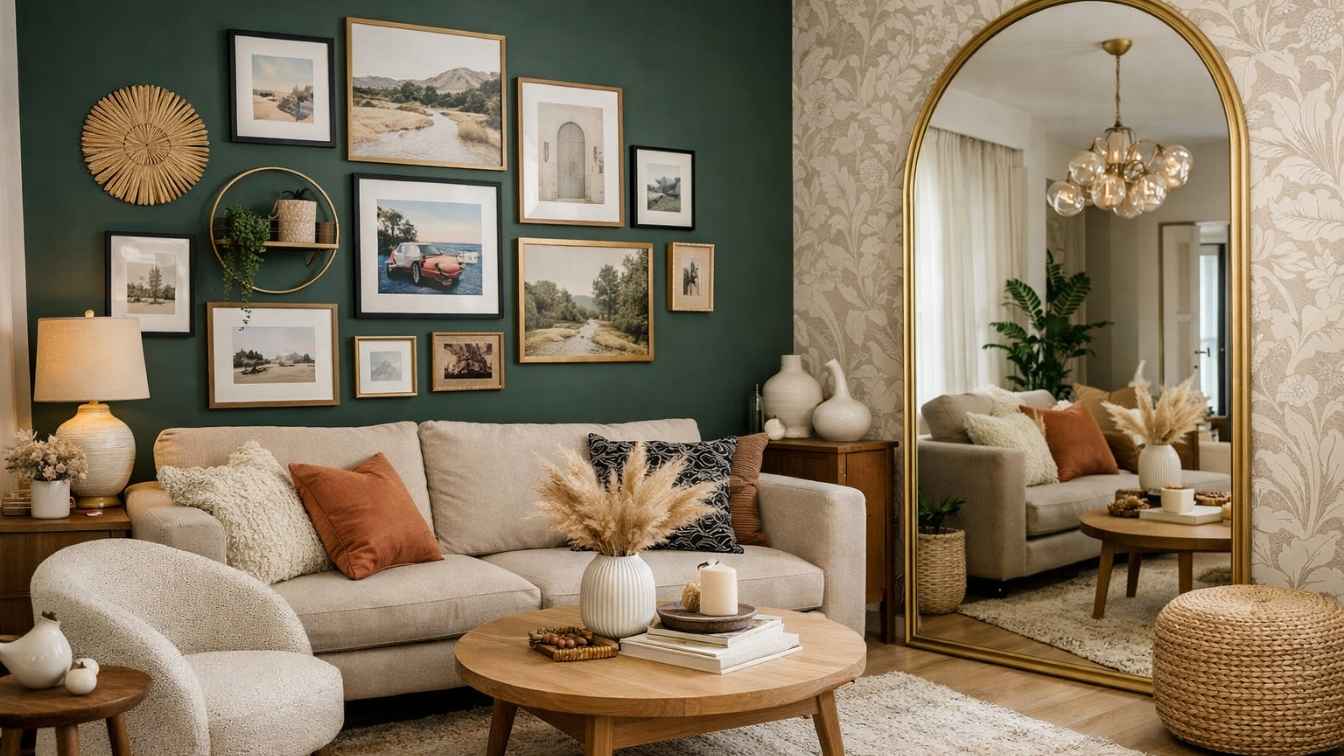
25 Home Decor Ideas That Actually Transform Your Space

Most homes feel “almost right” but never quite there. The difference isn’t a bigger budget it’s knowing which changes create real impact. This guide reveals 25 proven home decor ideas, from zero-cost rearrangements to smart investments that pay off for decades.
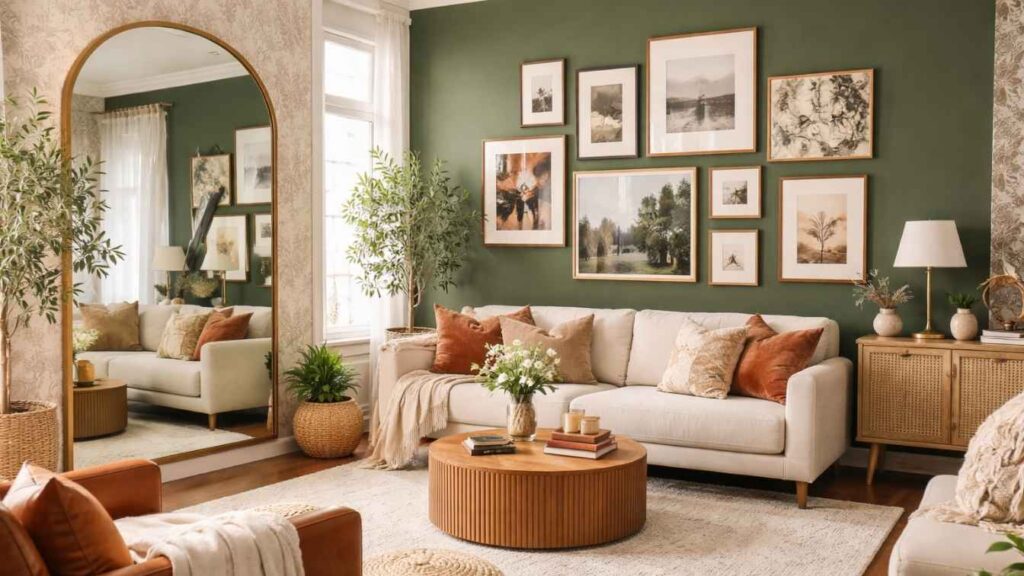
“The most beautifully decorated homes aren’t defined by expensive furniture or trendy pieces. They’re defined by intentional choices understanding light, proportion, texture, and story. Whether you have $50 or $5,000 to spend, this article gives you the framework and ideas to make your home feel genuinely curated, not just filled”.
72%
of homeowners say decor affects their daily mood.
$0–$50
cost of 8 ideas in this guide
12×
ROI of lighting upgrades at resale
Layer Your Lighting
The Three-Source Rule
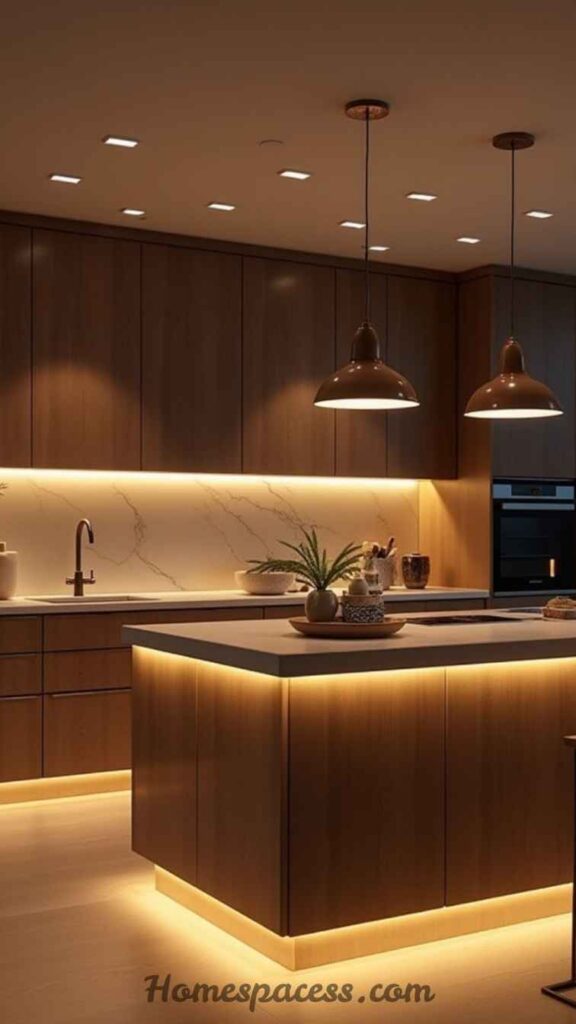
Most rooms rely on a single overhead light, which flattens the space and kills atmosphere. Interior designers use three light sources at varying heights: ambient (overhead), task (focused), and accent (decorative). For example, a living room gains enormous depth when you combine a floor lamp, a table lamp, and LED strip lights behind the TV console.
The rule of thumb: never have more than one light source at the same height. This creates visual layers that make any room feel professionally designed. Warm bulbs (2700–3000K) add coziness, while daylight bulbs (5000K) work better in home offices and kitchens.
Pro Tip:
Add dimmers to every light you install. The ability to reduce brightness by 40% at night changes the emotional quality of any room more than any furniture upgrade.
Must Read: 21 Kitchen Decor Ideas That Transform an Ordinary Kitchen Into a Space You Actually Love
Use a Statement Mirror to Double Your Space
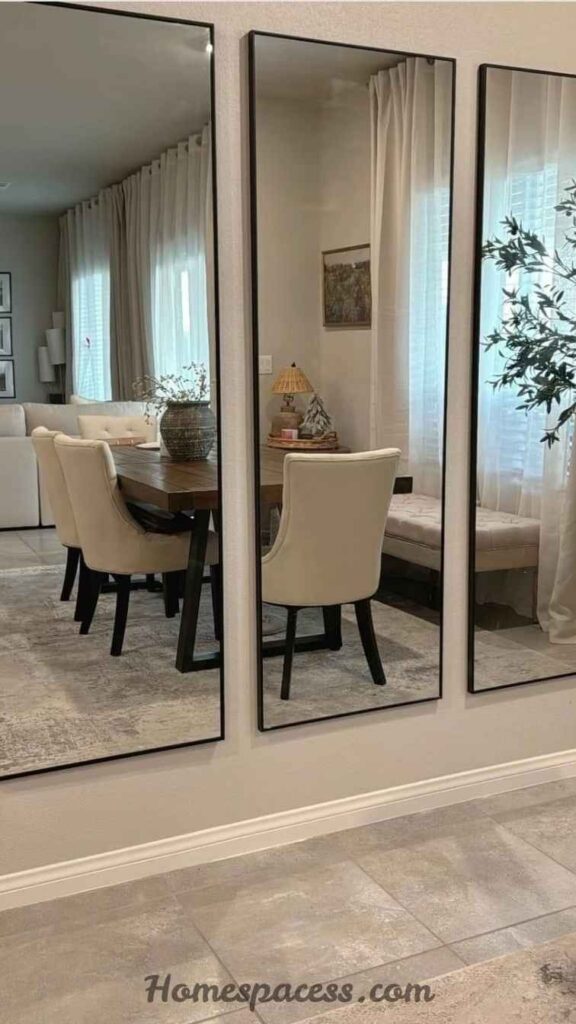
A large mirror particularly an arched or oversized rectangular one is one of the few decor items that literally makes your home bigger. Placed opposite a window, it bounces natural light deep into the room, reduces the need for artificial lighting, and creates the illusion of a second window. In narrow hallways, a full-length mirror turns a cramped space into an elegant entry gallery.
The sweet spot for mirror size is approximately two-thirds the width of the furniture it hangs above. A mirror that’s too small feels like an afterthought; one that extends to the ceiling feels intentional and grand. Vintage thrift-store frames can be repainted for a custom look at a fraction of the cost of new pieces.
Don’t Skip: 29 Bathroom Decor Ideas That Transform Any Space
Create a Gallery Wall That Tells Your Story
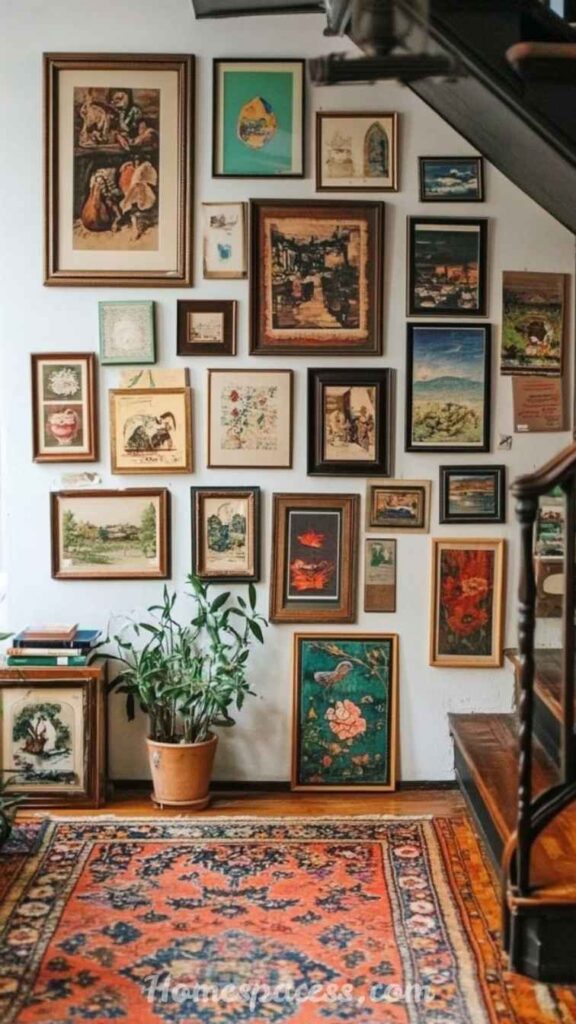
Gallery walls work because they combine personal narrative with visual rhythm. The common mistake is buying random prints to fill space. Instead, start with one anchor piece a large photograph, painting, or textile and build outward using frames that share at least one unifying element: color, shape, or finish. A mix of black frames in varied sizes will always feel cohesive.
Before hammering anything, lay the arrangement on the floor and photograph it from above. This digital preview saves time and avoids unnecessary wall damage. For rental spaces, adhesive strips can hold frames up to 4 lbs, making gallery walls fully reversible without losing deposit.
Pro Tip:
Leave exactly 2–3 inches between frames. Less feels cluttered; more loses the cohesive “gallery” feel. Use paper templates taped to the wall to plan placement perfectly before any nails go in.
Read More: 23 Front Porch Ideas That Will Transform Your Home’s First Impression
Bring the Outdoors In with Biophilic Design
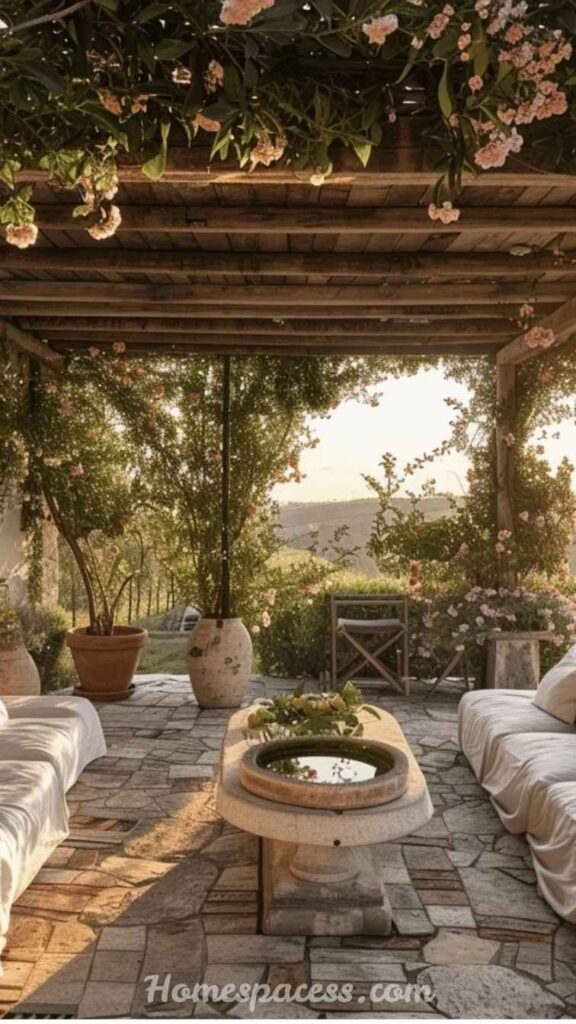
Biophilic design incorporating natural elements into interior spaces has moved from boutique hotels to mainstream homes. Research consistently shows that exposure to plants, natural light, and organic textures reduces cortisol levels and improves focus. This isn’t just aesthetics; it’s architecture serving human biology. Start with a cluster of three plants at different heights: a tall floor plant (like a fiddle-leaf fig or monstera), a medium shelf plant, and a trailing vine.
Natural materials matter equally. Swap synthetic rugs for jute or wool. Add a raw-edge wooden coffee table. Use linen curtains instead of polyester. These changes don’t just look better they age better, feel better underfoot, and contribute to healthier indoor air quality over time.
Don’t Miss: 22 Home Gym Ideas That Actually Work For Every Space & Budget
Paint an Accent Wall
Choose the Right Wall
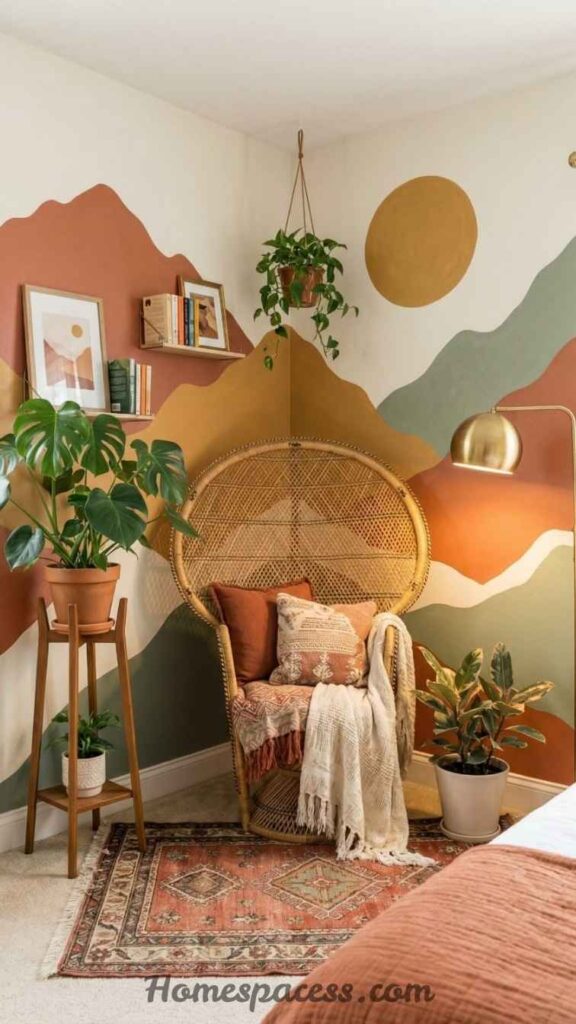
The accent wall is wildly misunderstood. Most people paint the wall they look at when entering a room. Interior designers paint the wall you look toward most often usually the far wall of a living room or the wall behind a bed headboard. This creates depth and draws the eye forward, making the room feel longer and more intentional. A deeply saturated color (navy, forest green, terracotta) on this wall acts as an anchor for the entire space.
Alternatively, painting the ceiling an unexpected color a soft sage or dusty blue adds drama most visitors can’t immediately identify. They just know the room feels special. This technique costs the same as a regular accent wall but creates three times the visual impact because the eye rarely expects color overhead.
Invest in One Hero Sofa, Style Around It
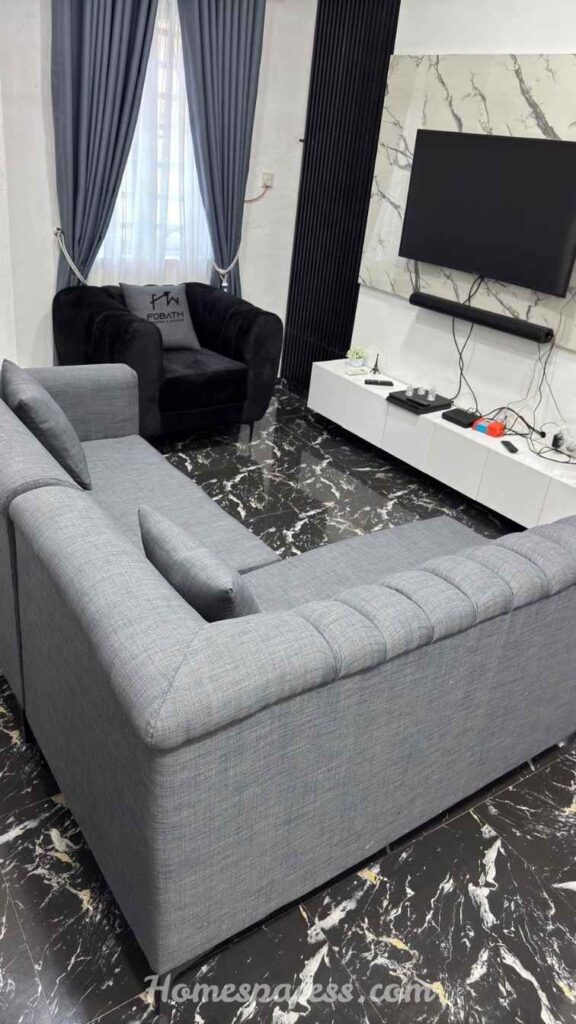
The sofa is the most-used, most-seen, and longest-held piece of furniture in most homes. Yet it’s often where people save money and then regret it. A high-quality sofa one with an 8-way hand-tied spring base, hardwood frame, and durable fabric will outlast three budget sofas and hold its shape and color for 15–20 years. Think of it as cost-per-use: a $2,000 sofa over 15 years costs less than $0.40 per day.
Style matters, but comfort drives satisfaction. Deep seats (over 23 inches) suit lounging; shallower seats (under 21 inches) suit more upright living. Choose a sofa in a neutral tone and use cushions and throws to introduce seasonal color this strategy keeps your space feeling fresh without replacing the main piece.
Use Rugs to Define Zones in Open-Plan Spaces
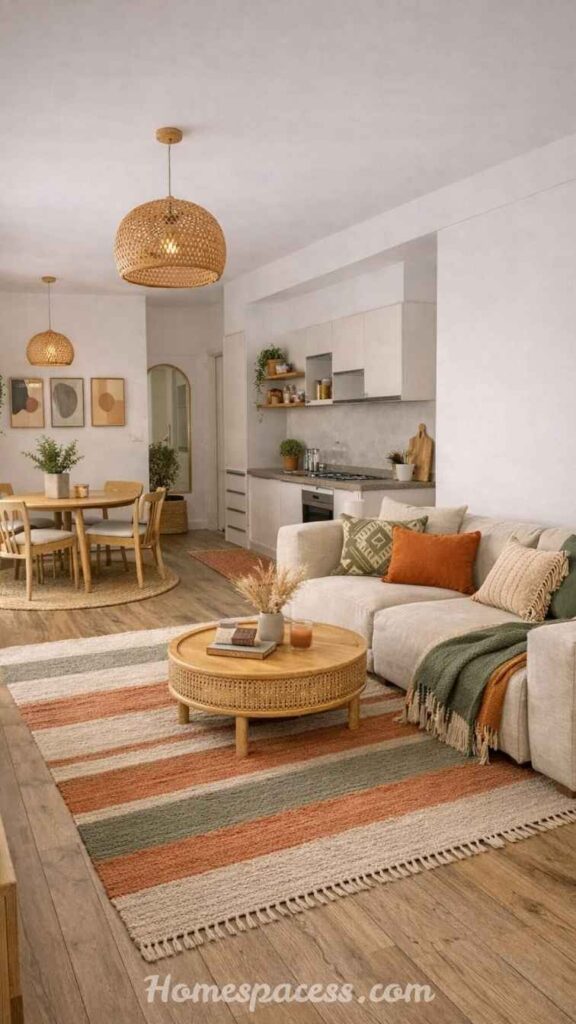
In open-plan apartments and homes, the absence of walls creates a spatial challenge everything feels like one undifferentiated room. Area rugs solve this architecturally. By placing a large rug under the sofa and coffee table, you create a “living room zone” even when the kitchen is visible ten feet away. The critical rule: the rug must be large enough for at least the front legs of every seating piece to sit on it.
A rug that’s too small is one of the top mistakes in home decor. It makes furniture look like it’s floating uneasily rather than anchored. For a typical sofa grouping, you’ll need at minimum a 8×10 foot rug. Layering a smaller, patterned rug over a larger neutral rug adds texture and visual interest without the cost of a single large decorative piece.
Rearrange Furniture
Better Conversation Flow
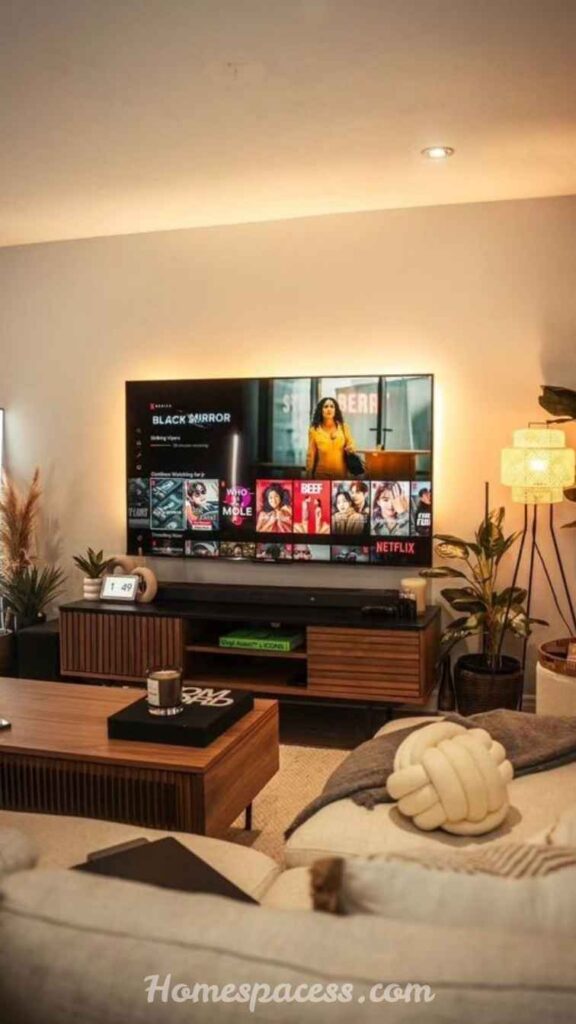
Furniture arrangement is home decor’s best-kept free secret. Most living rooms are set up with sofas pushed against all four walls creating a “waiting room” feeling where everyone is too far apart for comfortable conversation. Pulling furniture 12–18 inches away from walls and angling seating toward a focal point (fireplace, window, or TV) creates intimacy and makes the room feel more luxurious, not smaller.
The ideal conversational grouping keeps seating within 8 feet of each other. Beyond that distance, voices strain and eye contact becomes awkward. Try a U-shape or L-shape arrangement with a clear traffic path (at least 36 inches wide) from the entry to the exit. This single change costing nothing often transforms how a room feels more than any purchased item could.
Add Texture with Throw Pillows and Layered Blankets
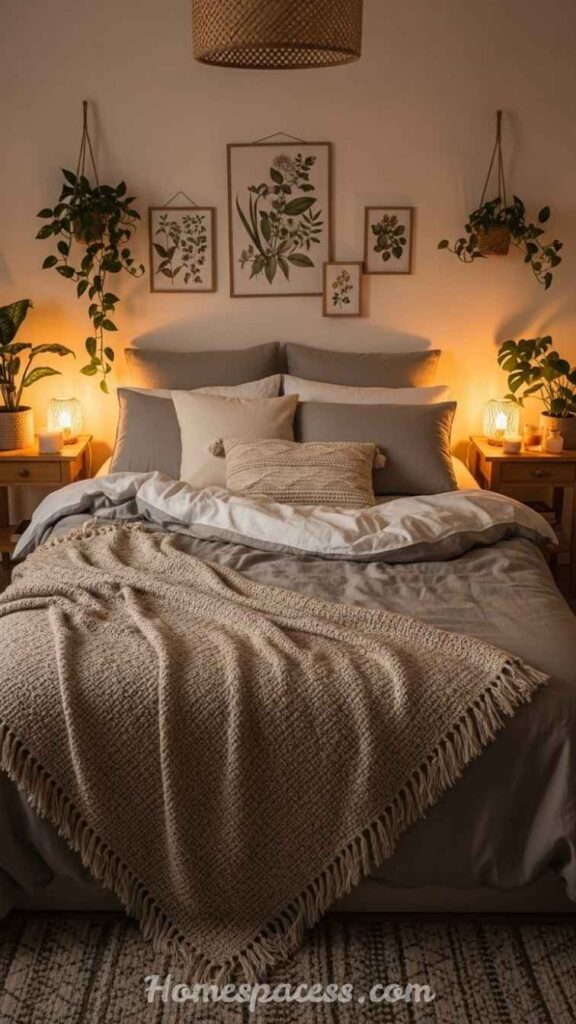
Texture is what separates a warm home from a cold showroom. When every surface in a room is smooth leather sofa, glass table, hardwood floors the space feels sterile no matter how expensive the pieces are. Introducing contrasting textures (chunky knit, velvet, linen, faux fur) engages the senses and creates visual richness. This is why luxury hotels pile on pillows and layered throws: they’re engineering comfort through material contrast.
The pillow formula that always works: combine one large solid (22×22), one medium pattern (18×18), and one small lumbar pillow. Use the 60-30-10 color rule 60% of your room’s main color, 30% secondary color, 10% accent. Pillows are one of the easiest ways to refresh a room seasonally without replacing anything structural.
Style Your Bookshelf Like a Visual Story
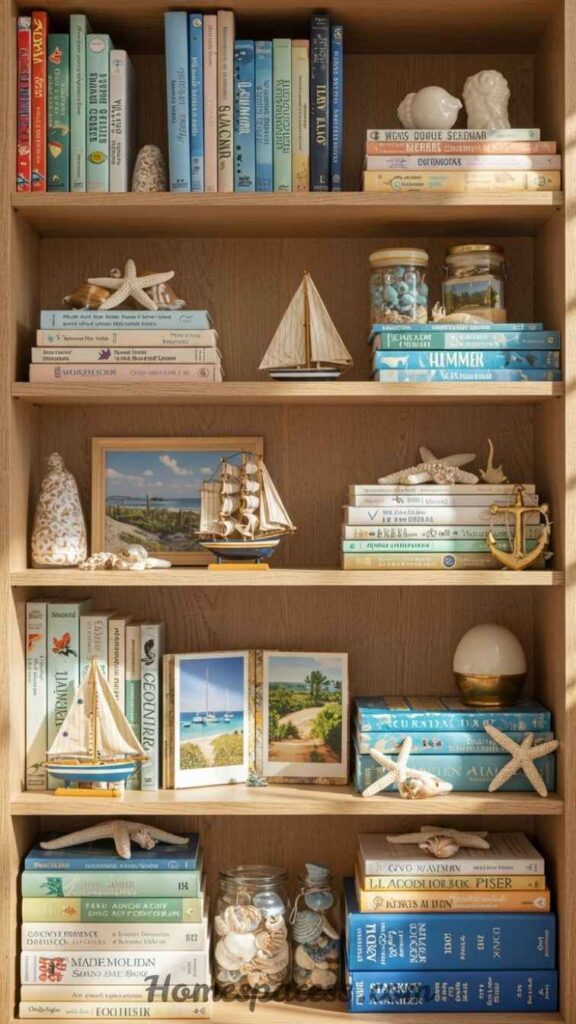
Bookshelves styled poorly look cluttered; styled well, they become the most personality-rich feature in a room. The key is alternating vertical books with horizontal stacks topped by a small object. Every third or fourth section should be opened up with a plant, framed photo, or sculptural piece to let the eye breathe. Organizing books by color spine creates a striking visual effect that reads as intentional even to guests who don’t consciously notice it.
Remove books with visually jarring covers by turning them spine-in the creamy pages facing outward create an elegant, library-style look. Use baskets or lidded boxes on lower shelves for practical storage that doesn’t compete visually with the curated upper shelves. The result: a bookshelf that looks like a designer set it up, using items you already own.
Hang Curtains High and Wide for Tall Windows
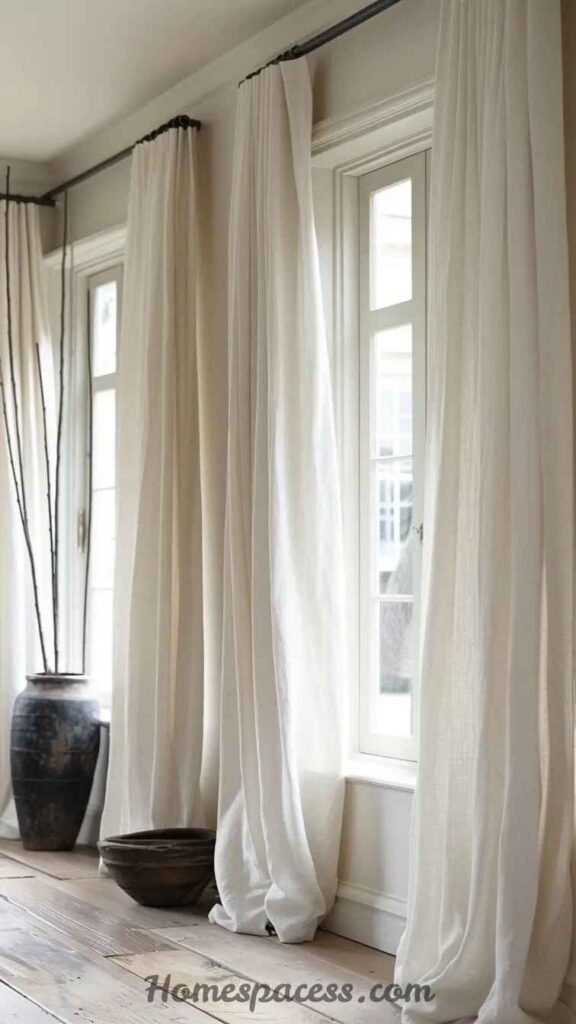
This is possibly the single most impactful change most rooms need: hang curtain rods as close to the ceiling as possible (ideally 4–6 inches below the ceiling), and extend the rod 12–18 inches beyond the window frame on each side. This simple change makes standard 8-foot ceilings look like 10-foot ceilings. It also allows maximum natural light when curtains are open, as the fabric panels clear the glass entirely.
Curtains that hover just above the floor look elegant; curtains that puddle slightly on the floor look intentionally luxurious. The one style to avoid: curtains that hang mid-window or stop short of the floor, which compresses the visual height of the room. Blackout lining adds functionality without changing the aesthetic, making this upgrade practical and beautiful simultaneously.
Pro Tip:
Use a curtain rod extender or two separate rods mounted to the ceiling for a truly architectural look. This costs under $30 but photographs like a high-end interior.
Create a Cozy Reading Nook from Dead Space
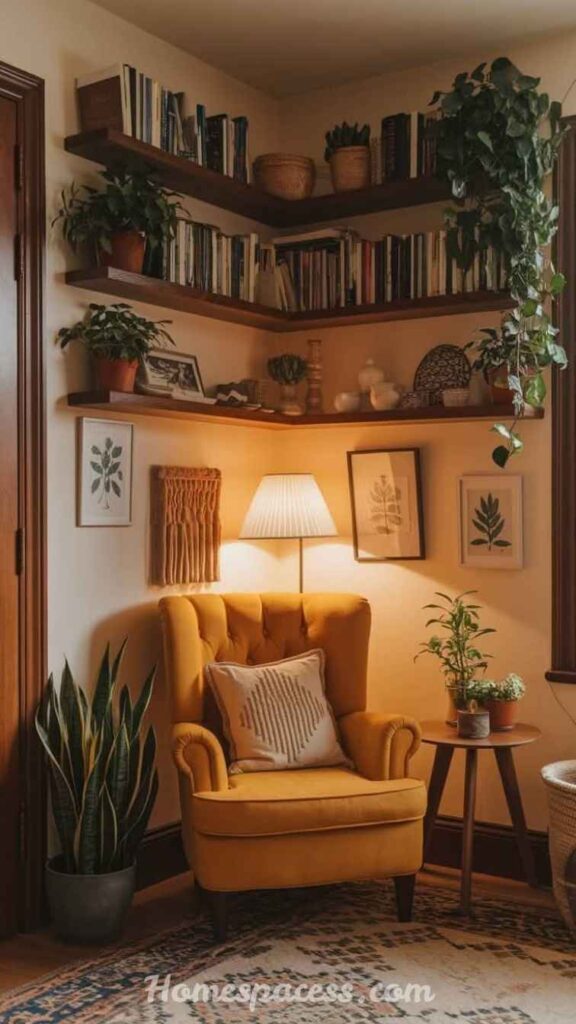
Every home has at least one awkward corner, underused alcove, or forgotten stretch of wall that’s functionally empty. A reading nook converts this dead space into the most sought-after spot in your home. The ingredients are simple: a comfortable chair or floor cushion, a small side table, a focused light source (floor lamp or pendant), and a textile (rug or sheepskin) to define the area. This creates a “room within a room” a psychological retreat that feels private even in open-plan spaces.
Window seats are the ultimate nook: add a custom cushion over a storage bench built into a bay window, hang floating shelves above for books, and frame the window with linen drapes. Total cost for a DIY version: $150–$400. The perceived value to buyers at resale? Interior designers cite this as one of the highest-ROI custom features in smaller homes.
Update Hardware for an Instant Kitchen Refresh
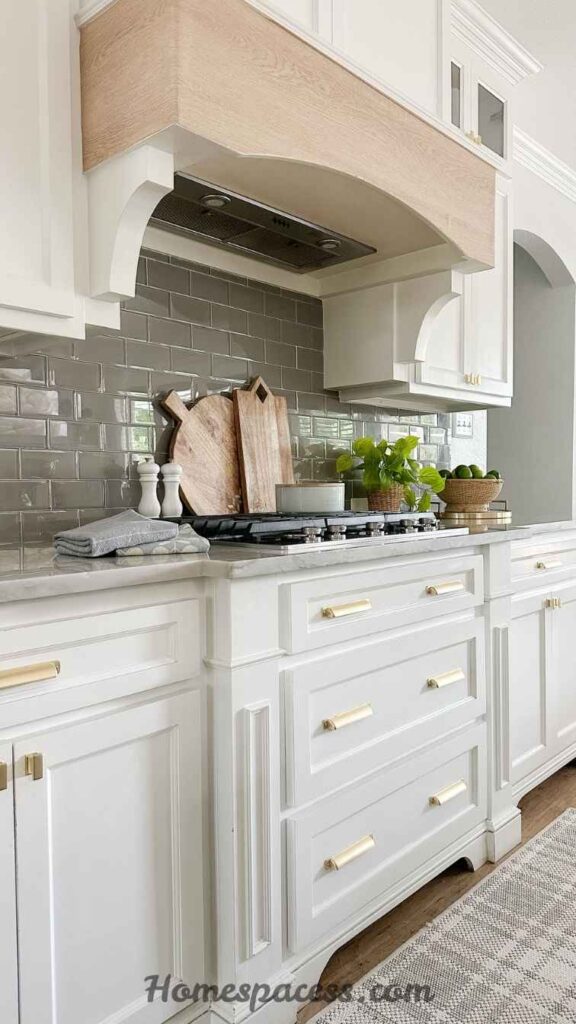
Cabinet hardware is the jewelry of the kitchen. Swapping dated brass pulls for matte black or brushed gold equivalents costs $3–$12 per piece and takes ten minutes per cabinet with a basic screwdriver. On a 20-cabinet kitchen, this transformation costs under $200 and looks like a $10,000 renovation in photographs. The reason: hardware draws the eye along every cabinet face, so its style and finish defines the kitchen’s entire aesthetic language.
The key is consistency. Choose one finish and repeat it on cabinet pulls, drawer handles, faucet, and light fixture for a cohesive look. Mixed metals can work, but only when intentional for example, a matte black faucet paired with warm brass hardware. Random mixing reads as unfinished rather than eclectic.
Design a Bedroom That Prioritizes Sleep Architecture
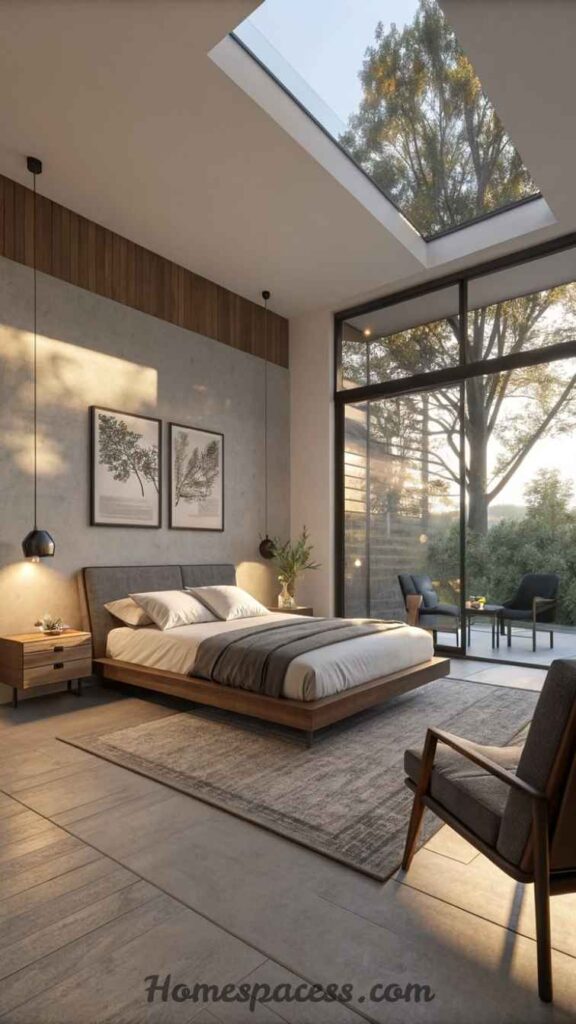
The bedroom should be optimized for sleep above all else and this is both a health principle and a design principle. Blackout curtains, cool-toned walls (soft grey, pale blue, dusty sage), a high-quality mattress, and layered bedding all contribute to an environment that signals the brain to wind down. Design research shows that rooms with less visual “noise” fewer objects, more negative space correlate with faster sleep onset and better sleep quality.
The nightstand setup is a bedroom’s most underrated detail. At a minimum: a lamp that hits the right height (the shade should be at eye level when you’re sitting in bed), a small tray for items that would otherwise scatter, and one meaningful object a plant, a candle, or a framed photo. This “intentional nightstand” concept prevents the surface from becoming a dumping ground and maintains the room’s calm visual quality.
Maximize Small Bathrooms with Strategic Styling
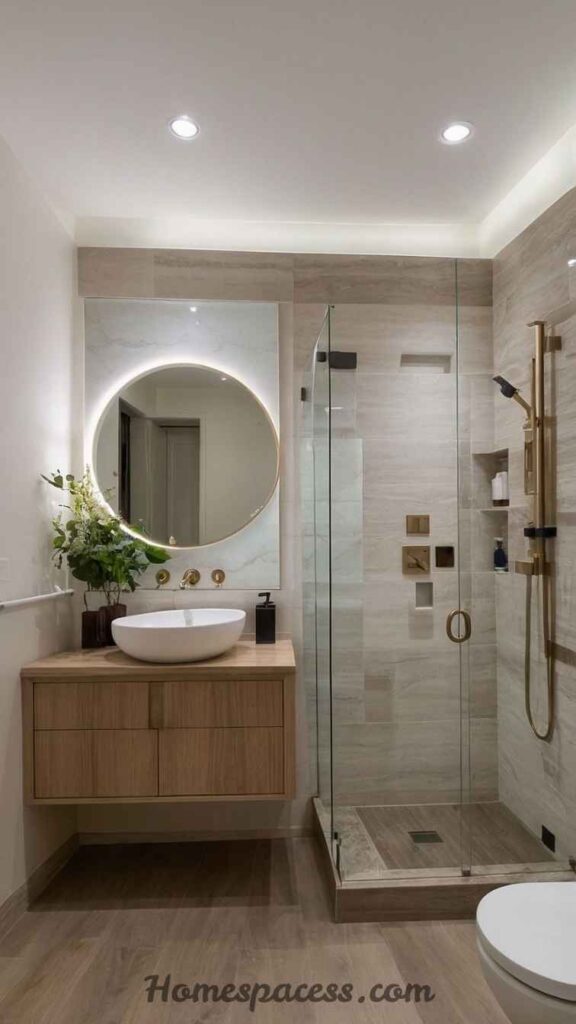
Small bathrooms feel larger when everything visible is intentional and beautiful. Start by removing everything from the countertop every product, soap, and toothbrush holder and replace only what’s essential in matching, aesthetic containers. A decanted hand soap dispenser and a small tray holding two or three items reads as “spa” rather than “storage overflow.” Wall-mounted shelves above the toilet create vertical storage without consuming floor space, which is the most precious resource in compact bathrooms.
A teak bath mat, white fluffy towels, a trailing plant (pothos thrives in humidity), and a single candle elevate a basic bathroom to hotel quality. This entire styling upgrade costs under $80. The principle is the same as professional real estate staging: clear surfaces signal spaciousness, and every visible object should earn its place through both function and beauty.
Style Your Entryway as the Home’s First Impression
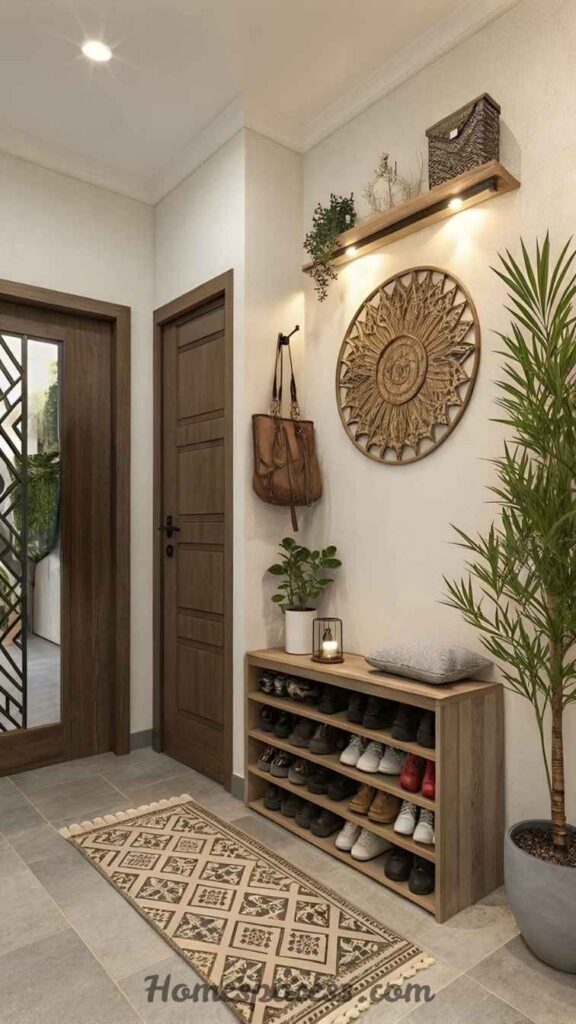
Guests form their impression of your home in the first seven seconds and that impression is set by the entryway. Even a narrow hallway becomes welcoming with the right elements: a console table or floating shelf for keys and mail, a mirror to reflect light and let guests check their appearance, a hook system for coats, and a moment of beauty a vase with branches, a small piece of art, or a plant. The entryway tells guests what the rest of the home will feel like before they’ve seen it.
For truly tiny entries (under 4 feet wide), skip the console table and instead install a floating shelf at shoulder height with a single hook below. Add a slim mirror that runs floor to ceiling this optically widens the corridor. A distinct rug pattern anchors the space and signals “this is the arrival zone,” creating a psychological transition between outside and inside.
Introduce Scent as an Invisible Layer of Decor
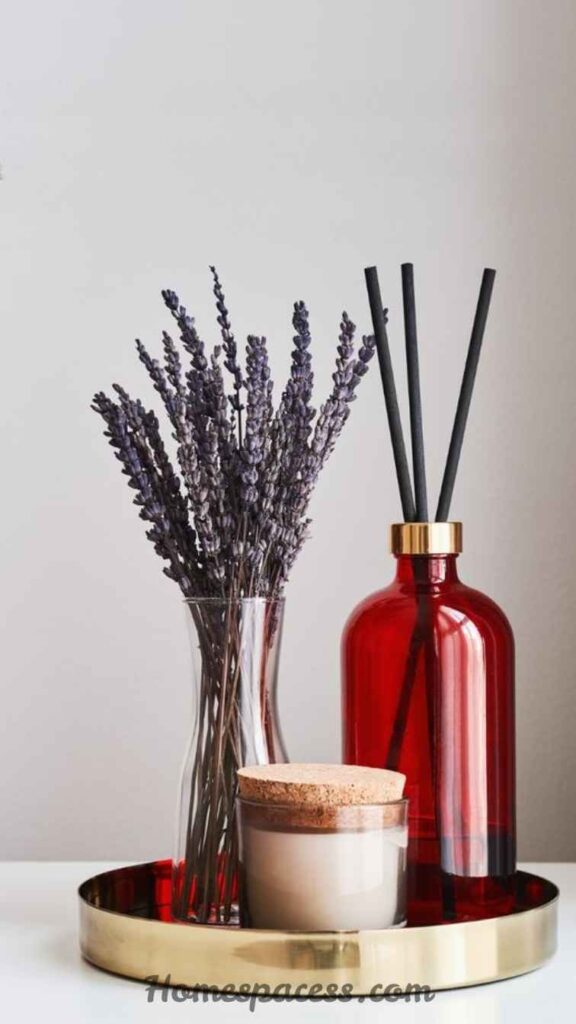
Scent is the only sense directly connected to the brain’s memory and emotion centers, which is why a well-chosen home fragrance feels like a design decision, not just a lifestyle accessory. A consistent signature scent the same candle, diffuser, or linen spray throughout a home creates a sensory through-line that guests remember long after they’ve left. Hotels do this intentionally; the most memorable luxury properties have proprietary fragrances that guests associate with the experience.
Choose a scent that complements your aesthetic: earthy woods and smoke for dark, moody interiors; fresh linen and eucalyptus for airy, Scandinavian-influenced spaces; citrus and herbs for Mediterranean or coastal styles. One quality candle ($30–$60) burned thoughtfully lasts longer than a dozen cheap alternatives and reinforces the design intent of the entire space.
Use Wallpaper Strategically
Not Everywhere2026 Trend
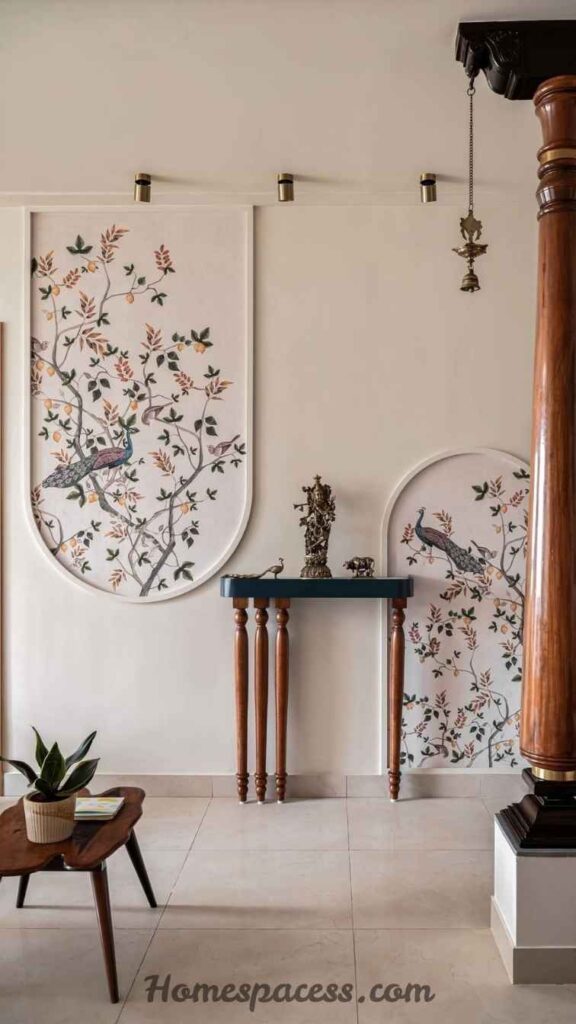
Wallpaper has made a decisive return, but its most sophisticated application is restraint. Papering a single wall the back of a built-in bookcase, the ceiling of a powder room, or a wardrobe interior creates a high-impact moment without overwhelming the space. This “wallpaper as highlight” approach lets even bold, maximalist prints work in rooms that would otherwise feel overcrowded by them. A leopard-print wallpaper inside a plain wardrobe, for example, is both unexpected and delightful.
Peel-and-stick wallpaper has improved dramatically in quality and now rivals traditional paper in texture and longevity, while being completely removable. This makes bold wallpaper choices risk-free for renters and commitment-averse owners alike. The current leading styles include large botanical prints, geometric arches, and hand-painted-look textures that photograph beautifully in every light condition.
Build a Functional, Beautiful Home Office CornerMid-Range
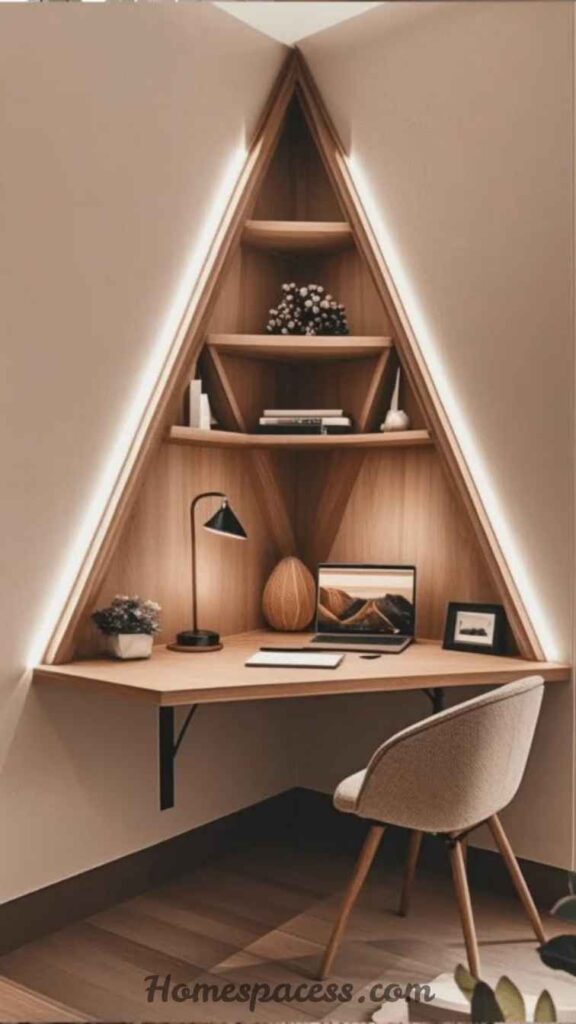
The home office isn’t just a practical zone anymore it’s a permanent part of how we live and present ourselves (via video calls) to the professional world. A well-designed home office corner features: a desk at the correct ergonomic height (28–30 inches for seated work), task lighting that doesn’t backlight you on video calls, cable management that keeps surfaces visually clean, and a curated “wall behind you” with a few pieces of art or a plant that reads well on camera.
For small-space home offices, a floating wall desk takes up zero floor space and can fold away when not in use. Pair it with a pegboard above for tool and supply organization that doubles as a design feature. The key insight most people miss: your home office background is now a public-facing design decision, not just a private room. Treat it accordingly.
Pro Tip:
A ring light or a desk lamp positioned at eye level (not overhead) eliminates unflattering shadows on video calls. This is both an ergonomic and a social investment.
Style Your Dining Table as a Daily Experience
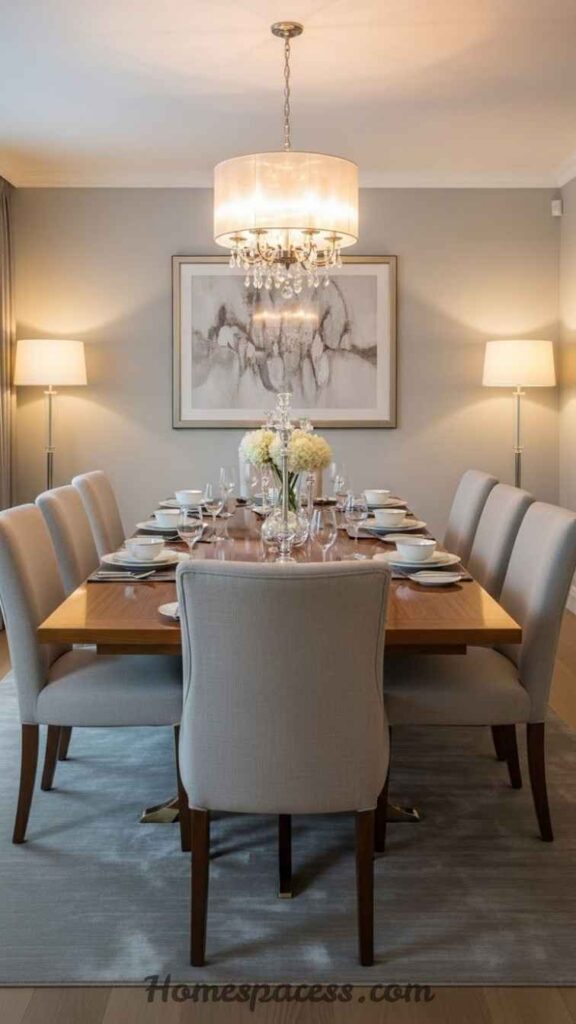
The dining table is the social center of the home, yet most tables sit unstaged until guests arrive. A low, permanent centerpiece a wooden bowl with fruit, a cluster of candlesticks, or a trailing succulent keeps the table intentional on ordinary days. For dinner parties, styling the table takes 15 minutes with the right toolkit: linen napkins, mismatched vintage glassware, tapered candles, and a botanical element (fresh eucalyptus branches, for instance) work together effortlessly.
The height rule for table centerpieces: keep arrangements under 12 inches tall if guests sit across from each other, so eye contact and conversation aren’t blocked. Wide, low arrangements (a wooden cutting board with cheese and fruit for casual meals, or a row of bud vases for something more formal) always outperform tall, narrow arrangements in both aesthetics and social function.
Create Visual Continuity with a Consistent Color Story
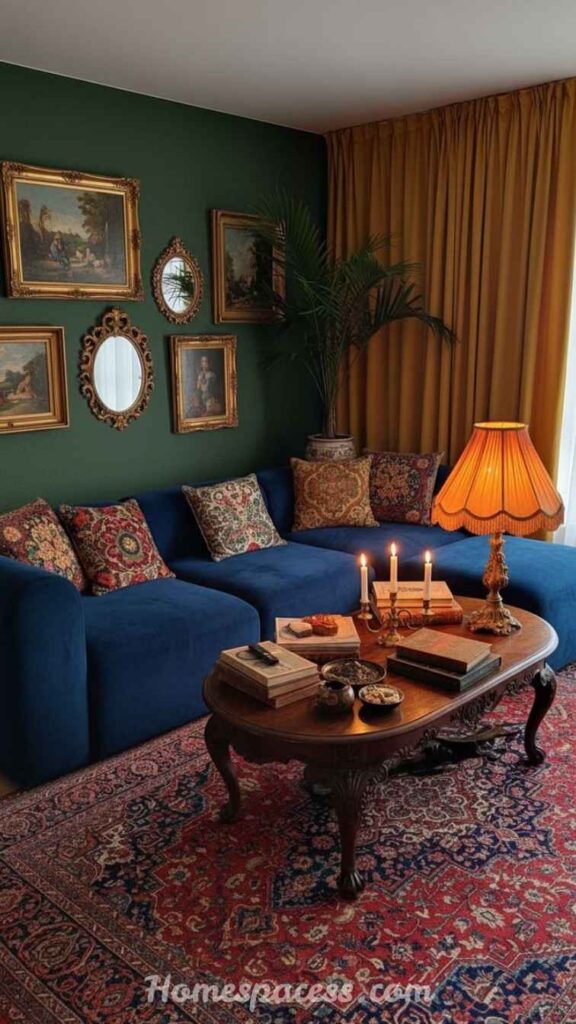
Professionally designed homes feel cohesive because they operate on an intentional color story a palette of 3–5 colors that appears in varying proportions throughout every room. When you stand in your living room, you should see elements that echo in the hallway; when you’re in the bedroom, the colors should feel related to the bathroom. This doesn’t mean everything matches it means colors converse with each other throughout the home.
A practical starting point: walk through your home with a camera and photograph the dominant colors in each room. If you see eight unrelated palettes, that’s why the home feels fragmented. Choose one primary neutral, one warm accent, and one cool accent, then introduce these gradually through pillows, art, plants, and small objects across all spaces. This process is free and produces results that feel like a professional redesign.
Curate, Don’t Accumulate The Edit-First Approach
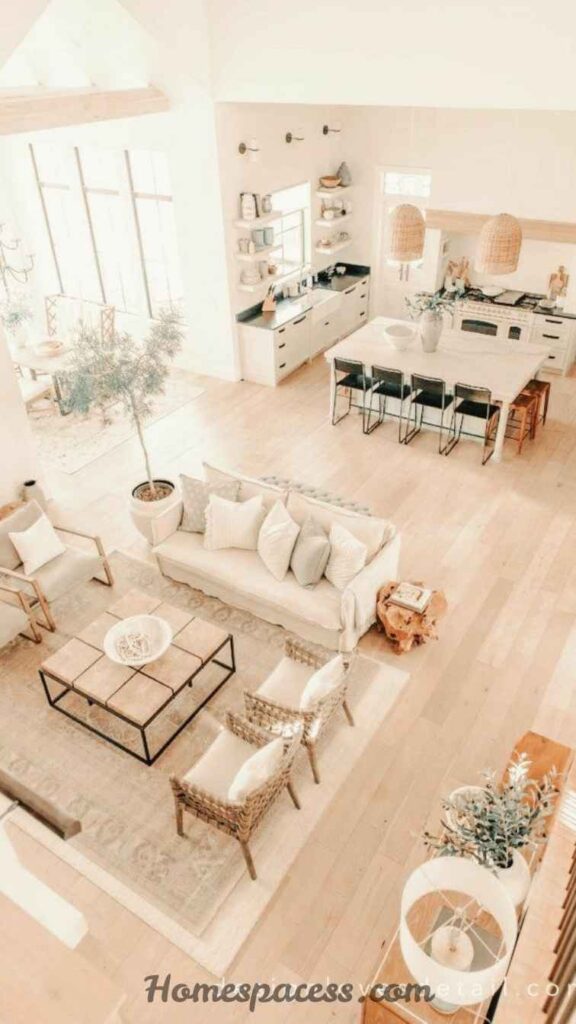
The most common reason homes feel cluttered isn’t lack of storage it’s excess of possessions. Professional interior designers often start projects by removing 40% of what a client owns before adding anything new. This “edit-first” principle is counterintuitive (we associate good homes with beautiful things), but its logic is sound: a room with 12 carefully chosen objects looks more elegant than one with 40 random ones. Each object you display should earn its place.
The “shop your own home” technique is a related strategy: move objects between rooms before buying anything new. A vase in the bedroom might be exactly what the bathroom needs. A print languishing in the office might be perfect for the hallway. Most homes contain beautiful things in the wrong places rearranging before purchasing almost always reveals underused treasures that work better than anything new you’d buy.
Add Architectural Interest with Molding and Paneling
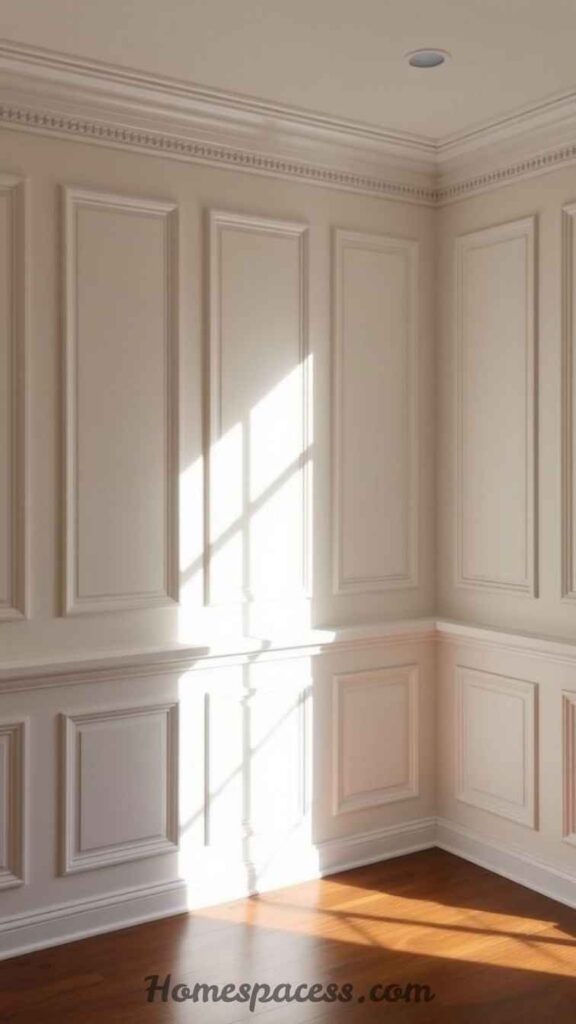
Flat walls are the baseline; architectural detail is the upgrade. Wainscoting (wood paneling on the lower third of a wall), picture rail molding, or board-and-batten patterns add dimension that photographs beautifully and feels expensive even when completed as a DIY project with materials costing $150–$400 per wall. Painted in the same color as the wall above (or a contrasting shade for more drama), paneling transforms a plain room into one that looks purposefully designed from the beginning.
Fluted panels vertical grooved panels are 2026’s fastest-growing architectural detail. They work on full walls, as room dividers, on the fronts of kitchen islands, and on the sides of built-in cabinetry. The vertical lines elongate any surface, making rooms feel taller. Pre-made fluted MDF panels are now widely available at home improvement stores, making installation approachable for intermediate DIYers.
Optimize Outdoor Spaces as Rooms with Open Ceilings
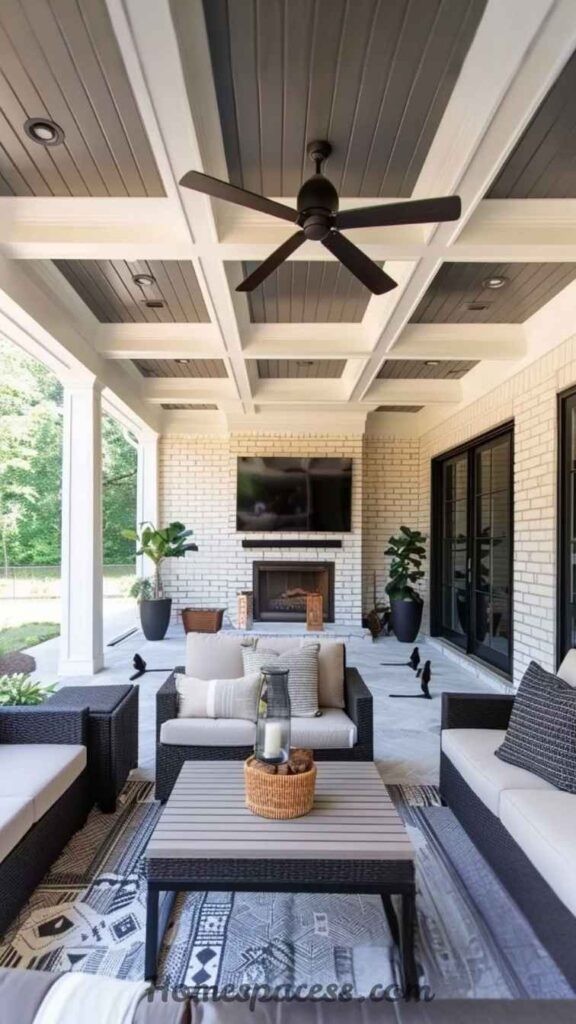
The pandemic permanently shifted how people use outdoor space patios, balconies, and even small terraces are now treated as functional rooms rather than overflow areas. The key to an excellent outdoor living space is applying the same principles as interior rooms: a defined “seating area” with weather-resistant furniture, an outdoor rug to anchor the zone, string lights or lanterns for evening atmosphere, and at least one plant or garden element to soften hard surfaces. A $200 balcony transformation can add a room to a small apartment’s functional space.
Weather resistance is non-negotiable: teak, powder-coated steel, and solution-dyed acrylic fabrics are the materials that last 10+ years outdoors without fading or rotting. Cheap outdoor furniture typically requires replacement every 2–3 years, making it more expensive over time than a quality initial investment. Outdoor rugs made from polypropylene are waterproof, mold-resistant, and now come in beautiful patterns that rival indoor textiles.
Design with Personal Artifacts
The Anti-Generic Principle
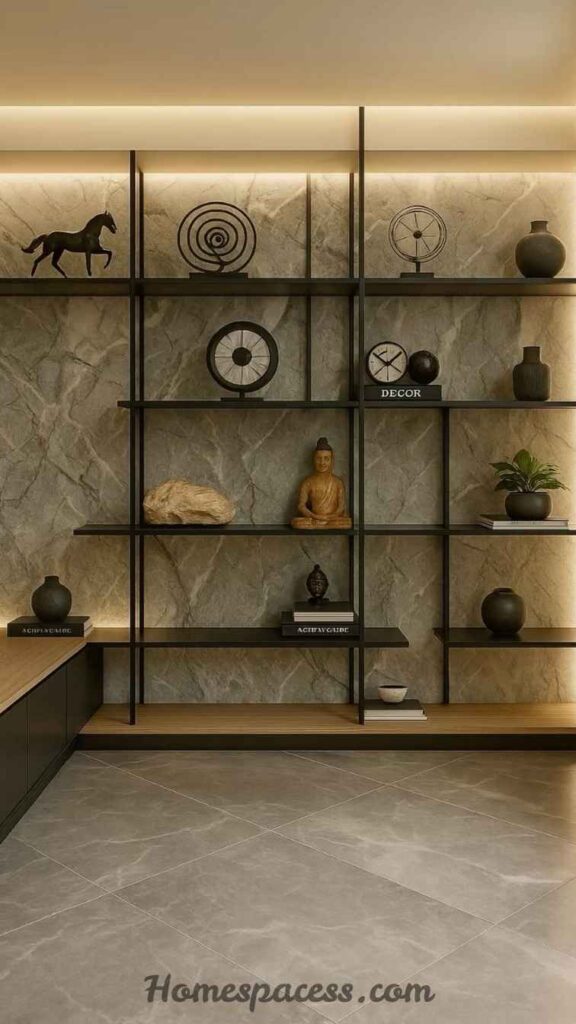
The homes that feel most memorable are the ones that couldn’t be replicated on a showroom floor they contain fragments of a life actually lived. Travel photographs, inherited ceramics, hand-crafted objects from artisan markets, children’s framed drawings given gallery-wall treatment these pieces give a home authenticity that no catalog purchase can provide. This isn’t about nostalgia; it’s about specificity. Generic art from mass retailers fills a wall; personal artifacts start conversations.
The curation challenge is balancing personal meaning with visual order. A practical approach: designate specific zones for personal items (a gallery wall, a dedicated shelf, a curated tabletop vignette) and keep the surrounding areas cleaner and more neutral. This creates a “curated spotlight” effect where personal pieces feel intentional and prominent rather than scattered and overwhelming. Your home’s story deserves to be told well not just told.
Pro Tip:
Frame sentimental items you wouldn’t normally display a child’s first drawing, a pressed flower, a handwritten recipe card. Using identical frames (black or white) creates visual unity that transforms personal ephemera into intentional art.
Conclusion
Great home decor ideas don’t require a big budget. They require smart choices. Start small change your lighting, move your furniture, add a textured throw. Each small step builds toward a space that feels truly yours. You don’t need to do everything at once.
Your home should tell your story. Use these home decor ideas as a starting point, not a rulebook. Trust your instincts. Mix old with new. Choose what makes you feel good. A beautiful home isn’t perfect it’s personal. Begin today, one room at a time.
Trend Analysis
2026 Home Decor Trend Analysis: What’s Rising and What’s Fading
Understanding where design is heading helps you make purchases that age well rather than trends you’ll want to replace in two years. Here’s what the design industry’s leading voices are tracking for 2026 and beyond.
Rising Strong
Quiet Luxury Interior
Understated materials linen, travertine, aged leather in muted palettes. No logos, no excess, maximum material quality. Inspired by fashion’s “old money aesthetic.”
Rising Strong
Japandi Fusion
The continued convergence of Japanese wabi-sabi and Scandinavian hygge: functional simplicity, natural imperfection, warm neutrals, and craftsmanship over ornamentation.
Emerging 2026
Terrazzo Renaissance
From countertops to floor tiles, terrazzo’s return is now extending to accessories, wallpaper, and even furniture surfaces. The colorful chip patterns work in both bold and neutral palettes.
Emerging 2026
Curved Everything
Sharp corners are retreating. Arched doorways, rounded sofas, circular mirrors, and curved cabinet fronts soften interiors and signal emotional warmth a counter-reaction to years of cold minimalism.
Fading Out
All-White Everything
The all-white interior peaked during the mid-2010s Instagram era. Warm plasters, cream, greige, and earthy neutrals have replaced clinical white as the go-to neutral choice.
Fading Out
Farmhouse Maximalism
Shiplap, mason jar light fixtures, and barn doors are rapidly dating. Replaced by more refined rustic influences reclaimed wood with clean lines, muted palettes, and fewer overt “country” signifiers.
What this trend analysis reveals is a clear macro direction: authenticity over novelty, quality over quantity, and warmth over clinical perfection. The homes that will feel timeless in 2030 are already being designed around natural materials, personal meaning, and functional comfort not viral aesthetics.
Expert Insights
What Professional Interior Designers Know That You Don’t
These insights come from the working principles of professional designers the kind of knowledge that separates a good room from a great one and isn’t found in standard decorating guides.
The Odd Number Principle
Design professionals consistently style objects in odd numbers groups of three, five, or seven. The reason is psychological: even numbers create visual symmetry that the eye resolves immediately and then ignores. Odd groupings create slight asymmetry that keeps the eye engaged, moving between objects and reading the arrangement as more dynamic and interesting. This applies to candles on a mantle, books on a shelf, and plants on a windowsill.
Proportion Beats Price Every Time
A $50 lamp that’s the right size for its table creates a more beautiful result than a $500 lamp that’s too small or too large. Professional designers obsess over proportion because the human eye is wired to recognize it even people who can’t articulate why a room looks “off” are usually responding to proportional mismatches. Before buying any piece, measure the space where it will live and compare to the item’s actual dimensions.
Designer Rule:
Artwork should fill approximately two-thirds to three-quarters of the wall space above a sofa or console table. An 84-inch sofa works best with art that spans 56–63 inches. Most people hang art that’s 30–40% too small.
Light Before Style
Every professional design project addresses lighting before furniture placement and long before purchasing decorative objects. This is because the quality of light determines how every subsequent decision looks. A beautifully chosen paint color on the wrong wall one that receives no natural light will look darker and flatter than intended. Study how light moves through your space at different times of day before committing to paint colors, fabric choices, or any reflective surfaces.
Sustainable Home Decor
Long-Term Value Over Fast Fashion
Sustainable decorating isn’t just ethical it’s often cheaper, more beautiful, and more satisfying over time. Here’s how to build a home that lasts and doesn’t contribute to the $12 billion worth of furniture that ends up in landfills each year in the US alone.
The “buy once, buy right” philosophy applies nowhere more powerfully than home decor. Fast furniture the cheaply made, trendy pieces from mass-market retailers typically lasts 3–5 years before structural failure, surface degradation, or style obsolescence triggers replacement. A solid oak table built on traditional joinery methods will last 50–100 years and improve with age. Amortized over time, the quality piece costs a fraction of repeated replacements.
Vintage and secondhand furniture represents both the most sustainable and most character-rich path to a well-furnished home. Platforms like Facebook Marketplace, Craigslist, Chairish, and local estate sales regularly offer pre-loved pieces in solid wood, genuine leather, and quality fabrics that would cost 5–10x more if bought new. Reupholstering a vintage sofa with durable fabric costs $400–$900 and produces a custom piece that outperforms any mass-produced equivalent. The environmental benefit: no new resources consumed, no landfill contribution, and a piece that carries genuine history.
Non-toxic materials are increasingly important as awareness grows of VOCs (volatile organic compounds) in paints, adhesives, and synthetic materials. Low-VOC paints, solid wood furniture over particleboard, natural fiber textiles (linen, wool, cotton, jute), and beeswax or plant-based finishes all contribute to better indoor air quality especially important in homes with children or those who spend significant time indoors. These choices are now competitively priced with conventional alternatives.
The Future of Home Decor
What’s Coming in 2027–2030
Innovations Reshaping How We Design & Live
- AI-powered interior design tools: will allow homeowners to photograph any room and receive real-time redesign suggestions, product links, and 3D visualizations making professional design accessible without a professional’s fees.
- Smart material surfaces: walls and countertops that change color or texture via embedded technology are moving from commercial to residential. Early versions are expected in premium homes by 2027–2028.
- Biophilic technology: will integrate living plant systems, water features, and circadian lighting into modular wall panels, bringing regulated nature inside without the maintenance burden of individual plants.
- Sustainable material innovation: is producing alternatives to common materials: mycelium (mushroom-based) insulation and furniture, algae-based paints with zero VOC, and reclaimed ocean plastic in premium-quality textiles.
- Adaptive furniture: pieces that reconfigure for different functions will become mainstream as urban living shrinks available square footage. A single wall-mounted unit that transforms from desk to dining table to bed already exists; the design quality is catching up with the engineering.
- Personalization at scale: 3D printing of custom decorative objects, furniture hardware, and even structural furniture components will allow true one-of-a-kind home decor at commodity prices within the decade.
Common Home Decor Mistakes And How to Fix Them
These are the errors that interior designers notice immediately and that clients rarely identify on their own. Each one has a simple fix that costs nothing or very little.
- Hanging Art Too High: Gallery standard is eye level approximately 57–60 inches from the floor to the center of the artwork. Most people hang 6–12 inches above this, disconnecting art from the room’s furniture and conversation zones. When art hovers near the ceiling, it looks like it drifted there accidentally. Fix: lower everything by 6 inches and reassess.
- Under-Sizing the Rug: A too-small rug makes furniture look like it’s floating on a postage stamp. In a living room, all main seating furniture should have at least its front legs on the rug. In a bedroom, the rug should extend at least 24 inches beyond each side of the bed. If your rug barely fits between the furniture legs, it’s the wrong size and a larger rug is almost always the answer.
- Ignoring Scale When Mixing Furniture: A large sectional paired with a tiny coffee table, or a massive dining table with delicate chairs, creates visual tension that makes a room feel unresolved. Before purchasing any piece, cut paper to its footprint dimensions and place it in the room. This paper-template technique is used by every professional designer for good reason photographs and visualizations lie about scale; paper doesn’t.
- Buying All Furniture at One Store: Rooms furnished exclusively from one retailer look like a showroom floor technically coordinated but lacking personality. The best rooms combine investment pieces from quality makers, vintage finds with history, and accessible pieces from mainstream retailers. This layered sourcing creates visual tension (in the good sense) and the sense that a space has evolved over time rather than been assembled in an afternoon.
- Treating Decor as Permanent: The best-decorated homes are curated seasonally, not set and forgotten. Spring calls for light linens and fresh botanicals; autumn for warm textiles and amber candlelight. This doesn’t require new purchases rotating existing objects between rooms, swapping pillow covers, and changing out a vase arrangement takes 30 minutes and produces a room that feels alive and attended to, rather than settled and static.
FAQ’S About Home Decor
Optimized for how people ask real questions via voice search, AI assistants, and featured snippet targeting.
What is the easiest home decor idea to try first?
Rearranging your furniture costs nothing and often has the most dramatic impact. Pull sofas away from walls, create a conversational grouping, and ensure traffic paths are at least 36 inches wide. This single change transforms the feel of a room without spending a dollar. If you want to spend a small amount, adding a second or third light source (a lamp in a dark corner) creates instant atmosphere.
How do I decorate a small living room on a budget?
Focus on vertical space (tall bookcases, high curtain rods, wall-mounted shelves), reflective surfaces (mirrors to bounce light), and multipurpose furniture (ottomans with storage, nesting tables). Avoid furniture with heavy visual weight pieces with exposed legs look lighter and take up less visual space. Keep the color palette light and cohesive, and resist the urge to fill every surface.
What home decor styles are popular in 2026?
The leading styles in 2026 are Japandi (Japanese-Scandinavian fusion), Quiet Luxury (understated natural materials in muted tones), and Warm Minimalism (less clutter, more texture, neutral palettes with earthy accents). Biophilic design integrating plants and natural materials cuts across all styles as a dominant macro-trend. Curved furniture and arched architectural elements are also widely prevalent.
How do I make my home look more expensive without spending a lot?
The highest-ROI changes are: replacing cabinet and door hardware, hanging curtains high and wide, adding statement lighting, decluttering surfaces, and adding real plants. Each of these costs under $100 and creates the impression of a significantly larger budget. Consistency of materials and finishes across a room also signals quality mismatched metals and finishes register as budget even when the individual pieces are expensive.
Aliza Noor founded Home Spacess to share simple, practical design ideas that work for real families. She focuses on cozy décor, soft colors, and natural textures that make a space feel truly lived-in. Based just outside Toronto, Aliza spends her days juggling family life, experimenting with home projects, tending to her plants, and occasionally moving things around just to create a fresh vibe.


