
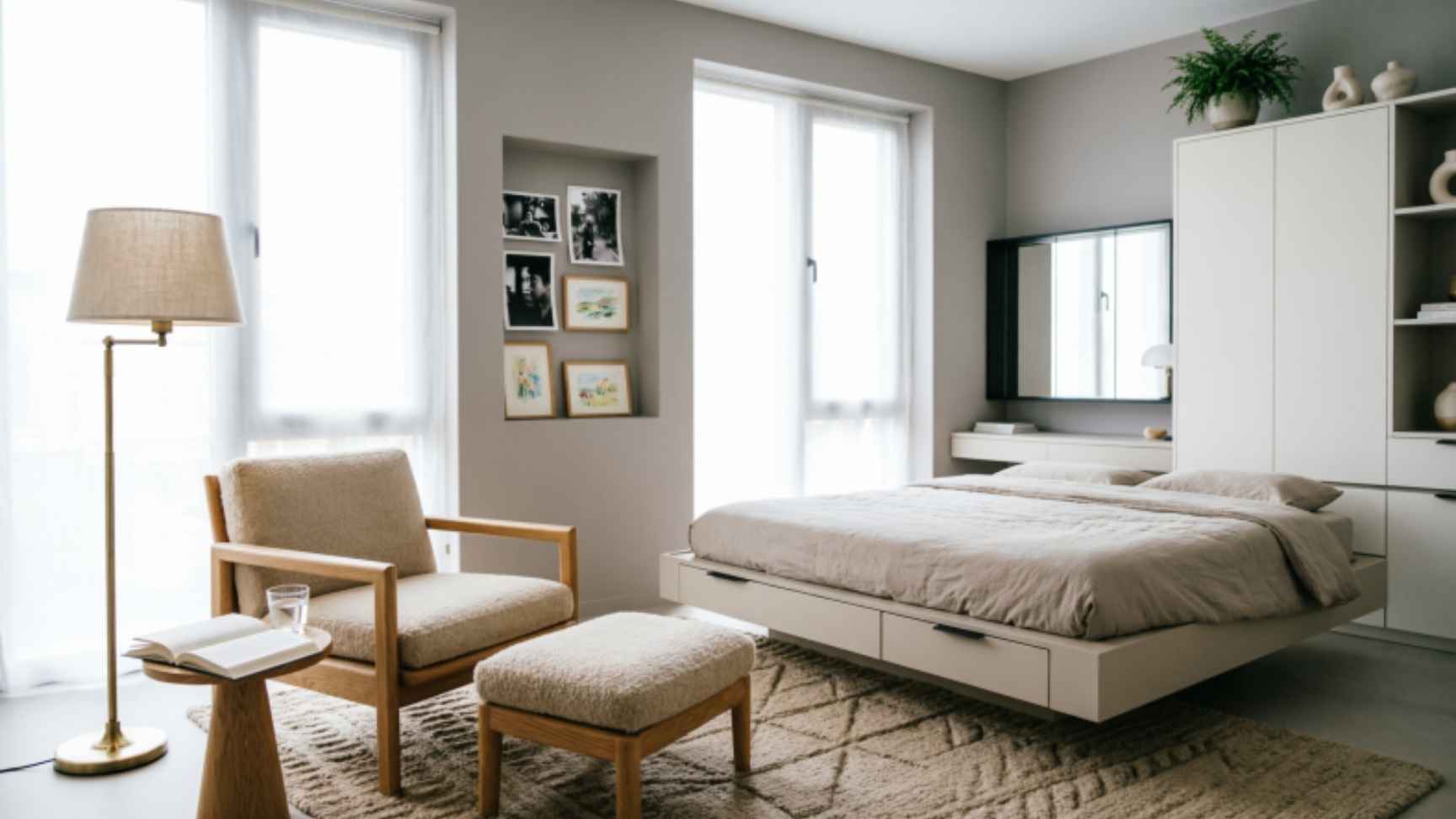
24 Bedroom Interior Ideas That Actually Work in Real Homes

An expert-level guide covering layouts, textures, lighting, sustainability, and the trends shaping bedrooms in 2026 and beyond.
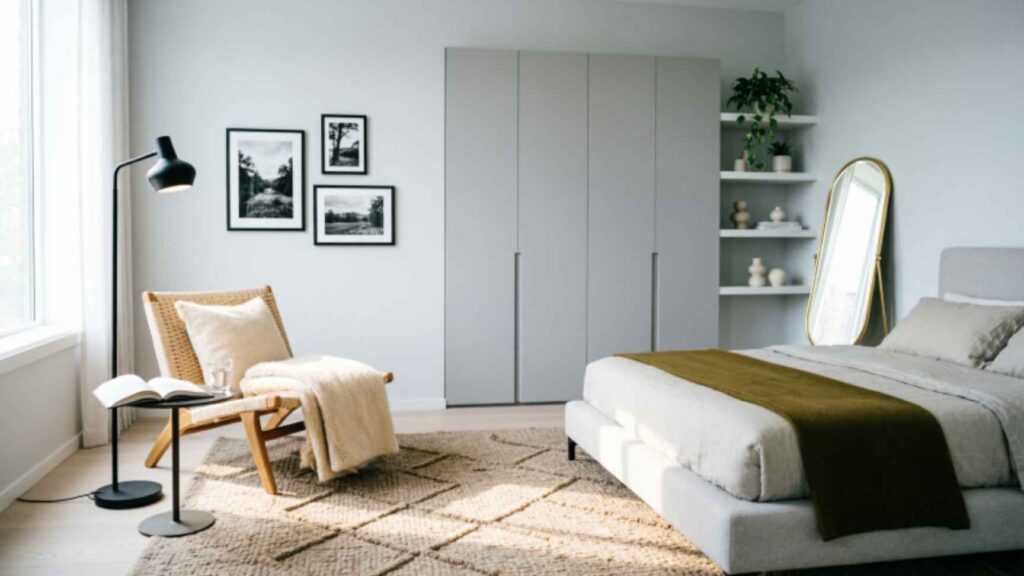
Your bedroom is not just a place to sleep it is the most personal room in your home. It is where your day begins and ends, where stress is shed, and where design choices have a direct impact on how you feel. Yet most bedroom interior guides offer the same recycled ideas: “add throw pillows,” “paint an accent wall,” and call it done. This guide goes much deeper.
Here, you will find 24 bedroom interior ideas built on real design principles spatial psychology, material science, lighting theory, and emerging trends that interior designers are actively using in 2026. Whether you are redesigning a master suite, a compact urban bedroom, or a guest room that needs to feel luxurious without a large budget, these ideas will give you a practical, expert-level roadmap.
Each idea below includes not just the “what,” but the “why” because understanding the logic behind a design choice is what separates a beautiful bedroom from one that truly functions and feels right every single day.
Layered Lighting: The Foundation of Every Great Bedroom Interior
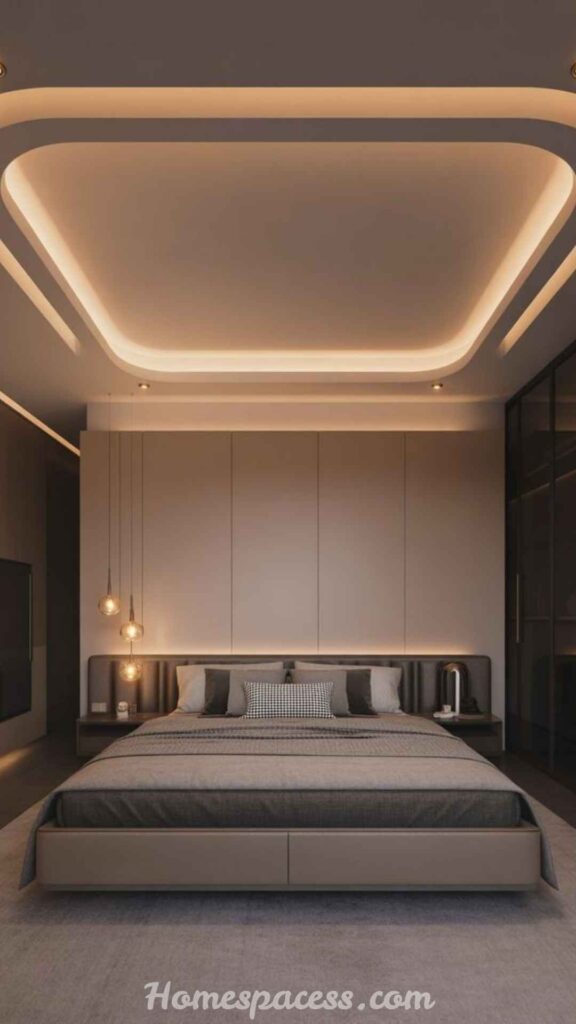
Single-source overhead lighting is the number one mistake in bedroom design, yet it remains the default in most homes. A truly well-designed bedroom uses three layers of light: ambient (general illumination), task (reading, dressing), and accent (decorative, mood-setting). Each layer operates independently, so you can dial in exactly the right atmosphere for any moment from energizing mornings to wind-down evenings.
The key is using warm-toned bulbs (2700K–3000K) for the bedroom environment specifically. Cool daylight bulbs disrupt melatonin production and make your bedroom feel like an office. Consider recessed dimmable fixtures for ambient light, wall-mounted swing-arm sconces for task reading, and a statement pendant or chandelier as a visual anchor above the bed. This combination gives you total atmospheric control without complex wiring.
For 2026, circadian lighting systems which automatically shift color temperature throughout the day are becoming accessible at consumer price points. Brands like Philips Hue and LIFX now offer bedroom-specific presets that gradually warm your light after 8 PM. This is not a luxury; sleep researchers have confirmed that light temperature in the two hours before bed significantly affects sleep quality, making this one of the highest-ROI bedroom upgrades available.
Pro Insight:
Install your bedside sconces at eye level when seated in bed roughly 48–60 inches from the floor. This eliminates glare and positions light exactly where it is needed for reading.
Must Read: Small Bathroom Ideas:25 Clever Ways to Make Every Inch Count
Platform Beds & Low-Profile Furniture: Visual Spaciousness by Design
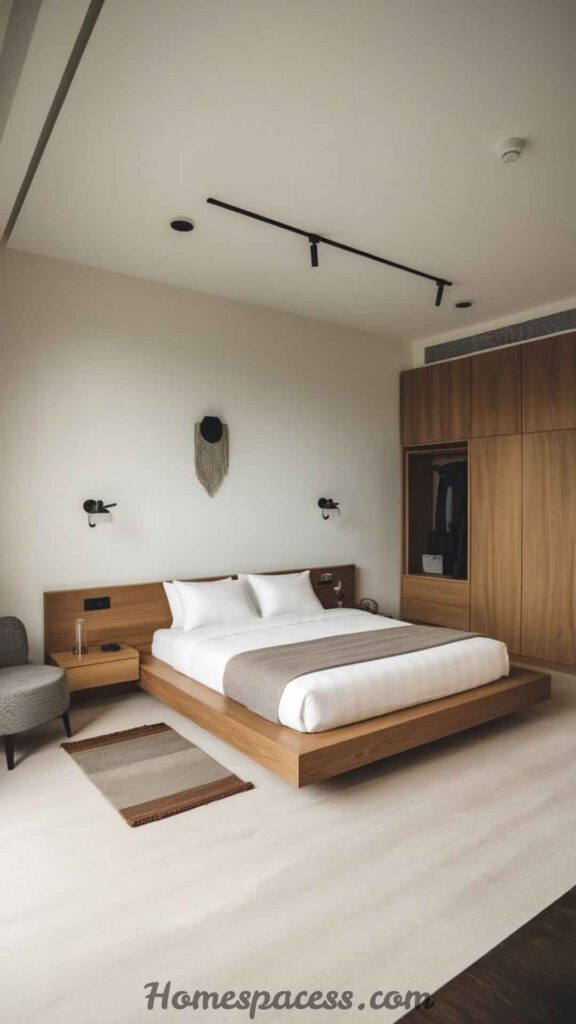
Platform beds those with a low, box-style frame that eliminates the need for a box spring have become one of the most enduring bedroom interior trends for a reason grounded in spatial perception. A lower profile bed raises the visual ceiling height of the room. In an average 9-foot bedroom, a platform bed can make the space feel 15–20% more open than a traditional high-frame bed. This psychological effect is especially powerful in smaller bedrooms where every inch of perceived space matters.
When pairing furniture with a platform bed, maintain a consistent low-profile approach. Floating nightstands (wall-mounted at bed height), low dressers rather than tall chests of drawers, and seating benches without legs create a horizontal visual rhythm that feels intentional and calm. Contrast this with a single tall element a floor lamp, a piece of wall art to create dynamic tension without visual chaos.
From a practical standpoint, platform beds also reduce the under-bed dead zone that accumulates dust. Many modern platform designs now incorporate integrated drawer storage beneath the mattress, making them particularly ideal for city apartments where storage is scarce. Look for solid wood or steel frames with at minimum 1.5-inch slat spacing this ensures proper mattress ventilation and extends your mattress lifespan by years.
Read More: 20 Home Office Ideas to Boost Productivity in 2026
Statement Accent Walls: Beyond the Paint-One-Wall Approach
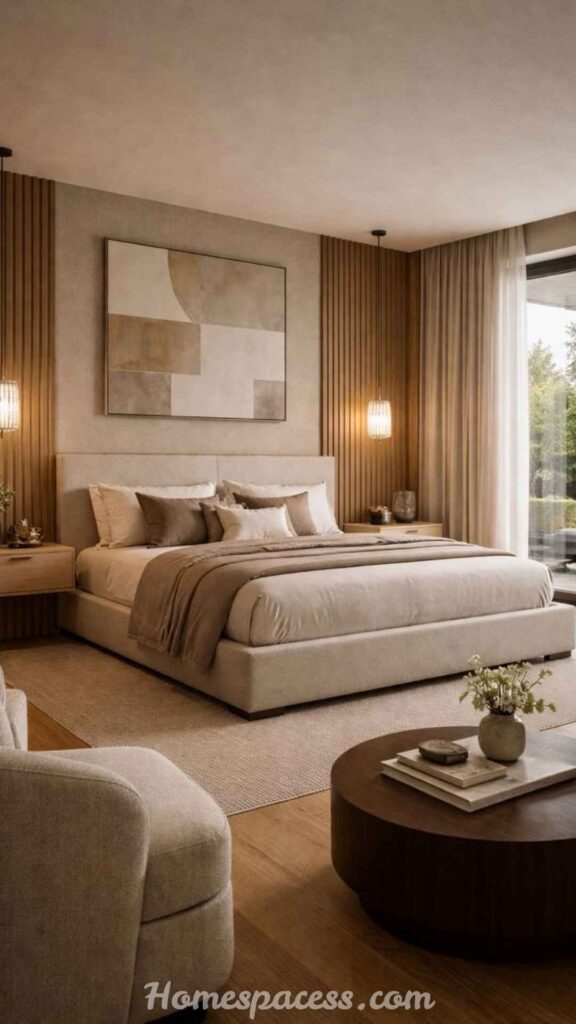
The concept of a bedroom accent wall has evolved dramatically. Today’s most compelling accent walls are architectural experiences limewash plaster that catches light differently throughout the day, fluted wood panels that add tactile depth, or hand-applied Venetian stucco with a mirror-like sheen. These treatments transform the wall behind your bed from a flat surface into a design focal point that evolves with natural light. The result is a bedroom that looks noticeably different at sunrise, noon, and midnight making the space feel alive.
Limewash paint in particular has emerged as a sophisticated alternative to standard paint. Its mottled, organic texture absorbs and diffuses light rather than reflecting it, creating a softness that no flat paint can replicate. Applied in earthy tones terracotta, warm putty, sage it gives a bedroom an instant sense of age and character that feels expensive even on a modest budget. Brands like Portola Paints and Roman Clay have made professional-quality limewash accessible for DIY application.
For those with a higher budget, fluted or reeded wood panels behind the bed are perhaps the single most transformative accent wall option in 2026. Vertically oriented fluting draws the eye upward, adding architectural height. In a warm oak or walnut tone, these panels provide warmth, texture, and a sense of quiet luxury that photographs beautifully relevant for those who care about how their bedroom looks in content or listings.
Designer Tip:
Always extend your accent wall treatment 12–18 inches past the edge of your headboard on each side. This creates a visual frame that makes the entire bed arrangement feel intentional and planned.
Don’t Miss: Small Kitchen Ideas: 18 Expert Transformations That Actually Work
Biophilic Design Elements: Nature as a Wellness Strategy
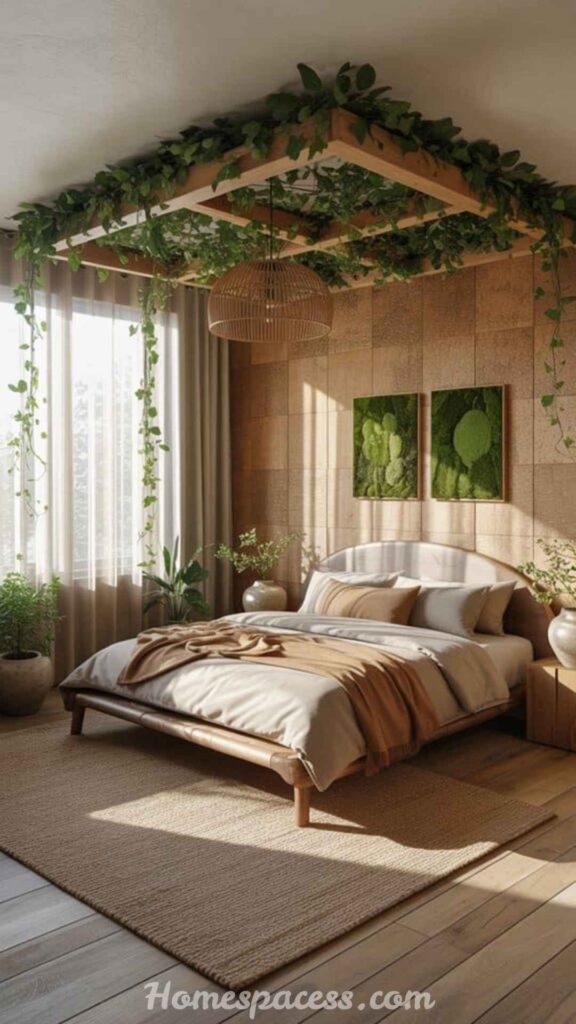
Biophilic design incorporating natural elements, patterns, and materials into interior spaces is no longer a trend. It is a design philosophy supported by peer-reviewed research. Studies published in the Journal of Environmental Psychology have consistently shown that natural elements in sleeping environments reduce cortisol levels, lower resting heart rate, and improve subjective sleep quality. In a bedroom context, this means intentionally weaving in wood, stone, plant life, and natural textiles to create an environment your nervous system recognizes as safe and restorative.
You do not need a wall of plants to achieve biophilic benefits. A single large-leafed specimen a monstera, a fiddle-leaf fig, or a floor-standing snake plant in the corner of a bedroom introduces organic form and cleans the air. Pair this with a wooden nightstand, a jute or wool rug, and linen bedding in earthy tones. These layered natural materials create what designers call a “sensory landscape” a space that engages sight, touch, and even smell in ways synthetic materials cannot.
The overlooked dimension of biophilic bedroom design is sound and air quality. A small tabletop water feature introduces natural white noise that masks urban sound disturbances. An air-purifying plant cluster peace lily, spider plant, and Boston fern actively removes volatile organic compounds from your sleeping environment. When combined with natural ventilation from strategically placed windows, these elements create a bedroom that feels genuinely different to sleep in: quieter, fresher, and more deeply restful.
Japandi Aesthetic: Where Minimalism Meets Warmth
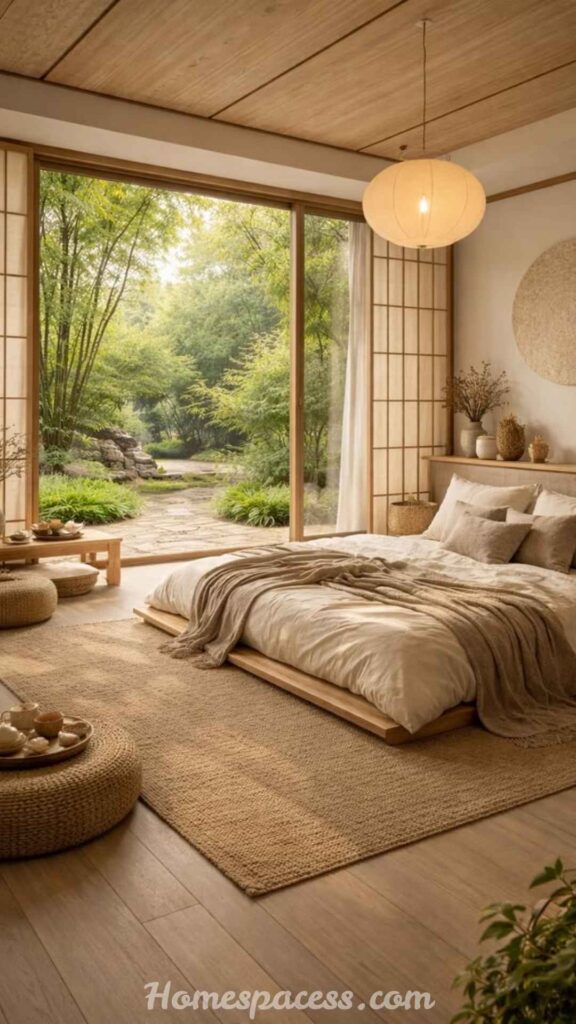
Japandi the design fusion of Japanese minimalism and Scandinavian hygge has become one of the most searched bedroom interior styles for three consecutive years, and for good reason. It solves a fundamental design problem: how to be minimal without feeling cold, and warm without feeling cluttered. The Japandi bedroom achieves this through a precise material palette natural wood in light to medium tones, wabi-sabi ceramics, handwoven textiles, and a neutral color story anchored in warm whites, soft beiges, and muted grays.
The functional philosophy behind Japandi is equally important as the visual one. Japanese design principle “ma” the art of negative space teaches that empty areas are not wasted; they are deliberate. A Japandi bedroom resists the impulse to fill every surface and corner. Instead, it curates: a single sculptural lamp, one carefully chosen art object, a low-profile bed with clean lines. The result is a bedroom that feels effortlessly considered, not minimally deprived.
For those building a Japandi bedroom from scratch, start with your material anchors. A raw oak bed frame, natural linen bedding in oat or stone, and a handmade ceramic lamp base will establish the palette. Layer in a boucle or wool throw in a slightly darker neutral. Add one organic-shaped mirror and keep the floor largely clear. Resist adding decorative items unless they serve a functional purpose this restraint is what separates authentic Japandi from generic minimalism.
Built-In Storage Solutions: Custom Without the Custom Price Tag
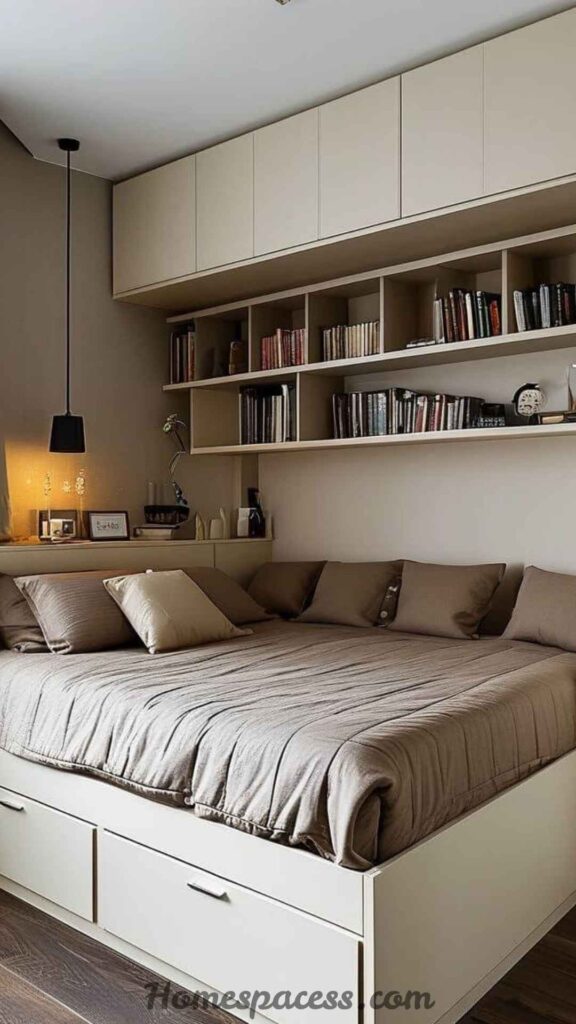
The greatest enemy of a beautiful bedroom interior is visible clutter and the most elegant solution is storage that disappears into the architecture. Built-in wardrobes, flanking nightstand shelves, and under-bed drawers integrated into the bed frame all share a common principle: they eliminate the visual weight of freestanding furniture while maximizing every cubic foot of usable space. In a bedroom, this is not just about aesthetics it fundamentally changes how the room feels to live in daily.
IKEA’s PAX wardrobe system remains one of the most effective ways to achieve a built-in look without custom cabinetry costs. With custom-cut overlay panels, a floating crown molding detail, and handles replaced with recessed pulls, a PAX installation is nearly indistinguishable from bespoke built-ins at a fraction of the cost. The key is to run the wardrobes floor-to-ceiling and paint them the same color as the wall this creates a seamless visual field that makes even a small bedroom feel architecturally significant.
Beyond wardrobes, consider the wall space above your bed. A floating shelf system 18–24 inches above the headboard provides display and nightstand functionality without requiring floor space. For tight bedrooms, this can replace both bedside tables entirely, freeing up over 10 square feet of floor area. Paired with plug-in wall sconces mounted to the shelf underside, this arrangement is both more functional and more visually clean than traditional nightstand setups.
Space Optimization:
If floor-to-ceiling built-ins are not possible, use consistent furniture height across all case pieces (dressers, open shelving). A unified horizontal line at 36 inches creates order without custom millwork.
Canopy & Four-Poster Beds: Architectural Drama for the Everyday Bedroom
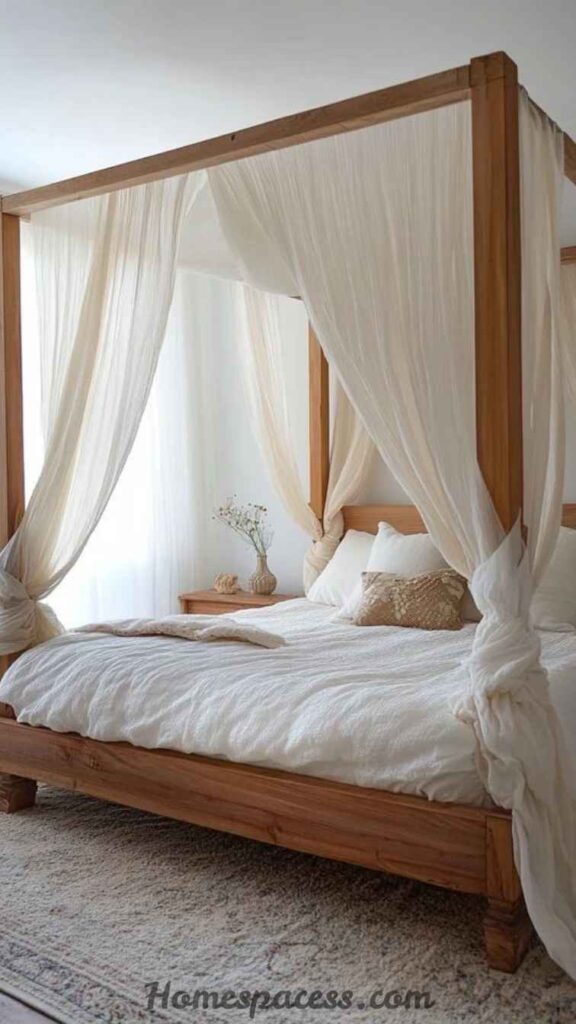
A canopy bed does something no other bedroom furniture can: it creates a room within a room. The vertical posts and overhead frame define the bed as a distinct architectural zone, separate from the rest of the bedroom. This psychological enclosure is deeply connected to the human preference for “refuge” spaces areas with a clear boundary that feel sheltered and protected. Sleep researchers have noted that people in defined sleep environments report feeling more relaxed at bedtime, falling asleep more quickly.
Modern canopy beds have shed the heavy, medieval associations of traditional four-posters. Today’s interpretations are often made from blackened steel or raw brass tubing simple geometric frames that read as sculpture as much as furniture. Draped with sheer linen panels, they create a soft, filtered light environment around the bed without blocking airflow. In high-ceiling rooms (9 feet and above), a canopy bed fills vertical space that would otherwise feel wasteful and disconnected.
For those without ceiling height to support a traditional canopy, a half-canopy where only the headboard side is framed with a wall-mounted canopy element provides the same visual drama with less spatial commitment. A simple rectangular steel frame mounted 24 inches above the headboard, draped with a single piece of fabric, creates the same “room within a room” effect at a fraction of the cost. This approach works exceptionally well in rental apartments where structural changes are not possible.
Bedroom Gallery Walls: Curated Without Looking Chaotic
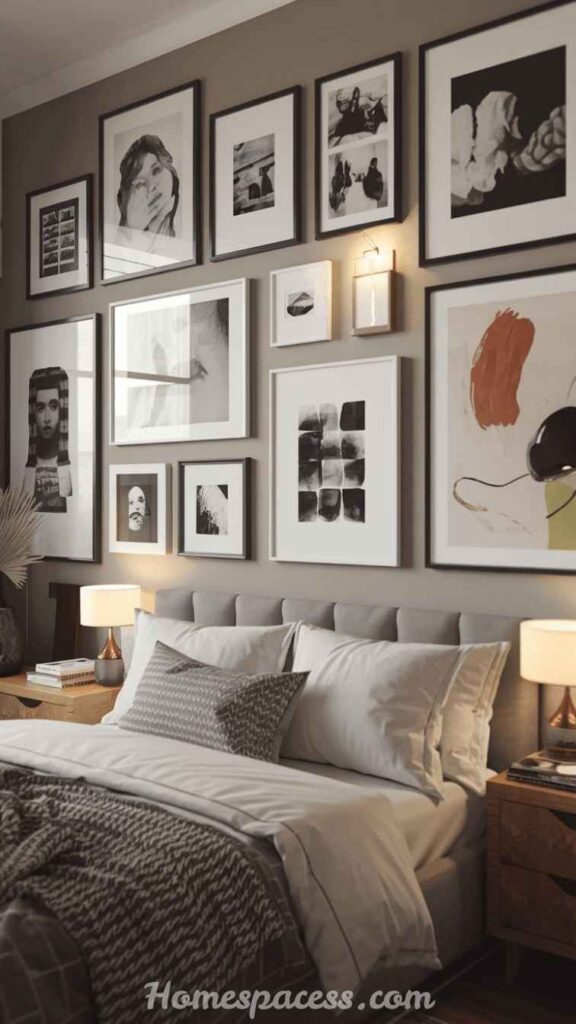
Gallery walls in bedrooms differ from those in living rooms in one critical way: the scale and tone must be calibrated for a sleep environment. High-contrast, busy, or visually stimulating artwork can create low-grade visual noise that interferes with relaxation. The most successful bedroom gallery walls use a limited palette of two to three tones, consistent framing style (all thin black frames, or all natural wood), and artwork that is contemplative rather than energetic abstract shapes, muted photography, botanical studies.
The layout principle that separates professional gallery walls from amateur ones is consistent spacing. A 2.5-inch gap between every frame, regardless of frame size or shape, creates visual order across the entire arrangement. Achieving this is simpler than it looks: cut paper templates of each frame, tape them to the wall in your planned arrangement, and adjust positions before committing a single nail. This step alone eliminates the most common gallery wall mistake the uneven, unpredictable spacing that makes a collection look like an accident.
For a bedroom-specific approach, consider a “linear” gallery wall a single horizontal row of four to six frames hung at eye level, creating a long horizontal band above the bed or dresser. This format is more calming than a large stacked grid because it does not compete with the ceiling line. A linear arrangement in matching or coordinated frames feels intentional and designed, working equally well in modern, traditional, or transitional bedroom styles.
Layered Window Treatments: Light Control and Visual Luxury

Single-layer window coverings whether a curtain panel or a roller shade alone solve only one problem at a time. Layering window treatments, by contrast, addresses light control, privacy, insulation, and aesthetic richness simultaneously. The classic bedroom layering formula pairs sheer linen panels (for daytime diffusion of natural light) with a blackout roller shade or Roman blind behind them (for true darkness when sleeping). Together, these two elements give you the full spectrum of light conditions throughout the day.
The installation detail that makes or breaks bedroom curtain panels is hanging height and width. Curtains should be mounted 4–6 inches above the window frame ideally near the ceiling and extend 6–12 inches beyond the frame on each side when open. This approach makes the window appear dramatically larger and the ceiling feel higher. Most people hang curtains too low and too narrow, which boxes in the window and shrinks the room. This single correction transforms how a bedroom feels without spending a dollar more on the curtain itself.
For 2026, motorized shades paired with smart home systems have become a meaningful bedroom upgrade. Programmed to open gradually with natural light as a sunrise alarm, they replace harsh alarm sounds with a gentler, biologically attuned wake-up sequence. For master bedrooms in particular, motorized layered treatments a programmed blackout shade below a decorative drapery panel provide both aesthetic elegance and functional sophistication that pays dividends in sleep quality every night.
Quick Upgrade:
If only doing one thing to improve your bedroom’s windows, mount your existing curtain rod 3–4 inches higher and 6 inches wider than the window frame. The visual difference is immediate and costs nothing.
Color Drenching: The Bold Technique Transforming Bedroom Design
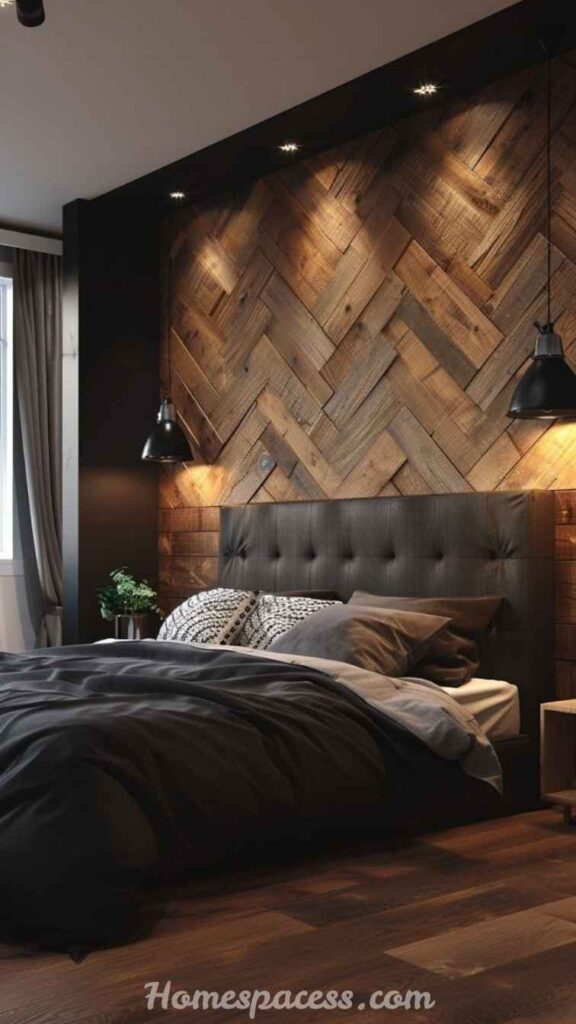
Color drenching applying a single color to all surfaces in a room, including walls, ceiling, trim, and sometimes even furniture has moved from avant-garde design circles into mainstream bedroom interior design. The effect is enveloping and surprisingly calming when the right color is chosen. Deep, saturated tones like forest green, inky navy, dusty terracotta, or warm burgundy create a cocoon-like quality that is uniquely suited to bedrooms. Rather than feeling overwhelming, a fully drenched room in a muted, desaturated tone feels like stepping into a color experience.
The psychological logic behind color drenching in bedrooms is sound. When color exists on all surfaces simultaneously, the eye has no high-contrast edges to fixate on the space feels restful rather than busy. A bedroom painted in the same warm mushroom tone on walls, ceiling, and trim, with dark-toned furniture and natural wood accents, creates depth and dimension without visual competition. The result is often described as “cozy” or “hotel-like” by those who experience it.
Choosing the right color for drenching requires testing paint on large swatches at least 12 by 12 inches on multiple walls and observing them at different times of day. Colors behave very differently in artificial evening light versus natural afternoon light, and this difference is amplified when the color covers every surface. Invest in high-quality paint with a satin or eggshell finish, which handles light more elegantly than flat paint and is easier to clean over time.
Smart Bedroom Technology: Integration Without Intrusion
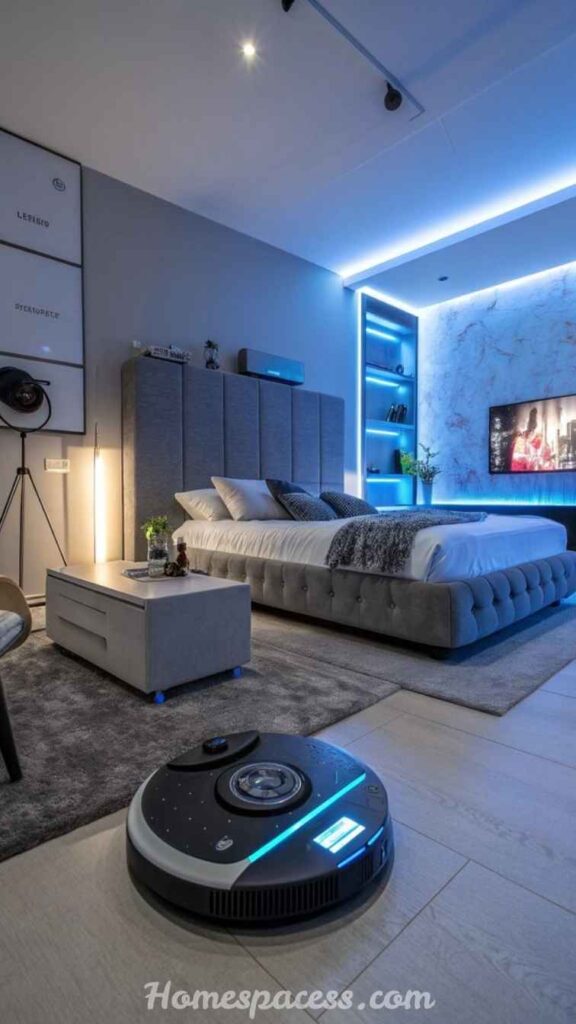
The smartest bedroom technology integrations are the ones you barely notice. Rather than turning the bedroom into a tech showroom, effective smart bedroom design embeds technology into the architecture of the space hidden speakers in the ceiling, motorized shades flush with the window frame, a single bedside touch panel controlling all room functions. This approach uses technology as a tool for comfort, not as a decorative feature, which is the correct application in a sleep-focused space.
Thermostat control is one of the most impactful and underutilized smart bedroom upgrades. Sleep science has established that the ideal sleeping temperature range is 65–68°F (18–20°C) for most adults. A smart thermostat programmed to cool the bedroom 30 minutes before sleep time and gradually warm it 30 minutes before wake-up creates optimal sleep and wake conditions automatically. When paired with a smart mattress topper like the Eight Sleep Pod, which provides individual temperature control for each side of the bed, the result is a sleep environment that is genuinely personalized and measurably better.
For those building a smart bedroom on a budget, start with the highest-impact items: a smart plug controlling a bedside lamp (to allow voice-controlled light-off without getting up), a white noise machine with a sleep timer, and a smart thermostat. These three items can be installed for under $200 and immediately improve the daily experience of the bedroom. Add complexity gradually motorized shades, smart speakers, circadian lighting as budget allows, ensuring each addition serves the bedroom’s primary function: restorative sleep.
Texture & Material Layering: The Secret to Depth in Neutral Bedrooms
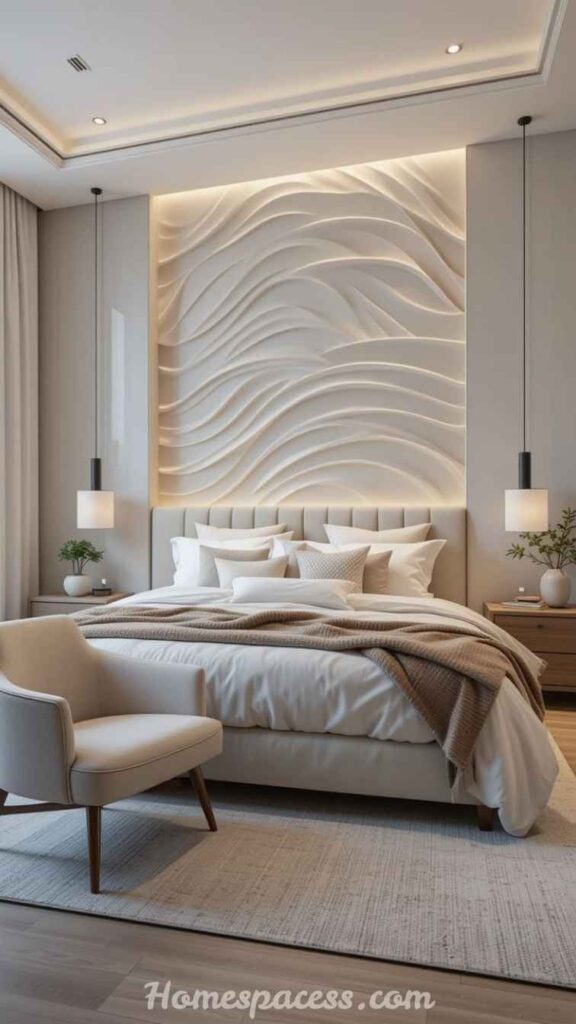
A monochromatic or neutral bedroom can look flat and uninspired, or it can look like the most sophisticated space in the home the difference is entirely texture. When color variation is limited, tactile variation becomes the primary design tool. Contrast a smooth linen duvet with a chunky knit throw. Place a smooth marble lamp base on a raw wood nightstand. Layer a flat-weave cotton rug over hardwood floors, then add a small sheepskin accent rug beside the bed. These material contrasts create visual and physical richness that the eye reads as “designed” rather than generic.
The concept of “textile weight” is particularly relevant for bedroom layering. Lightweight sheers at the window, medium-weight linen bedding, and a heavyweight wool or boucle throw at the foot of the bed create a gradient of visual density that pulls the eye through the room naturally. Mismatching textile weights a heavy velvet throw with a silk coverlet, for example creates an unintentional clash that even non-designers sense but cannot articulate. Matching weight ranges while varying material and tone is the professional’s approach to bedroom textile layering.
Wall texture is equally important and often overlooked. Smooth painted walls, though easy to achieve, provide zero tactile dimension. Even a subtle application of Roman Clay paint adds a depth that interacts with light in a way that changes throughout the day. For more pronounced texture, grasscloth or jute wallcovering on the headboard wall introduces natural material into the vertical plane, connecting the walls to the natural textures elsewhere in the room. This three-dimensional approach to bedroom surfaces is what separates interior designer bedrooms from standard renovations.
Reading Nooks & Cozy Corners: Reclaiming Dead Space
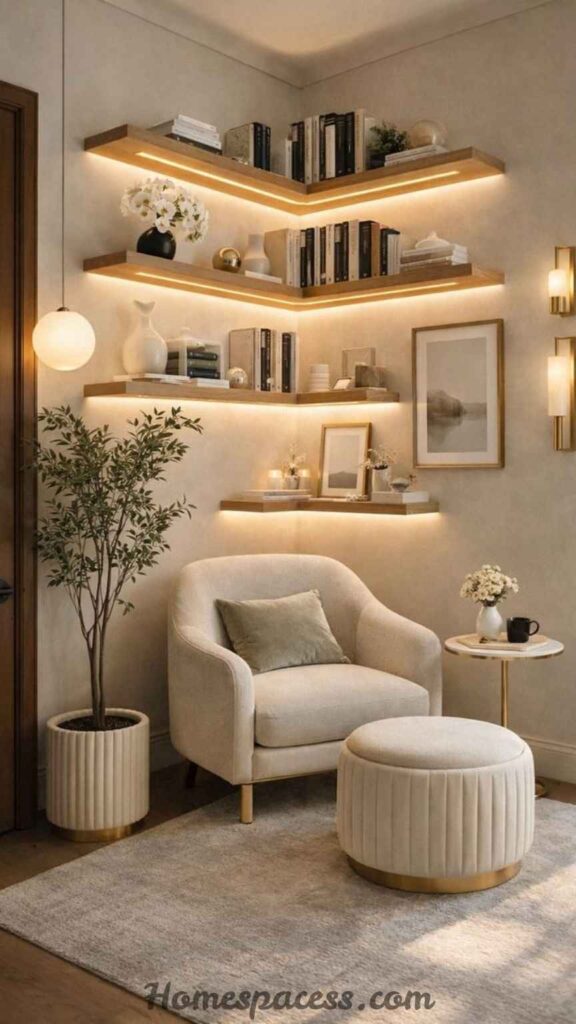
Most bedrooms have at least one underutilized corner a space that holds a forgotten chair or remains empty by default. Transforming this corner into a dedicated reading nook or quiet sitting area multiplies the bedroom’s functional value without requiring structural changes. A properly designed reading corner consists of four elements: a deeply comfortable chair (ideally with arms and a footrest), focused task lighting positioned above and to the side of the seated reading position, a small side table for a drink and current reading, and a soft textile layer a throw and a floor rug to define the zone within the broader room.
The chair selection is the make-or-break decision for a reading nook. Swivel chairs provide more flexibility in small spaces, allowing you to orient toward natural light or toward the room as needed. Deep-seated lounge chairs think a classic Womb Chair silhouette or a generous club chair invite the extended, unhurried sitting that supports actual reading rather than the short-stay perching that less comfortable chairs encourage. Investing in a well-made chair for a bedroom reading corner is one of the highest-return design decisions you can make for daily quality of life.
For smaller bedrooms without a spare corner, a window seat built over a radiator cover or beneath a bay window creates the same intimate reading zone in a space that would otherwise be architectural dead space. A cushioned window seat with hidden storage underneath, flanked by floating shelves for books and objects, creates a complete reading environment in as little as 18 inches of floor depth. This approach is particularly effective in older homes with architectural window niches that modern furnishings typically ignore.
Design Scenario:
A 10×10 bedroom with a single window can place an armchair angled toward the window at 45 degrees, add a floor lamp behind the chair’s left shoulder, and a small round side table creating a reading zone that feels separate from the sleep zone without dividing the room.
Strategic Mirror Placement: Light, Space & Proportion
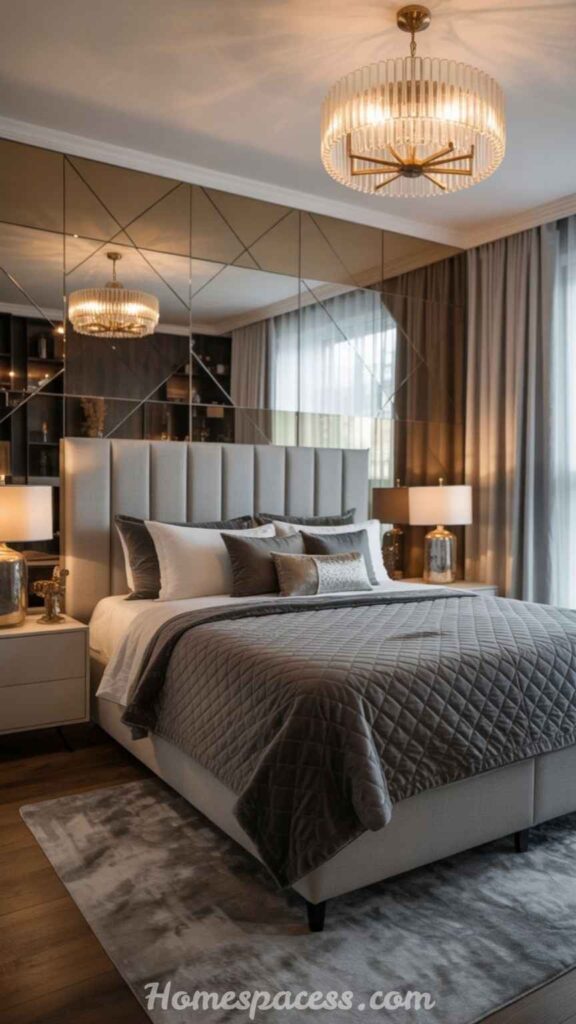
Mirrors in the bedroom serve three simultaneous functions: they reflect light (increasing apparent brightness), expand visual space (making rooms feel larger), and provide a practical dressing tool. However, the placement and sizing of bedroom mirrors profoundly affects all three functions. A too-small mirror on a large wall simply looks orphaned, while a mirror placed incorrectly can reflect clutter, create uncomfortable sightlines from the bed, or create glare during the day. Getting mirror placement right requires understanding what the mirror will reflect, not just where it hangs.
The most effective mirror placement in a bedroom positions the mirror to reflect the room’s best feature natural light from a window, a well-styled dresser arrangement, or a beautifully made bed. A large mirror (at minimum 24 by 36 inches) placed on the wall opposite or adjacent to a window bounces daylight deep into the room, reducing the reliance on artificial lighting during daytime hours. This is particularly valuable in north-facing bedrooms that receive limited direct sunlight throughout the year.
Full-length leaning mirrors have become a bedroom design staple, and their appeal goes beyond practicality. A large leaning mirror in a simple frame raw brass, matte black, or natural wood functions as a low-cost architectural element that gives a room a finished, styled quality. Positioned in a corner or leaned against the wall beside the wardrobe, a well-selected leaning mirror adds scale and visual interest without the commitment of wall mounting, making it ideal for renters or those who frequently rearrange their spaces.
Statement Headboards: The Architectural Heart of the Bedroom
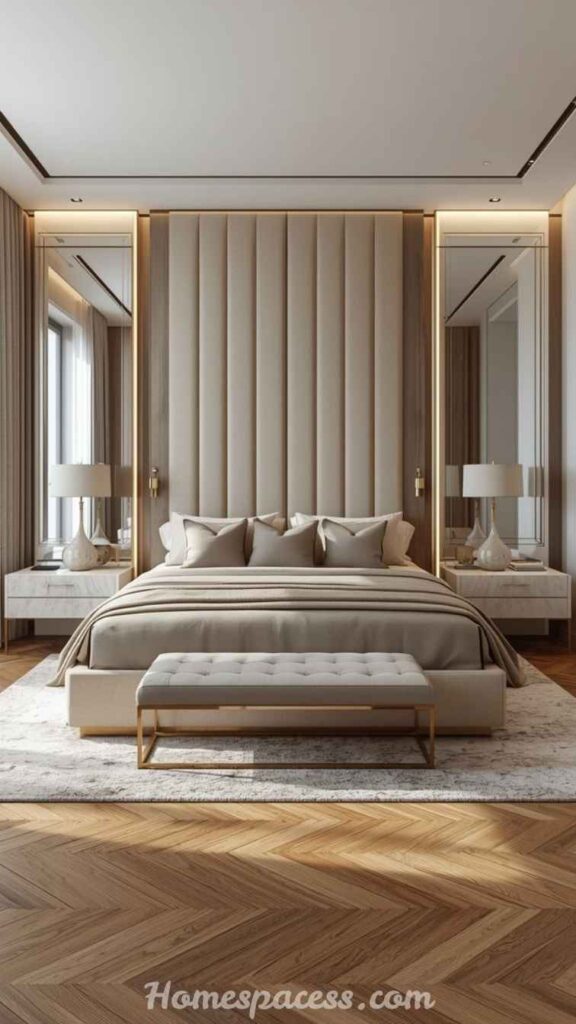
The headboard is the single furniture piece with the most visual influence in the bedroom. More than the dresser, the rug, or the lighting, the headboard defines the style direction of the entire room. This makes headboard selection a genuinely high-stakes decision and one worth investing in thoughtfully. In 2026, the most compelling headboard designs are oversized, floor-to-ceiling, or integrated into the wall itself statements that read as architecture rather than furniture.
An upholstered headboard that extends to the ceiling height particularly in a textured fabric like boucle, velvet, or performance linen immediately elevates a bedroom’s perceived quality. The verticality draws the eye upward, increasing the sense of ceiling height. When the headboard fabric matches or closely coordinates with other textiles in the room, it creates a curated, layered look that requires no additional styling effort. This “big headboard” approach is particularly effective in square-shaped bedrooms where the horizontal bed mass can otherwise make the room feel stubby and low.
For those who prefer a less conventional approach, a DIY plaster or Roman clay headboard treatment applied directly to the wall creates a soft, organic focal point that blurs the line between furniture and architecture. Applied in a gentle arch or rectangular panel shape, this finish is unique, incredibly photogenic, and costs a fraction of what an equivalent custom headboard would. It is also one of the few bedroom upgrades that adds genuine resale value to a home by improving the quality of the most-photographed room in real estate listings.
Warm Neutral Palettes: Why Not All Neutrals Are Equal

Neutral does not mean beige, and it certainly does not mean gray at least not in 2026. The neutral bedroom palettes that feel most sophisticated today are warm-toned, nuanced, and layered. Warm whites with a slight yellow or pink undertone, deep mushrooms and taupes, clay-based terracottas, and muted greens all read as “neutral” in context while bringing far more depth and character than the cool gray palettes that dominated the 2010s. The shift reflects a broader move toward warmth, nature, and sensory comfort in residential design.
When building a warm neutral bedroom palette, the critical skill is undertone management. Mixing a warm white wall with a cool gray bedding set creates an unconscious discord that most people sense but cannot name the room simply feels “off.” Conversely, a bedroom where every neutral walls, textiles, wood tones, ceramic accents shares a warm undertone (yellow, red, or orange bias) feels unified and harmonious without being matchy. You can have considerable variation in depth and texture as long as all tones share the same undertone family.
The most wearable warm neutral bedroom palette for 2026 pairs a warm off-white wall (try Benjamin Moore “White Dove” or Farrow & Ball “Wimborne White”) with natural linen bedding in oat or stone, a medium-toned oak or walnut wood floor and furniture, and a single deeper accent a warm mushroom or aged terracotta in the rug, throw, or lampshade. This combination photographs beautifully, ages gracefully, and works across seasons without requiring seasonal redecoration.
Multifunctional Furniture: Designing for Real Life, Not Ideal Conditions
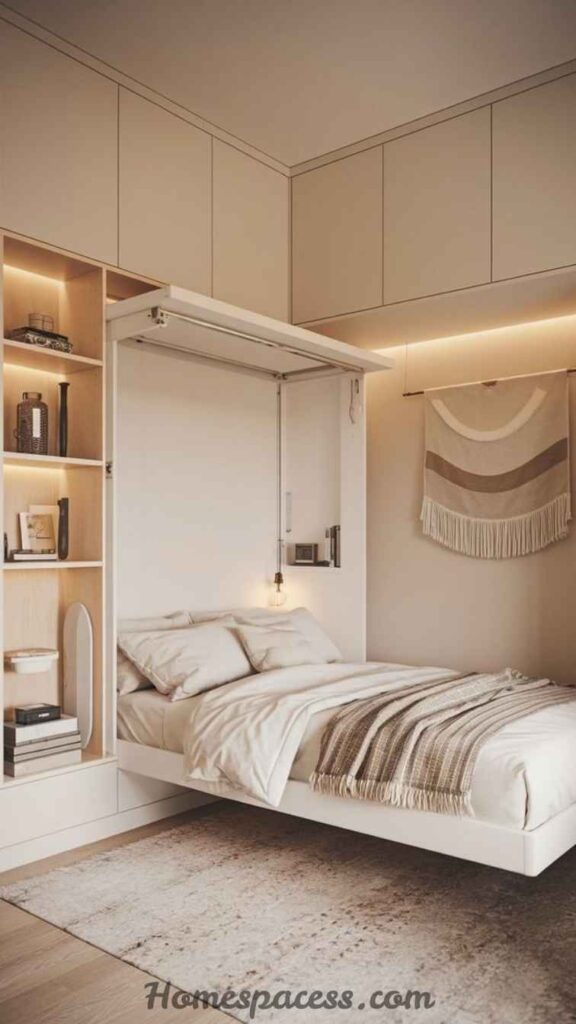
The rise of smaller urban living spaces has made multifunctional bedroom furniture not a compromise but a design priority. The most thoughtfully designed bedrooms today include furniture that serves two or three roles simultaneously storage ottomans that double as seating and as a coffee table surface, bedside tables with integrated wireless charging pads, Murphy beds with fold-down desk systems, and bed frames with built-in USB charging ports and reading light rails. These are not gimmicks; they are responses to how people actually live in their bedrooms.
A particularly valuable multifunctional piece for the modern bedroom is the storage bench at the foot of the bed. It provides a surface for setting things when getting dressed (eliminating the dreaded “chair pile”), acts as extra seating when needed, and if chosen with an upholstered lift-top provides hidden storage for extra bedding, seasonal items, or luggage. A well-chosen bench in a complementary fabric or leather finish also acts as a visual anchor that grounds the bed arrangement, replacing the visual dead zone at the foot of a bed with a purposeful design element.
For guest bedrooms specifically, the sleeper sofa or daybed with a trundle represents the highest-efficiency solution: a comfortable sitting area during the day and a fully functional sleep space at night. Contemporary daybed designs have improved enormously with quality mattresses, thoughtful frame designs, and upholstered finishes that read as intentional rather than makeshift. Paired with thoughtful nightstand-equivalent shelving and good lighting, a well-designed daybed guest room can feel as welcoming and considered as a dedicated bedroom.
The Ceiling as the Fifth Wall: The Most Overlooked Surface
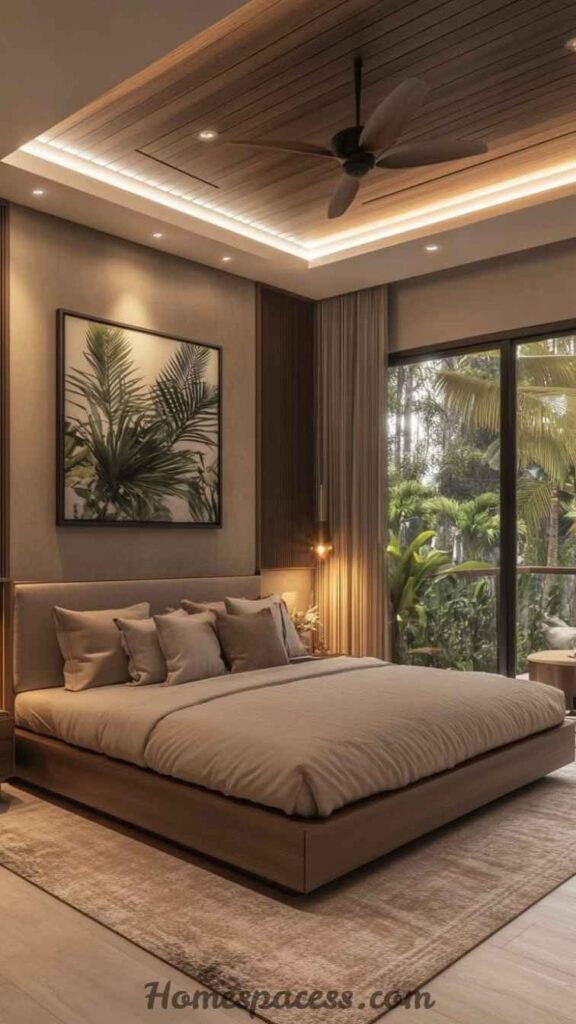
Interior designers refer to the ceiling as “the fifth wall” a surface with enormous design potential that most homeowners completely ignore. In a bedroom, where you spend hours lying on your back looking directly at the ceiling, this oversight is particularly significant. The ceiling above your bed is essentially the last thing you see before falling asleep and one of the first things you see when waking. Making it beautiful or interesting is one of the most personal and impactful bedroom upgrades possible, yet it appears on almost no mainstream bedroom interior idea list.
The simplest ceiling intervention is paint specifically, painting the ceiling the same color as the walls (color drenching, as discussed) or painting it a contrasting shade to create drama. A deep navy or forest green ceiling above a white-walled bedroom creates an intimate, canopy-like quality. A warm blush or terracotta ceiling above neutral walls adds an unexpected warmth that bathes the room in reflected color throughout the day. These options cost no more than a standard paint job and create a result that feels genuinely distinctive.
For more architecturally ambitious approaches, a simple cove molding detail around the ceiling perimeter adds instant architectural gravitas. Painted in a slightly deeper shade than the walls, this detail makes even a builder-grade bedroom feel custom. LED strip lighting installed above the cove molding, directed upward toward the ceiling, creates a gentle indirect glow that is one of the most restful and flattering light sources available the light equivalent of candlelight, without the fire hazard.
Unique Insight:
In bedrooms with low ceilings (under 8 feet), paint the ceiling bright white even if walls are colored. This optical technique visually raises the ceiling by 12–18 inches a measurement that multiple visual perception studies have confirmed.
Scent & Wellness Design: The Invisible Layer of Bedroom Interior
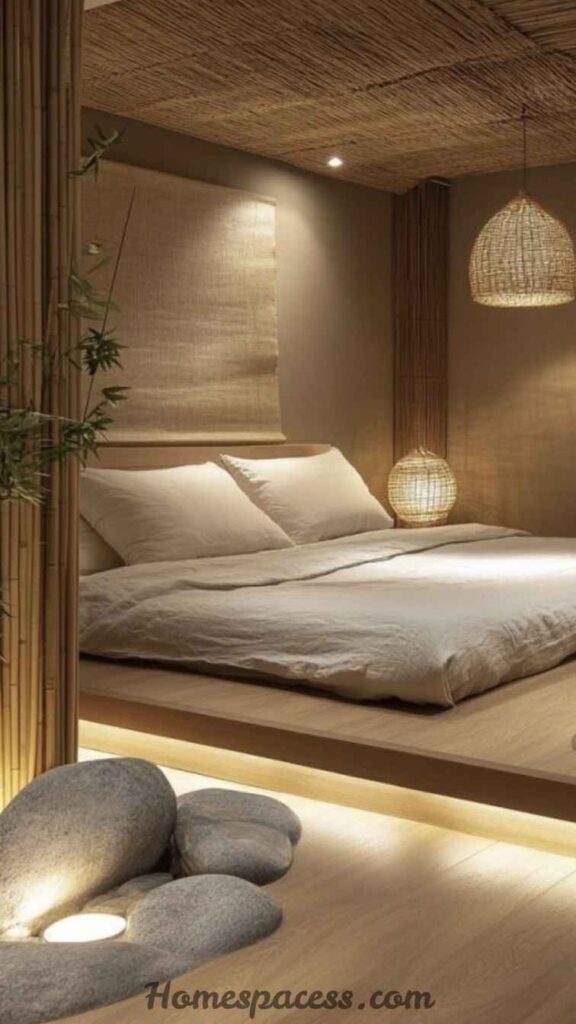
Scent is the most psychologically powerful and least discussed dimension of bedroom interior design. Research in olfactory science has established that lavender, jasmine, and cedarwood reliably reduce anxiety and improve sleep onset time. Vanilla and sandalwood are associated with warmth and safety, activating parasympathetic nervous system responses. Designing the scent landscape of your bedroom is as legitimate a design decision as choosing a paint color it simply operates on a different sensory channel, one that works even when your eyes are closed.
The delivery mechanism matters as much as the scent itself. Synthetic air fresheners or low-quality candles can introduce VOCs into the sleeping environment, counterproductively degrading air quality. Reed diffusers with natural essential oils provide a consistent, low-level scent without combustion. Beeswax or soy candles used during pre-sleep wind-down routines (never left burning during sleep) add a ritual dimension to the bedroom that reinforces the transition from wakefulness to sleep. Linen sprays applied to pillowcases before bed are perhaps the most targeted and effective scent delivery method for sleep the scent is literally present at your breathing zone.
Designing for complete bedroom wellness extends beyond scent to encompass EMF management, air quality, and material off-gassing. Conventional mattresses, MDF furniture, and synthetic carpets all off-gas VOCs and formaldehyde into the sleeping environment for years after purchase. Choosing furniture certified to GREENGUARD Gold or OEKO-TEX standards, selecting natural or organic mattresses and bedding, and ensuring adequate bedroom ventilation are design choices with genuine physiological implications. The wellness-designed bedroom is one where every material decision considers the body that will spend 8 hours per night within it.
Small Bedroom Maximization: 25 Square Feet Can Feel Spacious
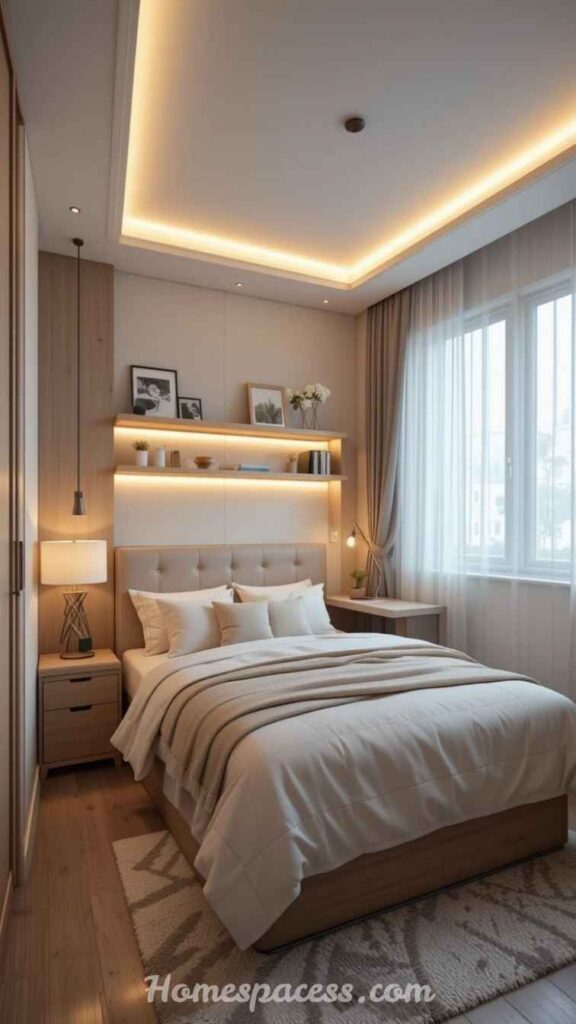
Small bedroom design is not about compromising it is about prioritizing. The most effective small bedroom interiors succeed because every element has been selected with brutal intentionality: nothing is there by default, everything earns its place. This discipline actually produces bedrooms that feel more considered and purposeful than larger rooms where choices are made by accumulation rather than curation. Small bedroom design, done well, is an advanced form of spatial intelligence.
Three techniques have an outsized impact on small bedroom perception. First: vertical storage. Wall-mounted shelving that extends to the ceiling draws the eye upward and uses airspace that would otherwise be wasted. Second: a single large rug rather than multiple small rugs. One rug that extends under the bed on three sides visually expands the floor plane and makes the room feel cohesive. Third: furniture with exposed legs rather than case pieces that rest directly on the floor. The visible floor space beneath chairs, nightstands, and benches creates the illusion of more floor area than actually exists.
Color strategy is also disproportionately impactful in small bedrooms. Light-reflective colors on all walls and the ceiling maximize the bounce of natural light, making the space feel airier. However, do not shy away from one deeply colored element a rich headboard wall, a deeply toned rug, a boldly colored wardrobe in an otherwise light room. This “controlled depth” technique creates visual interest and dimension that prevents the all-white small bedroom from feeling sterile and hospital-like.
Vintage & Modern Mix: Curated Character Over Catalog Uniformity
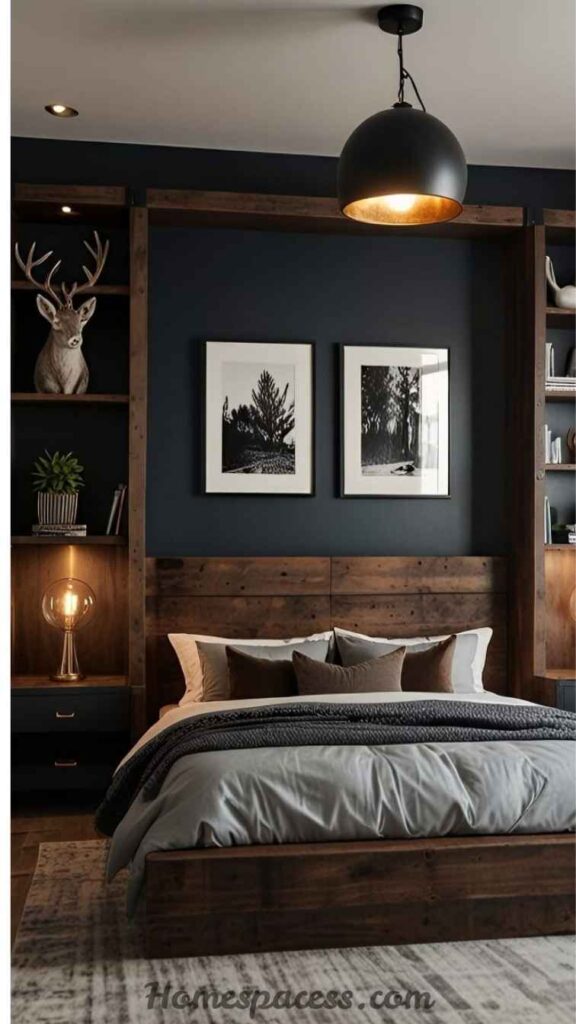
The fully “matching set” bedroom where every piece of furniture comes from the same collection has largely disappeared from aspirational design. Contemporary bedroom interior design values a more curated, collected-over-time aesthetic: a vintage oak dresser paired with a contemporary platform bed, a mid-century modern pendant with a traditional upholstered headboard. This mixing of eras and styles creates the layered, personal quality that distinguishes a home from a hotel room or more accurately, from a furniture showroom.
The key to successful vintage-modern mixing is establishing a consistent material language across mixed pieces. If your new bed frame is in warm oak, seek vintage pieces in similarly warm-toned woods (teak, walnut, mahogany). If your new furniture is in a dark finish, limit vintage additions to pieces that share the same depth. The “mix” should be in style and era, not in material tone a warm-toned mid-century dresser next to a warm-toned contemporary bed frame looks intentional; the same dresser next to a cool-toned gray bed looks random.
Sourcing for bedroom vintage pieces has become significantly more accessible. Platforms like Chairish, 1stDibs, and Facebook Marketplace now provide access to quality vintage furniture that would previously have required antique dealer relationships. For those new to vintage sourcing, nightstands and small accent furniture are the lowest-risk entry point a pair of vintage rattan or cane nightstands beside a contemporary bed immediately adds character and textural richness that no new production piece can replicate at a comparable price point.
Sustainable Material Choices: Better for the Planet and Your Health
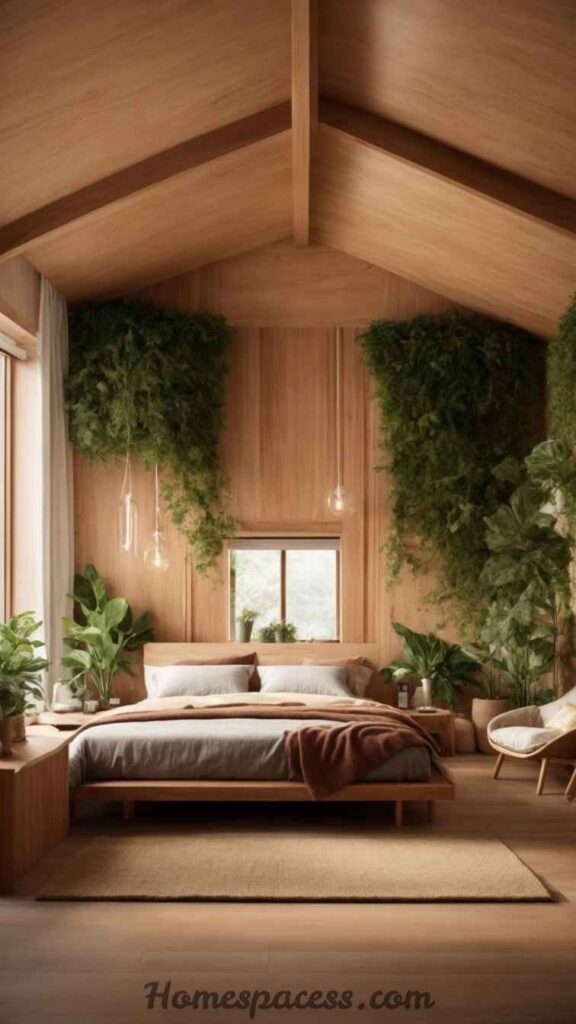
Sustainable bedroom design has evolved beyond bamboo flooring and recycled textiles into a comprehensive approach to material sourcing, longevity, and environmental impact. The most meaningful sustainable choices in bedroom interior design are those that address the full lifecycle of the products in the room: how they are made, how long they last, and what happens to them at end-of-life. A solid wood bed frame that lasts 50 years and can be refinished or repaired has a fundamentally different environmental profile than a particleboard equivalent that goes to landfill in 5–8 years.
Natural textiles organic cotton, linen, wool, and silk are not just ethically preferable choices for bedding; they are physiologically superior. Natural fibers are inherently breathable and temperature-regulating, which directly impacts sleep quality. A 100% organic linen duvet cover, for instance, is measurably cooler in summer and warmer in winter than a synthetic equivalent of the same weight. The initial cost premium (typically 30–50% more than conventional options) is offset by significantly longer useful life and better sleep performance, making it a sound investment rather than a luxury indulgence.
Paint selection is another area where sustainability intersects directly with health. Zero-VOC and low-VOC paints have reached paint quality parity with conventional formulas there is no performance reason to choose higher-VOC alternatives. Brands like ECOS Paints, Clare, and Benjamin Moore’s Natura line offer excellent coverage, durable finishes, and near-zero off-gassing, making them the obvious choice for a bedroom where air quality directly affects breathing quality for 8 hours each night. For those with chemical sensitivities or children, this choice is not optional it is essential.
Rug Anchoring Techniques: The Foundation That Ties It All Together
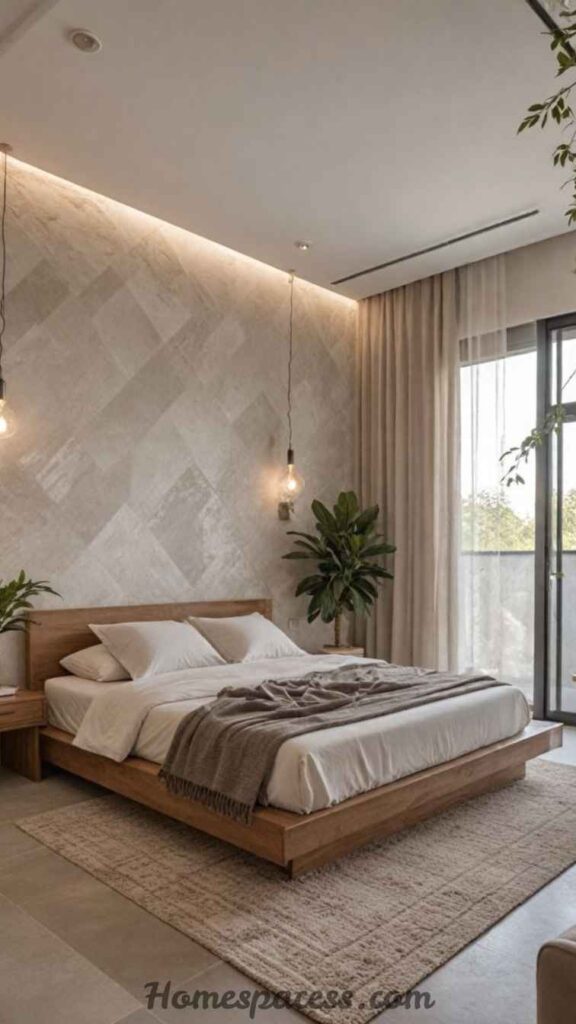
A rug in the bedroom is not just a comfort underfoot it is a compositional tool that defines the sleep zone, adds acoustic dampening (reducing echo and sound transfer), introduces warmth and texture into the floor plane, and anchors the furniture arrangement into a coherent visual grouping. The most common bedroom rug mistake is selecting a rug that is too small. A rug that does not extend under the bed creates a “floating” effect where the furniture appears unanchored, making even a well-furnished bedroom feel unresolved and incomplete.
The correct bedroom rug sizing formula for a king or queen bed: a minimum 9×12-foot rug, positioned so that at least 24 inches of rug extends beyond the sides of the bed (left, right, and foot). This proportion creates a generous visual field that frames the bed like a stage. In smaller bedrooms with a full or twin bed, a 6×9-foot rug placed the same way achieves the same proportional effect. If budget constraints prevent a single large rug, two matching runners on each side of the bed provide the critical “soft landing” for bare feet without requiring the full field of an area rug.
Material selection for bedroom rugs should prioritize softness underfoot (particularly for the first-step-in-the-morning experience) and ease of cleaning. Wool rugs are the gold standard naturally soil-resistant, durable, and softer than synthetic alternatives in the medium-pile range that works best in bedrooms. For those with pet allergies or who prefer easier cleaning, a flat-weave cotton or polypropylene rug is perfectly respectable. What matters most is proportional correctness a well-sized, appropriately placed synthetic rug outperforms a premium wool rug that is too small, every time.
Seasonal Design Adaptability: A Bedroom That Evolves Through the Year
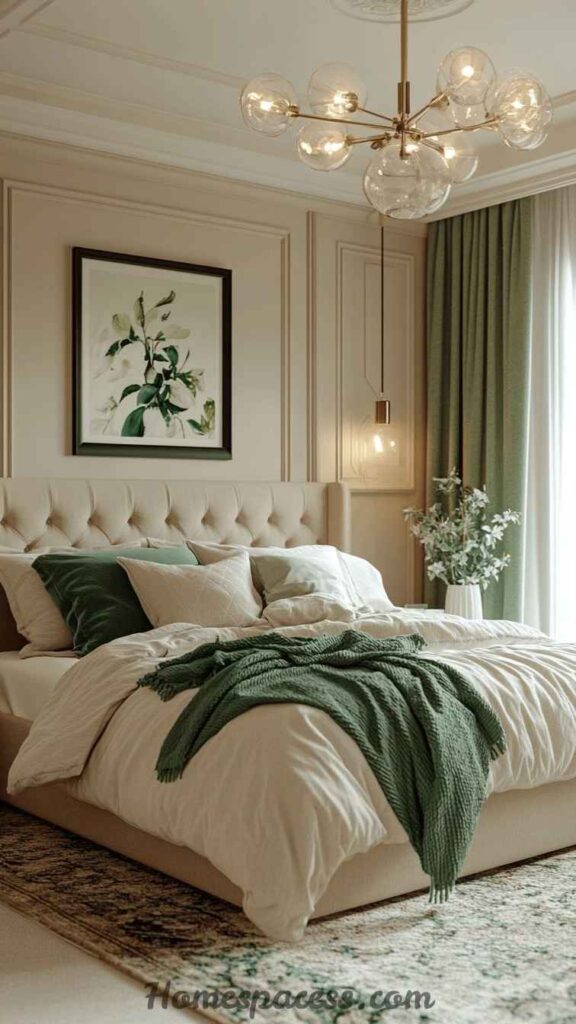
The most livable bedrooms are those designed for seasonal transformation not through expensive redecoration, but through a considered base layer that accepts seasonal additions gracefully. The key is a neutral, warm-toned bedroom foundation (walls, large furniture, flooring) that acts as a backdrop for seasonal textiles, accent colors, and botanical elements. In winter, heavier throws, flannel or velvet pillowcases, and warm amber lighting deepen the cocooning quality of the space. In summer, lighter linens, cooler tones in accent pieces, and the removal of heavy textiles create a breezier, more open feel without touching the room’s permanent elements.
From a functional standpoint, seasonal bedding transitions also offer a practical opportunity to rotate mattress toppers and assess bedding for replacement. The Duvet Insert approach a medium-weight duvet used year-round with a seasonal cover is more cost-effective and storage-friendly than maintaining separate winter and summer comforters. High-quality linen or percale duvet covers, purchased in a range of coordinating tones, allow the bedroom’s textile story to shift with the seasons while maintaining design coherence.
Seasonal plant rotation is one of the most underused seasonal bedroom design tools. Spring might bring fresh-cut eucalyptus in a simple vase on the dresser; summer introduces a potted tropical plant that thrives in the seasonal humidity; autumn welcomes dried grasses and preserved botanicals in warm tones; winter sees candlelight take center stage and aromatic eucalyptus and pine branches alongside. These small botanical shifts require almost no investment but create a bedroom that feels intentionally curated throughout the year alive to the season rather than frozen in a single decorating moment.
Conclusion
The 24 bedroom interior ideas in this guide share a common thread: every one of them is grounded in how the bedroom actually functions as a daily living environment. Great bedroom design is not about following trends or spending more money it is about making intentional choices at every scale, from the rug size to the paint undertone to the thread count of your bedding.
The bedrooms that are most beautiful and most livable are those where the designer (professional or not) understood that the space serves a profoundly human purpose: recovery, rest, intimacy, and daily transition. Every design choice either supports or undermines that purpose. The ideas in this guide, applied thoughtfully and selectively, will help you build a bedroom that is not just visually impressive but genuinely restorative.
Start with the elements that will have the broadest impact on your daily experience lighting, bedding quality, and the rug. Then layer in architectural details and personal touches over time. The best bedroom interiors are never finished in a single decoration session; they evolve through considered accumulation of the right elements, in the right proportions, for the right life.
2026 Bedroom Interior Trends & What’s Coming Next
Trend Analysis
The defining shift in bedroom interior design through 2026 is the transition from aspirational aesthetics toward functional wellness. Bedrooms are no longer designed primarily to look good in photographs they are being designed to actively support better sleep, lower stress, and improved mental health. This shift is visible in every major design trend of the moment: the move toward warmer, more absorptive color palettes, the emphasis on natural and non-toxic materials, the integration of circadian lighting, and the deliberate de-technologizing of the sleep environment (screens out, smart wellness devices in).
Quiet Luxury the design philosophy centered on quality over display, understatement over ornamentation continues to be the dominant aesthetic direction in bedroom design through 2026. This means investment in fewer, better pieces rather than more decorative elements. A handwoven linen duvet cover, a solid brass lamp with a ceramic base, a single original artwork above the dresser the Quiet Luxury bedroom communicates taste through restraint. This is a direct counter-movement to the maximalist, heavily accessorized bedrooms that dominated social media in 2024–2025.
“The most Googled bedroom aesthetic in Q1 2026 is ‘earthy bedroom’ a term that encapsulates the convergence of biophilic design, warm neutral palettes, and sustainable materials into a single design philosophy. Interior designers predict this direction will intensify through 2027, driven by post-pandemic preferences for safety, nature, and sensory comfort in the home.”
Looking forward to 2026 and 2027, the most significant emerging trend in bedroom design is spatial personalization through AI. Design tools that analyze your room’s dimensions, natural light patterns, and personal preferences to generate personalized furniture layouts and color palettes are already in beta. Within two years, these tools will be consumer-grade, fundamentally changing how homeowners approach bedroom redesign moving from generalist inspiration-browsing toward personalized, data-informed design decision-making.
Practical Tips Interior Designers Wish You Knew
Expert Insights
Professional interior designers approach bedroom design with a set of principles that rarely appear in consumer-facing content because they are operational rather than inspirational. These are the behind-the-scenes decisions that separate rooms that look good in pictures from rooms that feel extraordinary to live in. Understanding these principles gives non-designers the same decision-making framework that professionals use daily.
The single most impactful expert insight for bedroom design: design for the morning, not for the evening. Most people design their bedroom while standing in it imagining the evening, the relaxed, lit-by-lamps version of the space. But the morning experience getting dressed efficiently, finding what you need without frustration, moving through the space with clarity is equally important and often neglected in design. Closet organization systems, well-positioned mirrors, adequate task lighting at the dresser, and clear pathways all serve the morning self who is operating on limited time and incomplete wakefulness.
The 60-30-10 Bedroom Rule
Distribute your bedroom’s color story: 60% dominant neutral (walls, large furniture), 30% secondary tone (textiles, rugs), and 10% accent (decorative objects, artwork, lamp). This proportion creates a cohesive palette without monotony.
The 2/3 Rule for Furniture Scale
Your bed’s headboard should occupy no more than two-thirds of the wall width behind it. A headboard too wide or too narrow for its wall creates subconscious tension. This ratio creates visual balance without a measuring tape.
Always Buy the Next Size Up Rug
When in doubt between two rug sizes, always go larger. The most common and most regrettable bedroom design mistake is a rug that is too small. A larger rug makes a room feel more spacious, not more crowded.
The “Remove Three Things” Test
After finishing any bedroom styling session, remove three items. If the room looks better, those items should not return. This discipline keeps the bedroom from accumulating decorative clutter that erodes the quality of the overall design.
Light switch positioning is a detail that professional designers always address and homeowners almost never do. In a well-designed bedroom, you should be able to turn off every light in the room without getting out of bed. Smart switches or smart plugs at the bedside resolve this without rewiring. This single convenience improvement turning off all lights from bed meaningfully improves the nightly routine and is, according to sleep specialists, associated with better sleep onset times.
Designing a Bedroom That Ages Gracefully and Holds Its Value
Sustainability & Long-Term Value
The most sustainable bedroom is not the one filled with certified organic products it is the one that does not need to be redesigned in five years. Design longevity is the most environmentally responsible form of interior design, and it requires understanding what ages gracefully and what does not. As a general rule: neutral base materials (natural wood, stone, linen, wool) age well and accept style updates gracefully; fashion-forward colors, highly stylized furniture silhouettes, and trend-specific decorative elements age poorly and require replacement to feel current.
The strategic bedroom investment hierarchy where to spend and where to save follows a clear logic based on longevity and daily impact. Invest in: quality mattress and bedding (you sleep on them every night for 7–10 years), the bed frame and headboard (the room’s visual anchor, ideally lasting 20+ years), and flooring (a permanent architectural element). Save on: decorative accessories (refresh seasonally with low-cost swaps), paint color (repainting is the most cost-effective refresh available), and trend-specific items like accent chairs or side tables (replace as styles evolve).
From a property value perspective, bedroom interior quality has a measurable impact on real estate outcomes. Studies by the National Association of Realtors consistently show that master bedrooms are among the three rooms that most influence buyer purchasing decisions. A bedroom with quality flooring, good natural light management, and cohesive design commands a measurably higher price per square foot than a comparable room with dated or low-quality finishes. Designing your bedroom with quality materials and timeless aesthetic choices is not just a personal quality-of-life investment it is a financial one.
The Bedroom of 2027: Upcoming Innovations to Watch
Future Innovations
The next three years will see the bedroom transformed by three convergent forces: personalized sleep technology, advanced sustainable materials, and AI-assisted design tools. Together, these innovations will make the “intelligent bedroom” a space that actively monitors and responds to your physiological state a realistic consumer product rather than a luxury concept. Companies like Eight Sleep, Bryte, and Sleep Number are already commercializing mattress systems with embedded biometric sensors, temperature modulation, and sleep stage detection. By 2027, these technologies will be standard in premium bedroom builds.
Materials innovation will introduce products to the bedroom that are not yet commercially available but are approaching market readiness. Phase-change material (PCM) textiles fabrics that absorb and release heat to maintain a consistent temperature will move from medical and athletic applications into mainstream bedding. Mycelium-based insulation panels will appear in sustainable home builds, providing excellent acoustic dampening (ideal for bedrooms) with near-zero carbon footprint. Self-healing surface coatings for wood furniture, already in development, will extend the functional life of bedroom furniture dramatically.
The design tool landscape will also shift fundamentally. AI-powered spatial design platforms already in early access through companies like Modsy’s successors and newer entrants will generate fully personalized bedroom layouts from a single room scan, incorporating your existing furniture, natural light data, and personal aesthetic preferences. What currently takes an interior designer several consultations will be achievable in minutes. This democratization of design expertise will raise the baseline quality of bedroom design across all income levels, making the insights of professional design more universally accessible than ever before.
“The bedroom of 2027 will know when you are stressed before you do adjusting its temperature, light, and acoustic environment in real time based on heart rate variability and skin conductance data collected by your mattress. This is not speculative science fiction: the sensors exist, the algorithms are being trained, and the first consumer products are already on market.”
10 Bedroom Interior Mistakes That Undermine Even Beautiful Spaces
Common Mistakes:
Understanding what not to do in bedroom design is often more instructive than understanding what to do. These mistakes appear repeatedly in homes across all budget levels from modest renovations to high-end redesigns and each one quietly undermines the quality and livability of the space in ways that are immediately noticeable once you know what to look for.
- Overhead lighting only: A single ceiling fixture with no supplemental lighting creates a flat, unflattering light environment that does not support the bedroom’s functions. Layer at minimum two light sources: ambient and bedside task.
- Undersized rug: The most common and most impactful bedroom design error. A rug that does not extend under the bed makes the furniture look unanchored and the room feel incomplete. Always size up.
- Low curtain rods: Mounting curtain rods at window frame height boxes in the window, lowers the perceived ceiling height, and makes the room feel smaller. Mount as close to the ceiling as possible, always.
- Ignoring the ceiling: A flat white ceiling on a room with colored or textured walls creates a discordant “unfinished” quality. At minimum, consider paint continuity between wall and ceiling treatment.
- Matching bedroom sets: Furniture collections designed to match create catalog-showroom uniformity rather than collected, personal character. Mixing pieces from different sources almost always produces a more interesting and authentic result.
- Mixed undertones in neutrals: Combining warm-undertone and cool-undertone neutrals creates an unconscious tension that makes a room feel “off” without an obvious reason. Commit to one undertone family across all neutrals.
- Too many small decorative items: A collection of small objects on every surface creates visual noise that actively works against the bedroom’s role as a restful, decompression space. Edit ruthlessly.
- Screens in the bedroom without management: Blue-light-emitting screens left on until sleep dramatically impair melatonin production. If screens must be present, use automatic night mode scheduling and physically orient the TV so it is not visible from the bed.
- Ignoring acoustics: Hard floors and minimal soft furnishing create echo and ambient noise that disrupt sleep quality. Rugs, upholstered furniture, heavy curtains, and soft bedding all contribute to acoustic dampening a critical bedroom comfort factor.
- Designing for photos, not for living: A bedroom designed primarily for visual impact in photographs often fails as a daily living environment. Prioritize how the room feels to inhabit at 6 AM on a Tuesday over how it looks in a carefully staged afternoon photo.
Aliza Noor founded Home Spacess to share simple, practical design ideas that work for real families. She focuses on cozy décor, soft colors, and natural textures that make a space feel truly lived-in. Based just outside Toronto, Aliza spends her days juggling family life, experimenting with home projects, tending to her plants, and occasionally moving things around just to create a fresh vibe.
